Tuesday, September 9, 2014

BOONE COUNTY PSB Sales tax

 
The Sheriff is requesting Boone County Board to purchase eight new squad cars for approximately $18,500 each.  The funds are to be obtained from the PSB Bond fund. This would be over and above the $200,000 limit imposed by Ordinance 10-35 for FY 2015.  See Ordinance below.

Here are some of the facts regarding the issue whether this sales tax should be used for anything other than interest and principle on the PSB Building.

This was previously posted in 2012.
Boone County’s half cent sales tax for the Jail

Boone County Government’s website has a summary of the history of this sales tax.  The following are excerpts from that site which is at:  http://www.boonecountyil.org/sites/default/files/pubsafety%20sales%20tax.pdf

First, the actual ballot resolution

Click on the photocopy to enlarge:

image

The Boone County Board’s 1999 published statement regarding the referendum issue.

Jail sales tax -1

Beginning in FY 2004 (12-1-2003 to 11-30-2004) the county began using the sales tax for items related to jail operations but not related to bond repayment.  Note the FY 2001 numbers were only for part of the year.  See below:

Jail sales tax -2

For FY 2011, a very large use of Jail sales tax was actually authorized.  See Ordinance 10-35 below. The county proposed very large operational expenses for the sales tax, gradually reducing it until it was projected to stop in 2018 with the final payment on the jail bonds.

Jail sales tax -3

The half cent PSB sales tax was budgeted to be $1,358,000 for the FY 2012.  The highest PSB tax receipts was in 2008 when $1,653,891 was received. See below:

Jail sales tax -4

Saturday, September 6, 2014

Illinois Gaming Machine Operators Association’s View: Video gaming in Illinois success story

See Boone County Government’s last reported 12 months income from video gaming, after the opinion piece.

Posted Sep. 5, 2014 @ 1:52 pm

Video gaming is an unquestioned success in Illinois. Nearly two years after the first video gaming terminals became available to the public in September 2012, the numbers and the stories from so many people and places around Illinois prove that state lawmakers were correct in legalizing video gaming five years ago.
Just ask the Illinois Gaming Board. In its 2013 Annual Report, the board wrote, “Video gaming in Illinois has proved to be both a regulatory and technical success as well as an important adjunct to State revenues.”
As president of the Illinois Gaming Machine Operators Association (igmoa.org), which includes many video gaming terminal operators whose machines are producing these great benefits around our state, I hear of video gaming success stories every day. Our partnering bars, restaurants and veterans or fraternal clubs are using the new revenue to start to recover from years of financial hardship. There is a renewed hope on Main Street Illinois that people are “coming home” to spend money on local entertainment. That means more people are going to work in higher-paying jobs and spending money in neighborhood stores. As a bonus, governments are able to fix roads and bridges and support local budgets.
Too often, the stories of the winning hand that video gaming provides all across our state go untold as our critics blame us for the demise of casinos or focus on negative behavior associated with gambling. It is time we spoke up as an industry so Illinois citizens see for themselves the impressive results:
Video gaming started in September 2012 with 61 machines producing about $27,000 in tax revenue. The growth since then has been strong. By the end of 2013, more than 13,300 machines statewide had produced nearly $90.2 million in state and local tax revenue.
This year has been even more successful. Through July 2014, the latest numbers reported by the Illinois Gaming Board, there are now nearly 18,000 machines around Illinois that have generated about $104 million, surpassing last year’s total in just over a half of a year — a pace that would exceed $180 million in state and local tax revenue by the end of this year.
Decisions by Chicago, unincorporated Cook County and other communities to opt out of video gaming have definitely hurt the industry’s chances of meeting revenue expectations set when lawmakers and Gov. Pat Quinn approved VGTs as a key funding source for the 2009 capital construction bill. Yet, local economic benefits from revenues on the machines that are operating in participating communities have exceeded expectations.

There has been no increase in crime tied to video gaming, as some critics had predicted. Towns realize they have ultimate control over which businesses qualify for video gaming and its future growth. This makes us hopeful we will continue to see growth and that we will be able to educate communities who have turned down video gaming to revisit earlier decisions that were made before they understood the video gaming laws and the positive impact our industry is having on Illinois.

  • Page 2 of 2 - For the small percentage of people who need help, the video gaming industry is working together with the Illinois Gaming Board and local treatment communities for unprecedented aid and information through the Illinois Alliance on Problem Gambling: illinoisalliance.org
    Video gaming is making a difference locally around Illinois, supporting businesses by keeping cash local and helping rebuild communities economically. In turn, the tax revenues realized from video gaming are helping Illinois make significant infrastructure improvements. We look forward to doing a better job of telling you these success stories and working to building a stronger Illinois, starting on Main Street.
    Michael Gelatka is president of the Illinois Gaming Machine Operators Association.

  • Read more: http://www.rrstar.com/article/20140905/Opinion/140909621#ixzz3CahfwLfL

  •  

Total Boone County government income for last 12 months:  $61,132.89.

image

City of Belvidere’s 12 month income is $53,065.04.

image

Poplar Grove’s 12 month income is $10,441.10.

image

Capron’s 12 month income is $5,718.79.

image

Above video gaming income available at:  http://www.igb.illinois.gov/VideoReports.aspx

Friday, September 5, 2014

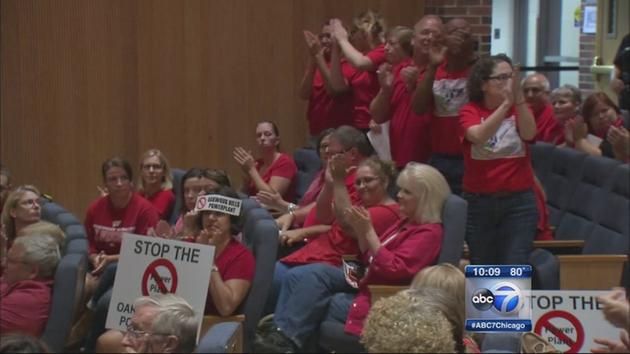
Oakwood Hills residents voice concern over proposed power plant


Bill is a former resident of the Oakwood Hills area.  And he thought this story would interest some blog followers.  To some degree it is a “not in my backyard” story but openness and transparency is what is being demanded by these citizens. That is a demand of local politics across the nation and the reason for the Illinois Open Meetings Act.

image

Oakwood Hills residents voice concern over proposed power plant

More than 120 citizens showed up at a village meeting, concerned that a $450 million power plant will be built in Oakwood Hills.

SEE the film clip by clicking on the following: http://abc7chicago.com/news/oakwood-hills-residents-voice-concern-over-proposed-power-plant-/295615/

By Stacey Baca

Thursday, September 04, 2014

OAKWOOD HILLS, Ill. (WLS) --

A controversial plan over a proposed power plant closed down Oakwood Hills' village government last month. On Thursday night, a village meeting had to be moved to Crystal Lake to a location big enough to handle the crowd.
Oakwood Hills is a village in McHenry County with just 2,000 people. More than 120 citizens showed up at the meeting, concerned that a $450 million power plant will be built in their community.
"We are not a bunch of thugs, bullies, liars and gossips - as we have been referred to - but are concerned residents of Oakwood Hills," said Rosie Riley, resident.
Although it's not on Thursday night's agenda, residents are concerned that the village will approve plans to build a massive power plant in this field. Transparency is an issue.
"Have you folks met? Have you met in secret? What have you done - created a police state for us?" said Regina Narusis, resident.
The issue has been so contentious that the village hall was shut down for nearly a month after board members reportedly received threats - an issue the police chief declined to talk about Thursday.
But the police presence was obvious as officers used hand-held detectors and checked bags - and residents are not finished fighting.
"It's been a black hole, we have no idea what is going on with the board, and that's probably what is driving most of the concern," said Ryan Noonan, who opposes the power plant.
The village president declined to talk to Eyewitness News Thursday night, and during the meeting, she did not address specific concerns about the power plant.
The village board is expected to take up the power plant issue next month.

Earlier Channel 7 coverage:  http://abc7chicago.com/news/oakwood-hills-village-hall-shut-down-by-personal-threats/245415/

http://abc7chicago.com/news/oakwood-hills-village-hall-re-opens-after-threats/283731/

Peaker Plant asks for another extension of their special use permit

This month the Boone County Board will consider another extension of the special use permit.  Here is some background on the plant and the 2009 decision to approve the plant.

There are some additional posts from this blog concerning peaker plants and the 2009 board approval.  SEE: 

http://boonecountywatchdog.blogspot.com/2009/01/peaker-plant-clears-boone-zoning-board.html

http://boonecountywatchdog.blogspot.com/2009/02/boone-board-delays-peaker-plant-verdict.html

http://boonecountywatchdog.blogspot.com/2009/02/boone-county-again-debates-peaker-plant.html

http://boonecountywatchdog.blogspot.com/2009/03/boone-county-government-for-march.html

Boone County Board Chairman Bob Walberg stands in front of one of the engines at a peaker plant in Hays, Kansas, on Friday, March 6, 2009. Three board members visited the plant in preparation for their own vote on whether a similar plant should come to rural Boone County.PHOTO PROVIDED Boone County Board Chairman Bob Walberg stands in front of one of the engines at a peaker plant in Hays, Kansas, on Friday, March 6, 2009. Three board members visited the plant in preparation for their own vote on whether a similar plant should come to rural Boone County.

Peaker plant tour hasn't swayed Boone County Board member's votes

By Kevin Haas
Posted Mar. 10, 2009 @ 12:01 am
Updated Mar 10, 2009 at 9:01 AM
BELVIDERE

Boone County Board members who visited a peaker plant in Hays, Kan., Friday said the trip hasn’t swayed their votes on a proposed project in rural Boone County.
Boone County Board Chairman Bob Walberg and board members Marshall Newhouse and Kathy Donhowe-Hartwig toured the 75-megawatt Goodman Energy Facility to get a first hand view of a peaker plant similar to the one proposed for Boone County. Board members are scheduled to vote on the project March 18.
Newhouse, who had voted in favor of the project at the committee level, said his feelings haven’t changed since the tour. Donhowe-Hartwig, who had voted against the project in committee, said she also hasn’t changed her mind.
“The (Kansas) facility is in the middle of nowhere. There really aren’t any neighbors close by,” said Donhowe-Hartwig, who has expressed concern for residents on Garden Prairie Road who would live near the proposed 100-megawatt, natural-gas-fired peaking power plant.
“My next step is going out to the (Boone County) site, because now I can visualize how large it is,” Donhowe-Hartwig said. “At this point, I haven’t changed my mind.”
If it's approved, developers still need a number of state and federal permits, and someone to purchase and operate the site, before they break ground. The earliest construction could start would be fall 2010, with plans to bring it on line by May 2012.
Would-be neighbors of the plant have contested that the sight and noise of 12 engines, with accompanying exhaust stacks, would lower property values.
“I just think it’s the wrong location,” said Gary Gibson, who lives on Garden Prairie Road north of the would-be facility.
Taxpayer money was not used to pay for the trip, which was financed by Burns & McDonnell, the architectural and engineering firm behind the project. It was offered to neighbors south of the would-be plant, but scheduling conflicts prevented any from accepting, developers said.
Gibson said he felt the board members’ trip to Kansas was an effort to buy their vote.
“That’s easy criticism. The truth is I saw them going the extra mile, trying to do everything they could to present their project and let people know what it is going to be like,” Walberg said. “There was no sales pitch, just trying to get an honest opinion of what they had to offer.”
Walberg, who has not cast a vote on the proposal, said he was impressed by the facility.
The Goodman Energy Facility has nine engines. One of the nine engines was turned on Friday to allow for board members to gauge the sound.

“I did not consider (noise) an issue at all,” Newhouse said. “They started with me standing right next to it and it was incredibly loud. When they shut the door the insulation in the facility did its work. ... At 200 to 240 yards motorcycles running down the highway a half-mile away were completely eclipsing anything the engines at the peaker power plant were producing.”

Read more: http://www.rrstar.com/article/20090310/News/303109868#ixzz3CNlsfn9V

Thursday, September 4, 2014

Perdue Farms eliminates antibiotic use in chicken hatcheries

By David Pierson

Perdue Foods, the nation’s third-largest poultry producer, said it has removed all antibiotics from its chicken hatcheries to address growing concerns about bacterial resistance to the widely used drugs.

The Salisbury, Md.-based company said it invested in cleaner hatcheries that eliminate the need for antibiotics on eggs. The poultry industry often injects eggs with antibiotics after vaccinating them because small holes in the shell can expose the eggs to disease.

Perdue is the first major poultry producer to phase out antibiotics in hatcheries, according to the National Chicken Council.

Perdue said antibiotic use is now restricted to treating sick flocks and to control a common intestinal parasite. The company eliminated antibiotic use to promote growth in its birds in 2007. Perdue said 95% of its chickens are now free of so-called medically important antibiotics – antibiotics that have an equivalent in human medicine and therefore raise the risk of creating human resistance.  

Read more by clicking on the following:  http://www.latimes.com/business/la-fi-perdue-antibiotics-20140903-story.html?track=rss

Little Evidence That The ACA Affected Part-Time Employment

Bowen Garrett and Robert Kaestner

image

new evidence on the question using the latest available data
from the Current Population Survey (CPS).
We find no evidence that the ACA had already started increasing part-time work before 2014. We find a small
increase in part-time work in 2014 beyond what would be expected at this point in the economic recovery based
on prior experience since 2000. This increase in part-time work is fully attributable to an increase in involuntary
part-time work. The increase in involuntary part-time work, however, is not specific to the category of part-time work
defined by the ACA (i.e., less than 30 hours per week), but applies to part-time work more broadly (also between 30 and
34 hours per week). Moreover, transitions between full-time and part-time work in 2014 are in line with historic patterns.
These findings suggest that the increase in part-time work in 2014 is not ACA related, but more likely due to a slower than
normal recovery of full-time jobs following the Great Recession
.

Read the entire 17 page report by clicking on the following:  http://www.rwjf.org/content/dam/farm/reports/reports/2014/rwjf415284