Showing posts with label Obama. Show all posts

Monday, November 16, 2015

U.S. Republicans seek to shut door on Syrian refugees after Paris - Yahoo News###


By Scott Malone


(Reuters) - More than a dozen state governors refused on Monday to accept Syrian refugees after the Paris attacks, part of a mounting Republican backlash against the Obama administration's plan to accept thousands more immigrants from the war-torn country.

Leading Republican presidential candidates called on President Barack Obama to suspend the plan to accept 10,000 Syrian refugees in the coming year and some Republican lawmakers began moves in Congress to try to defund the policy.

The State Department said the administration would stand by its plan, reiterating that the refugees would be subject to stringent security checks, and Obama said that the terrorism problem should not be equated with the refugee crisis.

But Republican leaders said it was too risky to allow a further influx of refugees after Friday's attacks by the Syria-based Islamic State group that killed 129 people.

The Republican governors of Maine, Nebraska, Texas, Arkansas, Arizona, Indiana, Louisiana, Mississippi, Massachusetts, Ohio, North Carolina, Wisconsin, Georgia and Illinois joined their counterparts in Alabama and Michigan in saying they would no longer help settle Syrian refugees. One Democratic governor, Maggie Hassan of New Hampshire, joined them in rejecting Syrian refugees.

Experts in immigration law said the governors likely had no legal standing to block the federal government from settling refugees admitted into the country, but noted that they could obstruct the plans by cutting funding to programs and creating an atmosphere of hostility.

Louisiana Governor Bobby Jindal, for instance, said he had instructed law enforcement officials to monitor one Syrian refugee recently resettled into his state.

A Syrian passport found near the body of one of the attackers showed that its holder passed through Greece in October, raising concern that the attackers had entered Europe amid the wave of refugees fleeing that country's four-year civil war.

"Texas cannot participate in any program that will result in Syrian refugees - any one of whom could be connected to terrorism - being resettled in Texas," Texas Governor Greg Abbott said in an open letter to Obama on Monday. "Neither you nor any federal official can guarantee that Syrian refugees will not be part of any terroristic activity."

View gallery

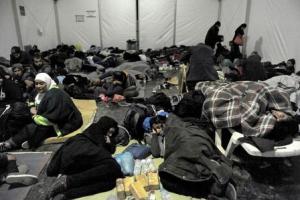
Refugees and migrants rest inside a tent at a camp, …

Refugees and migrants rest inside a tent at a camp, as they wait to cross Greece's border with M …

Refugee advocates argued that the governors and other Republicans are targeting those who are overwhelmingly victims rather than perpetrators of extremist violence.

"These are victims of the same terror that we're so horrified by," said Melanie Nezer, vice president of policy and advocacy at Jewish nonprofit refugee service HIAS. "The impact on people is going to be tragic and the impact on our reputation as a global humanitarian leader is also going to be tragic."

LEGAL AUTHORITY UNCLEAR

The United States admitted 1,682 Syrian refugees in the federal fiscal year that ended Sept. 30, a sharp jump from the 105 admitted a year earlier, while Europe is struggling with an influx of hundreds of thousands. Texas, California and Michigan accepted the largest number of people fleeing the war.

Secretary of State John Kerry in September said the United States would increase the number of refugees it takes in from all nations by 15,000 per year over the next two years, bringing the total to 100,000 a year by 2017.

"The federal government has the power over immigration. If they admit Syrian refugees, they're here," said Deborah Anker, a professor of law at Harvard Law School who specializes in immigration issues. "People aren't going to the (state) border. The federal government is going to bring them in."

Florida Governor Rick Scott said it was unclear if a governor had the right to block refugees from entering a state. Instead, he sent a letter to Congressional Republicans asking for their help in blocking Syrian refugees from being resettled in his state.

"We are asking the U.S. Congress to take immediate and aggressive action to prevent President Obama and his administration from using any federal tax dollars to fund the relocation ... without an extensive evaluation of the risk these individuals may pose to our national security," Scott wrote.

Republican lawmaker Brian Babin, a member of the conservative House Freedom Caucus, circulated a letter to the Republican House leadership requesting that Obama's plan be defunded as part of an upcoming spending bill.

Republican presidential candidates vowed on Monday to take a tougher approach toward Islamic State, with Donald Trump saying he would consider closing some mosques and Ben Carson saying that Congress should cut funding for all programs that bring people fleeing violence in Syria

On the Democratic side, the governors of Pennsylvania and Washington State said they will continue working with the federal government to admit Syrian refugees.

"Washington will continue to be a state that welcomes those seeking refuge from persecution, regardless of where they come from or the religion they practice," said Washington Governor Jay Inslee, in a statement.

Alabama and Michigan said they would no longer accept Syrian refugees on Sunday.

Michigan's Republican governor, Rick Snyder, described his state, which has a large Arab-American population, as "welcoming" but said the risk associated with admitting Syrian refugees was too high.

The State Department denied that admitted refugees, who are all extensively screened before being allowed into the country, present any threat and said it would seek to alleviate the governors' concerns.

"We take their concerns seriously," spokesman Mark Toner said of the governors' statements. "We disagree that these people, individuals frankly many of them the most vulnerable (in the region), represent any kind of real threat."

(Reporting by Scott Malone in Boston; Additional reporting by Doina Chiacu, Jon Herskovitz, Letitia Stein, Eric Johnson, Ben Klayman and Colleen Jenkins; Editing by Jonathan Oatis and Stuart Grudgings)
U.S. Republicans seek to shut door on Syrian refugees after Paris - Yahoo News###

Monday, November 9, 2015

Obama's immigration action blocked again; Supreme Court only option left - Yahoo News


WASHINGTON (Reuters) - President Barack Obama's executive action to shield millions of undocumented immigrants from deportation suffered a legal setback on Monday with an appeal to the Supreme Court now the administration's only option.Federal Appeals Court Upholds Injunction Against Obama's Executive Action On Immigration Huffington Post

The 2-1 decision by the 5th U.S. Circuit Court of Appeals in New Orleans to uphold a May injunction deals a blow to Obama's plan, opposed by Republicans and challenged by 26 states.

The states, all led by Republican governors, said the federal government exceeded its authority in demanding whole categories of immigrants be protected.

The Obama administration has said it is within its rights to ask the Department of Homeland Security to use discretion before deporting nonviolent migrants with U.S. family ties.

The case has become the focal point of the Democratic president's efforts to change U.S. immigration policy.

Seeing no progress on legislative reform in Congress, Obama announced last November he would take executive action to help immigrants. He has faced criticism from Republicans who say the program grants amnesty to lawbreakers.

In its ruling, the appeals court said it was denying the government's appeal to stay the May injunction "after determining that the appeal was unlikely to succeed on its merits."

Republicans hailed the ruling as a victory against the Obama administration.

John Scalise, the No. 3 Republican in the House of Representatives, said in a Twitter message that the court decision was "a major victory for the rule of law."

Texas Attorney General Ken Paxton said in a statement the ruling meant the state, which has led the legal challenge, "has secured an important victory to put a halt to the president’s lawlessness."

Obama's immigration action blocked again; Supreme Court only option left - Yahoo News

Friday, November 6, 2015

Obama rejects Keystone as short on economic benefits, long on risk to climate - LA Times


WRITTEN BY:  Christi Parsons and Paul RichterContact Reporters

President Obama announced Friday that he was rejecting the controversial Keystone XL oil pipeline project because it wouldn’t serve U.S. interests, dismissing its potential economic benefits as insignificant over time as he sought to close a long-running chapter in the political fight over global warming.

“For years, the Keystone pipeline has occupied what I frankly consider an overinflated role in our political discourse,” Obama told reporters at the White House. “It became a symbol too often used as a campaign cudgel by both parties rather than a serious policy matter.”

The pipeline began as a project nearly a decade ago to carry more than 800,000 barrels of crude oil a day from Canada to U.S. Gulf Coast refineries, as a shortcut to bring it to market more quickly. But it grew over time into a political symbol: for opponents, of energy interests run amok, and for backers, of the zealous overreach of environmental advocates.

Opponents long warned about the negative effects of tar sands oil mining on wildlife and people. Construction of the pipeline would lock the U.S. into dependence on an oil that is destructive and hard to extract, foes said.

Supporters, meanwhile, argued in favor of the economic benefits. They pointed to the jobs that the construction of the pipeline would create as well as to the stream of North American oil as an important alternative to Middle Eastern sources. But a State Department study found that the pipeline would create only about 35 permanent jobs after construction was complete.


And fluctuating oil prices affect the economics of tar sands oil, which is difficult and costly to extract. At some points over the past year, the price of oil dropped below the point that would allow Keystone investors to break even.

The years of fighting obscured the fact that Keystone would “neither be a silver bullet for the economy, as was promised by some, nor the express lane to climate disaster proclaimed by others,” Obama said.

His announcement came days after TransCanada, the company building the pipeline, asked that its permit application be put on hold while another challenge to the project played out in Nebraska. It had become increasingly clear in recent months that Obama would probably reject the pipeline, and TransCanada’s request was widely seen as a way to buy time until a more politically friendly atmosphere prevailed, including a new administration moving into the White House after the 2016 presidential election.

Environmentalists “are well aware that the next president could undo all this, but this is a day of celebration,” said Bill McKibben, cofounder of the environmental group 350.org, in a statement.

Obama had long said he’d decide on the pipeline before he left office, and making his announcement now could help ease the impact of the the issue in the 2016 campaign. Keystone being a thing of the past could help Democratic candidates, particularly in swing states in the Rust Belt and interior West, where Democrats have voiced support for the project and opposition to it helped cost Sen. Mark Udall of Colorado his seat last year.

The Democratic front-runner, Hillary Rodham Clinton, opposes the pipeline, and Republicans immediately tried to tie her to Obama’s decision.

“Barack Obama and Hillary Clinton caved to extreme special interest groups and rejected good American jobs,” Republican National Committee Chairman Reince Priebus said in a statement. “This move can only be described as a politically motivated embarrassment.”

But even as he dismissed the project’s potential impact, Obama still argued that rejecting it makes an important statement about the U.S. commitment to fighting climate change.

“We are continuing to lead by example,” Obama said. If world leaders are going to protect the environment, he said, “we’re going to have to keep some fossil fuels in the ground rather than burn them.”

Obama and other world leaders are expected to agree on significant new efforts to curb global warming during a major international climate summit in Paris next month.

“America,” he said, “is going to hold ourselves to the same high standards to which we hold the rest of the world.”

Because the pipeline would cross a U.S. border, State Department officials were in charge of the review of the project, and for months the agency had been gathering comments from the public. But the project had become so highly politicized that the decision about whether to clear or derail it was under consideration at the highest levels of the Obama administration.

Obama said he explained his decision earlier Friday to new Canadian Prime Minister Justin Trudeau, who supports the pipeline but pledges oversight of its environmental impact.

Obama’s decision swiftly drew reaction from across the political spectrum, with leading environmentalists pointing to the effectiveness of organized opposition and promising to fight other projects they see as harmful to the planet.

“The power of the American people decisively beat out the fossil fuel special interests,” said Tom Steyer, a California billionaire who has poured tens of millions of dollars into fighting climate change. “The D.C. establishment once called this pipeline a done deal, but a movement emerged that refused to accept the fossil fuel status quo.

Pipeline backers and political opponents labeled Obama’s decision a give-in to special interests.

“These jobs were so critical to our membership and their families to maintain their place in the middle class,” said Sean McGarvey, president of the North America's Building Trades Unions. “At this point, it’s safe to say we’re out of hope.”

House Majority Leader Kevin McCarthy (R-Bakersfield) called the long wait for a decision “troubling.”

“The president’s approach to this process and his ultimate decision reveals a lack of leadership when facing tough issues,” McCarthy said in a statement.

ABOVE IS FROM:  Obama rejects Keystone as short on economic benefits, long on risk to climate - LA Times

Monday, October 26, 2015

Lawmakers strike major budget deal - CNNPolitics.com


CNN)Bipartisan congressional leaders and the White House struck a major fiscal deal in principle Monday that would raise the debt ceiling and lift budget caps on both defense and domestic programs, according to congressional sources familiar with the deal.

The agreement could be voted on as early as Wednesday, the same day House Republicans are expected to nominate Rep. Paul Ryan, R-Wisconsin, to replace retiring Rep. John Boehner, R-Ohio, as House speaker.

The final details are being ironed out and a bill could be introduced later Monday as negotiators draft the language to prepare for it for vote.

    This deal would avoid a potential debt default on November 3, and it would reduce the chances of a government shutdown on December 11.

    The agreement includes top line numbers for defense and domestic spending levels for the next two years, but Congress will still need to pass some type of omnibus spending bill that includes specific levels for various federal agencies to avoid a shutdown in December.

    Read More

    The deal includes $80 billion in increased defense and domestic spending over two years‎, a senior House source told CNN.

    It also includes more money for the Pentagon's overseas contingency account.

    That new spending would be offset by sales from the strategic petroleum oil reserve, use of public airwaves for telecommunications companies and changes to the crop insurance program — among other measures. Moreover, the deal would spread out increases in Medicare premiums over time so beneficiaries don't feel them acutely. It would also aim to preserve the Social Security disability trust fund, sources said.

    Conservatives sharply panned the deal.

    "It's emblematic of five years of failed leadership," said Rep. Justin Amash, R-Michigan.

    But Sen. John McCain says he will support the deal, even though it is $5 billion short on defense funding in 2016 and more than that in 2017.

    "I think it is saleable," he told reporters after leaving a Senate GOP Conference meeting.

    Boehner's office negotiated many of the details directly with the White House, but House Minority Leader Nancy Pelosi, Senate Majority Leader Mitch McConnell and Senate Minority Leader Harry Reid were also part of the discussions as the framework was developed, according to a source familiar with the talks.

    As he walked off the floor and back to his office, McConnell signaled leaders were on the cusp of a deal to raise the debt ceiling and budget caps.

    "Yeah, we're still talking," he said.

    He was then asked if he feels good about where they are he repeated, "We're still talking."

    On the floor, Reid signaled talks were moving forward as well.

    "There is no reason to have one -- that is a crisis," he said.

    House and Senate GOP leaders scheduled a closed door meeting for rank-and-file members for Monday evening to discuss the emerging deal.

    The legislation could be filed as early as Monday night with a House vote likely Wednesday -- the same day as House Republicans vote to elect a new speaker.

    The deal is not yet final, and could ultimately change. But the discussions are moving quickly since Boehner wants to wrap up the divisive fiscal issues before he hands the gavel on Thursday to Rep. Paul Ryan, R-Wisconsin, who is expected to win House leadership elections.

    It's still uncertain whether the two sides -- particularly in the House -- could win over the rank-and-file and push the matter to final passage. But if Pelosi agrees to back the package, and Boehner can deliver a large segment of his conference, it could be enough to overcome opposition from conservative factions. Two sources said Monday that Boehner and Pelosi were having "productive" discussions.

    The possible deal could give both sides cover. The White House has said that the debt limit should not have any corresponding budget cuts and should pass without restrictions in order to meet the November 3 deadline to avoid a possible default.

    But if a budget deal moved at the same time, Republicans could point to the cuts Democrats agreed to in order to argue they were winning concessions from the White House. One source familiar with the discussions said that the two sides were looking at the possibility of a two-year budget deal, effectively decreasing the chances of a shutdown December 11.

    Boehner was expected to discuss the matter with his leadership team later Monday afternoon

    Lawmakers strike major budget deal - CNNPolitics.com

    Tuesday, October 20, 2015

    Trudeau wins big as Canada votes resoundingly for a leftward shift (+video) - CSMonitor.com


    Toronto — For many residents of Canada’s largest city, it was hard to know where to begin celebrating on Monday night.

    First came the Toronto Blue Jays’ 11-8 victory over the Kansas City Royals in a must-win Major League Baseball playoff game.

    Then came news of Prime Minister Stephen Harper’s defeat in the federal election at the hands of Justin Trudeau’s Liberal Party.

    Recommended: How about this Canada quiz, eh?

    Mr. Trudeau, a charismatic politician who captivated many voters here with his youth and optimism – not to mention his boxing skills – is set to be Canada's new prime minister after his party won a majority of Parliament's 338 seats in a sweeping, come-from-behind victory.

    For many here, the election was foremost a referendum on Mr. Harper and his Conservative Party’s near-decade in power. His secretive and often partisan political style grated with many voters. And in pushing Canada to the right, Mr. Harper supported policies that many viewed as out of sync with the nation, including his refusal to pursue climate change legislation and his push to shrink government and trim spending.

    Now, many Canadians are eager to see Trudeau return the country to its left-of-center traditions.

    “In this election, the question was how badly did Canadians want to defeat Stephen Harper,” says Zain Velji, a Calgary-based political strategist and host of “The Strategists,” a popular political podcast.  “The answer was, ‘desperately.’ ”

    Voters in Toronto flocked to polling stations in Blue Jays baseball caps and jerseys to cast their votes ahead of the game on Monday. Although ballot boxes stayed open until 9:30 p.m., election officials expected turnout to fall to a trickle after the 8:07 first pitch.

    It was unclear if the occasional car horns that could be heard later in the night were in celebration of the game, Harper’s defeat, or both.

    Having re-energized the Liberal Party since its devastating electoral losses four years ago, Mr. Trudeau rode a wave of anti-conservatism that galvanized voters around his promise of change and helped his party win a resounding 184 seats, or 56 percent.

    Trudeau has pledged to raise taxes on the rich and run deficits for three years to increase government spending and boost the economy. He’s promised a more multilateral approach in international affairs – cooperating more, for example, with the UN. He's vowed to repair ties with the United States, which were dogged by Harper's weak personal relationship with President Barack Obama and differences over the Keystone pipeline. Addressing climate change – an area where he shares common cause with Mr. Obama – is high on his agenda.

    “Right away, I expect we’ll see a brand new posture from the federal government when Trudeau takes office,” says Christopher Cochrane, a political science professor at the University of Toronto. “It looks like the Liberals are going to have a solid four years to implement their plans.”

    Trudeau, a 43-year-old former school teacher and member of Parliament since 2008, will be the second youngest prime minister in Canadian history. He carries with him the immense legacy of his father, the late Prime Minister Pierre Trudeau, who took office in 1968 and led Canada for most of the next 16 years. Trudeau has also cited his maternal grandfather, Jimmy Sinclair, who represented a constituency in Vancouver from 1940-58, as an inspiration and role model.

    But concerns over his lack of political experience – a common theme in Conservative attack ads during the campaign – are likely to follow the young leader into office.

    While critics say Trudeau lacks the political intelligence of his father, many Canadians say they are simply happy to have anyone but Harper as their leader. Harper’s attempt to shift the nation to the right alienated a wide swath of voters, who came to view his policies – such as lowering corporate taxes and taking a more hawkish stance on global affairs – as out antithetical to the Canada they knew.

    The election marked a stunning turnaround for the Liberals, who held only 36 seats when Parliament was dissolved in early August. Their victory amounts to the largest seat increase for a party between elections in Canadian history, according to the Globe and Mail.

    The Liberals dealt a major blow not only to the Conservatives but also to the New Democratic Party, the furthest left of the big three parties. At the beginning of the 78-day campaign, the longest in Canada since the 19th century, the NDP was considered a frontrunner.

    Election results show that Conservatives were reduced to 99 seats. The NDP, which had previously formed the official opposition as the second largest party in Parliament, held onto only 44 seats after suffering major losses to the Liberals in Quebec

    Trudeau wins big as Canada votes resoundingly for a leftward shift (+video) - CSMonitor.com

    Monday, October 5, 2015

    Meet the Republicans who ousted John Boehner. They're just getting started. - CSMonitor.com


    Washington — When the House broke for its August recess, Republican Rep. John Fleming went home to Louisiana to connect with voters. He got an earful.

    He traveled the state, and whether he spoke with a lowly company employee, a middle manager, or a business owner, they all said the same thing: “They are very disappointed in how we Republicans are doing in Washington,” says Rep. Fleming, a physician elected in 2008.

    Fleming says his constituents see a GOP-controlled Congress failing to check President Obama, even as federal regulations are hurting them personally. It doesn’t matter to them that the president has veto power, or that Democrats can still block Republicans in the GOP-controlled Senate.

    “They just don’t want to hear that. That’s an excuse to them,” he says in an interview. “They at least want a fight.”

    In January, he and eight other hard-line Republicans formed the House Freedom Caucus to challenge the GOP leadership, which they claim is not fighting hard enough for Republican priorities. Now they’re bigger and they're emboldened. They just succeeded in driving out Speaker John Boehner (R) of Ohio, who recently stunned Washington with the news that he will retire from Congress on Oct. 30.

    In the weeks ahead, the Freedom Caucus will have plentiful opportunities to push the fight further – from the speaker's race to a combustible mix of fiscal deadlines this fall. Though members say they have not yet settled on a strategy, one thing is certain: They are not afraid of government shutdowns, fiscal cliffs, or any other hardline tactics that typically made Boehner wince.

    Republicans have not gotten what they wanted, they say, not because these gambits failed, but rather because leadership didn't commit to them, heart and soul.

    And they want that to end now. 

    Turmoil is not the problem

    For this invitation-only group of about 40 members, which meets regularly at a Capitol Hill restaurant called the Tortilla Coast, the fight starts with the GOP's election for the speakership and other GOP leadership offices, which will take place in a secret ballot on Thursday.

    Mr. Boehner said he wanted to spare his members and the institution the “turmoil” of an expected attempt to oust him. But to many conservatives, like the members of the Freedom Caucus, turmoil is not the problem. They want real change in the top-down way the House is run and are making demands.

    That pressure bubbled over Sunday when Rep. Jason Chaffetz (R) of Utah suddenly joined the race, challenging Boehner’s presumed successor, Rep. Kevin McCarthy (R) of California. Congressman Chaffetz says he was "recruited" as an alternative to majority leader McCarthy. He doubts Boehner’s right-hand man can get enough conservatives to win a final floor vote for speaker without having to rely on Democrats. That vote will occur at the end of the month.

    "You don't just give an automatic promotion to the existing leadership team," Chaffetz said on "Fox News Sunday." Voters “want us to take that fight to the Senate. They want us to take that fight to the president.”

    Beyond the race for the speakership, the House has a to-do list chock full of pressure points for the Freedom Caucus, including debt, budget, and tax deadlines. Many in Washington are quaking over the deadlines. They remember previous cliff-hanger negotiations between the Obama administration and Republicans in Congress. They wonder whether the Freedom Caucus will trigger a government shutdown over federal funding for Planned Parenthood, the way hardliners did over Obamacare in 2013.

    Caucus members see the coming weeks as an opportunity. Exactly what their fight will look like “is kind of fluid,” says Rep. Matt Salmon (R) of Arizona, another caucus founder. But “as we go forward, we’re going to consider anything and everything,” he said last week.

    Whether Republicans are fighting hard enough for their priorities is a matter of opinion, and forms a dividing line in the party that runs from voters, to Congress, to the presidential race.

    Sixty percent of Republican voters say they feel “betrayed” by their political party, according to a September Fox News poll. Two-thirds of GOP primary voters do not believe Republican majorities have done enough to block Obama’s agenda, the poll finds.

    The benefits of a shutdown

    “It’s somewhat subjective, 'Did you fight hard enough for your priorities?' With Boehner, the answer is, ‘No, you didn’t,’ ” says Matt Kibbe, the former head of the tea party advocacy group Freedom Works.

    Mr. Kibbe is the kind of person Boehner means when he rails against “false prophets” who gin up the base with unrealistic promises. The speaker blames outside groups such as Freedom Works and Heritage Action for egging on the 2013 shutdown, a strategy he says was doomed to fail. He and Senate majority leader Mitch McConnell (R) of Kentucky have since vowed not to repeat a shutdown.

    But Kibbe says it is Boehner who is the false prophet, promising in the 2010 GOP “Pledge to America” to roll back spending to 2008 levels and to repeal Obamacare if the Republicans won the House.

    “You have to believe that they never meant it,” says Kibbe, who is now a senior adviser to Concerned American Voters, a super political action committee for GOP presidential candidate and libertarian, Sen. Rand Paul of Kentucky.

    “This idea that shutting down the government is a fundamental loser for Republicans – I just don’t buy it,” Kibbe continues. He notes that it was only after the shutdowns of 1995 and early ’96 that Republicans, under the leadership of Speaker Newt Gingrich, were able to strike a deal on welfare reform with President Clinton.

    “Clinton took Gingrich seriously; Obama has never taken Boehner seriously.”

    Fleming couldn’t agree more. He points to the stunning midterm election of 2014, which returned a historic number of Republicans to the House and handed the Senate to GOP control – despite the shutdown the year before.

    Republicans rarely put a bill on the president’s desk that he doesn’t like, Fleming complains. Indeed, the president has only vetoed four bills in his seven years in office – though he’s made plenty of veto threats.

    “We could be getting more than we’re getting now,” Fleming says. “By raising the white flag before the discussion debate even begins, we’ve already lost.”

    Blackmailing your friends

    Other Republicans – hardly moderates – don’t see it that way.

    Take Grover Norquist, founder and president of Americans for Tax Reform. He’s famous for his Taxpayer Protection Pledge to oppose tax increases. Most Republicans in Congress have signed it.

    Ideologically, Republicans are more united today than ever, he says. What Republican is for Obamacare? Or for tax increases?

    Under Boehner’s leadership, he notes, the House scrapped earmarks. Republicans negotiated permanent tax cuts for most Americans. They got budget caps and the first real spending cuts since the end of World War II. They reformed a part of Medicare in what’s known as the “Doc Fix.” They even sued the president.

    “People take progress for granted,” says Mr. Norquist. “What you would like is not the question. I would like rubies and diamonds.... It's, 'What can you   accomplish?’ ”

    In Congress, a backlash may be building against Freedom Caucus hardball tactics. Last month, a caucus member quit, saying tactics were harming, not helping, the GOP cause. Over in the Senate, Republican colleagues shouted down tea party favorite Sen. Ted Cruz (R) of Texas last week over his procedural move related to spending and Planned Parenthood.

    “There’s a lot of frustration. In some sense, this group treats Republicans like they’re their enemy,” says Rep. Tom Cole (R) of Oklahoma, a Boehner supporter. “It’s always inappropriate to try and blackmail your teammates.”

    The Oklahoman understands the anger of Freedom Caucus members. The political roadblocks to the GOP agenda frustrate him, too, but anger clouds their judgment, he says. The caucus pursues things that “demonstrably don’t work,” such as threatening to shut down the Department of Homeland Security over the president’s immigration policy.

    Cole hopes that a new speaker can help calm the waters. “I think we’ve got an opportunity for a little bit of a new beginning.”

    Meet the Republicans who ousted John Boehner. They're just getting started. - CSMonitor.com

    Friday, October 2, 2015

    Arne Duncan, Education Secretary, to Step Down in December - The New York Times


    WASHINGTON — Arne Duncan, the secretary of education and a member of President Obama’s original cabinet, will step down in December after a long tenure in which he repeatedly challenged the nation’s schools to break out of their hidebound ways.

    A White House official confirmed Mr. Duncan’s decision to step down and said the president has decided to name John B. King Jr., the deputy secretary of education, to replace Mr. Duncan to lead the Department of Education.

    Mr. Obama is expected to formally announce the personnel changes and take questions from reporters Friday afternoon.

    In an email to his staff sent Friday morning, Mr. Duncan praised the work of his department, saying that “as a comparatively small team, often under challenging conditions and timelines, our staff has continued to offer example after example of dedication beyond the call of duty.”

    He said the department would be in good hands under Mr. King, a former commissioner of education in New York State and a former president of the University of the State of New York.

    As secretary, Mr. Duncan started the “Race to the Top” program, in which billions of dollars was offered in a competition to school districts to innovate in the ways they teach children. Mr. Duncan accompanied the president from Chicago, where the two had forged a friendship.

    Arne Duncan, Education Secretary, to Step Down in December - The New York Times

    Thursday, August 27, 2015

    Obama to seek unity with pope on issues in White House visit - Yahoo News


    WASHINGTON (AP) — Sweeping into office in 2009, President Barack Obama captured near rock-star status around the world among millions who saw him as the embodiment of a new sense of social purpose. Now, that baton has largely been passed to Pope Francis, whose visit to the White House next month will put his common cause with Obama on vivid display.

    Obama has made no secret of his affection for the outspoken pope, calling him a "transformative leader" whose influence has transcended the Roman Catholic community. The pope has embraced many of the issues Obama has sought to advance, including global warming, poverty and diplomacy with Iran and Cuba.

    Vice President Joe Biden, a Catholic, said the pope's Sept. 23 visit will mark an important moment not only for Catholics but for all Americans.

    "Pope Francis has breathed new life into what I believe is the central mission of our faith: Catholic social doctrine," Biden said in a statement to The Associated Press. Invoking key elements of Obama's agenda, Biden added that Francis "has become a moral rudder for the world on some of the most important issues of our time, from inequality to climate change."

    The pope's brief visit to the White House is part of his highly anticipated trip to the U.S. and Cuba. It's a reunion of sorts for Obama and Francis, who first met when the president visited the Vatican last year.

    Despite deep differences on some social issues such as abortion, Obama and the pope are expected to focus on areas of agreement. The White House said economic opportunity, immigration and refugees, and protection of religious minorities were high on the agenda.

    "It's going to be a come-to-Jesus moment - no pun intended - for the many politicians who want to claim the mantle of Pope Francis," said Michael Wear, a former White House official who led faith outreach for Obama's 2012 campaign.

    For Obama, the visit offers a chance to imbue his remaining goals with a sense of moral authority as he approaches the end of his presidency.

    Viewed as largely above politics, Francis is extremely popular in the U.S. Tickets to his speech to Congress are such a hot commodity that an overflow crowd of thousands is expected to watch on Jumbotrons from the National Mall.

    "In a way, Pope Francis has become a conscience for this age of the world. When President Obama came to office, he too had that aura for at least the first couple of years," said Stephen Schneck, who runs the Catholic politics institute at Catholic University of America. "But Pope Francis' message is moral and religious. He's not going to be talking about legislation."

    The White House has praised Francis for involving himself in issues usually left to politicians. In a rare move, Francis personally intervened to help the U.S. and Cuba restore relations, writing leaders of both countries and hosting their delegations at the Vatican for final talks. And on climate change, a cornerstone of Obama's desired legacy, Francis added the weight of the pulpit by publishing a landmark encyclical calling climate change real and man-made.

    Yet there are risks for Obama if he glosses over other, stark differences in views.

    When he visited Francis early last year, Obama contradicted the official Vatican account of their meeting by saying they hadn't discussed social issues in any detail. Papal aides insisted the two leaders indeed discussed religious freedom, life and conscientious objection - buzzwords for abortion, birth control and parts of Obama's health care law.

    "That's the delicate dance," said Julian Zelizer, a presidential historian at Princeton University. "The idea is to point out common areas of concern, rather than say, 'We are total allies.'"

    Gay rights presents another area of likely disagreement. The pope's U.S. visit is focused on family issues, and while Francis has emphasized compassion and tolerance for gays and lesbians, he's also affirmed the church's opposition to same-sex marriages - putting him at odds with Obama.

    The president's relationship with the Catholic Church has a mixed history. He won the Catholic vote in his presidential campaigns, according to exit polls - a feat even then-Sen. John Kerry, a Catholic, couldn't pull off. And when Obama signed his landmark health law in 2010, he gave the nearly two-dozen pens used to advisers and supportive lawmakers - but set aside one for Sister Carol Keehan, president of the Catholic Health Association, who played a key role in building support for the bill.

    But the U.S. Conference of Catholic Bishops opposed the legislation over provisions on coverage for abortions and birth control. Hundreds of Catholic groups and employers sued the Obama administration over the law, claiming it infringes on religious freedom.

    ___

    Obama to seek unity with pope on issues in White House visit - Yahoo News

    War of words: Obama v. Koch brothers


    WASHINGTON — The White House says it's not backing down from President Obama's pointed criticism of the Koch brothers, saying the billionaire industrialists were "squealing" after Obama accused them of hypocrisy for benefiting from oil subsidies while opposing green energy.

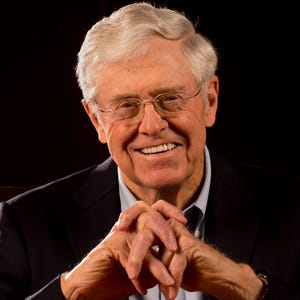
    Charles Koch told The Politico Tuesday he was "flabbergasted” and "dumbfounded" Obama's speech Monday singling out the Koch Industries owners for opposing solar power. “It’s beneath the president, the dignity of the president, to be doing that,” he said.

    But the White House — which had already admitted that the president's use of the word "crazies" that same night was "a little flip"  — wasn't backing down. White House Press Secretary Josh Earnest said Wednesday that the Koch response was both "remarkably rich" and "utterly predictable."

    "The fact is that Koch Industries has spent at least tens of thousands of dollars, if not hundreds of thousands of dollars, lobbying Congress -- these are publicly available disclosures -- in support of those kinds of policies, to say nothing of the millions of dollars that they have spent punishing those candidates that didn't side with them," Earnest said.

    Koch officials do not deny that the company benefits from federal subsidies and said it doesn't oppose green energy in theory.

    "If the question is, ‘Has Koch accepted subsidies?’ the answer is ‘Yes,’ and we’ve been clear about that," said Koch vice president Philip Ellender in a written statement to USA TODAY. He said Koch participates in existing programs so as "not put ourselves at a competitive disadvantage."

    "The fact is — and the White House should know this — we have fought against government boondoggles for decades because corporate welfare wastes resources, stifles innovation and has pushed our country to the brink of bankruptcy," Ellender said.

    In an interview with USA TODAY in April, Koch said he and brother David does not spend millions on political causes in order to advance Koch Industries' business interests. "We oppose as many or more things that would benefit us than would hurt us," he said.

    USA TODAY

    Charles Koch: We're not in politics to boost our bottom line

    But the Kochs' business success has allowed them to fund a broad range of political causes, founding the libertarian Cato Institute and the conservative Americans for Prosperity.

    That's made them a frequent target of Democrats like Senate Majority Leader Harry Reid, D-Nev. Charles Koch told the Politico that he suspects Obama's Las Vegas speech attacking him was "kind of a farewell gesture to help Harry Reid,” who's retiring next year. Reid hosted the Clean Energy Summit and introduced Obama at the event.

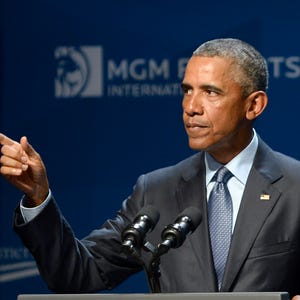
    "When you start seeing massive lobbying efforts backed by fossil fuel interests, or conservative think tanks, or the Koch brothers pushing for new laws to roll back renewable energy standards or prevent new clean energy businesses from succeeding, that's a problem," Obama said at the summit. "That's not the American way."

    USA TODAY

    Obama hits Koch Brothers for opposing solar power

    Until that speech, President Obama had only mentioned the Koch brothers a handful of times in his public speeches — always as a punchline.

    "Speaking of conservative heroes, the Koch brothers bought a table here tonight," he told the White House Correspondent's Dinner last year, "But as usual, they used a shadowy right-wing organization as a front. Hello, Fox News."

    And at the 2015 dinner, he noted that the presidential campaign was already starting, "and I for one cannot wait to see who the Koch brothers pick."

    Earnest said the exchange illustrates the kind of president Obama set out to be.

    "This is exactly why the president ran for office, it's why he ran for this office, is that for too long, we saw the oil and gas industry exert significant pressure on politicians in Washington, D.C.," he said. And when Obama fights that influence, "the special interests, including the millionaires and billionaires that have benefited from that paralysis, start to squeal. And I guess in this case, at least one billionaire special interest benefactor chose to squeal to a Politico reporter."

    Earnest said the spat would not distract from the one area where the White House and the Koch brothers are making common cause: criminal justice reform. "It certainly is not going to impact the desire of the president or this administration to work with anybody who is interested in bringing greater justice to our criminal-justice system," he said.

    War of words: Obama v. Koch brothers

    Wednesday, August 26, 2015

    Obama Slams Koch Brothers at Clean Energy Summit for 'Standing in the Way of Progress'


    President Obama has returned from vacation and he said he feels “refreshed, renewed, recharged” and “a little feisty.” Well, that feistiness was apparent as he delivered the closing address at the 8th National Clean Energy Summit in Las Vegas, Nevada Monday. Sun-blessed Nevada is being hailed as “ground zero in the solar boom.” He slammed critics of his energy policies for “wanting to protect an outdated status quo” based on fossil fuels and warned them away from “standing in the way of the future” and his efforts to combat climate change.

    He railed against U.S. political and business figures, particularly the Koch brothers, for attempting to thwart the expansion of wind and solar power, which is widely popular among the American public.

    “When you start seeing massive lobbying efforts backed by fossil fuel interests, or conservative think tanks, or the Koch brothers pushing for new laws to roll back renewable energy standards, or to prevent new clean energy businesses from succeeding, that’s a problem,” Obama said, marking the first time the President has singled out the Koch brothers in a climate speech. The explosive growth of solar in the U.S. “has some big fossil fuel interests pretty nervous,” Obama noted.

    And he pointed out the inconsistency of those who promote free market solutions, except when those solutions point to renewable energy. “Now, it’s one thing if you’re consistent in being free market,” said Obama. “It’s another thing when you’re free market until it’s solar that’s working and people want to buy and suddenly you’re not for it any more.”

    Koch-backed groups, particularly the American Legislative Exchange Council (ALEC), have fought renewable energy programs in several states, including pushing for states to withdraw from climate compacts, penalizing rooftop solar installations and repealing renewable portfolio standards.

    That’s not the American way. That’s not progress. That’s not innovation. That’s rent seeking. That’s standing in the way of progress,” Obama said. The President’s speech, however, was not all doom and gloom and bashing his critics. Obama spoke optimistically about American ingenuity and with great hope about solar and other renewable forms of energy. “We’re here today because we believe that no challenge poses a greater threat to our future than climate change,” Mr. Obama said. “But we’re also here because we hold another belief, and that is, we are deeply optimistic about American ingenuity.”

    Obama said the growth in solar—which is 20 times bigger than it was in 2008, is “like evolving from the telegraph to the smartphone in less than a decade.” And he noted that “solar isn’t just for the green crowd any more, it’s for the green-eyeshade crowd too,” citing the fact that Walmart, Google and Apple are among the largest buyers of renewable energy in the world.

    The speech came “as his administration announced a series of measures to encourage solar power construction, including making an additional $1 billion in loan guarantee authority available in a federal program for innovative versions of residential rooftop solar systems,” reports The New York Times.

    “We’re going to make it even easier for individual homeowners to put solar panels on the roof with no upfront cost,” Obama said. “So we’re taking steps that will allow more Americans to join this revolution, with no money down.”

    And this is all on the heels of the President’s Clean Power Plan, which requires states to cut carbon dioxide emissions by 32 percent from 2005 levels by 2030. Much of those cuts would come from bringing more renewable energy projects online.

    Environmental groups praised the President’s latest efforts. “President Obama’s announcement today is a huge win for American families from coast-to-coast,” said Sierra Club Legislative Director Melinda Pierce. “These policies will save homeowners money on their electricity bills, put more people to work and empower Americans to act to tackle climate disruption in their everyday lives.”

    Obama Slams Koch Brothers at Clean Energy Summit for 'Standing in the Way of Progress'

    Tuesday, August 25, 2015

    Obama calls out Koch brothers for opposing solar power - UPI.com


    VEGAS, Aug. 25 (UPI) -- President Obama lashed out against critics of his energy policies and high-power conservatives, specifically the Koch brothers, for pushing back against regulations that would enable growth in the renewable energy sector.

    The president, speaking at a green energy conference in Las Vegas Monday night, said the explosive growth of renewable energy, particularly solar, "has some big fossil fuel interests pretty nervous," specifically singling out billionaire brothers Charles G. and David H. Koch of Koch Industries. Koch backers have battled against clean energy mandates in several states, likening them to healthcare mandates under Obamacare.

    "When you start seeing massive lobbying efforts backed by fossil fuel interests, or conservative think tanks, or the Koch brothers pushing for new laws to roll back renewable energy standards, or to prevent new clean energy businesses from succeeding, that's a problem," he said. "That's not the American way. That's not progress. That's not innovation. That's rent seeking. That's standing in the way of progress," Obama said.

    Obama's speech to about 1,000 people at the National Clean Energy Summit came after his administration announced several measures to encourage solar power construction, including the Clean Power Plan, which requires states to cut carbon emissions by about 32 percent. The president has focused on climate change in his second term.

    Obama will fly to New Orleans on Thursday, on the 10th anniversary of Hurricane Katrina, to speak about global warming and next week to Alaska.

    Above available at:  http://www.upi.com/Top_News/US/2015/08/25/Obama-calls-for-clean-energy-push-calls-out-Koch-brothers-for-opposing-solar-power/7551440493916/

    Sunday, May 31, 2015

    Obamacare: 44% of Californians say it's difficult to pay their monthly premiums


    A new survey shows that 44% of Covered California policyholders find it difficult paying their monthly premiums for Obamacare coverage.
    And a similar percentage of uninsured Californians say the high cost of coverage is the main reason they go without health insurance.
    The issue of just how much people can afford will loom large as the state exchange prepares to negotiate with health insurers over next year's rates.


    Many analysts are predicting bigger premium increases for 2016 in California and across the country. Insurers have more details on the medical costs of enrollees, and some federal programs that help protect health plans from unpredictable claims will be winding down.
    This latest pulse on consumer attitudes is drawn from a Kaiser Family Foundation survey of 4,555 Californians from September to December 2014. It examined the experiences of people in Covered California, Medi-Cal, other private coverage and the uninsured.
    Forty-four percent of exchange policyholders surveyed said it's somewhat or very difficult to afford their premiums. That's compared with 25% of adults who had employer-based or other private health insurance.
    Peter Lee, executive director of Covered California, acknowledged that many Californians find it hard to fit health insurance premiums into their household budget, even when they qualify for generous federal subsidies.
    "If you are making $25,000 a year that $70 premium is still a struggle," Lee said. "The Affordable Care Act is providing nobody with a free lunch. This issue of making healthcare affordable is not easy."
    Anthem Blue Cross, Kaiser Permanente and other health insurers have submitted their proposed 2016 rates for individual policies to Covered California, and negotiations are expected to begin next month.
    The final statewide rates should be announced in July, Lee said. For 2015, the average rate increase was 4.2%.
    The consumer survey also delved into patient satisfaction with their health insurer and access to care.
    Among Covered California members, 74% rated their coverage as excellent or good. It was 88% among people with other private coverage.
    Ninety-one percent of exchange customers said it was easy to get to their usual source of medical care, matching the response among people with other types of private coverage.
    And 59% of Covered California enrollees had a checkup or preventive care visit by the fall of 2014. But 18% of exchange policyholders said a medical provider would not accept them as a new patient.
    Many consumers have complained about a shortage of participating doctors in narrower Covered California networks and problems getting accurate information from insurers' provider directories.

    Tuesday, May 12, 2015

    Obama to Build Presidential Library on Chicago’s South Side - WSJ


    The nation’s third-largest city was the front-runner from the start and, although stumbling at points, emerged from a shortlist that included New York’s Columbia University, where Mr. Obama did his undergraduate studies, and the University of Hawaii, located in the state where Mr. Obama was born.

    “All the strands of my life came together and I really became a man when I moved to Chicago,” Mr. Obama said in a statement Tuesday.

    President Barack Obama, accompanied by first lady Michelle Obama, speaks in the East Room of the White House. President Obama will build his presidential library on Chicago’s South Side, choosing the city where his political career was born. ENLARGE

    President Barack Obama, accompanied by first lady Michelle Obama, speaks in the East Room of the White House. President Obama will build his presidential library on Chicago’s South Side, choosing the city where his political career was born. Photo: Associated Press

    The president worked as a community organizer in Chicago and later was elected to the Illinois state senate and U.S. Senate while a resident of the city’s South Side. His wife, Michelle Obama, grew up on the South Side and worked as an administrator at The University of Chicago, which spearheaded the winning bid. The children of the president and first lady also were born here.

    The library spurred not only a national competition but one among Chicago neighborhoods, with bids coming from various sections of the city, including Bronzeville, the near West Side, and the far South Side. And while the winning proposal is tied to the University of Chicago, library organizers said they plan to work with the three finalists that weren’t selected, including establishing a presence at Columbia and collaborating with University of Illinois at Chicago.

    The Barack Obama Foundation still has to decide on a final site, saying it will choose between land in Washington and Jackson parks in the coming months. Plans call for the library to be part of a larger facility known as the Barack Obama Presidential Center, which will include the library, a museum and offices, and activity space. The foundation will raise the money to build the center, and after its completion, the National Archives will take over operation of the library and museum like with other presidential libraries.

    While Chicago was the leader from the start, the use of parkland drew criticism, raising concerns the city would lose out. But elected officials, including Mayor Rahm Emanuel who served as Mr. Obama’s first chief of staff, took steps to make the public land available, and in the end, the Obamas’ deep ties to the city won out.

    “Every value, every memory, every important relationship to me exists in Chicago. I consider myself a South Sider,” Mrs. Obama said.

    Tuesday’s decision is likely to renew speculation on where the Obamas will live after the White House, and whether they will return to Chicago or settle elsewhere such as New York City.

    Attendance at presidential libraries vary with those of recent Presidents George W. Bush and Bill Clinton attracting large numbers of visitors and the libraries of Presidents Ronald Reagan and John F. Kennedy remaining popular. The lowest attendance last year came at the Herbert Hoover presidential library, which was the nation’s first such library. In total, 2.5 million people visited the 13 presidential libraries last year, according to the National Archives.

    Part of what went into Tuesday’s decision is the potential economic boost the library could provide to Chicago’s South Side. The area is rich in history and remains the heart of the city’s black community, but has neighborhoods that have long struggled with high unemployment and violence.

    Mr. Emanuel described the library as a once in a lifetime opportunity “that will bring tremendous cultural, economic, and educational benefits to the South Side.”

    Read the entire story:  Obama to Build Presidential Library on Chicago’s South Side - WSJ

    Tuesday, April 21, 2015

    Obama won't declare killings of Armenians in 1915 to be genocide - LA Times


    hite House officials have decided that President Obama will not use the word “genocide” to describe the killings of more than 1 million Armenians at the hands of Ottoman Turks when he commemorates the deaths Friday, the 100th anniversary of the massacres.

    The decision, revealed Tuesday in a meeting with Armenian American groups, backs down from a previous Obama pledge and sparked anger from activists.

    “The president’s surrender represents a national disgrace,” said Aram Hamparian, executive director of the Armenian National Committee of America. “It is a betrayal of the truth, and it is a betrayal of trust.”

    White House officials defended the decision as necessary to preserve the chance of cooperation with Turkey, a NATO ally, on Middle Eastern conflicts.

    Rep. Adam B. Schiff (D-Burbank), who has led efforts in Congress to recognize the genocide, said he was "deeply disappointed" by the decision.

    "How long must the victims and their families wait before our nation has the courage to confront Turkey with the truth about the murderous past of the Ottoman Empire? If not this president, who spoke so eloquently and passionately about recognition in the past, whom? If not after 100 years, when?" he said in a statement.

    White House officials released a statement that did not use the word "genocide" after the meeting with Armenian American groups. The statement from National Security Council spokeswoman Bernadette Meehan said the U.S. would use the anniversary of the massacres to "urge a full, frank, and just acknowledgment of the facts that we believe is in the interest of all parties."

    A senior administration official, speaking on condition of anonymity, said the White House expects Obama will mark "the historical significance" of the “Meds Yeghern," as the massacres are known in Armenian.

    "We know and respect that there are some who are hoping to hear different language this year. We understand their perspective," the official said.

    But, the official added, "the approach we have taken in previous years remains the right one — both for acknowledging the past, and for our ability to work with regional partners to save lives in the present," a reference to U.S. hopes for cooperation from Turkey, particularly in the civil war in Syria.

    Hamparian said he and other Armenian American leaders learned the news

    Obama won't declare killings of Armenians in 1915 to be genocide - LA Times

    Monday, March 30, 2015

    U.S. Supreme Court rejects Obamacare 'death panel' challenge - Yahoo News


    The U.S. Supreme Court on Monday declined to hear a new challenge to President Barack Obama's healthcare law that took aim at a bureaucratic board labeled by some Republicans as a "death panel" because it was designed to cut Medicare costs.

    The high court left intact a ruling by the San Francisco-based 9th U.S. Circuit Court of Appeals that threw out the lawsuit.

    The court’s action in an unsigned order was a victory for Obama administration, which has faced a barrage of legal challenges to the 2010 Affordable Care Act, often called Obamacare. The court is currently weighing a separate case challenging health insurance subsidies that are key to Obamacare’s implementation. A ruling is due by the end of June.

    In the case that the justices rejected on Monday, Arizona-based business owner Nick Coons and Dr. Eric Novack, an orthopedic surgeon, sued in 2011 in litigation backed by a conservative legal group.

    Among other things, they challenged the Independent Payment Advisory Board, or IPAB, a 15-member government panel dubbed by some Republicans as a "death panel" because of its intended role in trimming costs within Medicare, the government healthcare program for the elderly and disabled.

    Lower courts threw out the lawsuit. In its August 2014 ruling, the appeals court said that the plaintiffs had not shown they had suffered any harm that they could sue over.

    On the IPAB claim, the court noted that under the terms of the healthcare law, the board acts only if Medicare spending increases at a certain level. The earliest it could ever take any action that could potentially reduce Novack’s Medicare reimbursements would be in 2019.

    The plaintiffs, represented by the Phoenix, Arizona-based conservative Goldwater Institute, also challenged a provision of the law, known as the individual mandate, that requires Americans to obtain health insurance. Those claims were also rejected.

    The Supreme Court upheld the constitutionality of the individual mandate in 2012.

    The case on which the court acted on is Coons v. Lew, U.S. Supreme Court, No. 14-525

    U.S. Supreme Court rejects Obamacare 'death panel' challenge - Yahoo News

    Sunday, March 29, 2015

    Canadian-born Ted Cruz getting birther meds from left and right


    Canadian-born Ted Cruz getting birther meds from left and right

    byEgberto Willies

    Ted Cruz is getting some of his tea party's own medicine. To be clear, Ted Cruz is a US citizen. He is born of an American mother and a Cuban father. He was born in Calgary, Canada. US statute says the following:

    A child born abroad to one U.S. citizen parent and one alien parent acquires U.S. citizenship at birth under Section 301(g) of the INA provided the U.S. citizen parent was physically present in the United States or one of its outlying possessions for the time period required by the law applicable at the time of the child's birth. (For birth on or after November 14, 1986, a period of five years physical presence, two after the age of fourteen, is required. For birth between December 24, 1952 and November 13, 1986, a period of ten years, five after the age of fourteen, is required for physical presence in the United States or one of its outlying possessions to transmit U.S. citizenship to the child.) The U.S. citizen parent must be the genetic or the gestational parent and the legal parent of the child under local law at the time and place of the child’s birth to transmit U.S. citizenship.
    The hypocrisy of the right on this issue is astounding. President Obama was born in Hawaii. It is understood that many are geographically challenged in believing Hawaii is not the USA. But everyone knew the president's mother was born in Wichita, Kansas. One cannot get more American than that. At least the same statute that applies to Ted Cruz applied to President Obama. Yet many in the media gave the birther's stories traction and a platform.

    What is ironic is that Ted Cruz's journey to "natural born citizen" is pretty dubious if one wanted to be crass about it. Head below the fold for more on this story.

    The Salon article"Ted Cruz's ironic birther predicament" is spot on:

    Cruz’s official Canadian birth certificate, as posted by the Dallas Morning News, shows that Rafael Edward Cruz was born in Calgary, Alberta, on December 22, 1970. Oddly, however, the birth was not registered until December 31, leaving an unexplained gap of nine days. But where was baby Ted over Christmas, an astute birther might ask. Donald Trump could build a casino in a hole that size.

    Still, the birth certificate does state that Cruz’s mother, Eleanor Elizabeth Wilson, was born in Wilmington, Delaware. As Cruz has often said, that made him a U.S. citizen at birth, and therefore eligible to be president – but only if the birth certificate is accurate. The Canadian officials would have had no reason to question Cruz’s mother about her native country, nor would they have demanded any proof. Her word alone was good enough for Canadian purposes. Why would they care about the baby’s future qualification for the U.S. presidency?

    President Obama did not have to produce any documents if he did not want to. Again, he was born in the United States of America. He was born on US land, not a Canal Zone in Panama like John McCain or Canada soil like Ted Cruz. It seems Ted Cruz may be missing some papers. Will the tea party start requesting these? As the Salon article continues:
    Which brings us – or rather, which ought to bring the birthers – to the documents Cruz has not produced. Where, for example, is the Consular Report of Birth Abroad, which Cruz’s parents could have obtained at the U.S. consulate in Calgary? That would at least establish their intention to register him as an American citizen while they were living in Canada. For that matter, where is Eleanor Wilson’s own birth certificate? I mean, anyone can claim to have been born in Delaware, and everyone (including this dual citizen of the United States and Canada) knows that Canadians are too polite to ask tough questions. Birthers will have no such qualms. Will they require documentary proof?

    Of course, even a sheaf of birth certificates would still leave Cruz’s citizenship technically open to question. Under the law in effect in 1970, Cruz would only have acquired U.S. citizenship if his mother had been “physically present” in the United States for ten years prior to his birth, including five years after she reached the age of fourteen. Neither Cruz’s birth certificate, nor his mother’s, nor the Consular Report could irrefutably establish Eleanor Wilson’s residence for the necessary length of time. For all birthers know, she might have been living in Kenya.

    Poetic justice is wonderful. Ted Cruz, the present day politician channeling McCarthy will likely have his McCarthy deflation moment sooner than later.
    Originally posted to ProgressiveLiberal on Tue Mar 24, 2015 at 09:19 AM PDT.
    Also republished by TexKos-Messing with Texas with Nothing but Love for Texans.

    Canadian-born Ted Cruz getting birther meds from left and right

    Friday, March 27, 2015

    Key Obama Adviser: "There’s Never Been a Time When We’ve Taken Progressive Action and Regretted It" | Mother Jones


    Key Obama Adviser: "There’s Never Been a Time When We’ve Taken Progressive Action and Regretted It"

    —Inae Oh on Fri. March 13, 2015 5:33 PM PDT

    Jacquelyn Martin/AP

    Here to jump start your weekend is a "Quote of the Week," taken from Jonathan Chait's interview with longtime Obama adviser Dan Pfeiffer, who worked closely with president from the 2008 campaign until his resignation last week. Their conversation focused on the president's embrace of liberalism in the face of a staunch GOP-controlled Congress. Pfeiffer's choice quote:

    Whenever we contemplate bold progressive action, whether that’s the president's endorsement of marriage equality, or coming out strong on power-plant rules to reduce current pollution, on immigration, on net neutrality, you get a lot of hemming and hawing in advance about what this is going to mean: Is this going to alienate people? Is this going to hurt the president's approval ratings? What will this mean in red states?

    There's never been a time when we’ve taken progressive action and regretted it.

    Key Obama Adviser: "There’s Never Been a Time When We’ve Taken Progressive Action and Regretted It" | Mother Jones

    Friday, March 13, 2015

    Jeb Bush Publicly Endorses ‘Gang Of Eight’ Amnesty Bill In New Hampshire - Breitbart


    That means Bush is essentially publicly supporting the centerpiece of President Obama’s agenda, an open borders immigration policy where illegal aliens get to take jobs away from American workers. The exact policy he’s describing is the foremost goal of Obama’s second term, and what Democrats in Congress including Sens. Chuck Schumer (NY), Dick Durbin (IL) and Harry Reid (NV) have been fighting to implement for years.

    Jon Ward of Yahoo News added more reporting from New Hampshire, in which Bush says his support for amnesty for more than 11 million illegal aliens is the “grown up plan” on immigration.

    Ward wrote on Friday, quoting Bush throughout:

    Bush kicked off his first pre-2016 trip to New Hampshire with a visit to the Integra Biosciences manufacturing plant in Hudson, where he took questions from local business leaders. The former Florida governor, whose position on immigration reform has come under criticism from members of his party, once again endorsed “earned legal status” for immigrants who entered the country illegally.

    “It’s easy to say, ‘Well, anything you can propose is amnesty.’ But that’s not a plan,” Bush said. “That’s a sentiment perhaps.”

    Read the entire article:  Jeb Bush Publicly Endorses ‘Gang Of Eight’ Amnesty Bill In New Hampshire - Breitbart

    Tuesday, March 10, 2015

    Text of GOP Senators’ Letter to Iran’s Leaders on Nuclear Talks - Washington Wire - WSJ


    Dozens of Republican senators wrote an open letter to the leadership of Iran, warning them that any nuclear  deal signed between Iran and U.S. President Barack Obama might not last beyond his presidency, without Congress signing off on it as well. Here is the text of the letter.

    An Open Letter to the Leaders of the Islamic Republic of Iran:

    It has come to our attention while observing your nuclear negotiations with our government that you may not fully understand our constitutional system.  Thus, we are writing to bring to your attention two features of our Constitution — the power to make binding international agreements and the different character of federal offices — which you should seriously consider as negotiations progress.

    More In Iran

    First, under our Constitution, while the president negotiates international agreements, Congress plays the significant role of ratifying them.  In the case of a treaty, the Senate must ratify it by a two-thirds vote.  A so-called congressional-executive agreement requires a majority vote in both the House and the Senate (which, because of procedural rules, effectively means a three-fifths vote in the Senate).  Anything not approved by Congress is a mere executive agreement.

    Second, the offices of our Constitution have different characteristics.

    For example, the president may serve only two 4-year terms, whereas senators may serve an unlimited number of 6-year terms.  As applied today, for instance, President Obama will leave office in January 2017, while most of us will remain in office well beyond then — perhaps decades.

    What these two constitutional provisions mean is that we will consider any agreement regarding your nuclear-weapons program that is not approved by the Congress as nothing more than an executive agreement between President Obama and Ayatollah Khamenei.  The next president could revoke such an executive agreement with the stroke of a pen and future Congresses could modify the terms of the agreement at any time.

    We hope this letter enriches your knowledge of our constitutional system and promotes mutual understanding and clarity as nuclear negotiations progress.

    Sincerely,

    Senator Tom Cotton, R-AR
    Senator Orrin Hatch, R-UT
    Senator Charles Grassley, R-IA
    Senator Mitch McConnell, R-KY
    Senator Richard Shelby, R-AL
    Senator John McCain, R-AZ
    Senator James Inhofe, R-OK
    Senator Pat Roberts, R-KS
    Senator Jeff Sessions, R-AL
    Senator Michael Enzi, R-WY
    Senator Michael Crapo, R-ID
    Senator Lindsey Graham, R-SC
    Senator John Cornyn, R-TX
    Senator Richard Burr, R-NC
    Senator John Thune, R-SD
    Senator Johnny Isakson, R-GA
    Senator David Vitter, R-LA
    Senator John A. Barrasso, R-WY
    Senator Roger Wicker, R-MS
    Senator Jim Risch, R-ID
    Senator Mark Kirk, R-IL
    Senator Roy Blunt, R-MO
    Senator Jerry Moran, R-KS
    Senator Rob Portman, R-OH
    Senator John Boozman, R-AR
    Senator Pat Toomey, R-PA
    Senator John Hoeven, R-ND
    Senator Marco Rubio, R-FL
    Senator Ron Johnson, R-WI
    Senator Rand Paul, R-KY
    Senator Mike Lee, R-UT
    Senator Kelly Ayotte, R-NH
    Senator Dean Heller, R-NV
    Senator Tim Scott, R-SC
    Senator Ted Cruz, R-TX
    Senator Deb Fischer, R-NE
    Senator Shelley Moore Capito, R-WV
    Senator Bill Cassidy, R-LA
    Senator Cory Gardner, R-CO
    Senator James Lankford, R-OK
    Senator Steve Daines, R-MT
    Senator Mike Rounds, R-SD
    Senator David Perdue, R-GA
    Senator Thom Tillis, R-NC
    Senator Joni Ernst, R-IA
    Senator Ben Sasse, R-NE
    Senator Dan Sullivan, R-AK

    Above is from:  Text of GOP Senators’ Letter to Iran’s Leaders on Nuclear Talks - Washington Wire - WSJ

    Wednesday, February 25, 2015

    Obama turns up heat on Republicans for stalled immigration reforms - Yahoo News


    Obama took questions about his stalled immigration executive actions at a town hall-style event at Florida International University, which claims to be first in the nation in awarding degrees to Hispanic students. It was televised on Spanish-language network Telemundo and MSNBC.

    Obama told the audience that he would veto any move by Congressional Republicans to block his plans, announced in November, to offer work permits and lift the threat of deportation for as many as 4.7 million undocumented immigrants who are parents of U.S. citizens and legal residents, or were brought into the country illegally as children.

    "They can have that vote. I will veto that vote," Obama said.

    Congressional Republicans said he overstepped his powers, but Obama said the failure of Congress to reform outdated immigration laws left him with no choice but to take action.

    But he said his actions were only temporary, and he told the audience that it was up to them to pressure Republicans to pass a bill to reform outdated immigration laws.

    "If they start feeling enough pressure, that can make a difference," he said. "When they start asking for votes, the first question should be, do you really intend to deport 11 million people?"

    Obama acknowledged that former Florida Governor Jeb Bush, who is considering a run for the Republican presidential nomination in 2016, supports immigration reform.

    But he said that he wished Bush would talk to Republican Speaker of the House of Representatives John Boehner to help move things along.

    Read the entire story by clicking on the following:  Obama turns up heat on Republicans for stalled immigration reforms - Yahoo News