Showing posts with label nuclear. Show all posts

Thursday, December 1, 2016

Rauner-Exelon deal clears way for nuke bailout

November 30, 2016

Comments Email Print

By Steve Daniels

Rauner-Exelon-nuke-deal.jpg

Photo by Thinkstock

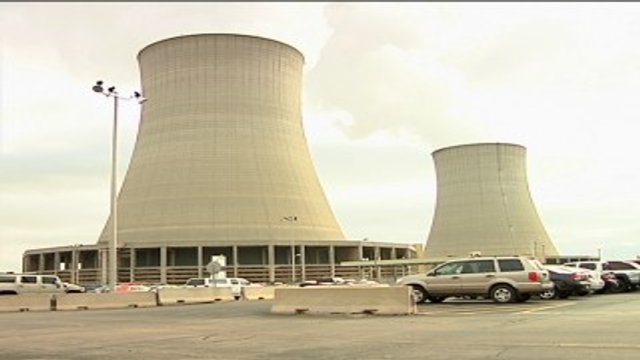
Gov. Bruce Rauner and Exelon have agreed to an eleventh-hour deal that paves the way for a ratepayer-financed bailout that will keep two at-risk nuclear plants open.

The two sides negotiated last night and this morning and produced a framework that the governor can support. In a release, Exelon said it had agreed to changes in the wide-ranging legislation that limit the rate hikes for the average Commonwealth Edison household customer to 25 cents per month and a 1.3 percent increase for businesses based on their 2015 rates.

A number of business groups, including the Illinois Manufacturers Association, remain opposed, and there are questions about how strong those "rate caps" are.

Sign up for the free Today's Crain's newsletter

In addition, money for new “microgrids” requested by Exelon-owned Commonwealth Edison will be struck from the bill, sources said. ComEd originally wanted $250 million in ratepayer money to build five independently functioning mini-power grids for sensitive installations throughout northern Illinois. In negotiations, that was pared to just one, for the Bronzeville neighborhood on Chicago's South Side. Now that is gone, too, sources say.

Exelon's Clinton nuclear power plant. The utility had set a deadline of early December to reach agreement on a bailout bill, or it would be forced to close the downstate facility.

Exelon's Clinton nuclear power plant. The utility had set a deadline of early December to reach agreement on a bailout bill, or it would be forced to close the downstate facility.

Money for new solar development in Illinois will be pared as well.

The measure still will greatly expand financing and goals for construction of new wind and solar projects in Illinois, as well as utility-run programs to reduce energy consumption. And ComEd for the first time will be allowed to earn a return on the money it spends on energy-efficiency programs.

Rauner also won concessions on behalf of the state's largest industrial power users, exempting them from rate hikes to finance the energy-efficiency expansion.

FINAL IMPEDIMENT

The governor's resistance to the bill was seen as the last impediment to a deal that would keep two of Exelon's six nuclear plants in the state from closing prematurely. Exelon had set a deadline of early December to reach agreement on a bailout bill or it would be forced to close its Clinton plant downstate.

The company has agreed to keep the plants open for at least a decade under the legislation.

"While there is still a lot of work to be done, we are pleased to have an understanding with the governor's office and continue to work with the four (legislative) leaders and their professional staffs, as well as other stakeholders and the bill's more than 200 other supporters, to move this bill forward," Exelon said in a statement. "With today's progress, we are all one step closer to saving thousands of jobs in Illinois."

The agreement now appears to clear the way for quick passage. But, with budget negotiations between Rauner and House Speaker Michael Madigan still at a stalemate, lawmakers will have to vote for what in the end will be an electricity rate hike for all Illinoisans when there isn't yet a budget, the state is billions behind on bills it owes and a future tax hike is likely.

A Rauner spokesman didn't respond immediately to a request to comment.

Above is from:  http://www.chicagobusiness.com/article/20161130/NEWS11/161139988/rauner-exelon-deal-clears-way-for-nuke-bailout

Tuesday, October 20, 2015

Half-Century Later, US Promises to Clean Up Spanish Nuke Accident - Yahoo News


The U.S. and Spain announced their intention today to work to once-and-for-all “remediate” a coastal region of Spain, just shy of 50 years after the U.S. Air Force accidentally dropped four nuclear bombs there – two of which partially exploded and radiated the countryside.

The “statement of intent,” signed by U.S. Secretary of State John Kerry while on a visit to Madrid, says the U.S. and Spain “intend to negotiate as soon as possible” a plan to finish the decades-old clean-up job that began with a tragic accident a half century ago.

In mid-January in 1966 an Air Force bomber carrying four nuclear weapons crashed into its refueling tanker over the provincial Spanish beach town of Palomares and broke up, killing seven U.S. airmen and sending the four nuclear bombs screaming towards the earth. The planes had been part of a secret mission called Operation Chrome Dome, designed to keep American nuclear weapons in the air virtually around the clock amid tensions with the Soviet Union during the Cold War.


One of the bombs landed in the Mediterranean without exploding, sparking a long, intense and unprecedented ocean recovery effort – a Soviet spy ship was reportedly poking around the area as well at the time. Three of the others crashed down on land – one harmlessly into a sand dune on the beach just outside Palomares, and two others in the hillsides closer to town. In each of those two cases, however, the primary charge in the weapons managed to detonate spreading radiation from the bombs over much of the countryside. Luckily, the actual nuclear warhead did not detonate in any of the bombs and no one on the ground was killed in the accident.

The incident prompted one of the most complex search, recovery and clean-up operations in the world, involving hundreds of U.S. soldiers, sailors and airmen as well as Spanish troops, local authorities and citizens. A report compiled by the U.S. military in 1975 describes the effort to find the bombs, to test the locals for any health issues related to the radiation and to compensate them for any losses caused by the accident – most prominently suffered by farmers as many of the local crops had to be removed, as well as a significant amount of contaminated soil.

In the months after the crash, truckloads of contaminated soil was dug up, packed into . But thousands of 55-gallon barrels and sent by U.S. Navy ships to a nuclear waste facility in South Carolina the clean-up work was never fully done and Spanish authorities have pushed the U.S. to finish the job ever since.

Today, Kerry and Spanish Foreign Minister Jose Manuel Garcia-Margallo signed a memorandum of understanding (MOU) regarding a new effort to finish the clean-up – one that still has to be negotiated. In broad strokes, the new plan would include sending more nuclear waste to the U.S. for storage and to further “remediate” the affected area.

Kerry said today that the new memorandum will “form a new path.”

“And we have to build on today’s signing to take further action to resolve, once and for all, this very important issue,” he said.

lee.h.ferran@abc.com

Half-Century Later, US Promises to Clean Up Spanish Nuke Accident - Yahoo News

Wednesday, October 14, 2015

Exelon Defers Retirements of 2 Illinois Nuclear Plants- Power Engineering


Exelon Defers Retirements of 2 Illinois Nuclear Plants

Sept. 10

Exelon Corp. (NYSE: EXC) said it plans to run the Quad Cities nuclear power plant through May 2018 and the Byron nuclear plant through May 2019.

The utility said all of its nuclear plants in the PJM market cleared the transition capacity auction for the 2017-18 planning year, and that it will defer any decisions about future operations of Quad Cities and Byron, which the companies considers economically challenged. The auction results take effect in June 2017. The decision to defer the retirements comes after analysis of the present and future economics of the plants, taking into consideration the constructive market trends from the PJM capacity auction reforms.

All of the nuclear plants have also cleared the transition capacity auction for the 2016-17 planning year, but Quad Cities, Oyster Creek and Three Mile Island nuclear plants did not clear the capacity auction for the 2018-19 planning year.

"The new market reforms help to recognize the unique value of always-on nuclear power, while preserving the reliability of our electric system," said Chris Crane, Exelon president and CEO. "However, these plants are long-lived assets with decades of useful life left, and today's decision is only a short-term reprieve. Policy reforms are still needed to level the playing field for all forms of clean energy and best position the state of Illinois to meet EPA's new carbon reduction rules."

Exelon said it plans to bid all of its eligible nuclear plants into the 2019-20 PJM capacity auction held next year. PJM holds a capacity auction each year to ensure enough power generating resources are available to meet demand in the region that covers 13 states and the District of Columbia.

The Nuclear Energy Institue (NEI) said in a release that, although the decision is temporary, it is a good step for the state.

"Although only a temporary reprieve, Exelon's decision is an enormous win for the state of Illinois. The Quad Cities and Byron nuclear stations employ almost 1,800 people directly, and are responsible for an additional 7,500 indirect jobs in the state," said Richard Myers, NEI's Vice President for Policy Development and Planning. "The two facilities produce $3.1 billion a year in total economic value for the state, according to an economic analysis conducted by NEI. In addition to this immense economic value, these nuclear energy facilities are essential if Illinois hopes to reduce its carbon emissions. Quad Cities and Byron produce 34.6 billion kilowatt-hours of carbon-free electricity every year-more than three times the state's entire production from renewable

NRC Issues White Finding for Entergy Nuclear Power Plant in Louisiana - Power Engineering

Friday, July 31, 2015

New power rules may preserve Exelon nuclear plants in Illinois | Reuters


New rules for U.S. electricity providers could save two money-losing nuclear power plants in Illinois from shutting down and may amount to a $10 billion bonanza to U.S. power producers.

A system of rewards and penalties is part of a requirement approved last month by federal energy regulators that applies to a power auction next month.

It may benefit some costly nuclear reactors in the PJM power region, which stretches from New Jersey to Illinois, that have had a tough time competing against the growing use of wind turbines and power plants fired with cheap natural gas.

That is particularly true for two plants operated by Exelon Corp, the biggest U.S. nuclear power plant operator. It has warned it might be forced to shut its Quad Cities and Byron nuclear plants in northern Illinois, unless the reactors' revenues increase.

Other generators expected to benefit from the new requirements, including those with nuclear plants located far away from the Midwest wind farms, include Dynegy Inc, NRG Energy Inc, Public Service Enterprise Group Inc and Talen Energy Corp.

Thanks to the growth of alternative power sources and abundant gas from shale formations, PJM power prices have fallen an average of 20 percent over the past five years to around $50 per megawatt hour compared with the prior five years.

The regulation should provide generators with more money for keeping their units ready to operate when most needed to avoid unexpected power plant outages like those that pushed the system to the brink of blackouts as homes and businesses cranked up their heaters during the polar vortex winter of 2013/2014.

The rule creates a niche for nuclear plants, which run consistently, unlike breeze-dependent wind turbines, and do not need potential upgrades to withstand harsh winter temperatures like gas plants.

Under so-called capacity performance requirements, generators will receive higher fees to keep plants available but face stiff penalties if their units don't deliver power when needed during system emergencies. Fines for an average 100-megawatt plant would be around $350,000 an hour.

One megawatt can power about 1,000 homes.

PJM will hold the auction starting August 10 for power capacity for the June 2018-to-May 2019 time period that will include the capacity performance standards.

Capacity performance prices for the 2018-2019 delivery year are expected to increase by about 25 percent over last year's rates to around $150 to $165 per megawatt day, according to analysts, which could total about $10 billion for the power resources sought in the auction.

If analysts' estimates are correct and all ten of Exelon's reactors in northern Illinois are selected to provide capacity in the auction, the company could receive around $600 million for those reactors during the 2018-2019 delivery year.

"We expect the vast majority of our nuclear units will clear the auction," Joseph Dominguez, Exelon's executive vice president for government and regulatory affairs told Reuters, meaning the company expects most of its reactors in PJM to receive capacity payments for the 2018-2019 delivery year.

He would not speculate on what might happen with Quad Cities and Byron in Illinois and Oyster Creek in New Jersey, which did not clear last year's auction for the 2017-2018 delivery year that did not include the capacity performance standards.

Exelon has already said it planned to retire Oyster Creek in the fourth quarter of 2019, but has not set a closure plan for the Illinois plants.

With the new capacity standards in place, some analysts said Byron and Quad Cities, which are located in Exelon's Commonwealth Edison (ComEd) power delivery zone in northern Illinois, will make the grade for continuing to operate.

"Byron and Quad Cities will clear the 2018-2019 auction because we think the ComEd zone will price at a higher level than the rest of PJM," said Prajit Ghosh, research director North America power, at Wood Mackenzie, an energy consultancy.

Exelon has lost close to $1 billion over the past five years on its nuclear operations - about $350 million at Quad Cities alone. It expects those losses to continue, based on forward power prices, Dominguez said.

Even if Byron and Quad Cities clear the auction, Dominguez said they still face the risk of shutdown unless federal, state and regional policy makers find ways to compensate generators for the environmental and reliability benefits that non-carbon emitting nuclear plants provide.

In the meantime, extra revenues from the capacity auction could keep the money losing reactors operating for a few more years until possible new carbon standards are available.

(Reporting by Scott DiSavino; Editing by Jessica Resnick-Ault and Alden Bentley)

New power rules may preserve Exelon nuclear plants in Illinois | Reuters

Saturday, July 25, 2015

Final environmental report filed for license renewals of Byron S - WREX.com – Rockford’s News Leader


BYRON (WREX) -

The Nuclear Regulatory Commission, or NRC has published its final report over the environmental impacts of renewing the operating licenses of the Byron Station nuclear power plant. The report states that the plant's impact on the environment isn't great enough to halt the renewal of the licenses.

Byron Station has two pressurized water reactors in Byron 17 miles southwest of Rockford. The NRC held public meetings in Byron to receive public comment on rules and renewal guidance.

The operator of the Byron Station, Exelon Generation Co. LLC, submitted a renewal application May 29, 2013. The application would extend the plant's licenses for 20 more years past their original expiration dates, Oct. 31, 2024, and Nov. 6, 2026.

The application included alternatives to the Byron Station, including a new plant, natural gas plants or a combination of wind, solar, and natural gas generators. Another option submitted was no renewal of the license.

If a hearing is granted, the renewal application will be evaluated by the commission. You can view the application by clicking here.

Final environmental report filed for license renewals of Byron S - WREX.com – Rockford’s News Leader

Friday, July 17, 2015

NRC Completes SER Process for Braidwood And Byron NPPs - Nuclear Power Industry News - Nuclear Power Industry News - Nuclear Street - Nuclear Power Plant News, Jobs, and Careers


There are no technical issues that stand in the way of 20-year license renewals for two Exelon Generation Company nuclear power plants in Illinois, the Byron and Braidwood plants that house two reactors each, the Nuclear Regulatory Commission said.

Byron NPPExelon submitted applications in May 2013 to have the NRC review all four reactors’ licenses for additional 20 year renewals. The NRC said it had issued its final safety evaluation report (SER) and found “no technical issues to preclude license renewal” of the four reactors.

Byron’s two pressurized-water reactors are located approximately 17 miles southwest of Rockford, Ill. Braidwood’s two pressurized-water reactors are located approximately 20 miles southwest of Joliet, Ill.

If approved, Byron Unit 1’s renewed license would expire Oct. 31, 2044, and Byron Unit 2’s renewed license would expire Nov. 6, 2046. If approved, Braidwood Unit 1’s renewed license would expire Oct. 17, 2046, and Braidwood Unit 2’s renewed license would expire Dec. 18, 2047, the NRC said.

Braidwood’s two Westinghouse-designed reactors in Braceville, Ill., began commercial operations in July and October of 1988. Unit 1 is capable of generating 1,194 net megawatts of electricity, while Unit 2 has a 1,166 net MW capacity, according to the company’s Web site. Combined, Braidwood’s reactors can provide electricity to more than 2 million average U.S. homes, Exelon says.

Byron’s Unit 1 and Unit 2 have an approximate capacity of 2,336 net megawatts of electricity. The facility in Byron, Ill., includes two massive towers close to 500 feet tall. These units began commercial operations in September 1985 and August 1987, respectively.

The application process to date has involved an NRC review of the license applications and site audits of Byron’s and Braidwood’s “aging-management programs to address the safety of plant operations during the period of extended operation,” the NRC said.

Exelon was judged to have identified actions to manage the structures and components of the plant to ensure ongoing plant production that meets NRC safety specifications.

The process proceeds along two tracks, the NRC explained. One track involves safety issues. The other involves environmental considerations.

The watchdog agency called issuing the final SER “a significant milestone in the license renewal review process.”

The SER(s) and applications for Byron and Braidwood have been forwarded to the Advisory Committee on Reactor Safeguards, an independent body of experts who plan to review the two license options in a September meeting and then make recommendations to the NRC.

NRC Completes SER Process for Braidwood And Byron NPPs - Nuclear Power Industry News - Nuclear Power Industry News - Nuclear Street - Nuclear Power Plant News, Jobs, and Careers

Sunday, May 31, 2015

Exelon to decide fate of Quad Cities nuclear power plant in September: CEO


Louisville, Kentucky (Platts)--29May2015/526 pm EDT/2126 GMT


Exelon CEO Christopher Crane said the nation's largest nuclear generator will decide in September whether to close its money-losing, 1,824-MW Quad Cities merchant nuclear plant in Illinois.

Time is running out for Exelon to craft an economic solution for three Illinois nuclear plants -- Byron and Clinton are the others, totaling about 5,000 MW of generation -- Crane said in comments webcast Thursday from the Sanford Bernstein Strategic Decisions Conference in New York.

The Chicago-based company had hoped the Illinois General Assembly would pass Exelon-backed legislation creating a low-carbon portfolio standard to provide the nuclear plants with an estimated $300 million/year in economic support before its 2015 regular session adjourns late next week.

That appears unlikely, although lawmakers still could consider the legislation during a two-week fall veto session in November.

Read more by clicking on the following:  http://www.platts.com/latest-news/electric-power/louisville-kentucky/exelon-to-decide-fate-of-quad-cities-nuclear-21526498

Wednesday, March 11, 2015

Unit 1 at Byron nuclear power plant returns to full power - WREX.com – Rockford’s News Leader


amoon@wrex.com

RELATED CONTENT

BYRON (WREX) -

Byron Generating Station Unit 1 returned to full power Tuesday evening following repairs to a main power transformer, according to Paul Dempsey from Nuclear Communications. 
The unit automatically shut down March 3 after a large chunk of ice was found underneath the unit's transformers, leading officials to believe an "ice intrusion" interrupted power. Byron Station Unit 2 continued to operate during Unit 1's shutdown. 
With both units at full power, the site produces enough electricity for 2.3 million homes, according to a news release.

Unit 1 at Byron nuclear power plant returns to full power - WREX.com – Rockford’s News Leader

Wednesday, March 4, 2015

Byron Reactor Shuts Down Due to Ice - MyStateline.com - Powered by WTVO-TV and WQRF-TV


Byron Generating Station Unit 1 automatically shut down at 11am Tuesday after an 'ice intrusion' interrupted power on one of the unit’s transformers.  A plant spokesperson said the unit is designed to shut down in such situations, and the equipment acted properly.
Repairs will be done to the unit, although it is not clear how long that will take.
Unit 2 continues to operate at full power.

Byron Reactor Shuts Down Due to Ice - MyStateline.com - Powered by WTVO-TV and WQRF-TV

Wednesday, October 15, 2014

Lockheed says makes breakthrough on fusion energy project - Yahoo Finance


breakthrough in developing a power source based on nuclear fusion, and the first reactors, small enough to fit on the back of a truck, could be ready for use in a decade.

Tom McGuire, who heads the project, said he and a small team had been working on fusion energy at Lockheed's secretive Skunk Works for about four years, but were now going public to find potential partners in industry and government for their work.

Initial work demonstrated the feasibility of building a 100-megawatt reactor measuring seven feet by 10 feet, which could fit on the back of a large truck, and is about 10 times smaller than current reactors, McGuire told reporters.

In a statement, the company, the Pentagon's largest supplier, said it would build and test a compact fusion reactor in less than a year, and build a prototype in five years.

In recent years, Lockheed has gotten increasingly involved in a variety of alternate energy projects, including several ocean energy projects, as it looks to offset a decline in U.S. and European military spending.

View gallery

Chief Executive Officer of Lockheed Martin Corp Hewson …

Chief Executive Officer of Lockheed Martin Corp Marillyn Hewson speaks to journalists at a news conf …

Lockheed's work on fusion energy could help in developing new power sources amid increasing global conflicts over energy, and as projections show there will be a 40 percent to 50 percent increase in energy use over the next generation, McGuire said

Read more:  Lockheed says makes breakthrough on fusion energy project - Yahoo Finance

Thursday, October 2, 2014

Byron Nuclear Plant closing in 2016?

image

New Report Details Economic Impact of Closing the Byron Exelon Plant

Lauren Langer

A new Nuclear Energy Institute report raises the possibility that it could soon be closed.  The report details the significant economic stress, including low natural gas prices, declining regional demand for electricity, and regulations which hurt nuclear power, which could leave ComEd no choice but to shut down Byron.
Lynn Burrows is a Byron resident and he said of the idea, “Oh, the consequences would be catastrophic [for Byron].”
The report agrees, saying that a possible retirement of this plant in 2016, along with two others in Illinois, could cost the state economy $4 billion dollars and cost 13,000 jobs.

Read the rest of the story by clicking on the following:  http://www.mystateline.com/fulltext-news/d/story/new-report-details-economic-impact-of-closing-the/25671/otSVT5ZaAUeXDYzw9EPj2g

Wednesday, October 1, 2014

Exelon's Byron nuclear generating station Unit 2 goes offline for refueling

Byron Station’s Unit 2 reactor is offline after 516 consecutive days of providing around-the-clock, carbon-free power.

The reliable generation from the unit kept air conditioners humming over the summer and helped keep houses warm during the worst of the polar vortex last winter.

Operators at Byron Generating Station took Unit 2 offline this morning for scheduled refueling and maintenance activities after an 18-month non-stop run of providing power to Northern Illinois and beyond.

The precision work completed over the coming weeks will help ensure another long uninterrupted run for Unit 2.

More than 1,500 additional workers will join the 850 permanent Byron Station employees, providing a temporary boost to the local economy. Most local motels, restaurants and shops from Rockford to Rochelle see an increase in customers during Byron Station refueling outages.

"The nuclear plant's two refueling outages this year are a boon to many of our businesses in the area," said Deanna Mershon, executive director of the Byron Area Chamber of Commerce. "We are glad for the work that takes place - not only because of increased foot traffic at local businesses, but also because of the continued reliability in regards to power generation for the area."

Workers at Byron Station will perform more than 10,000 inspections and maintenance activities and do other work that cannot be done while the unit is operating. This includes replacing about one-third of the unit's fuel. All of the activities are designed to assure the unit's consistent operation when online.

Read more by clicking on the following:  http://nuclear.energy-business-review.com/news/exelons-byron-nuclear-generating-station-unit-2-goes-offline-for-refueling-011014-4390977

Wednesday, March 5, 2014

Report: Exelon Warns Ill. Legislators of Possible Nuclear Plant Closures at Byron, Quad Cities and Clinton -


Citing off-the-record interviews and documents circulating in the state legislature, Crain's Chicago Business reported Monday that the Byron, Quad Cities and Clinton plants are at risk of closure. In addition to an abundance of natural gas holding down wholesale power prices, periods of excess wind generation can drastically cut spot prices and force reactors in the region to operate at a loss. Similar market conditions caused Dominion to close its Kewaunee plant in Wisconsin last year.

Click on the following to read the article:  Report: Exelon Warns Ill. Legislators of Possible Nuclear Plant Closures at Byron, Quad Cities and Clinton - Nuclear Power Industry News - Nuclear Power Industry News - Nuclear Street - Nuclear Power Plant Portal

Tuesday, February 11, 2014

NRC approves uprates for Braidwood, Byron nuclear power plants - Pennenergy

February 10, 2014

By PennEnergy Editorial Staff

Source: U.S. Nuclear Regulatory Commission

The Nuclear Regulatory Commission (NRC) has approved a request by Exelon Generation Company, LLC (NYSE: EXC) to increase the generating capacity of the Braidwood and Byron nuclear power stations by 1.63 percent for each reactor.

The NRC staff determined that Exelon could safely increase the reactors’ output primarily through more accurate means of measuring feedwater flow. NRC staff also reviewed the company’s evaluations showing the plant’s design can accommodate the increased power level.

Read more by clicking on the following:  NRC approves uprates for Braidwood, Byron nuclear power plants - Pennenergy

Friday, February 7, 2014

Surprise! As many as 50 nuclear bombs have gone missing — some in populated areas | Applesauce

by Pat Cunningham

Between the late 1950s and mid-1960s, the most explosive part of the Cold War, US bombers carrying atom bombs were in the air around the clock, 365 days a year. Their four main routes passed over Greenland, Spain and the Mediterranean, Japan and Alaska. Only when the bombers became capable of flying across the Atlantic or Pacific on one tank did the frequency of accidents diminish.

(Snip)

The US military’s rather nonchalant handling of its most dangerous toys was not limited to foreign countries. In fact, seven of the 11 nuclear warheads that are officially missing were lost at home in the USA. On Feb. 5, 1958, bomber pilot Howard Richardson had to jettison the hydrogen bomb he was carrying after colliding with a fighter jet. The bomb then disappeared in the shallow waters of Wassaw Sound, about 20 kilometers (12 miles) from Savannah, Georgia, a city of 100,000 people. Richardson, an experienced pilot, barely managed to land his aircraft at nearby Hunter Army Airfield.

The crew of a B-52 that exploded on Jan. 24, 1961 as a result of a defective fuel line was less fortunate. Before the aircraft broke apart, the men managed to eject their dangerous cargo. One of the two hydrogen bombs was parachuted safely into a tree, while the other one went down in a swamp near the small city of Goldsboro, North Carolina, where it plunged an estimated 50 meters (165 feet) into the marshy ground — and where it still lies today. The crash site remains a restricted military zone.

Read more by clicking on the following:  Surprise! As many as 50 nuclear bombs have gone missing — some in populated areas | Applesauce

Saturday, October 26, 2013

Illinois’ Distinction As State With Most Nuclear Waste Worries Activist « CBS Chicago


CBS) — The state of Illinois now appears to be the nation’s biggest producer of dangerous radioactive waste.

CBS 2’s Mike Parker reports.

There are 70,000 metric tons of potentially deadly nuclear waste stored at both active and inactive nuclear plants in the U.S.

Bloomberg.com reports that Illinois, with its 14 nuclear plant sites, is the country’s biggest atomic dump site.

There are roughly 9,000 tons of “high level, long lived, dangerous spent fuel” in Illinois, according to David Kraft of the Nuclear Energy Information Service, an anti-nuclear group.

That is more nuclear waste than any other state.

Kraft says he is worried about “natural catastrophes like we saw in Japan at Fukushima, terrorists, accidental airliners hitting buildings, or whatever.”

Although the federal government seems to recognize the dangers, critics say Washington can’t seem to decide how and where to move the waste for safe keeping. So it continues to sit in casks and cooling pools at the plants.

Says Kraft: “There’s absolutely nothing inherently safe about a thousand Hiroshimas in a box.”

The above is taken from:  Illinois’ Distinction As State With Most Nuclear Waste Worries Activist « CBS Chicago

Saturday, August 17, 2013

Report: All 107 US Nuclear Reactors Vulnerable To Terrorists | digtriad.com

new report (PDF) from the Nuclear Proliferation Prevention Project at the University of Texas at Austin.

all 107 commercial nuclear power reactors were thought to be vulnerable, the report spotlighted 11 that were most at risk. That included eight reactors that were deemed unprotected from attacks from the sea: Diablo Canyon in California, St. Lucie in Florida, Brunswick in North Carolina, Surry in Virginia, Indian Point in New York, Millstone in Connecticut, Pilgrim in Massachusetts, and the South Texas Project.

Three civilian reactors fueled with bomb-grade uranium were also deemed particularly vulnerable. They are housed at the University of Missouri in Columbia, the Massachusetts Institute of Technology in Cambridge, and the National Institute of Standards and Technology - which is within 25 miles of the White House. Unlike military facilities that hold bomb-grade uranium, the report found, these facilities are not sufficiently defended against a credible terrorist threat.

Click on the following for more of the story:: Report: All 107 US Nuclear Reactors Vulnerable To Terrorists | digtriad.com

This is the apparent PDF file which the article is speaking:  http://blogs.utexas.edu/nppp/files/2013/08/NPPP-working-paper-1-2013-Aug-15.pdf

Monday, August 12, 2013

NRC to discuss Byron power plant Wednesday - Rockford, IL - Rockford Register Star


BYRON — The Nuclear Regulatory Commission will hold a public meeting from 6 to 7 p.m. Wednesday at the Byron Station Training Building, 4450 N. German Church Road.

The agency will discuss the annual assessment of the safety performance for the Byron nuclear power plant. Attendees can talk with NRC staff members following the meeting.

For information: nrc.gov.

NRC to discuss Byron power plant Wednesday - Rockford, IL - Rockford Register Star

image

Wednesday, March 13, 2013

Byron power plant official defends response during power outage

Local media picks up on the Japanese news coverage of the Byron incident.


When the shift managers and operators have discussion of what to do next, and they decided to go to the diesel generator to get the power back in," said Dempsey.

It's those eight minutes that an article in the Japan Times points to as a critical failure and could have resulted in severe consequences.

"That day we did have a steam release," said Dempsey.

Click on the following to view the TV news click:  Byron power plant official defends response during power outage

Sunday, March 10, 2013

Echoes of Fukushima as toxic management erodes safety at Exelon's Byron, 'world's safest' nuclear plant | The Japan Times

Japanese talk of poor operating conditions at Byron Nuclear Power plant

image

image


For eight minutes, you’ve raised your middle finger to the meltdown gods,” one reactor operator said, speaking on condition of anonymity. “If anything else happened in that window — and it’s a safe bet one problem causes another — you’re screwed.”

Without any operable safety equipment or a clear idea of what had caused the accident, operators knew the plant was vulnerable to any number of accident scenarios, ranging from the trivial to the catastrophic.

In the aftermath of the incident, the technical details didn’t bother the plant’s reactor operators — it had been an oddball event. The human element, however, was troubling.

Click on the following for the entire story:  Echoes of Fukushima as toxic management erodes safety at Exelon's Byron, 'world's safest' nuclear plant | The Japan Times