Showing posts with label Japan. Show all posts

Monday, April 29, 2013

Japan and Russia want to finally end World War II, agree it is 'abnormal' not to - CSMonitor.com


Still, since the nuclear disaster at Fukushima, Japan's reliance on Russian energy supplies, particularly liquified natural gas, has grown significantly.

As Russia's geopolitical focus pivots eastward, Moscow is also eager for outside investment and expertise to develop its vast, resource-rich but largely unpopulated Siberian and far eastern regions. Japan is a logical go-to place for the capital and technology that Russia needs.

Japan might also be keen to distract Russia from its burgeoning partnership with China, with which Tokyo has increasingly tense relations, and introduce a bit more balance in fast-changing Asia Pacific.

Click on the following to read what agreements have been made:  Japan and Russia want to finally end World War II, agree it is 'abnormal' not to - CSMonitor.com

Wednesday, April 27, 2011

Renesas in Japan Scrambles to Make a Critical Car Chip - NYTimes.com

70 miles northeast of Tokyo, belongs to Renesas Electronics, which supplies about 40 percent of the world market for those crucial chips, known as automobile microcontrollers.

automobile industry has evolved in the digital era, microcontrollers are usually customized for each car model.

Renesas is that it is the product of mergers involving three Japanese semiconductor companies. Hitachi and Mitsubishi Electric merged their semiconductor operations in 2003 to form Renesas Technology. Then, last April, Renesas Technology merged with NEC Electronics, the former semiconductor division of NEC, to form the current company, Renesas Electronics.

Renesas’s main competitors include Freescale Semiconductor and STMicroelectronics.

microcontrollers are different in small but important ways,” said Tom Starnes, an analyst at Objective Analysis, a technology research firm. “That makes it very difficult to switch to alternate suppliers, at least not quickly.” Switching could take six months or more, analysts say. …highly customized software that provides instructions for the various chips. From automaker to automaker, “there’s no software compatibility

the long term, automakers will probably spread their bets more to other major suppliers,” said Egil Juliussen, an auto electronics analyst at IHS iSuppli, a research firm. “And there will be more reason to push the industry standardization efforts

Renesas in Japan Scrambles to Make a Critical Car Chip - NYTimes.com

Monday, April 18, 2011

Japan: TOPCO’s outline for bring nuclear reactors under control

TOKYO ELECTRIC POWER COMPANY

TOPCO has provided an outline of the actions and procedures it hopes to use to put the Fukushima reactors back to safety.

Press Release (Apr 17,2011)
Roadmap towards Restoration from the Accident at Fukushima Daiichi Nuclear Power Station

With regard to the accident at Fukushima Daiichi Nuclear Power Station due to the Tohoku-Chihou-Taiheiyo-Oki Earthquake occurred on Friday, March 11th, 2011, we are currently making our utmost effort to bring the situation under control. This announcement is to notify the roadmap that we have put together towards restoration from the accident.

1. Basic Policy By bringing the reactors and spent fuel pools to a stable cooling condition and mitigating the release of radioactive materials, we will make every effort to enable evacuees to return to their homes and for all citizens to be able to secure a sound life.

2. Targets Based on the basic policy, the following two steps are set as targets: "Radiation dose is in steady decline" as "Step 1" and "Release of radioactive materials is under control and radiation dose is being significantly held down" as "Step 2." Target achievement dates are tentatively set as follows: "Step 1" is set at around 3 months and "Step 2" is set at around 3 to 6 months after achieving Step 1.

3. Immediate Actions Immediate actions were divided into three groups, namely, "I. Cooling", "II. Mitigation", "III. Monitoring and Decontamination." For the following five issues—"Cooling the Reactors," "Cooling the Spent Fuel Pools," "Containment, Storage, Processing, and Reuse of Water Contaminated by Radioactive Materials (Accumulated Water)," "Mitigation of Release of Radioactive Materials to Atmosphere and from Soil," and "Measurement, Reduction and Announcement of Radiation Dose in Evacuation Order/Planned Evacuation/ Emergency Evacuation Preparation Areas"—targets are set for each of the five issues and various countermeasures will be implemented simultaneously. Please see the attachment for detailed actions.

We would like to deeply apologize again for the grave inconvenience and anxiety that the broad public has been suffering due to the accident at the Fukushima Daiichi Nuclear Power Station. We will continue to make every endeavor to bring the situation under control.

A more detailed is available at:  http://www.tepco.co.jp/en/press/corp-com/release/betu11_e/images/110417e12.pdf

Monday, April 11, 2011

Japan Plans Wider Evacuation Around Fukushima Nuclear Plant - NYTimes.com


According to the International Nuclear Event Scale, a level 7 nuclear accident involves “widespread health and environmental effects” and the “external release of a significant fraction of the reactor core inventory.”

The level 7 assessment has been applied only to the disaster at Chernobyl in the former Soviet Union

10,000 terabecquerels of radiation per hour was released from the plant into the environment for several hours in the aftermath of the March 11 earthquake and tsunami.

The scale of the radiation leak has since dropped to under 1 terabecquerel per hour,

Japan Plans Wider Evacuation Around Fukushima Nuclear Plant - NYTimes.com

Sunday, April 10, 2011

McDonald’s Wage For Nuclear Job Shows Japan Towns May Fade - Bloomberg


Fukushima Dai-Ichi plant offered $11 an hour for full-time maintenance work in an area of Japan that was lagging even before last month’s earthquake and tsunami struck.

The wage, the same as McDonald’s Corp. (MCD) pays for part-time work in Tokyo, shows the scale of the northern Tohoku region’s economic blight and indicates towns may never recover from the disaster. Almost 28,000 people are dead or missing and 160,000 are homeless in Tohoku, where 25 percent of the population is 65 or older and job seekers outnumber jobs by two-to-one.

McDonald’s Wage For Nuclear Job Shows Japan Towns May Fade - Bloomberg

Wednesday, April 6, 2011

Universities come through in monitoring for radiation | Seattle Times Newspaper

Click on photocopy to enlarge:

Federal and state officials have doled out only snippets of monitoring data in the weeks since the earthquake and tsunami on March 11. The most complete picture of the types and amounts of isotopes wafting across the ocean has come from a surprising source: university scientists.

A team at the University of Washington rigged up a detection system as soon as it became clear the Japanese reactors were damaged. Unlike some agencies, they have shared their full results with the public — including the newest measurements that show levels are now a tenth of what they were on March 20, when concentrations of radioactive material peaked in Seattle.

Click on the following for more details: Local News | Universities come through in monitoring for radiation | Seattle Times Newspaper

Friday, March 25, 2011

Japan Raises Possibility of Breach in Reactor Vessel - NYTimes.com


development, described at a news conference by Hidehiko Nishiyama, deputy director-general of the Japan Nuclear and Industrial Safety Agency, raises the possibility that radiation from the mixed oxides or mox fuel in the reactor — a combination of uranium and plutonium — could be released.

the injured workers, many of those risking their lives are subcontractors of Tokyo Electric, paid a small daily wage for hours of work in dangerous conditions. In some cases they are poorly equipped and trained for their task….ridiculous” that the workers had not been wearing full protective gear.

No. 3 the mox fuel. The nuclear industry has no experience with mox leaks, and it is possible that unusual patterns in the dispersal of radioactivity from the plant partly result from the mox, he said.

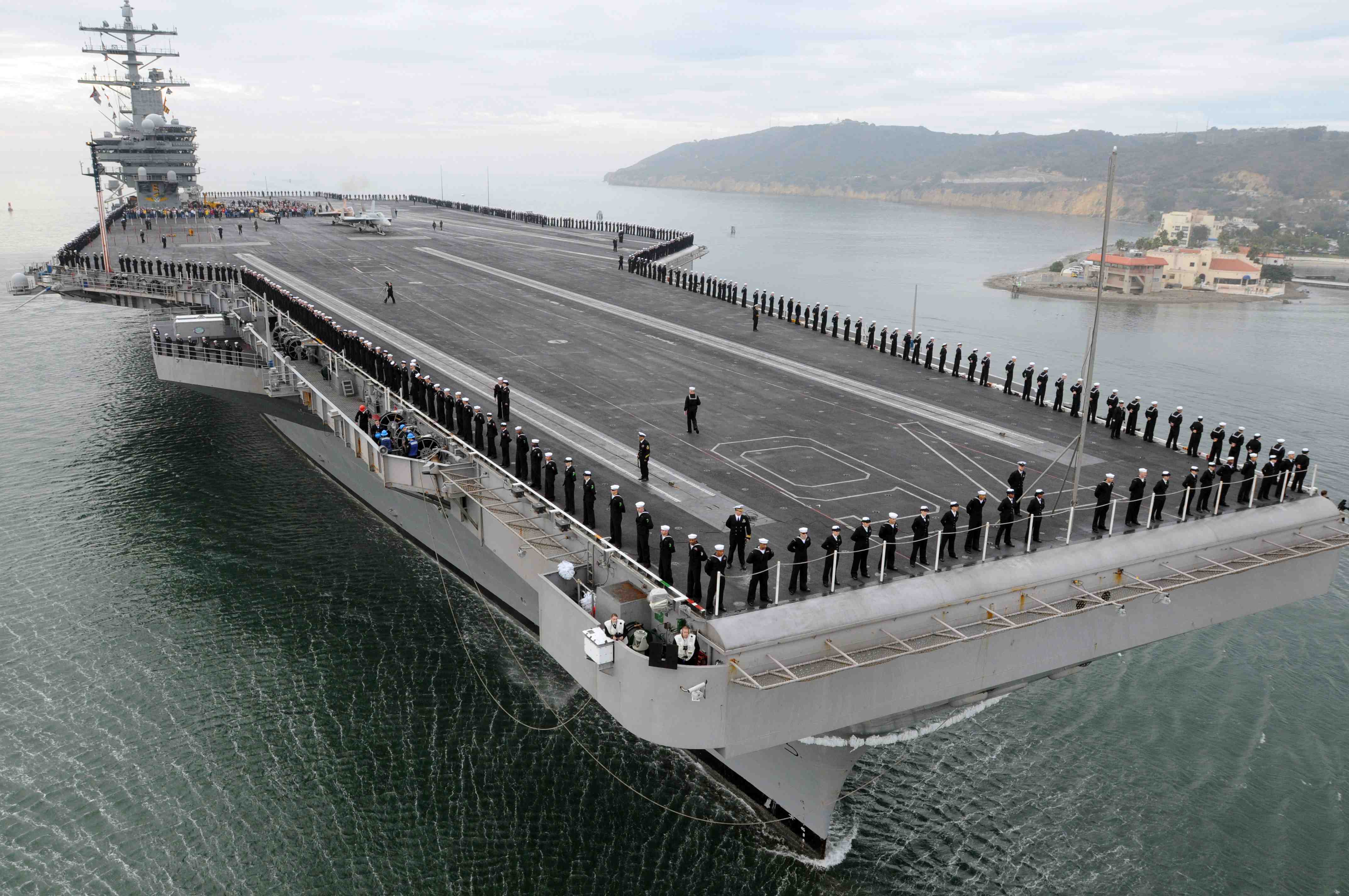
reason the United States Navy had moved nuclear-powered vessels like the Ronald Reagan …

worry is not that the radiation would pose a threat to the vessels’ crews but that even trace contamination of the ducts could create problems for years in the extremely sensitive equipment that is designed to detect any hint of a radioactive leak from onboard systems

Click on e following for more details: Japan Raises Possibility of Breach in Reactor Vessel - NYTimes.com

Wednesday, March 16, 2011

U.S. Calls Radiation ‘Extremely High’ and Urges Deeper Caution in Japan - NYTimes.com

The chairman of the United States Nuclear Regulatory Commission gave a significantly bleaker appraisal of threat posed by the Japanese nuclear crisis than the Japanese government, saying on Wednesday that the damage at one crippled reactor was much more serious than Japanese officials had acknowledged and advising to Americans to evacuate a wider area around the plant than ordered by the Japanese government.

Pentagon said Wednesday that American military forces in Japan were not allowed within 50 miles of the plant and that some flight crews who might take part in relief missions were being given potassium iodide to protect against the effects of radiation

Emperor Akihito made his first ever televised appearance on Wednesday to tell the nation he was “deeply worried” about the nuclear crisis.

U.S. Calls Radiation ‘Extremely High’ and Urges Deeper Caution in Japan - NYTimes.com

New power line almost ready at Japan nuke plant | Seattle Times Newspaper


A nearly completed new power line could restore cooling systems in Japan's tsunami-crippled nuclear power plant, its operator said Thursday, raising some hope of easing the crisis that has threatened a meltdown and already spawned dangerous radiation surges.

Tokyo Electric Power Co. spokesman Naoki Tsunoda said the new power line to the Fukushima Dai-ichi plant is almost finished and that officials plan to try it "as soon as possible," but he could not say exactly when.

The new line would revive electric-powered pumps, allowing the company to maintain a steady water supply to troubled reactors and spent fuel storage ponds, keeping them cool. The company is also trying to repair its existing disabled power line.

Nation & World | New power line almost ready at Japan nuke plant | Seattle Times Newspaper

Monday, March 14, 2011

Japanese Fuel-Cooling Pools Poses Nuclear Threat - NYTimes.com

This is the real radiation problem.


pools, which sit on the top level of the reactor buildings and keep spent fuel submerged in water, have lost their cooling systems and the Japanese have been unable to take emergency steps because of the multiplying crises.

The threat is that the hot fuel will boil away the cooling water and catch fire, spreading radioactive materials far and wide in dangerous clouds.

The good news is that the Japanese have a relatively long time to deal with the problem.

\

bad news is that if efforts to deal with the emergency fail, the results could be worse.

Japanese Fuel-Cooling Pools Poses Nuclear Threat - NYTimes.com

Japan Faces Prospect of Nuclear Catastrophe as Workers Leave Plant - NYTimes.com


TOKYO — Japan faced the likelihood of a catastrophic nuclear accident Tuesday morning, as an explosion at the most crippled of three reactors at the Fukushima Daiichi Nuclear Power Station damaged its crucial steel containment structure, emergency workers were withdrawn from the plant, and much larger emissions of radioactive materials appeared immiment, according to official statements and industry executives informed about the developments.

Japanese Prime Minsiter Naoto Kan made a televised address to the nation at 11 a.m. Tokyo time to discuss the latest developments in the crisis.

The sharp deterioration came after government officials said the containment structure of the No. 2 reactor, the most seriously damaged of three reactors at the Daichi plant, had suffered damage during an explosion shortly after 6 a.m. on Tuesday.

They initially suggested that the damage was limited and that emergency operations aimed at cooling the nuclear fuel at three stricken reactors with seawater would continue. But industry executives said that in fact the situation had spiraled out of control and that all plant workers needed to leave the plant to avoid excessive exposure to radioactive leaks.

No. 4 is currently burning and we assume radiation is being released. We are trying to put out the fire and cool down the reactor,” the chief government spokesman, Yukio Edano, told a televised press conference. “There were no fuel rods in the reactor, but spent fuel rods are inside.”

It’s way past Three Mile Island already,” said Frank von Hippel, a physicist and professor at Princeton. “The biggest risk now is that the core really melts down and you have a steam explosion.”

Click on the following:  Japan Faces Prospect of Nuclear Catastrophe as Workers Leave Plant - NYTimes.com

3rd Blast Strikes Japan Nuclear Plant as Workers Struggle to Cool Reactor - NYTimes.com


was not immediately clear if the blast was caused by the buildup of hydrogen, as occurred at the two other reactors at Daiichi

new blast came after emergency operations to pump seawater into the same reactor temporarily failed, leaving the nuclear fuel in that reactor dangerously exposed late Monday into early Tuesday morning.

Click on the following for the complete story:  3rd Blast Strikes Japan Nuclear Plant as Workers Struggle to Cool Reactor - NYTimes.com

William Tucker: Japan Does Not Face Another Chernobyl - WSJ.com


What the Japanese earthquake has proved is that even the oldest containment structures can withstand the impact of one of the largest earthquakes in recorded history. The problem has been with the electrical pumps required to operate the cooling system. It would be tragic if the result of the Japanese accident were to prevent development of Generation III reactors, which eliminate this design flaw.

Click on the following to read the complete editorial:  William Tucker: Japan Does Not Face Another Chernobyl - WSJ.com

Sunday, March 13, 2011

Tokyo Electric Power Company: Nuclear plants


[edit] NuclearThis article needs references that appear in reliable third-party publications. Primary sources or sources affiliated with the subject are generally not sufficient for a Wikipedia article. Please add more appropriate citations from reliable sources. (March 2011)

Power plants

Name

JNUKE

JNUKE


Location
Number of units
Generation Capacity (MW)

Fukushima I Nuclear Power Plant
22 Kitahara, Mezawa, Okuma Town, Futaba County, Fukushima
6 (operational) +2 (planned)
4,696 (operational) +2,700 (planned)

Fukushima II Nuclear Power Plant
12 Obamatsukuri, Namikura, Narawa Town, Futaba County, Fukushima
4 (operational)
4,400 (operational)

Kashiwazaki-Kariwa Nuclear Power Plant
16-46 Aoyama-Cho, Kashiwazaki City, Niigata
2 (operational) 5 (closed)
2,712 (operational) 5,500 (closed)

In March 2008, Tokyo Electric announced that the start of operation of four new nuclear power reactors would be postponed by one year due to the incorporation of new earthquake resistance assessments. Units 7 and 8 of the Fukushima Daiichi plant would now enter commercial operation on October 2014 and October 2015, respectively. Unit 1 of the Higashidori plant is now scheduled to begin operating in December 2015, while unit 2 will start up in 2018 at the earliest.[5]

 Thermal

Name↓
Location↓
Units↓
Capacity (MW)↓

Chiba

Goi

Anegasaki Power Station
35°29′06″N 140°01′00″E / 35.485°N 140.0166667°E / 35.485; 140.0166667 (Anegasaki Power Station)
6 × 600MW
3,600

Sodegaura Power Station
3,600

Futtsu Power Station
25 Shintomi, Futtsu City, Chiba
4 (operational)
5,000

Kashima Power Station
4,400

Hirono Power Station
3,800

Hitachinaka

Oi Thermal Power Station
1-2-2 Yashio, Shinagawa, Tokyo
1 (operational)
1,050

Shinagawa
5-6-22 Higashi-Shinagawa, Shinagawa, Tokyo
1 (operational)
1,140 (operational)

Yokosuka
9-2-1 Kurihama, Yokosuka City, Kanagawa
3 (operational) +4 (standby)
730 (operational) +1,400 (standby)

Kawasaki
5-1 Chidori-Cho, Kawasaki, Kawasaki City, Kanagawa
1 (under construction)
3,000 (under construction)

Yokohama
11-1 Daikoku-Cho, Tsurumi, Yokohama City, Kanagawa
4 (operational)
3,325 (operational)

Minami Yokohama
37-1 Shin-Isogo Cho, Isogo, Yokohama City, Kanagawa
3 (operational)
1,150 (operational)

Higashi Ogishima
3 Higashi-Ogishima, Kawasaki, Kawasaki City, Kanagawa
2 (operational)
2,000 (operational)

Tokyo Electric Power Company - Wikipedia, the free encyclopedia

The lack of information concerning the troubled nuclear reactors may be the nature of TEPCO—see this old scandal concerning reporting safety incidents.

Scandal

On August 29, 2002, the government of Japan revealed that TEPCO was guilty of false reporting in routine governmental inspection of its nuclear plants and systematic concealment of plant safety incidents. All seventeen of its boiling-water reactors were shut down for inspection as a result. TEPCO's chairman Hiroshi Araki, President Nobuya Minami, Vice-President Toshiaki Enomoto, as well as the advisers Shō Nasu and Gaishi Hiraiwa stept by September 30, 2002.[3], and the utility "eventually admitted to two hundred occasions over more than two decades between 1977 and 2002, involving the submission of false technical data to authorities".[4] Upon taking over leadership responsibilities, TEPCO's new president issued a public commitment that the company would take all the countermeasures necessary to prevent fraud and restore the nation's confidence. By the end of 2005, generation at suspended plants had been restarted, with government approval.

In 2007, however, the company announced to the public that an internal investigation had revealed a large number of unreported incidents. These included an unexpected unit criticality in 1978 and additional systematic false reporting, which hadn't been uncovered during the 2002 inquiry. Along with scandals at other Japanese electric companies, this failure to ensure corporate compliance resulted in strong public criticism of Japan's electric power industry and the nation's nuclear energy policy. Again the company made no effort to identify those responsible.

Click on the following to read the rest of  the Wikipedia citation:  Tokyo Electric Power Company - Wikipedia, the free encyclopedia

Danger Posed by Radioactivity in Japan Hard to Assess - NYTimes.com


danger of nitrogen-16 is an issue only for plant workers and operators because its half-life is only seven seconds. A half-life is the time it takes half the atoms of a radioactive substance to disintegrate.

The other radioactive material often in the cooling water of a nuclear reactor is tritium. It is a naturally occurring radioactive form of hydrogen, sometimes known as heavy hydrogen….. Tritium emits a weak form of radiation that does not travel very far in the air and cannot penetrate the skin.

It accumulates in the cooling water of nuclear reactors and is often vented in small amounts to the environment. Its half-life is 12 years

big worries on the reported releases of radioactive material in Japan center on radioactive iodine and cesium. ….They imply some kind of core problem….Iodine-131 has a half-life of eight days and is quite dangerous to human health. If absorbed through contaminated food, especially milk and milk products, it will accumulate in the thyroid and cause cancer.

Cesium-137 mixes easily with water and is chemically similar to potassium. It thus mimics how potassium gets metabolized in the body and can enter through many foods, including milk. After entering, cesium gets widely distributed, its concentrations said to be higher in muscle tissues and lower in bones.

The radiation from cesium-137 can throw cellular machinery out of order, including the chromosomes, leading to an increased risk of cancer.

Click on the following for more details:  Danger Posed by Radioactivity in .

Japan Hard to Assess - NYTimes.com

U.S. Carrier Crew Said to Be Exposed to Radiation From Japan - NYTimes.com

Pentagon was expected to announce that the aircraft carrier Ronald Reagan, which is sailing in the Pacific, passed through a radioactive cloud from stricken nuclear reactors in Japan, causing crew members on deck to receive a month’s worth of radiation in about an hour, government officials said Sunday.

helicopters flying missions about 60 miles north of the damaged reactors became coated with particulate radiation that had to be washed off.

There was no indication that any of the military personnel had experienced ill effects from the exposure.

Click on the following for more details;  U.S. Carrier Crew Said to Be Exposed to Radiation From Japan - NYTimes.com

U.S. Carrier Crew Said to Be Exposed to Radiation From Japan - NYTimes.com


At this point, we have not picked up anything” in detectors midway between Japan and Hawaii, Ms. Thunborg said in an interview on Sunday. “We’re talking a couple of days — nothing before Tuesday — in terms of picking something up.”

While federal officials expected little danger in the United States from Japanese plumes, they were taking no chances. On Sunday, Energy Department officials, speaking on the condition of anonymity, said the agency was working on three fronts.

One main player is the Lawrence Livermore National Laboratory in California. Officials said they had activated its National Atmospheric Release Advisory Center, which draws on meteorologists, nuclear scientists and computer scientists to forecast plume dispersal.

Separately, energy officials said the agency was readying plans to deploy two-person monitoring and sampling teams, if necessary. The teams would travel to consulates, military installations and Navy ships to sample the air in a coordinated effort to improve plume tracking.

Finally, the department was preparing what it calls its Aerial Measuring System.

U.S. Carrier Crew Said to Be Exposed to Radiation From Japan - NYTimes.com

Radioactive Releases at Fukushima Could Last Months - NYTimes.com

Possibly the first “real” report.

still being analyzed, but presumed to include Cesium-137 and Iodine-121 — suggesting widening environmental contamination

reactor operators now have little choice but to periodically release radioactive steam until the radioactive elements in the fuel of the stricken reactors stop generating intense heat, a process that can continue for a year or more even after the fission process has stopped. To control that heat, the plant’s operator must constantly try to flood the reactors with seawater, then release the resulting radioactive steam into the atmosphere, several experts familiar with the design of the Daiichi facility said. That suggests that the 200,000 people who have been evacuated may not be able to return to their homes for a considerable period and that shifts in the wind could blow radioactive materials toward Japanese cities rather than out to sea.

Re-establishing normal cooling will require electric power and may require workers to function in areas that are now contaminated,

And workers attempting the pumping operation are presumed to be exposed to radiation; several workers, according to Japanese reports, have been treated for radiation poisoning. It is not clear how severe their exposure was.

Radioactive Releases at Fukushima Could Last Months - NYTimes.com

ABC News - Japan Earthquake: before and after

Sun Mar 13, 2011 3:00pm AEDT

Aerial photos taken over Japan have revealed the scale of devastation across dozens of suburbs and tens of thousands of homes and businesses.

Hover over each satellite photo to view the devastation caused by the earthquake and tsunami.

Development: Andrew Kesper

Click on the following to see these revealing photographs:  ABC News - Japan Earthquake: before and after