Intended as a discussion group, the blog has evolved to be more of a reading list of current issues affecting our county, its government and people. All reasonable comments and submissions welcomed. Email us at: bill.pysson@gmail.com
REMEMBER: To view our sister blog for education issues: www.district100watchdog.blogspot.com
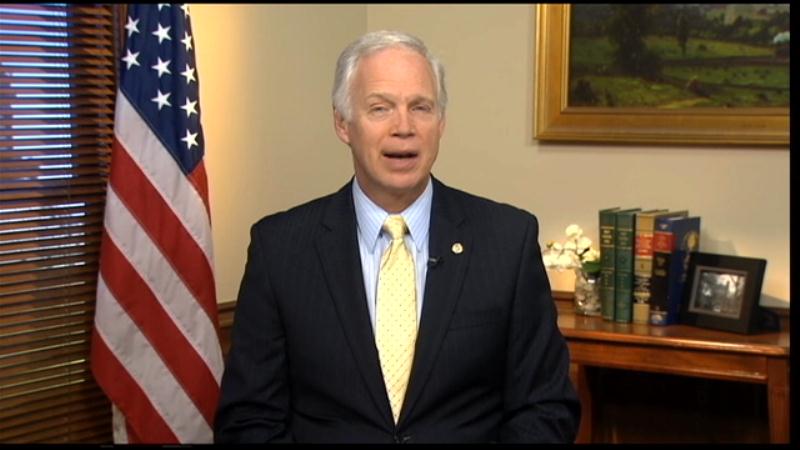
MADISON (WKOW) -- The national conservative group funded by Charles and David Koch is jumping into Wisconsin's U.S. Senate race, launching a $1.1 million television ad campaign in support of Republican Sen. Ron Johnson.
Johnson is running for re-election against the man he helped remove from that senate seat in 2010, Democrat Russ Feingold.
The ad, put together by the group Americans for Prosperity, will start airing in Wisconsin on Wednesday, the day after the state's presidential primary election. Above is from: http://www.wkow.com/story/31646909/2016/04/05/koch-brothers-get-involved-in-wi-us-senate-race
GEORGE MASON UNIVERSITY in northern Virginia renamed its law school the Antonin Scalia School of Law on Thursday, after receiving a $10 million gift from the Charles Koch Foundation and another $20 million from an undisclosed donor.
Scalia was one of five justices who voted for the Citizens United ruling and subsequent rulings that allowed unlimited sums of unidentified money to be used in elections. So the anonymous $20 million gift, which was conditioned upon naming the law school after Scalia, truly honors the late justice’s legacy of allowing corporations and the wealthy to buy influence under a shroud of secrecy.
www.law.gmu.edu
In a press release, George Mason University explained that the $20 million gift was funneled through Leonard Leo, the executive vice president of the ultra-conservative Federalist Society and a personal friend of Scalia. “The anonymous donor asked that the university name the law school in honor of the justice,” according to the press release. This is just how anonymous donors ask for favors in exchange for their campaign contributions.
The Koch brothers have plowed more funding into the university than any other school; The Atlantic recently called the college “effectively Charles Koch’s personal academic workshop.” Koch’s $10 million gift to the law school follows $48 million in other donations from 2011 to 2014, according to the Associated Press.
The cash supports George Mason research hubs like the free-market Mercatus Center. Mercatus research routinely shows up in papers from Koch-linked groups like Americans for Prosperity, and even in Republican-written legislation. The Mercatus board includes Richard Fink, an executive vice president of Koch Industries, as well as Charles Koch himself. Charles Koch also chairs the board of the George Mason Institute for Humane Studies, a separate libertarian think tank.
The Center for Media and Democracy’s SourceWatch identifies other links between the Mercatus Center and corporate money, including the National Federation of Independent Businesses and the American Legislative Exchange Council, or ALEC. It serves as the academic validator for right-wing ideas, much as Scalia served as the judicial conduit for such theories on the Supreme Court.
George Mason has undergone a number of transformations over the years. The U.S. Commission on Civil Rights declared in 1971 that “George Mason College was conceived of, by, and for the white community of northern Virginia and not for the entire northern Virginia population.” Since Scalia observed last December that African-American students would be better off at “less advanced” colleges, the tribute to him at the formerly exclusionary George Mason also makes sense.
Over the years, George Mason transformed itself from a commuter school to a residential university, with its most recent, rapid growth fueled in part by money from conservative groups and individuals.
Its responsiveness to pro-corporate interests is hardly new. In the 1980s and 1990s, George Mason economist Robert Tollison led several programs on behalf of the tobacco industry, designed to provide intellectual support for its contention that secondhand smoke wasn’t harmful and government didn’t need to increase cigarette taxes. Hundreds of academics were paid by the tobacco industry for favorable comments, papers, and op-eds backing the industry line.
More recently, George Mason’s Law and Economics Center received $762,500 from Google over a two-year period, and subsequently produced multiple studies supporting Google’s positions on privacy, patents, and antitrust.
Justice Scalia’s reliable support for corporate America in a wide variety of cases makes him a fitting namesake for a law school there.
Midwest Corporate Campus2001 North Division Street (Route 14) Harvard, IL 60033
Industrial
1,547,857 Sq. Feet
Map details are currently unavailable. Save this property and check back later.
Google Street View is not available for this property.
Midwest Corporate Campus
2001 North Division Street (Route 14)
Harvard, IL 60033
1 of 16
Property Details (2001 North Division Street (Route 14), Harvard, IL 60033)
Asset Type
Commercial
Starting Bid
$2,700,000
Bid Deposit Amount
$25,000
Property
Midwest Corporate Campus
Property Description
±1,527,857 SF Vacant Industrial Campus in Harvard, IL
Assessor's Parcel Number
APN: 01-25-100-018
Square Footage
1,527,857 Sq. Ft.
Net Rentable Area
1,547,857 Sq. Ft.
Lot Size
325.0 Acres
Year Built
1997
Number of Buildings
4
Number of Stories
5
Number of Units
1
Occupancy
0.0%
Occupancy As of Date
03/01/2016
Event Item #
B178-118
Property ID
193046911
Buyer's Premium
5% of Winning Bid Amount (A minimum of $40,000 will apply)
Description
Due Diligence
Documents
Description for 2001 North Division Street (Route 14), Harvard, IL 60033
Property Tours are available by appointment on Friday April 8th and Friday April 15th from 10-2pm. Please contact Mark Kolar to schedule at 312-228-3214 or mark.kolar@am.jll.com
Ten-X and Jones Lang LaSalle, Inc. are pleased to offer for sale a state-of-the-art corporate office and logistics campus located at 2001 North Division Street (Route 14) in Harvard, Illinois.
Once used by a publicly traded Fortune 100 company, the Property was utilized as a light manufacturing and assembly facility and served as a strategic headquarters location for one of the company’s main divisions. This offering represents a rare opportunity for a user to acquire a superior quality corporate campus in move-in condition at well below replacement cost. This facility can either be utilized by one user or multiple tenants.
Completed in 1997 with premium quality construction materials and finished with high-tech building systems and infrastructure, the property boasts ±1.5 million SF throughout four connected buildings designated for manufacturing, distribution, office and administration use. The facility has ±974,000 SF manufacturing & distribution facility that is interconnected by an integrated material handling system. The building has an amazing amount of infrastructure and can be utilized for light/technical manufacturing or as a fulfillment center. With numerous amenities including two on-site day care facilities, a ±1,100 person capacity cafeteria, a ±500 person capacity auditorium and heliports, the property is ideally suited to meet a number of high-tech corporate needs. The property is situated on ±325 acres of prime, developable land finished with ponds, and miles of biking and running trails and offers the potential for unlimited development opportunities.
The location of the Property provides immediate access to major Midwest cities including: Chicago, Milwaukee, Madison, Rockford, St Louis, and Minneapolis. The Midwest Corporate Campus’ proximity to low cost air-freight at Rockford International Airport (3rd largest UPS Hub) makes it an excellent option for companies looking to establish a Midwest presence to quickly serve a North American customer base.
The Chicago area workforce of over 8 million. The regional demographics provide access to a wide range of professions (skilled office and manufacturing). Major industries in the area include technology, pharmaceutical, manufacturing, food processing and consumer products.
FACILITY DETAILS
• Originally development to support Motorola’s cellular phone assembly operations
• ±619,590 SF 2 story manufacturing building (17' - 23' clear)
• ±355,315 SF distribution building (35' clear) linked by an integrated material handling system & manufacturing infrastructure
• ±63,000 SF of high base warehouse space with 52 foot clear with existing racking system and Daifuku AS/RS system. Storage capacity 15,140 pallets
• Integrated Tote/Carton Conveyor System connecting manufacturing and distribution buildings. 3.2 miles of tote/conveyer estimated.
• ±30 miles from Rockford International airport (3rd largest UPS hub and major International Freight airport)
• ±48 miles from O’Hare International airport
• Located in a Foreign Trade Zone
• This location can service Chicago, Milwaukee, Madison, St Louis, Minneapolis
INVESTMENT HIGHLIGHTS
• State-of-the-Art Corporate Headquarter Campus: The Midwest Corporate Campus is an existing ±1.5 million square foot office and industrial campus located on ±325 acres. This facility was originally completed in 1997 as a regional headquarters, manufacturing, assembly and distribution campus. The replacement cost of this facility is over $250 million and the facility is available immediately at well below this cost.
• Central Midwest Location: The location of the Property provides access to all major Midwest cities. The Midwest Corporate Campus’ proximity to low cost air-freight and rail service make it an excellent option for companies looking to establish a Midwest presence to serve a North American customer base.
• Workforce: The Chicago area workforce of over 8 million. The regional demographics provide access to a wide range of professions (skilled office and manufacturing). Major industries in the area include technology, pharmaceutical, manufacturing, food processing and consumer products.
Making a move legislators are calling “bold” and “awesome, in the biblical sense,” Governor Bruce Rauner announced today that he will permanently close the U of I at Urbana-Champaign as part of his plan to “turn around” the state of Illinois.
“There is only one way to ensure that Illinois will remain a great place to live for future generations,” said Rauner. “Literally, one. And that is scrapping social services and closing public institutions of higher education, including the U of I.”
The groundwork for this approach has already been tested at universities across the state, such as Chicago State University and Eastern Illinois University. But Rauner decided to reserve his largest cuts for the flagship public university, the U of I at Urbana-Champaign.
“It’s only fitting that our best public university campus should receive our best public university cuts,” said Rauner. “This is a unique opportunity for Champaign-Urbana. For too long, the community has been feeding off the teat of its own tax dollars. Now, the community will have the chance to support itself.”
Urbana Mayor Laurel Prussing and Champaign Mayor Deb Feinen responded with surprise and dismay to the closure of the university, which is the number one employer of community members in Champaign-Urbana.
“Our community depends on its partnership with the U of I,” said Prussing. Feinen agreed, adding, “The university is preparing a generation of Illinois citizens for employment and civic responsibility.”
According to Rauner, however, the responsibility of the state is to protect the short-term interests of its citizens. Drawing on his business expertise, which has earned him $750,000 in baller tax breaks over the last several years, Rauner pointed out that the purpose of civic bodies is to make a profit as quickly as possible.
“Government is really here to make a buck, do nothing, or to do less than nothing,” said Rauner. “If I can’t completely stall a civic benefit, I want to cut it as much as possible in the hopes of saving myself and my golfing buddies the cost of another trip to Maui.”
With layoffs imminent, several Champaign-Urbana community members noted that they are looking forward to spending more time outdoors, with their loved ones, and oil painting.
“Now that I don’t have to pay tax dollars toward anything that benefits anyone, my life is wonderful,” said community member Brett Wright, who I interviewed as he changed his tire after hitting a gaping pothole. “This is the best of all possible worlds,” he added, gesturing toward his children, who lack dental insurance and a path toward careers with retirement options.
“Ultimately, this is about job creation,” said Rauner. “Subtracting tens of thousands of jobs from Champaign-Urbana gives the community a chance to find its bootstraps and thrive.”
- See more at: http://www.smilepolitely.com/culture/governor_rauner_revitalizes_c_u_economy_by_permanently_closing_the_u_of_i/#sthash.iUnbndgt.dpuf
The U.S. Nuclear Regulator Commission recently agreed to accept a petition submitted by seven engineers with the U.S. Nuclear Regulatory Commission who expressed concern over a power distribution issue at nuclear power plants.
The petition was filed on Feb. 19, and the NRC issued a response to the petition on March 21. The engineers had sought an immediate resolution to an open phase electrical issue they felt made nuclear plants vulnerable. If the issue could not be resolved immediately, the petition asked the NRC to shutter all U.S. nuclear plants.
Five of the engineers who submitted the petition are from Maryland, while one is from Louisiana and another from West Virginia.
While the petition was accepted for review, a summary on the NRC's website said, “the immediate actions requested by the petitioners were denied because of the risk reduction provided by the interim compensatory measures.” The NRC's response noted two invitations to the petitioners to address the Petition Review Board, which was declined on the grounds the “petition already contained all of the relevant information to support the PRB’s review.”
The notice to the petitioners said the NRC would take action on the request “within a reasonable amount of time,” though no timeline was provided.
“The resolution of the petitioners' concerns will be tied into the ultimate resolution of the issue,” said Scott Burnell, spokesman for the NRC. About the issue
The petition was filed over concern about an open-phase condition that occurred at Exelon’s Byron 2 Nuclear Station in Illinois in 2012. Power to large industrial facilities, like nuclear power plants, is delivered in three phases. In this case, one of the phases dropped out in the plant's switchyard, which impacted how electrical current was being distributed throughout the plant.
In this situation, the plant's automatic systems did not recognize a phase had dropped out, and operators didn't immediately realize it. During that time, the plant's reactor safety systems did not operate as effectively as they could have. Once the problem was discovered, the power was rerouted accordingly and the plant was shut down safely.
“The Byron event identified a vulnerability in the design of U.S. and international, operating plants. The current design requires an accident signal to automatically connect the emergency core cooling systems to the preferred power source to mitigate the consequences of a design-basis event,” says the petition. “... If the preferred power source, has an undetected open phase-condition, redundant trains of electrical equipment (electric motors that drive the pumps and valves) could burn out in few minutes and therefore will not be available for safe shutdown, even after restoration of an operable power source.”
A design-basis event, or accident, is defined by the NRC as a “postulated accident that a nuclear facility must be designed and built to withstand without loss to the systems, structures, and components necessary to ensure public health and safety.”
Burnell previously told The News Courier the incident led the NRC to examine the issue more closely, and a bulletin was issued to all nuclear power plants, including Browns Ferry Nuclear Plant in Athens, explaining the open-phase incident. The bulletin also requested information from the operators explaining how they would handle the issue if it occurred at their plants. Moving forward
According to the NRC, nuclear power plant operators are currently implementing the permanent solution for the open phase issue. Those changes should be implemented by Jan. 30, 2019, but may need NRC approval via license amendment.
“Either way, the NRC staff plans to … confirm that regulatory requirements are met,” says information on the NRC's website.
When asked about the process of implementing the changes at Browns Ferry Nuclear Plant, Tennessee Valley Authority Spokesman Jim Hopson issued the following statement: “TVA is committed to ensuring the safety of the public as they continue to benefit from the reliable, low-cost, carbon-free power nuclear generation provides.We are closely following the NRC’s inquiry into this issue and, based on their guidance, will take the steps necessary to further enhance the safe design of our nuclear facilities.”
Opinions expressed by Forbes Contributors are their own.
I’m an entrepreneur, founder and CEO of OpenTheBooks.com - the world's largest private repository of government spending. Our mission- post “every dime, online” of all local, state, and federal government spending at OpenTheBooks.com & in our award winning Open The Books mobile app. My work has been featured in USA Today; The Wall Street Journal; John Stossel’s 'Innovation Nation' Special; Forbes Magazine; Investor’s Business Daily; HBO Bill Maher's blog; The Rush Limbaugh Show; FOX News Channel - including Bill O'Reilly, Megan Kelly, Sean Hannity, & Bret Baier; Sinclair Broadcast Group - including Full Measure with Sharyl Attkisson; Huffington Post; National Review; The Washington Times; TheHill; Sunlight Foundation; Breitbart; Chicago Tribune; Daily Herald, and by many other national media, television, and radio personalities.
The author is a Forbes contributor. The opinions expressed are those of the writer.
Opinions expressed by Forbes Contributors are their own.
Nobody knows how to game the system for personal gain like an Illinois lawmaker. The political class voted themselves tens of millions of dollars in lifetime pension payouts. It’s time end their ‘pension palace.’
Illinois lawmakers have one of the sweetest retirement deals on planet earth. It’s supposed to be a ‘part-time’ job in the general assembly, but now taxpayer funded legislator pension costs exceed most base salaries. Last year, taxpayers paid a whopping $71,818 per legislator ($15.8 million in FY2015) to fund their ‘golden parachute’ retirement plans. See the top all-time General Assembly Retirement System pensions here.
President Obama addressed the Illinois General Assembly at the Illinois State Capitol on February 10, 2016. Most of the IL lawmakers have designed their very own ‘pension palaces.’ Credit: MANDEL NGAN/AFP/Getty Images
At OpenTheBooks.com, we looked at who’s receiving what, when and for how long. The results would make Public Enemy #1, the 1930s bank robber John Dillinger, blush. For example, the #1 all-time pension goes to a 31-year long-forgotten state senator. Retiring from Springfield in 2000, with a pension spiking stop at the Chicago schools, Arthur Berman (D) now takes $19,652 a month ($235,824) in annual pension – nearly four times more than he ever made as a Springfield lawmaker.
Here are just some of the Illinois lawmaker ‘big-dogs’ from both parties:
Retired Chicago Mayor Richard J. Daley (D) makes $132,384 a year in state lawmaker pension – from a short eight-year ‘career’ as a state senator (plus some pension spiking tricks).
Former Governor Jim Edgar (R) costs taxpayers $337,816 per year: a $156,324 pension, plus an $181,492 salary (FY2013) at our flagship University of Illinois at Champaign.
In 2010, former Governor George Ryan (R) had a $197,028 annual pension ($16,419/month), but it was stripped away by the successful public corruption prosecution conviction.
Recommended by Forbes
CoxVoice: 4 Reasons to Give Free WiFi to Visiting Customers
Even former Speaker of the House Denny Hastert (R) cashed in for a $28,020 ($2,335/month) legislative state pension before heading off to his congressional career.
Both Democrats and Republicans have engineered a system of compliance and largesse – give no pain to party leadership and the lawmaker gets all the gain. As soon as lawmakers ‘retire,’ they move into a pension palace.
Of course, even the losers get into pension palace. Consider the ‘casualties’ of the 2014 elections:
Governor Pat Quinn (D) lost re-election and immediately started collecting $133,164 ($11,097/month). Quinn was also a previous treasurer and lieutenant governor.
State Treasurer Dan Rutherford (R) lost in the republican primary for governor and immediately started collecting $132,624 ($11,052/month). Rutherford was a previous state representative and senator since 1993.
House Minority Leader Tom Cross (R) lost the race for state treasurer and immediately filed for his $81,012/year ($6,751/month) pension. Cross was a state representative since 1993.
State Senator Kirk Dillard lost two republican primary gubernatorial elections, served in the state senate from 1994-2014, and filed for his state pension: $6,831 per month ($81,972/year).
Widely reported in 2011, former State Treasurer and State Representative Dawn Clark-Netsch (D) paid back $10,000 from her pension to the state. She thought the benefits were too lucrative and inappropriate.
Yet, Illinois politicians who feel such remorse are rare. For example, former State Representative Judy Erwin (D–Chicago) spent ten years in the house and then was able to spike her pension with an appointment to the Board of Higher Education with a salary of over $191,000 annually. Edwin’s pension is now #3 on our list in FY2015: $164,004 per year ($13,667/month).
Another example is the former State Representative Gary Hannig (D) who served ten years through 2009. In the same year, Hannig took the top job at Illinois Department of Transportation paying $150,228 per year. He stayed only 27 months, just enough time to pump his pension to $150,960 annually ($12,580/month). Then-Governor Pat Quinn rehired Hannig at nearly $150,000 in a new position – as his Director of Legislative Affairs. All told, Hannig was making $300,000. Not bad for a ‘public servant.’
New Governor Bruce Rauner (R) and 37 legislators – first led by State Representative Tom Morrison (R) in 2011 – refused to participate in the lawmaker pension plan. That’s a full one-fifth of the Illinois General Assembly – from both parties. These declinations saved Illinois taxpayers tens of millions of dollars in future payouts.
Incredibly, the General Assembly Retirement System is only 16.8% funded (FY2015). So despite hundreds of millions of taxpayer dollar funding over the years for a very small number of participants, it just wasn’t even to satisfy lawmaker greed. Taxpayers are on the hook for an even bigger future bill.
In Illinois, the pension palace is one part of the housing bubble that never burst. But, when it does, everyone in the state but the beneficiaries will pay. Update: In 1995, State Rep. Dave Leuchtefeld (R) was the first to opt out of the General Assembly Retirement System. In 2010, two months before Tom Morrison, State Rep. Ron Sandack (R) opted out of the pension and healthcare benefit. Sandack has since advocated for his HB138 legislation that would kill pensions for lawmakers. Who are ‘The Big Dogs of Illinois Municipal Government 2016?’ Read our recent Forbes editorial. Adam Andrzejewski is the founder and CEO of OpenTheBooks.com – the world’s largest private repository of public spending. This article is based mostly on our FOIA requests.