Friday, October 9, 2015

Comment | Kochs invade KY, bringing inequality


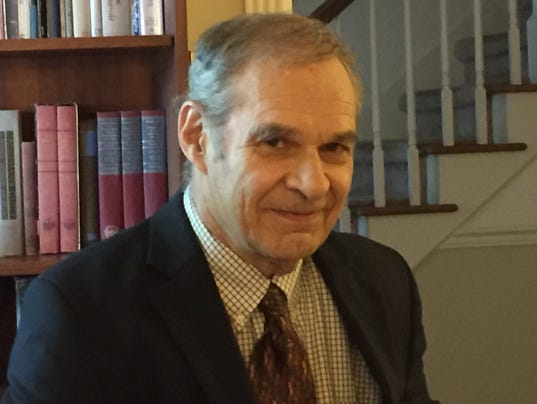
Ronald P. Formisano 9:30 a.m. EDT October 8, 2015

635797496702620955-Ron-Formisano

Ron Formisano (Photo: Provided)

25 CONNECT 16 TWEETLINKEDIN 15 COMMENTEMAILMORE

Since the 1980s inequality of income has grown and social mobility has declined more rapidly in the United States than in most economically advanced countries. Wealth in the U.S is more concentrated than in any peer country: the top 10 percent own more than 75 percent of all wealth.

The billionaire Koch brothers, Charles and David, and their network of “think tanks,” lobbyists, and phony grass-roots “citizens” groups — “astroturf” in today’s political lexicon — have expended hundreds of millions in campaigns that have worsened inequality and damaged the quality of life for millions.

And that’s not counting Koch Industries ranking among the top three polluters of the nation’s air, water, and climate with its plants generating 24 million tons of greenhouse gases a year; it has paid out more millions in civil and criminal environmental penalties than any other company.

The Koch-funded lobbying and political action group Americans for Prosperity is in Kentucky working to sustain inequality and drag down our workers to Third World levels. AFP has already denounced any discussion of inequality in the presidential race. AFP president Tim Phillips says that calling attention to economic inequality is “class warfare” and trying to alleviate it “diminishes freedom.”

Regrettably, the Kochs have taken a strong interest in Kentucky, with AFP first running ads in the Republican primary, then launching an expensive ad against Democratic gubernatorial candidate Jack Conway. More important than the political meddling of outside billionaires in a state they do not live in, is carrying their crusade for low wages and inequality into Kentucky.

Kentucky AFP’s political director Julia Bright Crigler as a panelist  in July on KET’s Kentucky Tonight opposed raising the federal minimum wage of $7.25, although nearly three-fourths of the public favors raising it and 20 states, including four Red states, have voted to increase their own minimums. (Crigler has worked as a Republican operative in several campaigns and is married to a field director for Sen. Mitch McConnell.) The Kochs do not simply oppose a hike, they want to abolish minimum wages everywhere.

More than 16 million Americans have gained health insurance since enactment of the Affordable Care Act. The Kochs’ relentless campaign distorting it is well known. Less publicized are the millions the Kochs spent in states across the country trying to prevent the ACA’s expansion of Medicaid to poor people with income up to 138% of the federal poverty level (e.g. $32,193 for a family of four). As 30 states opted in and 20 states, mostly with Republican governors, rejected expansion, the Kochs waged fierce campaigns to prevent millions of low-income Americans from getting health insurance. In Tennessee the Kochs launched a radio blitz resulting in 250,000 low-income men, women, and children not receiving health insurance. But in Red Alaska, independent Gov. Bill Walker bucked the Koch ad-machine to add 30,000 newly insured.

The Kentucky AFP has “committed significant resources” to getting the legislature to pass a “right to work” law, unsuccessfully so far. These misnamed laws actually restrict workers’ rights by allowing workplaces to exist where union members pay dues but those who do not (“free riders”) still get union benefits and representation if they have grievances or are fired. These laws interfere with the free market in order to weaken unions and lower wages. In states with right to work laws, overall wages are $1,558 lower than in states without RTW.

While AFP lobbies Frankfort, another Koch-corporate-funded astroturf group, the American City Council Exchange has bypassed the Kentucky legislature and stole up on 10 counties to get local RTW ordinances passed. Unions filed a lawsuit challenging these county ordinances that are now tied up in the courts. The Kochs and AFP also oppose paid sick leave for workers and have sponsored laws preventing states and localities from granting it.

Many minimum and low-wage workers increasingly turn to tax preparers to get cash advances — 21.6 million in 2014. About half receive the Earned Income Tax Credit, with 84 percent of that group low-income. But fly-by-night tax preparers and scam artists in what is a $10 billion business routinely defraud low-income workers. The Obama administration sought to protect the victims by requiring preparers to prove competency and undergo criminal background checks, but the Libertarian Institute, another Koch-funded front group, challenged the regulations in court and won.

Finally, the billionaire brothers hate “Obamacare,” except when they can benefit from it. Koch Industries uses Obamacare’s Early Retirement Reinsurance program for its employees and saves money. The Kochs’ petroleum and timber companies also enjoy government subsidies. Their hypocritical brand of “freedom” means profits and government benefits for them and our freedom to lose.

Ronald P. Formisano is William T Bryan Chair of American History and Professor of History emeritus at the University of Kentucky. He author of "Plutocracy in America: How Increasing Inequality Destroys the Middle Class and Exploits the Poor" (Johns Hopkins University Press, 2015).

Comment | Kochs invade KY, bringing inequality

Top Democrats warn Illinois could go broke in months, won't bow to Rauner's anti-union push


By SARA BURNETT
Published: 10/8/15 6:09 pm EDT - Updated: 10/8/15 6:09 pm EDT

CHICAGO — Illinois will run out of money to operate in a matter of months if lawmakers can't agree on a state budget, top Democrats warned Thursday, but they reiterated they won't bow to Gov. Bruce Rauner's demands to weaken public-worker unions for a deal.

House Majority Leader Barbara Flynn Currie and state Sen. Kwame Raoul said the Republican governor should drop his push to let local governments opt out of collective bargaining, a move they say would lead to lower wages and a less-qualified workforce.

Currie said Rauner should instead be worrying about the state money "going out the door at a very fast clip." Both parties estimate Illinois is on track to spend about $5 billion more than it's taking in because of court orders and state law requiring some payments.

"He needs to get serious about adopting a budget that doesn't mean the state goes totally broke come February or March," the Chicago Democrat said following an unrelated stop in Chicago's Hyde Park neighborhood, where Rauner also spoke Thursday.

Rauner has been stepping up his anti-union push this week, arguing that Democrats have "repeatedly" taken votes against collective bargaining and issuing a news release that listed specific bills and Democratic lawmakers who supported them.

He called their firm stance against doing so now "political manipulation" because Democrats don't want to anger labor unions — some of their biggest backers — heading into the 2016 elections.

Rauner also argues that giving governments a choice of whether to bargain over wages, benefits and other issues will ultimately help the middle class by lowering taxes and sparking a healthier economy.

"The status quo in Illinois ... is not helping our middle class," he said.

Illinois is in its fourth month without a state budget. Democrats want Rauner to agree to a tax increase to help balance the budget, but the governor says he won't do so until the Legislature approves some of his priorities.

Other items on his agenda include freezing property taxes and imposing term limits on lawmakers. But he said Thursday collective bargaining is "one of the most critical things we need to change."

Currie compared him to the Wisconsin governor, whose move to curb bargaining rights drew huge protests a few years ago.

"He's 'Scott Walker light' is what I would call him," she said.

Top Democrats warn Illinois could go broke in months, won't bow to Rauner's anti-union push

Capitol Fax.com - Point taken. However…


Point taken. However…

Thursday, Oct 8, 2015

* From a press release…

Governor Rauner yesterday delivered remarks explaining how reforming collective bargaining is a bi-partisan idea and would save taxpayers billions. In fact, many Democrats, including the House Speaker and House Majority Leader as well as the Senate President and Senate Majority Leader, have voted in recent years to limit and remove collective bargaining requirements in an effort to save taxpayers money.

“Twice in the last four years, Illinois Democrats voted to reform collective bargaining, but now they are hiding behind it to try to force spending higher and raise taxes on the people of Illinois,” Rauner spokesman Lance Trover said. “The notion that collective bargaining is sacrosanct to the Democratic Party is nothing more than political gamesmanship to protect the status quo and hurt taxpayers.”

SB 1 (Pension Reform of 2013)
Senate Democrats voting aye:
Biss, Cunningham, Harmon, Hunter, Jones, Landek, Martinez, McGuire, Morrison, Mulroe, Munoz, Raoul, Sandoval, Silverstein, Stadelman, Steans, Van Pelt, Mr. President
http://www.ilga.gov/legislation/votehistory/98/senate/09800SB0001_12032013_005000R.pdf

House Democrats voting aye:
Acevedo, Andrade, Arroyo, Bradley, Burke, D., Burke, K., Cassidy, Chapa LaVia, Conroy, Crespo, Currie, D’Amico, Davis, M., Drury, Dunkin, Evans, Feigenholtz, Fine, Flowers, Gabel, Harris, G., Hernandez, Hurley, Jones, Kifowit, Lang, Manley, McAsey, Mitchell, Moylan, Mussman, Nekritz, Sente, Soto, Tabares, Thapedi, Turner, Verschoore, Walsh, Welch, Williams, Willis, Yingling, Zalewski, Mr. Speaker
http://www.ilga.gov/legislation/votehistory/98/house/09800SB0001_12032013_006000R.pdf

SB 7 (Labor Reform of 2011)
Senate Democrats voting aye:
Biss (House), Clayborne, Collins, Cunningham (House), Delgado, Forby, Haine, Harmon, Holmes, Hunter, Hutchinson, Jones, Koehler, Landek, Lightford, Martinez, Mulroe, Munoz, Noland, Raoul, Sandoval, Steans, Sullivan, Trotter, Mr. President
http://www.ilga.gov/legislation/votehistory/97/senate/09700SB0007_04152011_059000T.pdf

House Democrats voting aye:
Acevedo, Arroyo, Beiser, Bradley, Burke, D., Burke, K., Chapa LaVia, Crespo, Currie, D’Amico, Davis, W., DeLuca, Dunkin, Feigenholtz, Flowers, Ford, Franks, Gabel, Gordon, Harris, G., Hernandez, Jackson, Jones, Lang, Lilly, Mautino, Mayfield, McAsey, Mussman, Nekritz, Phelps, Rita, Sente, Soto, Thapedi, Turner, Verschoore, Williams, Zalewski, Mr. Speaker
http://www.ilga.gov/legislation/votehistory/97/house/09700SB0007_05122011_002000T.pdf

That’s all well and good. However, the governor has proposed some awfully radical legislation

Prohibited subjects of bargaining.

(a) A public employer and a labor organization may not bargain over, and no collective bargaining agreement entered into, renewed, or extended on or after the effective date of this amendatory Act of the 99th General Assembly may include, provisions related to the following prohibited subjects of collective bargaining:

(1) Employee pensions, including the impact or implementation of changes to employee pensions, including the Employee Consideration Pension Transition Program as set forth in Section 30 of the Personnel Code.

(2) Wages, including any form of compensation including salaries, overtime compensation, vacations, holidays, and any fringe benefits, including the impact or implementation of changes to the same; except nothing in this Section 7.6 will prohibit the employer from electing to bargain collectively over employer-provided health insurance.

(3) Hours of work, including work schedules, shift schedules, overtime hours, compensatory time, and lunch periods, including the impact or implementation of changes to the same.

(4) Matters of employee tenure, including the impact of employee tenure or time in service on the employer’s exercise of authority including, but not limited to, any consideration the employer must give to the tenure of employees adversely affected by the employer’s exercise of management’s right to conduct a layoff.

Sorry to repeat myself, but no way are they gonna vote for that, governor. No way are even all that many Republicans gonna vote for it, either.

- Posted by Rich Miller

Capitol Fax.com - Your Illinois News Radar » Point taken. However…

Thursday, October 8, 2015

Norwegian Air CEO says $69 flights from U.S. to Europe around the corner | Reuters


Parked Boeing 737-800 aircrafts belonging to budget carrier Norwegian Air are pictured at Stockholm Arlanda Airport March 6, 2015.

Reuters/Johan Nilsson/TT News Agency

Bjorn Kjos, CEO of Norwegian Air Shuttle, answers questions during a press briefing in Oslo March 10, 2015.

Reuters/Terje Pedersen/NTB Scanpix


Parked Boeing 737-800 aircrafts belonging to budget carrier Norwegian Air are pictured at Stockholm Arlanda Airport March 6, 2015.

Reuters/Johan Nilsson/TT News Agency

EW YORK Norwegian Air Shuttle ASA (NWC.OL) hopes to sell one-way tickets to Europe for $69 as early as 2017 by flying from U.S. airports that have low fees, Chief Executive Officer Bjørn Kjos said in an interview Tuesday.

Europe's third-largest budget airline is considering flights to Edinburgh and Bergen, Norway from U.S. airports that have little to no international service today, such as New York's Westchester County Airport and Connecticut's Bradley International Airport, just north of Hartford, Kjos said.

Average prices on such routes are likely to be closer to $300 round trip, Kjos said, compared with many of Norwegian's fares that run more than $500 today because of higher fees levied by busier airports.

The potential plans are part of Norwegian's broader move to cut prices and take share from traditional flag carriers that dominate trans-Atlantic flying.

While airlines such as Deutsche Lufthansa AG (LHAG.DE) offer travelers hundreds of destinations via connections in airport hubs, Norwegian is aiming to make nonstop service to small cities that straddle the Atlantic more common, which keeps costs low.

"I think you will see a lot to that effect within five years' time," Kjos said. "What will happen to (Lufthansa) when everyone starts to fly direct?"

Norwegian has 100 737 MAX jets from Boeing Co (BA.N) on order and expects to receive five in 2017. These planes are equipped to traverse the Atlantic but are smaller than most jets that currently do so, making them a better size for international flights to cities such as Birmingham in Britain, Kjos said.

Regulators will have to agree to set up customs stations at U.S. regional airports to handle international traffic, although Kjos said he is confident this can be arranged.

Norwegian is not the only airline to market cheap fares across the Atlantic.

Iceland's Wow Air recently offered one-way fares between Boston and Paris for $99. Lufthansa's low-cost subsidiary Eurowings is also starting cheap long-haul flights.

Kjos downplayed the competitive threat of Eurowings, saying, "I don't believe in their being able to operate low cost with a Boeing 767," in part because the widebody planes save less fuel and have smaller range than planes such as Boeing Dreamliners in Norwegian's fleet.

Norwegian separately reported Tuesday that it filled 96 percent of long-haul plane seats in September, helping the airline post better-than-expected results.

Norwegian Air CEO says $69 flights from U.S. to Europe around the corner | Reuters

Superintendent (District 100) Search Community Forum experiences low community participation


By Michele Gruba

Reporter

BELVIDERE – On Thursday, Sept. 24, B.W.P and Associates hosted a community forum to allow stakeholders an opportunity to assist them in searching for School District 100’s new superintendent. Unfortunately, only ten members of the community were in attendance.

The consensus among attendees regarding the night’s dismal numbers seemed to be alack of communication and advertisement by District 100. Those who did participate indicated they became aware of the event via Facebook posts by PASS (Parents Advocating for Students and Staff), a local advocacy group or a Robocall by the school district.

Les Ried former District 100 school board member agreed with that assessment.

“Lack of publicity was a factor,” Reid said.

In an email response from Mark Friedman, B.W.P and Associates President, he indicated that low turnout is not unusual and should not hinder the selection process.

“The numbers were fairly typical of what we see in most districts and won’t have a negative impact. There was a great discussion, and we pulled some valuable information. The open forum is just a small part of the profile we are building, so we were not unhappy with the turnout,” Friedman        said.

Reid discussed why it is imperative to be actively engaged in the community and the importance of his participation in the superintendent selection process.

“Having been a member of the District 100 school board in the past and having been involved in the selection of two past superintendents it is critical to make the best selection possible. As a stakeholder in the community, I feel a responsibility to stay involved, and I wish more people would become involved in the community.”

B.W.P partner, Anne Noland, and consultant, Patricia Wernet, lead the discussion by explaining the areas where they would be collecting data. They wanted good qualities of the school district, areas of concern, traits that are important for a new superintendent, and open discussion regarding the future of the district.

Although the group of participants was small, there appeared to be a good cross-section of the Boone County population. Everyone was very enthusiastic while providing feedback and had a united desire for positive change within School District 100.

“The importance of selecting the right superintendent for this district has never been more apparent,” Reid said.

Reid’s thoughts were echoed during the discussion on areas of concerns. The majority cited long-standing communication deficits and lack of trust between District 100 and the community. The new superintendent will need to work on rebuilding confidence and foster meaningful communication with stakeholders to repair community relations.

“Establishing themselves quickly as a leader with vision in the District 100 community,” Reid said on the obstacles facing a new superintendent and as far his hopes for the future: “a renewed respect for parents and district employees.”

Positive aspects the District 100 community were also discussed, and again, the participants were in agreement: dedicated teachers, parent support, incredible kids, satisfaction with new additions to the school board and excellent facilities.

Mark Friedman conceded, explaining all of those attributes add value when attracting quality superintendent candidates.

“We are optimistic. In a tight market for superintendents, we will be very proactive in sharing with potential candidates what a good job the Belvidere Superintendent position is. Our day in the district confirmed Belvidere would be a great career move for the right person. The positives far outweighed any negatives,” Friedman said.

The most important information B.W.P collected over the course of the evening was the characteristics desired in a new superintendent: honesty, problem solver, good character, communicator, vision, and accountability.

Throughout the day, B.W.P and Associates held focus group around the district gathering information from district employees, school board members, and the community. They also used a survey that was available on the district 100 website until Oct. 1.

According to Friedman, all the information will be compiled, and the data will be used to help them bring quality candidates to the table.

“When we have all of this information we will prepare a formal Profile Report and then present it to the Board of Education.”

The next opportunity for the community to hear the status of B.W.P’s search for the next superintendent will be at the next regularly scheduled meeting of the board of education on Oct. 13, at 6 p.m. at the central office.

Superintendent Search Community Forum experiences low community participation

Election 2016: Koch Brothers Officially Back Carly Fiorina, Opening Door To Big Donations


It’s official: The influential Koch brothers have thrown their weight behind Republican presidential candidate Carly Fiorina, CNN reported Wednesday. Fiorina will gain access to a large pool of funding from conservative groups with the endorsement.

The Freedom Partners Chamber of Commerce, an umbrella organization that funds many conservative groups backed by the industrialist brothers Charles and David Koch, announced that Fiorina will be one of five candidates it backs. The group had previously backed Wisconsin Gov. Scott Walker before he dropped out of the race in September.

"Governor Jeb Bush, Carly Fiorina and Senators Ted Cruz, Rand Paul and Marco Rubio are leading a thoughtful and substantive discussion on the issues and we look forward to hearing more about their vision for the country," said James Davis, a Freedom Partners spokesman, according to CNN.

Despite backing Fiorina in her unsuccessful 2010 California Senate race against incumbent Barbara Boxer, the Koch brothers waited with their endorsement in this race. Fiorina’s own campaign manager has previously worked for the Koch group.

Election 2016: Koch Brothers Officially Back Carly Fiorina, Opening Door To Big Donations

Exxon's Own Research Confirmed Fossil Fuels' Role in Global Warming Decades Ago


Exxon's Own Research Confirmed Fossil Fuels' Role in Global Warming Decades Ago

Top executives were warned of possible catastrophe from greenhouse effect, then led efforts to block solutions.

By Neela Banerjee, Lisa Song and David Hasemyer

Sep 21, 2015

Exxon Experiment

Exxon's Richard Werthamer (right) and Edward Garvey (left) are aboard the company's Esso Atlantic tanker working on a project to measure the carbon dioxide levels in the ocean and atmosphere. The project ran from 1979 to 1982. (Credit: Richard Werthamer)

[1]

At a meeting in Exxon Corporation's headquarters, a senior company scientist named James F. Black addressed an audience of powerful oilmen. Speaking without a text as he flipped through detailed slides, Black delivered a sobering message: carbon dioxide from the world's use of fossil fuels would warm the planet and could eventually endanger humanity.

"In the first place, there is general scientific agreement that the most likely manner in which mankind is influencing the global climate is through carbon dioxide release from the burning of fossil fuels," Black [2] told Exxon's Management Committee, according to a written version he recorded later.

It was July 1977 when Exxon's leaders received this blunt assessment, well before most of the world had heard of the looming climate crisis.

A year later, Black, a top technical expert in Exxon's Research & Engineering division, took an updated version of his presentation to a broader audience. He warned Exxon scientists and managers that independent researchers estimated a doubling of the carbon dioxide (CO2) concentration in the atmosphere would increase average global temperatures by 2 to 3 degrees Celsius (4 to 5 degrees Fahrenheit), and as much as 10 degrees Celsius (18 degrees Fahrenheit) at the poles.  Rainfall might get heavier in some regions, and other places might turn to desert.

"Some countries would benefit but others would have their agricultural output reduced or destroyed," Black said, in the written summary of his 1978 talk.

His presentations reflected uncertainty running through scientific circles about the details of climate change, such as the role the oceans played in absorbing emissions. Still, Black estimated quick action was needed. "Present thinking," he wrote in the 1978 summary, "holds that man has a time window of five to ten years before the need for hard decisions regarding changes in energy strategies might become critical."

Exxon responded swiftly. Within months the company launched its own extraordinary research into carbon dioxide from fossil fuels and its impact on the earth. Exxon's ambitious program included both empirical CO2 sampling and rigorous climate modeling. It assembled a brain trust that would spend more than a decade deepening the company's understanding of an environmental problem that posed an existential threat to the oil business.

Then, toward the end of the 1980s, Exxon curtailed its carbon dioxide research. In the decades that followed, Exxon worked instead at the forefront of climate denial. It put its muscle behind efforts to manufacture doubt about the reality of global warming its own scientists had once confirmed. It lobbied to block federal and international action to control greenhouse gas emissions. It helped to erect a vast edifice of misinformation that stands to this day.

This untold chapter in Exxon's history, when one of the world's largest energy companies worked to understand the damage caused by fossil fuels, stems from an eight-month investigation by InsideClimate News. ICN's reporters interviewed former Exxon employees, scientists, and federal officials, and consulted hundreds of pages of internal Exxon documents, many of them written between 1977 and 1986, during the heyday of Exxon's innovative climate research program. ICN combed through thousands of documents from archives including those held at the University of Texas-Austin, the Massachusetts Institute of Technology and the American Association for the Advancement of Science.

The documents record budget requests, research priorities, and debates over findings, and reveal the arc of Exxon's internal attitudes and work on climate and how much attention the results received.

Of particular significance was a project launched in August 1979, when the company outfitted a supertanker with custom-made instruments. The project's mission was to sample carbon dioxide in the air and ocean along a route from the Gulf of Mexico to the Persian Gulf.

In 1980, Exxon assembled a team of climate modelers who investigated fundamental questions about the climate's sensitivity to the buildup  of carbon dioxide in the air. Working with university scientists and the U.S. Department of Energy, Exxon strove to be on the cutting edge of inquiry into what was then called the greenhouse effect.

Exxon's early determination to understand rising carbon dioxide levels grew out of a corporate culture of farsightedness, former employees said. They described a company that continuously examined risks to its bottom line, including environmental factors. In the 1970s, Exxon modeled its research division after Bell Labs, staffing it with highly accomplished scientists and engineers.

In written responses to questions about the history of its research, ExxonMobil spokesman Richard D. Keil said that "from the time that climate change first emerged as a topic for scientific study and analysis in the late 1970s, ExxonMobil has committed itself to scientific, fact-based analysis of this important issue."

"At all times," he said, "the opinions and conclusions of our scientists and researchers on this topic have been solidly within the mainstream of the consensus scientific opinion of the day and our work has been guided by an overarching principle to follow where the science leads. The risk of climate change is real and warrants action."

At the outset of its climate investigations almost four decades ago, many Exxon executives, middle managers and scientists armed themselves with a sense of urgency and mission.

One manager at Exxon Research, Harold N. Weinberg [3], shared his "grandiose thoughts" about Exxon's potential role in climate research in a March 1978 internal company memorandum that read: "This may be the kind of opportunity that we are looking for to have Exxon technology, management and leadership resources put into the context of a project aimed at benefitting mankind."

His sentiment was echoed by Henry Shaw [4], the scientist leading the company's nascent carbon dioxide research effort.

"Exxon must develop a credible scientific team that can critically evaluate the information generated on the subject and be able to carry bad news [5], if any, to the corporation," Shaw wrote to his boss Edward E. David [6], the president of Exxon Research and Engineering in 1978. "This team must be recognized for its excellence in the scientific community, the government, and internally by Exxon management."

Irreversible and Catastrophic

Exxon budgeted more than $1 million over three years for the tanker project to measure how quickly the oceans were taking in CO2. It was a small fraction of Exxon Research's annual $300 million budget, but the question the scientists tackled was one of the biggest uncertainties in climate science: how quickly could the deep oceans absorb atmospheric CO2? If Exxon could pinpoint the answer, it would know how long it had before CO2 accumulation in the atmosphere could force a transition away from fossil fuels.

Exxon also hired scientists and mathematicians to develop better climate models and publish research results in peer-reviewed journals. By 1982, the company's own scientists, collaborating with outside researchers, created rigorous climate models – computer programs that simulate the workings of the climate to assess the impact of emissions on global temperatures. They confirmed an emerging scientific consensus that warming could be even worse than Black had warned five years earlier.

Esso Atlantic

Between 1979 and 1982, Exxon researchers sampled carbon dioxide levels aboard the company's Esso Atlantic tanker (shown here).

Exxon's research laid the groundwork for a 1982 corporate primer [7] on carbon dioxide and climate change prepared by its environmental affairs office. Marked "not to be distributed externally," it contained information that "has been given wide circulation to Exxon management." In it, the company recognized, despite the many lingering unknowns, that heading off global warming "would require major reductions in fossil fuel combustion."

Unless that happened, "there are some potentially catastrophic events that must be considered," the primer said, citing independent experts. "Once the effects are measurable, they might not be reversible."

The Certainty of Uncertainty

Like others in the scientific community, Exxon researchers acknowledged the uncertainties surrounding many aspects of climate science, especially in the area of forecasting models. But they saw those uncertainties as questions they wanted to address, not an excuse to dismiss what was increasingly understood.

"Models are controversial," Roger Cohen [8], head of theoretical sciences at Exxon Corporate Research Laboratories, and his colleague, Richard Werthamer, senior technology advisor at Exxon Corporation, wrote in a May 1980 status report on Exxon's climate modeling program. "Therefore, there are research opportunities for us."

When Exxon's researchers confirmed information the company might find troubling, they did not sweep it under the rug.

"Over the past several years a clear scientific consensus has emerged," Cohen wrote in September 1982, reporting on Exxon's own analysis of climate models. It was that a doubling of the carbon dioxide blanket in the atmosphere would produce average global warming of 3 degrees Celsius, plus or minus 1.5 degrees C (equal to 5 degrees Fahrenheit plus or minus 1.7 degrees F).

"There is unanimous agreement in the scientific community that a temperature increase of this magnitude would bring about significant changes in the earth's climate," he wrote, "including rainfall distribution and alterations in the biosphere."

He warned that publication of the company's conclusions might attract media attention because of the "connection between Exxon's major business and the role of fossil fuel combustion in contributing to the increase of atmospheric CO2."

Nevertheless, he recommended publication.

Our "ethical responsibility is to permit the publication of our research in the scientific literature," Cohen wrote. "Indeed, to do otherwise would be a breach of Exxon's public position and ethical credo on honesty and integrity."

Exxon followed his advice. Between 1983 and 1984, its researchers published their results in at least three peer-reviewed papers in Journal of the Atmospheric Sciences and an American Geophysical Union monograph.

David, the head of Exxon Research, told a global warming conference [9] financed by Exxon in October 1982 that "few people doubt that the world has entered an energy transition away from dependence upon fossil fuels and toward some mix of renewable resources that will not pose problems of CO2 accumulation." The only question, he said, was how fast this would happen.

But the challenge did not daunt him. "I'm generally upbeat about the chances of coming through this most adventurous of all human experiments with the ecosystem," David said.

Exxon considered itself unique among corporations for its carbon dioxide and climate research.  The company boasted in a January 1981 report, "Scoping Study on CO2," that no other company appeared to be conducting similar in-house research into carbon dioxide, and it swiftly gained a reputation among outsiders for genuine expertise.

"We are very pleased with Exxon's research intentions related to the CO2 question. This represents very responsible action, which we hope will serve as a model for research contributions from the corporate sector," said David Slade, manager of the federal government's carbon dioxide research program at the Energy Department, in a May 1979 letter to Shaw. "This is truly a national and international service."

Business Imperatives

In the early 1980s Exxon researchers often repeated that unbiased science would give it legitimacy in helping shape climate-related laws that would affect its profitability.

Still, corporate executives remained cautious about what they told Exxon's shareholders about global warming and the role petroleum played in causing it, a review of federal filings shows. The company did not elaborate on the carbon problem in annual reports filed with securities regulators during the height of its CO2 research.

Nor did it mention in those filings that concern over CO2 was beginning to influence business decisions it was facing.

Throughout the 1980s, the company was worried about developing an enormous gas field off the coast of Indonesia because of the vast amount of CO2 the unusual reservoir would release.

Exxon was also concerned about reports that synthetic oil made from coal, tar sands and oil shales could significantly boost CO2 emissions. The company was banking on synfuels to meet growing demand for energy in the future, in a world it believed was running out of conventional oil. 

In the mid-1980s, after an unexpected oil glut caused prices to collapse, Exxon cut its staff deeply to save money, including many working on climate. But the climate change problem remained, and it was becoming a more prominent part of the political landscape.

"Global Warming Has Begun, Expert Tells Senate," declared the headline of a June 1988 New York Times article describing the Congressional testimony of NASA's James Hansen, a leading climate expert. Hansen's statements compelled Sen. Tim Wirth (D-Colo.) to declare during the hearing that "Congress must begin to consider how we are going to slow or halt that warming trend."

With alarm bells suddenly ringing, Exxon started financing efforts to amplify doubt about the state of climate science.

Exxon helped to found and lead the Global Climate Coalition, an alliance of some of the world's largest companies seeking to halt government efforts to curb fossil fuel emissions. Exxon used the American Petroleum Institute, right-wing think tanks, campaign contributions and its own lobbying to push a narrative that climate science was too uncertain to necessitate cuts in fossil fuel emissions.

As the international community moved in 1997 to take a first step in curbing emissions with the Kyoto Protocol, Exxon's chairman and CEO Lee Raymond [10] argued to stop it.

"Let's agree there's a lot we really don't know about how climate will change in the 21st century and beyond," Raymond said in his speech before the World Petroleum Congress in Beijing in October 1997.

"We need to understand the issue better, and fortunately, we have time," he said. "It is highly unlikely that the temperature in the middle of the next century will be significantly affected whether policies are enacted now or 20 years from now."

Over the years, several Exxon scientists who had confirmed the climate consensus during its early research, including Cohen and David, took Raymond's side, publishing views that ran contrary to the scientific mainstream.

Paying the Price

Exxon's about-face on climate change earned the scorn of the scientific establishment it had once courted.

In 2006, the Royal Society, the United Kingdom's science academy, sent a harsh letter to Exxon accusing it of being "inaccurate and misleading" on the question of climate uncertainty. Bob Ward, the Academy's senior manager for policy communication, demanded that Exxon stop giving money to dozens of organizations he said were actively distorting the science.

In 2008, under mounting pressure from activist shareholders, the company announced it would end support for some prominent groups such as those Ward had identified.

Still, the millions of dollars Exxon had spent since the 1990s on climate change deniers had long surpassed what it had once invested in its path-breaking climate science aboard the Esso Atlantic.

"They spent so much money and they were the only company that did this kind of research as far as I know," Edward Garvey [11], who was a key researcher on Exxon's oil tanker project, said in a recent interview with InsideClimate News and Frontline. "That was an opportunity not just to get a place at the table, but to lead, in many respects, some of the discussion. And the fact that they chose not to do that into the future is a sad point."

Michael Mann, director of the Earth System Science Center at Pennsylvania State University, who has been a frequent target of climate deniers, said that inaction, just like actions, have consequences. When he recently spoke to InsideClimate News, he was unaware of this chapter in Exxon's history.

"All it would've taken is for one prominent fossil fuel CEO to know this was about more than just shareholder profits, and a question about our legacy," he said. "But now because of the cost of inaction—what I call the 'procrastination penalty'—we face a far more uphill battle."

Click here for Part II [12], an accounting of Exxon's early climate research; Part III [13], a review of Exxon's climate modeling efforts; Part IV [14], a dive into Exxon's Natuna gas field project; Part V [15], a look at Exxon's push for synfuels.

ICN staff members Zahra Hirji, Paul Horn, Naveena Sadasivam, Sabrina Shankman and Alexander Wood also contributed to this report.
Exxon's Own Research Confirmed Fossil Fuels' Role in Global Warming Decades Ago