Wednesday, November 16, 2016


Monday, November 14, 2016
Clinton's Popular-Vote Lead Will Grow, and Grow, and Grow
.
Millions of mail-in and absentee ballots haven’t been counted yet. They won’t change anything, though.
- Nov 13, 201
Updated on November 13 at 4:22 p.m. ET
This chart has been making the rounds on Twitter these past few days:

Donald Trump didn’t actually flip many Democrats, the thinking goes. Instead, Hillary Clinton failed to turn out liberal voters who had previously voted for Barack Obama. It’s a tempting narrative for smarting progressives, as it maintains status quo thinking—Clinton’s unlikable!—and removes any culpability on the part of the Democrats for missing a massive shift in the electorate. In other words, it’s Clinton’s fault, not theirs, that Trump won the presidency.
Unfortunately, that graph is missing something important. (And not just a properly scaled y-axis.) The numbers that came out on Election Night were enough to secure Trump the presidency, but they weren’t complete. State officials are still counting millions of provisional and absentee ballots, and within two weeks, Clinton will likely have another few million votes in the bank.
Most were cast in the Clinton-leaning states of California, Washington, and New York—not swing states—so they won’t change the Electoral College. But there’s a sufficient amount to put her within striking distance of Obama’s 2012 turnout, and help put an end to the argument that she simply didn’t work hard enough.
“We probably have about 7 million votes left to count,” said David Wasserman, an editor at Cook Political Report who is tracking turnout. “A majority of them are on the coasts, in New York, California, and Washington. She should be able to win those votes, probably 2-1.” By mid-December, when the Electoral College officially casts its ballots, Wasserman estimates that Clinton could be ahead by 2 percentage points in the popular vote.
What’s with the delay? Several states, notably California and Washington, have liberal absentee and mail-in voting laws. California, for instance, allows residents to submit ballots up to three days late (although they must be postmarked on or before Election Day). These provisions have made alternative voting pretty popular, and the ballots a bit harder to count. California alone has more than 4 million votes pending; Washington is waiting on another 700,000.
This has happened before. David Leip is the one-man band behind The Atlas of U.S. Presidential Elections, a website cataloging vote totals all the way back to the early days of the Republic. He remembers seeing much of the same vote-counting hysteria after Election Day in 2012, when it appeared Obama would fall far short of his 2008 total. “They did the same thing—‘Oh my goodness, look at all those missing votes,’” he said. From the numbers he’s seeing, California is due for a record turnout, and possibly other states are as well. It’s too soon to tell, he cautions, if Clinton’s total haul, which sat at 61.3 million as of the afternoon of November 13, will match or surpass the 66 million votes Obama received in 2012.
But let’s be clear: While these uncounted votes may grow Clinton’s popular lead, they absolutely will not change the course of the election. That math is settled; Trump holds an insurmountable lead in swing states, which turned his popular defeat into a sizable electoral victory. All the votes in liberal-leaning New York and California will not change that.
However, these ballots will knock the legs out beneath the argument that Clinton failed to mobilize Democrats. Yes, she’s no Obama in 2008. (Neither was Obama in 2012.) But county-by-county results indicate Democratic voters flipped for Trump, not that they stayed home. “We just saw massive shifts in the industrial midwest from ’12 to ’16, and those are the same voters,” Wasserman said. This is the conclusion Democrats must face, and in the absence of other data, it’s the one they’ll have to live with
Above is from: http://www.theatlantic.com/politics/archive/2016/11/clintons-popular-vote-lead-will-grow-and-grow/507455/
Defying Trump, Chicago will continue as immigrant sanctuary

11/13/16 10:08 PM EST
CHICAGO — Joining other cities around the country, Chicago is pledging to remain a sanctuary city for undocumented immigrants, an act of defiance in the face of Donald Trump’s past promise to cut off those cities from federal funding.
In sanctuary cities, local law enforcement officials aren’t required to alert U.S. Immigration and Customs authorities about the immigration status of individuals with whom they come in contact.
On Monday, Chicago's elected officials, including Mayor Rahm Emanuel, are expected to hold a news conference to formally discuss how the city will retain its sanctuary status. Aldermen are expected to call on Republican Gov. Bruce Rauner to pressure Trump to back off his vow to interfere with funding.
“Across the country and in Chicago and Illinois ... young men and women [are] very distraught about this,” Chicago Alderman Danny Solis told POLITICO Illinois on Sunday.
Solis is among those planning to attend the news conference with Emanuel. "There’s some people, though I disagree with them, but I have some respect for — Paul Ryan, Reince Priebus," Solis said, referring to the House speaker and the RNC chairman who will serve as Trump's chief of staff. "I’m hoping that those guys have much more influence on Trump and what needs to be done not only on his first 100 days, but in his term."
Illinois Comptroller-elect Susana Mendoza, whose parents are Mexican immigrants, called on Rauner to take a stand on the issue.
“As a leader of this state, the governor, and everyone in a leadership position, should be saying it’s wrong,” Mendoza told POLITICO Illinois on Sunday. “I would expect that the governor would say, ‘that’s ridiculous.’ Besides moral bankruptcy, it’s bad fiscal policy for the city or any city.”
Above is from: http://www.politico.com/states/illinois/story/2016/11/defying-trump-major-cities-vow-to-remain-immigrant-sanctuaries-107313


Los Angeles Police Chief Charlie Beck said Monday that he has no plans to change the LAPD’s stance on immigration enforcement, despite President-elect Donald Trump’s pledge to toughen federal immigration laws and deport millions of people upon taking office.
For decades, the LAPD has distanced itself from federal immigration policies. The LAPD prohibits officers from initiating contact with someone solely to determine whether he or she is in the country legally, mandated by a special order signed by then-chief Daryl Gates in 1979. During Beck’s tenure as chief, the department stopped turning over people arrested for low-level crimes to federal agents for deportation and moved away from honoring federal requests to detain inmates who might be deportable past their jail terms.
On Monday, Beck said he planned to maintain the long-standing separation.
“I don’t intend on doing anything different,” he said. “We are not going to engage in law enforcement activities solely based on somebody’s immigration status. We are not going to work in conjunction with Homeland Security on deportation efforts. That is not our job, nor will I make it our job.”
Fear among immigrants and their families has rippled across the country in the days following Trump’s election to the presidency. Trump made illegal immigration a central issue of his campaign, vowing to build a wall along the U.S.-Mexico border, deport people who are in the country illegally and unwind immigration relief created under President Obama.
In Los Angeles, officials have tried to alleviate some of those concerns by signaling their support for the city’s immigrant residents. At a meeting Friday at the Coalition for Humane Immigrant Rights of Los Angeles, Mayor Eric Garcetti said the city would question Trump’s decisions on immigration.
More than 1 million of the estimated 11 million immigrants in the country without legal status live in Los Angeles County, according to the Migration Policy Institute.
“If the first day, as president, we see something that is hostile to our people, hostile to our city, bad for our economy, bad for our security, we will speak up, speak out, act up and act out,” Garcetti said.
The mayor also said that the LAPD would continue to enforce Special Order 40, the Gates-signed directive that bars officers from contacting someone solely to determine their immigration status.
“Our law enforcement officers and LAPD don’t go around asking people for their papers, nor should they,” he said. “That’s not the role of local law enforcement.”
Capt. Jeff Scroggin, a spokesman for the Los Angeles County Sheriff’s Department, said it is too soon to say how sheriff’s officials would react to any changes required by the Trump administration. Those changes could be tied to federal funding, he noted.
In the meantime, he said, sheriff’s deputies who patrol the county will continue their longstanding practice of treating all residents the same, regardless of background.
“We just want people to come forward so we have a better community. It doesn’t matter whether they’re an immigrant or going through the process of citizenship,” Scroggin said. “Whatever it is, we want to hear from them. We don’t want them to not cooperate. It’s important to keep the community safe. We never ask about immigration status.”
In the county jails, the Sheriff’s Department recently scaled back its cooperation with federal immigration agents. Previously, under a program called 287(g), federal agents were stationed in the jails, and jail deputies helped them to identify potentially deportable inmates.
Since September 2015, deputies have still been referring some inmates to U.S. Immigration and Customs Enforcement, but only those convicted of serious crimes, such as burglary, assault, sexual abuse or felony drunk driving.
Beck said his command staff has also been meeting with community leaders to hear their concerns about immigration enforcement.
“This is the same LAPD you had Monday, a week ago. We have not changed because of the election on Tuesday. We have the same principles. We have the same values,” he said. “This is not going to change the way that the Los Angeles Police Department enforces the law.”
Above is from: http://www.latimes.com/local/lanow/la-me-ln-los-angeles-police-immigration-20161114-story.html
Illinois Governor Bruce Rauner releases tax returns - KMOV.com
°
Illinois Governor Bruce Rauner releases tax returns
Posted: Nov 11, 2016 8:25 PM CST Updated: Nov 11, 2016 9:22 PM CST
By Matt Sczesny, Reporter
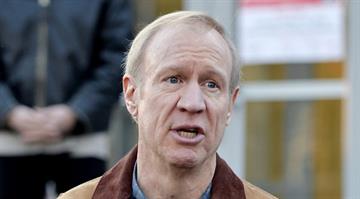 Illinois Governor Bruce Rauner (AP Images)
Springfield, Ill. (KMOV.com) -
(KMOV.com) - Illinois Governor Bruce Rauner released his 2015 tax returns showing he reported income of $188 million.
The Republican also paid over $50 million in federal and state taxes. Most of Rauner's income came from his investments, totaling $169 million.
This year the governor pumped in over $30 million of his own money into supporting Republican candidates in Illinois and even the gubernatorial race in Missouri.
Rauner only released two page federal and state returns and did not disclose any schedules or attached forms that would have revealed more information about his finances.
Above is from: http://www.kmov.com/story/33691482/gov-rauner-releases-tax-returns

Gov. Bruce Rauner and his wife have reported more than $170 million in income for 2015.
The Rauners had a taxable federal income of $176.7 million and paid more than $50 million in state and federal taxes on that income. They had a state taxable income of $188.2 million and paid a total effective tax rate on income of more than 26 percent.
In a news release, Rauner announced his family’s philanthropic foundation made contributions of more than $11.6 million.
Rauner personally donated more than $30 million to state elections this year, including a $1 million donation to a group supporting Republican candidate for Comptroller Leslie Munger in late October. He also donated $9 million to a campaign group for Illinois Rep. James Durkin (R-Western Springs). Durkin is the House Republican leader.
In 2015, Rauner reported a $58 million dollar income for 2014. Since becoming governor, he has not had control over his business’ investments, which are set up in a blind trust. Rauner ran an investment fund before running for governor.
At an event on Friday, Rauner said maybe not having control over his investments had been a good thing.
Above is from: https://dailynorthwestern.com/2016/11/13/city/gov-bruce-rauner-reports-more-than-170-million-in-income-for-2015/
Saturday, November 12, 2016
How Federal Ethics Laws Will Apply to a Trump Presidency
5 / 19


How Federal Ethics Laws Will Apply to a Trump Presidency
By STEVE EDER1 hr ago


Over the next few weeks, Donald J. Trump will be deep in the throes of selecting cabinet members, reviewing potential Supreme Court justices and deciding on the top priorities for his new administration.
In the middle of all that, he or his companies will be running golf courses in several states, managing apartment buildings in New York City and tending to properties all over the world. They will also be fighting a fraud lawsuit in San Diego, going to court against two chefs in Washington and continuing a long legal fight in Florida over airliners flying above his Palm Beach resort.
A theme of Mr. Trump’s presidency is likely to be the clash of his duties running the country with the remnants of his decades as a hard-charging businessman. But federal rules and precedent make a couple of things clear.
Mr. Trump will have no immunity from lawsuits involving his corporate ventures, thanks to a Supreme Court ruling involving Paula Jones, one of President Bill Clinton’s accusers. And nothing will stop Mr. Trump’s family from continuing to run its vast international web of businesses. Federal ethics laws and conflict-of-interest statutes that apply to other federal employees and cabinet members do not apply to the president.
“It is unprecedented in modern history to have the level of complexity of global substantial business relationships that the president-elect has, and the litigation that inevitably follows any complex global business venture,” said Norman L. Eisen, a former special counsel for ethics and government reform under President Obama, who supported Mr. Trump’s opponent, Hillary Clinton. “It will be complicated, but not insurmountable.”
Mr. Trump faces potential conflicts on multiple fronts. He has income streams that could be affected by taxation policies he may try to get through Congress. His companies have hundreds of millions of dollars of debt from banks regulated by the federal government. In one case, Mr. Trump is a part owner of an office building in Manhattan that carries a $950 million loan from lenders that include the Bank of China.
A key source of his revenue is the licensing of the Trump name, both domestically and abroad, and the value of that brand could be helped, or harmed, by actions he takes or does not take.
The Trump Organization said it had begun the process of “vetting various structures,” with a goal of quickly transferring the businesses to three of Mr. Trump’s children — Donald Jr., Ivanka and Eric — along with executives. “This is a top priority at the Organization and the structure that is ultimately selected will comply with all applicable rules and regulations,” Amanda Miller, a marketing executive for the company, wrote in an email.
During a debate in January, Mr. Trump said he would put his holdings in a blind trust, an arrangement in which a public official lets a financial manager control his wealth and does not know exactly how the money is invested. But in the next breath, he acknowledged the problem with that strategy: “Well, I don’t know if it’s a blind trust if Ivanka, Don and Eric run it.”
In an interview, Alan Garten, a lawyer for the Trump Organization, spoke of the difficulty of the task. “There has been a huge event — a historic event — that has occurred,” he said. “There is no question that makes my job more complicated.”
Under federal laws, executive branch employees must comply with conflict-of-interest rules that guard against being influenced by personal investments, and they must curb payments from sources outside the government. As a result, employees may have to recuse themselves from working on matters where they may have conflicts, holding certain properties or accepting money. For example, when Henry Paulson, the former Goldman Sachs executive, became Treasury secretary in 2006, he pledged to sell about $470 million in company stock to comply with conflict-of-interest rules.
But the president and vice president were exempted from such laws, on the theory that they needed to be able to carry out their constitutional duties without restraint. So President Trump will be able to take actions pertaining to another country even if he has business interests there.
Federal laws like those against bribery and receiving benefits from foreign countries still apply to the president. Enforcement would fall to the Justice Department or to Congress, which could pursue criminal or impeachment proceedings if evidence suggests laws were broken.
Mr. Trump will be required next year to file an updated personal financial disclosure listing his holdings, similar to the forms he has filed the past couple of years as a candidate. But Mr. Trump will not be required to make public his income tax returns, which he declined to do during the campaign, citing a continuing audit by the Internal Revenue Service, an agency he will now control. If he did release them, the tax returns could provide transparency into his international business dealings and other potential conflicts that may arise.
As president, Mr. Trump will have no protection from lawsuits related to his life outside the White House, a result of the 1997 Supreme Court ruling that President Clinton could be sued by Ms. Jones in a sexual harassment case that dated to his time as Arkansas’s governor. That litigation, which ended in an $850,000 settlement but no admission of wrongdoing, preoccupied Mr. Clinton in his second term and indirectly led to his impeachment.
That ruling could set a trap for Mr. Trump — who has been accused by several women of unwanted advances, though none are currently suing him — and present a strategy for his political opponents to hamper his administration with litigation, legal experts said.
“I anticipate that is going to be one of the first line of attacks against President Trump,” said Richard W. Painter, the chief White House ethics lawyer under President George W. Bush from 2005 to 2007, who endorsed Mrs. Clinton. “It is potentially very destructive for the country as it was with Clinton.”
On Thursday, as Mr. Trump was in Washington meeting with President Obama and congressional leaders, his lawyers were in court in San Diego for a lengthy hearing related to the Trump University lawsuit, in which former students allege they were cheated out of thousands of dollars in tuition through deceptive promises and high-pressure sales tactics.
Mr. Trump has rejected the allegations. But on Thursday, one of his lawyers, Daniel Petrocelli, told the judge, Gonzalo P. Curiel — whom Mr. Trump accused of bias because of his Mexican heritage — that he was open to discussing a settlement in the case.
Mr. Petrocelli also said he might request to delay the trial to next year, saying more time was necessary because “we’re in uncharted territories” in light of Mr. Trump’s election, The Associated Press reported. Trump University is also the subject of a lawsuit by the New York attorney general. That case will also continue.
Mr. Trump and his businesses are enmeshed in myriad other litigation. Mr. Trump has been engaged in a lengthy dispute with Palm Beach County over jetliners flying over his Mar-a-Lago resort on the way to and from the nearby airport. In a lawsuit, he claimed that the noise, vibrations and emissions from the aircraft are disruptive to guests and damaging the property, including the Dorian stone and antique Cuban roof tiles.
And in Washington, Mr. Trump has sued two celebrity chefs, Geoffrey Zakarian and José Andrés, after they backed out of restaurant deals at his new hotel development at the Old Post Office Pavilion after he made incendiary comments last year about Mexican immigrants.
The Old Post Office project itself is a potential conflict. The Trump Organization signed a 60-year deal with the federal government to redevelop and manage the building as a hotel — meaning that he will be, in a sense, his own landlord.
Above is from: http://www.msn.com/en-us/news/politics/how-federal-ethics-laws-will-apply-to-a-trump-presidency/ar-AAkcd0p?li=BBmkt5R&ocid=spartanntp
Wednesday, November 9, 2016
Boone County has new board members
Boone County has new board members
Newhouse wants land use policies that maintain open spaces and enhance retail areas.
Newhouse and Ellingson beat out independent William Randall III, 45, of Poplar Grove, who gathered 26 percent of the vote.
In District 3, Democrat incumbent Jessica Muellner, 47, of Belvidere, and Republican Carl Larson, 39, of Belvidere, claimed victory with 36 percent and 34 percent, respectively. Republican Marion Thornberry, 69, of Belvidere, got 30 percent.
Muellner wants to bring more diversity to the County Board's discussions. Larson wants to preserve services such as food pantries and senior transportation.
“We want to keep those programs definitely alive and running for people,” Larson said.
Belvidere Republicans Bernard O'Malley, 70, and incumbent Cathy Ward, 73, ran uncontested in District 2.
Susan Vela: 815-987-1392; svela@rrstar.com; @susanvela
Above is from: http://www.rrstar.com/news/20161108/boone-county-has-new-board-members
Donald Trump’s presidency: A guide to five key issues
Donald Trump’s presidency: A guide to five key issues
15 / 29

Ana Campoy 2 hrs ago

Donald Trump has spent decades in the spotlight, as wealthy real-estate developer, a reality-television star, and, in the past year and a half, an extremely effective political agitator, if not a smooth political operator. We know what he is like, and it is unreasonable to think that the office of the United States president will change much of it. The question now is what he will do.
The 2016 election campaign was always long on personality, and even important moments for discourse—the debates, for instance—felt woefully short on substance. But Trump has signaled his intentions on several key issues. And now we’d best start paying attention.
Immigration
Trump’s first actions on immigration will likely be overturning the policies that US president Barack Obama put in place to protect undocumented immigrants.
Under the policy known as Deferred Action for Childhood Arrivals (DACA), implemented by Obama as an executive order in 2012, more than 700,000 immigrants who were brought into the country illegally as children have been allowed to temporarily stay and work in the US. DAPA is a similar policy for the undocumented parents of American citizens; it has been challenged in court by several states.
Trump has vowed to end DACA, DAPA, and so-called “catch-and-release” policies, or the practice of not detaining immigrants while they wait for their cases to be processed. He’s also said he’s going to triple the number of US Immigrations and Customs Enforcement agents and will “move criminal aliens out day one.”
None of this will result in mass deportations in the short term—the US Department of Homeland Security does not have the funding to deport all 11 million people who are thought to be in the country illegally, and it’s unclear where Trump would get it. There’s also a question of physical resources; thousand of Central American women and children who showed up at the border in the summer of 2014 quickly overwhelmed existing detention facilities.
It would take more funds still to build that wall between the US and Mexico that Trump has talked about from the start of his campaign. Aside from being very expensive, it would require congressional approval, and logistically, it would be very complicated to erect a barrier across the length of the entire border.
But Trump doesn’t need a physical symbol like a wall to communicate his policy objectives. His tone alone will immediately destroy the fragile peace of mind that Obama’s approach had given millions of immigrants. Obama in essence had told them, if you don’t have a criminal record, we’re not coming after you. That assurance is gone under Trump.
Infrastructure
It’s no secret the US needs to invest in its crumbling bridges and highways. The backlog of infrastructure projects is expected to cost $3.6 trillion by 2020, according to the American Society of Civil Engineers. The need is so stark, and the benefits to the economy so obvious, that it was one of the few areas where Trump and Clinton agreed this campaign season. But while rebuilding crumbling bridges and highways may be a smart long-term investment, it’s unclear whether Congress will have the appetite for what is essentially another stimulus program.
Trump hasn’t given a precise figure for how much he wants to spend on infrastructure, other than to say he would at least double the $275 billion Clinton proposed.
Trump says he would develop US transportation, water, telecommunications, and electricity systems, using “American steel made by American workers.” He would dangle tax credits to attract private investment and streamline permitting for pipelines and other energy projects. He is vague on how to pay for his plan, but has suggested he would issue bonds and support an infrastructure bank.
“We’ll get a fund, make a phenomenal deal with low interest rates, and rebuild our infrastructure,” he said. Then there’s the funding option he unveiled at a Nov. 7 rally, near the tail end of his campaign trail.
Obamacare
How you view Obamacare is a litmus test for your political leanings. Liberals see the program as a basic success, one that has provided millions of previously uninsured Americans with healthcare, but just needs a few tweaks. Conservatives see a disaster, with soaring premiums, failing state co-ops, and a two-tiered insurance system that is leaving many on Obamacare plans with fewer options. But both sides agree on the core problem with the current system: not enough young, healthy people are enrolling, meaning the insurance pools have too many sick patients who are driving up costs.
But whereas Clinton had promised to recalibrate and expand the Affordable Care Act, Trump has said he’ll repeal it, and end the individual mandates requiring health insurance. As a replacement, he has proposed expanding health savings accounts, which allow families to set aside money tax-free to pay for insurance premiums and drug costs, and would let them fully deduct medical expenses from their taxes. He also wants to let insurance companies sell policies across state lines, generating more competition, and would allow drugs to be imported from overseas.
Trump’s plan is mainly achieved through rewriting the tax code, which would likely need bipartisan support, and does little for low-income families who are not paying taxes. According to one analysis, the net effect could mean 25 million Americans could lose health insurance.
Trans-Pacific Partnership
One thing we know about Trump is that he isn’t for free trade. The Mexican peso has been tracking Trump’s odds of winning; when they improved, the currency frequency would plunge on the expectations that Trump will begin his promised demolition of the North American Free Trade Agreement (NAFTA). You can assume that the Trans-Pacific Partnership (TPP) is over, too.
The TPP, intended to cover a dozen countries and roughly one-third of global trade, promised to lower tariffs and set standards on a broad range of trade issues, from labor and environmental regulations to the treatment of intellectual property. It was potentially a counterweight to China’s strength as a manufacturer to the world.
The deal was endorsed by president Obama and, at one time, Clinton. But that was before the pact was fully negotiated, and before influential senators to the left of Clinton, namely Bernie Sanders and Elizabeth Warren, forced her into the skeptics’ corner. Trump needed no such nudging. From the early days of the campaign, his full-throated critiques of the deal helped brand it as a refutation of core American values.
His threats to hike tariffs on Mexico and China by 35% or 45% will be difficult without collaboration from lawmakers in Congress. Major US corporations will fight Trump’s trade threats tooth and nail, since every complication in the global supply chain means losses to their bottom line.
But even if Trump just uses presidential powers to punish countries for currency manipulation (whether real or perceived), a trade war could ensue. This could entail challenges before the World Trade Organization, retaliatory tariffs, and other penalties on big US companies doing business abroad—which is most of them—and would hit the pocketbooks of the American people, whether they are buying cheap goods at Wal-Mart or expensive goods at the Apple store. And a US assault on the foundations of global commerce will no doubt fray relationships with major allies when it comes time to dealing with non-economic challenges facing the globe.
The US Supreme Court
Trump made an unprecedented move in electoral politics (one of many, to be sure) this past August, when he released a shortlist of potential replacements for the late US Supreme Court justice Antonin Scalia. Heeding the call of conservatives, who are desperate to prevent a liberal majority on the court, his list drives hard to the right; he reportedly consulted the ultra-conservative Heritage Foundation and Federalist Society in compiling it.
Notable names of possible nominees include conservative Utah senator Mike Lee (who refused to endorse Trump) and Charles Canady of the Supreme Court of Florida who in 1995, as a congressman, introduced the first proposed federal ban on “partial-birth” abortions. Also on the list is 10th Circuit Court of Appeals judge Timothy Tymkovich. He wrote the opinion in Burwell v. Hobby Lobby, which held that privately owned corporations could not be forced to provide contraception to employees as part of health-insurance packages.
A continued Republican majority in the Senate means that whoever Trump picks to fill the court’s ninth seat will likely be quickly confirmed, reestablishing the ideological balance of the last few years: four sure conservatives, four sure liberals, and moderate-conservative justice John Roberts as the perennial tiebreaker.
Subscribe to:
Posts (Atom)