Tuesday, June 14, 2022

Russian Offensive Campaign Assessment, June 13

RUSSIAN OFFENSIVE CAMPAIGN ASSESSMENT, JUNE 13

Jun 13, 2022 - Press ISW

Download the PDF


Russian Offensive Campaign Assessment, June 13

Kateryna Stepanenko, Mason Clark, George Barros, and Grace Mappes

June 13, 7:30pm ET

Click here to see ISW's interactive map of the Russian invasion of Ukraine. This map is updated daily alongside the static maps present in this report.

Kremlin-sponsored outlet Izvestia published and quickly removed an appeal by the First Deputy Head of the Russian Presidential Administration Sergey Kirelenko for Russia to rebuild the Donbas on June 12 and blamed hackers for what they (likely falsely) claimed was a “fake publication.” Izvestia likely intended to save the article for a later date to set informational conditions for Russian annexation of Donbas. Kirelenko’s appeal stated that Russia will restore the Donbas regardless of high costs or if doing so lowers the standard of living in Russia.[1] Izvestia blamed unknown hackers for publishing a “fake article,” but it is possible that hackers instead released an article Izvestia had prepared to publish at a later date. The Kremlin previously published and removed an article prematurely celebrating a Russian victory over Ukraine in late February and discussing the capture of Ukraine in past tense in anticipation of Ukraine’s capitulation during the first Russian-Ukrainian negotiations in Belarus.[2] Unnamed Kremlin officials previously identified Kirelenko as the future head of a new Russian federal district, which would encompass Donbas, and occupied settlements in Kherson and Zaporizhia Oblasts.[3]

Russia continues to deploy insufficiently prepared volunteer and reserve forces to reinforce its ongoing operations. Kremlin-sponsored outlet Izvestia released footage showing Russian artillery reservists undergoing training with old D-20 howitzers reportedly within 10 days of their deployment to Ukraine.[4] The reservists focused on learning how to operate hand-held weapons, despite being reportedly only days away from deploying. Social media footage also showed Russian forces transporting Russian volunteer and reserve units with T-80BV tanks (a variant produced in 1985, as opposed to the modernized T-80 BVM operated by the 1st Guards Tank Army) and BMP-1 armored personnel carriers (which have largely been phased out in favor of the BMP-2) to Belgorod Oblast on June 9.[5] Additional social media footage showed Russian forces transporting T-80BV tanks removed from storage in Moscow Oblast on June 9.[6]

Key Takeaways

  • Russian forces pushed Ukrainian defenders from the center of Severodonetsk and reportedly destroyed the remaining bridge from Severodonetsk to Lysychansk on June 13, but Ukrainian officials reported that Ukrainian forces are not encircled in the city.
  • Russian forces carried out unsuccessful ground assaults in an attempt to sever Ukrainian ground lines of communications (GLOCs) near Popasna and Bakhmut.
  • Russian forces launched unsuccessful offensive operations southeast of Izyum and north of Slovyansk, and are likely setting conditions for an assault on Siversk and northwestern Ukrainian GLOCs to Lysychansk.
  • Russian forces are likely conducting a limited offensive directly northeast of Kharkiv City in a likely attempt to push Ukrainian forces out of artillery range of Russian rear areas and secured some successes.
  • Russian and Ukrainian forces are engaging in ongoing fighting for Davydiv Brid in northwestern Kherson Oblast.
  • Russian occupation authorities likely staged terrorist activity in Melitopol and Berdyansk for Russia Day on June 12.
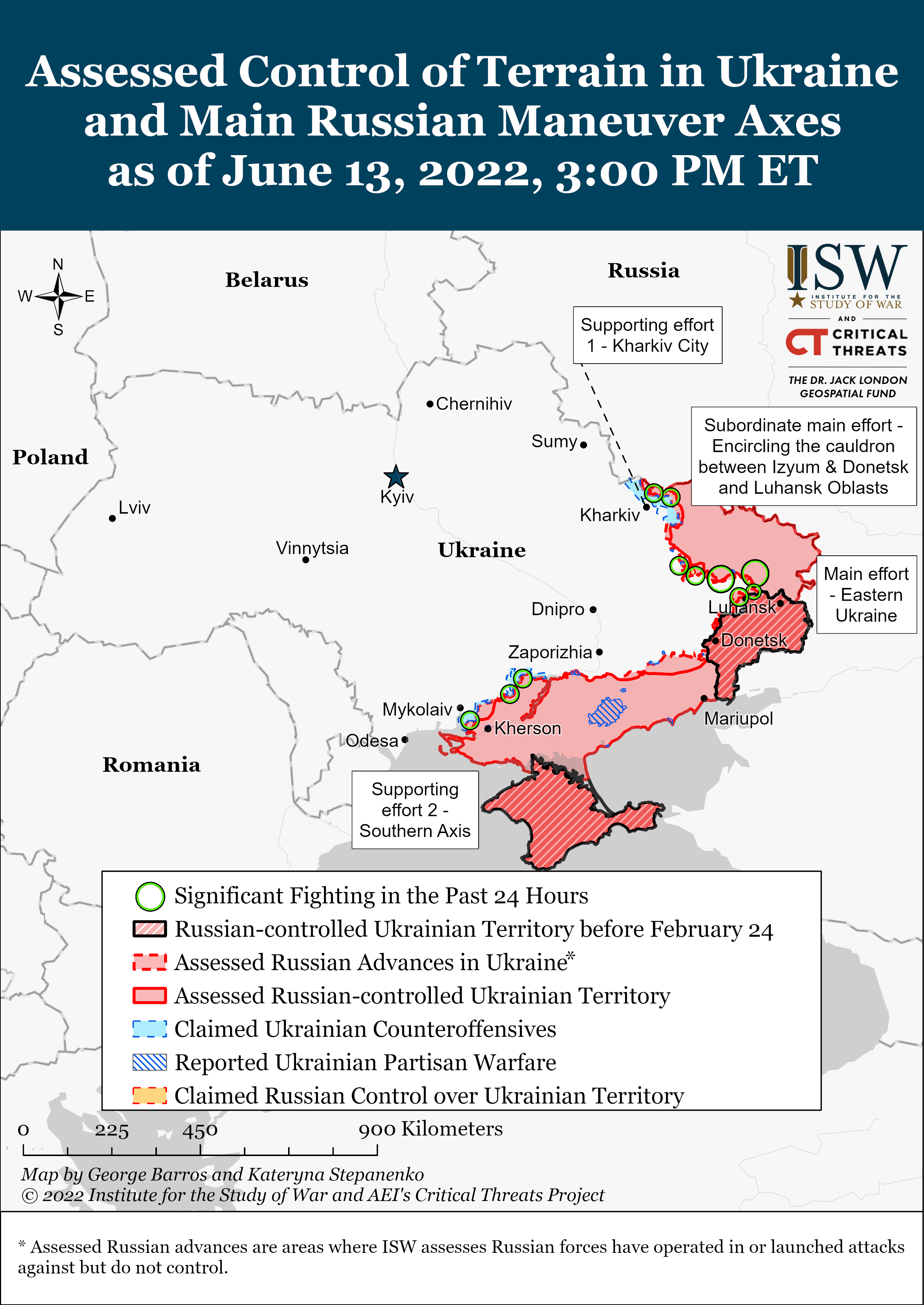
We do not report in detail on Russian war crimes because those activities are well-covered in Western media and do not directly affect the military operations we are assessing and forecasting. We will continue to evaluate and report on the effects of these criminal activities on the Ukrainian military and population and specifically on combat in Ukrainian urban areas. We utterly condemn these Russian violations of the laws of armed conflict, Geneva Conventions, and humanity even though we do not describe them in these reports.

  • Main Effort—Eastern Ukraine (comprised of one subordinate and three supporting efforts);
  • Subordinate Main Effort—Encirclement of Ukrainian troops in the cauldron between Izyum and Donetsk and Luhansk oblasts
  • Supporting Effort 1—Kharkiv City;
  • Supporting Effort 2—Southern Axis;
  • Activities in Russian-occupied Areas

Main Effort—Eastern Ukraine

Subordinate Main Effort—Southern Kharkiv, Donetsk, Luhansk Oblasts (Russian objective: Encircle Ukrainian forces in Eastern Ukraine and capture the entirety of Donetsk and Luhansk oblasts, the claimed territory of Russia’s proxies in Donbas)

Russian forces conducted offensive operations in Severodonetsk and pushed Ukrainian forces away from the city center on June 13 but did not fully capture the city. Ukrainian Defense Ministry Spokesperson Oleksandr Motuzyanyk noted that Russian forces did not entirely clear Severodonetsk of Ukrainian resistance due to Russia’s reluctance to commit its (likely understrength) infantry units and overreliance on artillery and assault aviation for offensive operations.[7] The Ukrainian General Staff added that fighting is still ongoing in Severodonetsk.[8] Luhansk Oblast Administration Head Serhiy Haidai reported that Russian forces destroyed the last remaining bridge from Severodonetsk to Lysychansk and retain a significant artillery advantage over Ukrainian forces.[9] Deputy Head of the Donetsk People’s Republic (DNR) Militia Eduard Basurin blamed Ukrainian forces for destroying the bridge (though it is highly unlikely Ukrainian forces would willingly destroy the bridge while any of their forces remained in Severodonetsk and this claim is likely false) and claimed that Russian forces are entirely encircling remaining Ukrainian troops in Severodonetsk.[10] Haidai denied Basurin’s claims of encirclement, noting that Ukrainian forces still have limited military channels for the evacuation of wounded troops and reinforcements despite the destruction of all three bridges.[11] Haidai specified that Ukrainian authorities could not conduct civilian evacuations and humanitarian efforts because Russian forces damaged the third bridge prior to its destruction on June 13. Geolocated footage showed that Ukrainian forces continued to hold defensive positions around the Azot Chemical Plant on June 12.[12] The Ukrainian General Staff reported that Russian forces also conducted unsuccessful offensive operations on Metolkino, approximately 4km east of Severodonetsk.[13]
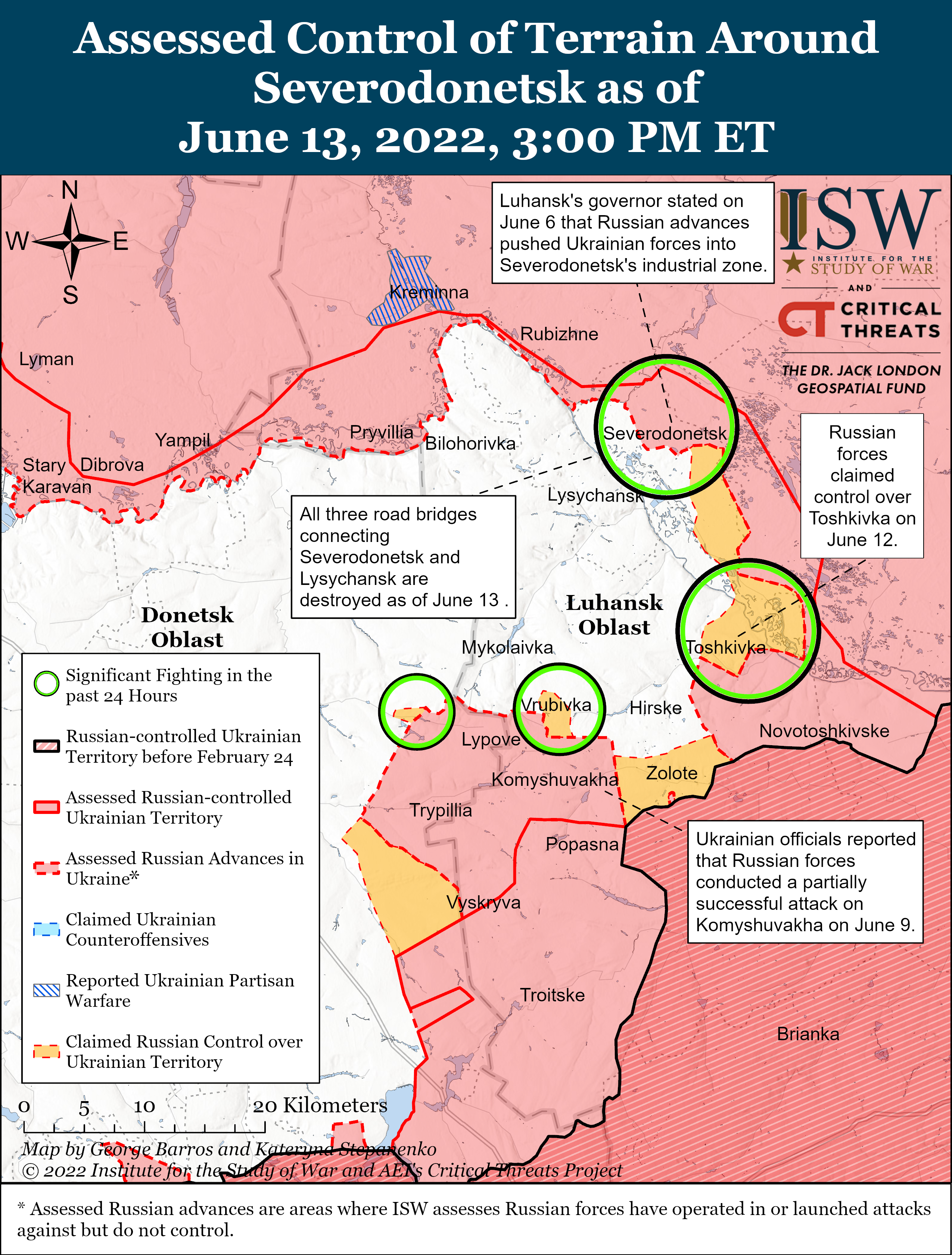
Russian forces unsuccessfully attacked settlements adjacent to Ukrainian ground lines of communication (GLOCs) south of Lysyschansk. The Ukrainian General Staff reported that Ukrainian forces repulsed Russian assaults on Vrubivka, a settlement on a connecting road to the Lysychansk-Bakhmut T1302 highway.[14] Russian forces reportedly resumed ground assaults near Zolote, a settlement adjacent to the Ukrainian GLOCs along the T1303 highway to Lysychansk.[15] A Luhansk People’s Republic (LNR) Militia commander (under the pseudonym Chapai) claimed that Russian forces seized Toshkivka, approximately 4.5km east of the T1303, but the Ukrainian General Staff reported that Russian forces continued to shell Ukrainian positions in the settlement on June 13, indicating fighting likely remains ongoing.[16] Russian forces reportedly conducted unsuccessful assaults on Kodema and Novoluhanske - approximately 15 and 21km south of Bakhmut, respectively.[17] Pro-Russian Telegram Rybar claimed that elements of the Russian Wagner Group have been fighting in Pokrovske (12.5km east of Bakhmut) since June 11, but Ukrainian sources stated that Russian forces are carrying out aerial reconnaissance in the settlement.[18]

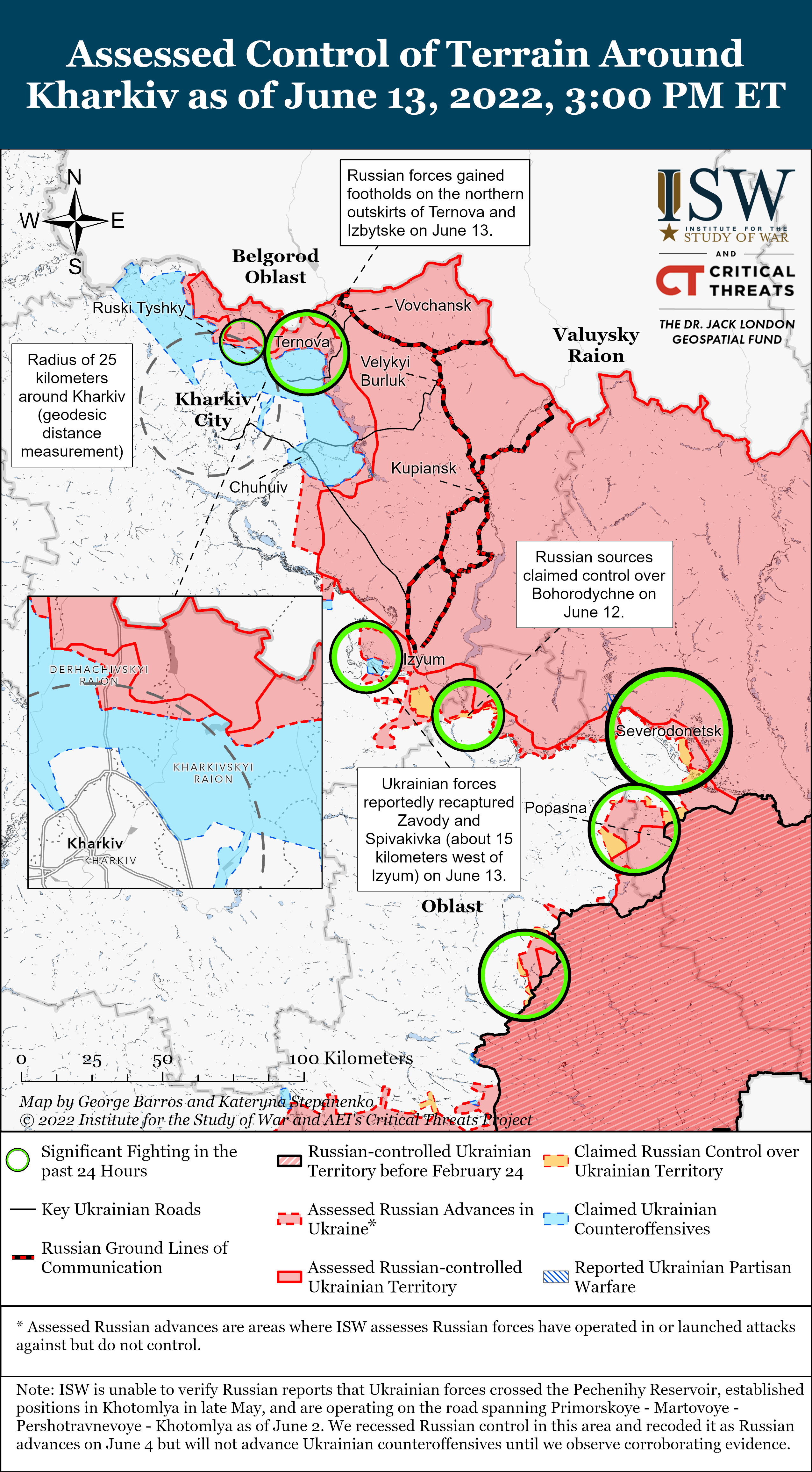
Russian forces launched unsuccessful offensive operations southeast of Izyum and in settlements north of Slovyansk but did not resume assaults in the Lyman area on June 13. The Ukrainian General Staff reported that Russian forces attacked Bohorodychne, approximately 25km southeast of Izyum, but only secured the northwestern outskirts of the settlement.[19] Russian forces also launched an unsuccessful assault on Dolyna, a settlement along the E40 highway to Slovyansk.[20] Ukrainian military journalist Andriy Tsaplienko reported that Ukrainian forces are conducting counteroffensives just west of Izyum and have liberated Zavody and Spivakivka, but Ukrainian officials did not confirm this report.[21] Russian forces are likely continuing their preparations to cut off Ukrainian GLOCs to Lysychansk from Siversk and the northwest. Russian forces reportedly shelled Maiaky (just five kilometers northeast of Siversk) and transferred up to 80 units of military and artillery equipment to Kreminna and Starobilsk.[22] LNR Ambassador to Russia Rodion Miroshnik claimed that Russian forces will likely simultaneously attack Lysychansk and Siversk to block Ukrainian forces from retreating to Slovyansk.[23] Russian forces likely seek to set conditions for direct assaults against Siversk and settlements northwest of Lysychansk in the next two weeks.

Russian forces did not conduct any offensive operations east or west of Avdiivka on June 13 and continued to shell surrounding settlements.[24] Ukraine’s Joint Forces Task Force reported liberating three unnamed settlements and pushing back the line of contact by 15km in Donetsk Oblast, though ISW cannot independently verify this claim.[25]

Supporting Effort #1—Kharkiv City (Russian objective: Withdraw forces to the north and defend ground lines of communication (GLOCs) to Izyum)

Russian forces are likely conducting a limited offensive directly northeast of Kharkiv City in a likely attempt to push Ukrainian forces out of artillery range of Russian rear areas. Russian forces made incremental territorial gains in settlements along the Ukrainian-Russian border northeast of Kharkiv City on June 13. The Ukrainian General Staff reported that Russian forces launched partially successful ground assaults on the border settlements of Ternova and Izbutske, approximately 40km northeast of Kharkiv City, and secured the northern outskirts of Izbutske.[26] Pro-Russian Telegram channel Rybar claimed that Russian and Ukrainian forces are engaging in trench and artillery warfare in Tsupivka and Velyki Prokhody, just west and east of the Kharkiv City-Belgorod City highway.[27] Geolocated footage confirmed that Ukrainian forces continued to target Russian ammunition storages in Velyki Prokhody.[28] Kharkiv Oblast Head Oleg Synegubov reported that Russian forces launched MLRS strikes on residential areas of Kharkiv City overnight.[29]
Supporting Effort #2—Southern Axis (Objective: Defend Kherson and Zaporizhia Oblasts against Ukrainian counterattacks)

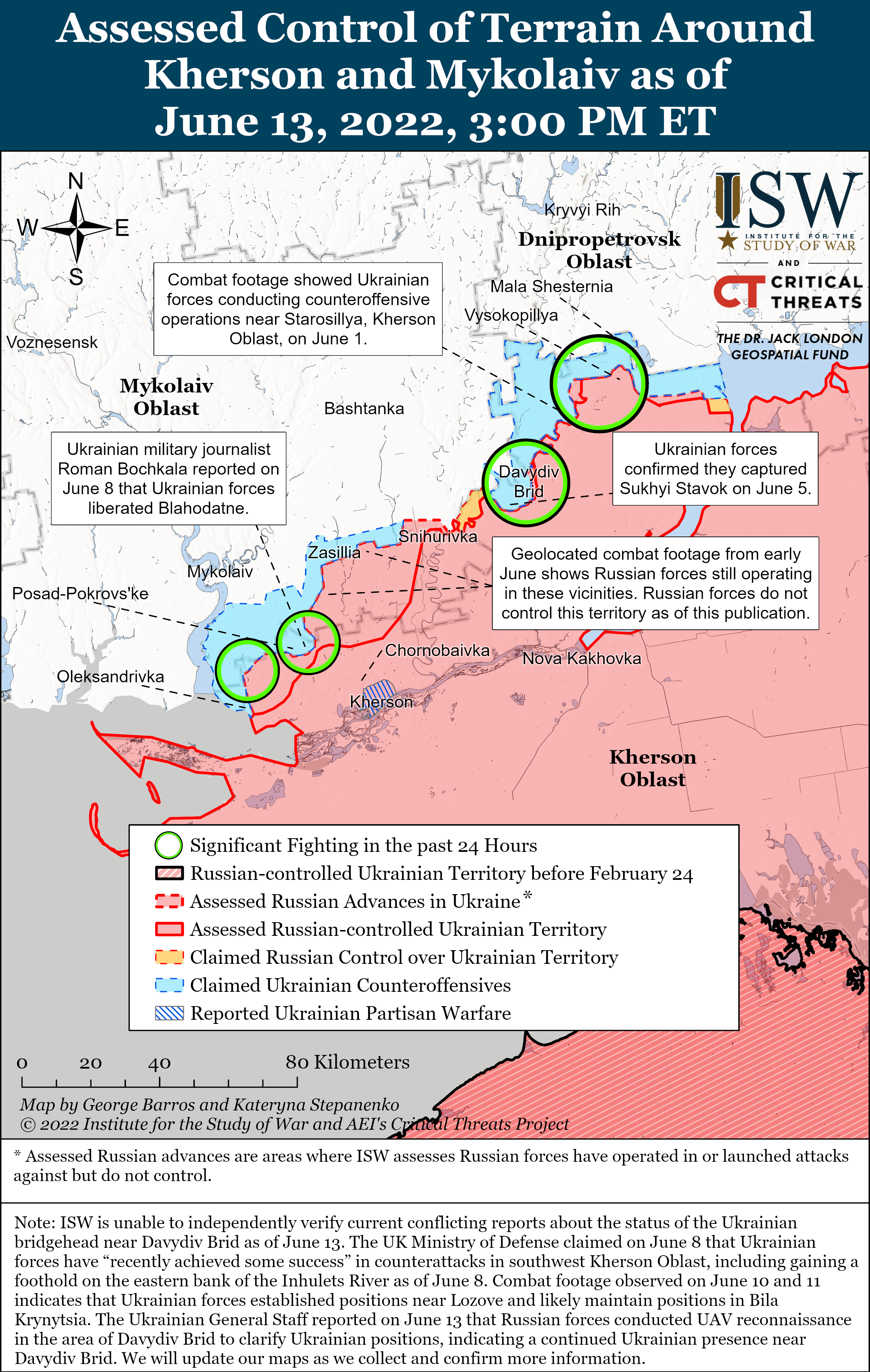
Ukrainian forces reportedly continued to gradually attack Russian positions on the eastern bank of Inhulets River in northwestern Kherson Oblast. The Ukrainian Southern Operational Command noted that Ukrainian and Russian forces engaged in heavy fighting in the Davydiv Brid area, an operationally significant settlement situated on the eastern Inhulets riverbank and on Russian ground lines of communication (GLOCs) along the T2207 highway.[30] The Ukrainian General Staff reported that Russian forces conducted aerial reconnaissance over Davydiv Brid, but the scope of Ukrainian advances in the settlement remains unclear.[31] Russian forces continued to fortify their positions and reportedly strengthened the grouping of troops in areas near the Dnipropetrovsk-Kherson Oblast border.[32]

Ukrainian artillery struck Russian fuel and ammunition depots in Polohy, approximately 60km west of Zaporizhia-Donetsk Oblast border.[33]
Activity in Russian-occupied Areas (Russian objective: consolidate administrative control of occupied areas; set conditions for potential annexation into the Russian Federation or some other future political arrangement of Moscow’s choosing)

Russian authorities may have staged false flag attacks in Melitopol and Berdyansk on June 12, likely to accuse Ukrainian partisans of targeting civilians. Self-proclaimed head of the Zaporizhia Oblast Military-Civilian Administration Vladimir Rogov made a preliminary announcement that “terrorists” staged three explosions in Berdyansk, before retracting his statements and identifying the situation as an accident at the electrical station.[34] Rogov falsely maintained that Berdyansk residents attribute any emergency in the city to Ukrainian efforts to disturb peaceful life in “liberated” (Russian-occupied) regions. Self-proclaimed deputy head of the Zaporizhia Oblast Internal Affairs Ministry Alexei Selivanov also claimed that unknown assailants planted an explosive device in Melitopol to disrupt Russia Day (the day of adoption of the declaration of Russian state sovereignty after the collapse of the Soviet Union).[35] Zaporizhia Oblast Military Administration Head Oleksandr Starukh noted that Ukrainian authorities warned that Russian forces could stage terrorist activity prior to Russia Day.[36]

Russian occupation authorities continue to face personnel shortages that impede their occupation measures. The Ukrainian Military Intelligence Directorate (GUR) reported that Russian forces in Mariupol were unable to recruit collaborators by promising individual applicants 10,000 rubles per month and switched to offering payments in food supplies, given the dire humanitarian situation in the city.[37] The GUR added that Russian occupation authorities are inviting any volunteers to clear out rubble and dead bodies in Mariupol. Mariupol Mayor’s Adviser Petro Andryushenko noted that the Russian occupation authorities are restricting access to humanitarian aid for individuals younger than 65 years of age.[38] Russian occupation authorities in Mariupol may be attempting to gain the support of elderly citizens and coerce younger residents to work with Russian forces in exchange for food. Russian occupation authorities additionally deployed Donetsk People’s Republic (DNR) police officers to patrol Kherson City.[39] The GUR also noted that Russian occupation authorities are recruiting teachers without pedagogical education and transporting educators from Crimea to replace Melitopol teachers that refused to teach Russian curriculums.[40] Russian occupation authorities are also attempting to bribe civilians by offering debt forgiveness of all loans taken from Ukrainian banks.[41]

Russian occupation authorities continue to introduce new titles for personnel that agreed to cooperate with the Kremlin and its proxies. The Donetsk People’s Republic Head (DNR) Denis Pushilin appointed previous Ukrainian Mayor of Sviatohirsk Vladimir Bandura as the new Sviatohirsk Administration Head after Bandura agreed to cooperate with Russian forces.[42] Russian occupation authorities have seemingly eliminated the position of mayor in occupied settlements, likely to fully institute their own governance structures rather than taking over existing structures.

Russian occupation authorities are continuing to exploit Ukrainian agrobusiness and have reportedly banned the export of crops to Ukrainian government-controlled territories from Russian occupied settlements.[43] The GUR also noted that Russian forces are coercing Kherson Oblast businessmen and farmers to hand over 70% of their harvest to Crimean buyers at low profit margins.

Above is available daily from:  https://www.understandingwar.org/backgrounder/russian-offensive-campaign-assessment-june-13?campaign_id=249&emc=edit_ruwb_20220614&instance_id=64035&nl=russia-ukraine-war-briefing&regi_id=53444314&segment_id=95116&te=1&user_id=8a776225d84f290294e4274317e366a5

June 14, 2022: Johns Hopkins COVID 19 Situation Report

COVID-19 Situation Report

Editor: Alyson Browett, MPH

Contributors: Clint Haines, MS; Noelle Huhn, MSPH; Natasha Kaushal, MSPH; Amanda Kobokovich, MPH; Christina Potter, MSPH; Matthew Shearer, MPH; Marc Trotochaud, MSPH; and, Rachel A. Vahey, MHS.

MONKEYPOX OUTBREAKS UPDATE Read our latest update from June 1 on the monkeypox outbreaks and visit our monkeypox resource page. We will continue to analyze the situation and provide updates, as needed. If you would like to receive these updates, please sign up here.

SARS-CoV-2 ORIGINS On June 9, the WHO Scientific Advisory Group for the Origins of Novel Pathogens (SAGO) published the first preliminary report from its efforts to determine key analyses necessary to identify the origin of SARS-CoV-2 and future emerging and re-emerging pathogens. While SAGO was not explicitly tasked with identifying the original source of SARS-CoV-2, the report indicates that the available evidence remains insufficient to fully characterize the circumstances around the emergence of the virus. The experts indicate that the available evidence suggests that the closest ancestor of the virus likely circulated in wild bat populations before the spillover event into humans. The report indicates that it is not possible to rule out that the virus escaped from a research laboratory, but additional investigation is required to more fully characterize that scenario. Several SAGO members included a note in the report, however, to emphasize that they identified “no new scientific evidence” to support this theory and did not support continuing this line of investigation.

The report includes a series of recommendations regarding data and analyses that would further support efforts to identify the original source of the COVID-19 pandemic. SAGO recommends further analysis of environmental specimens from the Hunan seafood market and of potential animal and environmental sources to identify the route of SARS-CoV-2 introduction to the market. Additionally, analysis of human respiratory pathogen specimens (eg, influenza, enteroviruses) collected prior to the emergence of COVID-19 could help identify previously undetected SARS-CoV-2 infections. Genetic analysis of infections in wild and livestock animal populations could similarly help identify related coronaviruses or intermediate hosts that may have facilitated spillover into human populations. The SAGO report also highlights the need for these types of analyses regarding the emergence of new SARS-CoV-2 variants. Some independent experts continue to call attention to the lack of transparency by the Chinese government, including restrictions on access to specimens, facilities, and personnel necessary to conduct these investigations.

SAGO also outlines key components of a global framework to guide response activities and investigations into the emergence or re-emergence of future pathogens. This framework largely mirrors SAGO’s calls for additional data related to SARS-CoV-2. Specifically, the group notes the importance of investigating human and animal specimens; interactions between humans, animals, and the environment; genomics and phylogenetics; biosafety and biosecurity systems and processes; and research activities or other human interaction with related pathogens.

ACUTE HEPATITIS & LONG COVID Researchers from Israel published findings from their study on instances of long-term COVID-19 liver manifestation among children. The study, published in the Journal of Pediatric Gastroenterology and Nutrition, involved a retrospective investigation of 5 patients hospitalized in an Israeli children’s hospital. Each of the patients had a confirmed SARS-CoV-2 infection and presented with long-term liver injury stemming from their infection. Two of the patients in the study, both under 6 months of age, presented with acute liver failure, the other 3 patients, ranging between ages 8 and 13 years, presented with acute hepatitis and cholestasis.

This review adds to the growing list of evidence tying post-acute sequelae of COVID-19 (PASC/Long COVID) to cases of acute hepatitis of unknown origin. Last month, multiple technical and news media publications documented an international cohort of children with severe hepatitis. Many experts have suggested that COVID-19 could be a potential source for this unexplained manifestation, considering the lack of apparent epidemiological explanations. The US CDC is examining a series of US cases of acute hepatitis as well, and a recent update indicates that adenovirus type 41 could be a possible causative agent as well. While much has been written about Long COVID, many questions remain, and advocates continue to call for expanded research efforts into explanations and treatments.

US PEDIATRIC VACCINATION Last week, the Biden Administration outlined its SARS-CoV-2 vaccination plans for children under 5 years of age. The current estimates suggest that up to 18 million children may become eligible for SARS-CoV-2 vaccination once the US FDA authorize existing vaccines for emergency use in younger children. The White House has allocated 10 million doses for states to distribute to dispensing sites. Notably, the White House estimates that 85% of the newly eligible pediatric population lives within 5 miles of one of these sites. The allotment of vaccines is approximately even between the Pfizer-BioNTech and Moderna vaccines. Despite a ready supply of vaccines and a plan to make them accessible to a large number of children in this age group, questions remain regarding the willingness of parents and caretakers to get the children vaccinated. In the age group of children from 5-11 years, only one-third of eligible children have received the vaccine.

US TRAVEL RESTRICTIONS On June 12, the US CDC lifted its testing requirement for travelers arriving in the US on flights originating in other countries. In the CDC’s announcement rescinding the policy, CDC Director Dr. Rochelle Walensky noted that the availability of vaccines, therapeutics, and alternative testing options (eg, rapid at-home test kits)—as well as the current prevalence of vaccination coverage in the US—largely render the testing restrictions obsolete, and she emphasized that the CDC continues to recommend full vaccination against SARS-CoV-2, including with the appropriate booster dose/s.

Previously, international air travelers with destinations in the US were required to obtain a negative PCR-based or antigen test within 1 day of departure—or provide documentation of recent recovery from SARS-CoV-2 infection—regardless of vaccination status. The policy was instituted in the final days of the Trump Administration and continued under President Joe Biden. Notably, the restrictions only applied to international air travel and did not cover individuals entering the US via land borders nor domestic air travel. The travel industry, particularly airlines, has long called for the testing requirement to be eliminated, arguing that it was originally instituted at a time when the vast majority of the US was unvaccinated. Additionally, some health officials and other experts have argued that the testing mandate provided little protection for travelers or benefit in terms of slowing domestic transmission or the introduction of new SARS-CoV-2 variants into the US.

US SEROPREVALENCE The US CDC COVID-19 Response Team published updated analysis of infection- and vaccine-induced SARS-CoV-2 seroprevalence in the US. The findings, published in JAMA, are based on more than 2.4 million blood donations collected from individuals aged 16 years and older across all 50 states; Washington, DC; and Puerto Rico from July 2020-December 2021. The research does not include individuals with active SARS-CoV-2 infection or who were suspected COVID-19 cases, and results were weighted by demographic factors, including age, sex, race, and ethnicity.

The researchers observed increases in both infection-induced seroprevalence and combined seroprevalence between May 2021 and December 2021, increasing from 20.2% to 28.8% and 83.3% to 94.7%, respectively. At the end of the timeframe for the study, researchers observed the highest level of infection-induced seroprevalence in multiple demographic groups—including individuals aged 16-29 years (40.0%), non-Hispanic Black individuals (32.5%), and Hispanic individuals (32.5%)—as well as the Midwest (31.7%) and South (33.5%) regions.

Notably, regions with higher vaccine coverage seroprevalence exhibited a significantly smaller increase in infection-induced seroprevalence. In regions with vaccine-induced seroprevalence less than 60%, infection-induced seroprevalence increased by 19.8% over the course of 2021, compared to only 10.6% in regions with vaccine seroprevalence greater than 80%. Despite widespread combined seroprevalence at the end of 2021, the Omicron variant was still able to drive a major surge in early 2022, and the researchers note that this illustrates the transmissibility and immune escape potential of new variants.

BA.4 & BA.5 SUBVARIANTS IN EUROPE The European CDC published an epidemiological update on the emergence and prevalence of the BA.4 and BA.5 sublineages of the SARS-CoV-2 Omicron variant of concern (VOC). The subvariants were first detected in Europe in March, and in May, Portugal was the first European country to report a COVID-19 surge associated with one of the subvariants (BA.5). Notably, Portugal’s daily incidence appeared to peak in late May/early June. While most European countries have reported relatively low prevalence of these subvariants, they represent an increasing proportion of new sequenced specimens in multiple countries over the past several weeks, including Austria, Belgium, Denmark, France, Germany, Ireland, Italy, Netherlands, Spain and Sweden. In particular, the BA.4 and BA.5 subvariants represent more than 25% of sequenced specimens in Belgium over the second half of May, and more than 10% in some communities in Spain. The increasing prevalence of BA.4/BA.5 corresponds to increasing COVID-19 daily incidence in most of those countries as well.

The ECDC projects that BA.4 and BA.5 will become the dominant variants across Europe “in the coming weeks” and that the continent can expect an associated COVID-19 surge like those in the countries noted above. The daily incidence in Europe has increased nearly 30% since June 6, with even larger increases in the UK. While there is “no evidence” these subvariants pose higher risk of severe disease, the ECDC notes that an overall increase in transmission can be associated with subsequent increases in hospitalizations and mortality.

WASTEWATER SURVEILLANCE Researchers from the University of Illinois and University of Florida published (preprint) findings from a study on the implementation of neighborhood-scale SARS-CoV-2 wastewater surveillance systems. The COVID-19 pandemic has popularized wastewater surveillance as a tool to provide early warning of impending outbreaks; however, most of these efforts have focused on large-scale sewer systems. Neighborhood-scale systems can provide more targeted early warning capacity, but as the catchment population decreases, the volume of fecal matter is less consistent, which can make it more difficult to analyze the concentration of SARS-CoV-2 and accurately detect emerging outbreaks.

This study covered 7 neighborhood-scale wastewater surveillance systems in Champaign County, Illinois, from January-November 2021, with catchment populations ranging from 853 to 2,402 individuals. In an effort to improve the system’s accuracy, the researchers developed a methodology to normalize the concentration of SARS-CoV-2 N gene fragments by the concentration of pepper mild mottle virus (PMMOV) detected in the system. The presence and concentration of PMMOV served as an analogue for the presence of fecal matter in the sample, which enabled the researchers to establish more accurate baseline metrics and better analyze the relative concentration of SARS-CoV-2. Based on the concentration of SARS-CoV-2 N gene fragments to PMMOV, the system output a binary risk assessment (ie, Low or High).

Over the 11 months of the study, the 7 neighborhoods experienced 26 total local COVID-19 outbreaks, and the surveillance system identified High COVID-19 risk corresponding to 19 of those time periods (73% sensitivity). The system identified 17 total High-risk time periods, and 12 of those corresponded to local COVID-19 outbreaks (71% specificity). The researchers also indicated that the surveillance system was capable of providing sufficiently accurate risk assessment for specific variants of SARS-CoV-2, which could provide early warning of the geographic spread of variants of concern. This study provides evidence that smaller-scale wastewater surveillance systems can provide indication of increased transmission risk among specific communities, particularly during periods of relatively low local incidence.

Friday, June 10, 2022

Much of the January 6 Congressional Report may have been known back in April 2021


International Committee of the Fourth International (ICFI)


Internal Pentagon document confirms military standdown during January 6 coup attempt

Jacob Crosseg = "http://www.w3.org/2000/svg" />11 April 2021

Over the weekend the Associated Press (AP) revealed the contents of an internal Pentagon report detailing a series of calls made between lawmakers and the Department of Defense during the attack on Congress on January 6. The report demonstrates that Trump-appointed officials within the Pentagon purposefully forestalled the deployment of military forces for hours even as lawmakers and Vice President Mike Pence pleaded for help while fascist-led mobs hunted and called for their deaths inside the Capitol.

The report states that at 4:08 p.m. on January 6, over two hours after windows at the Capitol were breached by members of the fascist Proud Boys, Pence called acting Secretary of Defense Christopher Miller and demanded he “clear the Capitol.”

The AP wrote that Pence’s phone call to Miller “lasted only a minute” and that Pence, who was still trapped in a “secure location,” asked for a deadline as to when the Capitol would be clear. The AP wrote that Pence was forced to make the call because the coup-plotter Trump was “not engaged” during the attack on Congress.

In this Jan. 6, 2021, file photo rioters try to break through a police barrier at the Capitol in Washington. (AP Photo/John Minchillo, File)

This meant that the authority to deploy the D.C. National Guard resided in the hands of acting Defense Secretary Miller, a former Special Forces commander and Trump loyalist.

In addition to Pence, the Pentagon report indicated that congressional leaders were also making desperate appeals to military officials seeking the deployment of the National Guard.

“We need help,” Senate Majority Leader Chuck Schumer told General Mark Milley, chairman of the Joint Chiefs of Staff, and other military and Pentagon officials more than an hour after the Senate chamber had been breached, the AP reported. By 3:19 p.m. both Schumer and House Speaker Nancy Pelosi were calling the Pentagon demanding the deployment of the National Guard to the Capitol.

Lawmakers were being ferried in underground tunnels away from the approaching mob of Trump supporters, far-right militia members and neo-Nazis, some were wielding clubs, bear mace and ropes. Apparently high-ranking Pentagon officials were more concerned with protecting themselves than any lawmakers.

The AP reported that by 3:37 p.m., “the Pentagon sent its own security forces to guard the homes of defense leaders. No troops had yet reached the Capitol.”

At 3:44 p.m. Schumer called the Pentagon again and told officials, “Tell POTUS to tweet everyone should leave.” At the same time, House Majority Leader Steny Hoyer inquired to Pentagon officials about deploying active duty troops to the Capitol.

Despite Pence making the call to Miller at 4:08 p.m., Miller’s approval to D.C. National Guard Commander William Walker to deploy the Guard would not come until an hour later, at 5:08 p.m. The call from Pence to Miller occurred roughly two hours and 19 minutes after Walker originally sought approval from Miller to deploy his soldiers to the Capitol to assist overrun police.

By roughly 4:30 p.m., about 13 minutes after Trump tweeted to his “special” followers to “go home and go in peace,” Miller gave his approval to Walker to send the National Guard to the Capitol. However, he would not be told that for nearly 40 minutes.

Despite the apparent approval given to Walker, by about 4:40 p.m. Pelosi and Schumer were again on a call with Gen. Milley and the rest of the military leadership, demanding that acting Secretary Miller “secure the perimeter.”

The timeline noted that during the 30-minute phone call, Pelosi and Schumer “accused the National Security apparatus of knowing that protestors planned to conduct an assault on the Capitol.”

This stunning revelation further demolishes claims from the intelligence agencies as well as D.C. Metropolitan and Capitol Police chiefs that there was “no intelligence” that the January 6 rally would turn violent and that Congress itself was the target.

Underscoring the need to subpoena the entire Pentagon civilian and military leadership and the heads of the various intelligence agencies to ascertain their involvement and knowledge in the attempted overthrow of the election, the report also revealed on January 3, Milley, Trump and his entire cabinet had all gathered to discuss deploying the National Guard in preparation for the planned rally. During the meeting, Trump approved the activation of the D.C. National Guard, telling Miller to “take whatever action [was] needed as events unfolded,” according to the AP.

Following the meeting, Miller and Secretary of the Army Ryan McCarthy issued two memos, which would severely limit the ability of the D.C. National Guard to play any effective security role on January 6.

A January 5 memo from McCarthy to Walker prohibited Walker from deploying a quick reaction force of soldiers without prior approval from McCarthy. A January 4 memo from Miller to McCarthy prohibited Walker from deploying D.C. Guardsmen with weapons, helmets, body armor or riot control agents without the approval of Miller and allowed McCarthy to deploy the aforementioned quick reaction force “only as a last resort.”

On March 3, Walker testified before the Senate Rules and Homeland Security committees that these memos were unlike anything else he had experienced in his military career in that “it required me to seek authorization from the secretary of the Army and the secretary of defense to essentially even protect my Guardsmen.”

Walker testified that the three-hour 19-minute delay left him “stunned and frustrated.” He also said that during the June 1 protests against police violence, Army Secretary McCarthy was “right by my side” ready to approve any request he had. But at the time of the January 6 assault, Walker testified that McCarthy was “unavailable” to approve his requests.

Miller was appointed as acting secretary of defense after Trump fired previous Secretary Mark Esper on November 9. Esper sealed his fate with Trump after he publicly opposed Trump’s June 1 threat to invoke the Insurrection Act and deploy active duty soldiers to major US cities to quash mounting protests against police violence. Esper’s position was shared by Milley, both of whom feared the use of troops would provoke massive resistance in the working class that would spiral out of their control.

Even though the entire cabinet, Gen. Milley and Trump were discussing the possibility of violence and the need for the National Guard at the Capitol three days before the attempted coup, none of the domestic intelligence agencies issued reports that would normally accompany such threats, deeply implicating them in the plot to halt the certification of the election.

In congressional testimony earlier last month, FBI Director Christopher Wray confirmed that the FBI did not issue a threat assessment for January 6. Melissa Smislova, a senior official with the Department of Homeland Security (DHS), confirmed at the same hearing that the DHS did not designate the January 6 joint session as a National Security Special Event, despite the numerous well-known threats.

The report is the latest damning piece of evidence demonstrating that the January 6 attack was not the result of a few excitable Trump zealots overwhelming a suspiciously underprepared Capitol Police force. Rather it was a coordinated operation between fascist militias, sections of the police, military, intelligence agencies and the Republican Party to overturn the results of the election and install Trump as president-dictator.

The release of the report reflects the still ongoing and unprecedented crisis within the capitalist state over three months after the attempted coup. According to the AP, the document was “obtained” by them, and its contents were “vetted by current and former government officials.”

Taking their cue from President Joe Biden and the Democratic Party, the mainstream press has largely ignored the damning report, with neither the Democratic-aligned Washington Post nor New York Times devoting an article to the stunning report more than 24 hours after its publication.

This continues the line advanced by Biden and the Democratic Party, who above all seek to foster “unity” with their “Republican colleagues” in order to chloroform the working class to the danger of fascism and continue their shared class agenda. To expose the involvement of the police and military in the attempted coup could trigger a massive social explosion from below against the state and both political parties.

In order to prevent this, Pelosi and former Homeland Security officials have rekindled discussions about a joint “9-11 style commission” into the events of January 6. The fact is the establishment of such a commission would be an effort to conceal rather than reveal the full extent of the “insider threat.”

More than three months after the attempted coup, the Democratic Party, despite controlling both houses of Congress and the executive branch, has yet to subpoena any high-ranking Pentagon officials to explain their seditious actions. This fact alone underscores the need for an independent investigation to be conducted outside the control of the Democratic Party, a party of Wall Street and the military.

Thursday, June 9, 2022

June 9, 2022: Johns Hopkins COVID 19 Situation Report

COVID-19 Situation Report

Editor: Alyson Browett, MPH

Contributors: Clint Haines, MS; Noelle Huhn, MSPH; Natasha Kaushal, MSPH; Amanda Kobokovich, MPH; Christina Potter, MSPH; Matthew Shearer, MPH; Marc Trotochaud, MSPH; and, Rachel A. Vahey, MHS.

MONKEYPOX OUTBREAKS UPDATE Read our latest update from June 1 on the monkeypox outbreaks and visit our monkeypox resource page. We will continue to analyze the situation and provide updates, as needed. If you would like to receive these updates, please sign up here.

EPI UPDATE The WHO COVID-19 Dashboard reports 531 million cumulative cases and 6.30 million deaths worldwide as of June 8*. The global weekly incidence decreased for the third consecutive week, down 8.4% from the previous week. All WHO regions reported decreasing weekly trends, except the Eastern Mediterranean (+19.5%) and South-East Asia (+1.2%) regions. Notably, the Eastern Mediterranean region is reporting the lowest total weekly incidence—21,116 new cases—so even small changes are proportionately larger than in other regions. Weekly incidence decreased in the Americas for the first time since early April, down 1.5% from the previous week. Global weekly mortality decreased for the 16th consecutive week**, down 17.9% from the previous week and nearly 90% from the most recent high in early February. The weekly total (8,153 deaths) is the lowest since the week of March 9, 2020, very early in the pandemic.

*The WHO COVID-19 dashboard indicates that there is a delay in reporting for the African Region, so the current totals may not be complete.

**With the exception of a 1-week spike the week of March 21, which appears to be the result of a reporting anomaly in the Americas and South-East Asia.

The Omicron variant of concern (VOC) continues to account for essentially all analyzed SARS-CoV-2 samples worldwide. Together, the BA.2 sublineages represent 86.2% of all sequenced specimens last week***. Both the BA.4 (4.1%) and BA.5 (8.8%) sublineages are increasing in prevalence, and collectively, the BA.1 sublineage represents less than 0.2% of sequenced specimens last week. The WHO now categorizes the Delta VOC as “previously circulating,” joining the Alpha, Beta, and Gamma variants.

***Reported in GISAID.

UNITED STATES

The US CDC is reporting 84.9 million cumulative cases of COVID-19 and 1,004,732 deaths. The average daily incidence appears to be peaking, down slightly from the most recent high of 110,433 on May 26 to 104,511 on June 7. The average fell briefly following the US Memorial Day holiday weekend in late May; however, reporting has largely recovered, and the overall trend now shows early signs of a longer-term decline. Despite the current surge in daily incidence, daily mortality continues to remain relatively steady at approximately 290 deaths per day*—with the exception of the week following the Memorial Day holiday weekend. Looking at regional trends, this appears to be the result of daily mortality from the first Omicron surge continuing to decline in some parts of the country (eg, Regions 6, 7, 8, 9, and 10), while it increased slightly in regions that were affected earliest in the current surge (eg, Regions 1, 2, and 3).

*Changes in state-level reporting may affect the accuracy of recently reported data, particularly over weekends. In an effort to reflect the longer-term trends, the numbers reported here may not correspond to the most recent dates.

Both new hospital admissions (+6.3% over the past week) and current hospitalizations (+8.4%) continue to increase; however, both trends appear to be tapering off. Community transmission in the US continues to be driven by the BA.2.12.1 sublineage of Omicron (62.2%), followed by BA.2 (24.8%), BA.5 (7.6%), and BA.4 (5.4%). These variants represent essentially all new SARS-CoV-2 infections in the US. Analysis from Our World In Data—based on data from the US Department of Health and Human Services—indicates that US test positivity continues to increase, up to 13.8% on June 3. The current average is 30% higher than the peak of the Delta surge (10.6%), but still considerably lower than the first Omicron surge (29.2%).

NOVAVAX SARS-COV-2 VACCINE EUA The US FDA’s Vaccines and Related Biological Products Advisory Committee (VRBPAC) met on June 7 to discuss the Emergency Use Authorization (EUA) application for Novavax’s 2-dose SARS-CoV-2 vaccine for use in adults aged 18 years and older. At that meeting, the VRBPAC members voted nearly unanimously—21-0, with 1 abstention—in support of issuing the EUA. The FDA is not obligated to follow the committee’s recommendations, but it usually does. In clinical trials, the vaccine demonstrated an overall efficacy of 90% against symptomatic COVID-19 disease and 100% efficacy against moderate or severe disease. The FDA briefing document released ahead of the meeting showed that adverse events associated with the vaccine were generally mild and short-lived. Only 6 of the vaccinated trial participants, of nearly 30,000 total, experienced the heart inflammation conditions of myocarditis or pericarditis, which was similar to the placebo arm.

If the FDA issues an EUA for the Novavax vaccine, it would be the fourth SARS-CoV-2 vaccine authorized in the US, but the first to use a protein-based technology. There is hope that the vaccine’s more traditional platform will help entice those skeptical of mRNA vaccines to get vaccinated. If authorized, the Serum Institute of India (SII) will manufacture the Novavax vaccine for the US. Novavax faced manufacturing quality issues in early 2021, which delayed clinical trials. Novavax also has manufacturing facilities in the Czech Republic, Australia, and Canada.

MODERNA OMICRON-SPECIFIC BOOSTER Moderna announced Phase 2/3 clinical data for its Omicron-specific candidate booster dose. The bivalent booster contains Moderna’s original Spikevax vaccine and a candidate vaccine that specifically targets the Omicron variant. In a clinical trial of more than 400 participants, it demonstrated superior antibody response against Omicron 1 month after administration, compared to the original Spikevax vaccine alone. Against the Omicron variant, the candidate booster stimulated a neutralizing antibody response that was 1.75 times that of the monovalent Spikevax booster. Binding antibody titers against all other variants of concern (Alpha, Beta, Gamma, Delta) were also significantly higher than those stimulated by the original vaccine. Moderna indicated that it will seek authorization for the new candidate to be available in late 2022. The Moderna press release did not report any data regarding the booster’s performance specifically against the BA.4 or BA.5 Omicron subvariants that now represent 13% of new cases in the US.

US COVID-19 FUNDING The Biden Administration announced that the federal government will reallocate US$10 billion in COVID-19 funding due to failure of the US Congress to authorize additional emergency funding. Specifically, the reallocation will move funding originally allotted for domestic testing and the procurement of personal protective equipment (PPE) to enable future purchases of new or updated vaccines and expand the availability of Paxlovid and other therapeutics. The Biden Administration stressed that these tradeoffs leave the US more susceptible to a prolonged COVID-19 response and urged the Congress to make progress on stalled supplemental funding.

US STATE-LEVEL COVID-19 POLICY DATABASE In spring 2020, shortly after the onset of the COVID-19 pandemic, researchers at Boston University established the COVID-19 US State Policies (CUSP) database to track rapidly changing state-level COVID-19 response policies and strategies. This tool not only updated information as states implemented and removed various protective measures, restrictions, and other mitigation and response strategies during the pandemic, it also provides a valuable resource for those researching the evolution of response efforts over the course of the pandemic. CUSP also enables visualizations of state policies and COVID-19 epidemiological data to support efforts to analyze the effects of various policies and response activities.

Researchers from Boston University, along with colleagues from the Johns Hopkins and Wake Forest Universities, recently published a detailed overview of the database and its capabilities. In addition to a description of the breadth of sources and documents reviewed to compile the state-level policies and the processes implemented to maintain the updated database, the article—published in BMC Public Health—highlights CUSP’s utility to support research efforts. The authors identify a number of recent studies on mitigation strategies, economic policies, vaccine allocation, and other aspects of the COVID-19 response that have already leveraged CUSP data to provide valuable insight to support ongoing COVID-19 response decision-making. The authors also note that similar databases have facilitated longer-term research following previous emergencies, including the 2008 financial crisis. This database will provide valuable historical data as researchers investigate various aspects of the US COVID-19 response and their associated impacts—including on physical and mental health, the economy, and social dynamics—for years to come.

JAPAN Following the peak of its current COVID-19 surge, the Japanese government announced that it will begin lifting travel restrictions and, starting June 10, allow international tourists to enter the country for the first time since early in the pandemic. The new policies still include a number of restrictions and protective measures for international travelers, including mandatory mask use. Additionally, international tourists will be required to coordinate their travel with local travel agencies and remain with their chaperones/tour guides, who will monitor compliance with mask use and other restrictions, throughout their visit. Additionally, tour guides have been instructed to select itineraries that avoid densely populated areas and to select hotels that have COVID-19 mitigation measures in place. The Japanese government will also require each visitor to have health insurance coverage that would cover the cost of COVID-19 treatment, in the event they become ill during their trip. Individuals who fail to comply with the restrictions may be deported.

MENTAL HEALTH Researchers from Denmark published findings from a study on changes in mental health in Europe during the COVID-19 pandemic. The study, published in Annals of Epidemiology, analyzed data from more than 36,000 adults aged 50 years and older (mean: 70.1 years) across 27 countries, collected as part of the Survey of Health, Ageing and Retirement in Europe (SHARE) and the SHARE Corona Survey. They compared data from surveys collected before the pandemic to those collected since it began.

Compared to before the pandemic, the participants exhibited a decreased risk of feeling “sad or depressed” (-14.4%) or having trouble sleeping (-9.9%), but a slightly higher risk of experiencing feelings of loneliness (+1.2%). Women exhibited a significantly larger increase in the risk of feelings of loneliness (+2.3%) compared to men, who actually exhibited decreased risk of loneliness (-0.42%, although not a statistically significant decrease compared to pre-pandemic). Additionally, individuals in countries with greater degrees of COVID-19 restrictions experienced smaller decreases in the risk of sadness or depression and larger increases in the risk of loneliness, compared to those in countries with fewer restrictions. Individuals with larger close social networks (2 or more people) before the pandemic exhibited larger decreases in the risk of sadness/depression and sleep problems than those with smaller close social networks (0 or 1 person). Interestingly, though, individuals with larger social networks were at higher risk for loneliness during the pandemic (+2.3%), whereas those with smaller social networks actually exhibited a significant decrease in the risk of loneliness (-1.9%). And individuals who had COVID-19 exhibited higher risk of loneliness (+3.1%) compared to those who did not (+1.0%). The authors emphasized the need to study the longer-term effects of the COVID-19 pandemic on mental health, particularly those stemming from restrictive public health measures, such as “lockdowns.”

Tuesday, June 7, 2022

June 7, 2022: Johns Hopkins COVID 19 Situation Report

COVID-19 Situation Report

Editor: Alyson Browett, MPH

Contributors: Clint Haines, MS; Noelle Huhn, MSPH; Natasha Kaushal, MSPH; Amanda Kobokovich, MPH; Christina Potter, MSPH; Matthew Shearer, MPH; Marc Trotochaud, MSPH; and, Rachel A. Vahey, MHS.

NOVAVAX VACCINE The US FDA’s Vaccines and Related Biological Products Advisory Committee (VRBPAC) is meeting today to discuss and vote on the question of whether the benefits of Novavax’s 2-dose SARS-CoV-2 vaccine outweigh the risks of use among adults. The Novavax vaccine uses decades-old technology, and a vaccine using more traditional technology could help fill gaps in vaccination coverage among those who are hesitant to be vaccinated with shots using newer mRNA technology. In clinical trials, the vaccine demonstrated 90.4% efficacy in preventing mild, moderate, or severe infections with older variants, and 100% efficacy in preventing moderate or severe infection. However, it is unclear how effective the vaccine is against currently circulating Omicron subvariants. There also are concerns over the risk of the heart conditions myocarditis and pericarditis associated with the vaccine, particularly among young men, outlined in a briefing document for the meeting. These rare occurrences of heart inflammation also are associated with the Pfizer-BioNTech and Moderna mRNA vaccines. Notably, there is not enough data to evaluate the Novavax vaccine for use among pregnant women, children, or immunocompromised individuals.

If VRBPAC recommends the vaccine and the FDA grants emergency use authorization, after also evaluating information about the company’s manufacturing processes, the vaccine will be the fourth authorized for use in the US and could be available later this summer. The Novavax vaccine, one of 6 candidates supported by Operation Warp Speed, is authorized for use among adults in dozens of countries, as well as by the WHO and European Union.

BOOSTER EFFECTIVENESS DURING OMICRON Researchers continue to examine the effectiveness of SARS-CoV-2 vaccines booster doses in preventing infection during Omicron predominance. A research letter published on June 2 in JAMA examines the association between booster doses and Omicron infections among US National Basketball Association (NBA) players and staff between December 1, 2021, and January 15, 2022. A full vaccine regimen and a booster dose was required for staff members, but vaccination was optional for players. During the study period, the proportion of participants who were fully vaccinated but not boosted dropped from 26% to 8%, while the proportion of participants who received a booster rose from 49% to 85%. There were 608 SARS-CoV-2 infections among the boosted population and 127 infections among the unboosted population. While it appears that more cases occurred among vaccinated individuals, it is important to remember that the total size of the 2 populations varied widely. As a result, the whole number must be standardized to accurately reflect booster effectiveness. Overall, the study found that boosted participants were significantly less likely to develop SARS-CoV-2 infection or symptoms of COVID-19.

Another study published in The Lancet Infectious Diseases examined the connection between booster doses and Omicron infection in Spain. The study utilized data from 3 national registries, matching individuals who had completed their primary vaccination series at least 3 months earlier with those who had not, and who were aged 40 years or older and had not previously tested positive for SARS-CoV-2. Between January 3 and February 6, 2022, the researchers looked for laboratory-confirmed infections among the study population, finding the average estimated effectiveness for boosters protecting against Omicron infection for 1 month after administration was 51%. Notably, booster effectiveness was higher when a longer time passed between the initial primary vaccine regimen and the booster dose. Effectiveness also varied slightly depending on which vaccine was used for the booster. Overall, both studies indicate that booster doses of SARS-CoV-2 vaccines remain an effective means of protection, even if only for a short period of time following vaccination.

NEXT-GENERATION VACCINE DEVELOPMENT Health experts in the US are discussing the next generation of SARS-CoV-2 vaccines. While individuals who are fully vaccinated and boosted have a lower overall risk of COVID-19-associated hospitalization and death than people who are not up-to-date on their vaccinations, even boosted populations can acquire and transmit SARS-CoV-2 due to waning immunity and the ability of newer Omicron subvariants to evade both natural and vaccine-induced immunity. As a result, the US FDA’s Vaccines and Related Biological Products Advisory Committee (VRBPAC) is scheduled to meet on June 28 to discuss whether and how the SARS-CoV-2 strain composition of vaccines should be modified. Pfizer-BioNTech and Moderna are conducting clinical trials of modified versions of their vaccines that target multiple variants, including more recent Omicron subvariants, and 2 additional novel SARS-CoV-2 vaccine designs are in clinical trials, including a plant-based vaccine and a receptor binding domain (RBD)-dimer-based vaccine. Additionally, different delivery methods, such as inhaled nasal administration, could produce better mucosal immunity and potentially reduce breakthrough infections.

As the next generation of SARS-CoV-2 vaccines are being developed, health officials are speculating about whether booster doses will be needed annually, similar to a flu shot. The aspiration is a pancoronavirus that protects against all variants and sublineages, including possibly yet-to-emerge versions. While some experts believe the science is available to develop a pancoronavirus vaccine, the sense of urgency and the funding for such an effort are not. The US Congress remains deadlocked over negotiations for additional COVID-19 funding that would help progress research on future SARS-CoV-2 vaccines.

US VACCINE WASTE According to data from the US CDC, more than 82 million doses (11%) of distributed SARS-CoV-2 vaccines in the US were wasted between December 2020 and May 2022. This demonstrates an upward trend, as roughly 65 million doses were estimated to be wasted as of February 2022, when the figures were last reported. Over a quarter of doses thrown away were distributed by CVS (11.8 million doses) and Walgreens (8.3 million doses), the 2 largest US retail pharmacy chains. Other pharmacies and health centers, including Rite Aid, Costco, and DaVita, wasted fewer overall doses but a higher share of their received doses than CVS and Walgreens. Demand for the vaccines has plateaued, and in some parts of the country demand has dropped. Less than half of fully vaccinated US residents have received a booster shot (47%) as of June 6.

Packaging is a large contributing factor to vaccine wastage. The SARS-CoV-2 vaccines are packaged in multidose vials, and if a vial is not quickly used after opening, it has to be discarded due to their short shelf life under emergency authorizations. Concerns around vaccine wastage due to packaging are not unique to the US. Prior to the COVID-19 pandemic, the WHO cautioned that large vaccination campaigns using multidose vials will experience significant rates of vaccine wastage. The CDC is working with vaccine manufacturers to produce single-dose vials to help reduce waste. Additionally, Pfizer is making adjustments to extend shelf-life, improve handling and storage requirements, and minimize waste.

OMICRON SUBVARIANT IMPACTS Sublineages of the Omicron variant of concern continue to edge out previously dominant variants. Prevalence of the latest subvariant, BA.2.12.1, nearly tripled in the US between mid-April and late-May, and it appears the newer BA.4 and BA.5 sublineages are gaining ground among the nation’s population. However, the US CDC is aggregating genomic data with B.1.1.529, making it difficult to parse out exactly what proportion of cases are due to these newest subvariants. While much of the population has some immunity from either previous infection or vaccination, with or without 1 or 2 booster doses, reinfection remains a real risk as immunity fades over time or newer, potentially more transmissible or virulent, variants emerge. BA.4/5 appear to cause little severe disease but are highly transmissible and capable of immune escape, so we likely can expect another wave of infection due to these subvariants. Notably, BA.4/5 appear to be responsive to boosters, albeit with waning protection, as well as monoclonal antibodies and antivirals. However, unvaccinated individuals, even those with some immunity from infection with previous strains, are most at risk of severe COVID-19 outcomes.

A new report, which is not yet peer-reviewed, estimates the US death toll of each variant. According to the researchers from Yale University and Public Citizen, nearly half of COVID-19 deaths (46%) have occurred after the ancestral strain of SARS-CoV-2 was replaced by variants. The research dispels the myth that Omicron causes less severe disease than previous variants. This year, more deaths have been among older adults, especially those in long-term care facilities. The research highlights the importance of continuing vaccination and other public health strategies as long as the virus is circulating and underlines the need for additional surveillance to detect the emergence of new variants. A partnership among the US CDC, Ginkgo Bioworks Inc., and the airport-based massage and nail salon XpresSpa is hoping to fill some surveillance gaps, launching a testing service for international travelers that already has found both positive cases and new SARS-CoV-2 mutations. This type of partnership, if continued and expanded, could help to monitor for other biological threats into the future.

PAXLOVID EFFECTIVENESS The US FDA authorized the COVID-19 antiviral treatment Paxlovid in December 2021 for early COVID-19 treatment among anyone aged 12 and older who are at high risk for progression to severe COVID-19 based on data collected from its use among unvaccinated individuals during the Delta variant surge of 2021. An accepted manuscript by researchers in Israel published last week in Clinical Infectious Diseases evaluates the effectiveness of Paxlovid in a real-world setting among vaccinated and unvaccinated adults during Omicron variant predominance. According to the study, treatment with Paxlovid reduced the risk of severe COVID-19 or death by about half (46%) regardless of vaccination status, while up-to-date vaccination reduced the risk 80%. Notably, Paxlovid was more effective in older patients, immunocompromised patients, and those with underlying neurological or cardiovascular disease, and no interaction was observed between Paxlovid therapy and vaccination status.

Another preprint study posted to Research Square, also conducted by Israeli researchers, suggests Paxlovid is most effective among older adults (>=65 years), reducing the risk of COVID-19 hospitalization by 67% and COVID-19 mortality by 81%. However, patients aged 40-64 years, regardless of prior immunity, saw no significant benefit from Paxlovid treatment in reducing the risk of severe COVID-19 outcomes. Some people are experiencing what is being called “Paxlovid rebound” or “COVID rebound”—a resurgence in viral load and symptoms days after finishing the 5-day course of medicine—although data on how many patients experience the rebound or their demographics are not available at this time. Pfizer, which makes the treatment, said it plans to spend US$120 million to boost its production to make 120 million courses this year.

The White House continues to expand its test-to-treat initiative, doubling the number of sites where Paxlovid is available nationally over the past 2 months. Additionally, the number of US prescriptions filled each week has increased nearly 7-fold over the past 2 months, according to a White House fact sheet published 2 weeks ago. Importantly, both studies from Israel, which showed the greatest benefit among older patients, call into question the widespread use of Paxlovid in the US. More than 1 million courses of the drug have been administered in the US, but it remains unclear who is taking it.

VACCINE MISINFORMATION DURING PREGNANCY Pregnancy-related misinformation about SARS-CoV-2 vaccines is common and persistent, leading about 1 in 5 US adults (18%) and about 3 in 10 women who are pregnant or planning to become pregnant (29%) to believe in at least 1 of 3 false statements about vaccines and pregnancy, according to the latest findings of the Kaiser Family Foundation’s COVID-19 Vaccine Monitor. Larger proportions of those surveyed said they believe or are unsure of at least 1 of 3 false statements about pregnancy and SARS-CoV-2 vaccines, including segments of the population that generally believe the vaccines are safe for adults. The survey, conducted in May, included responses from more than 1,500 US adults, including 900 women, who evaluated 3 false statements on vaccines and pregnancy, breastfeeding, and infertility. About 1 in 7 adults (14%) and almost 1 in 4 women who are pregnant or planning to become pregnant (24%) incorrectly believe pregnant women should not be vaccinated against COVID-19, according to the survey.

Pregnant people are at an increased risk of severe COVID-19 outcomes, including death, and health experts recommend that pregnant people and those looking to become pregnant remain up to date on their vaccinations. Notably, vaccination of pregnant people likely has benefits to newborns, as well. Research out of Norway, published in JAMA Internal Medicine, suggests that infants born to women who had received a second or third vaccine dose during pregnancy were 33% less likely to test positive for SARS-CoV-2 infection at age 4 months than infants born to unvaccinated women. The difference between infants born to vaccinated versus unvaccinated women was more pronounced during Delta predominance, with those born to vaccinated women 71% less likely to test positive in the 4 months following birth. About 30% of pregnant people in the US remain unvaccinated.

COVID-19 DEATHS In discussions regarding how to best articulate the end of the COVID-19 pandemic emergency phase, officials in the administration of US President Joe Biden considered using a specific threshold of daily COVID-19 deaths but decided not to use that number as a formal metric. The exercise was meant more as a thought experiment, with the continuing goal to bring down the number of new infections and deaths. An average of 247 people are dying of COVID-19 each day as of June 5. At no point since the beginning of the pandemic have fewer than 200 people died of COVID-19 per day in the US for a sustained time period.