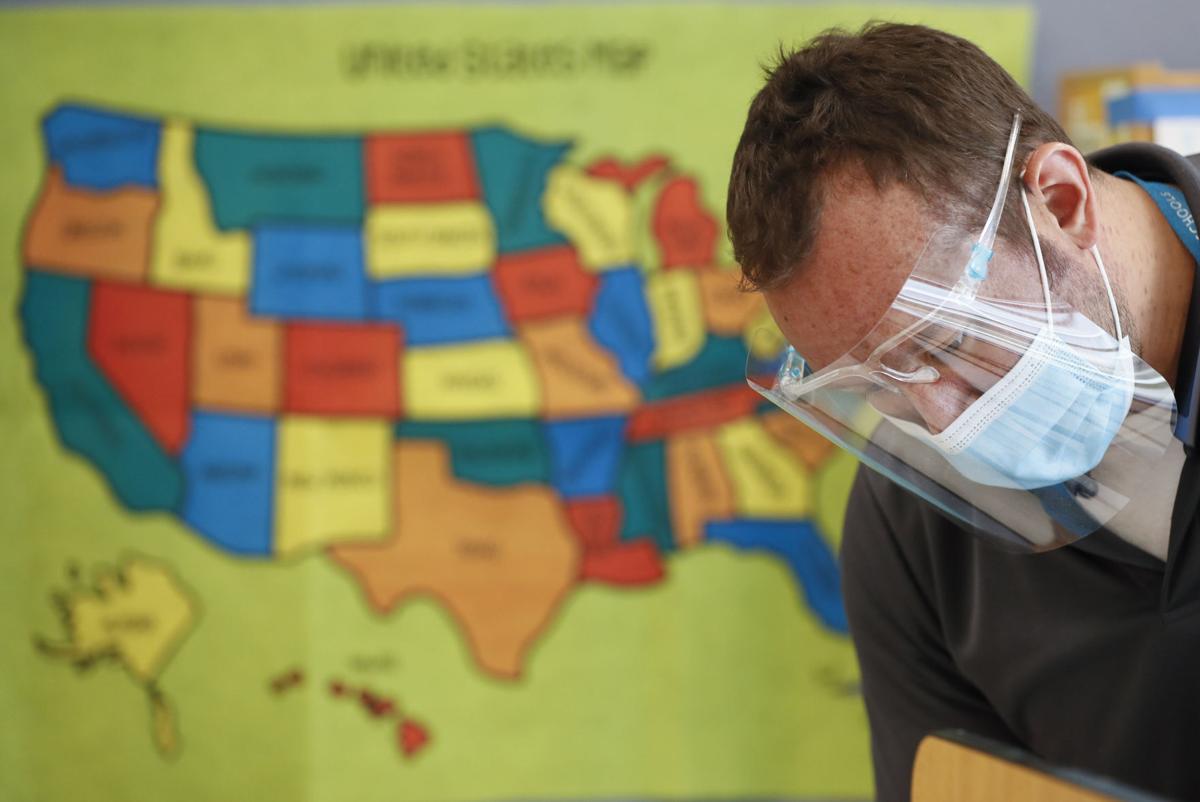
15 additional fatalities in Illinois. Boone County 11 additional cases

15 additional fatalities in Illinois. Boone County 11 additional cases
FILE - In this July 8, 2020, file photo, Des Moines Public Schools custodian Joel Cruz cleans a desk in a classroom at Brubaker Elementary School in Des Moines, Iowa. An aggressive push by Iowa’s staunchly pro-Trump governor to reopen schools amid a worsening coronavirus outbreak has descended into chaos, with some districts and teachers rebelling and experts questioning the scientific benchmarks being used by the state to make decisions. (AP Photo/Charlie Neibergall, File)
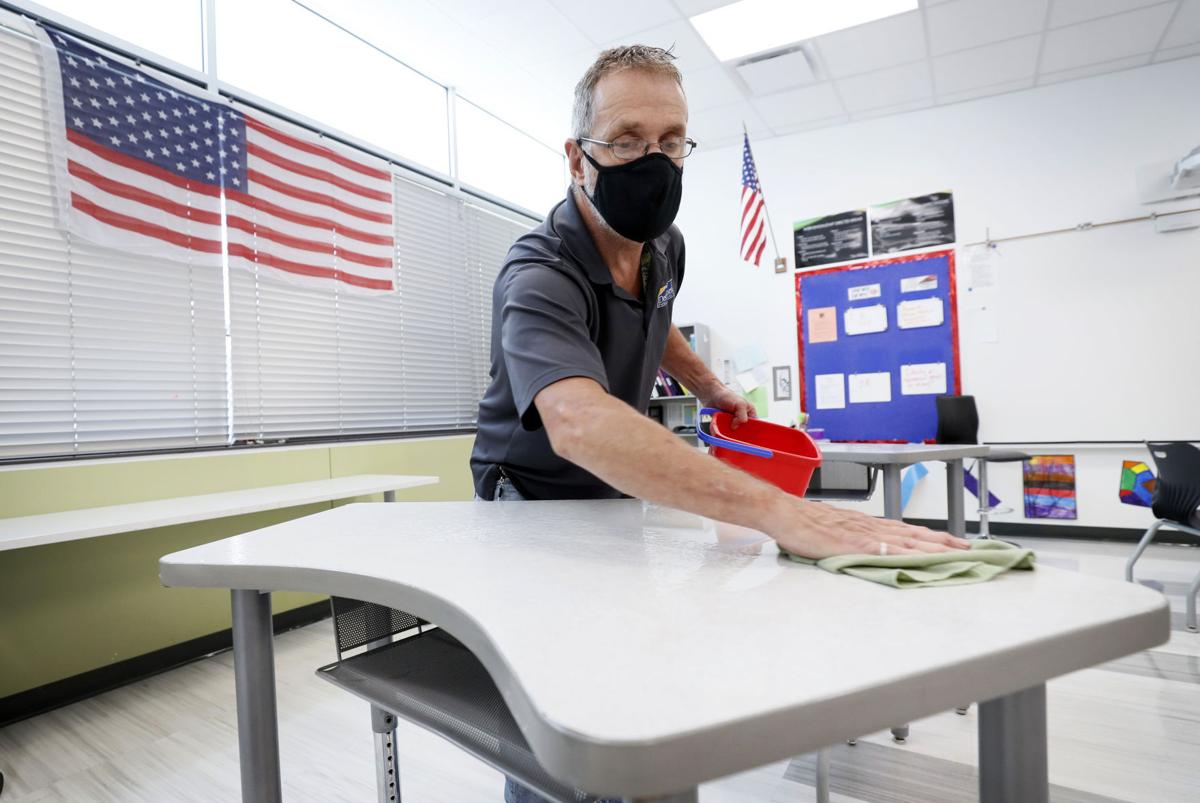
FILE - In this July 29, 2020, file photo, custodian Doug Blackmer cleans a desk in a classroom at the Jesse Franklin Taylor Education Center in Des Moines, Iowa. An aggressive push by Iowa’s staunchly pro-Trump governor to reopen schools amid a worsening coronavirus outbreak has descended into chaos, with some districts and teachers rebelling and experts questioning the scientific benchmarks being used by the state to make decisions. (AP Photo/Charlie Neibergall, File)
FILE - In this July 8, 2020, file photo, a bottle of hand sanitizer sits on a cart as Des Moines Public Schools custodian Tracy Harris cleans a chair in a classroom at Brubaker Elementary School, in Des Moines, Iowa. An aggressive push by Iowa’s staunchly pro-Trump governor to reopen schools amid a worsening coronavirus outbreak has descended into chaos, with some districts and teachers rebelling and experts questioning the scientific benchmarks being used by the state to make decisions. (AP Photo/Charlie Neibergall, File)
FILE - In this July 29, 2020, file photo, Des Moines Public Schools mechanic Kelly Silver cleans the interior of a school bus in Des Moines, Iowa. An aggressive push by Iowa’s staunchly pro-Trump governor to reopen schools amid a worsening coronavirus outbreak has descended into chaos, with some districts and teachers rebelling and experts questioning the scientific benchmarks being used by the state to make decisions. (AP Photo/Charlie Neibergall, File)
FILE - In this July 30, 2020, file photo, Iowa Gov. Kim Reynolds listens to a question during a news conference on the state's guidance for returning to school in response to the coronavirus outbreak in Des Moines, Iowa. An aggressive push by Reynolds to reopen schools amid a worsening coronavirus outbreak has descended into chaos, with some districts and teachers rebelling and experts questioning the scientific benchmarks being used by the state to make decisions. (AP Photo/Charlie Neibergall, File)
The clash in the Midwest has illustrated in condensed form the tension between science and politics — and between economic concerns and health fears — that has characterized the nation's response to the outbreak from the White House on down. The virus has devastated the U.S. economy and killed over 170,000 Americans.
"We're about to see a tragedy occur in the state. And there's not a lot we can do about it. That's frightening," said Sara Anne Willette of Ames, a parent and former math tutor who runs a website tracking state infection data.
At issue is Republican Gov. Kim Reynolds' mandate in July that districts offer at least 50% classroom instruction.
The conflict intensified Wednesday when the statewide teachers union announced a lawsuit challenging the governor's ability to make such decisions for local districts. The Iowa City school board, which like many others had planned to start the year fully online, voted to join the lawsuit.
In her order, the governor said districts where 15% or more of coronavirus tests were positive over the prior 14 days can request permission to move to online instruction for two weeks at a time.
Health experts say Reynolds' 15% threshold is not based on science and is three times higher than what the Centers for Disease Control and Prevention suggests is safe. The surgeon general has recommended a 10% limit.
States and local districts have set widely varying thresholds for reopening schools, but Iowa's is among the highest anywhere.
"They decided they wanted to open schools and then set the threshold, rather than deciding what's safe and meeting that target. They did it backwards," said Eli Perencevich, an infectious-disease expert at the University of Iowa.
By contrast, New York City says schools can reopen if positivity rates are below 3%. Arizona has put its rate at 7%.
Perencevich and others warn that it will only be a matter of time before Iowa educators, students and their families face illness and death in growing outbreaks. About a half-million students are preparing to begin school in the coming days.
Reynolds has dismissed the health warnings as scare tactics and, echoing President Donald Trump, argued that children infrequently get seriously ill from or transmit the virus. She has said schools need to be open for children's benefit and so parents can go to work.
"Education is fundamental to the well-being of our children, and our teachers are essential to ensuring that our schoolkids return to learn rather than mark time and lose ground," she said. "We can do this safely."
Reynolds noted that one of her daughters will be teaching in-person classes and eight of her grandchildren will be going to school this fall.
Since her order, Iowa's outbreak has only gotten worse. Its per capita cases are the highest in the Midwest, the number of patients now in the hospital has increased to nearly 300, deaths surpassed 1,000 Wednesday, and dozens of nursing homes are suffering outbreaks. The governor has refused to order the wearing of masks statewide.
As of Wednesday, only a few districts across the state would qualify to request a waiver under the state's calculations.
Making matters worse: The data the state is using to calculate local positivity rates has been flawed.
The Fort Dodge district this week said its positivity rate looked grimmer than it really was because a clinic failed to report up to 3,000 negative tests.
Other school districts are seeing worse outbreaks than the state data would indicate. Reynolds' office announced Wednesday that it is fixing a major flaw in the data that unintentionally backdated thousands of negative and positive test results, which will lower or raise each county's 14-day positivity rate.
Thomas Tsai, a health policy researcher at Harvard, called Iowa's 15% threshold arbitrary and said it was made worse by the data problems. He said Iowa is among the states rushing to reopen schools despite not having the virus contained, while others that could safely reopen them haven't done so.
"You are seeing both extremes," he said.
The governor's order also required school districts to give parents the option of choosing online-only education, and many have agonized over what to do.
A storm that damaged school buildings across the state last week with 100 mph winds dealt another blow, and many districts have delayed their start dates so they can clean up and make repairs.
But it also highlighted the friendly relationship between Reynolds and Trump, who traveled to Iowa on Tuesday to discuss the damage with the governor.
Business groups have backed her in her move to reopen schools. Democratic lawmakers and school officials have mostly lined up against her.
"I believe the governor is misinterpreting that law," said Iowa City school board member J.P. Claussen, who said the state's metrics "don't seem designed to keep our staff and students safe."
The governor has warned that administrators who defy the state could face discipline against their licenses. In addition, the state said schools moving to 100% virtual instruction will not be allowed to offer sports or other activities. That could put pressure on administrators to keep classrooms open even when outbreaks occur.
Under pressure, some districts, including Iowa City, have decided on a hybrid arrangement in which students will go to class two or three days per week.
But the Des Moines district, the state's largest school system, is still pushing back against the state, despite the county's positivity rate well below 15%. The school board intends to begin next month in an online-only format but allow sports and other extracurricular activities.
25 additional deaths in Illinois. Boone County has 8 additional cases.


COVID-19
Updates on the emerging novel coronavirus pandemic from the Johns Hopkins Center for Health Security.
The Center for Health Security is analyzing and providing updates on the COVID-19 pandemic. If you would like to receive these updates, please subscribe below and select COVID-19. Additional resources are also available on our website.
The Johns Hopkins Center for Health Security also produces US Travel Industry and Retail Supply Chain Updates that provide a summary of major issues and events impacting the US travel industry and retail supply chain. You can access them here.

CORRECTION: We previously misstated that Auckland is the capital of New Zealand. Auckland is New Zealand’s most populous city, but Wellington is the capital.
EPI UPDATE The WHO COVID-19 Dashboard reports 21.99 million cases (213,391 new) and 775,893 deaths (4,644 new) as of 10:00am EDT on August 19.
UNITED STATES
The US CDC reported 5.42 million total cases (40,117 new) and 169,870 deaths (520 new). In total, 19 states (no change) are reporting more than 100,000 cases, including California with more than 600,000 cases; Florida and Texas more than 500,000 cases; New York more than 400,000; and Georgia and Illinois more than 200,000. For nearly 3 weeks, the US has averaged more than 1,000 deaths per day.
The US epidemic passed its second peak around July 24, and since then, the national COVID-19 incidence has decreased steadily. While many states are exhibiting similar trends, case counts in some states continue to climb. Hawai’i, which largely maintained low COVID-19 incidence for the first several months of the pandemic, has reported increasing incidence since mid-July, now up to more than 200 new cases per day. Illinois has reported steadily increasing daily incidence for the past 2 months, up to nearly 75% of its first peak. While it is only reporting approximately 100 new cases per day, South Dakota’s daily incidence has been slowly increasing since mid-to-late July, and it does not appear to be exhibiting any indication of slowing. Kansas appeared to reach a second peak in late July; however, incidence rebounded after approximately a week, and it set a new high daily incidence yesterday of nearly 500 new cases per day. Missouri and Wyoming exhibited a similar trend, peaking in late July before rebounding. The increase in daily incidence in Kentucky and North Dakota has tapered off to some degree, but it is still increasing in both states, potentially approaching a peak or plateau. A number of other states have largely plateaued over the past 2 weeks and continued to report elevated daily incidence.
The COVID Exit Strategy website still classifies 18 states as having “Uncontrolled Spread,” although the US as a whole recently improved from “Uncontrolled Spread” to “Trending Poorly.” Additionally, the site reports 16 states with increasing test positivity, including 2 with test positivity greater than 10%.* An additional 7 states are reporting test positivity greater than 10% percent and exhibiting a flat or decreasing trend.
*In addition to the 2 states reporting both increasing test positivity and test positivity greater than 10%, the data for Washington indicates 100% test positivity, which may not accurately reflect the current state of testing.
With the peak in national daily incidence occurring approximately 3 weeks ago, we expect to see an associated decrease in daily mortality in the near future. Mortality tends to lag several weeks behind incidence, as it takes time for COVID-19 patients to progress through the course of disease. Nationally, the US continues to average more than 1,000 new deaths per day. Multiple states are reporting overall increases in daily mortality, including several states that were severely affected during the summer resurgence. Notably, Georgia reported its record high mortality (133 deaths) on August 11, and it continues to report more than 60 deaths per day. The Tennessee Department of Health does not report or display average daily mortality, but the weekly average reported by STAT News shows the state remaining at its record high of 22 deaths per day. California’s COVID-19 mortality has plateaued over the past week or so, remaining relatively steady at approximately 130 deaths per day. Florida’s average mortality has fluctuated over the past 2 weeks, but it remains elevated at approximately 170 deaths per day. Texas reported a peak in mortality in early August (largely driven by a spike of more than 1,000 deaths reported on August 6), and mortality decreased substantially since then; however, Texas continues to report 170-200 deaths per day.
The Johns Hopkins CSSE dashboard reported 5.50 million US cases and 172,109 deaths as of 1:30pm EDT on August 19.
US SCHOOLS
K-12
The challenge of resuming classes continues across the US, at all levels of education. As more schools resume classes, particularly those using in-person or hybrid models, school districts and states are reporting more COVID-19 cases linked to schools. One teacher in Kansas started compiling reports of COVID-19 cases in K-12 schools as a local resource for her school, but when the document circulated more widely, she received hundreds of reports from across the country. Today, 35 people are supporting the effort to document reports of COVID-19 among US students, teachers, and other school staff, and the Google Sheet includes data from all 50 states, plus Washington, DC, and Guam.
A school district outside Phoenix, Arizona, was forced to cancel plans to resume in-person classes this week due to a “sickout” organized by teachers and staff. The school district’s Governing Board recently voted to start the school year with in-person classes, which prompted “a high volume of staff absences for Monday citing health and safety concerns.” Facing the prospect of “insufficient staffing levels” when classes were scheduled to resume this week, the school district elected to postpone in-person classes. Notably, no school districts in Arizona have met the benchmarks established by the Arizona Department of Health Services in order to resume in-person or hybrid classes (as of August 13).
The Los Angeles Unified School District (California), the country’s second-largest school district, announced its own SARS-CoV-2 testing program to support in-person classes this fall. The program reportedly aims to administer nearly 800,000 tests to students and staff over a period of weeks or months, in advance of schools resuming in-person instruction. The school district will implement its own testing program in order to ensure sufficient testing capacity, which might not be available under existing local public health testing efforts. The program is expected to cost US$150 million, the equivalent of $300 per student across the entire school district. The school system views widespread and routine testing as a key to eventually being able to resume in-person classes.
By this point, K-12 school systems nationwide have largely determined how they intend to resume instruction in the fall, and we are starting to see the early impact of those decisions. Tomorrow—Thursday, August 20—at 12:15pm EDT, the Johns Hopkins University Bloomberg Schools of Public Health will host a webcast to address the various scenarios that community and elected leaders, teachers, parents, and students may face in the coming months, depending on the US epidemic’s trajectory. The webcast will include experts from both the Bloomberg School of Public Health—including Center for Health Security Senior Scholar Dr. Jennifer Nuzzo—and the Johns Hopkins School of Education. The discussion will include a broad scope of topics, such as how to react to cases in schools offering in-person classes, manage stress and concern among students amid uncertainty during the coming school year, and plan ahead for potential changes.
COLLEGES & UNIVERSITIES
Numerous colleges and universities are also facing challenges as students return to campus. In the short time since many schools started their school year, numerous colleges and universities have reported cases, clusters, and larger outbreaks of COVID-19. At the University of North Carolina (UNC), the Chapel Hill campus was forced to abruptly cancel in-person classes after identifying at least 135 cases since the start of fall classes, including multiple clusters, and an associated increase in test positivity from 2.8% to 13.6%. While classes transitioned to online only, some space at on-campus residential facilities will remain open to support students, including international students, who may not have other options available to them. The University of Notre Dame (Indiana) also suspended in-person classes, following 147 cases detected since August 3.
In order to support resuming in-person classes, colleges and universities have implemented a variety of risk mitigation measures, including testing programs; however, most schools do not have the ability to enforce school policies off campus. For example, videos and photos of off-campus parties and local bars—including at schools in Alabama, Georgia, and Oklahoma—show dozens or hundreds of students present, the majority of whom do not appear to be practicing appropriate physical distancing or wearing masks. Elected and university officials have been quick to admonish students for not adhering to public health recommendations; however, none appeared to take any responsibility for the decision to resume in-person classes in the first place, as noted by the Editorial Board of UNC student newspaper, The Daily Tar Heel.
In addition to traditional colleges and universities, the US services academies—the US Military (West Point), Naval, Air Force, Coast Guard, and Merchant Marine Academies—resumed activity in time for fall classes, including the traditional summer orientation period for new Cadets and Midshipmen. The service academies implemented a variety of strict measures, including mandatory mask use and physical distancing, routine testing, and staggered arrival times for students (complete with quarantine periods). These student populations and environments are much different than a traditional campus setting (e.g., students are used to wearing prescribed uniforms and following orders); however, there may be lessons that other schools can draw for their own students.
US ELECTION & VOTING SAFETY As the US approaches the 2020 election, in the midst of the COVID-19 pandemic, traditional voting practices are raising concerns about increased transmission risk, particularly for in-person voting. A report published by the RAND Corporation assessed state voting processes in preparation for the upcoming election. The researchers identified flexible voter registration policies, remote voting, and early voting among the key tools in mitigating exposure risk for voters and election workers. In particular, the researchers highlighted options for remote or automatic registration and no-excuse mail-in voting as particularly important in terms of reducing in-person contact that can facilitate SARS-CoV-2 transmission. Twelve (12) states and Washington, DC, have implemented automatic registration, early voting, and no-excuse mail-in voting for this year’s election, while 9 states have implemented none of these options. In a companion report, RAND outlines key factors that policymakers and election officials must balance in order to promote voter safety and election integrity, including protecting the health of election workers and ensuring equitable access for all eligible voters. In particular, the report highlights the increased risk that in-person voting can pose for higher-risk individuals (eg, older individuals and those with underlying health conditions), but also that increased absentee or mail-in voting can pose logistical challenges compared to previous elections.
Similarly, the Brennan Center and the Infectious Diseases Society of America issued guidance for mitigating COVID-19 risk for voters for in-person voting. Physical distancing and associated signage, selection of well-ventilated polling locations, mask use, and limiting unnecessary persons in the facility can help reduce contact at polling locations that can facilitate transmission. Compared to previous elections, these efforts may require additional resources in order to implement, so advance planning is recommended.
US TESTING VOLUME & DELAYS Even as the US moves further away from its second peak in daily COVID-19 incidence, the country struggles to conduct SARS-CoV-2 testing. The peak in daily testing occurred in late July, around the same time as the peak daily incidence, and both have decreased, in relative tandem, since then. Some health officials have expressed concern about the decrease in testing volume, particularly in states with increasing test positivity. Notably, national test positivity remains elevated (ie, greater than 5%), but it has been decreasing since late July as well. This indicates that testing volume is beginning to catch up with community transmission, at least at the national level. The situation varies considerably at the state level, however, and multiple states are reporting increasing test positivity, including 13 that already exceed 5%. Notably, Mississippi is currently reporting test positivity greater than 20% and increasing. While the test positivity trend appears encouraging at the national level, testing volume needs to increase in multiple states in order to better capture the scale of community transmission.
In addition to testing volume, there are growing concerns about delays in obtaining test results. A survey conducted by CNBC and Dynata, conducted July 30-August 10, found that nearly 40% of COVID-19 tests took more than 3 days to process. By the time these test results are returned, affected individuals may be past their infectious period, which largely negates the value of the test in terms of limiting transmission risk. The turnaround time varies widely by state, ranging from 2 to 5.5 days on average, but there are reports of some individuals waiting a week or longer. The situation has improved dramatically since mid-July, when the national average was greater than 7 days; however, rapid results (or at least timely results) are critical to containing the epidemic. Additionally, individuals who get tested are recommended to keep themselves isolated until they receive their test results in order to mitigate transmission risk for those who are positive, and longer wait times may make it difficult for individuals to comply with this guidance or less likely that they will choose to do so.
Beyond scaling up testing capacity, which has been an ongoing struggle since the onset of the US epidemic, there are other options to increase testing volume. Some states, health systems, and laboratory networks have attempted to implement pooled testing strategies as a way to increase testing capacity, but these efforts have largely been ineffective due, in part, to increasing prevalence of SARS-CoV-2 infection in the community. As the proportion of infected specimens increases, pooled strategies are less effective at decreasing the number of tests required. New York is a notable exception, as it has maintained low levels of transmission since it contained the “first wave” of COVID-19. Additionally, a group of professional organizations, headlined by the American Medical Association, called for prioritizing some specimens for testing, including patients exhibiting symptoms and those with known exposure to a COVID-19 case. While this could decrease turnaround time for the priority specimens, it could potentially increase wait times for others. The groups argue that increased testing demand has been driven by asymptomatic individuals with no known exposure and that existing capacity should be directed toward “those with a medically-indicated need.” Additionally, as we covered previously, the US FDA recently issued an Emergency Use Authorization for a saliva-based test that could be a useful tool for screening purposes, which could potentially be directed at individuals without “medically-indicated need,” including those who are returning to work or school, and free up more traditional diagnostic test capacity.
DEMOCRATIC NATIONAL CONVENTION The Democratic National Convention, which traditionally nominates the Democratic Party's candidate for the US presidential election, is taking place remotely/virtually this year. The Democratic and Republican National Conventions typically take place in person and draw tens of thousands of attendees to the host city for several days; however, both conventions are largely forgoing in-person events for the first time in modern history. In addition to a series of video or live-streamed speeches, the Democratic National Convention utilized remote voting by delegates, who nominated Joe Biden as the presidential candidate. The Republican National Convention is expected to use a similar virtual format for speakers, or possibly multiple smaller satellite events, when it convenes next week, but it intends to host delegates in Charlotte, North Carolina, in order to vote in person for the Republican presidential candidate, presumably President Donald Trump.
VACCINE ALLOCATION In support of planning efforts for future vaccination campaigns, the Johns Hopkins Center for Health Security published a framework for vaccine allocation and distribution in the US. The report, published today, focuses on challenges early in the vaccination campaign that stem from limited availability as production capacity increases. There will inevitably be initial vaccine shortages, so it will be critical to identify who will be eligible for the first available doses in advance of the start of a vaccination campaign. The researchers included a variety of relevant factors in the development of this framework, including “medical risk, public health, ethics and equity, economic impact, and logistics” with the dual aim of mitigating harm and maintaining societal function. This is a complex challenge with no single correct answer, and other organizations may reach different conclusions, even with the same considerations.
The report outlines numerous “candidate groups that should be given serious consideration” for priority access, with the highest priority groups divided between 2 tiers. In Tier 1, the highest priority, the researchers included 3 groups of individuals: (1) those who are “most essential” to implementing the COVID-19 response, including frontline healthcare workers caring for COVID-19 patients and “vaccine manufacturing and supply chain personnel”; (2) “those at the greatest risk of severe disease and death,” such as individuals aged 65 and older and those with certain underlying health conditions; and (3) those “most essential to maintaining core societal functions,” including public transportation and food supply personnel and teachers. Tier 2 includes other individuals who support the provision of health care and maintenance of core societal functions, those who may have difficulty accessing healthcare in the event they are infected, and others who may be at elevated risk of infection (eg, due to living or working conditions). The report also addresses historical efforts to develop and implement priority groups for vaccination programs as well as important considerations with respect to obtaining input and support from the public, developing culturally competent prioritization protocols, and communicating the plan to the community.
CONVALESCENT PLASMA The use of convalescent plasma to treat COVID-19 patients has been discussed and evaluated since the onset of the pandemic, but it has been difficult to fully assess evidence of its efficacy. Antibodies found in convalescent plasma obtained from COVID-19 survivors could provide a meaningful boost to the immune systems of hospitalized patients, but the extent to which this occurs remains uncertain. To examine this possibility, the Mayo Clinic enrolled more than 35,000 COVID-19 patients in an observational study, the results of which are beginning to be published. The study (preprint) found that patients who received convalescent plasma transfusions within 3 days of diagnosis exhibited improved mortality after 7 days over those who received the treatment 4 days or more after diagnosis—8.7% compared to 11.9%. The results were statistically significant, but there was no control group against which to compare the results. The researchers also observed that patients who received plasma with higher antibody concentrations exhibited a statistically significant improvement in 7-day mortality over patients receiving plasma with lower antibody concentrations—8.9% for high antibody levels, compared to 11.6% for medium and 13.7% for low levels.
While these results are promising, the lack of a control group significantly limits the strength of conclusions that can be drawn from this study. Unlike in a randomized control trial, which is designed to evaluate the direct impact of a certain treatment on patient outcomes, this observational study had several uncontrolled factors, including differences in clinical care and disease severity. The use of convalescent plasma under “expanded access” protocols has made the treatment more widely available and provided increased data; however, it has made the development and enrollment for randomized control trials more difficult. While there are some randomized control trials ongoing for COVID-19 convalescent plasma, some researchers maintain that it is too soon for the US FDA to determine whether to grant an EUA to the treatment based on the Mayo Clinic’s study data alone. According to a report by The New York Times, the FDA was “preparing to issue and emergency use authorization” for convalescent plasma, but the decision was postponed while regulatory officials evaluate data from the Mayo Clinic study.

COVID-19

Updates on the emerging novel coronavirus pandemic from the Johns Hopkins Center for Health Security.
The Center for Health Security is analyzing and providing updates on the COVID-19 pandemic. If you would like to receive these updates, please subscribe below and select COVID-19. Additional resources are also available on our website.
The Johns Hopkins Center for Health Security also produces US Travel Industry and Retail Supply Chain Updates that provide a summary of major issues and events impacting the US travel industry and retail supply chain. You can access them here.

EPI UPDATE The WHO COVID-19 Dashboard reports 21.55 million cases (250,285 new) and 767,158 deaths (5,345 new) as of 10:00am EDT on August 17. The global cumulative mortality surpassed 750,000 deaths on August 15, with the second highest daily death total to date—9,989 new deaths. The WHO also reported the second highest daily incidence on August 15—294,386 new cases. The average global daily incidence has been relatively steady over the past 3 weeks at approximately 1.8 million cases per week (~257,000 cases per day).
The WHO published its final daily COVID-19 Situation Report on August 16. Starting today, the WHO will publish weekly epi updates.
Total Daily Incidence (change in average incidence; change in rank, if applicable)
India: 61,798 new cases per day (-217)
USA: 51,201 (-884)
Brazil: 43,539 (-1,127)
Colombia: 11,550 (+680)
Peru: 8,275 (+763)
Argentina: 6,756 (-86)
Mexico: 5,983 (-169)
Russia: 5,045 (-78)
Philippines: 4,477 (+468; ↑ 1)
Spain: 4,064* (+0; new)
*Spain’s average daily incidence is not reported for today; this value corresponds to the previous day’s average. Spain’s average daily incidence has not changed since August 13.
Per Capita Daily Incidence (change in average incidence; change in rank, if applicable)
Peru: 251 new cases per million population (+23; ↑ 2)
Panama: 247 (+14)
Colombia: 227 (+13; ↑ 2)
Brazil: 205 (-5; ↑ 2)
Bahrain: 203 (-35; ↓ 4)
Maldives: 197 (-18; ↓ 2)
Israel: 160 (-1; ↑ 1)
USA: 155 (-2; ↑ 1)
Suriname: 152 (-10; ↓ 2)
Bahamas: 151 (+32; new)
India reported its highest average daily incidence to date on August 15—62,512 new cases per day—before falling slightly. Spain climbed into the top 10 in terms of total daily incidence, and South Africa fell out of the top 10. In terms of per capita daily incidence, Peru is currently the only country reporting more than 250 new daily cases per million population. The Bahamas climbed into the top 10 in terms of per capita daily incidence, and Argentina fell out of the top 10.
The US CDC reported 5.34 million total cases (54,686 new) and 168,696 deaths (1,150 new). In total, 19 states (increase of 4) are reporting more than 100,000 cases. California is reporting more than 600,000 cases; Florida and Texas more than 500,000 cases; New York more than 400,000; and Georgia and Illinois more than 200,000. Puerto Rico is a US territory, but at 194 new daily cases per million population, it would be #7 globally in terms of per capita daily incidence, falling between the Maldives and Israel. For nearly 3 weeks, the US has averaged more than 1,000 deaths per day.
The Johns Hopkins CSSE dashboard reported 5.41 million US cases and 170,178 deaths as of 1:30pm EDT on August 17.
SEASONAL INFLUENZA Public health leaders are looking ahead to the upcoming Northern Hemisphere influenza season and trying to anticipate challenges associated with mounting simultaneous seasonal influenza and pandemic responses. The Northern Hemisphere influenza season typically starts around October and peaks between December and February. In the US, the annual influenza season typically causes 9-45 million cases, including 140-810,000 hospitalizations and 12-61,000 deaths. Last season was relatively mild, but that is not necessarily expected to be the case this year. US CDC Director Dr. Robert Redfield warned Wednesday that the US could face its “worst fall from a public health perspective,” due to seasonal influenza and COVID-19 both straining health systems at once. Dr. Redfield encouraged Americans to wear a mask, avoid crowds, maintain appropriate physical distancing (eg, 6-foot separation), and practice proper hand hygiene, and notably, he emphasized the importance of getting a seasonal influenza vaccination.
Only about 50% of Americans receive their seasonal influenza vaccination in a typical year, but Dr. Redfield hopes to increase that proportion to 65% this year. The CDC usually purchases 500,000 doses of seasonal influenza vaccine to provide for uninsured individuals, but this year, it is acquiring an additional 10 million doses. Despite this investment, some experts are concerned these efforts will not be sufficient. Seasonal influenza vaccination suffers from a number of challenges, including low efficacy on a yearly basis as well as mis- and disinformation spread by anti-vaccine advocates. In order to improve vaccination coverage, health officials have allocated considerable effort and resources to expanding access to the vaccine, including at convenient locations such as schools and workplaces; however, many of these locations may be closed due to social distancing restrictions, which could subsequently limit access for some communities.
The ongoing Southern Hemisphere influenza season has been very mild compared to past years, which some have attributed to social distancing measures implemented for COVID-19. If social distancing can limit seasonal influenza transmission, the Northern Hemisphere could potentially experience a mild influenza season as well, but that would depend heavily on the degree to which communities adhere to social distancing policies.
SALIVA-BASED DIAGNOSTIC TEST The US FDA issued an Emergency Use Authorization for a saliva-based diagnostic test developed by researchers at the Yale School of Public Health. When compared with other FDA-authorized diagnostic tests, the SalivaDirect protocol demonstrated an 83%-100% agreement. A saliva-based test offers a number of potential benefits over existing diagnostic tests. Collecting a saliva sample is more comfortable than nasopharyngeal swabs, and the SalivaDirect tests can use any sterile container, as opposed to requiring expensive tubes as is the case for some other saliva-based tests. Additionally, the testing protocol is reportedly more streamlined than other diagnostic tests, which eliminates the need for certain reagents and decreases testing time, and the tests require no proprietary supplies to process. Yale researchers are also making the protocol “open source,” so any laboratory can order supplies and follow the instructions rather than purchase tests from a single manufacturer. Test materials are also relatively inexpensive, less than US$5 per test.
Researchers are currently working with the National Basketball Association on the Surveillance with Improved Screening and Health (SWISH) study to determine the test’s ability to detect asymptomatic infections, but the ultimate goal is to expand availability more broadly to supplement existing testing capacity. Additional studies to modify the original protocol to increase testing capacity via automation, pooled testing, and rapid detection are also underway. Additional information about the test, including instructions for use and obtaining authorization to use the protocol, can be found here.
US PERSONNEL & PPE SHORTAGES On Friday, the US FDA published a list of medical device and equipment shortages{SEE BELOW} for the first time during COVID-19 pandemic. The list includes a wide variety of items, including personal protective equipment (PPE), such as examination gloves, surgical gowns, and respirators; swabs and viral culture medium used for testing; and mechanical ventilators. Reporting this information is required under the CARES Act.
A report published by Politico describes findings, based on survey and interview responses from frontline healthcare workers and hospital administrators, regarding the challenges that healthcare facilities are facing in terms of securing necessary supplies and personnel. As we have reported previously, without centralized coordination at the national level to distribute limited resources, hospitals and health systems have been forced to compete against each other. Notably, some smaller hospitals do not have the resources to compete with larger and better-funded facilities, both for supplies and personnel, resulting in shortages of both.
LEBANON Lebanon’s Minister of Public Health announced that the country will require a 2-week “lockdown” to curtail a recent rise in COVID-19 incidence. The recent surge of transmission in Beirut has also complicated response efforts following a major explosion at the city’s port last week that resulted in at least 178 deaths and more than 6,000 wounded and left approximately 250,000 individuals homeless. The government has not yet published details regarding how the lockdown measures will be implemented. To date, Lebanon has reported 9,337 total cases, including 105 deaths, and the daily incidence has nearly ten-fold since early July.
RACIAL & ETHNIC DISPARITIES A study, published in the US CDC’s Morbidity and Mortality Weekly Report, evaluated county-level data for areas identified as COVID-19 hotspots between June 5 and June 18, and the findings provide further evidence of racial and ethnic disparities in COVID-19 incidence. In total, 205 counties across 33 states were identified as hotspots during the study period, of which 79 counties (22 states) reported race/ethnicity data for at least 50% of the reported cases. The researchers defined disparity as either a 5% or greater absolute difference between the proportion of COVID-19 cases among a specific race/ethnic group and the proportion of that group among the general population (eg, a race/ethnic group represents 15% of COVID-19 cases but only 10% of the population) or a ratio of 1.5 or greater between the proportions (eg, a race/ethnic group represents 4.5% of cases but only 3% of the population).
Of the 79 included counties, 76 (96.2%) exhibited racial or ethnic disparities for at least one racial or ethnic minority group. These disparities affected minority populations totaling approximately 5.6 million people across the included counties, representing more than 20% of the 27.5 million total population. The most severely affected racial/ethnic groups were Hispanic/Latino and Black/African American populations, totaling 3.5 million and 2 million people, respectively.
LASTING IMMUNITY The US CDC published clarifications on some recent guidance regarding quarantine, isolation, and the possibility of SARS-CoV-2 reinfection. On August 3, the CDC updated its isolation guidance to include new information which indicates that individuals infected with SARS-CoV-2 can “continue to test positive for up to 3 months after diagnosis and not be infectious.” On Friday, the CDC clarified that this does not mean that individuals are immune to reinfection for 3 months. Investigation into lasting immunity and risk of reinfection are ongoing, and while there has not been documented evidence of reinfection within 3 months, the possibility or reinfection during this period has not yet been ruled out. The previous guidance stated that “People who have tested positive for COVID-19 do not need to quarantine or get tested again for up to 3 months as long as they do not develop symptoms again.” Some interpreted this statement as implying a 3-month period of immunity, so the CDC clarified that its intent was to state “that retesting someone in the 3 months following initial infection is not necessary” due to the possibility of continued positive tests, even after an individual has recovered and is no longer infectious. The CDC has included updated language about reinfection for multiple guidance pages, including for quarantine and self-isolation.
NEW ZEALAND DELAYS ELECTION New Zealand Prime Minister Jacinda Ardern announced that the country’s general election will be postponed from September 19 to October 17 due to COVID-19, including an ongoing outbreak in the capital city of Auckland. The delay is intended to aid political parties’ ability to plan for campaigning under COVID-19 restrictions. Reportedly, Prime Minister Ardern collaborated with leadership from all major political parties in making the decision, and the decision appears to have broad support among the general public. She indicated that the election date will not be delayed any further due to COVID-19, even if the situation worsens. The outbreak in Auckland is up to 58 total cases, including 9 identified in the past 24 hours.
SOUTH KOREA After bringing its “first wave” of COVID-19 under control, South Korea is battling another outbreak, this time in Seoul. Early in its epidemic, SARS-CoV-2 transmission largely centered around a religious group in Daegu, and the current surge has been linked to a different religious group in the country’s capital. Over the past 3 days, South Korea has reported 642 total cases reported nationwide, and 553 of these are domestically acquired cases in Seoul and the Gyeonggi and Incheon provinces, which surround Seoul. In total, nearly 450 cases in Seoul, Incheon, and Gyeonggi have been linked to clusters at 2 churches in the Seoul metropolitan area, as well as more than a dozen cases in other parts of the country.
As of August 15, all members of the Woori Jaeil Church in Gyeonggi province (approximately 900 individuals) were in quarantine, and all members of the Sarang Jaeil Church in Seoul who were present August 7-13 were directed to quarantine on August 16. The pastor at the Sarang Jaeil Church has reportedly hindered the public health response, including holding a large protest against South Korean President Moon Jae-in that drew a crowd of 10,000 people. In response to the recent increased incidence, South Korea increased the COVID-19 alert level in Seoul to Level 2 (out of 3), which restricts indoor gatherings to no more than 50 people and outdoor gatherings to 100 or fewer and prohibits fans from sporting events, along with other social distancing measures.
SUPPY SHORTAGE
On March 27, 2020, the CARES Act was signed into law. Section 3121 of the CARES Act amends the Federal Food, Drug, and Cosmetic Act (FD&C Act) by adding section 506J to the statute. Section 506J provides the FDA—for the first time—with authority intended to help prevent or mitigate medical device shortages “during, or in advance of, a public health emergency declared by the Secretary under section 319 of the PHS Act.” The provision includes requirements for manufacturers of certain devices to notify the FDA “of a permanent discontinuance in the manufacture of the device” or “an interruption in the manufacture of the device that is likely to lead to a meaningful disruption in supply of that device in the United States” during a declared public health emergency. One provision of this new statutory authority—section 506J(g) of the FD&C Act— requires the FDA to maintain a publicly-available, up-to-date list of the devices the FDA has determined to be in shortage. In addition, the FDA is providing a list of medical devices for which the FDA has been notified that manufacturing has been permanently discontinued. The list below fulfills this statutory obligation and reflects the categories of devices the FDA has determined to be in shortage at this time, and will be maintained and updated as the COVID-19 public health emergency evolves.*
Categories of devices in the device shortage list are:
Search:
Show 102550100All entries
Date Posted
Category
Product Code
Reason for Interruption
Estimated Shortage Duration
Additional Information
08/14/2020
Personal Protective Equipment
FME (Examination gown)
Demand increase for the device
Duration of COVID-19 PHE
Availability: Limited supply
08/14/2020
Personal Protective Equipment
FXX (Surgical apparel)
Demand increase for the device;
Delay in shipping of the device;
Shortage or discontinuance of a component or part
Duration of COVID-19 PHE
Availability: Limited supply
08/14/2020
Personal Protective Equipment
FYA (Surgical gown)
Demand increase for the device
Duration of COVID-19 PHE
Availability: Limited supply
08/14/2020
Personal Protective Equipment
LYY (Latex, non-powdered patient examination glove)
Demand increase for the device
Duration of COVID-19 PHE
Availability: Limited supply
08/14/2020
Personal Protective Equipment
LYZ (Vinyl patient examination glove)
Demand increase for the device
Duration of COVID-19 PHE
Availability: Limited supply
08/14/2020
Personal Protective Equipment
LZA (Polymer, non-powdered patient examination glove)
Demand increase for the device
Duration of COVID-19 PHE
Availability: Limited supply
08/14/2020
Personal Protective Equipment
LZC (Specialty, non-powdered patient examination glove)
Demand increase for the device
Duration of COVID-19 PHE
Availability: Limited supply
08/14/2020
Personal Protective Equipment
MSH (Surgical respirator)
Demand increase for the device
Duration of COVID-19 PHE
Availability: Limited supply
08/14/2020
Personal Protective Equipment
OEA (Non-surgical isolation gown)
Demand increase for the device
Duration of COVID-19 PHE
Availability: Limited supply
08/14/2020
Testing Supplies and Equipment
JJH (Clinical sample concentrator)
Demand increase for the device
Duration of COVID-19 PHE
Availability: Limited supply
08/14/2020
Testing Supplies and Equipment
JSM (Transport culture medium)
Demand increase for the device
Duration of COVID-19 PHE
Availability: Limited supply
08/14/2020
Testing Supplies and Equipment
KXG (Sterile swabs)
Demand increase for the device
Duration of COVID-19 PHE
Availability: Limited supply
08/14/2020
Testing Supplies and Equipment
LIO (Microbiological specimen collection and transport device)
Demand increase for the device
Duration of COVID-19 PHE
Availability: Limited supply
08/14/2020
Testing Supplies and Equipment
NSU (Instrumentation for clinical multiplex test systems)
Demand increase for the device
Duration of COVID-19 PHE
Availability: Limited supply
08/14/2020
Testing Supplies and Equipment
OOI (Real time nucleic acid amplification system)
Demand increase for the device
Duration of COVID-19 PHE
Availability: Limited supply
08/14/2020
Testing Supplies and Equipment
PPM (General purpose reagents for in vitro diagnostic tests)
Demand increase for the device
Duration of COVID-19 PHE
Availability: Limited supply
08/14/2020
Testing Supplies and Equipment
QBD (Microbial nucleic acid storage and stabilization device)
Demand increase for the device
Duration of COVID-19 PHE
Availability: Limited supply
08/14/2020
Ventilation-Related Products
BZD (Non-continuous ventilator)
Demand increase for the device
Duration of COVID-19 PHE
Availability: Limited supply
08/14/2020
Ventilation-Related Products
CBK (Continuous ventilator, facility use)
Demand increase for the device
Duration of COVID-19 PHE
Availability: Limited supply
08/14/2020
Ventilation-Related Products
NOU (Continuous ventilator, home use)
Demand increase for the device
Duration of COVID-19 PHE
Availability: Limited supply
Showing 1 to 20 of 20 entries
* FDA has determined, pursuant to section 506J(g)(3)(C) of the FD&C Act (titled “Public Health Exception”), that disclosure of the manufacturer’s name of the devices determined to be in shortage during the COVID-19 PHE will adversely affect the public health by increasing the potential for hoarding or other disruptions in device availability to patients.
As part of the list required pursuant to section 506J(g) of the FD&C Act, the FDA is providing a separate, publicly-available, up-to-date list of the devices for which the FDA has been informed by the manufacturer have been discontinued. The FDA will update this list when it receives additional information regarding device discontinuances.
Categories of devices in the discontinuance list are:
Search:
Show 102550100All entries
Date Posted
Category
Product Code
Manufacturer Name
Device Trade Name
Reason for Discontinuance
08/14/2020
Infusion Pumps and Related Accessories
FRN (Infusion Pump)
MEA (Infusion Pump, Patient Controlled Analgesic))
Becton Dickinson and Company (CME America, LLC)
BodyGuard Infusion Pump System
BodyGuard Syringe Pump System, BodyGuard microsets
Shortage or discontinuance of a component or part;
Discontinuance of the manufacture of the device;
Facility closure