Saturday, September 9, 2023

Diane Hendricks: the good and the bad?

Diane Hendricks Is the Richest Self-Made Woman — How Did She Do It?

As the richest self-made woman according to 'Forbes,' Diane Hendricks has a lot going on. What’s her actual net worth? Here's how she made billions.

Rachel Curry - Author

BY RACHEL CURRY

FEB. 24 2023, UPDATED 4:52 P.M. ET

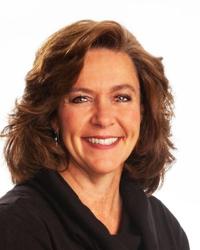
Diane Hendricks

SOURCE: ABC SUPPLY

In this article

A decade and a half after roofing billionaire Ken Hendricks fell through a roof and died, Forbes recognized Diane Hendricks as the richest self-made woman in the world for five years in a row. Despite losing her husband, Hendricks has gone on to amass a major fortune. So, just how rich is Diane Hendricks today?

Article continues below advertisement

According to Forbes, a self-made woman didn't come from inherited wealth. Get the scoop on Hendricks’ net worth, plus how she made her fortune before and after her husband’s early death.

DIANE HENDRICKS

Founder of ABC Supply

Net worth: $12.2 billion

Diane Hendricks' wealth fluctuates, but Forbes has kept her in the number one spot of the world's richest self-made women for five years running as of 2022. The pandemic-era housing and constriction boom has propelled her roofing business to new heights.

Birthplace: Wisconsin

Birth year: 1947

Spouse: Ken Hendricks (died 2007)

Education: Osseo-Fairchild High School

Number of Children: 7

What is Diane Hendricks' net worth?

Diane Hendricks

SOURCE: HENDRICKS FAMILY FOUNDATION

In 2012, Hendricks had an estimated net worth of $2.8 billion. In 2021, that number had ballooned to $11.1 billion. Today, it’s even higher. According to Forbes methodology, Hendricks has a self-made score of nine out of 10, meaning she is primarily self-made but circumstantially received a helping hand. As of February 2023, Hendricks is reportedly worth $12.2 billion.

How many times was Diane Hendricks named the richest self-made woman by 'Forbes'?

In its 2022 iteration of America’s Richest Self-Made Women list, Forbes has put Henricks at the top for the fifth year running. During that same year, Hendricks found company in other major players, including Reese Witherspoon, who sold her production company Hello Sunshine to a Blackstone-backed group last year.

Hendricks founded roofing and building materials company ABC Supply in 1982 with her late husband. She continues to reside in Wisconsin, her home state.

Diane Hendricks is self made, but what does that mean?

Hendricks was born in 1947 to a pair of dairy farmers. One of nine sisters in her family, she eventually earned a high school diploma and got married, but divorced her first husband and married Ken 10 years later. For Hendricks, what started as a career selling custom-built homes turned into a fast-growing business venture on the backs of two married people.

Hendricks and her late husband launched ABC Supply on their own lines of credit. Today, ABC Supply is the largest wholesale roofing distributor in the U.S. (and one of the leading siding distributors, too).

Article continues below advertisement

How did Diane Hendricks get rich?

Hendricks isn't a stranger to the Forbes list of wealthiest self-made women, but her net worth has grown a lot in recent years. In addition to ABC Supply, Hendricks also owns Hendricks Holding Co., whose portfolio includes companies in transportation, recycling, industrial, real estate, healthcare, and other sectors.

As for the husband's wealth, he had a net worth of $3.5 billion when he passed away and was the 91st richest person in the U.S. However, he was notoriously thrifty and retained his midwestern values. Hendricks has seven children with her late husband.

Article continues below advertisement

Despite leading a somewhat frugal lifestyle, Hendricks has been known to donate to Republican political campaigns, including Rep. Marjorie Taylor Greene, who incorrectly blamed the tampon shortage on transgender people.

Hendricks is also a philanthropist, supporting WisconsinEye, Beloit College, Stateline Boys & Girls Club, and more. She has poured a lot of money into Beloit, rebuilding entire blocks and bringing business into the state of Wisconsin, but maintains a philanthropy score of just one out of 10 according to Forbes.

The ABC Supply founder maintains her wealth despite past tax controversies, including failing to pay state income taxes for four years during the early 2010s. She also underpaid property taxes on a fraudulently assessed multi-million dollar home.


The above is from:  https://marketrealist.com/p/diane-hendricks-net-worth/

E-fuels the other answer to zero carbon producing cars


Explainer: What are e-fuels, and can they help make cars CO2-free?

By Victoria Waldersee and Kate Abnett

March 22, 20233:10 AM CDTUpdated 6 months ago

Benz Group AG

  • Follow

BERLIN/BRUSSELS, March 22 (Reuters) - Germany has declared last-minute opposition to a landmark European Union law to end sales of CO2-emitting cars in 2035, demanding that sales be allowed of new cars with internal combustion engines after that date if they run on e-fuels.

The EU rules would require all new cars sold from 2035 to have zero CO2 emissions, making it effectively impossible to sell new fossil fuel-powered cars.

The law - which Germany, alongside a majority of EU countries and lawmakers, previously supported - would not ban internal combustion engines (ICEs).

Advertisement · Scroll to continue

Report this ad

But it is seen as a death knell for the technology because of a dearth of options that could enable ICE cars to operate without producing CO2.

Here's what you need to know.

WHAT ARE E-FUELS?

E-fuels, like e-kerosene, e-methane, or e-methanol, are made by synthesizing captured CO2 emissions and hydrogen produced using renewable or CO2-free electricity.

The fuels release CO2 into the atmosphere when used in an engine. But the idea is that those emissions are equal to the amount taken out of the atmosphere to produce the fuel - making it CO2-neutral overall.

Advertisement · Scroll to continue

Report this ad

Germany and Italy want clearer assurances from the EU that sales of new ICE cars can continue beyond 2035, if they run on CO2-neutral fuels.

WHO MAKES THEM?

Most major carmakers are betting on battery-electric vehicles - a technology that is already widely available - as the main route to cut CO2 emissions from passenger cars.

But suppliers and oil majors defend e-fuels, as well as a number of carmakers who don't want their vehicles weighed down by heavy batteries.

Advertisement · Scroll to continue

Report this ad

E-fuels are not yet produced at scale. The world's first commercial plant opened in Chile in 2021, backed by Porsche and aiming to produce 550 million litres per year. Other planned plants include Norway's Norsk e-Fuel, due to begin producing in 2024 with a focus on aviation fuel.

CAN E-FUELS CLEAN UP CARS?

E-fuels can be used in today's ICE vehicles and transported via existing fossil fuel logistics networks - good news for ICE component makers and companies which transport petrol and diesel.

Supporters say e-fuels offer a route to cut the CO2 emissions of our existing passenger car fleet, without replacing every vehicle with an electric one.

Critics highlight that manufacturing e-fuels is very expensive and energy-intensive. Using e-fuels in an ICE car requires about five times more renewable electricity than running a battery-electric vehicle, according to a 2021 paper in the Nature Climate Change journal.

Some policymakers also argue that e-fuels should be reserved for hard-to-decarbonise sectors such as shipping and aviation - which, unlike passenger cars, cannot easily run on electric batteries.

WHAT NEXT FOR THE EU LAW?

Days before the final vote on the EU law, which was scheduled for March 7, German Transport Minister Volker Wissing called into question Germany's support for it.

That has put one of Europe's core climate change policies on hold - and surprised other policymakers, because EU countries and lawmakers had already agreed the law last year.

Alongside Germany and Italy, countries including the Czech Republic and Poland have expressed concerns about the law, raising the possibility of enough support to block it.

But other EU lawmakers and diplomats warn that allowing one country to torpedo an already-agreed law would endanger other carefully negotiated deals on EU policies.

Free Democratic Party member Wissing said the use of e-fuels should remain possible after 2035, and a promised European Commission proposal on this was still missing.

In response, the European Commission has drafted a proposal, seen by Reuters, to allow carmakers to register new cars in the EU that can run on climate neutral e-fuels only. That could be a first step towards allowing their sale after 2035.

The draft proposal said vehicles must use technology that would prevent the car from starting if it used non-carbon-neutral fuels.

The International Council on Clean Transportation said it was doubtful technologies would be able to sense whether a vehicle is operating on pure e-fuels or a blend with fossil fuels - since e-fuels have very similar properties to the fossil fuels they are designed to replace.

An EU official told Reuters any new proposal would be made only after countries approve the combustion engine phaseout. Germany's Transport Ministry said it was examining the draft proposal.

WHAT DO COMPANIES WANT?

Big auto component suppliers in Germany such as Bosch, ZF and Mahle are members of the eFuel Alliance, an industry lobby group, as are oil and gas majors from ExxonMobil to Repsol.

Carmakers such as Piech, Porsche and Mazda are broadly supportive of the technology. Porsche holds a stake in e-fuel producer HIF Global.

BMW (BMWG.DE) has invested $12.5 million in e-fuel startup Prometheus Fuels, while also investing billions in battery-electric technology.

Other carmakers including Volkswagen (VOWG_p.DE) and Mercedes-Benz (MBGn.DE) are betting on battery-electric vehicles to decarbonise. Volvo and Ford this week urged EU countries not to row back on the 2035 phaseout of new

Above is from:   https://www.reuters.com/business/autos-transportation/what-are-e-fuels-can-they-help-make-cars-co2-free-2023-03-07/

Tuesday, September 5, 2023

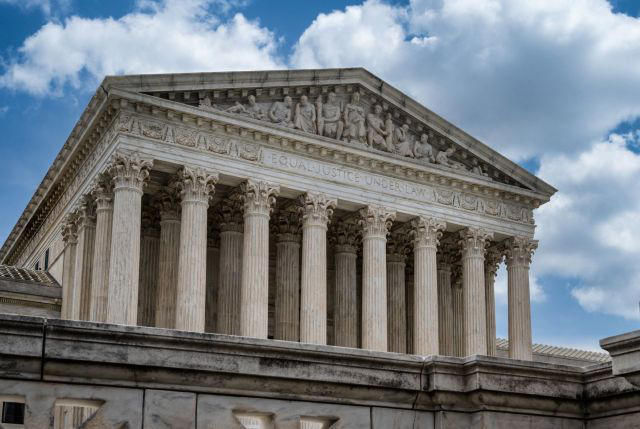
Supreme Court “guts” EPA and the Clean Water Act

The Cool Down

The Cool Down

<?XML:NAMESPACE PREFIX = "[default] http://www.w3.org/2000/svg" NS = "http://www.w3.org/2000/svg" />Follow

Expert sounds the alarm after U.S. Supreme Court sides with couple wanting to build house at protected site

Story by Laurelle Stelle •6h

HAVE YOUR SAY

Poll: What do you think of the Supreme Court ruling?

Sacketts family prevails in Supreme Court battle with EPA

Sacketts family prevails in Supreme Court battle with EPA© Provided by The Cool Down

Since the creation of the Clean Water Act in 1972, the federal government has had the authority to protect bodies of water throughout the U.S. from pollution. This traditionally included wetlands, which play a vital role in feeding open bodies of water like rivers and lakes.


However, thanks to a Supreme Court ruling in May, this federal protection has been removed from many crucial wetlands across the country, the Guardian reports.

What happened?

According to the Guardian, Michael and Chantell Sackett are Idaho residents who bought a half-acre lot in 2004 near Priest Lake, one of the state’s largest bodies of water. They intended to build a home there and started to fill in the marshy site with gravel.

The Sacketts didn’t know that the site was a protected wetland, which they would need a permit to fill in, the Guardian explains. The EPA stepped in to stop construction and issued serious fines for the work already done.

The Sacketts began a 15-year legal battle, which made it to the Supreme Court this year. The central question was whether the EPA had the authority to prevent the Sacketts from building on a wetland area.

The Supreme Court ruled in the Sacketts’ favor. It found that the Clean Water Act applied only to “wetlands with a continuous surface connection to bodies that are waters of the United States in their own rights.”


Why does this decision matter?

As the U.S. Geological Survey explains, wetlands are crucial to America’s water system and environment. They catch and filter water before it reaches rivers and lakes, keeping those sources clean for human use — even if the wetlands don’t have an obvious surface connection to those bodies of water.

Wetlands also absorb stormwater to prevent floods, protect coastlines from eroding, and provide food and shelter to wildlife that people rely on, including young fish and shellfish.

If the EPA doesn’t have the authority to protect wetlands, those areas may be polluted, filled in, or drained in ways that harm whole communities. The former wetland and the surrounding area would experience increased flood risks, and fish populations in nearby waters would drop. People who rely on those water sources for household use or crops would also see a decline in water quality and safety.


What’s being done about the change?

This decision came at a time when the Clean Water Act was being strengthened by the EPA and the Biden administration, so the federal government may take action to address the change.

Jim Murphy of the National Wildlife Federation also called on Congress and state governments to create new laws to protect the wetlands that have suddenly been left exposed.

“For 50 years the Clean Water Act has been instrumental in revitalizing and safeguarding drinking water sources for people and wildlife, wetlands for flood control, and habitats that sustain our wildlife heritage,” said Murphy. “The court’s ruling removes these vital protections from important streams and wetlands in every state. We call on both Congress and state governments to step in, plug the gap, and protect our threatened waters and the people that depend on them.”

Whales are ingesting up to 10 million pieces of microplastic per day: ‘Like training for a marathon and eating only jelly beans’

Whales are ingesting up to 10 million pieces of microplastic per day: ‘Like training for a marathon and eating only jelly beans’© Provided by The Cool Down

Join our free newsletter for cool news and actionable info that makes it easy to help yourself while helping the planet.

Expert sounds the alarm after U.S. Supreme Court sides with couple wanting to build house at protected site first appeared on The Cool Down.

Thursday, August 31, 2023

What happened to the last Boone County employee indicted for theft?

CRIME

Former Boone County employee sentenced to 5 years in prison for stealing money

Ben Stanley Rockford Register Star

0:11

0:55

The Boone County Court House on April 16, 2015. BEN STANLEY/RRSTAR.COM

BELVIDERE — Former Boone County employee Donna Osoria was sentenced to five years in prison Thursday for stealing more than $24,000 in bond money while working in the circuit clerk's office.

Osoria, 58, pleaded guilty to felony theft on Dec. 4, 2014.

On Thursday, Boone County Circuit Clerk Linda Anderson testified that between March 15, 2010 and June 22, 2012, Osoria engaged in a cash lapping scheme with bond money paid to the circuit clerk's office for various unrelated felonies and misdemeanors. 

Osoria stole bonds paid on active cases and covered her tracks by transferring bonds paid on old and unrelated cases. She claimed she stole the money to help her mother pay rent.

"She just needed my help and if she hadn't needed my help I wouldn't be here right now," Osoria said. "I'm not a bad person I just made a really, really, really, really bad mistake. And in turn that mistake cost me just about everything that mattered to me."

However, Osoria's mother died in 2011 and thefts continued well into 2012. Judge Robert Tobin called Osoria's systematic approach to stealing bond money and covering her tracks a "true act of a criminal mind"

"A mistake is different than an ongoing theft, and this is behavior that went on for 27 months," said Special Prosecutor Chuck Colburn. "That goes beyond a mistake. This is a criminal enterprise that went on and on and on."

Ben Stanley:

Above is fromhttps://www.rrstar.com/story/news/crime/2015/04/16/former-boone-county-employee-sentenced/34754602007/

Boone County Clerk arrested on theft of public funds

Boone County Clerk Julie Bliss faces theft, misconduct charges

https://www.wifr.com/2023/08/31/boone-county-clerk-julie-bliss-faces-theft-misconduct-charges/

Boone County Clerk and Recorder Julie Bliss, 53, was arrested on August 31, 2023.(23 WIFR)

By Meghan Schobinger

Published: Aug. 31, 2023 at 4:49 PM CDT|Updated: 2 hours ago

<?XML:NAMESPACE PREFIX = "[default] http://www.w3.org/2000/svg" NS = "http://www.w3.org/2000/svg" />

BELVIDERE, Ill. (WIFR) - Boone County Clerk and Recorder Julie Bliss, 53, was arrested Thursday following an investigation by Illinois State Police.

Bliss is charged with theft of government property and official misconduct.

The charges come after a months-long investigation.

According to a news release from Boone County, an employee in the clerk’s office reported “irregularities” in two of the office’s bank accounts. The release says the information was presented to leaders in April.

Boone County officials called the Illinois State Police and contracted accounting firm Silkich, LLP, to assist in the investigation.

In a statement to the media, the county said “the misuse of public funds is an abuse of power and a violation of the public trust that will not be tolerated. The Boone County Board and Boone County Administration are fully committed to cooperating with the Illinois State Police and with Sikich, LLP, in order to provide the public with a full, accurate, and transparent accounting of the outcome of this investigation, and to restore the public’s trust in our County officials.”

If convicted, Bliss could face more than 10 years in prison, however county leaders say both charges could also carry sentences of probation only.

This story is developing and will be updated as information is confirmed.

Copyright 2023 WIFR. All rights reserved

Above is from:  https://www.wifr.com/2023/08/31/boone-county-clerk-julie-bliss-faces-theft-misconduct-charges/


*******************************************************************************************************************************************************************

Boone County Clerk and Recorder Arrested on theft of government property


%

In April of 2023, an employee of the Boone County Clerk’s Office reported irregularities that she had discovered in two of the County Clerk’s bank accounts.

BELVIDERE — Boone County Clerk and Recorder Julie Bliss was arrested on Thursday according to a press release from Boone County Board Chairman Rodney Riley.

The release states Bliss, 53, of Belvidere, was arrested on one count of Theft of Government Property, a class 2 felony, and one count of Official Misconduct, a class 3 felony.

In April of 2023, an employee of the Boone County Clerk’s Office reported irregularities that she had discovered in two of the County Clerk’s bank accounts.

Upon receiving that report, Boone County officials immediately notified the Illinois State Police, and took appropriate steps to ensure fiscal oversight of the Clerk’s office during the course of the investigation.

Additionally, the County contracted with Sikich, LLP, an accounting firm, to assist the Illinois State Police in the investigation, and to make recommendations with respect to ensuring the future fiscal integrity of the Boone County Clerk’s Office.

The release also states that The Boone County Board and Boone County Administration are fully committed to cooperating with the Illinois State Police and with Sikich, LLP, in order to provide the public with a full, accurate, and transparent accounting of the outcome of this investigation, and to restore the public’s trust in their County officials.

A class 2 felony is punishable by 3 to 7 years in the Department of Corrections.

A class 3 felony is punishable by 2 to 5 years in the Department of Corrections.

Although the maximum penalty for each charge is a prison sentence, both charges are also eligible for probation pursuant to Illinois statute.

The investigation is ongoing, and additional charges may be filed.

Above is from:  https://www.wrex.com/news/boone-county-clerk-and-recorder-arrested-on-theft-of-government-property/article_9c0d3274-4845-11ee-a248-d3ae7adc5799.html

Monday, August 28, 2023

Johns Hopkins Health Update 8/28/2023

Roundup and analysis of the top headlines on health security, pandemic preparedness, COVID-19, and other news from the Johns Hopkins Center for Health Security

Please note that some links may require subscription or registration

August 28, 2023

TOP NEWS

COVID-19 indicators increase in 3 of 6 WHO regions, US; updated boosters expected in mid-September

COVID-19 indicators increased in 3 of the 6 WHO regions, and US CDC data show a continued slow but steady rise in COVID-19 activity in the most recent week, with hospitalizations up nearly 22% and deaths from the disease up a little more than 21%. Though the US is in a good position to face this late-summer increase in COVID-19 cases—as well as other respiratory viruses responsible for the majority of fall and winter hospitalizations—the uptick serves as a reminder that the novel coronavirus is here to stay.

Experts are closely watching the new BA.2.86 variant, which has been detected in 13 cases in 6 different countries and in wastewater in several additional nations. The new variant has a high number of mutations that likely enable it to evade antibodies developed in response to previous SARS-CoV-2 infections or vaccination. While BA.2.86 does not appear to cause more severe disease than other variants, and existing treatments likely will work against the variant, more data are needed to know how well the forthcoming, updated vaccines will protect against severe disease and hospitalization. US President Joe Biden last week said he is planning to request additional funding from the US Congress to develop another new COVID-19 vaccine, as the virus continues to mutate.

The updated vaccines likely will be available in mid-September, earlier than previously expected, following a meeting of the US CDC's Advisory Committee on Immunization Practices (ACIP) on September 12. People who are aged 65 or older or immunocompromised should talk with their health care provider about whether to get an additional dose of the currently available bivalent booster or wait for the updated monovalent shot. Those who are behind on their recommended vaccinations or unvaccinated might consider completing their vaccine series now. Most others who are not at high risk of severe COVID-19 can wait for the updated vaccine, or even skip this next dose, according to some experts. In the meantime, those at high risk should consider wearing high-quality masks in indoor settings to lower their risk of infection. Several US hospital systems, schools, and businesses have reinstituted mask mandates, though another federal mandate is highly unlikely.

COVID-19 continues to interrupt in-person learning in US public schools; experts urge improvements to indoor air quality to avoid closures

The uptick in COVID-19 cases is impacting the start of the new school year in several areas around the US. At least 3 school districts suspended in-person learning due to significant drops in student and teacher attendance attributed to COVID-19 and other illnesses. Notably, US CDC data show greater increases over the previous week in the percentage of emergency department visits diagnosed with COVID-19 among children and adolescents compared with older age groups.

In-person schooling interruptions due to COVID-19 and other illnesses have led to significant learning losses among the nation's children despite K-12 schools receiving unprecedented amounts of federal aid to help them address pandemic-related challenges. Some of that funding, appropriated in 2020, was meant to help schools improve their HVAC systems; however, an estimated 36,000 public schools still lack adequate air conditioning. Record high temperatures across much of the country this summer drove up classroom temperatures, which inhibits focus and learning. Additionally, poorly ventilated spaces offer ideal conditions for the transmission of airborne diseases, including the virus that causes COVID-19. Improvements to indoor air quality could help keep more students and teachers in the classroom and help avoid closures due to disease outbreaks.

US health officials outline plan for approaching respiratory virus season, release updated flu vaccine guidance

US health officials last week detailed the various medical countermeasures available to combat the viruses that cause respiratory illness ahead of the fall and winter, when increases in disease incidence typically occurs. Updated vaccines for COVID-19 and influenza are expected in September and October, and new vaccines against RSV are now available for adults aged 60 years and older and available soon for pregnant people in their third trimester. Additionally, a new monoclonal antibody shot against RSV will be available this fall for infants under 8 months and young children at increased risk of severe disease.

For those eligible, experts agree it is safe to get a COVID-19 booster and flu shot at the same time. The new mRNA-based COVID-19 vaccines from Pfizer-BioNTech and Moderna are expected to be fully licensed vaccines for individuals aged 12 and older and available under an emergency use authorization (EUA) for children ages 11 and younger. The protein-based COVID-19 vaccine from Novavax is also expected be available under an EUA. The US CDC published new guidelines for flu vaccinations last week, outlining the composition of the 2023-2024 seasonal vaccines and updating recommendations regarding flu vaccination for people with egg allergy. The agency's experts now say that all people aged 6 months or older with egg allergy should receive a flu vaccine, whether it is egg-based or non-egg-based, and no additional safety measures are needed for vaccination.

As for RSV immunizations, the US FDA has approved 2 vaccines for older adults, approved one of those vaccines for use in pregnant people to pass immunity on their newborns, and approved a preventive monoclonal antibody for infants and vulnerable toddlers. The monoclonal antibody is now included in the federal Vaccines for Children program, meaning it will be available at no cost to children who are uninsured, Medicaid eligible, Native American or Alaska Native, or underinsured in a plan that does not cover vaccines. For adults, the RSV vaccines are covered under Medicare Part D, which pays for prescription drugs, but those without a Part D plan may have to pay for an RSV vaccine out of pocket, depending on their non-Medicaid prescription drug coverage. 

MORE HEADLINES

Risk of death from SARS-CoV-2 Omicron variant 4 times higher than from flu, study shows, suggests need for better vaccine coverage

CIDRAP: COVID Omicron carries 4 times the risk of death as flu, new data show

Epidemiology & Infection: Mortality associated with Omicron and influenza infections in France before and during the COVID-19 pandemic

US hospital patients' perceived quality of care worsened during COVID-19 pandemic, possibly due to staffing shortages, absenteeism

CIDRAP: US hospital patient survey reveals worse perceived care amid COVID-19

JAMA Health Forum: Changes in Patient Experiences of Hospital Care During the COVID-19 Pandemic

In-person, online mental health care visits increased substantially during pandemic, research shows; telehealth made visits more accessible but questions remain about future insurance coverage

New York Times: Mental Health Spending Surged During the Pandemic

The Hill: Mental health spending up 50 percent since beginning of COVID-19 pandemic: study

Axios: Americans invested in their mental health during the pandemic

Pulse oximeters' overestimation of blood oxygen saturation led to COVID-19 treatment delays, especially among darker skinned patients

New York Times: Faulty Oxygen Readings Delayed Care to Black and Hispanic Covid Patients, Study Finds

CIDRAP: Study: Oximeters often overestimate COVID patients' oxygen levels, delaying care

China had estimated 1.87 million excess deaths after lifting of zero COVID policy, US study suggests

NBC News: China had almost 2 million excess deaths after the end of 'zero-Covid,' U.S. study finds

Medical Xpress: American study estimates 1.87 million excess deaths occurred in China two months after its zero COVID policy ended

North Korea opens to citizens following COVID lockdown; China drops testing for incoming travelers

Reuters: North Korea approves return of its citizens from abroad after COVID lockdown

CNN: This country is finally reopening after Covid. But it still requires a one-week quarantine

AP: China won't require COVID-19 tests for incoming travelers in a milestone in its reopening

See also: Reuters: Pandemic, inflation push 68 million more in Asia into extreme poverty, Asian Development Bank says

30 families sue UK government, care homes, hospitals over relatives' deaths during COVID-19 pandemic

BBC: Families sue government for failing to protect care homes from Covid

Guardian: Families sue UK government over relatives' deaths during Covid crisis

Link between climate change, infectious disease outbreaks should prompt scientists, policymakers to evaluate risks, opportunities for mitigation, adaptation, experts say

Science: Will climate change amplify epidemics and give rise to pandemics?

Think Global Health: Amid Global Boiling, the Foreign Policy Response Remains Lacking

See also: AP: Norway to spend $6 million a year stock-piling grain, citing pandemic, war and climate change

Asthma-related hospital visits increased in US on days with significant wildfire smoke

Quartz: Canadian wildfire smoke caused an increase in asthma-related hospital visits in the US

See also: Wired: It's Easy to Check the Air Quality. Meet the People Collecting That Data for You

US CDC calls on nation's hospitals to implement sepsis programs, improve sepsis care; nurses, patients, professional groups call for more rigorous CDC isolation precaution guidelines

CNN: CDC launches effort to bolster hospital sepsis programs

MedPage Today: CDC Advisory Group Under Fire for Proposed Infection Control Guidelines

'Silent pandemic' of antimicrobial resistance worsening; experts warn lack of urgency on part of governments, pharma companies to address issue risks future disaster

Financial Times: Superbugs: why it's so hard to stop the 'silent pandemic'

Al-Monitor: Iraq's war-battered cities grapple with rising resistance to antibiotics

See also: Wired: The Battle Against the Fungal Apocalypse Is Just Beginning

And: CIDRAP: Study shows artemisinin-resistant malaria is spreading in Uganda

West Nile virus leading cause of insect-borne viral disease in US; surveillance shows outbreaks of other mosquito-, tick-borne diseases

CNN: In the US, West Nile virus is leading cause of viral disease spread by insects, CDC study says

NBC News: Rare cases of mosquito- and tick-borne diseases, including Powassan and dengue, crop up across the U.S.

COVID-19 pandemic impacted teen vaccine uptake, especially of HPV vaccine, study shows

CIDRAP: Pandemic altered teen vaccine uptake, with major lags seen in HPV

MMWR: Vaccination Coverage Among Adolescents Aged 13–17 Years — National Immunization Survey–Teen, United States, 2022

Polish authorities investigating whether water tampering caused Legionnaires' outbreak that killed 7 people in Ukrainian border city

AP: Legionnaires' disease kills 7 people in a strategic Polish city on the Ukrainian border

Reuters: Polish authorities probe whether deadly Legionnaires' outbreak was result of water tampering

Editors: Alyson Browett, MPH and Rachel A. Vahey, MHS

Contributors: Erin Fink, MS; Vanessa Gregoire, MSc; Amanda Kobokovich, MPH; Aishwarya Nagar, MPH; Christina Potter, MSPH; Matthew Shearer, MPH; Prarthana Vasudevan, MS, MSPH, DrPH (c); and Alex Zhu, MSPH

Thursday, August 24, 2023