Monday, November 30, 2020

Pope Francis: A Crisis Reveals What Is in Our Hearts

Pope Francis: A Crisis Reveals What Is in Our Hearts

This oped by Pope Francis appeared the day after the Supreme Court’s new conservative majority late Wednesday night sided with religious organizations in New York that said they were illegally targeted by pandemic-related restrictions.

November 29, 2020 Pope Francis: Pope Francis NEW YORK TIMES

PRINTER FRIENDLY

, Illustration by Najeebah Al-Ghadban; photographs by Getty Images

In this past year of change, my mind and heart have overflowed with people. People I think of and pray for, and sometimes cry with, people with names and faces, people who died without saying goodbye to those they loved, families in difficulty, even going hungry, because there’s no work.

Sometimes, when you think globally, you can be paralyzed: There are so many places of apparently ceaseless conflict; there’s so much suffering and need. I find it helps to focus on concrete situations: You see faces looking for life and love in the reality of each person, of each people. You see hope written in the story of every nation, glorious because it’s a story of daily struggle, of lives broken in self-sacrifice. So rather than overwhelm you, it invites you to ponder and to respond with hope.

These are moments in life that can be ripe for change and conversion. Each of us has had our own “stoppage,” or if we haven’t yet, we will someday: illness, the failure of a marriage or a business, some great disappointment or betrayal. As in the Covid-19 lockdown, those moments generate a tension, a crisis that reveals what is in our hearts.

In every personal “Covid,” so to speak, in every “stoppage,” what is revealed is what needs to change: our lack of internal freedom, the idols we have been serving, the ideologies we have tried to live by, the relationships we have neglected.

When I got really sick at the age of 21, I had my first experience of limit, of pain and loneliness. It changed the way I saw life. For months, I didn’t know who I was or whether I would live or die. The doctors had no idea whether I’d make it either. I remember hugging my mother and saying, “Just tell me if I’m going to die.” I was in the second year of training for the priesthood in the diocesan seminary of Buenos Aires.

I remember the date: Aug. 13, 1957. I got taken to a hospital by a prefect who realized mine was not the kind of flu you treat with aspirin. Straightaway they took a liter and a half of water out of my lungs, and I remained there fighting for my life. The following November they operated to take out the upper right lobe of one of the lungs. I have some sense of how people with Covid-19 feel as they struggle to breathe on a ventilator.

I remember especially two nurses from this time. One was the senior ward matron, a Dominican sister who had been a teacher in Athens before being sent to Buenos Aires. I learned later that following the first examination by the doctor, after he left she told the nurses to double the dose of medication he had prescribed — basically penicillin and streptomycin — because she knew from experience I was dying. Sister Cornelia Caraglio saved my life. Because of her regular contact with sick people, she understood better than the doctor what they needed, and she had the courage to act on her knowledge.

Another nurse, Micaela, did the same when I was in intense pain, secretly prescribing me extra doses of painkillers outside my due times. Cornelia and Micaela are in heaven now, but I’ll always owe them so much. They fought for me to the end, until my eventual recovery. They taught me what it is to use science but also to know when to go beyond it to meet particular needs. And the serious illness I lived through taught me to depend on the goodness and wisdom of others.

This theme of helping others has stayed with me these past months. In lockdown I’ve often gone in prayer to those who sought all means to save the lives of others. So many of the nurses, doctors and caregivers paid that price of love, together with priests, and religious and ordinary people whose vocations were service. We return their love by grieving for them and honoring them.

Whether or not they were conscious of it, their choice testified to a belief: that it is better to live a shorter life serving others than a longer one resisting that call. That’s why, in many countries, people stood at their windows or on their doorsteps to applaud them in gratitude and awe. They are the saints next door, who have awakened something important in our hearts, making credible once more what we desire to instill by our preaching.

They are the antibodies to the virus of indifference. They remind us that our lives are a gift and we grow by giving of ourselves, not preserving ourselves but losing ourselves in service.

With some exceptions, governments have made great efforts to put the well-being of their people first, acting decisively to protect health and to save lives. The exceptions have been some governments that shrugged off the painful evidence of mounting deaths, with inevitable, grievous consequences. But most governments acted responsibly, imposing strict measures to contain the outbreak.

Yet some groups protested, refusing to keep their distance, marching against travel restrictions — as if measures that governments must impose for the good of their people constitute some kind of political assault on autonomy or personal freedom! Looking to the common good is much more than the sum of what is good for individuals. It means having a regard for all citizens and seeking to respond effectively to the needs of the least fortunate.

It is all too easy for some to take an idea — in this case, for example, personal freedom — and turn it into an ideology, creating a prism through which they judge everything.

The coronavirus crisis may seem special because it affects most of humankind. But it is special only in how visible it is. There are a thousand other crises that are just as dire, but are just far enough from some of us that we can act as if they don’t exist. Think, for example, of the wars scattered across different parts of the world; of the production and trade in weapons; of the hundreds of thousands of refugees fleeing poverty, hunger and lack of opportunity; of climate change. These tragedies may seem distant from us, as part of the daily news that, sadly, fails to move us to change our agendas and priorities. But like the Covid-19 crisis, they affect the whole of humanity.

Look at us now: We put on face masks to protect ourselves and others from a virus we can’t see. But what about all those other unseen viruses we need to protect ourselves from? How will we deal with the hidden pandemics of this world, the pandemics of hunger and violence and climate change?

If we are to come out of this crisis less selfish than when we went in, we have to let ourselves be touched by others’ pain. There’s a line in Friedrich Hölderlin’s “Hyperion” that speaks to me, about how the danger that threatens in a crisis is never total; there’s always a way out: “Where the danger is, also grows the saving power.” That’s the genius in the human story: There’s always a way to escape destruction. Where humankind has to act is precisely there, in the threat itself; that’s where the door opens.

This is a moment to dream big, to rethink our priorities — what we value, what we want, what we seek — and to commit to act in our daily life on what we have dreamed of.

God asks us to dare to create something new. We cannot return to the false securities of the political and economic systems we had before the crisis. We need economies that give to all access to the fruits of creation, to the basic needs of life: to land, lodging and labor. We need a politics that can integrate and dialogue with the poor, the excluded and the vulnerable, that gives people a say in the decisions that affect their lives. We need to slow down, take stock and design better ways of living together on this earth.

The pandemic has exposed the paradox that while we are more connected, we are also more divided. Feverish consumerism breaks the bonds of belonging. It causes us to focus on our self-preservation and makes us anxious. Our fears are exacerbated and exploited by a certain kind of populist politics that seeks power over society. It is hard to build a culture of encounter, in which we meet as people with a shared dignity, within a throwaway culture that regards the well-being of the elderly, the unemployed, the disabled and the unborn as peripheral to our own well-being.

To come out of this crisis better, we have to recover the knowledge that as a people we have a shared destination. The pandemic has reminded us that no one is saved alone. What ties us to one another is what we commonly call solidarity. Solidarity is more than acts of generosity, important as they are; it is the call to embrace the reality that we are bound by bonds of reciprocity. On this solid foundation we can build a better, different, human future.


Pope Francis is the head of the Catholic Church and the bishop of Rome. This essay has been adapted from his new book “Let Us Dream: The Path to a Better Future,” written with Austen Ivereigh.

Sunday, November 29, 2020

The Green Revolution Has Been Won, Says America’s New Wind Billionaire


JEFF SCIORTINO FOR FORBES

Christopher Helman

Christopher HelmanForbes Staff

Energy

Renewable energy is now cheap and ready for prime time. That is if—like Michael Polsky—you don’t mind angering farmers and chopping up a few bald eagles.


“II’I’m an engineer. Not an environmentalist,” says Michael Polsky, as if to explain why even after spending 17 years developing renewable-energy systems, he’s still enthralled by the sight of 125-foot-long wind turbine blades sweeping in elegant circles through the sky. It’s machines that this serial entrepreneur loves. And building. And making profitable deals. After becoming a centimillionaire by developing gas-fired turbines, the 71-year-old has ridden wind power to billionaire status.

We’re touring the Grand Ridge Energy Center, a renewable energy complex that Polsky’s private company, Invenergy, built and owns 80 miles southwest of its Chicago headquarters. He eagerly shows off his 140 wind turbines, 120 acres of solar panels and a utility-scale battery installation that in an emergency can put out 38 megawatts (enough to power about 38,000 homes) for an hour. Then the slim septuagenarian with a mop of curly gray hair strides toward a row of new “bi-facial,” or double-sided, photovoltaic panels, which also catch sun rays bouncing off the ground, generating 8% more power on the same square footage as conventional solar panels. “The technology is so good and ripe. You get the conviction that it has to happen,’’ Polsky says in his slight Ukrainian accent. “The revolution has been won.”


YOU HAVE ONLY YOURSELF TO BLAME
One big obstacle to green energy is spelled y-o-u. Technological advances have made wind and solar power cheaper than coal, nuclear and even natural gas. So why aren’t we using more of the stuff? Quite simply because you (and your neighbors) oppose and block the construction of wind farms and new transmission lines for green power.

The technological revolution, that is. Even without tax breaks, wind and solar power are now cheaper than fossil fuels, a stunning turnabout in just the last decade (see chart). President-elect Joe Biden wants to renew soon-to-expire clean-energy tax credits. Plus, part of his $2 trillion climate plan is a pledge to install 60,000 wind turbines and 500 million solar panels over the next five years to achieve a carbon-free power grid by 2035. A Republican Senate would likely block most of that spending.

No matter. With cities, states and corporations setting their own “net zero carbon” goals, the demand for industrial-scale solar and wind power, which now account for just 12% of domestic power supply, will continue to surge. Polsky is buying turbines from GE Power that are twice the size of those at Grand Ridge (at 700 feet, they’re taller than Trump Tower in New York) and generate up to 3 megawatts each. He intends to erect more than 1,000 of these enormous machines on 100,000 acres in Kansas, on what could become the nation’s biggest wind farm.

While the technological revolution has been won, Polsky still needs to get his windmills sited and to transport the wind power to the people. On that front, skirmishes continue. Farmers are not thrilled about the prospect of Invenergy using eminent domain laws to claim a right-of-way corridor through their land for an 800-mile-long, $7 billion high-voltage transmission line (called the Grain Belt Express) that would move power from Kansas through Missouri to Illinois. Fights against wind farms have broken out recently from ruby-red Wyoming to solid-blue Santa Barbara.

uncaptioned

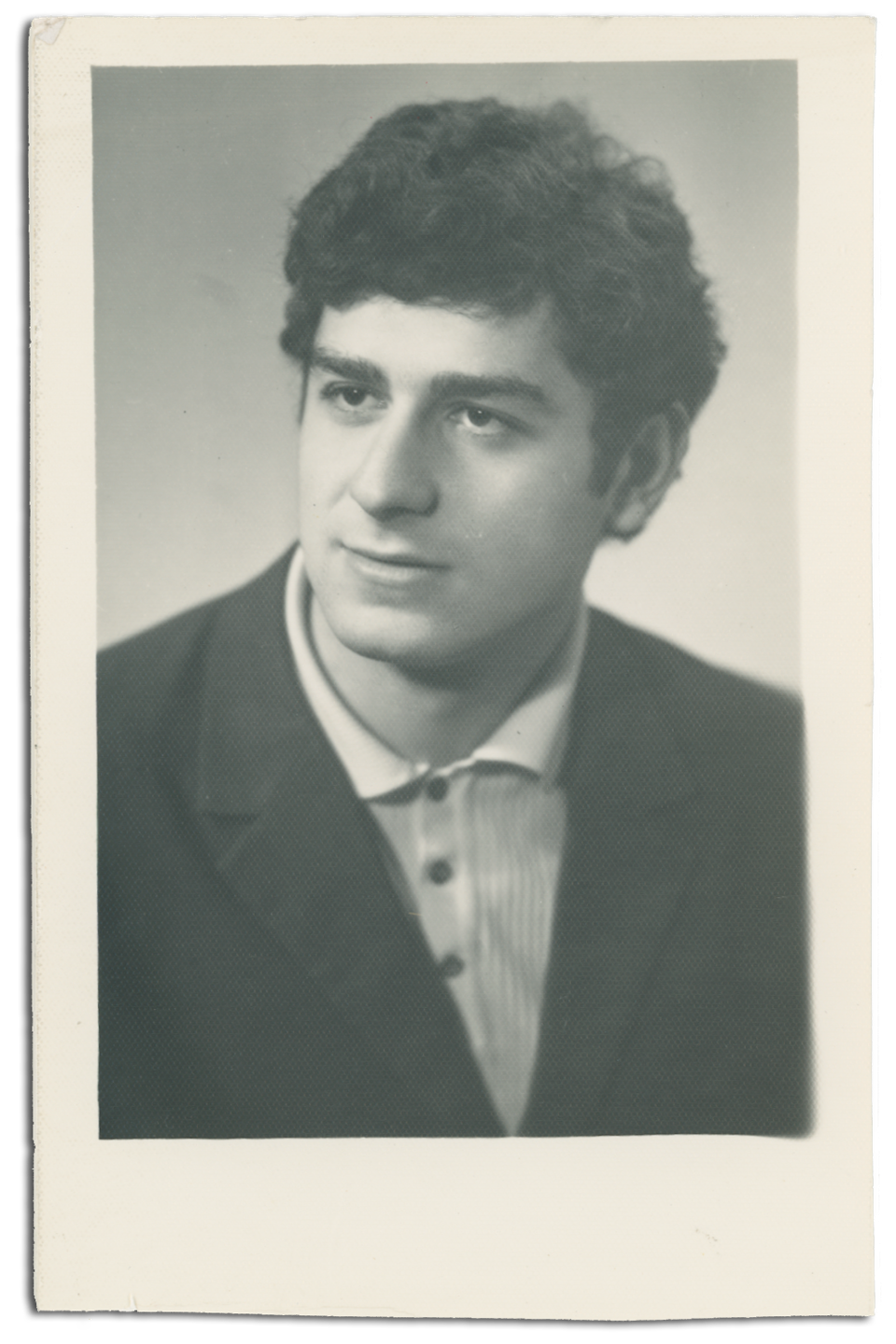
The Young Engineer: After Kiev Polytechnic Institute, dim job prospects in the Soviet bloc drove Polsky to America.

INVENERGY

The irony here is that hard-nosed, profit-driven developers like Polsky, ready to bulldoze, litigate and lobby through such not-in-my-backyard objections, are key to realizing the world’s clean-energy future. “It is not going to happen just because we want it to,” Polsky warns.

In 1976, the then-26-year-old Polsky and his pregnant wife, Maya, who taught English when the couple lived in Ukraine, arrived in Detroit with $500 and four suitcases of belongings. He had a master’s in mechanical engineering from top-notch Kiev Polytechnic Institute, but as a Jew, saw little future for himself in Soviet Ukraine. The charity that had helped to resettle the couple in Detroit suggested Polsky take a blue-collar job. Instead, he sent out hundreds of résumés and, despite his limited English skills, landed an engineering job at a Bechtel power plant, later moving to ABB and Fluor.

Back then, smoke-belching, coal-burning plants were state of the art in the heavily regulated power business. But a big opportunity was emerging: In 1978, Congress partially deregulated the power industry, enabling independent startups to build plants and sell juice to the grid.

That change enabled Polsky, a Ukrainian engineer, to transform himself into an American dealmaker. In 1985, he and a partner launched Indeck Energy Services to develop cogeneration projects, in which steam produced as a by-product of power generation is used to run industrial plants. While earning an M.B.A. at the University of Chicago Booth School of Business, Polsky traveled the country, selling cogeneration to the likes of DuPont.

Indeck was successful, but the partnership soured and Polsky was ousted. He sued and ended up with a $25 million settlement. In 1991 he launched Polsky Energy, later renamed SkyGen, which specialized in building gas-fired generators that could ramp up rapidly to provide power for top dollar at times of peak demand. A decade later, Polsky sold SkyGen to publicly traded Calpine for $450 million net of debt; he got about half of that.

Polsky Energy

In 1991, after an acrimonious split with his first business partner, Polsky launched an eponymous energy company in Chicago to build gas-fired power plants, later rebranding it SkyGen.

INVENERGY

He was now a centimillionaire, but frustrated to be cooling his heels on the board of Calpine instead of making deals and running his own show. So he resigned, taking four SkyGen colleagues with him to start Invenergy with $75 million of his own capital.

Polsky’s original plan was to stick to natural gas, but there was a glut of such plants. (Calpine itself filed for bankruptcy protection in 2005 with $17 billion in debt.) And so, in 2003, Invenergy stuck a finger up to gauge the wind business, first building a disappointing small project for the Tennessee Valley Authority. It ran over budget and, it turned out, was situated in a spot in the Blue Ridge Mountains where the wind didn’t blow hard enough. Lessons learned, Invenergy’s next projects, located in windier parts of Montana, Colorado and Idaho, were many times bigger—and profitable.

By 2006, Polsky was worth $367 million—according to an Illinois court that ordered him to hand over half of it to Maya, who had filed for divorce. While Polsky unsuccessfully appealed the order, complaining (among other things) that he was being forced to liquidate assets to pay her, it didn’t set back his dealmaking and wealth-building for long.

To date, Invenergy and its subsidiaries have built 160 projects totaling 25,000 megawatts of wind, solar and natural-gas generation—enough to power 5 million homes. Polsky has sold about 55% of that capacity to a big Canadian pension fund and other investors, although in some cases Invenergy still runs the projects. “The best way to grow is to recycle capital into new projects,” Polsky says. “We sell assets to raise money to keep control. I could have raised more money if I gave up control, but I never wanted to give up control.”


“Hard-nosed, profit-driven developers are key to realizing the world’s clean-energy future.”


While Polsky won’t provide financial details for privately held Invenergy, analysts figure the whole enterprise is worth around $10 billion. After deducting for joint-venture interests and presumed debt loads, Forbes estimates Polsky’s controlling stake gives him a net worth of $1.5 billion. Invenergy is now the second-largest producer of wind power in the U.S.—second, that is, to NextEra Energy, a publicly traded utility holding company with a market cap of $150 billion.

Back in Chicago, Polsky leads an impromptu tour of the three floors Invenergy occupies at One South Wacker Drive in the pandemic ghost town that is downtown Chicago. It’s a Friday morning. Ordinarily, there would be dozens of people in open-plan workstations and offices, but only a handful are present, including the 24/7 crew manning Invenergy’s control center—watching, and even operating, 6,774 wind turbines spread across the country.

Sharing Invenergy’s digs are the offices of Polsky’s $150 million green-tech-focused VC fund, Energize Ventures. Among its 13 portfolio investments: Drone Deploy, which inspects turbine blades using infrared beams and drones, and Volta, which is building a chain of electric vehicle charging stations.

These days, Polsky has reluctantly traded the standing desk in his office for Zoom calls from his living room and quality time with his second wife, Tanya, 47, a former banker, and their three young children. “I’ve spent a lot more time with family than before,” the compulsive dealmaker admits. He seems to be enjoying it. “I’ve discovered being home, in a way.”

Polsky’s battles to build say a lot about both the political challenges facing wind power and the wily, pragmatic operator he has become. His most ambitious project to date was Wind Catcher, designed to create 2,000 megawatts of capacity from 800 turbines in Oklahoma at a cost of $4.5 billion. Invenergy broke ground in 2016 but stopped work when Texas regulators, egged on by antiwind groups like the Windfall Coalition (backed by fracking billionaire Harold Hamm), blocked the project, saying it wouldn’t sufficiently benefit rate payers. Undeterred, Invenergy and its partner, utility giant American Electric Power, are now building $2 billion worth of Oklahoma wind farms to serve that state and parts of Arkansas, Louisiana and Texas.

Then there’s that Grain Belt Express, which would install an 800-mile high- voltage line across Kansas and Missouri into Illinois at a cost of $7 billion. It was originally the brainchild of wind-industry pioneer Michael Skelly, whose Clean Line Energy was backed by the billionaire Ziff family, among others. Skelly’s team burned through $100 million fighting NIMBys and bureaucrats in its quest for permits and approvals. “After a decade, it was hard for us to attract capital,” says Skelly, now a senior advisor at Lazard.

uncaptioned

An eagle-eye view: Polsky's Invenergy owns or operates nearly 7,000 turbines, worldwide.

INVENERGY

Polsky agreed to take over Grain Belt on the condition of Invenergy winning those approvals—in other words, all he risked upfront was the cost of lawyers and lobbyists. “It’s much more complicated than just building a wind farm,” admits Polsky, who relishes the challenge. A bill that would keep non-utility companies like Invenergy from using eminent domain to take private land passed the Missouri state assembly this year but has been bottled up in the state senate. Meanwhile, two Missouri appeals courts have upheld the state public service commission’s approval of the Grain Belt Express.

Despite ongoing appeals, farmers like Loren Sprouse, whose family owns a 480-acre tract west of Kansas City that the high-voltage line would cross, are becoming resigned to the fact that soon Invenergy will be able to negotiate with the sledgehammer of eminent domain. “Once you get eminent domain, the price may still be negotiated, but they would have the right to do it,’’ he says.

Sprouse’s land is already crossed by three buried petrochemical pipelines, which he says transport warmed crude that “runs so hot it dries out the ground and kills the crops.” (Indeed, the proposed transmission lines would run along the pipeline right-of-way.) But Sprouse prefers the pipelines to the visual blight of hulking transmission lines, and he’s concerned about the health effects of electromagnetic radiation. Polsky is encouraged by Invenergy’s legal victories in Missouri, and expects Illinois approvals to follow. “It will be built. It has to happen,” he says.

The full range of competing interests—and Polsky’s tactics—are on display in his battle in New York’s rural Allegheny and Cattaraugus counties, east of Lake Erie. There, Invenergy is moving through the permitting process on its proposed Alle-Catt Wind Farm, which would spread 117 turbines across 30,000 acres south of Buffalo, with a maximum output of 340 megawatts.


“Sure, Polsky’s turbines will chop up eagles and bats, but they won’t put mercury, cadmium, sulfur dioxide or CO2 into the air.”


Farmers from the Old Order Amish Swartzentruber sect moved to the region in 2011 in search of a life removed from modern technology. They and other landowners object to the size of the turbines, their noise, their red blinking lights at night and the strobelike effect caused by the sun rising or setting behind the spinning blades.

“Their religious beliefs dictate that they don’t live near industrial development,” says the sect’s attorney, Gary Abraham. They asked the state siting board to grant them a 2,200-foot setback between the turbines and their homes and barns, arguing they are the community’s de facto churches. But the board ruled they were entitled only to the normal 1,500-foot residential setback, not the 2,200-foot one churches get, and ignored other local opposition. “They are experts in sweet-talking landowners into parting with their land,” Abraham says of Invenergy. “There’s no green in their body except for the dollar.” The outflanked Amish have started looking upstate for new land.

To be sure, Invenergy’s tactics have drawn scrutiny. Last year, New York’s attorney general fined it $25,000 for undisclosed conflicts of interest—Invenergy had pushed through favorable new wind laws in the towns of Freedom and Farmersville without disclosing that it had signed land leases with certain town employees and officials. Attorney Ginger Schroder, who raises heritage exotic poultry in Farmersville, was outraged, and organized citizens to unseat those officials in 2019. The new regime’s first act upon taking office was to undo the Invenergy-friendly rules passed by its predecessor—like the one that increased the permissible noise from turbines.

Schroder is also supporting Abraham’s suit against the New York renewable-energy siting board that aims to overturn its approval of Alle-Catt. Invenergy has “a very determined single-purpose perspective, ignoring laws and communities and all sorts of outcry,’’ she says.

Polsky doesn’t deny that his single-minded pursuit is to build. “Nobody ever built renewables because they need electricity,” he says. “You build to replace something else.” In this case, he’s replacing New York’s last coal-fired power plant, a 686-megawatt unit near Buffalo that closed in March 2020. Over its 30-year lifespan, Alle-Catt’s turbines are projected to chop up 41 bald eagles and thousands of bats. But they will not put mercury, cadmium, sulfur dioxide or CO2 into the air. Polsky doesn’t doubt that the benefits of replacing coal emissions outweigh the eagles lost or the disruption for Amish and other farmers.

“If you’re just making money, you can only go so far,’’ he says. “When you have a mission, a conviction, you perform on a completely different level. You believe so strongly, you don’t take no for an answer.”

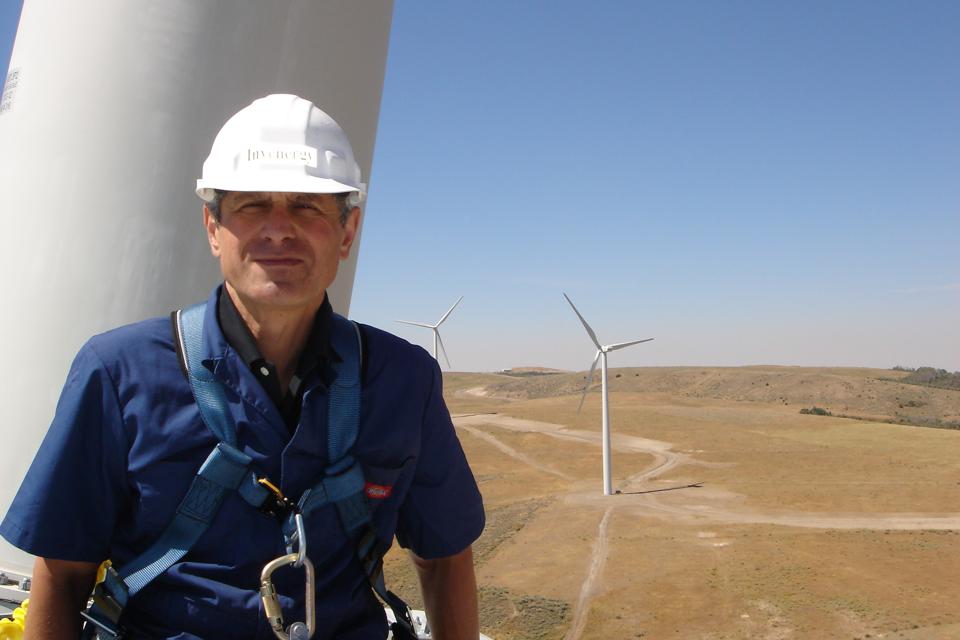
Invenergy wind turbines in Illinois. C. HELMAN

Follow me on Twitter or LinkedIn. Send me a secure tip.

Above is from:  https://www.forbes.com/sites/christopherhelman/2020/11/17/how-an-immigrant-engineer-rode-wind-power-to-billionaire-status/?sh=3ce1f84a2344

Illinois among worse for COVID 19 hospitalizations


The US could face an 'apocalypse’ by Christmas as COVID-19 cases surge:

Seana Smith

Seana Smith

·Anchor

Sat, November 28, 2020, 7:53 AM CST·3 min read

As COVID-19 hospitalizations surpass 90,000 for the first time, a record for the seventeenth day in a row, Dr. Andre Campbell, a trauma surgeon at Zuckerberg San Francisco General Hospital, warns the U.S. could be facing an “apocalypse” next month.

“We could be facing an apocalypse by Christmas because of what is happening with respect to the growing number of hospitalizations — 90,000 is a lot but what if we have 150,000? Those of us who take care of patients are really concerned about it.”

The rampant spread of the novel coronavirus has pushed some hospital systems to their limits, with many more at risk of reaching capacity in a matter of weeks as the number of available ICU beds in some regions drop to dangerously low levels, Campbell warned. North Dakota has over 90% of the state’s ICU beds in use. Across Wisconsin, 88% of the state’s ICU beds are currently occupied.

‘COVID does not take a holiday’

Massachusetts, Arkansas and Pennsylvania all reported a record number of cases Thanksgiving Day as CDC officials urged people to stay home for the holiday. While a recent Axios-Ipsos poll found 61% of Americans changed their holiday plans because of the recent spike in cases, there were millions who did not adhere to the warnings. The Transportation Security Administration (TSA) said it screened 1.07 million travelers at checkpoints nationwide Thanksgiving Eve, the highest number since March 16.

FORT LAUDERDALE FL - NOVEMBER 25 : Airline Passengers are seen at Fort Lauderdale Hollywood International Airport on Thanksgiving as travelers are ignoring CDC warnings to avoid holiday travel as COVID-19 cases are surging across the United State during the Coronavirus COVID-19 pandemic on November 25, 2020 in Fort Lauderdale, Florida. Credit: mpi04/MediaPunch /IPX

FORT LAUDERDALE FL - NOVEMBER 25 : Airline Passengers are seen at Fort Lauderdale Hollywood International Airport on Thanksgiving as travelers are ignoring CDC warnings to avoid holiday travel.

“We're very worried about the travel that's going on around Thanksgiving. Six million people traveled in the last six days and that means many more people will be exposed [to the virus.] We told folks to stay at home and not move around but people did the opposite….We're all quite worried the system will be overwhelmed with patients because the resources we have are finite but the numbers of patients we have could be infinite. COVID does not take a holiday.”

Hospital systems are strained in the Midwest. (Graphic: David Foster/Yahoo Finance)

Hospital systems are strained in the Midwest. (Graphic: David Foster/Yahoo Finance)

‘Things are on fire’

Forty-six states are now considered hotspots where stay-at-home orders are necessary, according to the Brown School of Public Health COVID-19 Risk Level Dashboard. To be designated as a hotspot, the positivity rate exceeds 25 cases per 100,000 people. States with the highest number of cases per 100,000 people are Montana, North Dakota, Wyoming, Wisconsin and South Dakota.

Thanksgiving Day marked the 24th day in a row that new COVID cases remained above 100,000, bringing the average 7-day case count to more than 163,000, according to the COVID Tracking Project. That’s up from a 7-day average of just over 69,000 a month ago.

“Right now things are on fire. The case rate in North Dakota is 150 per 100,000 people. In California, it’s 31 per 100,000 people and the case positivity rate is going up. These are things that we all worry about as we move forward,” said Campbell. “Help is on the way, but we have to hold out.”

The help Campbell is referring to is the recent progress on a potential vaccine after Pfizer (PFE), Moderna (MRNA) and Astrazeneca (AZN) all reported positive covid vaccine results in recent weeks.

“We have to hold on because hope is coming. A vaccine is coming,” said Campbell.

Seana Smith anchors Yahoo Finance Live’s 3-5 pm ET program. Follow her on Twitter @SeanaNSmith

Above is from:  https://finance.yahoo.com/news/the-us-could-be-facing-an-apocalypse-by-christmas-as-covid-19-cases-surge-135313791.html?.tsrc=fin-notif

November 29: 7178 New COVID 19 Cases in Illinois

Public Health Officials Announce 7,178 New Cases of Coronavirus Disease

29th Nov, 2020

SPRINGFIELD – The Illinois Department of Public Health (IDPH) today reported 7,178 new confirmed and probable cases of coronavirus disease (COVID-19) in Illinois, including 57 additional deaths.

  • Bureau County: 1 male 70s
  • Champaign County: 1 female 50s
  • Cook County: 1 male 40s, 3 females 50s, 1 male 50s, 1 female 60s, 4 males 60s, 5 females 70s, 3 males 70s, 9 males 80s, 1 female 90s, 5 males 90s
  • DuPage County: 1 female 80s, 2 males 80s
  • Fayette County: 2 males 80s
  • Fulton County: 1 female 90s
  • Kane County: 1 male 50s, 1 male 70s
  • Knox County: 1 male 80s
  • LaSalle County: 1 male 80s
  • Logan County: 1 female 80s
  • Madison County: 1 female 70s, 1 male 70s, 1 female 80s, 1 male 80s
  • Mason County: 1 female 90s
  • Massac County: 1 female 70s
  • Ogle County: 1 female 80s
  • Peoria County: 1 male 50s, 1 female 90s
  • Rock Island County: 1 male 50s
  • Whiteside County: 1 male 90s

Currently, IDPH is reporting a total of 720,114 cases, including 12,193 deaths, in 102 counties in Illinois. The age of cases ranges from younger than one to older than 100 years.  Within the past 24 hours, laboratories have reported 62,740 specimens for a total 10,431,018.  As of last night, 5,858 in Illinois were reported to be in the hospital with COVID-19.  Of those, 1,185 patients were in the ICU and 723 patients with COVID-19 were on ventilators.

The preliminary seven-day statewide positivity for cases as a percent of total test from November 22 – November 28, 2020 is 10.1%.  The preliminary seven-day statewide test positivity from November 22 – November 28, 2020 is 12.1%.

*All data are provisional and will change. In order to rapidly report COVID-19 information to the public, data are being reported in real-time. Information is constantly being entered into an electronic system and the number of cases and deaths can change as additional information is gathered.  Information for a death previously reported has changed, therefore, today’s numbers have been adjusted.  For health questions about COVID-19, call the hotline at 1-800-889-3931 or email dph.sick@illinois.gov.

November 28: 7873 New COVID 19 Cases in Illinois


Public Health Officials Announce 7,873 New Cases of Coronavirus Disease

28th Nov, 2020

SPRINGFIELD – The Illinois Department of Public Health (IDPH) today reported 7,873 new confirmed and probable cases of coronavirus disease (COVID-19) in Illinois, including 108 additional deaths.

  • Bureau County: 1 female 80s
  • Cook County: 1 female 30s, 3 females 40s, 2 males 40s, 3 males 50s, 6 females 60s, 9 males 60s, 10 females 70s, 10 males 70s, 12 females 80s, 11 males 80s, 5 females 90s, 3 males 90s
  • DuPage County: 1 male 50s, 1 female 60s, 2 males 70s, 1 male 80s, 2 males 90s
  • Greene County: 1 female 60s
  • Knox County: 1 male 70s
  • Lake County: 1 male 70s, 1 male 80s
  • Macoupin County: 1 male 70s
  • Madison County: 2 females 60s, 1 female 70s, 1 female 80s, 2 females 90s, 2 males 90s
  • Ogle County: 1 female 90s
  • Peoria County: 1 female 70s, 1 female 80s
  • St. Clair County: 1 male 90s
  • Stephenson County: 1 male 60s
  • Whiteside County: 2 males 60s, 1 female 80s, 1 female 90s
  • Will County: 1 female 40s, 1 female 70s
  • Williamson County: 1 male 80s

Currently, IDPH is reporting a total of 712,936 cases, including 12,137 deaths, in 102 counties in Illinois. The age of cases ranges from younger than one to older than 100 years.  Within the past 24 hours, laboratories have reported 79,055 specimens for a total 10,368,278.  As of last night, 5,775 in Illinois were reported to be in the hospital with COVID-19.  Of those, 1,211 patients were in the ICU and 686 patients with COVID-19 were on ventilators.

The preliminary seven-day statewide positivity for cases as a percent of total test from November 21 – November 27, 2020 is 10.1%.  The preliminary seven-day statewide test positivity from November 21 – November 27, 2020 is 12.2%.

*All data are provisional and will change. In order to rapidly report COVID-19 information to the public, data are being reported in real-time. Information is constantly being entered into an electronic system and the number of cases and deaths can change as additional information is gathered.  For health questions about COVID-19, call the hotline at 1-800-889-3931 or email dph.sick@illinois.gov.

Friday, November 27, 2020

November 27: 7574 New COVID 19 Cases in Illinois

Public Health Officials Announce 7,574 New Cases of Coronavirus Disease

27th Nov, 2020

SPRINGFIELD – The Illinois Department of Public Health (IDPH) today reported 7,574 new confirmed and probable cases of coronavirus disease (COVID-19) in Illinois, including 66 additional deaths.

  • Bureau County: 1 male 90s
  • Clark County: 1 male 80s
  • Clay County: 1 female 90s
  • Clinton County: 1 male 80s
  • Cook County: 1 male 30s, 1 male 40s, 2 females 50s, 2 males 50s, 3 males 60s, 3 females 70s, 3 males 70s, 4 females 80s, 2 males 80s, 4 females 90s, 1 male 90s
  • DeKalb County: 1 female 80s
  • DuPage County: 2 males 70s, 1 male 80s, 1 female 90s
  • Fayette County: 1 female 60s
  • Hardin County: 1 male 80s
  • Henry County: 1 female 80s
  • Kane County: 1 female 70s
  • Kendall County: 2 females 90s, 1 male 90s
  • Lake County: 1 female 60s, 1 female 70s, 1 male 70s, 1 female 80s, 1 male 80s
  • LaSalle County: 1 male 80s
  • Livingston County: 1 male 60s
  • Macon County: 2 males 80s
  • Marion County: 1 female 70s
  • McHenry County: 1 male 80s
  • Monroe County: 1 male 80s
  • Morgan County: 1 male 80s
  • Rock Island County: 1 female 80s
  • Saline County: 1 female 80s
  • Vermilion County: 1 female 70s
  • Will County: 1 female 60s, 3 females 70s, 1 female 80s, 1 female 90s
  • Winnebago County: 1 male 80s
  • Woodford County: 1 female 70s

Currently, IDPH is reporting a total of 705,063 cases, including 12,029 deaths, in 102 counties in Illinois. The age of cases ranges from younger than one to older than 100 years.  Within the past 24 hours, laboratories have reported 77,130 specimens for a total 10,289,223.  As of last night, 5,829 in Illinois were reported to be in the hospital with COVID-19.  Of those, 1,215 patients were in the ICU and 698 patients with COVID-19 were on ventilators.

The preliminary seven-day statewide positivity for cases as a percent of total test from November 20 – November 26, 2020 is 10.1%.  The preliminary seven-day statewide test positivity from November 20 – November 26, 2020 is 12.2%.

*All data are provisional and will change. In order to rapidly report COVID-19 information to the public, data are being reported in real-time. Information is constantly being entered into an electronic system and the number of cases and deaths can change as additional information is gathered.  For health questions about COVID-19, call the hotline at 1-800-889-3931 or email dph.sick@illinois.gov.

A New View of President Trump

President Donald Trump spoke with reporters following a video chat with members of the military, and the tiny desk he sat at became a meme. (Photo: ASSOCIATED PRESS)

Lee Moran

·Reporter, HuffPost

Fri, November 27, 2020, 1:44 AM CST

President Donald Trump sat at a small-looking desk to baselessly rant about election fraud on Thanksgiving, and Twitter users had a field day with the furniture.

Trump flipped out at a reporter, whined about the media and refused to say if he’ll attend President-elect Joe Biden’s inauguration while taking questions from the press after a video chat with service members on Thursday.

President Donald Trump spoke with reporters following a video chat with members of the military, and the tiny desk he sat at became a meme. (Photo: ASSOCIATED PRESS)

President Donald Trump spoke with reporters following a video chat with members of the military, and the tiny desk he sat at became a meme. (Photo: ASSOCIATED PRESS)

Photographs from Trump’s presser soon became a meme as Twitter users joked the president had been moved to the kids’ table for Thanksgiving.