Monday, July 20, 2020

Johns Hopkins’ COVID 19 Update


COVID-19

Updates on the emerging novel coronavirus pandemic from the Johns Hopkins Center for Health Security.

The Center for Health Security is analyzing and providing updates on the emerging novel coronavirus. If you would like to receive these updates, please subscribe below and select COVID-19. Additional resources are also available on our website.


EPI UPDATE The WHO COVID-19 Situation Report for July 19 reports 14.04 million cases (166,735 new) and 597,583 deaths (4,496 new). This is the lowest daily incidence reported since July 1; however, it includes zero new cases reported by the US. With the expected number of US cases, the global daily incidence would be closer to 230-240,000 cases. The WHO reported the global record high of 259,848 new cases on July 18. The pandemic has been ongoing for more than 6 months and continues to accelerate.

Brazil reported 23,529 new cases, falling to #3 globally in terms of daily incidence. Two weeks ago (Week 28), Brazil’s weekly incidence was nearly identical to the previous week, and last week (Week 29), Brazil reported its first noticeable decrease in weekly incidence—down from 262,846 new cases to 235,010. The daily incidence still appears to be relatively consistent over the past 3 weeks; however, this could indicate that Brazil has passed its first peak. Colombia reported 6,578 new cases, and its epidemic continues to accelerate. Colombia is currently #5 globally with respect to daily incidence, and Mexico (5,311 new cases) is #6. Broadly, the Central and South American regions are still major COVID-19 hotspots. Including Brazil, Colombia, and Mexico, the region represents 5 of the top 11 countries globally in terms of daily incidence, along with Peru (#8) and Argentina (#10). Additionally, 10 countries in the Americas, including the US and the Caribbean, are reporting more than 100 daily cases per million population.

India reported its highest daily incidence to date, with 40,425 new cases, exceeding 40,000 new cases for the first time. India surpassed Brazil to become #2 globally in terms of daily incidence. India’s daily incidence has more than doubled since the beginning of July and appears to be increasing exponentially. Bangladesh continues to report slowly decreasing daily incidence; however, it is also reporting decreased testing while its test positivity remains slightly above 20%. This could indicate that Bangladesh's decreased incidence could be driven more by reduced testing than slowing transmission. Bangladesh is #9 globally in terms of daily incidence.

South Africa reported 13,449 new cases, and it remains among the top countries globally in terms of both per capita and total daily incidence.

Overall, the Eastern Mediterranean region remains a global COVID-19 hotspot. In total, at least 20 countries globally are reporting more than 100 daily cases per million population, and 4 of those—Bahrain, Kuwait, Oman, and Qatar—are in the Eastern Mediterranean region. Additionally, nearby Armenia and Israel (WHO European region) are also reporting more than 100 daily cases per million population. Saudi Arabia is #11 globally in terms of total daily incidence.

After its first peak, Australia appeared to gain control of its COVID-19 epidemic; however, transmission has surged in recent weeks. At more than 300 new cases per day, Australia’s daily incidence is approaching the level reported during its first peak. In nearby New Zealand, daily totals have not exceeded 3 new cases since the country declared the disease eliminated in early June.

UNITED STATES

The US CDC reported 3.70 million total cases (67,574 new) and 139,659 deaths (877 new). In total, 25 states and New York City have reported more than 40,000 total cases, including California with more than 375,000 cases; Florida and Texas with more than 300,000; New York City with more than 200,000; and 7 additional states with more than 100,000. The US is currently averaging more than 750 deaths per day, and it could reach 150,000 cumulative deaths in the next 2 weeks.

New York, including New York City, has reported the most COVID-19 cases of any US state, with 406,807 total cases; however, California, Florida, and Texas continue on pace to surpass this total in the coming days. California is reporting an average daily incidence of 8,323 new cases per day; Florida is reporting 11,461 new cases per day; and Texas is reporting 9,886 new cases per day. New York is reporting fewer than 750 new cases per day, so we can expect California to surpass New York by the middle of this week, Florida by the end of this week, and Texas by the middle of next week.

The Johns Hopkins CSSE dashboard reported 3.79 million US cases and 140,716 deaths as of 1:00 pm on July 20.

US COVID-19 RELIEF BILL Some portions of US COVID-19 relief funding are expiring soon, and efforts are ongoing to evaluate the possibility of another round of stimulus funding. In particular, previous COVID-19 funding bills provided for increased unemployment insurance—an extra US$600 per week—which will expire next week. Additionally, a federal moratorium on some evictions will also expire, which would put many individuals and families at risk of losing their homes, particularly those who remain unemployed. The expiration of state-level eviction moratoria are already resulting in substantial volumes of eviction proceedings in some states. Many individuals have used the extra unemployment funding to pay bills, including rent, and they may not be able to continue making their required payments without an extension or other federal funding support.

With many Americans still unable to return to work—due to a variety of factors, including temporary or permanent closure of their business, remaining social distancing restrictions, children still home from school, or a lack of available jobs—federal lawmakers are discussing potential options for another stimulus package. There is some evidence that the expanded unemployment funding is allowing some individuals to make more money than if they were working, which could complicate decisions regarding when and how to return to work. Concerns about rising federal debt and potential misuse of federal funding are factoring into these plans.

While the negotiations involve many complex issues and decisions, there are several primary proposals and areas of contention with respect to how future funding would be distributed. Democrats in the House of Representatives previously passed a US$3 trillion funding package that included a broad range of support for individuals, businesses, state and local governments, and hospitals; however, the bill never received a vote in the Senate. Senate Majority Leader Mitch McConnell has indicated that Senate Republicans are drafting their own legislation, potentially more limited in scope and funding, could be unveiled this week. One of Senator McConnell’s stated priorities is liability protection for businesses, including hospitals, to protect them against lawsuits following COVID-19 infections among employees or patrons. Speaker of the House Nancy Pelosi emphasized the need for direct payments and extended unemployment insurance for individuals to ensure they have funds available for rent, food, and other necessities, but there are differing opinions regarding how best to accomplish it and who could be eligible. Additionally, US President Donald Trump has called for a payroll tax cut for businesses; however, there appears to be some opposition to this mechanism from both Republicans and Democrats. While a payroll tax cut could reduce financial burden on businesses, it could also reduce federal funding for programs such as Social Security.

CHILDREN & SCHOOLS As the US school year rapidly approaches, federal, state, and local government officials are working to develop and implement plans to resume classes. Proposals range from full-time, in-person classes to online/remote classes only, including a myriad of hybrid options in between. Much of the uncertainty and debate revolves around the direct risk to children and the role they play in community transmission. It is generally understood that children are at lower risk for severe COVID-19 disease and death than adults—although, certainly not zero risk—but it is much less clear how easily children transmit the infection to others, including adults or other high-risk individuals at home or in the community.

A recent study by researchers in South Korea, published in the US CDC’s Emerging Infectious Diseases journal, found that SARS-CoV-2 transmission was far more common in household settings compared to public settings. Based on analysis of more than 59,000 contacts of more than 5,700 COVID-19 “index patients,” the researchers found that household contacts were more than 6 times more likely to become infected than non-household contacts. The study identified cases in 11.8% of household contacts, compared to only 1.9% of non-household contacts. Notably, households with an “index patient” aged 10-19 years were at even higher risk for transmission—cases identified in 18.6% of household contacts, compared to 11.8% in households with “index patients” of other ages. The lowest transmission risk among household contacts was for “index patients” aged 0-9 years. In these households, cases were identified in only 5.3% of household contacts; however, this was still greater than the overall risk for non-household contacts. This indicates that children who are infected at school could transmit the infection at home more easily than in other settings, particularly for older children, which would put other family members at increased risk. The study only evaluated symptomatic cases, so further evaluation is required to better characterize the role of asymptomatic or pre-symptomatic transmission by children.

It appears that there may be significant risk of transmission by children as they return to in-person classes, and many schools are evaluating options for remote/online classes this fall. Other options include home schooling, which some parents are investigating after positive experiences with remote classes this spring after most schools closed. While these options may appear similar on the surface, remote classes and home schooling are very different. Home school options vary widely, including utilizing existing curricula or developing personalized course work, and the standards and requirements vary from state to state. While online classes and home school may be effective, they may not be viable options for everyone. These options may require computers, tablets, or smartphones and reliable high-speed internet service to fully participate, particularly for live-streamed classes or video sessions. Availability for both computers and internet services may not be feasible for lower-income families or those living in remote areas, and many parents may not be able to continue to work remotely or remain at home in order to supervise their children during the day.

CANDIDATE THERAPEUTICS Synairgen, a biotechnology company based in the UK, announced preliminary findings from Phase 2 trials of a candidate treatment for hospitalized COVID-19 patients. The therapeutic, dubbed SNG001 for now, is an aerosolized formulation of interferon beta, a protein commonly found in humans’ innate immune system and found to be protective against respiratory viruses. The study—a double-blind, placebo-controlled clinical trial—involved 100 hospitalized patients. Patients receiving the experimental therapeutic were more than twice as likely to recover and exhibited a 79% reduction in progression to severe disease. These results were reported by Synairgen via a press release and have not been peer-reviewed. The trial also includes 120 non-hospitalized COVID-19 patients, but the data for that portion of the trial has not yet been published.

Researchers published data from the UK RECOVERY clinical trial for dexamethasone in TheNew England Journal of Medicine. Findings from the trial were previously summarized in a press release that described the drug’s effect in reducing mortality in severe COVID-19 patients. The study involved 2,104 hospitalized patients in the treatment arm and 4,321 patients in the control arm (ie, current standard of care). Overall, the study found that dexamethasone reduced mortality by 17%, adjusted for age. Notably, patients treated with the drug exhibited a statistically significant decrease in mortality among those receiving supplemental oxygen or mechanical ventilation but not for those receiving no respiratory support treatment. Dr. H. Clifford Lane and Dr. Anthony Fauci co-wrote a commentary in support of the RECOVERY trial results, emphasizing the importance of robust study designs, as opposed to relying on anecdotal evidence, in order to effectively evaluate candidate vaccines, therapeutics, and prophylactics.

CANDIDATE VACCINES Two studies were published in The Lancet, describing results of clinical trials for candidate vaccines from China and the UK. The candidate from Chinese pharmaceutical manufacturer CanSino is a single-dose vaccine that utilizes a recombinant adenovirus vector. The associated trial was a randomized, double-blind, placebo-controlled Phase 2 trial that involved 508 healthy human volunteers in Wuhan, China. Two dosages were tested, and both demonstrated high seroconversion after 4 weeks (96% and 97%, respectively) and significant neutralizing antibody response. Severe adverse reactions were reported in 9% of those receiving the higher dose and 1% of those receiving the lower dose, a statistically significant difference. Based on these results, the researchers intend to conduct a Phase 3 trial for the lower vaccine dose in the near future.

The candidate from the UK utilizes a chimpanzee adenovirus vector, created through a collaboration between Oxford University and AstraZeneca. The randomized Phase 1/2 trial was single-blinded and utilized a meningococcal conjugate vaccine as a control. The researchers administered the candidate vaccine to 543 healthy adults—533 receiving a single dose and 10 receiving a prime-boost formulation. No serious adverse reactions were reported, and adverse events were reduced among individuals who also received paracetamol (also known as acetaminophen) prohpylactically. The results indicate that the vaccine induced both T-cell and anti-spike IgG immune responses, and the anti-spike IgG response increased following the boost vaccination among those who received it. Neutralizing antibody responses were detected in 91% of individuals after a single dose—and 100% of individuals following the booster dose, for those who received it. According to the researchers, “these results...support large-scale evaluation of this candidate vaccine in an ongoing phase 3 programme.”

The UK government announced that it reached an agreement with multiple pharmaceutical companies to secure 90 million doses of candidate vaccines. This includes 30 million doses of an mRNA vaccine from BioNTech and Pfizer as well as 60 million doses of an inactivated whole-virus vaccine from Valneva (with an option to acquire an additional 40 million doses from Valneva). The UK government also secured 1 million doses of neutralizing antibodies from AstraZeneca for immunocompromised individuals who may not be able to receive a vaccination due to concerns about potential adverse events.

SOUTH AFRICA SHORTENS ISOLATION PERIOD South Africa announced that it is shortening its isolation period for COVID-19 patients from 14 days to 10 days. The update is based on data that indicates that mild COVID-19 cases are typically only infectious for 8-9 days after symptoms onset. The announcement states that the 10 days will apply from symptom onset for mild cases, but it will begin after severe patients are clinically stable (ie, no longer requiring supplemental oxygen or mechanical ventilation) in order to account for uncertainty regarding the infectious period in severe cases, consistent with the previous iteration of the guidance. Asymptomatic individuals who test positive can be removed from isolation 10 days after their positive test.

This update largely aligns with current US CDC and WHO guidance, both of which recommend a minimum of 10 days after symptom onset. Both the US CDC and WHO also include a recommended minimum time after symptoms improve or resolve before being removed from isolation. The US CDC recommends that patients be afebrile for 24 hours and exhibit improving symptoms before being removed from isolation, and the WHO recommends a minimum of 10 days after symptom onset, plus an additional 3 days without fever or other symptoms (ie, a minimum of 13 total days) for symptomatic patients.

Can US regroup or will we continue to flounder?


Harvard doctor: America 'needs to regroup' to fight coronavirus

Adriana Belmonte

Senior Editor

,

Yahoo Finance•July 19, 2020

Despite record numbers of coronavirus cases in many states across the country, there is still no coordinated response on a federal level.

As a result, many states reopened their economies sooner than public health experts would have liked. And Harvard Public Health professor Dr. Howard Koh says the U.S. needs to take a step back and do a better job and battling the coronavirus as a country.

“We are now seeing record cases and rising deaths for the first time in three months,” Koh said on Yahoo Finance’s The First Trade (video above). “So we’re in the public health fight of our lives right now. This is a time where our country needs to regroup.”

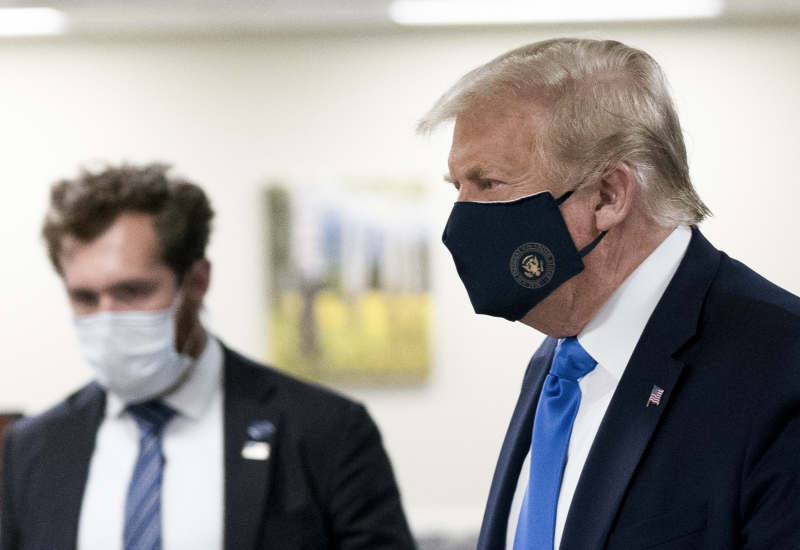
U.S. President Donald Trump wears a protective mask while visiting Walter Reed National Military Medical Center in Bethesda, Maryland, U.S., on Saturday, July 11, 2020. (Chris Kleponis/Polaris/Bloomberg via Getty Images)

U.S. President Donald Trump wears a protective mask while visiting Walter Reed National Military Medical Center in Bethesda, Maryland, U.S., on Saturday, July 11, 2020. (Chris Kleponis/Polaris/Bloomberg via Getty Images)

More

Dr. Anthony Fauci, director of the National Institute of Allergy and Infectious Diseases, echoed Koh’s statements.

“We have got to say, this is not working,” Fauci told PBS Newshour. ”So what we have got to do is reset. You may need to pull back a bit on a phase. You don't necessarily need to lock down.”

‘This has been an abject failure on the part of the federal government’

Koh explained that part of the problem is governors diverging on the best approach to containing the spread of the virus in their respective states.

“We’re now six months and counting into the worst pandemic our country has faced in a century,” Koh said. “So many other countries around the world have gotten to the other side of this and we, the United States, have not. That’s because we have not had national coordination or national strategy. We’ve had 50 states going in 50 different directions.”

Not every state has a mask mandate. (Graphic: David Foster/Yahoo Finance)

Not every state has a mask mandate. (Graphic: David Foster/Yahoo Finance)

More

Face masks are proven to make a significant difference in stopping the spread of the coronavirus, but only 19 states have mandates for residents to wear them in both outdoor and indoor public places.

“I’m really hoping at this time that every leader at the federal, state, and local level focuses on maximizing the public health measures we have, and maximizing masking,” Koh said. “We should have a national requirement for mask usage by now. I’m not sure why it hasn’t happened yet.”

People wearing face masks wait in line to shop at Ikea in Carson, California on July 4, 2020 the US Independence Day holiday. (Photo by Robyn Beck / AFP) (Photo by ROBYN BECK/AFP via Getty Images)

People wearing face masks wait in line to shop at Ikea in Carson, California on July 4, 2020 the US Independence Day holiday. (Photo by Robyn Beck / AFP) (Photo by ROBYN BECK/AFP via Getty Images)

More

In states like Texas and Florida — two of the nation’s newest hotspots for coronavirus cases — face mask mandates vary by city and county. Seven states only mandate masks for those in indoor public places. Two-thirds of Americans polled say everyone should be wearing masks in public.

“This has been an abject failure on the part of the federal government,” Dr. Craig Spencer, an emergency medicine physician and director of Global Health in Emergency Medicine at Columbia University, told Yahoo Finance. “We’re in the middle of a raging pandemic, and we’re having discussions about resuming some semblance of normal life.”

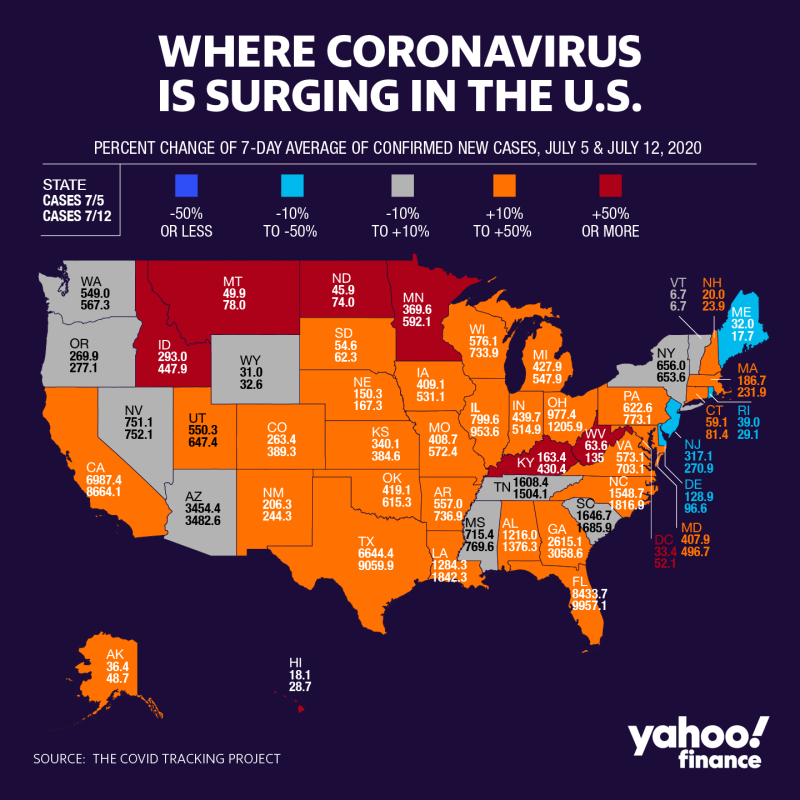
Where coronavirus was getting worse last week. (David Foster/Yahoo Finance)

Where coronavirus was getting worse last week. (David Foster/Yahoo Finance)

More

‘We have to get this down now before the fall comes’

Numerous companies are working towards finding a vaccine for the coronavirus, but the absolute earliest it would be available in emergency cases would be late 2020/early 2021.

“We’re all looking for the best cures and there have been advances in therapeutics but we don’t have a cure yet,” Koh said. “We’re all looking for a vaccine but that hasn’t been finalized or approved by the FDA yet.”

Research assistant Yi Kuo, of RNA medicines company Arcturus Therapeutics, conducts research on a vaccine for the novel coronavirus (COVID-19) at a laboratory in San Diego, California, U.S., March 17, 2020. REUTERS/Bing Guan

Research assistant Yi Kuo, of RNA medicines company Arcturus Therapeutics, conducts research on a vaccine for the novel coronavirus at a laboratory in San Diego, California. REUTERS/Bing Guan

More

Until a vaccine becomes widely available to the public, which will take longer, the U.S. is only left with preventative measures.

“We’ve got to take those public health and prevention measures and maximize this right now, and hit that virus with everything we got,” Koh said. “That includes social distancing, hand hygiene, and masks, which are on the news a lot these days. We have to get this down now before the fall comes and seasonal flu hits us as well.”

Adriana is a reporter and editor covering politics and health care policy for Yahoo Finance. Follow her on Twitter @adrianambells.

Above is from: 

He’s back!!!!!!!!!!!!


Trump to resume COVID-19 briefings

BY BRETT SAMUELS - 07/20/20 11:39 AM EDT


President Trump
on Monday said he will resume giving regular coronavirus briefings this week, reviving a practice that is controversial among some aides as infections surge across the United States.

Trump told reporters in the Oval Office he would deliver a briefing at 5 p.m. on Tuesday. It would mark his first time participating in a coronavirus briefing since late April.

Trump signaled the briefings would be heavily focused on the development of a vaccine and drugs to treat the virus, which has advanced significantly since he last held regular media sessions on the pandemic. He told reporters he may invite the heads of the companies involved in vaccine development to speak to the press.

“I think it’s a great way to get information out to the public as to where we are with the vaccine, with the therapeutics, and generally speaking where we are," Trump said. "So I think we’ll start that, probably starting tomorrow."

The president gave daily briefings from the White House through March and April, providing updates on the administration's response to the pandemic. But the question-and-answer sessions regularly devolved into Trump bashing governors, sparring with the press and making factually inaccurate statements that undercut the federal government's overall messaging.

The appearances abruptly ended in late April days after Trump sparked widespread backlash by suggesting scientists study whether the injection of light or disinfectants into the body could be used as a cure for the virus.

Some advisers have pushed in recent weeks for him to bring back the briefings, however, as his poll numbers sink and the outbreak worsens. They have argued the briefings would allow Trump to show the public he is taking a leading role in responding to the virus, even as he continues to insist it will eventually "disappear."

Vice President Pence and members of the White House coronavirus task force have given briefings a few times over the past month, coinciding with a sharp uptick in cases in many parts of the country.

The U.S. has 3.7 million confirmed coronavirus cases, and more than 140,000 Americans have died of the virus. Arizona, Texas, California and Florida have seen significant increases in infections, and Pence on Monday acknowledged the rise in cases in the Sun Belt was "serious."

But Trump, who fixates on media coverage, hinted that he was motivated to lead the briefings once again in part because of the attention they drew in the early days of the pandemic.


  • "We had very successful briefings. I was doing them, and we had a lot of people watching. Record numbers watching," he said. "In the history of cable television — television — there’s never been anything like it."

The president enjoyed an initial boost in his poll numbers in the early weeks of the pandemic as voters rallied around him. But the bump was short-lived, and he has seen his approval numbers for his handling of COVID-19 dip over the last three months in particular.

An ABC News-Washington Post poll released Friday showed that 38 percent of respondents approve of Trump's response to the pandemic, down from 46 percent in late May and from 51 percent in late March, when there were relatively few confirmed cases domestically.

Above is from:  https://thehill.com/homenews/administration/508106-trump-to-resume-covid-19-briefings?userid=217221

Sunday, July 19, 2020

District 100 gives free services worth thousands of dollars to RVC

On Monday July 20 (6PM)  the Board of Education will be voting to APPROVE the following intergovernmental agreement with Rock Valley College.  If approved, District 100 will provides numerous professional services for the acquisition  and  construction of the Advanced Tech Center.  District 100 will receive NO REIMBURSEMENT for these services.  District 100 has no rights regarding educational use of the facility.

The following is the agreement.  Page 1 supplies the legal “where as’s” ; page 1 and the body of the agreement (shown below)  is available at:  https://go.boarddocs.com/il/district100/Board.nsf/files/BRMHLL490737/$file/Agreement%20with%20District%20100.pdf

The exhibits referenced which include the actual building proposal were not released to the public. [Now available at: http://district100watchdog.blogspot.com/2020/07/district-100-proposal-for-rvcs-advanced.html]

For your convenience some major items have been highlighted.


Intergovernmental Agreement between Rock Valley College and Belvidere CUSD #100 to Act as Owner’s Representative for Advanced Technology Center Development Project

PAGE 2

1. Recitals. The recitals set forth above are hereby adopted as though fully set forth herein.

2. Relationship of the Parties. The School District shall serve as the College’s agent on the Project as a fiduciary of the College, and will manage the General Contractor and act on behalf of the College, to the extent expressly authorized by the College. The School District’s conduct and performance shall be based upon a relationship of the trust and confidence in which the actions of the School District shall be on behalf of the College acting for the College’s best and exclusive interests.

2.1 Standard of Care The School District shall furnish its skill and judgment based upon the trust and confidence which the College places in the School District and the commercial expectation that the School District shall act on the College’s behalf exercising the degree of care of an experienced and professional owners representative engaged in projects of similar complexity and magnitude.

2.2 Design Professionals The School District shall enter separate agreement with a Design Professional (also referred to herein as “Architect”) to provide architectural and engineering design of Base Building Work of the Project. The College shall be named as a third-party beneficiary in the School District’s contract with the Architect, and the College shall have the right to review and approve the School District’s contract with the Architect. The School District shall engage Ollmann Ernest Martin Architects and Engineers as the primary Architect for the Project (as hereinafter defined) and for the Work (as hereinafter defined) included in the Base Building Budget (as hereinafter defined), and such engagement will be as a fiduciary and agent of the College. Ollmann Ernest Martin Architects and Engineers’ fees were included as a cost in the School District’s proposal for the Base Building Budget. The School District shall assist the College in identifying the Architect and any other Design Professionals and entering into any necessary contracts with said Architect and/or other Design Professionals for FFE and/or other design requirements. For any Architect that the School District retains, the School District shall submit any invoices from the Architect to the College for its approval and payment.

2.3 Relationship of the School District to Other Project Participants In providing the School District’s services described in this Agreement, the School District shall on the College’s behalf endeavor to maintain a working relationship with the Architect, and General Contractor. Nothing in this agreement shall be construed to impose an obligation upon the School District to assume any of the responsibilities or duties of the Page 3 Architect or General Contractor. The Design Professional is solely responsible for the Project design and shall perform in accordance with the agreement between the Design Professional and the College. The General Contractor is solely and exclusively responsible for managing, coordinating, sequencing, and phasing the means, methods and techniques used in the construction of the Project and for the safety of its personnel and its operations performed in accordance with the Contract Documents. Neither School District nor College is responsible for Construction Site Safety which is the sole and exclusive responsibility of the General Contractor. 3. Project Definition. The term “Project” when used in this Agreement shall include the property acquisition, design, and construction to be performed in redeveloping the property at 1400 Big Thunder Blvd., Belvidere, Illinois under this Agreement. The term “Work” required for the “Project” used in this Agreement shall mean the various parts of the total design and construction to be performed by others and the coordination of that work with the College under this Agreement.

4. School District’s Basic Services. School District shall perform the basic services as set forth herein and in the School District’s proposal dated [INSERT], a copy of which is attached hereto and incorporated by reference herein as Exhibit A., and such other services as directed by the College. If there are any conflicts between Exhibit A and this Agreement, this Agreement shall control.

4.1. Property Acquisition

4.1.1 School District shall meet and communicate with the broker and real estate professionals as necessary to acquire the property at 1400 Big Thunder Blvd., Belvidere, Illinois (the “Property”). The Parties agree that time is of the essence and the School District shall take all steps necessary to enter into a purchase and sale agreement with the owner of the Property to accomplish the closing as soon as reasonably possible.

4.1.2 School District shall ensure that the purchase and sale agreement gives the College sufficient time to conduct due diligence on the Property, including any necessary title search, surveys, and environmental assessments as may be needed.

4.1.3 In negotiating the purchase of the Property, the Parties agree that the College will be purchaser of the Property, will pay the purchasing costs, and will hold title to the Property, and that the School District shall have no interest in the Property. The Parties also agree that the Board of Trustees for the College shall vote and approve the purchase of the Property prior to closing.

4.2 Programming Phase

4.2.1 School District shall meet with College and Architect to assist in the establishment of Project goals, budgetary Restraints and schedule requirements for each Project. With respect to budgetary Restraints, School District and College acknowledge and agree that Page 4 there are multiple budget amounts available to accomplish the goals of the Project. The Base Building Budget developed by the District includes the cost of acquisition of the Property plus the items noted in Exhibit B that generally include construction of the improvements shown on Exhibit C, and include the following: a. Exterior signage and painting per drawing A201 b. Floor plan per drawing A102, including: i) New paint/carpet in five (5) existing offices ii) New paint/carpet for three (3) “Huddle Rooms” iii) New Womens/Mens restroom by the waiting/reception area iv) Creation of an “open office” area ready for furnishings provided by College v) Reception/Waiting area ready for furnishings provided by College vi) Student Study Space area ready for furnishings provided by College vii) Two (2) computer lab classrooms ready for furnishings and equipment provided by College viii) Five (5) classrooms ready for furnishings and equipment provided by College ix) Seven (7) glass garage door storefronts for the computer labs and classrooms x) Painted/striped safety walk areas surrounding the Flex Space xi) 35,000 square feet of “Flex Space” with finished ceiling, heating, cooling, sprinkled in general hazard layout, existing concrete floor plus an allowance of $100,000 for either Buss Bar installation or electrical drops to serve the equipment and fixtures to be installed as part of College’s programming xii) One (1) Two (2) ton floor mounted foundationless JIB Crane – location TBD xiii) 12’x12’ Manual door for equipment load in/load out – location TBD xiv) No work in the Future Expansion Space or Supply Chain Training Area c. Sealcoating, crack filling, striping and patching as shown on drawing A100 d. Optional items to be added as deemed necessary and approved by the College, including items such as upgrading electrical service, security/camera systems, etc. The FFE Budget has been developed by the College and will be used to fit up the Flex Space, Classrooms, Computer Lab, Student Study Area and all Office Areas to accommodate College’s programming. Costs for both the Base Building Budget and FFE Budget shall be tracked and reported separately to the College by School District. The Parties agree that the College will be responsible for additional expenses for the FFE Budget and any related build-out costs as those costs were not included in the College’s Request for Proposals. (See Addendum No. 1 to Request for Proposal, #8, 9, 15, 20.f.i, 28.) 4.2.2. School District shall assist the Architect in developing College’s construction program and coordinate, attend and memorialize user group meetings necessary to Page 5 establish College’s construction program including but not limited to space, furniture, fittings and equipment. School District shall verify each program established by the Architect is consistent with Project goals and the input of each user group. If the program deviates from Project goals or user input, School District shall justify and memorialize the rationale for such deviation and submit to College for approval. During schematic design, design development and construction document phase of design, School District shall verify that the plans and specifications conform to the College’s program and approved user input.

4.2.3 School District shall communicate to the Administration and Board of Trustees of the College the progress of the Project, critical issues arising therefrom, through attendance at regular public board meetings supported by concise documentation and a recommendation for action and rationale for same, as required. 4.2.4 During the course of programming, design and construction the School District shall meet with community groups as necessary.

4.2.5 School District shall prepare periodic reports and newsletters to the educational community and interested advisory groups to be reviewed and approved by College before dissemination.

4.2.6 School District in consultation with College, shall establish a schedule and recommend phasing for work with critical dates in which buildings must be open and fully capable of use in order to maintain College’s educational program. School District shall coordinate and verify College’s schedule with the scheduling of design services by Architect and the critical path method construction schedule for construction services established by the General Contractor.

4.2.7 School District shall in consultation with the College and Architect develop a comprehensive project budget, cash flow needs and monitor for conformance during each phase of design and construction.

4.3 Design Phase

4.3.1. School District shall review schematic design, design development and Construction Documents during critical points to assure College that program and design criteria meet College’s program, schedule and budget.

4.3.2. School District shall in conjunction with Architect present critical issues for decision by College, with thorough analyses and specific recommendations.

4.3.3. School District shall develop procurement strategies for furniture, fixtures, and equipment for College’s review, approval and implementation.

4.3.4 School District shall in conjunction with the College and Architect, Page 6 develop and implement a plan for the relocation of services, people, resources, furniture, fittings and equipment prior to the commencement of construction in order to maintain an uninterrupted quality education program.

4.3.5 School District shall, in conjunction with College’s President or designee and Architect, develop bid packages for College procured furniture, fixtures and equipment, publish notice, assist in the public bidding process, review bids, perform due diligence determinations (for College procured furniture, fixtures and equipment), recommend award of alternates and recommend the award of contracts for procurement. School District shall ensure that all contracts and general conditions included within the bid packages are approved by the College and its legal counsel.

4.3.6 School District shall, in conjunction with the College’s President or designee and Architect, develop bid packages for the Project’s construction, publish notice, assist in the public bidding process, review bids, recommend award of alternates and award of contracts. School District shall ensure that all contracts and general conditions included within the bid packages are approved by the College and its legal counsel.

4.3.7 School District shall provide services on average of eight (8) hours a week (excluding travel) to ensure construction meets the project budget, schedule and design criteria, and otherwise protect the College’s interest.

4.3.8. It is the responsibility of the School District to promptly communicate all issues to the College’s President which require decisions by College and make an explicit recommendation and provide the rationale for such recommendation, and where authorized by Board Policy or in writing, to make decisions on the College’s behalf.

4.3.9. School District shall on a monthly basis, or more frequently as is necessary, report to the College the progress of each Project.

4.4 Bid/Award Phase

4.4.1 School District shall assist the College in preparing and placing notices and advertisements to solicit bids for the Project.

4.4.2 School District shall in conjunction with the College and Architect shall participate in Pre-bid Conferences. These conferences shall be forums for the College, School District, and Architect to explain the Project requirements to the bidders, including information regarding the idiosyncrasies of the construction site, and supply other information regarding, schedule, time cost control, site security, safety and the College’s administrative and technical information requirements.

4.4.3 School District shall assist the College in the bid opening and shall evaluate the bids for contract document compliance and price. The School District in conjunction Page 7 with the Architect shall assist the College regarding the acceptance or rejection of bids.

4.4.4 School District shall in conjunction with the Architect conduct post-bid conference with the successful General Contractor to review the contract award and administrative procedures.

4.4.5. School District shall in consultation with the College and Architect participate in a pre-construction conference with the General Contractors.

4.4.6. School District shall review and verify certifications pertaining to licenses, permits, bonds and insurance provided by the successful General Contractor to assure College that construction does not commence until all requirements of this paragraph are met. Review by School District shall not relieve the General Contractor of their respective responsibility to comply with the provisions of the Contract Documents.

4.4.7. School District shall review the General Contractor’s schedule for compliance with the requirements of the Contract Documents and for compliance with the Project Objectives.

4.5 Construction Phase

4.5.1 The School District shall in conjunction with the College develop logistics to accommodate the College’s Project schedule as set forth in Section 6.

4.5.2 The School District shall expedite, monitor and report to the College construction phase information and communications including requests for information, shop drawings, material and equipment submittals, contract schedule variations, process payment applications and change orders and make appropriate recommendations pertaining to same.

4.5.3 The School District shall prepare and distribute a monthly report addressing the items listed in paragraph 4.5.2 to insure the expeditious transfer of information between the Architect and the College. The School District shall prepare and update current and past activity of the construction process as part of a monthly report.

4.5.4. The School District shall attend and participate in weekly Project Meetings attended by the Architect, General Contractor and subcontractors which shall serve as a forum for the exchange of information concerning the Project, review of the construction process, and the scheduling, sequencing and coordination of construction and its impact on the uninterrupted educational program of the College. School District shall review for accuracy the minutes of these meetings and shall correct or revise meeting minutes to accurately reflect what transpired at the meetings and report to the College the progress of the Project based upon the information exchanged at such meetings.

4.5.5 The School District shall review pay applications submitted by the Page 8 General Contractor and shall prepare a recommendation to the College whether the amount requested accurately reflects the progress of the Project.

4.5.6 The School District shall verify that the Architect is providing appropriate and timely observation of construction to monitor the quality of construction. School District is not responsible for means, methods or techniques of construction, or site safety which is the sole and exclusive responsibility of the General Contractor.

4.5.7 School District shall notify the College of revisions necessary to the Schedule in order to meet the Project deadlines and shall recommend modifications to the Schedule if necessary.

4.6 Substantial Completion

4.6.1. School District, in conjunction with the College’s President or designee, shall upon substantial completion, coordinate and manage the final clean up of the site, move-in and installation of College procured furniture, fixtures and equipment, and other systems.

4.6.2 School District shall in conjunction with the College establish a user punch list procedure which shall include (a) identification of exact location of the deficiency; (b) digital photograph of the deficiency; (c) and description of the construction item(s) which are either incomplete or improperly installed. School District shall transmit and coordinate the punch list items with the Architect’s punch list for inclusion where appropriate in the Punch List which shall be attached to the Certificate of Substantial Completion. School District shall monitor the completion of all punch list work. School District shall in conjunction with the Architect verify the satisfactory completion of punch list item(s). School District shall report to College and user group the disposition of punch list items.

4.6.3 School District shall upon final completion verify final submittals to College such as warranties, operating manuals and instructional materials.

4.7 Final Completion

4.7.1 The School District shall review the Architect’s determination that the Work is final and complete and recommend acceptance or rejection prior to final payment.

4.7.2 The School District shall secure, verify and transmit to the College Record Documents, Operation and Maintenance Manuals and Warranties required by Contract Documents.

5. Duration of Services. School District’s services under this Agreement shall be completed upon issuance of a Certificate of Final Completion.

6. Project Schedule. School District shall begin its services for property Page 9 acquisition, programming, and identification of any design professionals in an expeditious manner upon execution of this Agreement. The School District shall meet the deadlines set forth in the schedule in its proposal, separately attached hereto as Exhibit D. The Project must be final and complete (Final Completion) by June 1, 2021 so that the College can start holding classes at the start of the Fall 2021 semester.

7. Compensation and Reimbursable Expenses. The Parties agree that the College shall not compensate the School District for its services as the College’s representative. In the event that the School District seeks to expend funds for which it will seek reimbursement from the College, the School District shall obtain the College’s written pre-approval of such expense.

8. Insurance. The School District shall purchase and maintain the following insurance with a carrier or cooperative that holds an A.M. Best rating of A X, or better. A. Commercial General Liability and Property Damage Occurrence: $1,000,000 Aggregate: $2,000,000 B. Automobile liability Insurance Occurrence: $250,000 Aggregate: $500,000 C. Excess Liability: $2,000,000. Commercial General Liability Insurance may be obtained under a single policy for the full limits required or by a combination of the underlying policies with the balance provided by an excess or umbrella liability policy. The College and Architect shall be named as an “additional insured” in any liability policy under form CG 20 10. 9. Indemnity.

9.1 The School District to the extent permitted by law agrees to defend, indemnify and hold harmless the College and its board members, employees, agents and representatives from and against any and all claims, demands, suits and damages for bodily injury and property damage, including attorney’s fees incurred by College, that arise out of or are the result from the negligent acts or omissions of the School District in performing its services under this Agreement but not due to the College’s own negligent acts or omissions.

9.2 The College to the extent permitted by law agrees to defend, indemnify and hold harmless the School District and its board members, employees, agents and representatives from and against any and all claims, demands, suits and damages for bodily Page 10 injury and property damage including attorney’s fees incurred by the School District, that arise out of or are the result from the negligent acts or omissions of the College but not due to the School District’s own negligent acts or omissions. 10. Termination.

10.1 This Agreement may be terminated by the College for convenience after seven (7) days written notice to the School District.

10.2 This Agreement may be terminated for cause by either Party hereto upon seven (7) days written notice should the other Party fail to substantially perform in accordance with the terms hereof through no fault of the other or if the Project in whole or substantial part is stopped for a period of ninety (90) days.

11. Miscellaneous. This Agreement includes the Proposal and the other documents incorporated herein by reference, and represents the entire and integrated agreement between the College and the School District and supersedes all prior negotiations, representations or agreements, either written or oral. This Agreement may be amended only by written instrument signed by both the College and the School District. Board of Education of Belvidere Community Unit School District 100 Board of Trustees of Illinois Community

Drive-In Movies at Sundstrand Park


Belvidere Park District hosts first Drive-in Movie Night at Sundstrand Park


July 18, 202010:22 pmCassandra BretlUncategorized

<?XML:NAMESPACE PREFIX = "[default] http://www.w3.org/2000/svg" NS = "http://www.w3.org/2000/svg" />3

BELVIDERE (WREX) — Movie theaters have been closed for almost four months due to COVID-19 restrictions. That didn't stop the Belvidere Park District from getting creative and utilizing one of its newest parks just in time for a summer time favorite.

Grab your popcorn or your favorite snack, because it's time to watch a movie.

"It feels a lot like summer and since the whole COVID thing this is a good thing to do just to get out and have fun," said Poplar Grove resident Sarah Rudd.

"I think everybody misses having fun family things to do on the weekends. Movie theaters have been closed for months. This gives people the opportunity to come out and do something," said Belvidere Area Chamber of Commerce Executive Director Amy Grafton.

The Belvidere Park District, in collaboration with the Belvidere Chamber of Commerce and the YMCA, hosted its first Drive-in Movie Night at Sundstrand Park.

"They just got the park donated to the Belvidere Park District. This is the first event they have been able to hold here and we're hoping we can partner with the park district and we'll be able to put this park to good use for the community," said Grafton.

Between the lawn and the parking lot, more than 100 tickets were sold for families to safely spend time together.

"There's 15 foot circles drawn on the lawn so they can properly socially distance and then we have car spaces that are parked car, empty space so they can tailgate safely outside of their car as well," said Grafton.

Local food trucks were just feet away allowing community members and families to create their own movie theater experience.

The Rudd family of Poplar Grove said going to the movies is something they have been missing.

"Try to do the best you can with social distancing. I know it can be a struggle sometimes but we got to do what we can to come back together as a community," said Matt Rudd.

Bringing the theater outdoors and making summer a memorable one.

The next Drive-in Movie Night will be held on July 25 at Sundstrand Park.

Cassandra Bretl

Above is from:  https://wrex.com/2020/07/18/belvidere-park-district-hosts-first-drive-in-movie-night-at-sundstrand-park/

18 States in Red Zone

White House document shows 18 states in coronavirus 'red zone'


Dylan Stableford

Senior Writer

,

Yahoo News•

July 17, 2020

2,344 Comments

A new White House coronavirus task force report shows that 18 states are in the COVID-19 “red zone,” meaning they recorded more than 100 new cases per 100,000 residents in the past week.

The 359-page document, which was obtained by the Washington, D.C.-based nonprofit Center for Public Integrity and dated July 14, also shows that 11 states are now reporting positivity rates exceeding 10 percent for COVID-19 diagnostic tests. 

The 18 states in the red zone for new cases are Alabama, Arizona, Arkansas, California, Florida, Georgia, Idaho, Iowa, Kansas, Louisiana, Mississippi, Nevada, North Carolina, Oklahoma, South Carolina, Tennessee, Texas and Utah.

The 11 states with test positivity rates above 10 percent — another red zone designation — are Alabama, Arizona, Florida, Georgia, Idaho, Louisiana, Mississippi, Nevada, South Carolina, Texas and Washington.

The report, which was not shared publicly, recommends that states in the red zone for either cases or test positivity mandate the use of masks, limit social gatherings to 10 people or fewer and maintain the closure of bars and gyms in cities and counties considered to be “hot spots.”

At a task force briefing earlier this month, Dr. Deborah Birx presented slides from a similar report showing that Arizona, California, Florida and Texas were among the states in red zones, and said people living in them should “not only use the face coverings” but limit gatherings “back down to our phase-one recommendation, which was 10 or less.”

The nation is still struggling to contain the virus, which has killed more than 138,000 Americans and infected over 3.6 million U.S. citizens. More than 74,000 new coronavirus cases were reported nationwide on Thursday, the most in a single day.

The White House said Thursday that President Trump does not want to issue a nationwide mask mandate to combat the coronavirus and instead will leave those restrictions up to state and local governments.

Georgia Gov. Brian Kemp adjusts his face covering during a coronavirus briefing in Atlanta. (John Bazemore/AP)

Georgia Gov. Brian Kemp adjusts his face covering during a coronavirus briefing in Atlanta. (John Bazemore/AP)

That same day, the governors of Arkansas and Colorado became the latest to issue mask mandates. But Georgia Gov. Brian Kemp, whose state is in the red zone for both cases and test positivity, is refusing to do so. (Kemp even sued Atlanta Mayor Keisha Lance Bottoms over her city’s mask order.)

Meanwhile, Dr. Anthony Fauci, director of the National Institute of Allergy and Infectious Diseases and a member of the White House coronavirus task force, said state and local leaders should be “as forceful as possible” to get the public to wear masks. 

“I can say as a public health official that I would urge the leaders — the local, political and other leaders in states and cities and towns — to be as forceful as possible in getting your citizenry to wear masks,” Fauci said Friday. “Masks are really important. And we should be using them — everyone.”

Above is from: https://www.yahoo.com/news/white-house-document-shows-18-states-in-coronavirus-red-zone-194350717.html

July 14 Death Projections Increase

July 14 vs. July 7 State COVID 19 death projection from U of Washington Institute

Home

Both projections are through November 1, 2020 show huge increases for Southern states. The East and MidWest have states which were hit earlier with greater deaths per population now death projections in South and West are catching up The July 14 projections are available from:  https://covid19.healthdata.org/united-states-of-america


United States  208,255 deaths  NOW 224,546  Population 331.00 million  629.17 per million NOW 678.39 per million


New York  32,221 deaths NOW 35,379  Population 18.8 million  1713.88 per million NOW 1881.86 per million

Massachusetts  12,906 deaths NOW 10,121 deaths  Population 6.7 million  1926.27 per million NOW 1510.60 per million

Connecticut  4,692  deaths NOW 4,456  Population  3.7 million   1268.11 per million NOW 1204.32 per million

Georgia  3,857  deaths NOW 4736 Population 3.99 million   966.67 per million NOW 1186.97 per million

Louisiana   4,643 deaths NOW 5,167  Population 4.6 million  1009.35  per million NOW 1123.26 per million

District of Columbia  666 deaths NOW 681  Population  .706 million  943.34 per million NOW 964.59 per million

South Carolina 242 deaths  NOW 4,556 Population 5.0 million  48.4 per million NOW 911.20 per million

Florida   17,477 deaths NOW 19,285  Population 21.47 million  814.01 per million NOW 893.23 per million

Maryland  3,880 deaths NOW 4,278  Population 6.0 million  646.67  per million NOW 713.00 per million

Arizona  5,553 deaths NOW 5,177  Population 7.29 million  761.73 per million  NOW 710.15 per million

Pennsylvania  9,999 deaths NOW 8,431  Population 12.7 million  787.32 per million NOW 663.86 per million

Illinois     8,907 deaths NOW 8,351 Population 12.63 million  705.23 per million NOW 657.56 per million

Texas    13,450 deaths NOW 18,675    Population 29.90 million  449.83 per million NOW 624.58 per million

Virginia 5,190 deaths NOW 4,881  Population 8.63 million  601.39  per million NOW 565.59 per million

California 16,827 deaths NOW 21,264   Population 39.78 million  423.00 per million NOW 534.54 per million

Washington  2,510 deaths NOW 3,170 Population 7.17 million  325.98 per million NOW 442.112 per million

Ohio  5,712  deaths NOW 4,545  Population 11.73 million  486.96 per million NOW 387.47 per million

Iowa  841 deaths NOW 1,225  Population 3.17 million  265.30 per million NOW 386.44 per million

Colorado  1937 deaths NOW 2,032 Population 5.8 million  333.97 per million NOW 350.34 per million 

Idaho  120 deaths NOW 559  Population  1.75 million   68.57 per million NOW 319.43 per million

Oklahoma  587  deaths NOW 1,029  Population 4.0 million  146.75 per million NOW 257.23 per million

Arkansas 724 deaths NOW 617  Population 3.018 million  239.89 per million NOW 204.44 per million

Wisconsin  1,410 deaths NOW 992  Population 5.82 million  242,27 per million NOW 170.45 per million

Kansas 632 deaths  NOW 410  Population  2.77 million  228.16 per million NOW 148.01 per million

Oregon  471 deaths NOW 605  Population 4.3 million  109.53 per million NOW 140.70 per million