Tuesday, January 8, 2019

NYC Mayor Bill De Blasio Unveils Plan To Guarantee Health Care For All New Yorkers


Hayley Miller

,

HuffPostJanuary 8, 2019

NYC Mayor Bill De Blasio unveils universal plan to guarantee health care

New York Mayor Bill de Blasio on Tuesday announced a plan to provide health care for all New Yorkers, including those who cannot qualify for health insurance such as undocumented immigrants.

The initiative, dubbed NYC Care, will guarantee physical and mental health care for all 8.6 million people living in New York, de Blasio said at a press conference Tuesday at Lincoln Hospital in the Bronx.

“No one should have to live in fear,” the mayor said. “No one should go without the health care they need. Health care is a human right. In this city, we’re going to make that a reality. ... From this moment on in New York City, everyone is guaranteed the right to health care.”

The city will roll out the program borough by borough, the mayor’s office announced, starting in the Bronx this summer and covering the entire city by 2021.

It will ultimately reach as many as 600,000 uninsured New Yorkers, at a cost of $100 million per year ― money, de Blasio said, that the city is already spendingthrough the treatment of uninsured New Yorkers in emergency rooms and other settings for acute care.


Bill de Blasio @NYCMayor

Health care is a human right. Join me in the Bronx to discuss our plan to guarantee care for all New Yorkers.

pscp.tv


NYC Care will not offer free health care to all New Yorkers, but will provide a primary care doctor and access to specialty care priced on a sliding scale according to patients’ income. The program will be available to anyone who does not have an affordable insurance option, de Blasio said.

New Yorkers can already get care at clinics and hospitals when they need it, and many are eligible for one or several state and federal programs, including Medicaid, which the state expanded through the Affordable Care Act. But, de Blasio noted, many aren’t eligible for those programs and many more aren’t aware of the kind of care that is available to them.

A major focus of the effort, de Blasio emphasized, is making sure people get care before they get sick ― or, at least, before ongoing conditions explode into acute catastrophes ― by linking people with primary care doctors and clinics, so that they have “medical homes.”

De Blasio said he still believes the ultimate solution for health care is to create a single-payer or “Medicare for all” system ― that is, one government-run insurance program that would cover everybody ― either at the state or, better still, at the national level.

But with the prospects for a single-payer bill in Albany highly uncertain and no chance of single-payer at the national level while Republicans control the presidency and one house of Congress, de Blasio said, it made sense for the city to act.

“We don’t wait here in New York City,” de Blasio said. “Our people need health care right now and we can get it to them.”

New York is not the first city to undertake an ambitious effort to make sure all residents get health care. In 2006, San Francisco launched “Healthy San Francisco,” which makes medical services available throughout the city to the uninsured.

The chief architect of that program, Mitchell Katz, is now the chief executive of New York City’s hospital association and a member of the city’s board of health.

He helped to design NYC Care and, at the press conference, said the new program had a lot in common with the San Francisco initiative, although he expected the New York program to be more comprehensive and to cover many more people. “This is just a much broader scale,” Katz said.

During the press conference, de Blasio and his advisers said they were already increasing the capacity of public clinics and hospitals, to make sure people who need health care won’t have to wait for it.

The mayor also addressed critics who, by Tuesday morning, were already attacking the initiative because it will mean financing care for undocumented immigrants. 

Paying for them to get health care, de Blasio said, would ultimately save money because paying for their emergency care ends up costing more. But, he added, “They are our neighbors, they work right next to us, they help us to keep the city going, and that’s true of the whole country. I refuse the notion that these folks don’t deserve health care.”

Above is from:  https://www.yahoo.com/news/nyc-mayor-bill-blasio-unveils-163140990.html

4,000 Suspected Terrorists Stopped at the Mexico Border


Appears that we may need a fence across the Canadian border not the Mexican border


4,000 Suspected Terrorists Stopped at the Mexico Border, Says White House. Actually, It’s More Like Six, Reports U.S. Customs


Kevin Kelleher

FortuneJanuary 7, 2019

4,000 Suspected Terrorists Stopped at the Mexico Border, Says White House. Actually, It’s More Like Six, Reports U.S. Customs

U.S. Customs and Border Protection encountered only six immigrants on the U.S.-Mexico border whose names were in a federal database of known or suspected terrorists, contradicting earlier White House claims that nearly 4,000 suspected terrorists were stopped at the country’s southern border.

The disclosure, made by Secretary of Homeland Security Kirstjen Nielsen Monday and first reported by NBC News, concerned only the first half of 2018. Of 41 people stopped at the U.S.-Mexico border by the CBP in that period, 35 were U.S. citizens or lawful permanent residents, with the other six classified as non-residents.

By contrast, the CBP encountered 91 people at the U.S.-Canada border whose names were on the federal list, with 41 of them non-U.S. citizens or residents, NBC said.

On Friday, White House press secretary Sarah Sanders, said that CBP stopped nearly 4,000 known or suspected terrorists from crossing the southern border in 2018. Fact-checks of Sanders’ statement showed that the 4,000 figure applied to 2017, not 2018, and included stops made by DHS officials around the globe, with the vast majority of them occurring at airports.

Sanders appeared on Fox News Sunday and mentioned again the 4,000 known or suspected terrorists figure. When Fox News host Chris Wallace challenged her assertion and mentioned that most of the stops happened at airports, Sanders acknowledged that “they’re coming in a number of ways.”

Wallace then countered, “The State Department says there hasn’t been any terrorists that they’ve found coming across the southern border with Mexico.”

Californians may soon have medical care for all


image


Gov. Gavin Newsom proposes healthcare mandate, Medi-Cal expansion to more immigrants without legal status

By MELODY GUTIERREZ

JAN 07, 2019 | 6:05 PM

| SACRAMENTO


Gov. Gavin Newsom proposes healthcare mandate

Gov. Gavin Newsom announced sweeping proposals to tackle the state’s healthcare needs shortly after taking office on Monday, outlining a dramatic Medi-Cal expansion that would cover young immigrant adults who are in the U.S. illegally, require that all consumers in the state carry health insurance and increase subsidies for middle-class families to help those who need it.

The Day 1 announcement was as much a rebuke to the Trump administration as it was an attempt by Newsom to make good on his campaign promise to fix a fragmented healthcare system that leaves many priced out or underinsured. The governor also signed executive orders to consolidate the state’s prescription drug purchases into a state-run program and to create a new surgeon general position to look at health disparities before they manifest, as Newsom put it.


“Every person should have access to quality, affordable healthcare,” Newsom said earlier Monday in his inaugural address. “Far-away judges and politicians may try to turn back our progress. But we will never waver in our pursuit of guaranteed healthcare for all Californians.”

Newsom campaigned on a universal healthcare platform and has said the issue would be among his top priorities. His announcement on Monday stopped short of the single-payer system demanded by activists that would cover all residents’ healthcare costs, but was characterized as the first step down that path.

The new governor sent a letter to Congress and the White House asking for changes to federal laws so that the state can have the regulatory freedom to overhaul California’s healthcare system and move toward single payer.

“We are very pleased that this is a governor who has put forward the vision of universal healthcare and also seeks to make tangible Year 1 steps to increase access and improve care,” said Anthony Wright, executive director of Health Access California, a consumer advocacy group. “These are key steps toward universal guaranteed coverage.”

Some of the new healthcare proposals will be included in Newsom’s state budget that will be released Thursday and vetted in the coming months by the Legislature, when the details and costs of the plan will be reviewed.

“These complex proposals require a lot of scrutiny to fully understand the consequences — both good and bad,” said Assemblyman Chad Mayes (R-Yucca Valley), the vice chairman of the Assembly Health Committee. “We agree on the goals of reduced costs, increased competition and better quality healthcare for all Californians. Government has an important role to play in holding the healthcare industry accountable; however it must be balanced and not overreach or hinder innovation.”

Gavin Newsom

Gavin Newsom takes the oath of office, administered by California State Chief Justice Tani Gorre Cantil-Sakauye, and is sworn in as the 40th governor of California in front of the Capitol in Sacramento. (Kent Nishimura / Los Angeles Times)


California would be the first state to cover immigrants without legal status who are younger than 26 through Medi-Cal, the state’s health program for people with low incomes. California already covers undocumented children until they turn 19, with Newsom’s plan increasing the age cut-off to mirror that of the Affordable Care Act, which allows young adults to stay on a parent’s health insurance plan until turning 26.

“It’s the right thing to do,” Newsom said in a Facebook Live feed announcing the proposal. “It’s the fiscally conservative thing to do. It’s the moral thing to do … When we talk about universal healthcare, it means everybody. When everybody pulls together, it means lower costs to each and every one of you.”

A legislative proposal last year pegged the cost of extending Medi-Cal to undocumented immigrants under 26 at $250 million a year. That cost would fall solely to California, despite the mix of federal and state money that typically comprises Medi-Cal funding because the Affordable Care Act prohibits the use of federal dollars for covering immigrants who are in the U.S. illegally.

Cynthia Buiza, executive director of the California Immigrant Policy Center, called the proposal a “historic commitment that takes us one step closer to upholding the vital principle that no human being should suffer or die from a treatable condition, no matter what they look like or where they were born.”

“All youth deserve reliable access to healthcare, which will allow them to focus on living happy and productive lives,” said Brianna Lierman of the Local Health Plans of California, a trade association representing not-for-profit health plans.

Newsom’s proposal would also create an individual mandate in California to thwart predicted drops in the state’s health insurance market after the federal government removed financial penalties for uninsured consumers beginning this year. The requirement that consumers have health insurance or face financial penalties propped up the Affordable Care Act, or Obamacare, and its elimination is expected to drive up premiums.

Without the individual mandate, all consumers will experience rate increases this year, said officials for Covered California, the state's official health insurance marketplace. Covered California Executive Director Peter Lee said Newsom’s proposal would bring stability to the market and is a critical step toward reaching universal healthcare.

“At a time of ongoing uncertainty from Washington, the governor is not only embracing policies that will lower the cost of coverage for millions in the individual market, he is also offering increased help to those who are struggling with rising costs,” Lee said in a statement Monday.

Newsom’s plan to create a individual mandate for Californians could be a heavy lift, even in the Democrat-dominated state Legislature, where such a requirement could require a two-thirds vote.

Representatives for the governor’s office said requiring people to carry health insurance is central to another proposal to increase financial subsidies for middle-income families. Newsom’s budget will propose that the income cap be raised so that individuals earning up to $72,840 and families of four earning up to $150,600 could qualify for lower premiums.

“Gov. Newsom is backing up his words with action, helping make healthcare affordable and available to all Californians,” said David Aizuss, president of the California Medical Association.

While those proposals have to withstand legislative scrutiny, Newsom took his pen on Monday to an executive order that does not.

Newsom signed an order to create a surgeon general oversight position in the state and to consolidate pharmaceutical purchases in hopes of lowering drug costs for the state and consumers. Under the current system, Medi-Cal and state agencies separately negotiate prescription drug prices. Under the order, Newsom’s office said the state would become the largest single purchaser of prescription drugs.

The governor’s order would allow small businesses or individuals to join the state-run collective at the same bulk purchasing price points.

Consolidating prescription drug purchasing in the state has been proposed in the Legislature over the past several years, but has fizzled in part due to lobbying by powerful drug interests and the complexity of consolidating the current system.

“We are in essence taking all of these disparate pieces of state government that are currently negotiating for drug prices and bringing all them together in a scope and scale that is unlike any other in the United States of America,” Newsom said.

Above is from:  https://www.latimes.com/politics/la-pol-ca-gavin-newsom-healthcare-proposal-20190107-story.html

Monday, January 7, 2019

Other presidents have told Trump they wished they had built a wall???


Every living president has refuted Trump's claim about supporting the wall

BY JASON SILVERSTEIN

UPDATED ON: JANUARY 7, 2019 / 6:38 PM / CBS NEWS

President Trump claimed last week that "some" former presidents privately confided to him that they support his mission to build a border wall. As of Monday, every living president has said otherwise.

Former President Jimmy Carter issued a statement denying that he and Mr. Trump had any such conversation. He now joins former Presidents Bill Clinton, George W. Bush and Barack Obama in either refuting Trump's claim or denouncing his demands for the wall.

"I have not discussed the border wall with President Trump, and do not support him on the issue," Mr. Carter said in a statement issued by the Carter Center.


A spokesman for Mr. Bush told Politico that the 43rd president never talked to Mr. Trump about a border wall. A spokesman for Mr. Clinton also denied it and said the two haven't spoken since Mr. Trump's inauguration.

Mr. Obama is the only living president who has not explicitly denied having this conversation, and his office did not return a request for comment from CBS News. But Mr. Obama has repeatedly spoken out against Trump administration immigration policies and made clear since the 2016 campaign that he does not support a proposed wall at the U.S.-Mexico border. Politico also pointed out that Mr. Obama and his successor have not had any extensive conversation since the 2017 inauguration.

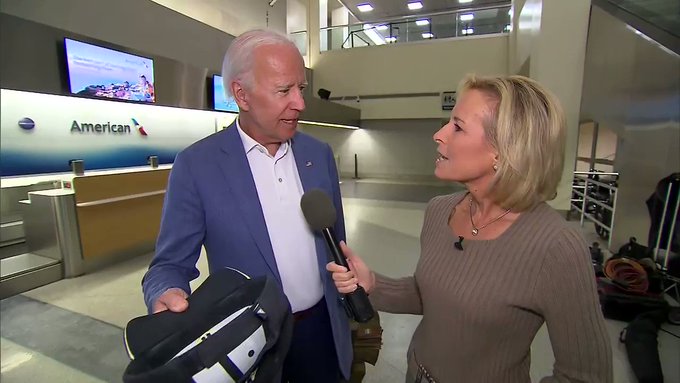
Acting White House Chief of Staff Mick Mulvaney told CNN he had "no idea" which past presidents told Trump they supported the wall. And former Vice President Joe Biden said he "can't think of a single" past president who wanted a border wall.

Embedded video

President Donald Trump said other presidents have told him "they wished they had built a wall." Former Vice President Joe Biden can't think of a single one.https://cir.ca/2CSnkdL


Past presidents have supported various measures to curb illegal immigration and secure the U.S.-Mexico border, including with strong fencing in some areas, though none of those policies resembled Trump's proposal for a multibillion-dollar steel wall covering most of the border. In 2006, then-Senator Obama voted for and President George W. Bush signed the Secure Fence Act, which approved about 700 miles of fencing along parts of the border. Trump has dismissed that fencing as a "nothing wall."

The government shutdown, now in its third week, started when Mr. Trump refused to sign congressional spending measures without $5 billion for the wall. Trump said in a news conference last Friday, "This should have been done by all of the presidents that preceded me, and they all know it. Some of them have told me that we should have done it."

First published on January 7, 2019

Above is from:  https://www.cbsnews.com/news/every-living-president-has-refuted-trumps-claim-about-supporting-the-wall/

Why is the historic clock tower at Trump's D.C. hotel open and staffed during the shutdown?


WASHINGTON, DC - APRIL 29:  Police officers wait for the marchers in the entrance of the Trump International Hotel which they are assigned to protect during the People's Climate Movement to protest President Donald Trump's enviromental policies April 29, 2017 in Washington, DC. Demonstrators across the country are gathering to demand  a clean energy economy. (Photo by Astrid Riecken/Getty Images)

The Trump-McConnell shutdown of the federal government has already shuttered most national offices, with hundreds of thousands of federal workers furloughed or forced to work without pay. In particular, it has wreaked havoc on our national parks, with reports of overflowing human waste, uncollected trash, damage to hiking trails, and even three deaths reported as of yesterday, all due to the lack of policing and supervision. Iconic landmarks and museums on the National Mall have been shuttered or have gone unstaffed, and the American public has been denied access to them.

Yet a single rather obscure historical site has somehow managed to remain open and fully staffed: the clock tower in the federal building that houses the Trump International Hotel in Washington, D.C.

As reported by the Associated Press:

Smithsonian museums are closed. There are no federal staffers to answer tourists’ questions at the Lincoln Memorial. And across the United States, national parks are cluttered with trash. Yet despite the federal government shutdown, a historic clock tower at the Trump International Hotel remained open Friday for its handful of visitors, staffed by green-clad National Park Service rangers.

The little-known post office clock tower, though included in the National Register of Historic Places, does not receive a great number of visitors, even as it provides guests of the Trump hotel with stellar views of the city.  According to the AP, its ranger staff often outnumbers the tourists.

The Trump administration appears to have gone out of its way to keep the attraction in the federally owned building that houses the Trump hotel open and staffed with National Park Service rangers, even as other federal agencies shut all but the most essential services.

Asked to explain why this particular site was permitted to remain staffed and open while so many more were shut down, a spokeswoman for the General Services Administration contended that the law that put the GSA in charge of the site obligates it to remain open. The spokeswoman also said that the status of the clock tower was “unrelated” to the building’s tenant, even though “Old Post Office” is displayed in gold letters prominently under the Hotel’s logo, as seen in the photograph above. The tower is touted by the hotel as one of the highlights of the property.

This “explanation” rings hollow to at least one watchdog organization:

A watchdog group, Citizens for Responsibility and Ethics in Washington, filed a Freedom of Information Act request with the GSA, seeking documents explaining why the tower was open, how it continues to be funded, and any communications between the agency and the Trump Organization, the president’s company. Trump gave up day-to-day management of the firm in 2017 but continues to receive earnings from its operations.

And at least one Democratic congressman has weighed in on the fact that this site out of hundreds was permitted to be staffed:

Bill Pascrell, Jr.

@BillPascrell

The Trump admin is using your tax dollars to keep an @NPS site at his luxury hotel open while the rest of Americans are wading through garbage and locked gates. The corruption and disgrace of this govt are without bottom.


For those who might consider what appears to be yet another example of the Trump excepting himself and his family’s interests from the consequences of his actions a mere minor matter, Josh Marshall of Talking Points Memo points out that in the conceivable, but unlikely, event that there is a legitimate reason this particular site remains open, just the appearance of such favoritism would be enough for any other administration to correct the error.

For this one, however, it appears to be simply another case of business as usual:

Assuming it is what it looks like, another example of the federal government being harnessed to the personal finances of the President, it will be just a more minor example of what we’ll learn far more about in the years to come. There is so little transparency in this administration, so much corruption that has become commonplace, that I don’t think we can really even imagine just how deep it all runs.

I have to differ with Josh Marshall on this point. We can most definitely imagine how deep it all runs.

Above is from:  https://www.dailykos.com/stories/2019/1/6/1823931/-Why-is-this-national-historic-site-at-Trump-s-D-C-hotel-open-and-fully-staffed

A Trump County Confronts the Administration Amid a Rash of Child Cancers


Image

Emma Grace Findley died in 2014 of a rare brain cancer. Her mother has helped organize families to demand federal action.CreditCreditMaddie McGarvey for The New York Times

Hiroko Tabuchi

By Hiroko Tabuchi

  • Jan. 2, 2019
    • 381

Want climate news in your inbox? Sign up here for Climate Fwd:, our email newsletter.

JOHNSON COUNTY, Ind. — The children fell ill, one by one, with cancers that few families in this suburban Indianapolis community had ever heard of. An avid swimmer struck down by glioblastoma, which grew a tumor in her brain. Four children with Ewing’s sarcoma, a rare bone cancer. Fifteen children with acute lymphocytic leukemia, including three cases diagnosed in the past year.

At first, families put the illnesses down to misfortune. But as cases mounted, parents started to ask: Could it be something in the air or water?

Their questions led them to an old industrial site in Franklin, the Johnson County seat, that the federal government had ordered cleaned up decades ago. Recent tests have identified a carcinogenic plume spreading underground, releasing vapors into homes.

ADVERTISEMENT

Now, families in a county that voted overwhelmingly for President Trump are making demands of his administration that collide directly with one of his main agendas: the rolling back of health and environmental regulations.

The Franklin area is thriving under Trump administration policies, the mayor said. But he also wants more E.P.A. action to fix decades-old contamination.CreditMaddie McGarvey for The New York Times


The Franklin area is thriving under Trump administration policies, the mayor said. But he also wants more E.P.A. action to fix decades-old contamination.CreditMaddie McGarvey for The New York Times

On Wednesday, a group representing dozens of concerned parents called for a federal investigation by the Environmental Protection Agency’s Office of Inspector General — the same watchdog that examined the government’s slow response to the water crisis in Flint, Mich. — into why Franklin’s toxic plume of trichloroethylene, or TCE,persists.

The group accuses the E.P.A. of “serious mismanagement” and “significant delays” at the site, even after the dangers became apparent this summer, according to a letter the group said it sent to the E.P.A.’s Office of the Inspector General.


But the parents’ demands also reach well beyond immediate concerns about the chemicals under their feet.

Families across the political spectrum have also spoken out against the Trump administration’s drive to weaken restrictions on TCE, a colorless fluid with a subtle, sweet odor used by as many as four-fifths of the nation’s 65,000 dry cleaners, as well as about 2,200 factories and other facilities. Decades ago, it was used at the Franklin site.

Twice last year, parents from Johnson County traveled to Washington to urge the administration to stick with stronger controls.


“We are done begging,” said Kari Rhinehart, the mother of Emma Grace Findley, the 13-year-old swimmer who developed brain cancer and died in 2014. “We are demanding the E.P.A. finish what it started and place these restrictions on TCE and other dangerous toxins.”

Kari Rhinehart lost her daughter Emma Grace Findley to cancer.CreditMaddie McGarvey for The New York Times

Kari Rhinehart lost her daughter Emma Grace Findley to cancer.CreditMaddie McGarvey for The New York Times

The E.P.A. confirmed that the chemicals were present near the Franklin site and said that fewer than 10 of 37 homes it had tested had potential air quality issues. The agency said its testing was continuing and that, if necessary, homes would be fitted with devices to clean the air.

Declaring TCE “carcinogenic to humans by all routes of exposure,” the Obama administration had sought to restrict two of its riskiest uses, as a stain remover and as a degreaser, and had marked it for further review, potentially to ban the chemical altogether. It had also moved to strengthen cleanup rules for hundreds of sites nationwide believed to be contaminated.

But at the urging of industry groups, the Trump administration has stalled some of those moves. In 2017 it indefinitely postponed the proposed bans on risky uses, leaving as many as 178,000 workers potentially exposed. It also scaled back a broad review of TCE and other chemicals so that it would exclude from its calculations possible exposure from groundwater and other forms of contamination — the problems present in Franklin.

In Johnson County, a parents’ group co-founded by Mrs. Rhinehart, If It Was Your Child, has traced at least 58 childhood cancer cases since 2008. At 21.7 cases of pediatric cancer per 100,000 children, Johnson County’s rate puts it in the 80th percentile among counties nationwide, according to data for 2011-2015 from the National Cancer Institute. Both the national and Indiana average are fewer than 18 pediatric cancers per 100,000 children.

“You don’t expect to see so many cancers in a relatively small community,” said Dr. Paolo Boffetta, professor in environmental medicine and public health at the Icahn School of Medicine at Mount Sinai in New York. Even so, he stressed that there was little research linking childhood cancers to TCE. “This doesn’t mean an association doesn’t exist,” he said. “But studies have not been able to confirm it.”

Motria Caudill, a scientist at the federal Agency for Toxic Substances and Disease Registry, which investigates environmental hazards, said at a community meeting in Franklin in November that it was still too early to draw conclusions. Her agency was still working with others, she said, “just to see what is going on.”


The TCE contamination has been traced to a former factory that, for years, discharged industrial wastewater into a municipal sewer. Amphenol, an electronics maker based in Wallingford, Conn., became responsible for the cleanup after acquiring the site, though it no longer owns the property.

In June, tests by an environmental group, Edison Wetlands Association, working with parents, detected the chemical in the air at two homes and in outdoor air near the site. The findings prompted more tests by local and state government officials, including one by Franklin that found levels more than 250 times state limits around a sewer near the homes. In November, the E.P.A. identified a plume of contamination stretching beyond the site toward nearby homes.

Shannon Lisa of the Edison Wetlands Association has been working with parents to investigate the factory site.CreditMaddie McGarvey for The New York Times

Shannon Lisa of the Edison Wetlands Association has been working with parents to investigate the factory site.CreditMaddie McGarvey for The New York Times

Joseph Bianchi, an Amphenol spokesman, said the company was working “to help ensure the well-being of residents,” and the E.P.A. has promised to team up with the company on a cleanup plan. But at the November community meeting, patience wore thin.

“When will this cleanup be done and gone,” asked Sonya Hallett, a local philanthropy consultant and mother of one, “and not hazardous to people who are living around it?”

Trouble Beneath the Grass

The state investigators who descended on Jennifer Clark’s house in October drilled into her basement floor. They sought signs thatchemicals in the ground were turning into a vapor and rising into her home, a phenomenon known as “vapor intrusion.”

Her daughter Chelsea learned when she was 12 that she had acute lymphoblastic leukemia, a cancer of the blood and bone marrow. After chemotherapy, Chelsea, now 18, is in remission; she dreams of working in the beauty industry.

But over the summer, the Clarks received daunting news. Tests at their home on behalf of the Franklin parents’ group detected TCE levels more than 18 times federal limits.

Testing is tricky. Results can be affected by the weather or even by doors left open, said Kelly Pennell, associate director of the federally funded Superfund Research Center at the University of Kentucky. Indeed, later tests showed lower levels in the house.

Still, the Clarks remain worried. Their youngest daughter is now 12. “This is our forever home right here, where the kids are going to come back with the grandkids,” Mrs. Clark said.

They live about a mile and a half from the former industrial site in Franklin, now a patch of grass bordered by old railroad tracks to the north and neat rows of homes to the south.

The site of a former factory is now a grassy field with contamination underground.CreditMaddie McGarvey for The New York Times

The site of a former factory is now a grassy field with contamination underground.CreditMaddie McGarvey for The New York Times

Image

Angela Brennan holds photos of her daughter, Karley, diagnosed with cancer in 2012.CreditMaddie McGarvey for The New York Times

Image

Ms. Brennan outside her old apartment complex, where another girl was also diagnosed with cancer.CreditMaddie McGarvey for The New York Times

Amphenol agreed to a cleanup in 1990, installing a “pump and treat” system that was supposed to control the contamination. For decadesAmphenol pumped out groundwater, but contamination remained.

The technology’s apparent ineffectiveness raises questions about hundreds of other sites using it, said Shannon Lisa, program director at Edison Wetlands.

“How many other communities across the United States are facing these very same issues?” she said.

One Home, Two Families, Two Cancers

Two girls lived, several years apart, in the same Franklin apartment about a mile from the toxic site. Both developed cancer, one at age 8 and the other at 14.

“You can’t go anywhere, or do anything, without meeting someone who’s been affected,” said Angela Brennan, whose daughter, Karley,was one of those girls. In 2012, the family learned that Karley had cutaneous T-cell lymphoma, a rare cancer affecting the skin. Later that year, 14-year-old Madison Newton was told that she had an aggressive form of pilocytic astrocytoma, which causes tumors in the brain and spinal cord.

Karley, who turns 15 this week, is in remission. Madison died in 2015. And across Franklin, If It Was Your Child yard signs dot the city, where a local TV station, WTHR Channel 13, is doggedly tracking the concerns.

There are conflicting views in Johnson County of the administration’s environmental rollbacks. There is talk that the federal government should get out of people’s lives, even as local officials have called on the E.P.A. to take over the response to the contamination.

“When it comes to public health, we can go against party lines. And I don’t agree with trying to roll back the E.P.A.’s role,” said Steve Barnett, Franklin’s mayor and a Republican. “Back in the day, there weren’t any rules. That’s why there was so much contamination,” he said.

Many members of If It Was Your Child in the Franklin area play down the politics, noting that both parties have let the cleanup fall by the wayside. Nevertheless, their demands come at a time when the Trump administration has weakened the very rules that could prevent another Franklin.

“We should not have to fight Republicans or Democrats to save our children. It’s not a political fight for us,” said Stacie Davidson, a Trump voter who co-founded the parents’ group with Mrs. Rhinehart (who didn’t vote for Mr. Trump).

Mrs. Davidson said, “His loosening of E.P.A. regulations, it’s infuriating.” She added, “We’re ruining the environment for money.”

Mrs. Davidson learned in 2014 that her stepson, Zane, who was 10 at the time, had a rare form of leukemia. He is now in remission. She has traveled to Washington to speak in favor of stronger TCE regulations. “What we’re fighting for is seemingly being undone right now,” she said.

Still, she said, she did not regret her vote. “Trump’s a businessman. There are great things he can do for our country. But he’s used to building high rises for money,” she said. “He’s not as environmentally savvy. Our hope is that he surrounds himself with people who are more knowledgeable.”

Steve Barnett, the Franklin mayor, praises the local economic benefits of Trump administration policies but also wants action from the administration’s environmental regulators.CreditMaddie McGarvey for The New York Times

Despite the emergence of alternatives to TCE, the Trump administration has stalled action on restricting its use. “There have been greener alternatives to TCE for years,” said Tom Forsythe, an executive vice president at Kyzen, a Tennessee cleaning-materials company, who joined E.P.A. officials in a conference call in August 2017 to lay out other options.

But a few months later, in October, when E.P.A. officials visited the Integer medical devices factory in Minneapolis, Minn., the agency received a different message.

“According to Integer, there are no effective alternatives,” read an E.P.A. memo about the visit, which was arranged by a chemicals group, the Halogenated Solvents Industry Alliance. Dry cleaners have also lobbied against a tightening of protections, arguing among other things that substitutes could harm clothing.

“Yes, we have spoken to E.P.A. about our desire not to have TCE banned — as is our right of free speech,” said Faye Graul, the chemical group’s executive director. TCE “is used in tightly controlled industrial settings,” she said, “with controls in place so that no workers are harmed.”

Kristie Dell and her son, Caleb, live in a Franklin apartment that was home to two girls who developed cancer. “We would move if we could but we don't have the money,” she said.CreditMaddie McGarvey for The New York Times


Kristie Dell and her son, Caleb, live in a Franklin apartment that was home to two girls who developed cancer. “We would move if we could but we don't have the money,” she said. CreditMaddie McGarvey for The New York Times

Looking to the Future

Johnson County bills itself as the festival county. In December, it hosted a holiday parade and a drive-through Nativity with live actors. And the economy is strong. A technology park measuring nearly a million square feet is soon opening in Franklin.

“I see good things that Trump has done,” said Mr. Barnett, the mayor, emphasizing his town’s future. “The economy’s good. There’s been a lot of investment into our city.”

Recently, though, Mrs. Rhinehart has been thinking of the past. Four Christmases ago, her daughter Emma Grace suffered two severe seizures.

“She said, ‘Mommy, something’s not right,’ and I knew we weren’t going to get much more time,” Mrs. Rhinehart said, recalling their final conversation. “I gave her some medication and she drifted off to sleep.”

Thursday, January 3, 2019

Regional leaders could team up in an effort to fight the blight throughout the Rockford region.

WINNEBAGO COUNTY, Ill. (WIFR) -

"We have blighted properties and we need to take care of it and the land bank is the first good step,” said Jean Crosby, Winnebago County Board Member.

Crosby, along with many other Winnebago County board members anticipate Wednesday night’s meeting where they will take a closer look at an agreement with the leadership of Rockford, Belvidere, and Boone county to establish the northern Illinois land bank. Boone and Belvidere already agreed to it.

"Land Banks deal with properties that are distressed and abandoned and if we can get them back on the rent rolls or the tax rolls I should say. Then that's a good thing," Crosby said.

Executive Director of the Regional Planning Council Michael Dunn Jr. has worked on this proposal for many months and feels this land bank could be the tool the Rockford region needs to grow.

"What we have in our community is too many properties that are not in private sector hands that are not paying taxes. What a land bank does is a competitive differential to the current status quo is to quickly go in and get these properties ready to get into a private owner hands in a faster way in a targeted way and get it paying taxes," Dunn said.

"We need to get them back on the tax rolls. That's good for the county that's good for the city. It's good for Belvidere it's good for Boone county and if things go well we could even reach over to Freeport in Stephenson and really grow it," Crosby said.

The city of Rockford and the Winnebago County Board could vote Wednesday night.

Above is from:  https://www.wifr.com/content/news/A-land-bank-could-help-revive-blighted-areas-in-the-Rockford-region-503821611.html