Thursday, August 31, 2023

What happened to the last Boone County employee indicted for theft?

CRIME

Former Boone County employee sentenced to 5 years in prison for stealing money

Ben Stanley Rockford Register Star

0:11

0:55

The Boone County Court House on April 16, 2015. BEN STANLEY/RRSTAR.COM

BELVIDERE — Former Boone County employee Donna Osoria was sentenced to five years in prison Thursday for stealing more than $24,000 in bond money while working in the circuit clerk's office.

Osoria, 58, pleaded guilty to felony theft on Dec. 4, 2014.

On Thursday, Boone County Circuit Clerk Linda Anderson testified that between March 15, 2010 and June 22, 2012, Osoria engaged in a cash lapping scheme with bond money paid to the circuit clerk's office for various unrelated felonies and misdemeanors. 

Osoria stole bonds paid on active cases and covered her tracks by transferring bonds paid on old and unrelated cases. She claimed she stole the money to help her mother pay rent.

"She just needed my help and if she hadn't needed my help I wouldn't be here right now," Osoria said. "I'm not a bad person I just made a really, really, really, really bad mistake. And in turn that mistake cost me just about everything that mattered to me."

However, Osoria's mother died in 2011 and thefts continued well into 2012. Judge Robert Tobin called Osoria's systematic approach to stealing bond money and covering her tracks a "true act of a criminal mind"

"A mistake is different than an ongoing theft, and this is behavior that went on for 27 months," said Special Prosecutor Chuck Colburn. "That goes beyond a mistake. This is a criminal enterprise that went on and on and on."

Ben Stanley:

Above is fromhttps://www.rrstar.com/story/news/crime/2015/04/16/former-boone-county-employee-sentenced/34754602007/

Boone County Clerk arrested on theft of public funds

Boone County Clerk Julie Bliss faces theft, misconduct charges

https://www.wifr.com/2023/08/31/boone-county-clerk-julie-bliss-faces-theft-misconduct-charges/

Boone County Clerk and Recorder Julie Bliss, 53, was arrested on August 31, 2023.(23 WIFR)

By Meghan Schobinger

Published: Aug. 31, 2023 at 4:49 PM CDT|Updated: 2 hours ago

<?XML:NAMESPACE PREFIX = "[default] http://www.w3.org/2000/svg" NS = "http://www.w3.org/2000/svg" />

BELVIDERE, Ill. (WIFR) - Boone County Clerk and Recorder Julie Bliss, 53, was arrested Thursday following an investigation by Illinois State Police.

Bliss is charged with theft of government property and official misconduct.

The charges come after a months-long investigation.

According to a news release from Boone County, an employee in the clerk’s office reported “irregularities” in two of the office’s bank accounts. The release says the information was presented to leaders in April.

Boone County officials called the Illinois State Police and contracted accounting firm Silkich, LLP, to assist in the investigation.

In a statement to the media, the county said “the misuse of public funds is an abuse of power and a violation of the public trust that will not be tolerated. The Boone County Board and Boone County Administration are fully committed to cooperating with the Illinois State Police and with Sikich, LLP, in order to provide the public with a full, accurate, and transparent accounting of the outcome of this investigation, and to restore the public’s trust in our County officials.”

If convicted, Bliss could face more than 10 years in prison, however county leaders say both charges could also carry sentences of probation only.

This story is developing and will be updated as information is confirmed.

Copyright 2023 WIFR. All rights reserved

Above is from:  https://www.wifr.com/2023/08/31/boone-county-clerk-julie-bliss-faces-theft-misconduct-charges/


*******************************************************************************************************************************************************************

Boone County Clerk and Recorder Arrested on theft of government property


%

In April of 2023, an employee of the Boone County Clerk’s Office reported irregularities that she had discovered in two of the County Clerk’s bank accounts.

BELVIDERE — Boone County Clerk and Recorder Julie Bliss was arrested on Thursday according to a press release from Boone County Board Chairman Rodney Riley.

The release states Bliss, 53, of Belvidere, was arrested on one count of Theft of Government Property, a class 2 felony, and one count of Official Misconduct, a class 3 felony.

In April of 2023, an employee of the Boone County Clerk’s Office reported irregularities that she had discovered in two of the County Clerk’s bank accounts.

Upon receiving that report, Boone County officials immediately notified the Illinois State Police, and took appropriate steps to ensure fiscal oversight of the Clerk’s office during the course of the investigation.

Additionally, the County contracted with Sikich, LLP, an accounting firm, to assist the Illinois State Police in the investigation, and to make recommendations with respect to ensuring the future fiscal integrity of the Boone County Clerk’s Office.

The release also states that The Boone County Board and Boone County Administration are fully committed to cooperating with the Illinois State Police and with Sikich, LLP, in order to provide the public with a full, accurate, and transparent accounting of the outcome of this investigation, and to restore the public’s trust in their County officials.

A class 2 felony is punishable by 3 to 7 years in the Department of Corrections.

A class 3 felony is punishable by 2 to 5 years in the Department of Corrections.

Although the maximum penalty for each charge is a prison sentence, both charges are also eligible for probation pursuant to Illinois statute.

The investigation is ongoing, and additional charges may be filed.

Above is from:  https://www.wrex.com/news/boone-county-clerk-and-recorder-arrested-on-theft-of-government-property/article_9c0d3274-4845-11ee-a248-d3ae7adc5799.html

Monday, August 28, 2023

Johns Hopkins Health Update 8/28/2023

Roundup and analysis of the top headlines on health security, pandemic preparedness, COVID-19, and other news from the Johns Hopkins Center for Health Security

Please note that some links may require subscription or registration

August 28, 2023

TOP NEWS

COVID-19 indicators increase in 3 of 6 WHO regions, US; updated boosters expected in mid-September

COVID-19 indicators increased in 3 of the 6 WHO regions, and US CDC data show a continued slow but steady rise in COVID-19 activity in the most recent week, with hospitalizations up nearly 22% and deaths from the disease up a little more than 21%. Though the US is in a good position to face this late-summer increase in COVID-19 cases—as well as other respiratory viruses responsible for the majority of fall and winter hospitalizations—the uptick serves as a reminder that the novel coronavirus is here to stay.

Experts are closely watching the new BA.2.86 variant, which has been detected in 13 cases in 6 different countries and in wastewater in several additional nations. The new variant has a high number of mutations that likely enable it to evade antibodies developed in response to previous SARS-CoV-2 infections or vaccination. While BA.2.86 does not appear to cause more severe disease than other variants, and existing treatments likely will work against the variant, more data are needed to know how well the forthcoming, updated vaccines will protect against severe disease and hospitalization. US President Joe Biden last week said he is planning to request additional funding from the US Congress to develop another new COVID-19 vaccine, as the virus continues to mutate.

The updated vaccines likely will be available in mid-September, earlier than previously expected, following a meeting of the US CDC's Advisory Committee on Immunization Practices (ACIP) on September 12. People who are aged 65 or older or immunocompromised should talk with their health care provider about whether to get an additional dose of the currently available bivalent booster or wait for the updated monovalent shot. Those who are behind on their recommended vaccinations or unvaccinated might consider completing their vaccine series now. Most others who are not at high risk of severe COVID-19 can wait for the updated vaccine, or even skip this next dose, according to some experts. In the meantime, those at high risk should consider wearing high-quality masks in indoor settings to lower their risk of infection. Several US hospital systems, schools, and businesses have reinstituted mask mandates, though another federal mandate is highly unlikely.

COVID-19 continues to interrupt in-person learning in US public schools; experts urge improvements to indoor air quality to avoid closures

The uptick in COVID-19 cases is impacting the start of the new school year in several areas around the US. At least 3 school districts suspended in-person learning due to significant drops in student and teacher attendance attributed to COVID-19 and other illnesses. Notably, US CDC data show greater increases over the previous week in the percentage of emergency department visits diagnosed with COVID-19 among children and adolescents compared with older age groups.

In-person schooling interruptions due to COVID-19 and other illnesses have led to significant learning losses among the nation's children despite K-12 schools receiving unprecedented amounts of federal aid to help them address pandemic-related challenges. Some of that funding, appropriated in 2020, was meant to help schools improve their HVAC systems; however, an estimated 36,000 public schools still lack adequate air conditioning. Record high temperatures across much of the country this summer drove up classroom temperatures, which inhibits focus and learning. Additionally, poorly ventilated spaces offer ideal conditions for the transmission of airborne diseases, including the virus that causes COVID-19. Improvements to indoor air quality could help keep more students and teachers in the classroom and help avoid closures due to disease outbreaks.

US health officials outline plan for approaching respiratory virus season, release updated flu vaccine guidance

US health officials last week detailed the various medical countermeasures available to combat the viruses that cause respiratory illness ahead of the fall and winter, when increases in disease incidence typically occurs. Updated vaccines for COVID-19 and influenza are expected in September and October, and new vaccines against RSV are now available for adults aged 60 years and older and available soon for pregnant people in their third trimester. Additionally, a new monoclonal antibody shot against RSV will be available this fall for infants under 8 months and young children at increased risk of severe disease.

For those eligible, experts agree it is safe to get a COVID-19 booster and flu shot at the same time. The new mRNA-based COVID-19 vaccines from Pfizer-BioNTech and Moderna are expected to be fully licensed vaccines for individuals aged 12 and older and available under an emergency use authorization (EUA) for children ages 11 and younger. The protein-based COVID-19 vaccine from Novavax is also expected be available under an EUA. The US CDC published new guidelines for flu vaccinations last week, outlining the composition of the 2023-2024 seasonal vaccines and updating recommendations regarding flu vaccination for people with egg allergy. The agency's experts now say that all people aged 6 months or older with egg allergy should receive a flu vaccine, whether it is egg-based or non-egg-based, and no additional safety measures are needed for vaccination.

As for RSV immunizations, the US FDA has approved 2 vaccines for older adults, approved one of those vaccines for use in pregnant people to pass immunity on their newborns, and approved a preventive monoclonal antibody for infants and vulnerable toddlers. The monoclonal antibody is now included in the federal Vaccines for Children program, meaning it will be available at no cost to children who are uninsured, Medicaid eligible, Native American or Alaska Native, or underinsured in a plan that does not cover vaccines. For adults, the RSV vaccines are covered under Medicare Part D, which pays for prescription drugs, but those without a Part D plan may have to pay for an RSV vaccine out of pocket, depending on their non-Medicaid prescription drug coverage. 

MORE HEADLINES

Risk of death from SARS-CoV-2 Omicron variant 4 times higher than from flu, study shows, suggests need for better vaccine coverage

CIDRAP: COVID Omicron carries 4 times the risk of death as flu, new data show

Epidemiology & Infection: Mortality associated with Omicron and influenza infections in France before and during the COVID-19 pandemic

US hospital patients' perceived quality of care worsened during COVID-19 pandemic, possibly due to staffing shortages, absenteeism

CIDRAP: US hospital patient survey reveals worse perceived care amid COVID-19

JAMA Health Forum: Changes in Patient Experiences of Hospital Care During the COVID-19 Pandemic

In-person, online mental health care visits increased substantially during pandemic, research shows; telehealth made visits more accessible but questions remain about future insurance coverage

New York Times: Mental Health Spending Surged During the Pandemic

The Hill: Mental health spending up 50 percent since beginning of COVID-19 pandemic: study

Axios: Americans invested in their mental health during the pandemic

Pulse oximeters' overestimation of blood oxygen saturation led to COVID-19 treatment delays, especially among darker skinned patients

New York Times: Faulty Oxygen Readings Delayed Care to Black and Hispanic Covid Patients, Study Finds

CIDRAP: Study: Oximeters often overestimate COVID patients' oxygen levels, delaying care

China had estimated 1.87 million excess deaths after lifting of zero COVID policy, US study suggests

NBC News: China had almost 2 million excess deaths after the end of 'zero-Covid,' U.S. study finds

Medical Xpress: American study estimates 1.87 million excess deaths occurred in China two months after its zero COVID policy ended

North Korea opens to citizens following COVID lockdown; China drops testing for incoming travelers

Reuters: North Korea approves return of its citizens from abroad after COVID lockdown

CNN: This country is finally reopening after Covid. But it still requires a one-week quarantine

AP: China won't require COVID-19 tests for incoming travelers in a milestone in its reopening

See also: Reuters: Pandemic, inflation push 68 million more in Asia into extreme poverty, Asian Development Bank says

30 families sue UK government, care homes, hospitals over relatives' deaths during COVID-19 pandemic

BBC: Families sue government for failing to protect care homes from Covid

Guardian: Families sue UK government over relatives' deaths during Covid crisis

Link between climate change, infectious disease outbreaks should prompt scientists, policymakers to evaluate risks, opportunities for mitigation, adaptation, experts say

Science: Will climate change amplify epidemics and give rise to pandemics?

Think Global Health: Amid Global Boiling, the Foreign Policy Response Remains Lacking

See also: AP: Norway to spend $6 million a year stock-piling grain, citing pandemic, war and climate change

Asthma-related hospital visits increased in US on days with significant wildfire smoke

Quartz: Canadian wildfire smoke caused an increase in asthma-related hospital visits in the US

See also: Wired: It's Easy to Check the Air Quality. Meet the People Collecting That Data for You

US CDC calls on nation's hospitals to implement sepsis programs, improve sepsis care; nurses, patients, professional groups call for more rigorous CDC isolation precaution guidelines

CNN: CDC launches effort to bolster hospital sepsis programs

MedPage Today: CDC Advisory Group Under Fire for Proposed Infection Control Guidelines

'Silent pandemic' of antimicrobial resistance worsening; experts warn lack of urgency on part of governments, pharma companies to address issue risks future disaster

Financial Times: Superbugs: why it's so hard to stop the 'silent pandemic'

Al-Monitor: Iraq's war-battered cities grapple with rising resistance to antibiotics

See also: Wired: The Battle Against the Fungal Apocalypse Is Just Beginning

And: CIDRAP: Study shows artemisinin-resistant malaria is spreading in Uganda

West Nile virus leading cause of insect-borne viral disease in US; surveillance shows outbreaks of other mosquito-, tick-borne diseases

CNN: In the US, West Nile virus is leading cause of viral disease spread by insects, CDC study says

NBC News: Rare cases of mosquito- and tick-borne diseases, including Powassan and dengue, crop up across the U.S.

COVID-19 pandemic impacted teen vaccine uptake, especially of HPV vaccine, study shows

CIDRAP: Pandemic altered teen vaccine uptake, with major lags seen in HPV

MMWR: Vaccination Coverage Among Adolescents Aged 13–17 Years — National Immunization Survey–Teen, United States, 2022

Polish authorities investigating whether water tampering caused Legionnaires' outbreak that killed 7 people in Ukrainian border city

AP: Legionnaires' disease kills 7 people in a strategic Polish city on the Ukrainian border

Reuters: Polish authorities probe whether deadly Legionnaires' outbreak was result of water tampering

Editors: Alyson Browett, MPH and Rachel A. Vahey, MHS

Contributors: Erin Fink, MS; Vanessa Gregoire, MSc; Amanda Kobokovich, MPH; Aishwarya Nagar, MPH; Christina Potter, MSPH; Matthew Shearer, MPH; Prarthana Vasudevan, MS, MSPH, DrPH (c); and Alex Zhu, MSPH

Thursday, August 24, 2023

Wednesday, August 23, 2023

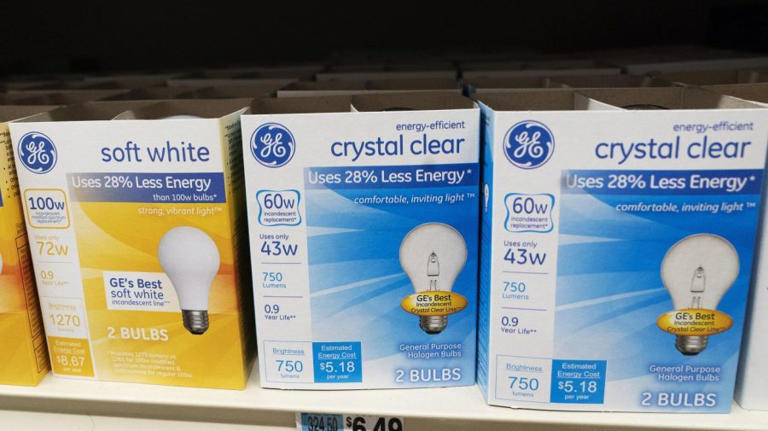
Are LED lights safe for everyone?

The Hill

The Hill

<?XML:NAMESPACE PREFIX = "[default] http://www.w3.org/2000/svg" NS = "http://www.w3.org/2000/svg" />Follow

LED lightbulbs may be hazardous to your health

Opinion by Katherine Drabiak, opinion contributor•1h

LED lightbulbs may be hazardous to your health

LED lightbulbs may be hazardous to your health© Provided by The Hill

The Department of Energy recently announced that it will enforce new rules that prohibit the manufacture and sale of certain types of incandescent and halogen lightbulbs used in homes. Stores can continue selling already stocked merchandise but will face stiff penalties for noncompliance.

The Energy Policy and Conservation Act gives the Energy Department authority to regulate the energy efficiency of consumer products. New standards must further environmental protection and advance public health. The department asserts that this rule modernizes energy efficiency, slashes carbon emissions, and will reduce energy costs. LED bulbs are an estimated 90 percent more energy efficient, and often touted as more economically and environmentally responsible.


Disagreement over how to regulate certain lightbulbs has been brewing for years. In 2019, the Department of Energy determined that it did not need to modify energy conservation standards for certain lightbulbs. In 2021, President Biden issued an executive order that directed federal agencies to review recent policies that were “inconsistent” with reducing carbon and greenhouse gas emissions. Agency decisions, said Biden, must “listen to the science” and protect public health and the environment.

The Energy Department interpreted this to mean issuing new restrictive rules, which became effective in July 2022. During the rulemaking process, multiple groups expressed concerns over adverse environmental impacts from forcing adoption of LEDs as the primary light source in our homes. The department flatly rejected these concern, claiming that it had not found any evidence that using LEDs in daily life directly results in adverse health effects or negatively affects animals.

This claim stands in stark contrast to decades of existing science on blue light, LEDs, and potential detrimental impacts to both human and environmental health. To compare, in 2019 the French Agency of Food, Environmental, and Occupational Health and Safety published a detailed report summarizing research on LEDs. It documented public health concerns such as flicker, phototoxicity, glare and impact to human circadian rhythms.

Related video: 'Huge game changer': New rules about which light bulbs can be sold, manufactured take effect Tuesday (WXMI Grand Rapids, MI)

what kinds of bulbs can be manufactured and sold are


So yes, there is at least some evidence of negative impact, whether or not it constitutes proof. And it might not be your imagination if LED lights induce a sense of discomfort, feel blinding to you, or emit what seems to you like a bizarre glow.

LED bulbs differ from other lightbulbs in spectral composition. They emit brighter, bluer light in shorter wavelengths, into a smaller emission area. They also rapidly flicker on and off, which is referred to as temporal light modulation. For most people, this flickering is not consciously perceptible. But our brains notice it, which can result in headaches, eye strain, eye fatigue and decreased visual performance — without even realizing that these symptoms could be connected to the LED light near us.

Some research suggests that exposure to the blue light found in LEDs is phototoxic and can induce damage in retinal cells, which can lead to vision problems, speed up aging of our eyes and lead to macular degeneration.

Light should allow our eyes to see visual images clearly. But LEDs can produce glare, which makes it more difficult for our eyes to see the objects around us, causing things to look blurry. Trying to refocus our eyes can cause discomfort and eye fatigue.

LEDs are all around us — from overhead lighting, to table lamps, to the backlighting on tablets and phones. Even a small amount of blue light from these sources in the evening can inhibit melatonin production and disrupt our circadian rhythm. Thousands of articles have examined the effect of light on circadian rhythm. LED exposure can delay or prevent us from falling asleep, and degrades the quality of our sleep.

The Energy Department’s rule also ignores other environmental impacts of LEDs. They contribute to greater light pollution, which negatively affects bird navigation, sea-turtle mating and the survival of beneficial insects that rely on nighttime darkness. Compared to compact fluorescent bulbs, LEDs are mercury free, but they do contain arsenic and lead, which researchers suggest carry a higher toxicity potential. LEDs also cause significantly more natural resource depletion than incandescent bulbs, leading some scientists to assert that we should reconsider labeling them as environmentally friendly.

This rule is not simply updating “outdated and wasteful technology,” but rather a decision that reflects a narrow focus on reducing energy consumption while disregarding the full scope of potential public health concerns. The Energy Department should consider revising the rule accordingly.

Katherine Drabiak is a professor of health law, public health law and medical ethics in the College of Public Health at the University of South Florida.

Above is from:  LED lightbulbs may be hazardous to your health (msn.com)

India is on the Moon

Live Science

Live Science

<?XML:NAMESPACE PREFIX = "[default] http://www.w3.org/2000/svg" NS = "http://www.w3.org/2000/svg" />Follow

India lands on moon! Chandrayaan-3 becomes world's 1st spacecraft to land near lunar south pole

Story by Sharmila Kuthunur •3h

null

© ISRO

India has joined the moon-landing club.

The Chandrayaan-3 spacecraft touched down softly near the moon's south pole today (Aug. 23), notching a huge milestone for the nation. India is now the fourth country to stick a lunar landing, after the United States, the former Soviet Union and China.

The historic touchdown occurred at 8:33 am ET (1233 GMT or 6:03 p.m. India Standard Time), according to the Indian Space Research Organisation (ISRO). "We have achieved soft landing on the moon! India is on the moon!" ISRO chairman Sreedhara Somanath announced after the landing.


"This success belongs to all of humanity and it will help moon missions by other countries in the future," India's Prime Minister Narendra Modi said in a speech following the landing. "I'm confident that all countries in the world, including those from the global south, are capable of capturing success. We can all aspire to the moon and beyond."


Soon, a solar-powered rover named Pragyan (Sanskrit for "wisdom") is expected to roll off Chandrayaan-3's Vikram ("valor") lander. The robotic duo will spend one lunar day (about 14 Earth days) exploring its new home, with the goal of collecting scientific data about the moon's makeup before its batteries drain after sunset.

"The whole country is excited about this mission," Anil Bhardwaj, director of the Physical Research Laboratory (PRL) in India, which built a few of the instruments onboard Chandrayaan-3, told Space.com prior to the landing. "We all hope that we will be successful in ... bringing out new science from this mission."

Chandrayaan-3 was India's second try at landing near the moon's south pole, a largely uncharted region of immense interest to scientists and exploration advocates alike. The south polar region is thought to harbor large amounts of water ice, which, if accessible, could be mined for rocket fuel and life support for future crewed missions. The country's first attempt at a lunar touchdown, in September 2019, failed when the Chandrayaan-2 lander crashed into the moon due to a software glitch.

Close to four years and many design and software upgrades later, the homegrown Chandrayaan-3 spacecraft launched atop a LVM3 rocket on July 14 from a spaceport in Sriharikota, on India's east coast. The spacecraft entered an elliptical orbit around the moon earlier this month, then performed multiple maneuvers to shift into a nearly circular path, which took it about 93 miles (150 kilometers) above the lunar surface.

Last Thursday (Aug. 17), the Vikram-Pragyan duo separated from the mission's propulsion module, which will study Earth from its orbit around the moon. The lander and rover, which had entered an egg-shaped lunar orbit after separation, braked successfully on Friday (Aug. 18) and then again on Sunday (Aug. 20) to get closer to the moon's surface.


While still in orbit around the moon on Monday (Aug. 21) and Tuesday (Aug. 22), the duo established contact with Chandrayaan-2's orbiter, which has been circling the moon since 2019 and will serve as the critical communication link with Earth for the Chandrayaan-3 mission.

When the sun rose today on the targeted landing site, which was seen from Earth on one edge of the moon, mission control at ISRO's headquarters in Bengaluru commanded the lander to begin its descent to the lunar surface, activating its fully automatic landing system.

The historic landing was covered live by ISRO and broadcast by Indian public broadcaster Doordarshan.

At about 8:34 a.m. EDT (1234 GMT and 18:04 India time), the lander Vikram touched down in its target landing area, at roughly 70 degrees south latitude. This location is close to where Russia had hoped its first moon mission in 47 years, Luna-25, would land on Monday (Aug. 21). That effort, however, failed when the probe crashed into the moon over the weekend after a final orbital maneuver went sideways.

India's success today can be attributed to "extensive changes" to its landing strategy after Chandrayaan-2's 2019 crash, Bhardwaj said. Onboard algorithms that calculate spacecraft speed in real time during descent were reworked to allow for "more freedom to deviate" from protocol "but still do the landing," he added.

Other changes that helped facilitate the mission's success include a larger target landing zone, stronger legs for Vikram to withstand higher landing speeds and dynamic engines that adjusted the spacecraft's velocity for a smoother touchdown.

Images of the moon that Chandrayaan-2's orbiter has been sending home since 2019 also painted a clearer picture of the landing site than what scientists knew previously, according to Bhardwaj. "There is not much of a hurdle in this [landing] area," he said.

Now that Vikram is settled on the moon, Pragyan is expected to roll onto the lunar surface and start analyzing lunar soil and rocks.

Similar to the unfortunate rover on Chandrayaan-2, Pragyan's wheels are etched with the Ashoka Chakra, a religious symbol of a wheel with 24 spokes depicted on the Indian flag, and ISRO's logo. So when Pragyan inches along on the moon, ISRO hopes both symbols will be stamped onto the surface, where they will remain untouched for eons.

The lander Vikram is equipped to sense moonquakes near the landing site using an onboard seismometer, and to probe lunar soil to record its temperature.


The Chandrayaan-3 mission, which costs a modest 6 billion rupees ($73 million US at current exchange rates), is unfolding at a time when multiple nations — notably, the U.S. and China — are eyeing the moon for future crewed missions. NASA, for example, aims to land astronauts near the lunar south pole in late 2025 or 2026 on its Artemis 3 mission, and to build one or more bases in the region shortly thereafter.

Chandrayaan-3 could also help spur India's space program, leading to even greater accomplishments in the future.

"It is going to be a game changer for the new generation," said Bhardwaj, adding that the success is important for the country's "strategic and geopolitical purposes" as well as to drive "the youth to do something different and unique."

When the sun sets upon the landing site in two weeks, the robotic duo will be left to fight a frigid night, which will be "very difficult to survive because the batteries will be drained out and it is too cold for electronics," Bhardwaj said.

Meanwhile, his team has geared up for what they hope will be a busy fortnight: "Our job starts after landing."

Above is from:  https://www.msn.com/en-us/news/technology/india-lands-on-moon-chandrayaan-3-becomes-worlds-1st-spacecraft-to-land-near-lunar-south-pole/ar-AA1fFZUL

Belvidere Park District will be pool-less


The Illinois Vibe

Local Landmark William Grady Pool Set for Demolition

8 hours ago

video by @13wrextv

The William Grady Pool, a widely recognized landmark in Belvidere, is slated for demolition after the local park district granted approval. The district's decision was made during a recent meeting, setting a budget of $341,000 for the project. The pool has been out of use since last summer because of mounting maintenance costs and safety concerns.

Park district leaders assert that the pool has reached the end of its usefulness, and further repairs would be a wasted expense. During the meeting, they introduced a 10-year plan focused on the future of the district's aquatic facilities. It's still unclear what will happen to the exact location once the pool is demolished. Over 700 community survey responses, however, emphasize the community's hope for a new water feature in its place. A public meeting to discuss these future plans in more detail has been set for September 26th.

Above is from:  https://local.newsbreak.com/belvidere-il/3132502674187-local-landmark-william-grady-pool-set-for-demolition?s=dmg_local_email_bucket_14.web2_fromweb