Friday, July 3, 2015

Illinois Gov. Bruce Rauner vetoes lawmakers' pay raise - Blogs On Politics - Crain's Chicago Business


With no agreement near on a new state budget, Gov. Bruce Rauner today sent lawmakers an unmistakable message: He vetoed their pay raise.

Rauner used his amendatory veto to eliminate from a budget implementation bill the money needed to pay for annual cost-of-living raises for legislative salaries and per diem expenses that automatically are adjusted up with inflation.

Unless overridden, the action will cost every legislator on both sides of the aisle $1,356 to $1,905 in pay for fiscal 2016.

The amendatory veto also applies to elected statewide executive officials, agency directors and other top state personnel. But I guarantee you it's the message to lawmakers that will make the news.

Rauner put a little bit of extra oomph in his action.

"The state is suffering from a debt burden well in excess of $100 billion. Instead of acknowledging this reality, the General Assembly passed an unbalanced and unconstitutional budget for fiscal year 2016," he said in his veto message.

"A balanced budget requires shared sacrifices. My administration has reduced state personnel costs among agencies under my jurisdiction by $4 million. . . . Under these circumstances, the state cannot afford to give legislators a raise."

Besides, he added, with a little bit of spit that might not go over well with GOP lawmakers either, "Illinois legislators are already among the highest paid in the United States, earning $68,000 to $95,000 per year for part-time service."

Somehow, I think we'll be hearing more about this. If you'll recall, former Gov. Pat Quinn a few years ago tried to put a brick on legislative paychecks, but his action was overruled in court.

Update — Illinois Senate GOP Leader Christine Radogno is being a loyal lady about the veto, though I suspect she didn't appreciate the suggestion that she's overpaid.

"It is a fact: Illinois lawmakers are among the highest-paid in the nation,” she told me in a phone interview. "And I'm not sure that, in this budget environment, any raises are appropriate."

What is regrettable, she added, is what majority Democrats have done. "A person looking at this situation from outside would scratch their head that the Democrats passed this (unbalanced) budget."

So there

Above is from:  Illinois Gov. Bruce Rauner vetoes lawmakers' pay raise - Blogs On Politics - Crain's Chicago Business

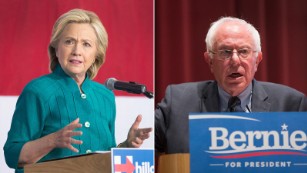
Why Bernie Sanders Will Become the Democratic Nominee and Defeat Any Republican in 2016 | H. A. Goodman

image

Bernie Sanders is down by just 8 points in New Hampshire and has gained tremendous momentum in Iowa. If the Vermont senator wins both the Iowa caucus and New Hampshire primary, the odds will favor him getting the Democratic nomination. What was once thought of as a long shot is becoming a reality, primarily because Bernie Sanders has energized his base while Hillary Clinton has been forced to defend against email and foreign donor scandals. However, this isn't the first time in recent history that a challenger to Clinton was once thought of as a long shot.

In 2008, Hillary Clinton finished third in Iowabehind Obama and John Edwards and eventually lost the Democratic nomination to the first African-American elected as president. This eventuality was once described as "the biggest fairy tale I've ever seen" by Bill Clinton, when the former president was asked about Obama's record and chances of winning the presidency. Even Hillary Clinton's "It's 3:00 am" advertisement, described by Harvard Professor of Sociology Orlando Patterson as having a "racist sub-message," couldn't prevent history from taking place and a more progressive electorate from deciding their own destiny at the ballot box.

Therefore, if you're a person who says, "I'd vote for Bernie Sanders, but he can't win," then compare the world in 2015 to another time period in American politics. Imagine in 1972, shortly after Nixon won reelection in a legendary landslide, that in 2015 The New York Times would read, Supreme Court Ruling Makes Same-Sex Marriage a Right Nationwide. Imagine just a decade ago, what you'd think about Strom Thurmond's son calling for the removal of the Confederate flag, or the Supreme Court ruling favorably on a national healthcare program. Even before Caitlyn Jenner, transgender Navy Seal Kristin Beck decided to run for Congress and Barney Frank came out publicly in 1987. Therefore, Bernie Sanders isn't George McGovern and this isn't 1972; Americans are willing to vote for any candidate they feel will make a positive change.

Dwindling symbols of the past and social advancements aren't the only hallmarks of this new era in American politics. In addition to President Obama being our first African-American president, William H. Frey of Brookings published a report titled Minority Turnout Determined the 2012 Election, highlighting profound demographic changes in the electorate:

What this tells me is that turnout will be less important for Democratic victory as demography changes in their favor, though they must maintain their strong voting margins among blacks, Hispanics and Asians. For Republicans, the latter projections show that they cannot count primarily on white support to take the White House. Even assuming high 2004 turnout rates and 2012 Republican voting margins for whites, they cannot win unless they also peel off more votes among minorities. In this regard, demography indeed becomes destiny.

Therefore, even if minorities vote at the same rate for any Democratic nominee, including Bernie Sanders, Republicans will still have an uphill battle for the White House in 2016.

He voted against the Iraq War, championed gay rights and other issues before they were popular, and works against unfair trade deals and Wall Street greed, so there's no denying the appeal of Vermont's senator to millions of voters. As for his appeal to minority voters, Professor Cornell West posted a message on Facebook stating, "Senator Bernie Sanders is one of the few elected officials who is fundamentally devoted to dealing with the plight of poor & working people." In contrast, Twitter grilled Hillary Clinton for waiting close to three weeks to address Ferguson, and Ebony published a piece titled, Is Hillary 'Ready' for Black Voters?.

As for the Electoral College and Bernie Sanders, a closer look at the numbers and the electoral map shows that Vermont's senator is indeed a pragmatic choice (no email scandals, voted consistently on progressive issues before they were popular, energized a base of Democratic supporters) for Democratic nominee. Also, Sanders has a better chance than Hillary of defeating Jeb Bush or any other GOP challenger. According to a POLITICO piece titled The 2016 Results We Can Already Predict, Democrats across the nation simply have to vote in a similar manner to 2012 for Sanders to win:

That leaves just seven super-swingy states: Colorado, Florida, Nevada, Ohio, and Virginia, all of which backed Bush and Obama twice each, and Iowa and New Hampshire, which have voted Democratic in three of the last four elections.

For the Democrats, a victory in 2016 entails zero expansion of the blue map, merely the limiting of blue-to-red transformations. Assuming the lean, likely, and safe Democratic states remain loyal to the party, the nominee need only win 23 of the 85 toss-up electoral votes. And if a lean Democratic state such as Wisconsin turns red, it is relatively easy to replace those votes with one or two toss-ups.

On the other hand, Republicans must hold all their usual states plus find a way to stitch together an additional 64 electoral votes, or 79 if they can't hold North Carolina. To do this, the GOP candidate will have to come close to sweeping the toss-ups under most scenarios--a difficult task...

What gives Hillary Clinton a better chance of winning states like Ohio (Brookings has a study titled Did Manufacturing Job Losses Hold the Midwest Back) than Bernie Sanders? Unlike Sanders, Hillary was for the TPP and voters weary of China and Vietnam taking jobs away from Americans will think twice about Hillary Clinton.

Also, communities around the country hit by the repercussions of American counterinsurgency wars in Iraq and Afghanistan, where close to 7,000 Americans died, over 50,000 wounded in combat, and over 900,000 injured, will think twice about voting for Hillary Clinton after her Iraq War vote. Bernie Sanders, however, was on the right side of history with Iraq and Afghanistan, he's always against horrible trade agreements, supported gay marriage and marijuana legalization (Hillary was against even the decriminalization of marijuana not long ago) and championed a range of other issues.

In other words, the electoral map shows that Bernie Sanders is not only a realistic candidate for president, but his record on a number of issues speaks to a wide range of voters. If Democrats simply vote based on their value system (considering demographic shifts favor Democrats), Bernie Sanders can easily win the presidency. If they nominate Hillary Clinton out of despair, thinking this is still 1999, then email scandals and an Iraq War vote could mitigate any advantages a Democratic challenger has over Jeb Bush or another Republican.

These aren't the days where Karl Rove can tap into a well of homophobia (Hillary was also against gay marriage at the time, stating "I don't support gay marriages, but I do support extending benefits to couples...") and gain millions of GOP votes by pushing for an amendment banning gay marriage. While "Moral Values" once carried GOP candidates into the White House, our outlook on social issues has changed as a nation. Americans care more about wealth inequality nowadays than marching with Mike Huckabee against the recent Supreme Court decision on gay marriage.

Ultimately, the only way for the GOP to win the White House in 2016 would be to campaign against a Democratic candidate who most resembles the Republican platforms on Wall Street, war, trade, and other issues. Hillary Clinton voted for Iraq, she's amassed $328,759,064 over the years (three of her top five donors are Citigroup, Goldman Sachs, and JP Morgan), and she was against gay marriage up until recently. Bernie Sanders is actually the only hope Democrats have of winning the White House without a controversial email showing up days before people line up at the voting booths. While the GOP is ready for Hillary Clinton, Sanders represents a real challenge to union busting Scott Walker and Jeb Bush's support for the Iraq War. In today's political environment, Hillary Clinton winning the presidency is the "fairy tale," while Senator Bernie Sanders is the most realistic choice for president in 2016.

Why Bernie Sanders Will Become the Democratic Nominee and Defeat Any Republican in 2016 | H. A. Goodman

Thursday, July 2, 2015

Rush to finish St. Patrick's Cathedral renovation ahead of Pope's visit | 7online.com


By Lucy Yang

Thursday, July 02, 2015 05:32PM

NEW YORK (WABC) --

When Pope Francis visits New York City in late September, he will lead evening prayers at St. Patrick's Cathedral. And workers are stepping up the pace of the cathedral's renovation project.
Of course, Timothy Cardinal Dolan said blessings before all the workers broke bread outside St. Patrick's Cathedral Thursday.
"God bless these men and women that have done such magnificent artistic work," said Cardinal Dolan.
The early July 4th picnic was a thank you gesture from the Cardinal because the workers and artisans have been racing against the clock to renovate the grand 5th Ave Catholic Cathedral.
When they began the $175 million renovation 3 years ago, no doubt St. Pat's was in dire need of help.

More than 100 years of grime, pollution, and decay had taken its toll.
The plaster was dark and crumbling, ornamental details were in distress. But when it was announced that the Pope was now planning to visit in September and say vespers here, everyone went into overdrive, working longer hours and coming in on Saturdays.
"That sense of pride and drive and craftsmanship of these fellas, that's why I wanted to let them know how grateful I was to them," said Cardinal Dolan.
Peter Cuffy helped renovate, repair, even replace all the ornamental details in the grand cathedral.
He learned something amazing when he got up on the scaffolding. There are hundreds of sculpted flowers there and each one is different.
"I couldn't do these things unless I got real inspiration from the spirit of God, that's a fact," he said.
The magnificent bronze doors that will welcome the Pope had to be painstakingly cleaned by hand. Artisans used special bronze and copper tools to scrape off seven sticky layers of paint.
They even needed toothbrushes to get into the crevices.
Another perk of the renovation, St. Pat's is now much brighter on the inside and outside. The walls are no longer dingy grey. They are shades of ivory.
Plus, after cleaning all 75 stained glass windows, more light filters in. The sound is also much clearer after all 9,000 pipes on the organ were polished and re-tuned.
The whole project will not be finished by September. But the areas the Pope will see when he says evening prayers here will be free of scaffolding and shining like new

Rush to finish St. Patrick's Cathedral renovation ahead of Pope's visit | 7online.com

Bernie Sanders draws nearly 10,000 supporters - CNNPolitics.com


Madison, Wisconsin (CNN)Bernie Sanders has been running for president for two months, but Wednesday night in Madison, Wisconsin, his long-shot campaign got real.

When Sanders walked on stage at the Veterans Memorial Coliseum, he was greeted by a raucous, howling crowd of 9,600 people, according to Sanders' campaign aides and arena staff.

A clearly energized Sanders, who late last year was speaking to crowds of 50 people in Iowa classrooms, appeared taken aback by the reception he received.

"Whoa," he said. "In case you haven't noticed, there are a lot of people here."

Sanders' campaign has been organizing the event for weeks, but just recently started telling reporters that 9,000 people signed up to attend.

Hillary to step up attacks on Republicans

"Tonight we have made a little bit of history," he said. "You may know that some 25 candidates are running for president of the United States, but tonight we have more people at a meeting for a candidate for president of the United States than any other candidate has."

    Sanders delivered what amounted to his standard stump speech -- a liberal message that pledges to fight for universal health care, break up the biggest banks in the United States and redistribute wealth from the richest Americans to the middle class and poor.

    "What I would like to ask of you: Please think big, not small," Sanders said, referring to the audience as his "brothers and sisters."

    Calling for a "political revolution," Sanders added, "there is nothing that we cannot accomplish."

    Sanders, who is rising in the primary polls and trails only Hillary Clinton, only mentioned the former secretary of state once in his speech.

    "This campaign is not about Bernie Sanders, it is not about Hillary Clinton, it is not about anyone else, it is about you," Sanders said to sustained applause.

    Sanders worked the rope line after the event -- something the Vermont senator rarely does.

    "The message is resonating, not just in Wisconsin, but all over America," Sanders told CNN. "The people are sick and tired of establishment politics, establishment economics. They want real change."

    On September 8, 2014, Sanders speaks outside the U.S. Capitol at a press conference where members of Congress discuss a joint resolution proposing a constitutional amendment relating to contributions and expenditures intended to affect elections.


    Bernie Sanders draws nearly 10,000 supporters - CNNPolitics.com

    Wednesday, July 1, 2015

    Facts about Illinois Budget Showdown

    image


    image

    The Illinois General Assembly failed to pass a balanced budget for the new fiscal year, which starts today. That means the state cannot spend money on any programs or services requiring an annual appropriation. There’s a lot of uncertainty about what this means, with predictions ranging from “most people won’t notice” to “Armageddon.”

    Here are 10 things Illinoisans can expect as the state moves into the new fiscal year without a balanced budget:

    1. No matter what stays open and what shuts down, state lawmakers will still get paid. State lawmakers will receive their paychecks no matter what happens or how long this budget impasse lasts. That’s because in 2014, House Speaker Mike Madigan and Senate President John Cullerton worked together to introduce and pass a law ensuring legislator salaries and operating expenses would be paid even if a balanced budget was not passed on time.
    1. Without a state budget, there is the threat of a state government “shutdown.” But operations won’t halt immediately. For most state programs and services, funds must be appropriated by the state on an annual basis through a budget. Without a budget, these programs and services will not receive funds from the state. However, that doesn’t mean these programs and services will immediately cease. Most will be able to withstand missing a payment or two without too much of an issue, recognizing that the state will likely appropriate money for those programs or services eventually. And vendors that provide state services already are paid months behind schedule, so they will keep receiving checks for services provided prior to July 1.
    1. Schools will start on time. Rauner signed a bill on June 24 that ensures public schools are funded in fiscal year 2016, meaning students will be back in school on time even if the state fails to adopt a balanced budget.
    1. Pension and debt payments can still be made. Pension and debt payments are continuing appropriations and by law do not need to be appropriated on an annual basis.
    1. Essential services will continue. Services essential for the safety and welfare of the people of Illinois will continue. State police will continue working and state prisons will remain open and operational.
    1. Local-government operations will continue. Cities, towns and villages will continue to receive their share of state income, sales and motor-fuel taxes.
    1. Federal programs will continue. Programs funded or operated by the federal government will generally not be affected.
    1. State parks, museums and casinos will remain open in the short term, but could close eventually.
    1. Eventually, people who rely on state services will feel the pain. While some programs and services may be able to continue at least temporarily, the lack of state funding for some programs and services will have an effect on many Illinoisans. Funding for Medicaid, addiction services, child care services, rehab and the senior meal program funds will all cease. Providers of such services have been kept afloat by expedited payments from the state, and when such payments stop, these providers may choose to stop providing these services.
    1. Illinoisans will still have to pay taxes.


    Jeffrey Schwab

    Staff Attorney, Liberty Justice Center

    What Scott Walker's Tenure Has Done to Wisconsin’s Workers


    …..To what extent, then, did Walker’s crushing of the unions help Wisconsin’s “hardworking taxpayers”? The $3 billion he saved in his first term was certainly something. But that amounted to less than 1 percent of overall state and local government spending over that time period. Those savings came from the pockets of teachers and other public servants who are also taxpayers and whose compensation, by most measures, was not out of line. The law Walker signed didn’t contribute to the fiscal health of the state’s public pension fund. It provided management flexibilities that could ease school reforms down the road but that the governor himself hasn’t taken much advantage of. And, as we’ve seen, Walker could have won most or all of that $3 billion through tough negotiating without going for the jugular and virtually eliminating collective bargaining. Why, then, did he do it?

    It’s tempting to portray the struggle over Wisconsin’s unions as a matter of high policy. In reality, however, it was the culmination of decades of increasingly fierce partisan wrangling that pitched the state’s Democrats, along with their union supporters, against resurgent Republicans and their allies in the business community.

    In the previous 20 years, there had been other epic battles, but none was bigger than the 1998 campaign for State Senate District 27, located in a Madison suburb. The race pitched Democrat Jon Erpenbach, a former legislative aide, local radio personality, short-order cook, and truck driver, against Republican Nancy Mistele, a local business operator and prominent conservative activist. Both sides expected that the race would decide control of the Wisconsin state senate, which had been tilting back and forth and was then in Republican hands. With Republican Tommy Thompson in the middle of his 14 years as governor, the Democrats saw control of the senate as critical in regaining their power in the state—and Erpenbach’s race as critical to senate control. For the Republicans, it was their golden opportunity.

    It was a big-money campaign, at least for those times and for a state legislative race. Erpenbach raised $188,000, but Mistele vastly outspent him with the $307,000 she collected. She also had big help from Wisconsin Manufacturers and Commerce (WMC), the state’s chamber of commerce, which spent an estimated $200,000 in issue ads. But the state’s major public employee union, the Wisconsin Education Association Council (WEAC), jumped on Erpenbach’s side with an estimated $362,000 of its own issue ads. Issue-ad spending swamped the candidates’ own campaigns, and, as Erpenbach later told a reporter, “The campaign was totally out of my control.” In fact, he said, he felt like a “bit player” in his own campaign.

    In the following years, WEAC and the WMC became stalking horses for the Democratic and Republican establishments, and the groups fought proxy battles for the parties on the state’s biggest issues.

    Erpenbach may have lost control of his campaign, but with WEAC’s money he won the race. The Democrats controlled the state senate, the seeds were planted to make issue ads an unstoppable national force, and the fight between WEAC and the WMC became a blood feud.

    In the following years, WEAC and the WMC became stalking horses for the Democratic and Republican establishments, and the groups fought proxy battles for the parties on the state’s biggest issues. WEAC was the most powerful voice of public employee unions in one of the most important swing states in the country. The WMC was determined not to let them set the state’s agenda. The two groups may not have invented issue ads, but their rivalry brought them to a fierce level not previously seen in the country.

    But not all unions suffered the same fate. The Wisconsin Troopers Association, for example, escaped most of the changes in bargaining power imposed on the teachers and won a 17 percent increase for its members in its bargaining with the Walker administration. The state troopers guarded the capitol during the 2011 fracas—and supported the governor in his 2010 campaign, the 2012 recall election, and his 2014 reelection battle. The governor’s spokeswoman, Laurel Patrick, denied that there was a connection. “This is ridiculous. To say there is a pattern of favoritism is inaccurate.” Some local police and fire unions also backed Walker—and they also found themselves far better off than the teachers’ union.

    Sharp-elbowed politics is part of the American tradition. James Madison warned about the “mischiefs of faction,” and what has happened in the Wisconsin city that bears his name surely ranks among the most mischievous. But it’s awfully hard to argue that it represents a pathology of union power or that the unions had a privileged place at the table. They found themselves in a nasty blood feud and lost.

    What do Scott Walker’s actions as governor say about how he might act as president if he were elected? Do his experiences busting the state’s government unions, and the instincts that led him to do so, make him the right person to take on the management challenges of the federal government? He argues that the union battles show he’s tough enough to lead, but there are much deeper issues at play here.

    To begin with, whatever problems Washington has, they don’t have much to do with union power, for the simple reason that unions at the federal level don’t have much clout. They represent only 19 percent of all federal employees (compared with 42 percent of local government employees and 30 percent of state government employees across the nation, and 31 percent of state and local employees in Wisconsin). Federal unions have no right to bargain over wages; Congress sets federal pay through appropriations. Federal employees don’t have the right to strike, and never have. (The 1981 air traffic controllers’ strike was illegal under federal law, and Reagan actually provided a grace period to give them a chance to think twice before being dismissed.)

    Today, the biggest problem with federal employees is that there’s not nearly enough of them. As the University of Pennsylvania political scientist and former George W. Bush White House aide John DiIulio has noted, the size of the federal workforce today remains about what it was in 1960. Meanwhile, the U.S. population has more than doubled, the federal budget has quadrupled in real terms, and the number of pages in the Federal Register has grown fivefold, as the below chart shows.

    Federal Workforce and Spending

    Yahoo

    Tuesday, June 30, 2015

    Belvidere Home Prices and Home Values | Zillow


    Belvidere Home Prices & Values

    Zillow Home Value Index

    The Zillow Home Value Index is the median Zestimate valuation for a given geographic area on a given day. Learn more

    $117,500

    • 4.4% 1-year change
    • 7.1% 1-year forecast
    <?XML:NAMESPACE PREFIX = "[default] http://www.w3.org/2000/svg" NS = "http://www.w3.org/2000/svg" />Apr 2014Jun 2015May 2016

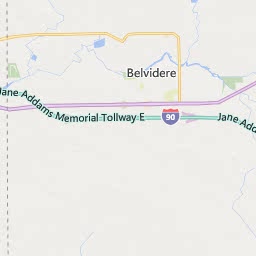
    The median home value in Belvidere is $117,500. Belvidere home values have gone up 4.4% over the past year and Zillow predicts they will rise 7.1% within the next year. The median list price per square foot in Belvidere is None.

    Mortgage delinquency is the first step in the foreclosure process. This is when a homeowner fails to make a mortgage payment. The percent of delinquent mortgages in Belvidere is 5.6%, which is lower than the national value of 6.0%. With U.S. home values having fallen by more than 20% nationally from their peak in 2007 until their trough in late 2011, many homeowners are now underwater on their mortgages, meaning they owe more than their home is worth. The percent of Belvidere homeowners underwater on their mortgage is 30.8%, which is the same as Rockford Metro at 30.8%.

    Read more

    Relative ZHVI
    - +

    Belvidere Market Overview

    Data through May 31, 2015
    • $117,500 ZHVI
    • 7.1% 1-yr forecast

      The Zillow Home Value Forecast is Zillow's prediction of what the Zillow Home Value Index will be one year from now. Learn more

      (May 31, 2016)

    • No data Median listing price
    • $134,900 Median sale price
    • Zillow Home Value Index Median list price Median sale price

      All homes Studio 1 bedroom 2 bedroom 3 bedroom 4 bedroom 5+ bedrooms Single family Condo / coop Duplex / triplex Top tier Middle tier Bottom tier

    Belvidere Home Prices and Home Values | Zillow