Monday, March 7, 2016

Boone County farmers opposed to Great Lakes Basin Railroad project


image

image


Mar. 5, 2016 at 8:29 PM

GARDEN PRAIRIE — A 60-acre farm near Marengo and Denny roads has been in the Daniels family for generations.
It's been a place of solitude and a fertile place to raise cattle and grow corn, alfalfa and soybeans.
"We've spent generations here," Ang Daniels said. "I know nothing other than this area."
Now, she believes the farm is threatened by the proposed Great Lakes Basin Railroad that would slice through the family's property, affecting farmland and causing unwanted noise.
"We chose to live in a rural area, not an urban area," said Daniels, 53. "I do believe it will affect property values."
The $8 billion, 281-mile loop would be the nation's largest railroad project in more than a century. The plan, in its current form, would extend an existing railroad linking Milwaukee and Brodhead, Wisconsin, to a new line through Boone County — with a western spur at the Chicago Rockford International Airport — then south to Lee County and east to Indiana before ending north in Michigan City, Indiana.
The route would bypass Chicago and thus provide quicker transportation of goods from coast to coast. The project's backers say they'll finance the railroad privately. However, they'll have to acquire vast stretches of private land via eminent domain — the right of a government or its agent to take property at fair market value for public use.
That concerns farmers and residents in Boone County who say the project would scar the land, disrupt natural resources and cause property values to plummet.
"I understand you have to have infrastructure, but that's why you have towns," Daniels said. "Farmland is for farming."
An earlier version of the railroad snaked through Winnebago County, but was scrapped after backers determined an environmental impact study to assess the effects along the Sugar River and Winnebago and Rock counties would have delayed the project.
Frank Patton, CEO of Great Lakes Basin Transportation Corp., said he'd like to start building the railway by 2019. He said the project will be a boon to the farming industry.
"What we're trying to do is modernize the logistics system, not just for agriculture but for the entire (railroad) system," Patton said. "In our minds, the farmers are one of the groups that are the big winners."
The railroad, he said, will carry grain, corn, ethanol and the products that derive from them.
About 20 people gathered Wednesday to discuss the project during a Boone County Planning, Zoning and Building Committee meeting. Farmers and other county residents expressed concerns about the impact the project could have on their lives.
Committee Chairman Denny Ellingson said he shares some of the concerns.

"Personally, I think they looked at a map and went, 'This is the least-populated area, so the least people will fight it,' and just drew the line there," Ellingson said.

Daniels told the committee the railroad will "totally distort Boone County as a farming community."
"This is the some of the most fertile ground in the state of Illinois — look at any of the reports," she said. "I understand we have to look at economic development. But at some point, we have to preserve our farmland, because you don't ever get that back. You don't grow that again next year. (When) it's gone, it's gone, and that's my concern."
More meetings will take place, but dates are undetermined.
Patton, meanwhile, defended the concept of eminent domain.
"Without eminent domain, we wouldn't have any roads, we wouldn't have any forest preserves, we wouldn't have anything that is built on land that someone else at one time owned," Patton said. "If people don't like the law, they can change it. That's what democracy is all about. Eminent domain goes back to Abraham Lincoln."
Committee members and county residents said they didn't know the Great Lakes Basin Railroad proposal existed. Patton contends the plan has been discussed publicly for two years.
Last fall, he pitched the project to the Rockford Metropolitan Agency for Planning board of directors. A Google Earth document detailing the project will be available on the Great Lakes Basin Railroad website in coming days.
"We are trying to be as transparent as possible," Patton said. "We've received ongoing tremendous support from the agricultural (community). They believe (the railroad) will much more efficiently move agricultural products to the user."
For 35 years, Lee Bozeman, 67, has owned 10 acres on Edson Road south of Capron. He rents out seven acres to a local farmer who plants corn or soybeans. He said the railroad would be about 200 feet from his property.
"I don't see any economic (benefit) here in Boone County," Bozeman said. "Boone County won't be getting any dollars out of this."
An oil pipeline buried in Bonus Township in 2007 and upgraded last year caused little consternation, because they "don't see it, don't hear it," Bozeman said.
Kathi Waite owns five acres on Edson Road where she's raising a horse, a cow and chickens. She said the railroad will either run through her property or just west of it.
"If it hits our property, we'll end up losing our home. If they skirt our property, it's going to basically make it impossible to sell our home," Waite said. "Our property is going to devalue. No one wants to live like that."

Waite also is worried about chemical spills.

"This is all farm country out here with very fertile soil," she said. "(If) those chemicals spill into the ground, who knows what could happen?"
Waite said residents should band together to oppose the project.
"This is an issue that is not going to go down without a fight," she said. "I really think some kind of committee has to be formed by Boone County so that we can at least try to fight this. I don't know if it'll do any good."

Adam Poulisse: 815-987-1344; apoulisse@rrstar.com; @adampoulisse

Above is from:  http://www.rrstar.com/article/20160305/NEWS/160309631/0/SEARCH/?Start=3

“402 Conferences” in Boone County


Georgette Braun: A step that avoids jury trials at issue in Boone County state's attorney race

By Georgette Braun
Staff writer

Posted Mar. 6, 2016 at 9:01 AM
Updated Mar 6, 2016 at 3:28 PM

A courtroom tool widely used in Winnebago County and elsewhere in Illinois that can avoid lengthy and costly jury trials isn't used in Boone County.
But it would be if Tricia Smith wins her bid against incumbent Michelle Courier on the Republican ballot in the March 15 primary election for Boone County state's attorney. There is no Democratic candidate on the primary ballot.
At issue: so-called "402 conferences," which refer to the long-standing Illinois Supreme Court Rule 402. The rule is usually invoked in a felony case. It allows a judge, prosecutor and defense attorney to meet behind closed doors without the presence of the defendant. The aim is for the judge to suggest an appropriate sentence should the defendant plead guilty.
Courier told me she has a policy not to participate in 402 conferences. It's required that all three parties be involved in such talks. "We believe it benefits the defense more than the state," she said. "I don't know why prosecutors use that, and I don't know how it benefits victims."
Tricia Smith told me that if she's elected state's attorney, she'd participate in the meetings. "I don't think it's not being tough on crime, ... and you get the end result without having to put (victims) through trial," she said. Smith said 402 conferences can be a "good tool to use to help move cases through the system, because part of the problem in Boone County is long wait times" for trials.
Smith said it takes an average of 788 days for jury trial felony cases to move through Boone County court, compared with 563 days to close such cases in Ogle County. Smith said jury trials are expensive considering witness expenses, juror fees and time spent on each trial by the judge, court officials and the state's attorney's office.
Courier said Boone County isn't comparable to Ogle County. "We have twice as many felony cases," she said. And while 402 conferences may "reduce the number of cases, it does not serve justice," Courier said. In addition, she said, "our closure rates are higher now than they have ever been."
Winnebago County State's Attorney Joe Bruscato said 402 conferences "offer us an excellent opportunity to bring about resolution of a case," noting that "both parties are free to reject" the judge's sentencing recommendation. The meetings typically take less than an hour, he said. His office doesn't keep track of how many times it participates in the meetings.

Courier said the smaller size of Boone County's court system could pose a problem for the conferences. Boone County has a single felony judge who could be "conflicted out of a case," if that judge learns too much evidence through a 402 conference prior to a case, Courier said. "In Winnebago, that is less of an issue because of a number of judges."

A Freeport-based judge says 402 conferences are useful and not one-sided. "I would not say it benefits anyone more than anybody else," said Judge James M. Hauser, associate circuit judge of the 15th Judicial Circuit in Stephenson County. "It benefits the whole system." Hauser said in courtrooms where he presides that use of 402 conferences is "more than occasional."
Here's what typically goes on in the judge's chamber behind closed doors. The prosecution presents facts of the case from police reports and conversations with witnesses. Additionally, the prosecution points out factors of the case that may have bearing on the sentencing, including whether the defendant had been in jail before, lacked remorse, or how much harm had been done to the victim. The defense would then explain the person's involvement in the alleged offense and factors that could make the sentence less serious.
A 402 conference is sometimes held, Hauser said, when a person with a criminal record cooperates with police to provide information on another criminal. "Police have to use bad guys to catch bad guys," he said. The prosecutor and defense attorney go to the judge, who has to determine or approve sentencing, to explain: "This is why we are giving him a sweetheart deal, because he worked with SLANT," Hauser said. He was referring to the State Line Area Narcotics Team. "They don't want to put that out there in open court," he said. But they want the judge to know that the defendant "lived up to his end" of the bargain.
Another situation in which 402 conferences are used: when the victim in a domestic battery case may not want to testify in court, so the prosecutor, defense attorney and judge agree to sentencing that includes getting the accused into counseling. "Should the defendant reject the recommendations of the 402 conference, the case can still precede to trial," Hauser said.
Another judge, though, says 402 conferences should not be used. Robert J. Steigmann is an appellate court justice with the Fourth District. In a court case filed March 4, he said, "As is almost always the case, defense counsel sought to get the trial court involved — ostensibly so that the court could be a 'preliminary feel' about a possible sentence.
"But defense counsel's transparent motive was to convince the court that it should tell the prosecutor he should go along with defendant's request for probation and not insist on at least a three-year prison sentence. When the court indicated that it thought the State's offer of three years was 'a very good offer,' the case ultimately proceeded to a jury trial. ... The easiest way, of course, is for trial courts never to be involved in plea bargaining."

In his 12 1/2 years as a trial judge, he said he never participated in 402 conferences and "was able to achieve the same number of negotiated pleas as judges who participated in such conferences."

Lou Bianchi, McHenry County state's attorney, told me 402 conferences should be used "sparingly and cautiously. We don't want to use (the judge) as a mediator," he said.
Ryan Swift, a Rockford-based defense attorney, told me he participates in 402 conferences in 5 percent to 10 percent of the cases he handles. "In my experience, more often than not, it is beneficial to do it," Swift said.
Rockford-based defense attorney Jerry Lund said he participates in 402 conferences at least once a week on behalf of his clients, mostly in Winnebago County. With regard to Boone County's policy, he said: "If a prosecutorial agency has a policy to not do 402 conferences, it really impedes ... the opportunity to seek a resolution to the case prior to trial."

Georgette Braun: 815-987-1331; gbraun@rrstar.com; @GeorgetteBraun

Above is from:  http://www.rrstar.com/news/20160306/georgette-braun-step-that-avoids-jury-trials-at-issue-in-boone-county-states-attorney-race/?Start=3

Koch as Koch can


It remains unclear why Global TV managers were alarmed by my story about the billionaire Koch brothers. Is the future of investigative journalism begging for money online?

by Bruce Livesey

March 6, 2016

8Koch copy.jpg

Hramovnick Getty Images/iStockphoto

As parts of the Republican Party establishment roil over the realization that Donald Trump might be the party's nominee for president, one big question that's arisen is what will Charles and David Koch do about it, if anything?

The billionaire Koch brothers, the ninth richest people in the world, each worth more than (US) $42-billion, are famous for pouring their vast fortune into influencing the American electoral system to further their corporate and conservative goals. They have pledged to spend hundreds of millions of dollars to get a Republican elected to the White House this year.

In fact, twice a year, the brothers host conclaves of hundreds of wealthy conservatives at swanky resorts in southern California. Among the attendees at one of last year’s gatherings were Republican presidential hopefuls Marco Rubio and Ted Cruz. 

At one of these events last year, the Kochs and their wealthy friends pledged to spend some $250-million on political activities during the 2016 election cycle. The Koch-guided effort employs a network of some 1,200 full-time staffers in 107 offices nationwide, or more than triple the number employed by the Republican National Committee.

Also on their bankroll are some 17 different groups that, between elections, run attack ads, fund conservative think tanks, university programs, and organizations including the NRA. Some Koch money even comes to Canada, helping to finance the efforts of the Fraser Institute, an influential Vancouver-based conservative think tank.

Among the Kochs’ most famous causes is climate change denial groups and scientists – which they have funded to the tune of almost (US) $80-million since 1997. (Trump has called climate change “bullshit” and a “hoax”).

Jane Mayer, an investigative journalist with the New Yorker and author of Dark Money, a recently-released book about the Kochs, argues the brothers have helped foster the Tea Party movement, while winning tax breaks and regulatory concessions behind the scenes from Congress. 

What’s less well understood is the Kochs’ influence in Canada. It was only revealed in recent years that the brothers control from 1.1 million to two million acres of Alberta’s tar sands – one reason they’re eager to see the Keystone XL pipeline built.

Yet news about the brothers and where their money flows is often difficult to find.

Last year, I produced a 22-minute story for Global TV’s newsmagazine program 16x9 called the Koch Connection which explained their ties to Canada and the tar sands. 

Two days before the piece was to air – having been lawyered, fact-checked and approved –  senior Global management yanked it from the schedule. A week later, I was let go as a contracted producer, despite having worked on the show for more than two years. 

It remains unclear why Global TV’s managers were so alarmed about the story, although one could guess: at the time Global TV was a subsidiary of Shaw Communications Inc., a Calgary-based media conglomerate, which receives advertising dollars from oil companies, including the Canadian Association of Petroleum Producers, of which Koch Industries is a member.  

Producing investigative journalism aimed at the rich and powerful has become increasingly difficult, especially for television. With ad revenues falling, networks don’t have the resources, or appetite, to bite the hand that feeds them.

This has occurred as wealth has become increasingly concentrated in fewer hands and the need to scrutinize what the 1 per cent are doing with their money is more necessary than ever. 

After my Koch story was killed, I was contacted by Paul Jay, the Canadian television producer and founder of The Real News Network (TRNN), an on-line TV network. Jay established TRNN so he wouldn’t be hampered by the strictures of corporate advertising. 

Based in Baltimore, TRNN proudly boasts that it survives with “no advertising, government or corporate funding." Instead, it relies on fundraising from viewers and sympathetic donors.

Jay told me he wanted to make the Koch documentary for his network. And for the past year we’ve worked on putting together a crowd-funding campaign which got underway last week.

Is this the future of investigative journalism, begging for money online?

It might well be as publicly-owned broadcasters like the CBC and private sector networks like Global and CTV cut their news-gathering budgets and programming – although, admittedly, it’s a far from ideal way to keep the powers that be honest. 

news@nowtoronto.com | @nowtoronto

Above is from:  https://nowtoronto.com/news/koch-as-koch-can/

Saturday, March 5, 2016

Dangerous Flaw discovered at Byron Threatens to Close Nation's Nuclear Fleet


It appears that Byron may have solved the problem but the other plants have not—see Union of Concerned Scientist article shown below.

UPDATE:  The Cape Cod TImes (also shown below) picked up the news release and their research reveals that the other nuclear plants have until 2018 to correct the problem.

The News Courier of Athens, Alabama also picked up the Conecerned Scientist letter.


Dangerous Flaw Threatens to Close Nation's Nuclear Fleet


3/04/2016 03:21 pm ET | Updated 1 day ago
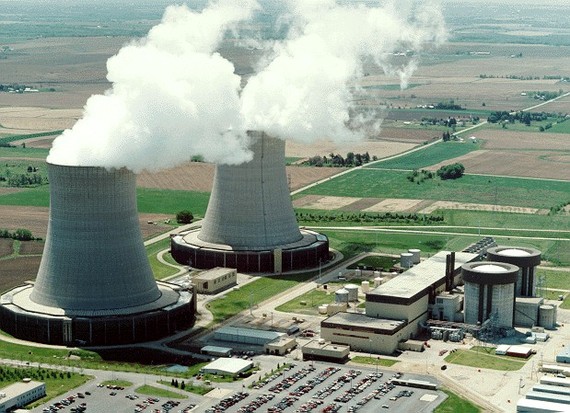
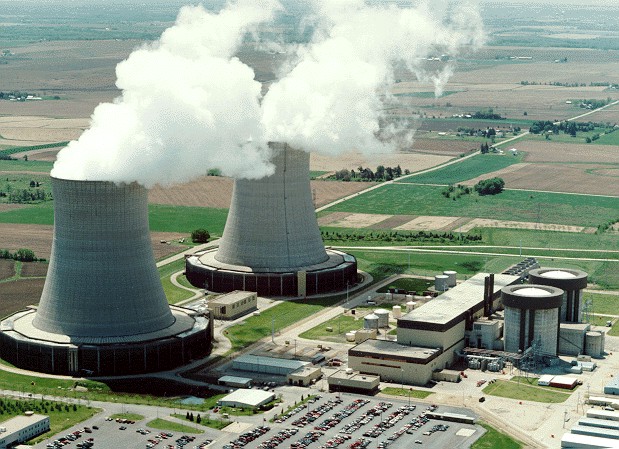
2016-03-04-1457093798-9683941-ByronNuclearPowwerPlant.jpg

After four years of increasingly tense internal discussion, seven Nuclear Regulatory Commission engineers have formally petitioned the governing Commissioners to either order the nation's nuclear power plant to immediately correct a design flaw governing their reactor cooling systems or order them all to shut down.

The flaw is in the original design of the electrical system, and has escaped notice for decades. According to the engineers' petition, as well as a series of staff analyses on file at the NRC, the design flaw occurs in what is called an "single phase" condition in which little or no electricity is entering the plant to operate its backup cooling systems in the event of a blackout or other event cutting off power from the grid. The result is that the motors of backup generators are underpowered and this can cause their motors to burn out. When that happens, there is no way to keep the reactor core cool.

The seven members of the Electrical Engineering Branch in the Office of Nuclear Reactor Regulation, led by Acting Chief Roy K. Mathew, stated in the petition that "the staff determined that all nuclear facilities are susceptible to this design vulnerability except one plant, and recommended that the NRC take prompt regulatory action."

As a result, the petition states, if the plants are not ordered to immediately redesign their electrical systems then the Commissioners should "issue Orders to immediately shutdown the operating nuclear power plants since the licensees are operating their facilities without addressing the significant design deficiency...and with inoperable electric power systems...."

The situation evolved from an unplanned shutdown in January 30, 2012 in Unit 2 of the Byron Station Nuclear Power Plant in Illinois. At the time, it was thought that the shutdowns resulted from a string of unfortunate coincidences. But further examination by the NRC's electrical engineering branch found something more alarming.

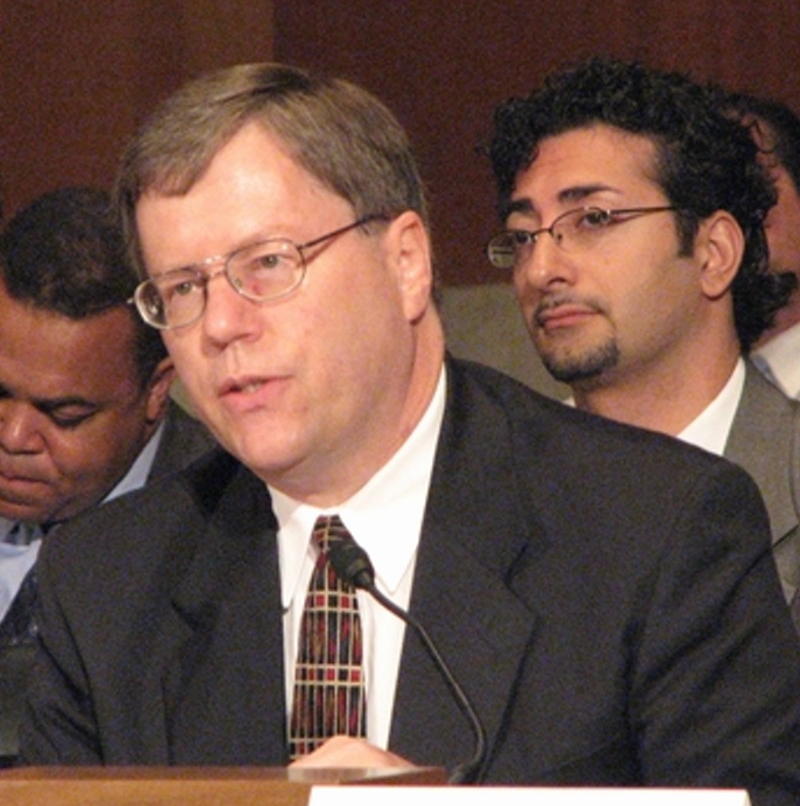
Alternating current comes out in three currents, or phases, which are positive, negative, and neutral. At the high voltage levels coming directly from the power plant, the currents are on separate lines, labeled A, B, and C. David Lochbaum, nuclear safety expert with the Union of Concerned Scientists, explained that "the output from A and B are constantly monitored to make sure they are together, or in phase.

"There are circuit breakers and sensors within the system noting if there is a fault and the two are not in phase. When that happens, a circuit breaker opens to block that line and reroute the electricity. The grid operates on the same principal, with circuit breakers isolating lines when there are interruptions so the entire northeast doesn't have a blackout.

"Within the plant there are electrical breakers signaled to open to isolate the problem and others will close for the systems around it. At Byron that didn't happen. And they didn't monitor the phase that failed."

At Byron, however, the single phase, Line C, was not monitored and, in fact, had broken and fallen to the ground between the plant's main transformer and the nearby power substation. Unfortunately, the staff analysis stated, the line on the ground "did not result in a detectable ground fault" since single phases were not monitored. Because of this power shortage, none of the plant's four reactor coolant pumps were operable.

Officials from Exelon, which owns and operates Byron and 10 other nuclear power plants, as well as inspectors from the NRC initially thought that the shutdown was the result of a series of unfortunate coincidences. But On Feb. 28, 2012, there was a similar interrupted and undetected phase which caused a shutdown at Byron's Unit 1. And, as in the earlier event, it disabled the plant's cooling systems. That caused Mathews and the electric unit he led to investigate further and see if there had been any other shutdowns in which an undetected phase disruption disabled the cooling pumps. Their initial look found identical shutdowns at the Beaver Valley Power Station Unit 1 in Pennsylvania in November, 2007; and in New York, the James Fitzpatrick and the neighboring Nine Mile plants, which share a power substation, shut down in December, 2005.

The staff analysis concluded that the design of the electrical systems was "inadequate because it did not consider the possibility of the loss of a single phase... This situation resulted in neither the onsite nor the offsite electric power system being able to perform its intended safety functions" to provide electric power to the plant's safety systems. Plants are required to have two separate sets of electrical power lines and monitors for their core cooling systems so that operators can still control the reactor even if one line is damaged by fire or another event.

The loss of a single phase of alternating current, the NRC staff found, "can potentially damage both trains of the emergency core cooling system." In that case, there is nothing to prevent a meltdown.

In a practical sense, said Lochbaum, who assisted the NRC in updating their operator training manuals, the situation facing Byron resembled a brownout, in which only a small amount of electricity is getting through to the equipment. "The problem at Byron was that all the electrical equipment could not get enough electricity to operate effectively.

"The larger motors on the cooling pumps need a lot of current. If they aren't getting the flow they need they can sit there and try to run, and basically their motors will burn up."
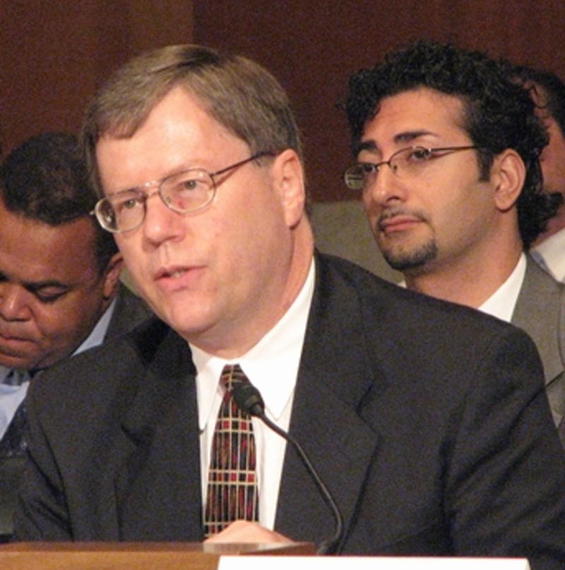
2016-03-04-1457093969-4818508-DavidLochbaumSenatetestimony.jpg

Continue reading at Energy Matters http://bit.ly/1Y9UkjC

Above is from:    http://www.huffingtonpost.com/roger-witherspoon/dangerous-flaw-threatens-_b_9382364.html

Here is what the Union of Concerned Scientists says about the issue.


The NRC Seven: Petitioning the NRC over Safety

Dave Lochbaum, director, Nuclear Safety Project | March 4, 2016, 3:37 pm EST


….The NRC Seven filed a petition with their employee seeking to resolve a safety problem affecting every operating nuclear plant in the United States, and the handful of new reactors currently under construction.

The Mercury Seven wore special gear to protect them from the harsh environment they could encounter during their journeys.

Hopefully, the NRC Seven will not encounter a harsh environment in response to their efforts to protect millions of Americans from a longstanding nuclear safety problem.

The key milestones leading to the NRC Seven submitting their petition are summarized below.

Revealing the problem: Byron event on January 30, 2012

As described in Fission Stories #111, the Phase C connection for a three-phase power source to Byron Unit 2 from the plant’s switchyard broke loose and fell to the ground (Fig. 2). The open phase condition was detected, causing the automatic shut down of the reactor.
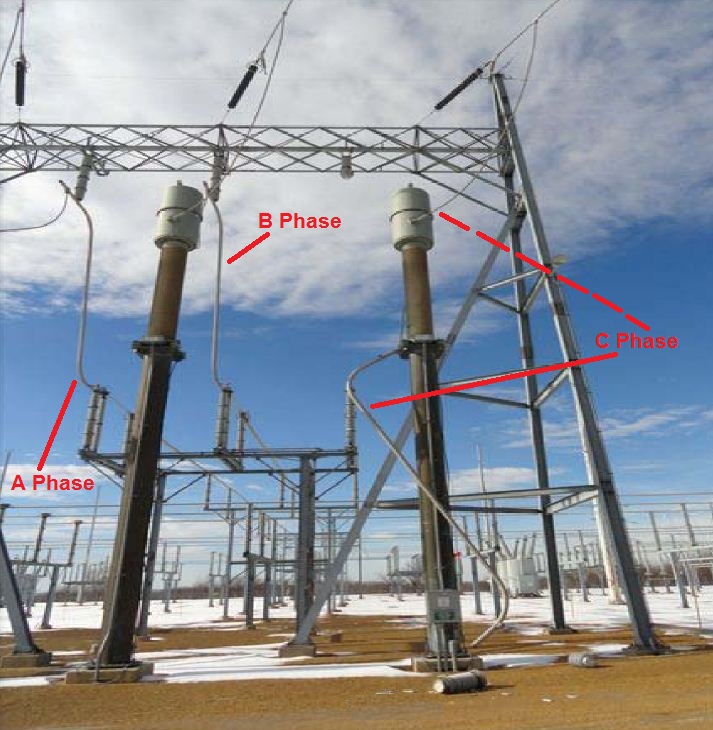
Fig. 2 (

Fig. 2 (Source: NRC)

But the open phase was not detected by the protection system for the two electrical circuits that supply electricity to vital equipment needed to cool the reactor core and perform other safety functions. Those electrical circuits continued to receive electricity from the degraded power source for about eight minutes until workers manually opened breakers to isolate the equipment and trigger automatic switchovers to a reliable power source.

A design vulnerability prevented the protection system from detecting the open phase condition affecting these two vital electrical circuits. The system compared Phase A to Phase B and Phase B to Phase C and required detections from both comparisons to trigger automatic protective actions. The Phase C failure was detected by the Phase B to Phase C comparison, but not by the other comparison. So, no automatic protection measures happened.

The open phase condition did not directly affect the emergency diesel generators. The emergency diesel generators stepped in at Byron to enable workers to sustain cooling of the reactor core.

The NRC calculated that the event at Byron posed a risk of core damage of approximately 1×10⁻⁴ per reactor year, or having one reactor meltdown due to an open phase condition every 10,000 years. That sounds like, and is, a low risk. But in nuclear safety, it’s a relatively high number. Risks are typically in the 1×10⁻⁶ per reactor year range.

Thus, the open phase condition was about 100 times riskier than risks routinely experienced at nuclear power plants.

Open phase conditions

The main generators at nuclear power plants produce three phase alternating current. Each phase is conducted separately to the main transformer where the voltage and current is adjusted to the needs of the offsite power grid (Fig. 3).

Fig. 3

Fig. 3 (Source: NRC, edited and annotated by UCS)

In an open phase condition, one of the three phases fails. That failure could be where the phase is connected at either end, as in the Byron event. Or that failure could occur between the endpoints such as when broken insulation allows a metal wire to contact a nearby piece of metal to short out.

An open phase can occur when the circuit is energized or it can happen when no electricity is flowing through the phases.

Open phase condition consequences

Open phase conditions have different consequences depending on whether the circuit is energized or not.

My parents experienced an open phase condition years ago while they were away on vacation. The line connecting the house’s main power panel to the power line in the neighborhood developed a fault causing an open phase condition. Because they were away on vacation, only small electrical appliances like clock radios were running, with one notable exception—the refrigerator. The open phase condition did not affect the 120 volt electrical circuits that supplied clock radios and other small appliances. But it impaired the 240 volt power supply for larger appliances like the electric stove, clothes dryer, air conditioner, and refrigerator. Of those, only the refrigerator was running during my parent’s absence. The open phase condition meant that the refrigerator was getting 120 volts. The electric motor on the refrigerator’s compressor tried to run, but burned itself out in the effort. The additional electrical current the motor used trying to run tripped the breaker in the house’s main power panel.

Thus, the problem when an open phase condition occurs on an energized circuit is that electrical equipment can be damaged by the degraded power supply unless breakers/fuses operate to isolate the equipment from the problem.

The problem when an open phase condition occurs on a de-energized circuit is different. Federal regulations require nuclear plants have at least two connections to offsite electrical power supplies. When nuclear plants are operating, it is not unusual for one or more of the connections to these offsite power sources to be de-energized in a standby role. Electricity produced by the plant itself is used to power its electrical equipment. If the plant were to suddenly shut down and stop producing electricity, systems are installed to automatically swap in-plant electrical circuits to the offsite power sources.

An open phase condition on a de-energized circuit could result in the in-plant electrical circuits swapping to a “dead” backup.

The bottom line is that an open phase condition could prevent electrical equipment from performing the safety roles needed to prevent or mitigate nuclear plant accidents.

Seeking the extent of condition: July 27, 2012

The NRC sent a Special Inspection Team to investigation the event at Byron. Because the design vulnerability that factored in the Byron event likely affected other nuclear plants, the NRC sent Bulletin 2012-01 to all plant owners in July 2012. The NRC required owners to evaluate their electrical power systems to determine if they had the design vulnerability like the one revealed at Byron. The NRC gave the owners up to 90 days to report the results from their evaluations.

Defining the extent of condition: February 26, 2013

The owners responded to Bulletin 2012-01 during the third week of October 2012. The responses for each nuclear plant are available in the NRC’s online digital library using the following links:

Arkansas Nuclear One (AR)

Beaver Valley (PA)

Braidwood (IL)

Browns Ferry (AL)

Brunswick (NC)

Byron (IL)

Callaway (MO)

Calvert Cliffs (MD)

Catawba (SC)

Clinton (IL)

Columbia Generating Station (WA) – not found in the digital library

Comanche Peak (TX)

Cooper (NE)

Crystal River 3 (FL)

Dresden (IL)

Davis-Besse (OH)

Diablo Canyon (CA)

Farley (AL) – not found in the digital library

Fermi 2 (MI)

FitzPatrick (NY)

Fort Calhoun (NE)

Ginna (NY)

Grand Gulf (MS) – not found in the digital library

Harris (NC) – not found in the digital library

Hatch (GA) – not found in the digital library

HB Robinson (SC)

Hope Creek (NJ)

Indian Point (NY)

Kewaunee (WI)

LaSalle (IL)

Limerick (PA)

McGuire (NC)

Millstone (CT)

Monticello (MN)

Nine Mile Point (NY)

North Anna (VA)

Oconee (SC)

Oyster Creek (NJ)

Palisades (MI) – not found in the digital library

Palo Verde (AZ)

Peach Bottom (PA)

Perry (OH)

Pilgrim (MA)

Point Beach (WI)

Prairie Island (MN)

Quad Cities (IL)

River Bend (LA)

Salem (NJ)

San Onofre (CA)

Seabrook (NH)

Sequoyah (TN)

South Texas Project (TX)

St. Lucie (FL)

Summer (SC)

Surry (VA)

Susquehanna (PA)

Three Mile Island (PA)

Turkey Point (FL)

Vermont Yankee (VY)

Vogtle (GA) – not found in the digital library

Waterford (LA)

Watts Bar (TN)

Wolf Creek (KS)

The NRC staff reviewed the responses and prepared a memo summarizing the results and recommending next steps. The NRC staff wrote that all plant owners “stated that the relay systems were not specifically designed to detect a single-phase open circuit in a three-phase system.” In other words, all nuclear plants in the U.S. shared the kind of design vulnerability that caused problems at Byron.

As a result, the NRC staff concluded that the plants “may not be in compliance with the existing regulations.” The NRC staff recommended that the NRC take action to require all owners fix the design vulnerabilities at their plants (Fig. 4).

Fig. 4

Fig. 4 (Source: NRC)

Seeking the solution: 2012-2013

As described in Fission Stories #168, Byron’s owner developed a hardware fix to monitor all three phases for an open phase condition. What impressed me was that the owner offered to provide details of its fix to any other nuclear plant owner—for free.

Spreading the solution: 2013-2015

The NRC staff initiated a number of steps intended to resolve the open phase condition problem at all other nuclear plants. Chief among these steps was developing an “answer key” for plant owners and NRC staff to judge whether the fix at a specific plant is acceptable and drafting the paperwork that would require the owners to implement fixes.

The “answer key” came in the form of an addition to the NRC’s Standard Review Plan for nuclear power plants. The Standard Review Plan articulates applicable regulatory requirements and conveys the NRC’s expectations on what would, and sometimes would not, constitute compliance with the requirements. In this case, the NRC issued Branch Technical Position 8-9 in July 2015.

Developing the implementation paperwork proved more challenging and as yet unachievable. I have been told that the NRC staff drafted the paperwork and distributed it for internal review by appropriate sections of the agency. I was informed that the Office of General Counsel concluded that the paperwork did not satisfy the provisions of the backfit rule. The backfit rule prevents the NRC from imposing regulatory requirements on plant owners unless they are needed for adequate protection of public safety or achieve sufficient safety improvements to justify their cost. The NRC staff revised the draft and re-distributed it for internal review. Once again, the Office of General Counsel concluded that it did not satisfy the backfit rule.

I was told that the NRC staff working on the paperwork was not getting adequate feedback from the Office on General Counsel on how the drafts violated the backfit rule. Thus, they felt it impossible to solve the “secret” concerns no matter how many times they revised the draft.

Side-stepping the stall: February 29, 2016

Seven members of the NRC staff submitted a petition to the NRC seeking to have the NRC order the known design vulnerability at all U.S. nuclear power plants to be remedied. The NRC Seven did not submit the petition as NRC staff members. Instead, they acted as private citizens desperately seeking overdue protection for other private citizens.

Why must seven members of a federal safety regulator take such drastic steps?

Why indeed.

Suppose that seven members of the staff at the Springfield Nuclear Plant near Anytown, USA petitioned the Board of Directors of their company to resolve a nuclear safety problem at the plant. The NRC would quite properly recognize their action as prima facie evidence of a safety culture problem at Springfield needing investigation.

The NRC Seven’s action constitutes prima facie evidence that the NRC has a safety culture problem.

Concerned Scientists artilce is at:  http://allthingsnuclear.org/dlochbaum/the-nrc-seven-petitioning-the-nrc-over-safety


CAPE COD TIMES
image

By Christine Legere

Posted Mar. 7, 2016 at 2:00 AM
Updated at 10:37 AM

Seven engineers who work for the Nuclear Regulatory Commission have called on their employer to force nuclear power plant owners to fix a design flaw that could affect emergency core cooling systems. If the flaw is not fixed, they say, the plants should be shut down.
The engineers, filing as private citizens, have submitted a formal petition, the process used by the public when asking the federal agency to take action.
The design flaw in the system used to detect electrical supply problems has been known since an incident at Exelon’s Byron 2 Nuclear Station in Illinois in 2012. The plant went into automatic shutdown and remained so for a week after an undetected open-phase condition in its electrical system.
An open phase involves a damaged circuit that has failed or is providing imbalanced voltage to equipment.

“An open phase at a nuclear plant, if not detected and isolated by tripping breakers, could damage the motors of lots of emergency equipment,” explained David Lochbaum, director of the Nuclear Safety Program for the Union of Concerned Scientists. “If so, even when the bad power is turned off and good power from a source like the emergency diesel generators is provided, the broken motors could prevent the emergency equipment from running."

If the motors burn out, the plant loses its backup ability to cool the reactor.
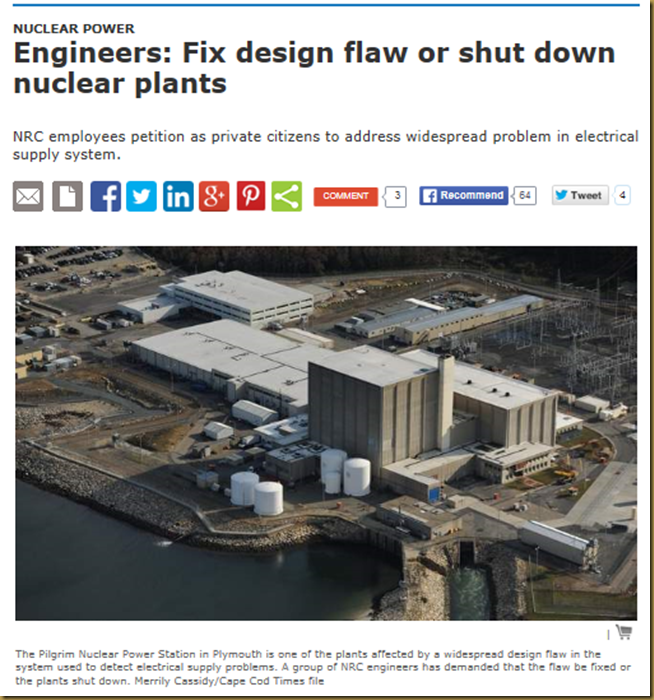
The design flaw in Byron’s detection system, which has since been fixed, exists in nearly all U.S. nuclear reactors, including Pilgrim Nuclear Power Station in Plymouth, although Pilgrim has never experienced an open-phase condition in its system.
In a letter send by Entergy Corp. to the NRC in 2013, Entergy experts stated that Pilgrim’s relay systems weren’t designed to detect an open single phase of the three-phase system, but the existing protective circuitry would separate the plant’s power lines from an off-site connection failure or sustained imbalance in voltage.
According to the petition, 13 open-phase events have occurred in the last 14 years in the United States and internationally.
The Nuclear Regulatory Commission required all plants in 2012 to provide information regarding their detection systems for open-phase conditions.
Plants have not yet been required to put in new systems to resolve the design flaw permanently. They have been given until the end of 2018 to permanently address the problem.
The NRC is satisfied with actions taken to date, according to Neil Sheehan, the agency’s spokesman.
“Based on plant owners’ responses to the bulletin and our requests for additional information, the NRC staff determined that appropriate interim corrective actions (fixes) have been implemented at all affected plants,” Sheehan wrote in an email. “As such, the risk associated with an (open-phase condition) is significantly reduced.”

At Pilgrim, its existing system was supplemented by interim safeguards that include twice daily checks by employees of the switchyard, where the plant’s lines connect to offsite power.

Entergy spokesman Patrick Thomas O'Brien said via email that "because of the way Pilgrim receives power, the station is unlikely to be affected by these potential concerns. In addition, Pilgrim has an existing automatic detection system that mitigates this concern, and given that the station will permanently shut down not later than mid-2019, additional upgrades are not planned."
The NRC will follow its usual procedure for reviewing formal petitions when considering the petition from the engineers, Sheehan said.
The group has asked federal regulators for a response by March 21.
It was a brave move for a group of employees to file a petition, Lochbaum said, and also signals the seriousness of the problem.
“If employees of the NRC do not trust the NRC to have acted to protect members of the public and have to petition their employer to protect the public, why should any member of the public trust the NRC to have its back (other than to have its back covered with a target)?” Lochbaum wrote.

— Follow Christine Legere on Twitter: @ChrisLegereCCT

Above is from:  http://www.capecodtimes.com/news/20160307/engineers-fix-design-flaw-or-shut-down-nuclear-plants?rssfeed=true


image

image


Petition claims vulnerability at nuclear power plants

A petition filed last month by seven engineers with the U.S. Nuclear Regulatory Commission is urging swift action to correct a power distribution issue at nuclear power plants. If the issue is not resolved, the engineers have asked the NRC to shut those plants down.

The engineers' concern stems an open-phase condition that occurred at Exelon’s Byron 2 Nuclear Station in Illinois in 2012. Power to large industrial facilities, like nuclear power plants, is delivered in three phases. In this case, one of the phases dropped out in the plant's switchyard, which impacted how electrical current was being distributed throughout the plant.

NRC Spokesman Scott Burnell explained in this situation, the plant's automatic systems did not recognize a phase had dropped out, and it took operators in the control room “some time” to realize it. During that time, he said, the plant's reactor safety systems did not operate as effectively as they could have. Once the problem was discovered, the power was rerouted accordingly and the plant was shut down safely.

“The Byron event identified a vulnerability in the design of U.S. and international, operating plants. The current design requires an accident signal to automatically connect the emergency core cooling systems to the preferred power source to mitigate the consequences of a design-basis event,” says the petition. “... If the preferred power source, has an undetected open phase-condition, redundant trains of electrical equipment (electric motors that drive the pumps and valves) could burn out in few minutes and therefore will not be available for safe shutdown, even after restoration of an operable power source.”

A design-basis event, or accident, is defined by the NRC as a “postulated accident that a nuclear facility must be designed and built to withstand without loss to the systems, structures, and components necessary to ensure public health and safety.”

Burnell said the incident led the NRC to examine the issue more closely, and a bulletin was issued to all nuclear power plants, including Browns Ferry Nuclear Plant, explaining the open-phase incident. The bulletin also requested information from the operators explaining how they would handle the issue if it occurred at their plants.

Those operators analyzed the condition and responded with answers, Burnell said, and some modified control room procedures so operators could check to see if all three electrical phases are available. Based on information received by plant operators, the NRC made the decision to allow plants to continue operation “while the industry looked for a more comprehensive resolution to the issue,” Burnell said.

The petition says 13 open-phase events have been identified over the last 14 years at domestic and international nuclear power plants, with the most recent occurring in December at the Oconee Nuclear Station in Seneca, South Carolina. In that case, the petition says, two separate transformers required for safe shutdown of three operating nuclear units had open-phase conditions.

“Since the transformers are common to one onsite and one offsite power source, both power sources were rendered inoperable, indicating that the lessons learned and manual compensatory actions implemented after the Byron Event were ineffective,” the petition says.

The petition filed by the engineers asks the NRC to resolve the issue more promptly, however. Burnell said the petition requires the NRC to look at all available information and make a decision on whether anything needs to be done. He added the NRC “has a firm goal” to respond to the petition within 30 days of its filing, which would be March 21.

The response would tell the petitioners they have met the requirements for a full review or the matter would not be subject to a full review.

The NRC considers the plants safe for continued operation, but we do expect to have an answer in a couple of weeks,” he said. “If the agency determines anything needs to be done, the decision to prompt further action would be months down the road.”

Jim Hopson, spokesman for the Tennessee Valley Authority, said the utility would not make any changes at Browns Ferry Nuclear Plant unless directed to do so by the NRC.

“We'll continue to monitor this and if changes are necessary, we'll do what we can to implement those,” he said. “(The NRC and TVA) share the concept that safety is the overriding priority.”

Adam Smith article is from:  http://www.enewscourier.com/news/local_news/petition-claims-vulnerability-at-nuclear-power-plants/article_1df7cc7e-e58c-11e5-89d4-5fa5b729067e.html

Lincolnshire lawsuit regarding right to work


Koch-ALEC Right to Work Power Play Exposed in a Small Illinois Village - By Kim Haddow

Last month, four unions sued the Village of Lincolnshire in federal court in Chicago. The unions representing engineers, construction workers, and carpenters--including three affiliated with the AFL-CIO--filed suit on February 18, 2016, to have Lincolnshire's anti-union "right-to-work" ordinance declared invalid and prevent its enforcement.

Two days after the federal lawsuit was filed, the International Union of Operating Engineers Local 150 filed a related lawsuit alleging that Lincolnshire Mayor Elizabeth Brandt wrongfully barred two men from speaking against the ordinance when it was originally being considered in December.

So how did a town with a population of 7,280 become a frontline in the national fight to destroy unions? Because Lincolnshire is in the vanguard of the latest, localized scheme to dismantle unions drawn directly from the Koch playbook.

A closer look at the lengths Lincolnshire's mayor and some members of the village's Board of Trustees went to in order to pass a right-to-work ordinance—which included ignoring legal opinions, constituents and the media—reveals how nationally-funded conservative organizations are using local government to gain a foothold in their fight to weaken unions everywhere.

Lincolnshire: Where National Ideology Trumps Local Democracy

Illinois Governor Bruce Rauner, a private equity mogul elected in 2014, has links to the Koch brothers. Over the years, Rauner has donated to the Koch network of institutions, including $150,000 to the Kochs' Americans for Prosperity group. In 2014, AFP returned the favor, attacking his opponent Democrat Pat Quinn.

After taking office, Rauner released what his administration called a "Turnaround Agenda" for the state, which borrowed heavily from the Koch library of ideas, including multiple union busting measures, repeal of higher wages for construction workers, pension privatization and more.

Blocked by a state legislature controlled by Democrats, Rauner couldn't enact a full-scale "right-to-work" law in Illinois. To overcome that obstacle, Rauner encouraged municipalities, counties, school districts, and other forms of local government to enact local right-to-work zones in their communities, what he called "Employee Empowerment Zones."

Rauner sent cookie-cutter templates and resolutions to local municipalities, but the "turnaround agenda" was not being broadly embraced. There were only a handful of exceptions throughout the entire state that supported the governor's plan and most of those were extremely small municipalities. The Village of Lincolnshire was notable because it was the only Chicago-area municipality to adopt Rauner's plan. Lincolnshire passed a resolution on May 11, 2015, supporting the overall "Turnaround" agenda.

After passing a supportive resolution for the Governor's larger agenda, the newly-elected Mayor of Lincolnshire, Elizabeth Brandt, then sought to pass a binding right-to-work ordinance. In a November 4, 2015 email, she asked that the Governor's local right-to-work zone proposal be added to the next Committee of the Whole meeting.

The proposal was officially described as an "Ordinance Pertaining to Economic Development and Worker Empowerment by Regulation of Involuntary Payroll Deductions for Private Sector Workers in the Village of Lincolnshire." But it was actually drawn straight from the Koch playbook.

Koch-ALEC "Model" Bill Rolled Out in Lincolnshire

Materials included in the November 23, 2015 Lincolnshire Board of Trustees agenda packet included a report from the conservative Illinois Policy Institute, which pushed the idea of establishing local right-to-work zones. The Illinois Policy Institute is a member of the State Policy Network, an umbrella institution for 64 centrally-funded/connected right-wing think tanks. It is also a member of the American Legislative Exchange Council (ALEC), a bill mill which allows corporations to draft and distribute to state legislators model bills that benefit their own bottom lines.

The Lincolnshire bill's operative language comes verbatim from this ALEC model. See the side by side comparison here.

What the information packet failed to include was a full copy of the formal opinion of the Illinois Attorney General, which declared that federal law prohibited such a right-to-work policy from being enforced on the local level.

On November 30, Lincolnshire Village Administrator Brad Burke sent around an email—obtained by the Center of Media and Democracy though a Freedom of Information Act (FOIA) request—to the mayor and members of the Board of Trustees about the conflicting opinions on the matter. Given the divergence in views, the village administrator asked if the mayor and trustees would like to direct Lincolnshire Village Attorney Adam Simon to issue an opinion about the legality of the proposed ordinance.

Mayor Brandt quickly cut off that idea, saying "I do not want an opinion from Adam," and that she thought that the Attorney General's opinion "was weak." One of the strongest supporters of the proposed ordinance on the board, Tom McDonough, said that he also had "no desire" to order such an opinion from the village's own attorney.

Discounting Public Input and the Media

The fact that the citizens of Lincolnshire were opposed to the right-to-work ordinance didn't stop the Mayor either. Based on FOIA records, the mayor received about a dozen emails and other communications from the public. The vast majority of this feedback from the public was in opposition to the proposed right-to-work ordinance. While the mayor didn't appear to forward those many critical communications, she did in fact forward some of the unrepresentative few that were supportive to the board.

The Village Board voted on the right-to-work ordinance on December 14, 2015 and it passed 5-1. Several emails at that time indicate that the mayor and various members of the board were actively avoiding questions from some of the media. In one case Mayor Brandt suggests that Trustee Leider "not make yourself available" to an AP reporter who requested an interview regarding the right-to-work vote.

Protected and Praised by the Right-Wing

At the time of the vote for the ordinance, a statement was included in the record that the Village of Lincolnshire would be represented by the Liberty Justice Center on a pro bono basis on matters related to the passage of the ordinance. The Liberty Justice Center is a conservative policy litigation center that was started by the Illinois Policy Institute. Essentially the Village of Lincolnshire planned to completely outsource both its bill drafting and its legal defense work to the Illinois Policy Institute .

Many conservative interests praised Lincolnshire and its mayor for passing their anti-union ordinance in the face of certain lawsuits. One such celebratory message came from Jon Russell, Director of the American City County Exchange (ACCE). ACCE is an offshoot of ALEC and similarly attempts to push conservative ideology and corporate-friendly policy at the local government level. In a January 29, 2016 email to Mayor Brandt, Russell congratulated her on the passage of their ordinance.

ACCE has worked with anti-union advocate Brent Yessin to pass similar ordinances in Kentucky, but this effort was quashed by a federal court which held that the National Labor Relations Act (NLRA) preempts a county government from enacting a right-to-work ordinance applicable only to a locality.

Ironically this is the same ACCE, along with ALEC, that is heavily promoting the use of preemption bills to limit local lawmaking power over progressive policies they disagree with, including minimum wage hikes.

Clearly, for these groups, the conservative belief that local government governs best is situational—especially when it comes to weakening unions and advancing the Koch agenda.

- See more at: http://www.prwatch.org/news/2016/03/13055/koch-alec-right-work-power-play-exposed-illinois#sthash.qpH0In4X.dpuf

WIFR 2: RR re-route thru Boone County


Railroad Organizer Responds to Boone County Concerns

By: Mike Buda - Email

Updated: Thu 10:37 PM, Mar 03, 2016


BOONE COUNTY (WIFR) -- Some Boone County farmers and homeowners are worried about a proposed $8B railroad and now organizers are responding to the negative perception.

There's not as much anger as there are questions for the train bypass of Chicago. The Boone County community has raised concerns both Wednesday and Thursday night at public events, and organizer of the Great Lakes Basin Railroad Frank Patton says he understands peoples' worries.

"I can certainly understand concerns, but it's based off of no knowledge and all I ask is that they attend the meetings, they voice their opinion and they understand what the process is," Patton said.. "Hopefully, a lot of the stuff will be resolved in a very short period of time."

Patton says it's not a surprise that people are responding negatively.

Many are worried about the tracks possibly running through their property and even their homes, and few of them have expressed their opinion asking how it can be stopped.

There is a tentative route, but Patton says that can change during the next two years of the environmental study by the federal government.

One thing Patton says is that he will not get into an argument about eminent domain.

"If people think it's an unfair law, then they should repeal it," said Patton. "Without eminent domain, there would be no roads, there would be no highways, there would be no forest preserves, there would be no federally protected natural habitats. That's just the fiber of our government."

Patton says the railroad would help create 250,000 jobs throughout the Midwest and that figure should get everyone on board.

"Projects like ours don't come along very often and if you look at what's going on with the state of Illinois and the communities within the state," Patton said. "Budgetary concerns, laying off police and firemen, laying off teachers. Our feeling is if we do put it together it's going to have a huge, positive impact."

Patton says out of the 11 counties in Illinois, Wisconsin and Indiana that the train would potentially be going through, he's only heard negative responses from people in Winnebago and Boone.

Patton says the Surface Transportation Board should be announcing that dates for the public hearings in the coming weeks.

Above is from:  http://www.wifr.com/home/headlines/Railroad-Organizer-Responds-to-Boone-County-Concerns-370970331.html

Friday, March 4, 2016

Republicans in tailspin, group forms to draft Ryan for U.S. president

By Doina Chiacu and Megan Cassella

WASHINGTON (Reuters) - With U.S. Republicans sharply split over a front-runner they cannot unite behind, a new group is trying to push the country's top elected Republican, Paul Ryan, into the White House race.

The Committee to Draft Speaker Ryan filed papers as a Super PAC with the Federal Election Commission on Thursday, adding to the groups of mainstream Republican leaders and donors with a shared goal: stopping Trump.

Ryan, the House of Representatives speaker who spoke out against Trump for not quickly rejecting white supremacist support, did not appear ready to take on the role.

"He is flattered, but not interested," Ryan spokeswoman AshLee Strong said in an email on Friday.

Politico first reported the formation of the draft-Ryan PAC.

Mitt Romney, the Republicans' losing presidential candidate in 2012, also said he was not interested.

"There are no circumstances I can foresee where that would possibly happen," Romney said on NBC's "Today" show on Friday, a day after he excoriated Trump as a fraud ill-equipped for the White House.

The Republican Party may need more than a hero as it grapples with its deepest divisions in decades.

Those splits were on display again on Thursday night as Trump took on his two closest challengers, U.S. Senators Marco Rubio and Ted Cruz of Texas, in a debate marked by the yelling, name-calling and vulgarity that has tainted the 2016 Republican race.

Trump's rivals said they would support the ultimate nominee but it was clear on Friday that would be easier said than done.

"That is the quandary I'm trying to avoid the Republican Party having to face," Rubio said on CNN on Friday.

While the anti-Trump movements proliferated, some Republicans have urged party leaders to respect the will of the voters.

Trump spokesman Sam Clovis seized on that message on Friday, warning on CNN that it was dangerous for Republican leaders to "call American voters stupid" because they support Trump.

"You have record turnout in every state so far. Record turnout. That doesn't happen by accident, said Clovis, national campaign co-chairman.

Trump is "tapping into what is going on in this country like no one else has in a long, long time. I haven't seen anything like this since Ronald Reagan."

Columnist Peggy Noonan, a former Reagan speechwriter, had a different lament in the Wall Street Journal on Friday. "I think we are seeing a great political party shatter before our eyes," she said.

"But we are witnessing history. Something important is ending. It is hard to believe what replaces it will be better. No one knows where this goes. The top of the party and the bottom have split."

(Reporting by Doina Chiacu and Megan Cassella; Writing by Doina Chiacu; Editing by Bill Trott)

Above is from:  http://news.yahoo.com/republicans-tailspin-group-forms-draft-ryan-u-president-141506858.html