Tuesday, December 29, 2015

Witnesses testify at Homan Square hearing in Chicago

Witnesses testify at Homan Square hearing in Chicago

  • Detainees, activists and lawyers testify at city hall meeting
  • Justice Department urged to include Homan Square in police investigation

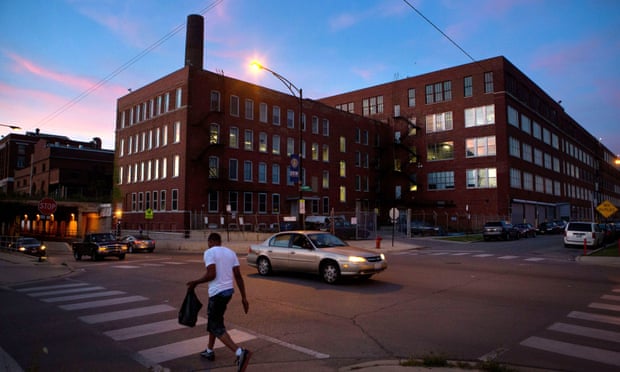
The Chicago police department’s Homan Square facility is on the city’s west side.

Detainees, legal advocates and activists testified on Tuesday at the first public hearing to examine Homan Square, the Chicago police interrogation facility exposed by the Guardian and falling under renewed scrutiny amid intense examination of the city’s law enforcement officials.

Homan Square: Chicago police chief's downfall prompts calls to shutter facility

Garry McCarthy forced to resign over video of black teenager’s death, but politicians and activists say hearing on off-the-books ‘black site’ must follow

As protests continue to grip Chicago following the release of video footage and a landmark investigation by the US Justice Department, police practices at the warehouse received a rare political convening at city hall, which has all but dismissed public comment – despite an ongoing Guardian investigation revealing at least 7,000 people held off-the-books there.

“It’s fallen to us to shine a light on dark places,” said the Cook County commissioner, Richard Boykin, who convened the group under the board’s human relations commission. “Homan Square is such a place.”

Boykin called for the extended inquiry hours after the city’s police chief was fired by the mayor this month, following protests in the wake of details about the death of a black teenager shot 16 times by a white police officer. Less than one week later, the nation’s top law enforcement agency said it had begun an inquiry into the patterns and practices of the city’s notoriously brutal police.

“The Justice Department’s investigation must take into account those systemic issues in the Chicago police department that go back decades,” Boykin said on Tuesday. “Homan Square is one of those systemic issues.”

US attorney general: Homan Square findings are 'extremely important'

Loretta Lynch acknowledges potential constitutional concerns and says Chicago police facility could be investigated if new information comes to light

Read more

At a press conference announcing the federal inquiry into the department, the US attorney general, Loretta Lynch, told the Guardian the “extremely important” issues at Homan Square would not be involved in her department’s inquiry to begin but that “we always reserve the right to expand it”.

Police department officials were invited to attend Tuesday’s hearing of the county commissioners. But seven people who were either detained or involved in exposing the detentions testified instead, for more than an hour of answers meant to push the city closer toward shuttering the west side facility.

Flint Taylor, the longtime civil rights attorney who helped press for a landmark reparations ordinance earlier this year and whose clients are suing the city for unconstitutional “widespread and interrelated Chicago police department patterns and practices” at Homan Square, gave a testimonial in front of the commission and sizable crowd of citizens who watched.

“Some of the activities in Homan Square fit into the definition of torture, internationally, under the UN’s definition,” Taylor said, “and Homan Square needs to be looked at under that light.”

He argued that allegations logged in lawsuits and a series of Guardian articles fit into a long history of police practices stemming from the police detective Jon Burge, who who tortured more than 200 Chicago citizens who were in police custody across two decades.

“I want to try and prevent anyone else to go through this situation,” said Kory Wright, who says he was held incommunicado at Homan Square and spoke out publicly for the first time since his February interview with the Guardian’s national security editor, Spencer Ackerman, who also testified at the hearing.

“It’s easy to assume we’re up to no good,” Wright said, referencing other poor, black people in his neighborhood who he says are targeted by Chicago police.

The hearing’s testimonies are now public record, which Boykin said he hoped would keep pressure on Washington to include Homan Square in the Justice Department’s investigation, since he had little faith that the mayor’s office would shut the site by itself.

“When we allow for people’s rights to be violated,” Boykin said, “we basically erode them as individuals.

“They feel like less of a citizen of America, and it erodes America in the process.”

Above is from:  http://www.theguardian.com/us-news/2015/dec/15/homan-square-testimony-chicago-police-practices

Chicago' Homan Square: Torture by Any Other Name...


G. Flint Taylor Founding Partner, People’s Law Office

Chicago' Homan Square: Torture by Any Other Name...

Posted: 03/17/2015 2:11 pm EDT Updated: 05/17/2015 5:12 am EDT

Guardian investigative reporter Spencer Ackerman has sparked a firestorm with a series of reports exposing a "secret" site, in the heart of Chicago's predominantly African-American west side, at which police have conducted off-the-books interrogations for more than 15 years.

Ackerman reports that black and brown suspects and witnesses, as well as white activists, have been taken by police to the abandoned Sears and Roebuck complex, known as Homan Square, and subjected to abuse. The victims describe, variously, being denied contact with lawyers or family for up to three days, being shackled hand and foot, and being subjected to starvation, sweltering heat, sensory deprivation and beatings. On at least one occasion, a detainee -- John Hubbard, 44 -- died in an interview room. (After the Guardian article appeared, Cook County said the death was due to heroin intoxication.)

The initial Guardian exposé prompted calls for an investigation from two former high-level Justice Department officials, William Yeomans and Sam Bagenstos, and several progressive Chicago politicians (including one, Luis Gutierrez, who has been a conspicuous supporter of Chicago Mayor Rahm Emanuel). The city attempted to give the growing scandal the back of the hand: Emanuel stated that the allegations were "not true. We follow the rules." The police department issued a statement claiming that the site was not secret, that lawyers had access to their clients and that the charges of brutality were "offensive." The local press, beaten on the story -- by a UK paper no less -- and having lost many of its award-winning investigative journalists years ago, turned to a veteran Chicago Sun-Times' police reporter who has long been embedded with the CPD, to attack the Guardian reports. He claimed that he had been to Homan Square 20 to 30 times to be shown drugs seized in raids. This, however, exhibits only the strange hidden-in-plain-sight nature of Homan Square: Press and lawyers were sometimes allowed in, but the interrogations and brutality were never reported. Nonetheless, a local NPR reporter, relying on the police reporter's assertion and doggedly focusing on the Guardian's use of the term "black site" to draw a parallel with the CIA's secret interrogation sites in the Middle East, attempted to dismiss the reports as "exaggerated."

The Guardian countered with yet another story, which detailed four more cases of secret physical abuse in "kennel-like" cells at Homan Square. The young African-American men describe being grilled about guns and gangs for days. This time, the alleged practices included handcuffing both wrists in a way that, according to the victim, felt like being "crucified," and stomping on another victim's groin.

The textbook definition

So how should we view Homan Square? The U.N. Convention Against Torture and Other Cruel, Inhuman or Degrading Treatment or Punishment, which has been adopted, with reservations, by the United States, defines torture as follows:

Any act by which severe pain or suffering, whether physical or mental, is intentionally inflicted on a person for such purposes as obtaining from him or a third person, information or a confession, punishing him for an act he or a third person has committed or is suspected of having committed, or intimidating or coercing him or a third person, or for any reason based on discrimination of any kind, when such pain or suffering is inflicted by or at the instigation of or with the consent or acquiescence of a public official or other person acting in an official capacity.

Given this, the emerging evidence of abuses at Homan Square once again places the question of systemic, racially and politically motivated torture squarely at the doorstep of the political powers that be in Chicago.

The similarities to the Burge torture era of the 1970s and 1980s are hard to miss. While the coercive tactics that have so far been documented at Homan Square are not as extreme as those practiced by then Chicago Police Commander Jon Burge and his men (which included electric shock, simulating suffocation with a bag and mock-executions), they still intentionally inflict "severe pain or suffering, whether physical or mental" as forbidden by the CAT. During the Burge era, lawyers and family members would call the police looking for an African-American client or loved one who had been taken into custody, only to be told that he or she was not there. When the person was finally located, Burge and his confederates had finished their torture and abuse, and in most cases, obtained a confession. Similar to Homan Square, numerous black men, including Darrell Cannon, Michael Tillman, and Alonzo Smith, were taken offsite to remote locations or to the basement of the police station to be interrogated under torture. And, as in Homan, at least one person died under highly suspicious circumstances on Burge's watch.

Homan Square itself has a direct tie to other brutal chapters of Chicago police history: The site is geographically located in the notorious Fillmore Police District, near the former Area 4 detective headquarters. In the 1980s and 1990s, a team of well-known Area 4 detectives interrogated suspects with a viciousness that was second only to that of Burge and his men. Decades earlier, in the 1960s, Fillmore District Officer James "Gloves" Davis, and his partner, Nedrick Miller, patrolled the streets with a brutality so extreme that they are remembered by residents to this day. Davis has another claim to infamy: When the Chicago police were enlisted by Cook County State's Attorney Edward Hanrahan and F.B.I. Director J. Edgar Hoover's COINTELPRO program to execute the deadly west side raid on the apartment of Black Panther leaders Fred Hampton and Mark Clark, Davis was one of the leaders of the raid, and bullets from his carbine were found in the bodies of both of the slain leaders.

More to unearth?

The first case of Burge related torture came to light in 1982, but it was more than two decades before the larger scope of his unit's systemic torture on the South and West Sides of Chicago -- 120 victims and still counting -- was unearthed. So it is little wonder that the stories emerging from the sprawling brick edifice chill those who have experienced similar terrorizing brutality at the hands of the Chicago police. At a rally in front of Emanuel's City Hall on March 2, torture victim Darrell Cannon linked Homan Square to Burge's racist torture, paraphrasing Martin Luther King Jr.: "Justice denied to one is justice denied to all." Angry young activists of color at the rally suggested that the revelations to date are just the tip of an iceberg and described everyday occurrences of brutal interrogations in their communities. Since the Guardian stories hit, lawyers have come forward and complained that holding clients incommunicado is a citywide problem.

That it is, without doubt, and it is much too early to call the story "exaggerated" or to conclude that there has been transparency with regard to what goes on in those kennel-like cells. As if on cue, the Guardian chronicled another case of Homan abuse less than a week after the angry demonstrations. And one veteran and well-respected African American activist, Prexy Nesbitt, who has lived in the shadow of that complex of buildings and had tasted the lawlessness of the Fillmore cops back in the day, has asserted that Homan Square is "where the bodies are buried." Unfortunately, in Chicago that statement can be taken literally, as well as figuratively.

On the Saturday after the first Homan Square article broke, a group of hardy protesters, led by Black Lives Matter, gathered before the fortified entrance of the main building at Homan Square. A spokesperson posed questions to the silent row of police guards: "How many people are you holding there?" "What are you doing to them?"

Those questions deserve answers, along with many others. Foremost among them: Given Chicago lawyers' reports that officers feel free to practice these kinds of abuses throughout the city, what is the purpose of taking people off the books to interrogate them at Homan Square? And who, among the thousands that may be taken into custody by the Chicago police on a given week, are brought there?

The CPD isn't telling. But an answer may be pieced together from what the police, the embedded reporter and the Guardian's exposé have so far revealed. Here's what we know: First, the CPD's undercover operations and intelligence and anti-gang units are based at Homan Square. Second, selected political activists are brought there, along with youth of color. The former are questioned about "terrorist" and other political activities, and the latter are grilled about gang activities, drugs and guns. Third, detainees are secreted away from their lawyers and families for as long as possible, sometimes days. Fourth, in many instances they are not charged with a crime. Fifth, one of Homan Square's main functions is, by the CPD's own admission, to "disrupt" gang activity, in a chilling echo of how the FBI's COINTELPRO program characterized its illegal set of tactics, which were also practiced by the CPD's notorious Red Squad and Gang Intelligence Unit to trample on the rights of political activists and people of color in the 1960s and 1970s.

All of this indicates that Homan Square houses a centralized police intelligence gathering and disruption operation -- secret, lawless, and out of control. Since the tactics at least sometimes include human rights violations forbidden by the United Nations Convention Against Torture, it seems depressingly appropriate to liken Homan Square to Burge's House of Screams, to Guantanamo Bay, and yes, to the CIA's secret black sites.

The politics at play

Two final overarching questions also must be posed: How, if at all, will the Obama Justice Department respond? And will these related human rights issues impact the mayoral runoff between Mayor Rahm Emanuel and progressive challenger Jesus "Chuy" Garcia on April 7?

With regard to the Justice Department, local activists remember all too well that Barack Obama, when a state senator, steered a wide berth around the Burge torture issue. That, coupled with his staunch support for his former chief of staff in the mayoral primary, make the chances of a meaningful federal investigation, at least in the short-term, next to zero.

As for the mayoral race, Garcia took a position in the primary elections that, to many progressives, appeared to be to the right of Emanuel on the issue of policing. He called for 1,000 more cops on the street in his one and only TV advertisement, a position that hardly resonated with those people of color and progressives who suffer the slings and arrows of overly aggressive, racially motivated policing. He does support the ordinance for reparations for Burge torture survivors, but came to it late in the campaign, with a written statement. He thereby missed a golden opportunity to seize upon an issue that would have further separated himself from Emanuel -- who has refused to commit to the ordinance despite its support by a majority of the City's aldermen - -while appealing to the African-American community.

The Homan Square scandal offers Garcia yet another chance to show progressives and people of color that he is committed to reform a corrupt and brutal police department. With a broad-based attack on his opponent for failing to support torture reparations or to halt Homan Square, Garcia would be taking a page from his mentor, the late and great Mayor Harold Washington. Harold's campaign caught fire in 1983 when he heeded the advice of one of his progressive advisors and seized on the issue of rampant police brutality to attack the incumbent, Jane Byrne. His base was galvanized, and the rest is history.

Above is from:  http://www.huffingtonpost.com/g-flint-taylor/chicago-homan-square-tort_b_6843750.html

Monday, December 28, 2015

Closing decimates Illinois State Museum management

By Chris Dettro
Staff Writer

Posted Dec. 27, 2015 at 10:00 PM
Updated Dec 27, 2015 at 10:43 PM

Union employees of the Illinois State Museum, which has been closed to the public since Oct. 1 over state budget issues, are keeping busy doing curation work and performing other duties, while about two-thirds of the museum’s management has either retired or found other jobs.
“Curation work needs to be done every day, and without the public being there, it has allowed more time for some of these things,” said Guerry Suggs, chairman of the Illinois State Museum Board. “Those employees who dealt with the public are doing whatever they can. There is productive work to be done.”
The state museum has about 13.5 million items in its collection.
The background
Without a state budget for the fiscal year that began July 1, Gov. Bruce Rauner’s administration believed it could save $4.8 million by closing the state museum and branch sites at Dickson Mounds, Lockport, Rend Lake and the James R. Thompson Center in Chicago.
But a lawsuit filed in St. Clair County by the American Federation of State, County and Municipal Employees at least temporarily stopped the layoffs of about 150 people employed at the museum and other state agencies. Rauner ordered the employees to continue reporting to work but closed the museum and related sites to the public.
The administration continued with layoffs for the 10- to 12-member museum management team, however.
The Illinois Senate passed a bill in August designed to keep the museum open, and the House passed it last month. The bill states that Illinois shall operate a state museum system at its current sites and that the sites should be open to the public. It also requires the state to operate a research and collections center in Springfield and to maintain access to those collections.
What’s next?
Suggs said the bill was delivered to Rauner on Dec. 9, and the governor has 60 days from that date to sign the bill, veto it or do nothing, after which it would become law. The legislature passed the bill with more than enough votes to override a veto.
Suggs said he thinks that even if the governor signs the bill — it is currently “under advisement” — it will amount to nothing more than an unfunded mandate. He thinks it is a longshot that the museum would reopen without a new budget.
The Illinois Department of Natural Resources, which operates the museum system, also is hopeful for action on the budget front.
“We’re still waiting on a budget to see what resources are available,” said DNR spokesman Chris Young.

Suggs did say he felt the bill, if it becomes law, will be helpful to the museum in the future.

“Governors would be less likely to close the museum because the bill would give us the same status as the state fair,” he said.”

Should the museum reopen, Suggs said only three or four members of the management team, which ceased being paid when the museum closed, would be available for recall. The others have either retired or taken other jobs, he said.

All of the above is from:  http://www.sj-r.com/article/20151227/NEWS/151229688

Sunday, December 27, 2015

1816—The Year without a Summer—could it repeat?

The Year Without a Summer

by Jaime McLeod | Monday, March 22nd, 2010 | From: Weather

The Year Without a Summer

The infamous “Year Without a Summer” was a weather event so devastating, people are still talking about it nearly 200 years later.

Referred to by many names, including “the poverty year” and “eighteen hundred and froze-to-death,” the year 1816 was literally a year without a summer across much of the Northern Hemisphere. Throughout not only North America, but also Northern Europe and parts of Asia, an exceptionally cold summer, featuring killing frosts in July and August, crippled food production. Crop failures and food shortages were so widespread that rioting and looting became common in the United Kingdom and France.

On this side of the Atlantic, many residents of New England and the Canadian Maritimes froze to death, starved, or suffered from severe malnutrition as storms–bringing a foot or more of snow– hit hard during May and June. Many others from the region pulled up their stakes and moved to Western New York and the Midwest, where the cold was less severe. In fact, the year without a summer is now believed to have been one major catalyst in the westward expansion of the United States.

Though the northeastern section of the continent was hardest hit, southern states still experienced their share of the cold. On July 4th of that year, for instance, the high temperature in Savannah, Georgia, was a chilly 46° F. As far south as Pennsylvania, lakes and rivers were frozen over during July and August.

So, what caused this tragically cold summer? The likely suspect was a series of volcanic eruptions that occurred during the winter of 1815, in particular, the eruption of Mt. Tambora in Indonesia, believed to be the largest eruption of the last 1,800 years. The volcano ejected a tremendous cloud of fine ash and dust was ejected into the stratosphere, where it remained for a very long time. This ash insulated the earth from the heat and light of the sun, resulting in a cooling effect throughout the Northern Hemisphere.

This ash also gave the sky a yellowish tinge in some areas, which can be seen in many landscape paintings from the era. Fortunately a summer like this had yet to repeat itself and the Almanac’s outlook for this summer is much more enjoyable.

Jaime McLeodJaime McLeod is a longtime journalist who has written for a wide variety of newspapers, magazines, and websites, including MTV.com. She enjoys the outdoors, growing and eating organic food, and is interested in all aspects of natural wellness.


Above is from:  http://farmersalmanac.com/weather/2010/03/22/the-year-without-a-summer/

Wind Decision among major highlights of Green Bay’s 2015 stories

One story marked a beginning, the other a tragic end.

The long-awaited unveiling of plans for the Green Bay Packers' proposed Titletown District, and the sudden death of Brown County police dog Wix during a golf tournament both happened in August, but the similarities end there.

The Titletown District was met with cheers and anticipation for the attention and tax dollars it is expected to bring when it is built just west of Lambeau Field. News of Wix's death prompted shock, sadness and some anger from members of the public who struggled to accept that two devices used to cool the car when the dog was inside had failed at the same time.

Those two stories were among the most read, and most-shared local stories on social media, but there was plenty of other significant news in the Green Bay area during 2015.

Here, organized by subject area, are the year's top stories as selected by the Press-Gazette Media news reporters.

ASHWAUBENON

In August, the Green Bay Packers revealed their plans for the long-anticipated Titletown District west of Lambeau Field.  The three-announced anchors include the Lodge Kohler luxury hotel, Hinterland Brewery and a Bellin Health sports medicine clinic. The development will include 10 acres of public plaza, including an ice-skating pond, an event area and a football-field-sized green space. The Lombardi Avenue side will include 200,000 square feet of retail, dining and entertainment businesses. Brookwood Drive will include up to 70 two-story townhouses. Work will probably begin in the spring. The anchors are slated to open by September 2017. The first phase of development will cost $120 million to $130 million.

BELLEVUE

Fire Chief Brad Muller was accused by the firefighters' union in June of putting staff in harm’s way, berating firefighters, making profane comments about women and using racist language. The Bellevue Fire Commission ultimately dismissed all of the charges. One commissioner claimed the union wanted to force Muller into retirement. Muller said he would retire at the end of the year, but he said it had nothing to do with the charges. He worked for the department his entire 30-year career.

BROWN COUNTY

Police dog dies: Brown County made national news on Aug. 12 when Wix, a sheriff's department police dog, died when an air-conditioner motor in a patrol car malfunctioned, and a device designed to alert the dog's handler that the cabin was overheating failed. In the 47 minutes Deputy Austin Lemberger was away from the vehicle during the PGA Championship golf tourney near Sheboygan, the heat killed Wix. An investigation cleared Lemberger of any wrongdoing. He is working with a new dog, a Belgian Malinois named Murdock.

 

Shirley Wind Farm, Glenmore Buy Photo

Shirley Wind Farm, Glenmore (Photo: File/Press-Gazette Media)

Wind farm ruling: Many people living near the Shirley Wind Farm in southern Brown County had their hopes dashed in December, when county Health Director Chua Xiong ruled insufficient scientific evidence exists to blame wind turbines for illnesses suffered by some area residents. Residents had battled for years for a ruling saying their sleep deprivation, depression and other illnesses were caused by proximity to the eight turbines. Health officials met multiple times for multiple hours and reviewed reams of evidence before Xiong ruled.

Airport name change:County lawmakers voted 15-10 in December to add "Green Bay" before the name of Austin Straubel International Airport, which honors the first Brown County airman killed in the Pacific in World War II. The name change, suggested by an airport business-owner and backed by the airport's director, is designed to improve marketing. It drew a handful of objections, some from veterans who said the change would diminish the honor bestowed upon Straubel, and others who said the change would not boost business.

Coroner's office eliminated: Bodies of people who die under suspicious circumstances in Brown County will be transported to Madison for autopsies under an agreement Brown County supervisors approved in October. Lawmakers approved a two-year contract to place the Dane County Medical Examiner's Office in charge of Brown County's medical examiner's office, saying the arrangement would improve the quality of death investigations. The agreement, which also includes Door and Oconto counties, begins Jan. 1.

BUSINESS

Consumers experienced frustration with new micro-chipped credit cards. Many shoppers say store employees are not knowledgeable on the new technology, some businesses didn't convert to meet an Oct. 1 deadline. Green Bay-area residents said they enjoy the added security but dislike the extra processing time the cards require at the register.

COLLEGES

UW funding cuts: Under the new state budget, the University of Wisconsin-Green Bay faced a $2.8 million reduction in state aid as part of an overall $250 million cut to the University of Wisconsin System reduction. UW-Green Bay offered buyouts to senior employees in spring; 29 accepted. Officials expected to eliminate 24 jobs, mostly in academic advising and support services.

Executive audience: The UW-Green Bay women’s basketball team’s return to the NCAA tournament in March had more attention than usual. President Barack Obama attended UWGB’s first-round game against Princeton at University of Maryland’s Xfinity Center. The Phoenix lost 80-70 to the unbeaten Tigers, whose team included the niece of the commander in chief. But players, coaches and staff have memories to cherish.

Eyes brimming with tears, WWII veteran Ed Daul received his French Legion of Honor medal from the Consulate General of France at the veterans clinic in Green Bay. Daul served during the Allied invasion of the Normandy coastline in northern France. (Photo: Jim Matthews/Press-Gazette Media)

International acclaim: The French paid tribute to local World War II veteran Ed Daul in October. The deputy consul general for the French Consulate in Chicago came to Green Bay to present the 90-year-old De Pere native a French Legion of Honor medal for his efforts in helping to liberate France from German occupation as an Army rifleman near the end of the war.

» A few months earlier, Lawrence distance runner Alex Guild won two gold medals and set an American record in the Special Olympics World Games at Los Angeles.

DEVELOPMENT

Hotel Northland: After months of behind-the-scenes holdups and false starts, work finally started on the Hotel Northland renovation in downtown Green Bay. Announced in April but not started until December, developers behind the $44 million project intend to open the luxury hotel before the 2016 Packers season.

KI expansion:

The KI Convention Center welcomed its first guests this fall after an expansion of the downtown convention center almost doubled in size. Tourism officials said the expansion has already paid off: Eight conventions have been booked for the downtown Green Bay facility since the expansion was announced.

FAITH

Pilgrims see Pope: Several Northeastern Wisconsin residents traveled to the East Coast when Pope Francis visited the United states in late September. His first visit to the United States as the leader of the Roman Catholic Church drew more than 1 million people to downtown Philadelphia for the World Meeting of Families. Bishop David Ricken joined more than 100 people on a pilgrimage sponsored by the Catholic Diocese of Green Bay newspaper.

GREEN BAY

Psychiatric hospital: After weeks of heated debate, the City Council in April narrowly approved selling land and providing financial assistance to a for-profit psychiatric hospital on the city’s east side. Mayor Jim Schmitt cast a tie-breaking vote approving Tennessee-based Strategic Behavioral Health's 72-bed, $10 million facility. Critics, championed by nonprofit Bellin Health and other local health care providers, said the new hospital will destabilize existing services by stretching a shortage of psychiatrists and driving up costs.

Aldermen gone wild:

The City Council spent four months fighting over a code of conduct to improve decorum at meetings. The Council approved the policy in September following sharp exchanges, including Alderman Guy Zima ripping a copy of the constitution and declaring his right to free speech was being violated. The policy includes possible sanctions for violators, including fines up to $500, censure or removal from office.

Oneida fight: A struggle over who has jurisdiction over tribal land, the subject of closed-door contract negotiations between Green Bay and the Oneida Nation of Wisconsin, has continued since early 2015. The governments have been trying since April to work out a deal in which the city continues to provide street maintenance and other services on tax-exempt tribal land located on Green Bay's west side. But the sides have been unable to move past a controversial provision that bans the city from opposing transfers of additional land owned by the tribe into the tribe's federal tax-exempt trust. Green Bay stands to lose up to 14 percent of its tax base to the tribe if the contract stays, or hundreds of thousands of dollars in annual fees revenue if the contract dissolves.

Monfils killing: Tom Monfils, 35, was found dead in a paper pulp vat 23 years ago, but the case continued to make headlines. This year, Keith Kutska, whom police and prosecutors believe was the instigator in Monfils’ murder, was denied parole for the first time. Kutska also sought to reopen his case based on what he claims is new evidence. Retired reserve Judge James Bayorgeon heard testimony and is reviewing transcripts and written arguments. He could make a decision any time.

Mayor re-elected: Green Bay voters elected Mayor Jim Schmitt to a fourth term in Office in April, putting him in line to tie the record for longest-serving mayor in the city’s history. Former Mayor Sam Halloin holds the record of four full terms.

Speeding crackdown: After months of pressuring police to crackdown on speeders, City Council started to finally see some action after a dog was killed in front of Aldo Leopold school.

HOWARD

Wick homicide:

Three years after Thomas Wick, 43, was found murdered in his Howard home, investigators made two arrests. Matthew Moore, 31, and his fiancée, Katie Heller, 27, are accused of killing Wick because they weren’t able to keep up with payments on a house they were buying from him. Heller’s trial is scheduled for February, Moore is headed for March jury trial.

Crash suit settled: A woman seriously injured when a Brown County sheriff's deputy slammed into her car in Howard in 2012 has settled with the county, the village of Suamico and two insurance companies. Michelle Lecker Micheel and her then-fiancee, Paul Micheel, agreed to a $260,000 settlement for the crash that left her with broken bones and significant internal injuries. Lecker and Micheel have since married. Lecker's attorney, I. Gregg Curry IV of Appleton, said the $260,000 was paid by insurance companies, and represents part of a larger settlement which he could not disclose. Lecker had sought $5.37 million.

MILESTONES

Final bow:
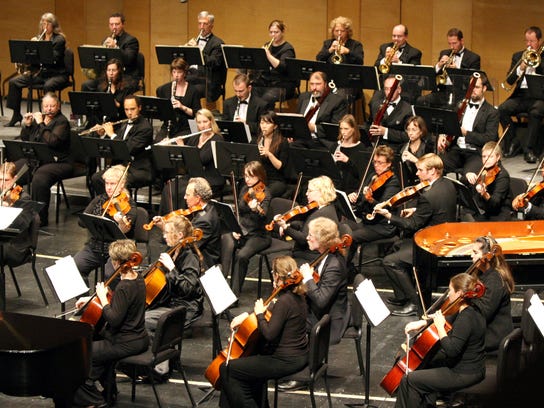
The Green Bay Symphony Orchestra’s current season will

The Green Bay Symphony Orchestra’s current season will be its last. (Photo: Submitted)

The Green Bay Symphony Orchestra, an institution in the community for more than 100 years, played its final concert April 11 at UWGB’s Weidner Center for the Performing Arts. The organization’s board of directors said financial burdens and declining attendance silenced the orchestra, which changed from a community band of mostly local musicians to a regional ensemble of professional players about 20 years ago.

More milestones: St. Patrick Catholic Church, one of the oldest churches in Green Bay, celebrated its 150th birthday. UW-Green Bay commemorated the 50th anniversary of its founding. De Pere celebrated the 25th anniversary of its Memorial Day weekend festival, Celebrate De Pere, with a patriotic concert by country musician Lee Greenwood.

PUBLIC SAFETY

City crime: Gang violence came to Green Bay in a shocking new way when two teens set fire to a 16-unit apartment building, putting 60 lives at risk to make a statement to a rival gang member. No one was injured in the April 27 fire, which destroyed the building. Jesse Jones, 19, is serving a 10-year prison term. Jordon Gardner-Shedrick, 18, is to be sentenced on Jan. 26.

Molitor leaves:

A dispute between police Chief Tom Molitor and members of the Green Bay City Council ultimately led to Molitor's retirement and the hiring of a new police chief. Molitor complained that city officials were trying to usurp his authority by demanding a gang unit, which Molitor said the department didn’t need. Former chief Jim Lewis, serving as interim chief, put a gang unit in place. Andrew Smith, a commander with the Los Angeles Police Department, is expected to take over as chief in early January.

UWGB-area slaying: The shooting death of Krystal R. Torres-Smith, 39, shocked and worried people in and near the University of Wisconsin-Green Bay campus, where she had been found dead in her car. Percy N. Sims, 26, of Appleton was arrested. Police think Sims set up a marijuana buy, then robbed and shot her. His next court appearance is Jan. 11.

Trooper slain:


A bank robbery in Wausaukee in March ended in three deaths, including that of the robber, Steven T. Snyder, Wausaukee truck driver Tom Christ, 59, and State Trooper Trevor Casper, 21. Snyder shot Christ shortly after the bank robbery, when Christ stumbled upon him going to his getaway car near Christ’s Oconto County home. Snyder and Casper died in a shootout in Fond du Lac when the trooper spotted him four hours later.

PUBLIC SCHOOLS

Voucher program expands: Wisconsin lawmakers lifted the cap on the number of students who could participate in private school voucher programs as part of the state 2015-17 budget. Some private schools in Brown County saw enrollment jumps of 10 to 20 percent. Funding mechanisms also changed, and rather than use a separate pot of money the state now reduces aid to the student’s home public school district to cover voucher costs.

School referendums: In April, 59 percent of voters in Northeast Wisconsin Technical College’s six-and-a-half county region approved a $66.5 million referendum to cover building and program expansions at its three campuses. Voters in the De Pere School District also overwhelmingly approved a $7 million referendum question asking to borrow for construction and renovation projects. De Pere voters rejected a $3.1 million request to cover improvements to the De Pere High School athletics complex.

PULASKI

Superintendent resigns:

Pulaski School District Superintendent Milt Thompson resigned in June before a disciplinary hearing. In a performance review, School Board members said Thompson was dishonest and handled the discipline of an employee poorly. The board plans to hire a superintendent in the spring.

Principal, teacher suspended: Pulaski High School Principal John Matczak and David Shaw, a physical education teacher and the boys varsity basketball coach, were disciplined for their roles in an incident in which one student repeatedly punched another. In April, Shaw was suspended for three days without pay, and Matzke was suspended for five days without pay. District officials said they would provide training for staff, including expectations for lunchroom supervision, and ways to respond to student concerns.

TRANSPORTATION

I-41: The stretch of U.S. 41 from northern Brown County to the Illinois line was re-designated as Interstate 41, a significant milestone in the multi-year, multimillion-dollar upgrade of the highway. Work will continue in 2016.
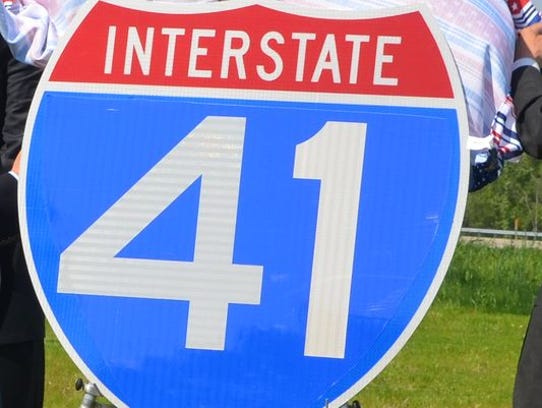
Interstate 41

Interstate 41 (Photo: Photo: Wisconsin DOT)

Uber: The Uber ride-share program made its way to Green Bay.

70 mph: Speed limits on parts of I-43 and selected other Wisconsin highways were increased to 70 mph. Some proponents of the change had claimed that lower speed limits caused some interstate commercial traffic to bypass the state.

dschneid@greenbaypressgazette.com and follow him on Twitter @PGDougSchneider. Adam Rodewald, Todd McMahon, Paul Srubas, Richard Ryman, Patti Zarling, Jeff Bollier, and Shelby Le Duc contributed to this report.

Above is from:  http://www.greenbaypressgazette.com/story/news/local/2015/12/26/packers-titletown-plans-lead-year-review/77841810/
Saturday, December 26, 2015

Jobless rate in Boone, Winnebago counties up in November to 7.5 percent

  • Posted Dec. 23, 2015 at 2:06 PM
    Updated Dec 23, 2015 at 2:27 PM

  • ROCKFORD — The jobless rate in Boone and Winnebago counties inched up in November to 7.5 percent, compared with 7.2 percent for the same month last year, the Illinois Department of Employment Security said today.
    In October, the rate was 6.8 percent for the two counties.
    Statewide, the unemployment rate increased in 12 metro areas, decreased in one and was unchanged in one. The Illinois rate, which is not seasonally adjusted, was 5.8 percent in November. By comparison, it was 12.2 percent in January 2010 at its peak. Nationally, the rate was 4.8 percent last month and 10.5 percent in January 2010.
    Georgette Braun: 815-987-1331; gbraun@rrstar.com; @GeorgetteBraun
  • Above is from:  http://www.rrstar.com/article/20151223/NEWS/151229786/0/SEARCH

Boone County Journal criticizes board approval of new animal services building

image

image

image

The above is from the December 25, 2015 Boone County Journal which is available free of cost at merchants across the area and on line at:  http://www.boonecountyjournal.com/news/2015/Boone-County-News-12-25-15.pdf#page=1