Saturday, January 7, 2023

McCarthy elected House speaker in vote 15 after chaotic week
Associated Press

McCarthy elected House speaker in vote 15 after chaotic week


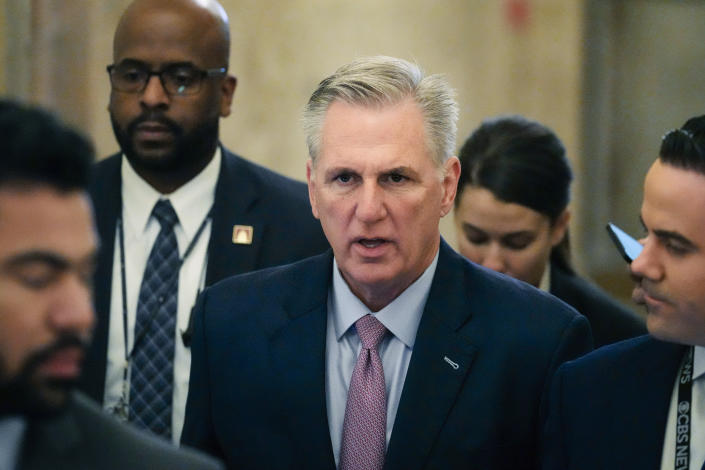
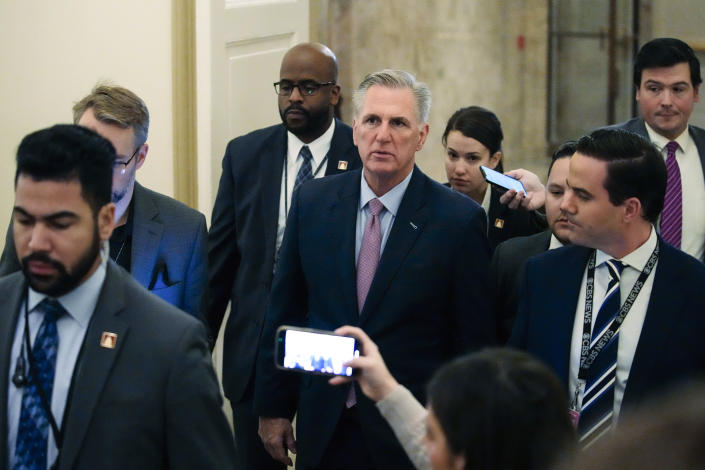
House Republican Leader Kevin McCarthy, R-Calif., arrives as the House meets for the fourth day to elect a speaker and convene the 118th Congress in Washington, Friday, Jan. 6, 2023. (AP Photo/Matt Rourke)

House Republican Leader Kevin McCarthy, R-Calif., arrives as the House meets for the fourth day to elect a speaker and convene the 118th Congress in Washington, Friday, Jan. 6, 2023. (AP Photo/Matt Rourke)


1 / 19

Congress

House Republican Leader Kevin McCarthy, R-Calif., arrives as the House meets for the fourth day to elect a speaker and convene the 118th Congress in Washington, Friday, Jan. 6, 2023. (AP Photo/Matt Rourke)

ASSOCIATED PRESS

LISA MASCARO and FARNOUSH AMIRI

Thu, January 5, 2023 at 11:57 PM CST

In this article:


WASHINGTON (AP) — Republican Kevin McCarthy was elected House speaker on a historic post-midnight 15th ballot early Saturday, overcoming holdouts from his own ranks and floor tensions boiling over after a chaotic week that tested the new GOP majority’s ability to govern.

After four days of grueling ballots, McCarthy flipped more than a dozen conservative holdouts to become supporters, including the chairman of the chamber’s Freedom Caucus, leaving him just a few shy of seizing the gavel for the new Congress.

As the House resumed for the late night session McCarthy had been on the cusp of victory in the 14th round but he fell one vote short.

He strode to the back of the chamber to confront Matt Gaetz, sitting with Lauren Boebert and other holdouts. Fingers were pointed, words exchanged and violence apparently just averted.

At one point, Republican Mike Rogers of Alabama started to charge toward Gaetz before another Republican, Richard Hudson, physically pulled him back.

“Stay civil!” someone shouted.

Republicans quickly moved to adjourn, but then McCarthy rushed forward to switch his vote to remain in session as colleagues chanted “One more time!”

The few Republican holdouts began voting present as well, dropping the tally he needed to finally seize the gavel in what was heading toward a dramatic finish on the fourth long day of a grueling standoff that has shown the strengths and fragility American democracy.

McCarthy had declared to reporters earlier in the day that he believed “we’ll have the votes to finish this once and for all.”

The day's stunning turn of events came after McCarthy agreed to many of the detractors' demands -- including the reinstatement of a longstanding House rule that would allow any single member to call a vote to oust him from office.

Even if McCarthy is able to secure the votes he needs, he will emerge as a weakened speaker, having given away some powers and constantly under the threat of being booted by his detractors.

But he could also be emboldened as a survivor of one of the more brutal fights for the gavel in U.S. history. Not since the Civil War era has a speaker's vote dragged through so many rounds of voting.

The showdown that has stymied the new Congress came against the backdrop of the second anniversary of the Jan. 6, 2021, attack on the Capitol, which shook the country when a mob of then-President Donald Trump’s supporters tried to stop Congress from certifying the Republican’s 2020 election defeat to Democrat Joe Biden.

At a Capitol event on Friday, some lawmakers, mostly Democrats, observed a moment of silence and praised officers who helped protect Congress on that day. And at the White House, Biden handed out medals to officers and others who fought the attackers.

“America is a land of laws, not chaos,” he said.

At the afternoon speaker's vote, a number of Republicans tiring of the spectacle temporarily walked out when one of McCarthy's most ardent challengers railed against the GOP leader.

Contours of a deal with conservative holdouts who have been blocking McCarthy's rise emerged after three dismal days and 11 failed votes in an intraparty standoff unseen in modern times.

And an upbeat McCarthy told reporters as he arrived at the Capitol, “We’re going to make progress. We’re going to shock you.”

One significant former holdout, Republican Scott Perry, chairman of the conservative Freedom Caucus who had been a leader of Trump's efforts to challenge the 2020 election, tweeted after his switched vote for McCarthy: “We're at a turning point.”

Another Republican holdout, Byron Donalds of Florida, who was repeatedly nominated as an alternative candidate for speaker, switched on Friday, too, voting for McCarthy.

Trump may have played a role in swaying the holdouts. Donalds said he had spoken to the former president who had been urging Republicans to wrap up their public dispute the day before.

As Rep. Mike Garcia nominated McCarthy for Friday, he also thanked the U.S. Capitol Police who were given a standing ovation for protecting lawmakers and the legislative seat of democracy on Jan. 6.

But in nominating the Democratic leader Hakeem Jeffries, Democrat Jim Clyburn recalled the horror of that day and told his colleagues: “The eyes of the country are on us today,” he said.

Without a speaker, the chamber is unable swear in members and begin its 2023-24 session, a sign of the difficulty ahead for the new Republican majority as it tries to govern.

Electing a speaker is normally an easy, joyous task for a party that has just won majority control. But not this time: About 200 Republicans have been stymied by 20 far-right colleagues who said he’s not conservative enough.

The disorganized start to the new Congress pointed to difficulties ahead with Republicans now in control of the House, much the way that some past Republican speakers, including John Boehner, had trouble leading a rebellious right flank. The result: government shutdowns, standoffs and Boehner’s early retirement when conservatives threatened to oust him.

The agreement McCarthy presented to the holdouts from the Freedom Caucus and others centers around rules changes they have been seeking for months. Those changes would shrink the power of the speaker’s office and give rank-and-file lawmakers more influence in drafting and passing legislation.

At the core of the emerging deal is the reinstatement of a House rule that would allow a single lawmaker to make a motion to “vacate the chair,” essentially calling a vote to oust the speaker. McCarthy had resisted allowing a return to the longstanding rule that former Speaker Nancy Pelosi had done away with, because it had been held over the head of past Republican Speaker Boehner. But it appears McCarthy had no other choice.

Other wins for the holdouts are more obscure and include provisions in the proposed deal to expand the number of seats available on the House Rules Committee, to mandate 72 hours for bills to be posted before votes and to promise to try for a constitutional amendment that would impose federal limits on the number of terms a person could serve in the House and Senate.

What started as a political novelty, the first time since 1923 a nominee had not won the gavel on the first vote, has devolved into a bitter Republican Party feud and deepening potential crisis.

Before Friday's ballots, Democratic leader Jeffries of New York had won the most votes on every ballot but also remained short of a majority. McCarthy ran second, gaining no ground.

The longest fight for the gavel started in late 1855 and dragged on for two months, with 133 ballots, during debates over slavery in the run-up to the Civil War.

___

AP writers Mary Clare Jalonick and Kevin Freking and video journalists Nathan Ellgren and Mike Pesoli contributed to this report.

Thursday, January 5, 2023

NY Post says McCarthy has a deal and will become Speaker.

New York Post

New York Post

Deal reportedly ‘in writing’ for GOP rebels to back McCarthy as speaker

Story by Victor Nava • 2h ago


As Rep. Kevin McCarthy heads to an astonishing 11th failed attempt to be elected House speaker, reports are emerging that a deal is being struck between the California congressman and the bloc of lawmakers that have kept the gavel out of his hands.

House Freedom Caucus member Rep. Ralph Norman (R-S.C.) said on Thursday that there’s an agreement in writing that he has been asked to review, according to Punchbowl News.

Anti-McCarthy Rep. Chip Roy (R-Texas) and pro-McCarthy Rep. Patrick McHenry reportedly negotiated the truce, according to the news outlet.

The deal is reportedly being reviewed in the office of House GOP whip Rep. Tim Emmer (R-Minn.), where Republican lawmakers from both factions met last night over pizza before voting to adjourn.

Deal reportedly ‘in writing’ for GOP rebels to back McCarthy as speaker

Deal reportedly ‘in writing’ for GOP rebels to back McCarthy as speaker© Provided by New York Post

A report emerged that a deal is being struck between Kevin McCarthy and the bloc of lawmakers who have fought his candidacy for speaker. Getty Images


A source close to McCarthy reportedly confirmed to Reuters that a deal is on the table, but that it won’t put him over the vote threshold needed to be elected speaker of the House.

Sources told Reuters that it possibly could give McCarthy an additional 10-12 votes from holdouts.

NBC News reported that the emerging deal is “phase 1” of a plan to generate steam for McCarthy, and allow him to turn some anti-McCarthy lawmakers.

Deal reportedly ‘in writing’ for GOP rebels to back McCarthy as speaker

Deal reportedly ‘in writing’ for GOP rebels to back McCarthy as speaker© Provided by New York Post

House Freedom Caucus member Rep. Ralph Norman said a deal was in place “in writing” from McCarthy to flip some votes.Getty Images

House members are voting on their 11th ballot in just over 48 hours for speaker with seemingly little momentum being made on an agreement to back McCarthy until Thursday evening’s report.

Rep.-elect Ken Buck of Colorado, a McCarthy supporter, has excused himself for a doctor’s appointment, leaving the House GOP leader with less votes, 200, than he started with earlier in the day, 201.

No speaker election had required 11 ballots since 1839.

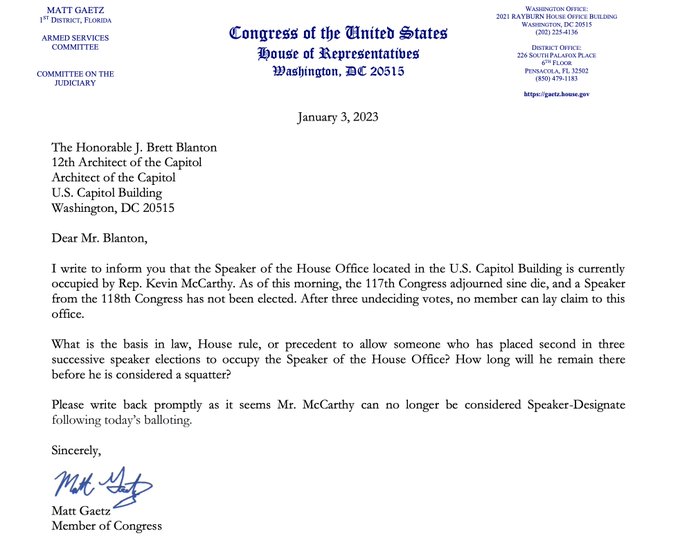
Is Representative Kevin McCarthy a squatter?

Image

Who bets that Donald Trump is the next Speaker of the House?

Newsweek

Newsweek

<?XML:NAMESPACE PREFIX = "[default] http://www.w3.org/2000/svg" NS = "http://www.w3.org/2000/svg" />Follow

Donald Trump's Chances of Becoming House Speaker, According to Bookmakers

Story by Jack Dutton • 5h ago

5611723409 Comments

Former U.S. President Donald Trump greets people as he arrives for a New Years event at his Mar-a-Lago home on December 31, 2022 in Palm Beach, Florida. Trump could be the next House Speaker, according to a bookmaker.

Former U.S. President Donald Trump greets people as he arrives for a New Years event at his Mar-a-Lago home on December 31, 2022 in Palm Beach, Florida. Trump could be the next House Speaker, according to a bookmaker.© Joe Raedle/Getty

Donald Trump is in the running to be the next House Speaker, according to one bookmaker, despite the former president throwing his weight behind Kevin McCarthy's embattled election bid.

After two days of chaos in the House and McCarthy not passing the threshold of 218 votes to claim the gavel in the Republican-controlled lower chamber, the House reconvened on Thursday to try and find a way forward.

In the final ballot on Wednesday, McCarthy acquired 201 votes, still short of the threshold.

There are 222 Republicans in the House, so more than four of them not voting for McCarthy will mean that he will not pass the threshold to be House Speaker. The California lawmaker is under increasing pressure to garner the extra votes or step aside for an alternative candidate.

Loaded: 61.28%

Play

Current Time 0:10

/

Democratic lawmakers have been nominating Rep. Hakeem Jeffries of New York, the Democrat who beat McCarthy with 212 votes in the sixth tally on Wednesday night.


BetOnline.ag has provided odds as to who will be the next House Speaker. The favorites to win are McCarthy and Steve Scalise, who are tied at 5-4. Elise Stefanik follows with 10-1 and Jim Jordan is at 20-1.

Hakeem Jeffries has odds of 20-1.

Meanwhile, Trump, who is not a member of the house, comes in at 33-1.

However, in an interview on Wednesday Lauren Boebert, the Colorado Congresswoman who has not been voting to support McCarthy, said she could nominate the former president.

The current Democratic speaker Nancy Pelosi comes in at 150-1 odds.

McCarthy is facing mounting criticism for not gaining the majority needed to become House Speaker. Florida Representative and Trump ally Matt Gaetz accused McCarthy of "squatting" in the Speaker's office after two days of failed attempts.

"He's a desperate guy whose vote share is dropping with every subsequent vote and I'm ready to vote all night, all week, all month, and never for that person," Gaetz, the Florida representative leading the so-called "Never Kevin" caucus, said.

This is the first time since 1923 that a speaker has failed to win election on the first ballot.

BetOnline's political odds analyst, Paul Krishnamurty, said the speaker saga is only hurting the Republican party's chances in the 2024 general election.

"In light of the chaos surrounding the vote to be next Speaker of the House of Representatives, we've shortened odds for a 2024 Democrat victory from +120 (6/5) to +110 (11/10). Republicans are still favored but have gone from -140 (5/7) to -130 (10/13)," Krishnamurty said in a statement emailed to Newsweek.

"The disappointing midterm results have sparked what is likely to be an ongoing crisis within the GOP," he added.

"Whoever emerges as Speaker seems sure to struggle to unite their very narrow majority in the House, and the inevitable prominence of divisive, obstructionist candidates may further damage the party's brand nationally," he said.

"We still favor a generic Republican ahead of a generic Democrat to win the presidency, partly due to the considerable weight of money pouring behind Ron DeSantis and Donald Trump, and also Joe Biden's persistently low approval rating. Nevertheless, recent momentum in U.S. politics lies with the Democrats and losing the House may yet turn out to be a blessing in disguise," he concluded.

Newsweek has contacted other bookmakers for comment and odds.

Please note, political betting is illegal in the United States, but it is legal in Europe.

January 5, 2023 Johns Hopkins COVID 19 Situation Report

COVID-19 Situation Report

Editor: Alyson Browett, MPH

Contributors: Erin Fink, MS; Clint Haines, MS; Noelle Huhn, MSPH; Amanda Kobokovich, MPH; Aishwarya Nagar, MPH; Christina Potter, MSPH; Matthew Shearer, MPH; and Rachel A. Vahey, MHS

CALL FOR PAPERS Early detection of biological threats, whether naturally occurring or manmade, is critical. Threat agnostic approaches, which do not rely on determining the identity of the agent or pathogen, show early promise. In 2023, the Johns Hopkins Center for Health Security journal, Health Security, will issue a special feature that considers threat agnostic approaches to biodefense and public health. We encourage submissions of original research articles, case studies, and commentaries that explore policy gaps, data and data analysis, and implementation, among potential topics.   The deadline is March 31, 2023. For more information, visit: https://www.centerforhealthsecurity.org/our-work/journal/call-for-papers/call-for-papers.html

EPI UPDATE* As of January 5, the WHO COVID-19 Dashboard reports:

  • 657 million cumulative COVID-19 cases
  • 6.67 million deaths
  • 3 million cases reported week of December 26
  • 22% decline in global weekly incidence as of December 26
  • 10,794 deaths reported week of December 26
  • 12% decline in global weekly mortality as of December 26

Over the previous week, incidence declined 73% in Africa; 42% in Europe; 26% in South-East Asia; 20% in the Americas; 16% in the Eastern Mediterranean; and 12% in the Western Pacific.

UNITED STATES

The US CDC is reporting:

  • 100.6 million cumulative cases
  • 1.09 million deaths
  • 402,525 cases reported week of December 28
  • 17% decline in weekly incidence as of December 28
  • 2,530 deaths reported week of December 28
  • 14% decline in weekly mortality as of December 28
  • 17% increase in new hospital admissions
  • 8.6% increase in current hospitalizations

*Recent holidays might delay data reporting for the WHO and US.

The Omicron sublineage XBB.1.5 experienced rapid growth over the past 2 weeks, accounting for an estimated 40.5% of all new sequenced specimens. BQ.1.1 (27%) and BQ.1 (18%) fall in line next, with various other Omicron subvariants accounting for the remainder of cases.

THE FOURTH YEAR As the COVID-19 pandemic enters its fourth year, many nations are better positioned to manage the disease due to clinical care management, vaccines, and therapies, WHO Director-General Dr. Tedros Adhanom Ghebreyesus said during a January 4 briefing. Nevertheless, inequities in access to testing, treatment, and vaccination remain, threatening individuals’ health, the global economy, and societies overall, he said, noting that approximately 10,000 people die of COVID-19 worldwide each week. On December 25, the WHO announced it prequalified the first generic version of Paxlovid for production by an Indian manufacturer and said its scientists are closely monitoring and evaluating the emergence of Omicron XBB.1.5, which is quickly spreading in the United States and has been detected in nearly 30 countries. WHO officials also expressed concern over the situation in China, urging health authorities there to regularly share reliable epidemiologic data.

OMICRON XBB.1.5 A new Omicron subvariant, XBB.1.5, has quickly become predominant in the United States, accounting for about 40% of all US cases—and 75% in the Northeast region—this week compared to around 4% of cases during the first week of December. XBB.1.5 is a recombinant Omicron sublineage, a fusion of 2 different BA.2 variants—BJ.1 (BA.2.10.1.1) and BA.2.75 (BA.2.75.3.1.1.1)—making it more closely related to the BA.2 subvariants that were predominant in the earlier part of 2022 than to the BA.5 subvariants that were responsible for most cases in the second half of 2022. Its rapid growth has concerned public health officials and healthcare practitioners alike, with WHO officials calling it the most transmissible subvariant detected yet. Though there is not yet much data on the severity of XBB.1.5, so far there is no indication it makes people more sick than previous subvariants. Hospitals in the US are already under significant stress, however, due to an early flu season as well as widespread incidence of other respiratory viruses such as RSV.

Some experts are concerned about XBB.1.5’s potential to evade prior immunity, with research on the related XBB subvariants showing the potential to escape the protections of antibodies resulting from vaccination, prior infection, or treatments, including Evusheld. In addition to being immune evasive, XBB.1.5 contains a mutation at genomic site 486 that is associated with enhanced viral binding to human ACE2 receptors, which could be boosting its transmissibility and causing it to surge. Notably, many experts highlight that vaccination and quick treatment with Paxlovid remains highly effective at preventing severe illness. It is unclear just how large of a surge may be driven by XBB.1.5, but the nation—and the world—is much better positioned at this point in the pandemic with vaccines, treatments, and nonpharmaceutical interventions such as masking helping to prevent infection, severe illness, and death.

US WINTER SURGE Much of the United States is experiencing a winter surge in COVID-19 cases, driven by waning immunity, holiday gatherings, and the emergence of the highly transmissible Omicron XBB.1.5 recombinant subvariant. Around the time of this report’s last publication on December 20, the nation surpassed 100 million cumulative reported COVID-19 cases, according to the US CDC. Federal data also show the number of hospitalized patients with COVID-19 is set to surpass the number reached during the summer 2022 surge, with new hospital admissions particularly high among individuals aged 70 and older who are most vulnerable to severe disease. Hospitals and clinics are feeling pressure from an influx of people with various respiratory illnesses in addition to COVID-19, including other coronaviruses that cause colds, influenza, and respiratory syncytial virus. Despite this, only 15% of people over age 5—and only 37.5% of those aged 65 and older—have received an updated bivalent vaccine booster dose. While recent data might not provide a clear picture of where the nation stands—due to reporting delays from recent holidays or severe weather as well as a lack of reporting from people using home tests—levels of SARS-CoV-2 detected in wastewater samples are rising in several regions, particularly in the Northeast, where the XBB.1.5 variant accounts for about 75% of new cases. Though health experts and some government officials, including those in New York City and Los Angeles, are urging people to begin wearing masks again and receive the latest booster, much of the country appears to have moved beyond the pandemic.

CHINA Following a reversal of its “zero COVID” containment strategy in early December after widespread protests, China is experiencing an unprecedented surge in cases. The outbreak appears to have spread first in urban areas, overwhelming healthcare facilities and morgues, and officials are concerned that weaker health systems in more rural areas will not fare well. The true impact of the current surge in cases and the number of resulting deaths is not fully understood due to unreliable data. The WHO has urged China to share more geographically based data on COVID-19 hospital admissions, intensive care unit (ICU) patients, and related deaths. Today, the organization said China supplied data on new COVID-19 hospitalizations showing a nearly 50% increase, from 15,161 new hospitalizations for mainland China during the week ending December 25 to 22,416 for the week ending January 1. China continues to report daily COVID deaths in single figures. The numbers likely are undercounts, based on officials’ use of a narrow definition of COVID-19 deaths, anecdotal evidence from individuals, and reports of deaths among prominent public figures.

In addition to the WHO, health and government officials worldwide are struggling to get a true sense of the situation in China and how to respond. Several countries have introduced—and the European Union recommended—pre-departure COVID-19 tests for travelers arriving from China, moves that the Chinese government and others have criticized as useless or even harmful. Some officials are concerned the large outbreak could provide an opportunity for a new SARS-CoV-2 variant to emerge. According to data from China’s CDC, the Omicron variant—specifically sublineages BA.5.2 and BF.7—is the most dominant based on recent genomic sequencing. The data allay concerns, for now, about the potential for a new variant of concern emerging from the outbreak, but some experts say the situation highlights the need to develop an early warning surveillance system using viral genomic data.

THERAPEUTICS Over the past several years, monoclonal antibodies were critical therapies for millions of people who were at high risk of getting sick from COVID-19 but who did not respond to or could not receive SARS-CoV-2 vaccines. However, new immune-evasive Omicron subvariants have rendered them largely ineffective as treatments for currently circulating SARS-CoV-2 variants, and even prophylactic antibody therapies like Evusheld show diminished efficacy. In 2022, the US FDA rescinded emergency use authorizations for major monoclonal antibody treatments including bamlanivimab, etesevimab, sotrovimab, casirivimab, imdevimab, and bebtelovimab, leaving immunocompromised individuals without many treatment options.

Other therapies have mixed benefits for immunocompromised individuals. Although antivirals are available,they have seen lackluster uptake and are not accessible to everyone; Pfizer’s Paxlovid interacts with other widely prescribed drugs, Merck’s Lagevrio shows lower efficacy, and Gilead’s intravenous remdesivir requires infusions over 3 days in hospital or outpatient settings. Although the US government has strongly promoted antivirals like Paxlovid,misinformation and misconceptions about the drug, as well as worries about side effects and viral rebounding after finishing a regimen, have hampered its uptake. Even convalescent plasma, which can be adapted to different strains,is inconsistently available and difficult to administer.

An FDA spokesperson said the agency will work with pharmaceutical companies on expediting the development of preventive therapies for immunocompromised patients, though it is unknown if the agency will accept fact-tracked data gathered from laboratory studies instead of large-scale clinical trials. Additionally, without the support of federal funding that drove drug development during earlier stages of the pandemic,pharmaceutical companies have little incentive to work on new and more effective antibody treatments. The lack of effective, specialized, and widely used therapies leaves many immunocompromised people with limited options if they become sick with COVID-19.

UNFOUNDED VACCINE RUMORS During a primetime US National Football League (NFL) game on January 2, Buffalo Bills player Damar Hamlin collapsed shortly after suffering a blow to his chest and subsequent cardiac arrest. Hamlin was resuscitated on the field and remains in critical condition in a Cincinnati hospital. Although little is known about the true cause of Hamlin’s collapse, cardiologistssuspect that the blow to his chest may have disrupted his heart’s rhythm and hindered blood flow to his brain; they note there is no indication Hamlin’s COVID-19 vaccine status played a role. Shortly after the incident, however, unfounded rumors began circulating on social media linking Hamlin’s injury to COVID-19 vaccines, revealing the pervasiveness of false and misleading information 3 years into the pandemic. The November 2022 rollback of Twitter’s ban on COVID-19 misinformation likely helped the rumors spread quickly and widely.

Although certain viral infections and vaccinescan lead to myocarditis in some instances, the risk ofvaccine-induced cardiac arrest associated with COVID-19 vaccines is inflated. A September 2022 study in the journalCirculation found that the risk of developing myocarditis following a booster dose of the Pfizer-BioNTech vaccine is low, and an August 2022 study published in Frontiers in Cardiovascular Medicine found that the risk of myocarditis is more than 7-fold higher in persons who were infected with SARS-CoV-2 than in those who were vaccinated. Additionally, a July 2020 study in theClinical Journal of Sport Medicine found that structural abnormalities of the heart muscle or arteries and faulty electric rhythms were the most common causes of sudden cardiac events among competitive professional athletes in the US.

With skepticism surrounding COVID-19 vaccines now threatening other public health priorities, including childhood vaccinations, health officials are struggling to combat misinformation and improve communities’ trust in public health. Experts are concerned that this new wave of misleading information surrounding COVID-19 vaccines threatens the rollout of updated booster doses and ongoing efforts to stop the spread of COVID-19 and other diseases such as measles.

Wednesday, January 4, 2023

May be a cartoon

Saturday, December 24, 2022

Immigration might solve labor shortage

Yahoo Finance

Lack of immigration is a contributing ‘cause of the labor market shortage’: Economist

There are now 3 million more job openings since pre-pandemic times and according to one economist, a slowdown in immigration is a contributing factor.

Tanya Kaushal

Tanya Kaushal

·Writer

Thu, December 22, 2022 at 1:12 PM CST

With too many jobs to fill and not enough workers, America is heading into the new year with a labor shortage.

There are now 3 million more job openings since pre-pandemic times and according to one economist, a slowdown in immigration is a contributing factor.

"It's really important to contrast two ideas," Adam Ozimek, chief economist at the Economic Innovation Group (EIG), told Yahoo Finance Live (video above). "One is that lack of immigration is a cause of the labor market shortage, and the other is that more immigration could help alleviate some of the shortages."

Data from the Department of Homeland Security (DHS) shows that authorized immigration in 2021 rose by 5% year over year — with 740,002 individuals being granted legal permanent resident (LPR) status — but still 28% lower than the 2011-2020 average, and the second-lowest amount since 2003.

During a November speech at the Brookings Institution, Federal Reserve Chair Jerome Powell spoke about the ongoing labor shortage, citing a lack of immigration as one of the causes.

“The combination of a plunge in net immigration and a surge in deaths during the pandemic probably accounts for about 1.5 million missing workers," he said.

The economic benefits to immigration

Economists and lawyers have often referred to the American immigrant population as the “backbone of our communities” as they tend to a higher labor force participation rate.

The reason why that's important, Ozimek argued, is because immigrants not only bring major labor supply but also create more demand.

"That means they spend money on houses and cars and furniture and all the stuff that's in shortage right now," he said.

According to a 2021 report from FWD.us, if immigration levels were doubled to more than 2 million new permanent and temporary immigrants each year, U.S. GDP could double and grow as large as $47 trillion in 2050.

A woman poses in front of a replica of the Statue of Liberty after participating in a USCIS naturalization ceremony on August 17, 2018 in Miami. (Photo by Joe Raedle/Getty Images)

A woman poses in front of a replica of the Statue of Liberty after participating in a USCIS naturalization ceremony on August 17, 2018 in Miami. (Photo by Joe Raedle/Getty Images)

"Per capita, this would lead to a 3% increase in average income by 2050 for all Americans compared with keeping immigration at recent levels, and a 7% increase compared with a zero immigration scenario," the report stated. "Compared with recent immigration levels of around 1.2 million immigrants per year, doubling of immigration now would greatly expand the economic future of the country."

While certain industries are dominated by foreign-born workers — like agriculture and manufacturing — immigrants also create more jobs as they are twice more likely to be entrepreneurial than Americans, according to a study by Northwestern University.

“The predominance of the imbalance between supply and demand is on the lower-skilled side, but there are areas across the skill spectrum where we can use more immigrants,” said Ozimek.

However, Ozimek stressed that increasing immigration isn't the only way to improve America's workforce.

"It's not as simple as saying that if all the people who planned on coming here would have otherwise come here [if] we wouldn't have labor market shortages, but it is the case that because immigrants are so flexible, because they've so geographically mobile and they move towards opportunity, they could help alleviate the acute labor market shortages we have today," he said.

A U.S. Marine veteran prays near the border wall between the U.S. and Mexico in Sunland Park, New Mexico, July 21, 2021. REUTERS/Jose Luis Gonzalez

A U.S. Marine veteran prays near the border wall between the U.S. and Mexico in Sunland Park, New Mexico, July 21, 2021. REUTERS/Jose Luis Gonzalez

The Trump effect

The slowdown in immigration is tied not only to the effects of the coronavirus pandemic, but also the fallout of Trump-era policies.

Pandemic lockdowns combined with a lack of federal funding caused a backlog of nearly 1.5 million work permit applications with the U.S. Citizenship and Immigration Services (USCIS), whereas Trump’s policies discouraged immigrants from entering the U.S.

The Trump administration "did a variety of things to reduce immigration," Ozimek said. "Some of them, like banning immigrants from certain countries, was very big and transparent and obviously made the U.S. look like not as great of a destination from that perspective."

Other actions they took, he continued, "were more technocratic, like trying to make it harder for skilled workers' spouses to get jobs. Other things are very administratively detailed. So it's a lot of stuff they did that's taking some time to unwind."

During the Trump administration, new H1B (high-skilled worker) visas and temporary worker visas were halted, which kept out nearly 525,000 workers.

Each worker visa is unique with its own limitations and requirements. There are four broad categories: temporary non-immigrant, permanent immigrant, work-study program, and international entrepreneur.

The H1B visa is a lottery system in which employers must file a petition to the government to state their interest in hiring a particular candidate through what's known as a Labor Condition Application. The annual cap for granting H1B visas is 65,000 and another 20,000 only for workers with a master's or doctorate degree obtained in the U.S.

Among the top 10 companies that have filed for the most Labor Condition Applications are Amazon (AMZN), Google (GOOG, GOOGL), Microsoft (MSFT), Meta (META), and Apple (AAPL), according to MyVisaJobs.

Granting workers these visas isn't the only challenge, Ozimek said. There's also an issue of "flexibility." Under both H-2A and H1B visas, if a worker wishes to switch jobs, they must find another employer who can file another petition for them.

“Letting workers go where the opportunity is, where the shortages are, not tying them to one employer, increasing flexibility could be very helpful in addressing some of these acute shortages that we see," Ozimek said. "And also providing faster, more certain paths to green cards. So it's not just about getting workers here — it's about getting them the ability to take whatever job has the highest and best return and where we're seeing the most shortages."

—

Tanya is a data reporter at Yahoo Finance. You can follow her on Twitter @tanyakaushal00.

Above is from:  https://www.yahoo.com/news/lack-immigration-labor-market-shortage-economist-191213573.html