
Tuesday, October 19, 2021

October 19: Johns Hopkins COVID 19 Report

COVID-19 Situation Report

Editor: Alyson Browett, MPH

Contributors: Clint Haines, MS; Natasha Kaushal, MSPH; Amanda Kobokovich, MPH; Christina Potter, MSPH; Matthew Shearer, MPH; Marc Trotochaud, MSPH; and, Rachel A. Vahey, MHS.

BOOSTER DOSES The US FDA’s Vaccines and Related Biological Products Advisory Committee during 2 days of meetings last week considered several questions related to booster doses for SARS-CoV-2 vaccines. The panel’s recommendations are not binding, although the FDA generally follows the advice of its committees.

Moderna

The vaccine advisory panel on October 14 voted unanimously to endorse a booster dose of Moderna’s SARS-CoV-2 vaccine, administered at least 6 months after the second dose. The vote supports authorizing an additional dose of the vaccine in the same groups authorized for a booster dose of the Pfizer-BioNTech SARS-CoV-2 vaccine, including individuals aged 65 and older, those ages 18 to 64 at a higher risk for severe disease, and people at risk of exposure due to their occupation. The advisory panel also discussed when booster doses should be provided to all adults but concluded it is too soon to make that decision. The Moderna booster under consideration is 50μg, half the dose of the initial 2 shots, while the authorized booster for the Pfizer-BioNTech vaccine is the same formulation as the FDA-approved 2-dose vaccine. Moderna claims a half dose is enough to activate the immune system while still stretching the world's supply of available vaccines. Data from Moderna show that the booster dose did not produce the 4-fold antibody increase set as a guideline by the FDA for authorizing boosters, but Moderna said it was because of existing high levels of antibodies in study participants. Some panel members expressed concern over some of the data provided by Moderna—including on how best to measure correlates of protection and durability provided by a half dose—but not enough to prevent endorsement of booster doses. Others noted that avoiding public confusion over which vaccines were approved for booster doses and why played a role in their decision.

J&J-Janssen

During a second day of meetings on October 15, the vaccine advisory panel voted unanimously to endorse a second dose of the J&J-Janssen SARS-CoV-2 vaccine for all recipients. This meeting saw more controversy than previous meetings on booster shots for the Pfizer-BioNTech and Moderna SARS-CoV-2 vaccines, with some panelists reportedly unhappy with multiple slides presented by J&J-Janssen that contained data not previously vetted by the FDA. Additionally, the companies presented data on boosters given at 6 months from a study with a sample size of only 17 volunteers. Panelists expressed frustration with and hesitancy to make a decision based on the limited data, but all the panelists agreed that anyone who received the J&J-Janssen vaccine should be eligible for a second dose, with some saying the vaccine should be considered as a 2-dose regimen. The concerns revolved around data showing that a single dose of J&J-Janssen offered lower protection than 2 doses of either the Pfizer-BioNTech or Moderna vaccines.

Mix & Match

Following its vote on the J&J-Janssen vaccine, the panel discussed the so-called “mix & match” strategy, which could allow heterologous booster doses for certain populations. Data from an NIH study released last week showed that the antibody levels of those who initially received the J&J-Janssen shot rose 76-fold in 15 days following a booster with Moderna and 35-fold after a booster with Pfizer-BioNTech. By comparison, a second dose of J&J-Janssen only raised antibody levels 4-fold in the same timeframe. It is worth noting that there were concerns because the NIH study results were based on a small number of volunteers and only reported short-term findings. Despite these concerns, some panelists claimed the data are enough to convince them to support a mix & match strategy, something that is fairly common in other countries.

The FDA is expected to authorize boosters for some Moderna and all J&J-Janssen vaccine recipients as early as this week and also could make a decision on the mix & match strategy. The US CDC’s Advisory Committee on Immunization Practices (ACIP) is scheduled to meet this week to make its own recommendations on booster doses, meaning millions more people in the US could be eligible for additional shots by the end of the week.

MYOCARDITIS RISK The US FDA has delayed a decision on authorizing Moderna’s SARS-CoV-2 vaccine for adolescents ages 12-17 years to allow more time to scrutinize whether the vaccine is associated with an increased risk of myocarditis, an inflammatory heart condition, particularly among young males. The move comes after several Nordic countries paused the use of the Moderna vaccine for younger males, reportedly due to an increase in reports of myocarditis. A Moderna official said the company has requested data from those countries but has not yet received the information. The FDA has said the risk of myocarditis and pericarditis—inflammation of the heart’s lining—appears to be low following vaccination with either the Moderna or Pfizer-BioNTech vaccines, and that the benefits of the vaccines outweigh the risks. But most of that data come from the vaccines’ use among adults, and the agency appears to be taking extra caution in reviewing the data on adolescents. For parents eager to vaccinate their children, the delay in authorization could increase anxiety over safety concerns or assuage any hesitancy. The timing of the FDA’s decision on the Moderna vaccine is unclear, although regulators are working expeditiously. The Pfizer-BioNTech vaccine is available for use among people aged 12 and older in the US.

US CDC HOLIDAY GUIDANCE The US CDC on October 15 released new public health guidance for 2021 winter holiday celebrations, with a focus on urging those who are unvaccinated against SARS-CoV-2 to get their shots before traveling or gathering with family and friends. To protect those too young to be eligible for vaccination, the agency recommends all those around them to be vaccinated. According to new data released the same day, the CDC noted that in August, unvaccinated individuals had an 11 times greater risk of dying from COVID-19 than those who were fully vaccinated. Like 2020, the CDC also recommended masking when in crowded indoor settings and trying to be outside as much as possible in group settings. The new guidance was released following some confusion earlier this month, when the CDC mistakenly posted old information to its website. Some public health experts warned that as long as there are gaps in vaccination coverage throughout the country, a winter surge in COVID-19 cases remains a possibility, especially if people do not follow the guidance.

US NAVY The US Navy has formed a COVID Consolidated Disposition Authority to facilitate the administrative separation of Navy service members who refuse a SARS-CoV-2 vaccine without a pending or approved exemption. The Pentagon mandated vaccination for all service members in August, after the US FDA granted full approval to the Pfizer-BioNTech SARS-CoV-2 vaccine. According to an unclassified communication, more than 98% of active duty US Navy service members have begun or completed a vaccination series, and all active duty sailors must be fully vaccinated—defined as 2 weeks after completing an authorized or approved vaccine—by November 28. Those in the Navy Reserves must be fully vaccinated by December 28. Any sailor separated only for vaccine refusal will receive “no lower than a general discharge under honorable conditions,” which could mean losing some veterans’ benefits.

EUROPE SURGE COVID-19 is once again surging in Europe, particularly in the UK and Central and Eastern Europe. The daily incidence at the continent level increased by more than 45% since the most recent low on September 16. Over the past 2 weeks, 16 European countries have reported increases in daily incidence of 25% or greater, including Czechia (+102%), Latvia (+118%), and Poland (+123%) with greater than 100%. Additionally, Ireland and the UK reported increases of 23% and 20% over that period, respectively. Europe is exhibiting similar trends in terms of daily mortality as well, with 9 countries reporting biweekly increases of 50% or more, including Poland (+103%), Romania (+109%), and Luxembourg (+300%) with increases of more than 100%. With the exception of Iceland, Ireland, and the UK, nearly all of these countries are located in the Central and Eastern regions of Europe. As Europe transitions to colder weather and winter holidays, major COVID-19 surges could pose additional risk due to increased social activities and gatherings indoors.

Russia surpassed 30,000 new cases per day for the first time on October 17 and continues to set new records for daily incidence. Russia also continues to set new records in terms of daily mortality, now up to 967 deaths per day, more than 75% higher than the previous peak in late December 2020. Reportedly, some Russian researchers have accused the Russian government of manipulating the official data, and they argue that the true figures are much worse. According to a report by The Washington Post, Russia’s official COVID-19 mortality data may “exclude many deaths” that are determined to be a result of other conditions, potentially including those known to be associated with elevated risk of severe COVID-19 disease and death.

On October 18, Latvia announced a 4-week “lockdown” period, including the closure of schools, restaurants, retail stores, and entertainment venues. Only essential services and activities will be permitted during the lockdown, and essential employees who need to work in person are required to be vaccinated. Additionally, Latvia’s COVID-19 restrictions include a curfew from 8pm-5am, with limited exceptions for traveling to or from work or receiving medical care. All schools will remain closed through October 29, and in-person classes are scheduled to resume on November 1 for grades 1-3 and November 15 for grades 4-12. The Latvian government intends to begin relaxing the lockdown measures on November 15, but initially only in “green” areas (ie, those with lower SARS-CoV-2 transmission) and only for fully vaccinated individuals.

AFRICA The WHO Regional Office for Africa (AFRO) last week estimated that only about 1 in 7 COVID-19 cases is being detected on the continent and suggested the actual cumulative COVID-19 incidence in Africa as of October 10 was about 59 million, and not the 8 million cases in official reports. In order to get a better understanding of the pandemic in Africa, the WHO announced a new initiative aimed at increasing testing access in 8 countries, with the hopes of reaching as many as 7 million people with rapid diagnostic tests in the next year. Burundi, Côte d'Ivoire, the Democratic Republic of Congo, Guinea-Bissau, Mozambique, the Republic of Congo, Senegal, and Zambia will each receive US$1.8 million to scale up testing and preventive measures using a “ring strategy,” which focuses on providing voluntary testing, face masks, and hand sanitizer to people who live within 100 meters of a confirmed COVID-19 case. The strategy successfully helped to contain and eradicate smallpox from the continent in the late 1970s, and a ring vaccination strategy has been used to contain Ebola in recent outbreaks, so it will be interesting to see how the approach works with COVID-19.

Only about 5% of the total African population is vaccinated against SARS-CoV-2, with only 30% of the continent’s 54 nations having fully vaccinated 10% of their population. In a White House meeting with Kenya President Uhuru Kenyatta, US President Joe Biden on October 14 said the US will donate an additional 17 million doses of the J&J-Janssen vaccine to the African Union (AU). The donation, which is available for delivery immediately, adds to 50 million vaccine doses already donated by the US to the AU. However, the US donation is a drop in the bucket of what is needed. In September, WHO Africa estimated that an average 150 million doses need to be delivered to the continent each month if it is to fully vaccinate 70% of the population by September 2022.

SPUTNIK V People living with HIV are at elevated risk of severe or critical COVID-19 disease and death, according to the WHO. Additionally, some researchers have long warned that vaccines that use a specific adenovirus (Ad5) vector could increase the risk of contracting HIV among certain populations. The South African Health Product Regulatory Authority this week said it would not authorize Russia’s Sputnik V vaccine, which uses Ad5, over concerns it could increase the risk of HIV infection among males. The agency said the company that makes Sputnik V did not supply data showing the vaccine is safe when used in areas with high HIV prevalence. South Africa ranks first among all countries for the greatest number of people living with HIV. Notably, South Africa currently offers the J&J-Janssen vaccine—which also uses an adenovirus vector, albeit a different type (Ad26)—as well as the Pfizer-BioNTech and Chinese-made Sinovac vaccines. The Sputnik V vaccine is used in at least 50 countries worldwide but has not yet received emergency use listing status from the WHO.

EFFICACY OF INTERFERON The immunomodulator interferon beta-1a used together with the antiviral remdesivir was no better at treating hospitalized adults with COVID-19 pneumonia than remdesivir alone, according to the results of a study supported by the US NIH. Researchers assigned 969 patients recruited in 63 hospitals across 5 countries 1:1 to receive the study treatment plus remdesivir or a placebo plus remdesivir. According to the results, published online in The Lancet Respiratory Medicine, interferon plus remdesivir was not superior to remdesivir alone, and patients who were on high-flow oxygen at the beginning of the study and took interferon had worse outcomes compared with those who took only the antiviral, possibly due to interferon increasing their inflammatory response. 

ABBOTT TEST RECALL Abbott Molecular is recalling 2 of its SARS-CoV-2 laboratory test kits because they have the potential to issue false-positive results, and the US FDA classified it as a Class I recall—the most serious type of recall. The issue is related to the software used with the Alinity m SARS-CoV-2 AMP Kits and Alinity m Resp-4-Plex AMP Kits, and until the software can be updated, positive results should be treated as presumptive, according to the regulatory agency. The FDA previously warned clinical lab staff and healthcare providers of the potential for false positives and urged users to promptly report any adverse events associated with the tests.

Monday, October 18, 2021

10 Current Lawsuits against Trump

NBC News

Trump faces a pile of civil lawsuits as depositions begin

1 / 2

Trump faces a pile of civil lawsuits as depositions begin

  • Donald Trump

Dareh Gregorian

Mon, October 18, 2021, 3:31 AM

In this article:

Former President Donald Trump has been ordered to answer questions under oath in a lawsuit Monday, and his attorneys could set a date for a deposition in another case, as well.

The lawsuits, involving allegations that his security guards roughed up protesters outside Trump Tower in New York and allegations of defamation by former "Apprentice" contestant Summer Zervos, respectively, are just two cases in the mass of civil litigation Trump faces post-presidency.

At least 10 civil cases are pending against Trump, whose ability to delay them has been curtailed since he left office in January. Trump had argued in some of the cases that as a sitting president he was immune from civil lawsuits. His office didn't respond to a request for comment on the cases.

Here's a rundown of where the major civil suits stand.

Summer Zervos

Zervos, a contestant on Season 5 of the reality show "The Apprentice," says Trump smeared her by calling her a liar during his 2016 presidential campaign after she accused him of having subjected her to unwanted kissing and groping when she was seeking career advice in 2007, a year after she appeared on the show.

An attorney for Trump declined to comment. Trump's attorneys have said that his statements were true and that they plan to file a countersuit.

At a court conference this month, the judge's law clerk said all depositions must be completed by Dec. 23.

"The defendant is now a private citizen, and he just cannot delay this litigation any longer," Zervos attorney Moira Penza told the clerk, according to The Associated Press.

Trump's attorneys could file court papers Monday to set a date for his deposition.

Protesters at Trump Tower

Also Monday, attorneys for protesters who allege that Trump's bodyguards assaulted them during a demonstration in 2015 were set to question Trump.

Trump said in an affidavit in 2016 that he has no knowledge about the altercation and that he wasn't directly involved in hiring security personnel. His attorneys tried to spare him from testifying for years, including while he was president, but the judge said his testimony was "indispensable."

The videotaped deposition was being conducted inside Trump Tower — where the six protesters were demonstrating in September 2015 over Trump' comments about Mexican immigrants when he was running for president — and they would be used as testimony when the case goes to trial.

E. Jean Carroll

Like Zervos, E. Jean Carroll is suing Trump for defamation, contending that he slandered her by accusing her of making up allegations of sexual assault. Carroll alleges that Trump raped her during a chance encounter in a New York City department store in the mid-1990s.

Trump countered that "she's not my type" and that the incident "never happened," and he accused her of concocting the story to sell her 2019 memoir, in which she recounted the allegation of assault. Carroll says she still has the dress from the encounter, and her attorney has asked for a DNA sample from Trump to help prove her claim.

The state case was transferred to federal court last year after the Justice Department sought to intervene, arguing that Trump was immune because the statements were part of his official responsibilities. The judge disagreed, a ruling that Trump and the Justice Department have appealed.

The 2nd U.S. Circuit Court of Appeals will hear arguments in December, and deposition dates could be set soon after the court rules.

Business investors

Trump, his children Eric, Don Jr. and Ivanka, and his company are also being sued in the same courthouse by a group of people who claim that the family conned them into making bad investments in businesses the Trumps were promoting. The suit, which seeks class-action status for thousands of people, alleges that Trump hid that he was being paid millions to endorse the companies.

"From 2005 to at least 2015, defendants received millions of dollars in secret payments to promote and endorse ACN," the suit alleges, referring to a multilevel marketing company that was among the businesses the Trumps were endorsing. "In return, Donald J. Trump told prospective investors that '[y]ou have a great opportunity before you at ACN without any of the risks most entrepreneurs have to take,' and that ACN's flagship videophone was doing 'half-a-billion dollars' worth of sales a year.' Trump also told investors that he had 'experienced the opportunity' and 'done a lot of research,' and that his endorsement was 'not for any money.' Not a word of this was true."

Trump's attorneys contended that the investors didn't have a case because none of them paid the Trumps directly, and they argued that the family isn't responsible for any of their losses. They also argued that Trump's statements were opinion and that they included "puffery" that no "reasonable investor" would have relied upon.

Depositions are supposed to be concluded by April 29, and the case is expected to go to trial in 2023.

Mary Trump

Trump and other family members face a fraud lawsuit from his niece Mary Trump, who alleges that the family defrauded her out of millions of dollars from her grandfather's estate.

"For Donald J. Trump, his sister Maryanne, and their late brother Robert, fraud was not just the family business — it was a way of life," her New York State Supreme Court lawsuit says.

The suit alleges that the trio cheated her out of her fair share of her grandfather's estate by presenting her with valuations that showed it was worth less than it was and by getting her and her brother, Fred Trump III, to sign a settlement agreement in 2001 based on the valuations. She said she concluded that she and her brother had been swindled in the settlement after an investigation into the family's finances by The New York Times in 2018. Donald Trump's siblings didn't respond to requests from The Times for comment about her allegations.

Attorneys for Trump and his siblings have asked a judge to dismiss the suit, contending that her time to pursue the claims has long since expired. They also pointed to Mary Trump's possession of the records she said she was misled about.

"[A]ll of the information that plaintiff claims was unknown to her until 2018 and which forms the basis of her alleged fraud claims, was plainly made known to her and her lawyer twenty years ago," Trump's team argued.

Trump has also filed his own suit against Mary Trump, alleging that she violated their settlement and a nondisclosure agreement.

Jan. 6

Trump has been hit with at least four lawsuits by Democratic lawmakers and Capitol Police officers over the Jan. 6 pro-Trump riot at the U.S. Capitol, which disrupted the official counting of electoral votes for president. The suits allege that Trump and other defendants violated the Ku Klux Klan Act of 1871, which one of the suits says "was intended to protect against conspiracies, through violence and intimidation, that sought to prevent members of Congress from discharging their official duties."

Trump's attorneys maintained that he is immune from the claims because he was president at the time and that his fiery speech at a rally on the morning of Jan. 6 was protected by the First Amendment. They want the cases dismissed. Depositions have yet to be scheduled.

Voting rights

The false claim underlying the Jan. 6 incitement allegations against Trump and his allies — that the 2020 election was "stolen" from Trump — is also at the center of another lawsuit that accuses Trump and his campaign of violating the Ku Klux Klan Act and the Voting Rights Act.

The NAACP and the Michigan Welfare Rights Organization say in the lawsuit, which was filed while Trump was challenging election results in numerous states, that Trump tried "to disenfranchise hundreds of thousands of voters" by pressuring state and local leaders not to certify election results.

"These systematic efforts — violations of the VRA and the Ku Klux Klan Act — have largely been directed at major metropolitan areas with large Black voter populations," the suit says. It seeks a declaration that he violated both laws and an order blocking him from coercing officials or obstructing voters in the future.

Trump's attorneys have asked that the case be tossed, saying the plaintiffs are trying to "improperly regulate constitutionally protected speech and to stymie President Trump's efforts to expose widespread voter integrity issues which operated to dilute the voices of voters in Michigan and throughout America."

Above is from:  https://www.yahoo.com/news/trump-faces-pile-civil-lawsuits-083100542.html

Saturday, October 16, 2021

Beloit is the worse city in Wisconsin?

MoneyWise

The Worst City to Call Home in Every State

Some places make it hard to find work, stay safe or just enjoy life.

Serah Louis

By Serah Louis

<?XML:NAMESPACE PREFIX = "[default] http://www.w3.org/2000/svg" NS = "http://www.w3.org/2000/svg" />

Apr. 26, 2021

Wisconsin: Beloit

Downtown BeloitMark's Postcards from Beloit / Flickr

Advertisement


  • Median home value: $87,400 (state: $173,600)
  • Poverty rate: 24.1% (state: 11.9%)
  • 5 yr. avg. unemployment: 9.4% (state: 4.0%)

Beloit, like the rest of Wisconsin, used to be a thriving hub for the manufacturing industry but lost tens of thousands of jobs following the Great Recession.

The median household income in Beloit is $43,651, but almost a quarter of the population lives in poverty, and the unemployment rate more than doubles the state as a whole.

The small city of about 37,000 also has one of the worst crime problems per capita of any city in the state. In 2019, Beloit suffered four homicides, 31 robberies, 122 burglaries and 71 car thefts.

Above is from: 

Friday, October 15, 2021

Stellantis: About 1,100 laid off Belvidere employees offered deals to relocate, quit or be fired

How much longer for Belvidere Auto Plant?????

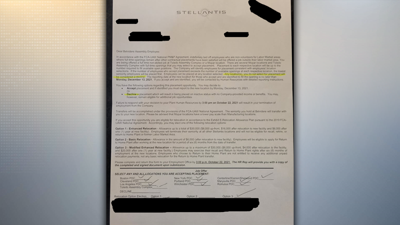
Stellantis letter 3


  • BELVIDERE (WREX) — We now know how many laid off employees have received a letter offering them a chance to relocate to return to work full-time.

13 WREX first reported about laid off employees receiving the letters Thursday night.

Now, Stellantis says "about 1,100" employees received a letter. The manufacturer says they have full-time openings at its Toledo Assembly Complex and several Mopar locations.

Employees who were given these letters have three options: accept the offer and relocate, decline the placement or not respond to the letter.

If an employee declines the placement, they will be placed with no company-provided income or benefits, but will maintain their eligibility for other job opportunities.

Failure to respond to the letter at all would lead to termination.

13 WREX obtained the three letters the laid off employees were given. One of the letters requires the employee to respond with a decision by 3 p.m. Friday, Oct. 22.

Here's Stellantis' full statement:

Stellantis currently has full-time job openings at its Toledo Assembly Complex and several Mopar locations. As per the terms of the UAW-FCA collective bargaining agreement, indefinitely laid off employees can be offered full-time opportunities in other labor markets. As a result, the company sent letters on Oct. 8, 2021, to about 1,100 previously indefinitely laid off Belvidere employees offering them the opportunity to staff those positions and return to work. These employees can either accept or decline the placement. However, as stated in the contract, declining will place them with no company-provided income or benefits, but they will maintain their eligibility for other job opportunities. Laid off employees who fail to respond to the letter will be terminated. We understand this may be a difficult decision for a number of our employees and their families, but it is our goal to get as many people as possible back to full-time employment.

Above is from:  https://www.wrex.com/news/top-stories/stellantis-about-1-100-laid-off-belvidere-employees-offered-deals-to-relocate-quit-or-be/article_4c7f569e-2df1-11ec-8d1a-9bdae204c159.html

Thursday, October 14, 2021

October 14: Johns Hopkins COVID 19 Report

COVID-19 Situation Report

Editor: Alyson Browett, MPH

Contributors: Clint Haines, MS; Natasha Kaushal, MSPH; Amanda Kobokovich, MPH; Christina Potter, MSPH; Matthew Shearer, MPH; Marc Trotochaud, MSPH; and, Rachel A. Vahey, MHS.

EPI UPDATE The WHO COVID-19 Dashboard reports 238.5 million cumulative cases and 4.86 million deaths worldwide as of October 13. Global weekly incidence decreased by 6.7% compared to the previous week, and mortality fell by 9.5%.

Global Vaccination

The WHO reported 6.36 billion cumulative doses of SARS-CoV-2 vaccines administered globally as of October 10. A total of 3.63 billion individuals have received at least 1 dose, and 2.64 billion are fully vaccinated. Analysis from Our World in Data indicates that the overall trend in global daily vaccinations continues to decline, down to fewer than 23 million doses per day*. The global trend continues to closely follow Asia. Our World in Data estimates that there are 3.78 billion vaccinated individuals worldwide (1+ dose; 47.97% of the global population) and 2.80 billion who are fully vaccinated (35.56% of the global population).

*The average daily doses administered may exhibit a sharp decrease for the most recent data, particularly over the weekend, which indicates effects of reporting delays. In an effort to reflect the longer-term trends, the numbers reported here may not correspond to the most recent data.

UNITED STATES

The US CDC reports 44.5 million cumulative COVID-19 cases and 716,370 deaths. The US has passed a peak in terms of daily incidence. The most recent high was 161,711 new cases per day on September 1, and the trend began to decline slightly before the Labor Day holiday weekend. The current average is approximately 86,181 new cases per day and appears to be decreasing. Daily mortality also appears to have passed a peak, down from a recent high of 1,815 on September 15 to 1,252 on October 12*.

*Changes in state-level reporting may affect the accuracy of recently reported data, particularly over weekends. In an effort to reflect the longer-term trends, the numbers reported here may not correspond to the most recent dates.

According to an analysis published October 13 by the Peterson Center on Healthcare and the Kaiser Family Foundation, COVID-19 continues to be a leading cause of death in the US. While daily mortality is now falling, COVID-19 was the second leading cause of death in the US in September 2021, behind heart disease, according to the analysis based on US CDC and other data. The majority of COVID-19-related deaths have been among unvaccinated individuals.

US Vaccination

The US has administered 404 million cumulative doses of SARS-CoV-2 vaccines. The daily vaccination trend rose briefly following authorization of booster doses of the Pfizer-BioNTech vaccine for some populations on September 22 but is now declining after a recent peak on October 1*. There are 217.6 million individuals who have received at least 1 dose, equivalent to 65.6% of the entire US population. Among adults, 78.5% have received at least 1 dose, as well as 14.7 million adolescents aged 12-17 years. A total of 187.9 million individuals are fully vaccinated, which corresponds to 56.6% of the total population. Approximately 68% of adults are fully vaccinated, as well as 12.1 million adolescents aged 12-17 years.

*Due to delays in reporting, estimates for the average daily doses administered are less accurate for the most recent 5 days. The most current average provided here corresponds to 5 days ago.

VACCINE BOOSTERS The US FDA’s Vaccines and Related Biological Products Advisory Committee (VRBPAC) is meeting today to discuss Moderna’s request for authorization of an additional dose of its SARS-CoV-2 vaccine and on October 15 to discuss a similar request from J&J-Janssen. Any recommendations the committee makes are used to help the FDA make decisions but are not binding. Moderna has asked regulators to authorize an additional half-dose of its vaccine for adults aged 65 and older—a decision which appears to already be made based on questions submitted to the committee—and individuals at high risk of severe COVID-19, similar to the authorization granted last month for the Pfizer-BioNTech vaccine. An FDA briefing document released this week suggests that a booster dose of Moderna’s vaccine administered at least 6 months from the second dose increased antibody levels in recipients. However, the difference of the levels before and after the booster dose was not wide, and the agency did not take a position on whether the extra dose was necessary. The panel also will discuss the risk of post-vaccination myocarditis and other adverse reactions and whether data show efficacy of the Moderna vaccine is waning. In separate documents submitted to the FDA, Moderna said a half-dose (50μg) additional shot provided similar increases in antibody levels as the full dose (100μg) but with fewer side effects.

During the second day of meetings, VRBPAC will consider whether data presented by J&J-Janssen supports a booster dose for its single-dose SARS-CoV-2 vaccine, and when the additional dose should be administered. In a briefing document released October 13, the FDA said there “may be a benefit” in giving a second dose about 2 months after the primary dose and made it clear that while the J&J-Janssen vaccine provides protection against severe COVID-19, it is less effective than the mRNA vaccines from Moderna and Pfizer-BioNTech. However, the agency questioned the sample sizes of the studies showing a benefit and did not provide a clear conclusion on whether the panel would recommend booster doses for certain populations.

VRBPAC also likely will discuss “mixing and matching” vaccines but is not expected to make recommendations on the approach. Highly anticipated results from a US NIH-sponsored study were posted to the preprint server medRxiv on October 13, suggesting that recipients of the J&J-Janssen vaccine might produce a more intense immune response to a booster dose of an mRNA vaccine than an additional dose of the J&J-Janssen vaccine. Individuals who initially received either the Moderna or Pfizer-BioNTech vaccines and received a third dose of either shot showed similarly strong immune responses, according to the study, which is not yet peer-reviewed. The US CDC’s Advisory Committee on Immunization Practices (ACIP) is scheduled to meet next week to discuss the FDA’s recommendations on booster doses. If regulators eventually decide to permit mixing and matching vaccines, the FDA will have to amend the authorizations of both mRNA vaccines to permit them to be used to boost the J&J-Janssen vaccine.

US TRAVEL REQUIREMENTS The US plans to ease travel restrictions in November for fully vaccinated individuals crossing its land borders with Canada and Mexico, marking a reopening to travelers and tourists after being closed for more than 18 months. Unvaccinated individuals will continue to be banned from crossing the country’s northern and southern borders for nonessential travel. The new rules—which coincide with and are similar to recently updated guidance for air travelers—will be implemented in phases, with vaccinated visitors traveling for nonessential reasons to be allowed to cross land borders in November, and all inbound travelers, whether essential or nonessential, needing proof of vaccination by January 2022. Canada reopened its US border to nonessential travel by fully vaccinated US residents in August, and Mexico never closed its northern border. Several US Members of Congress representing border states welcomed the rule changes, as closures had separated cross-border families and wrought financial tolls on border cities. Notably, the US will keep in place a separate immigration policy that allows the government to deport or turn away any migrants who are seeking asylum or economic opportunity.

VACCINE MANDATES Since US President Joe Biden announced SARS-CoV-2 vaccination requirements for federal workers and contractors, healthcare systems, and employers with 100 or more employees, most workers have chosen to be vaccinated, despite some predictions mandates might worsen labor shortages by prompting widespread resignations. The requirements boosted vaccination rates by at least 20 percentage points, White House officials said on October 13. Aerospace company Boeing and Southwest Airlines are the latest large corporations to announce their employees must be vaccinated or receive exemptions by December 8, in compliance with new federal guidelines expected to be finalized soon. However, confusion arose for Texas-based Southwest and American Airlines, as well as other companies, on October 11, as Texas Governor Greg Abbott signed an executive order extending bans on COVID-19 vaccine mandates by any entity in the state, including private employers, and broadening reasons for exemptions. A previous executive order from Governor Abbott bans vaccine requirements by government agencies, cities, counties, and school districts in the state. Both Southwest and American indicated they will maintain their vaccine requirements for employees. Most other companies also likely will follow the federal rule, as federal law takes precedence over state law under the Supremacy Clause of the US Constitution. But questions over the conflicting laws remain.

In Florida, the state Department of Health levied a fine of more than US$3.5 million on Leon County for requiring county employees to be vaccinated, in violation of a state law. Under the law, government agencies can be fined US$5,000 for each violation of requiring vaccination as a condition of employment. The state said Leon County violated the law 714 times, for each of its employees, accruing a fine of US$3.57 million it must pay within 30 days. The Leon County administrator called the ban politically motivated and vowed to enforce the county vaccine mandate “using any remedies available.”

In New York, a federal judge on October 12 issued a preliminary injunction barring state health officials from interfering with employers who allow religious exemptions to state-imposed vaccination mandates for all healthcare workers. Judge David N. Hurd of the Northern District said the state overreached by barring all religious accommodations in its mandate and wrote that the 17 healthcare workers who filed the lawsuit were likely to succeed. New York Governor Kathy M. Hochul vowed to appeal the ruling. The case (Dr. A et al v. Hochul) provides a test for strict vaccine mandates covering healthcare workers. At least 23 states require SARS-CoV-2 vaccination for healthcare workers.

SARS-COV-2 ORIGIN The WHO on October 13 announced 26 proposed members of its new Scientific Advisory Group for the Origins of Novel Pathogens (SAGO), which is tasked with creating a global framework to define and guide investigations into the origins of emerging and re-emerging diseases of epidemic and pandemic potential, including SARS-CoV-2. The scientists, hailing from 26 different nations, have expertise in a wide range of areas, from molecular biology to animal health and include 6 members of the previous 10-person joint WHO-China mission that investigated the COVID-19 pandemic’s origins and issued inconclusive findings more than 6 months ago. The WHO said the renewed effort might be the “last chance” to find the virus’s origins, but some questioned whether an advisory board will have the power to make inroads with China, which has not been a very cooperative partner. This week, Chinese officials said the country plans to test up to 200,000 blood bank samples from the city of Wuhan, where the virus was first identified in December 2019. The samples have been in storage for 2 years and could help provide clues as to when and where the virus first appeared in humans.

In an editorial published the same day in Science, WHO leadership encouraged that all origin possibilities be investigated, including the so-called “lab-leak theory” that the virus inadvertently escaped a laboratory in Wuhan. Notably, the previous WHO investigation deemed that theory “very unlikely.” Chinese officials continue to encourage researchers to look in other countries for clues but have said they will work within the framework of SAGO. The WHO plans to finalize the SAGO members following a 2-week public consultation period. Although the window of opportunity for finding the origins of the current pandemic is closing, and many questions remain unanswered, learning more about the origins of SARS-CoV-2 could help prevent the next outbreak.

FLU SEASON Medical professionals and public health experts worldwide are urging everyone to receive their flu vaccine in advance of what could be a particularly severe flu season this coming winter. Last year, SARS-CoV-2 appeared to displace most of the circulating seasonal influenza viruses with 1 pediatric flu death in the US for 2020 compared to 75-150 pediatric deaths in previous seasons. This year, experts are warning of a “twindemic” of COVID-19 and flu cases, as pandemic restrictions are easing. Since there were relatively few cases of flu last year, experts worry that immunity against the flu will be lower in the general population this year, potentially resulting in more cases and hospitalizations. Unlike with SARS-CoV-2 vaccines, flu vaccines are approved for children 6 months and older. Combined with effective respiratory disease control measures, such as masking and physical distancing, it is doubly important this year to obtain a flu vaccine. A recent study published in PLoS One suggested that flu shots could have protective effects against COVID-19 severe outcomes. In a retrospective cohort of more than 74,000 patients hospitalized with COVID-19, those who had received a flu vaccine had significantly lower risks of sepsis, stroke, and subsequent emergency department visits for COVID-19-related outcomes. More studies are needed to further examine this possible correlation, but the results are encouraging to solidify the case for all eligible persons to get their flu vaccine.

CUREVAC CureVac announced October 12 that it is withdrawing its first-generation SARS-CoV-2 mRNA vaccine candidate, CVnCoV, from the current approval process with the European Medicines Agency (EMA) to instead focus on developing second-generation mRNA vaccine candidates in collaboration with GlaxoSmithKline (GSK). The company also terminated an advance agreement with the European Commission (EC) for the sale of 405 million doses of the vaccine after approval. The announcement represents the seventh vaccine candidate to be abandoned after clinical trials, in part due to the success of mRNA vaccines from Pfizer-BioNTech and Moderna.

ABUSE OF SCIENTISTS A self-selecting survey by Nature of more than 300 scientists who have spoken publicly about COVID-19 in media interviews or on social media found 15% said they had received death threats, with nearly 60% of those surveyed saying they had faced other forms of harassment or abuse. Notably, most researchers said their experiences with media interviews were positive but those who reported the highest frequency of personal attacks or trolling were also the most likely to indicate a reduced willingness to speak with the media in the future. Nature predicts that these results could have a “chilling effect” on science communication.