Friday, September 24, 2021

Females are 60% of College Students?

What's behind the unexpected gender gap on college campuses?

Mike Bebernes

Mike Bebernes

·Senior Editor

Wed, September 22, 2021, 3:45 PM

“The 360” shows you diverse perspectives on the day’s top stories and debates.

1:20

1:57

Gabby Petito case draws renewed spotlight to Lauren Cho and others who have gone missing

What’s happening

In most conversations about the gender gap — whether the topic is income, professional achievement or presence in leadership roles — it’s typically women who are struggling to keep up with men. When it comes to higher education, however, the disparity is reversed.

At the end of the 2020-21 academic year, nearly 60 percent of all college students were women, according to data from the National Student Clearinghouse. Women have outpaced men in college enrollment for decades, but last year’s gap represents an all-time high. If the trend continues, twice as many women as men will earn college degrees within the next few years, the NSC’s executive director told the Wall Street Journal.

As much as this disparity is a sign of success for women, many experts worry about the wider effects of a worsening education deficit among men. Men with bachelor’s degrees earn about $900,000 on average more than high school graduates over the course of their careers. Less-educated men are also more likely to be unemployed and are more vulnerable to economic shocks like the recession caused by the coronavirus pandemic. At a society-wide scale, these shortfalls could dampen growth of the U.S. economy and make inequality more severe.

Universities across the country have quietly tried to reverse this trend, knowing that prospective applicants find schools with a significant gender divide in either direction less appealing. One college enrollment consultant told the Journal there is a “thumb on the scale for boys” in admissions at many prestigious schools, a reality she called “higher education’s dirty little secret.”

Why there’s debate

About 50 years ago, when women were underrepresented in colleges, sexism provided a simple answer as to why. But experts say the forces keeping men out of higher education today are complex and won’t be easy to reverse.

The role of college in American life has changed substantially in recent decades, in a way that has made higher education feel less essential to many men, some say. This is true in a practical sense. Women-dominated fields like teaching, nursing and counseling require at least a bachelor’s degree, while predominantly male professions like construction typically don’t. Conservative pundits often argue that what they see as anti-male liberal political culture in academia has made men feel they don’t belong on campus.

Many education experts say the causes of the college gender gap are established much earlier. Boys are much more likely to struggle academically in early school years and are more likely to be punished for misbehavior. They’re also more reticent to seek help, which can throw their education off track at an early age. Research also suggests that boys experience the negative economic impacts of poverty and of growing up in a single parent household more acutely than girls, effects that can make them more likely to pursue low-wage jobs available right away rather than investing in a college education.

What’s next

The college gender gap shows no sign of reversing, as states like Iowa and Minnesota are noting the dips. Women submitted nearly a million more college applications for the 2021-22 school year than men did, according to data obtained by the Journal.

Perspectives

Women have fewer career options if they don’t get a college degree

“Women surged into college because they were able to, but also because many had to. There are still some good-paying jobs available to men without college credentials. There are relatively few for such women. And despite the considerable cost in time and money of earning a degree, many female-dominated jobs don’t pay well.” — Kevin Carey, New York Times

Well-established systems that have helped women succeed don’t exist for men

“Female students in the U.S. benefit from a support system established decades ago, spanning a period when women struggled to gain a foothold on college campuses. … Young men get little help, in part, because schools are focused on encouraging historically underrepresented students.” — Douglas Belkin, Wall Street Journal

Many young men feel there is no place for them on college campuses

“A generation of white men who grew up hearing that the problem with American institutions is that there are too many white men in them apparently has been listening.” — Kevin D. Williamson, New York Post

Pressure to make money in the short term can steer men away from college

“Sometimes there’s the sense that young men will come back to the system when they enter into their career and realize that they do need a college degree for advancement, and a lot of the data shows that just doesn’t happen. Once students start this path and don’t pursue college, it’s really hard to get back into the system. Really hard, because life happens.” — Jens Larson, Eastern Washington University vice president, to The Spokesman-Review

Many boys are thrown off from college early in their education

“The differences between boys and girls emerge as early as elementary school, where boys lag in literacy skills and are overrepresented in special education. Boys are also more likely than girls to be punished for misbehaving — an experience that can sour them on school. … Boys are also less likely than girls to seek or accept help for their academic and emotional struggles, having been socialized to be self-reliant. By the time they’re in middle school, some boys have disengaged from school entirely.” — Kelly Field, Chronicle of Higher Education

Young men of color may feel like they have no place in society

“We have a lot of young men who are completely disengaged from our society because quite frankly they don’t feel they’re being valued as men. So they think, why even try when everybody sees me as a thug, as a delinquent, when everyone assumes the worst of me instead of assuming the best of me?” — Luis Ponjuan, higher education researcher, to Hechinger Report

Schools don’t have room to make male enrollment a priority

“With men still dominating the worlds of business, politics — and the faculty rosters of higher ed institutions themselves — it’s hard to generate the same attention to, or sympathy for, the growing gender gap in educational attainment.” — Michael Jonas, Commonwealth Magazine

Boys are especially hurt by the decline of marriage in the U.S.

“Marriage matters. Children from single-parent households, particularly boys from single-parent households, fare far worse than children from married households. Until our public policy elites admit our nation has a marriage crisis, the ‘guy problem’ at colleges will only get worse.” — Conn Carroll, Washington Examiner

The college gender gap is a societal problem that requires society-wide solutions

“This gender gap is an economic story, a cultural story, a criminal-justice story, and a family-structure story that begins to unfold in elementary school. … Rather than dial up male attendance one college-admissions department at a time, policy makers should think about the social forces that make the statistic inevitable.” — Derek Thompson, The Atlantic

Is there a topic you’d like to see covered in “The 360”? Send your suggestions to the360@yahoonews.com.

Photo illustration: Yahoo News; photos: Getty Images

Above is from:  https://www.yahoo.com/news/whats-behind-the-unexpected-gender-gap-on-colleges-campuses-204548329.html

September 24: Johns Hopkins COVID 19 Report


COVID-19 Situation Report

EPI UPDATE The WHO COVID-19 Dashboard reports 229.9 million cumulative cases and 4.71 million deaths worldwide as of September 23. Global weekly incidence decreased by 5.9% compared to the previous week, and mortality fell by 3.1%.

Global Vaccination

The WHO reported 5.87 billion cumulative doses of SARS-CoV-2 vaccines administered globally as of September 23. A total of 3.36 billion individuals have received at least 1 dose, and 2.43 billion are fully vaccinated. Analysis from Our World in Data indicates that the overall trend in global daily vaccinations continues to decline, down to fewer than 28 million doses per day*. The global trend continues to closely follow Asia. Our World in Data estimates that there are 3.46 billion vaccinated individuals worldwide (1+ dose; 44.13% of the global population) and 2.54 billion who are fully vaccinated (32.24% of the global population).

*The average daily doses administered may exhibit a sharp decrease for the most recent data, particularly over the weekend, which indicates effects of reporting delays. In an effort to reflect the longer-term trends, the numbers reported here may not correspond to the most recent data.

UNITED STATES

The US CDC reports 42.5 million cumulative COVID-19 cases and 680,688 deaths. The US has passed a peak in terms of daily incidence. The most recent high was 160,200 new cases per day on September 1, and the trend began to decline slightly before the Labor Day holiday weekend. The current average is approximately 121,532 new cases per day and appears to be decreasing. Daily mortality continues to increase slowly, now up to 1,556 deaths per day—the highest average since February 27. If the daily incidence peaked on September 1, mortality could peak in the next week or so*.

*Changes in state-level reporting may affect the accuracy of recently reported data, particularly over the weekend. In an effort to reflect the longer-term trends, the numbers reported here may not correspond to the most recent dates.

The US surpassed 675,000 cumulative deaths on September 20, which makes the COVID-19 pandemic more deadly than the 1918 influenza pandemic in the US. Notably, the US population in 1918 was less than one-third of the current population (approximately 105 million), so the COVID-19 mortality is much lower on a per capita basis.

US Vaccination

The US has administered 388 million cumulative doses of SARS-CoV-2 vaccines. The daily vaccination trend continues to decline from the most recent peak on August 29*, worrying some officials as flu season approaches. There are 212.6 million individuals who have received at least 1 dose, equivalent to 64.0% of the entire US population. Among adults, 76.7% have received at least 1 dose, as well as 14.4 million adolescents aged 12-17 years. A total of 182.6 million individuals are fully vaccinated, which corresponds to 55% of the total population. Approximately 66.2% of adults are fully vaccinated, as well as 11.6 million adolescents aged 12-17 years.

*Due to delays in reporting, estimates for the average daily doses administered are less accurate for the most recent 5 days. The most current average provided here corresponds to 5 days ago.

US BOOSTER DOSES Third doses of the Pfizer-BioNTech SARS-CoV-2 vaccine are now recommended for certain US populations at least 6 months after their primary 2-dose series. Following the US FDA’s authorization of third doses of the Pfizer-BioNTech vaccine on September 22, the US CDC’s Advisory Committee for Immunization Practices (ACIP) on September 23 voted to recommend booster doses be offered to people aged 65 years and older, residents in long-term care facilities, people aged 50-64 years with underlying medical conditions, and individuals aged 18-49 who have underlying medical conditions. The ACIP rejected a proposal to offer the shots to people aged 18-64 who are at an increased risk of COVID-19 because they live or work in high-risk occupational and institutional settings, including healthcare workers and teachers. Later the same day, in an unusual move, CDC Director Dr. Rochelle Walensky aligned her recommendation with the FDA’s authorization instead of the CDC committee's recommendations, to include those who work in high-risk settings to be eligible for booster shots. Several ACIP members expressed surprise over Dr. Walensky’s decision, which highlights ongoing divisions and confusion among federal regulators, Biden administration officials, and outside advisers about efforts to bring the pandemic under control.

While the new CDC recommendations authorize millions of US residents to receive a third dose, the plan still falls short of US President Joe Biden’s original announcement that booster shots would be available to all US residents. Biden administration officials are expected to announce a plan for rolling out booster shots as soon as today. The current recommendations only apply to the Pfizer-BioNTech vaccine, but a decision on boosters for the Moderna and J&J-Janssen vaccines could come within weeks.

VIRTUAL COVID-19 SUMMIT One day after UN Secretary-General António Guterres scolded the world for its inequitable distribution of SARS-CoV-2 vaccines on September 21, US President Joe Biden hosted a virtual COVID-19 summit—bringing together world leaders, advocacy groups, nonprofit organizations, and business leaders—in an effort to end the COVID-19 pandemic in 2022 and bolster support for a list of targets that includes vaccinating 70% of the world’s population by September 2022 and alleviating a global oxygen shortage. Calling the COVID-19 pandemic an “all-hands-on-deck crisis,” President Biden confirmed the US will donate another 500 million Pfizer-BioNTech vaccine doses by mid-2022, announced a partnership with the European Union (EU) to improve access to vaccines and therapeutics, and called on other wealthy nations to increase their pledges to countries in need. To facilitate several nations’ purchasing of vaccines through Gavi, the Vaccine Alliance, and the COVAX facility, the US International Development Finance Corporation announced it will provide US$383 million in political risk insurance, one of the conditions for self-financing countries to obtain doses through the initiative.

Questions remain over whether the new vaccine-related commitments will help, as many rich countries’ donation pledges have yet to materialize and the Pfizer-BioNTech vaccine requires specialized infrastructure to store and ship the shots, unavailable in most low-income nations. Advocates said the virtual summit, which was held behind closed doors and involved many pre-recorded speeches, was a missed opportunity to end the piecemeal international approach, increase the urgency for actually delivering vaccines, and coalesce global leadership and coordination to end the pandemic. With growing pressure on US pharmaceutical companies to share vaccine technology, some experts regretted that the summit’s lack of interactive conversation did not permit discussion over the potential for international property rights waivers, which the US has said it supports but has not taken steps to finalize. Additionally, the US government continues to face criticism over its plan to soon begin administering vaccine booster doses for some adults, but officials continue to claim they can vaccinate both US residents and people around the world.

Looking toward the future, US Vice President Kamala Harris announced the US will contribute US$250 million in startup funding for a new global health security fund, with the goal of raising US$10 billion to help confront future pandemics. The Biden administration has asked the US Congress to allocate an additional US$850 million for the new financial intermediary fund (FIF), according to Vice President Harris. Both she and President Biden, in his address to the UN General Assembly on September 21, called for the creation of a Global Health Threats Council that could elevate health threats to heads of state, as well as ensure nations’ transparency and accountability.

ECONOMIC RECOVERY Global vaccine inequity will directly impact economic recovery from the COVID-19 pandemic, and many of those same countries struggling for vaccine access likely will face difficulties financing their healthcare systems as governments cut overall spending, several new reports warn. The global economy has managed to bounce back this year, and likely will be able to rebound close to its pre-crisis trend, driven by growth in wealthy nations that have vaccinated large portions of their populations, a new report from Organisation for Economic Cooperation and Development (OECD) shows. But the gap between rich countries and the developing world is expanding due to continuing unequal access to vaccines. In its report, the OECD urged wealthy nations to share excess vaccine doses with countries in need, invest in resources to facilitate administration of the shots, and not be too quick to withdraw the “extraordinary support” they provided to their own economies during the pandemic. The OECD warned that the outlook remains uncertain, as employment levels in many countries have been severely impacted and not yet recovered.

In a separate report, the World Bank cautioned that at least 52 low- and middle-income countries (LMICs) that are experiencing declines in overall per capita government spending will be unable to adequately fund their healthcare systems, further threatening COVID-19 recovery and health security. Some nations will struggle to finance SARS-CoV-2 vaccine purchases and administration, or prepare for future disease outbreaks, the report noted, calling on wealthier nations to “recognize their interests” in a stable global recovery and commit the necessary resources. Another report, from Pathfinders for Peaceful, Just and Inclusive Societies, based at New York University’s Center on International Cooperation, warns that more than 100 countries are facing cuts to public spending on health, education, and social programs while simultaneously confronting problems paying down debt amid the pandemic, leading to growing inequality. The report cautions that cuts to government spending for vital services could lead to a reversal in development gains and unrest in some of these countries.

ENGLAND TRAVEL RULES England’s new “simplified” international travel rules—which come into effect on October 4—are igniting outrage and frustration across Africa, South Asia, and Latin America, with some calling the government’s decision to recognize only vaccinations in certain countries discriminatory and racist. Under the new rules, people who received the AstraZeneca-Oxford, Pfizer-BioNTech, Moderna, or J&J-Janssen vaccines in countries with approved health bodies—including the US, Australia, New Zealand, South Korea, an EU country, and several other nations—will be considered “fully vaccinated” and exempt from a 10-day quarantine upon arrival in England from an Amber list country, while people vaccinated with the same vaccines in African or Latin American countries or India will be considered “not fully vaccinated” and subject to quarantine when arriving from an Amber list country. The African Union’s lead health official said the policy is confusing and regrettable and asked why England would not recognize vaccination with shots it sent to the continent. England claims its policy is based on concerns over vaccine certification, but other European nations have found ways to alleviate concerns by allowing anyone vaccinated with a shot authorized by the European Medicines Agency to apply for a vaccine certificate before visiting. While the initial guidelines excluded India’s Covishield vaccine, which has been distributed in the UK, the vaccine was added to the travel list this week, even though it has not yet been formally authorized by UK regulators. A UK government spokesperson said additional changes to the policy would be considered during regular reviews every 3 weeks.

REMDESIVIR EFFECTIVENESS Gilead Sciences’ antiviral COVID-19 treatment Veklury, also known as remdesivir, appeared to reduce hospitalization among non-hospitalized patients at high risk of disease progression when given early in the disease, according to Phase 3 clinical trial results released in a September 22 press release. The results have not yet been published or peer-reviewed. The randomized, double-blind study evaluated the efficacy and safety of a 3-day regimen of remdesivir, which is delivered intravenously. Among the 562 patients assigned 1:1 to receive remdesivir or placebo, the remdesivir group experienced a statistically significant 87% reduction in risk of COVID-19-related hospitalization or all-cause death by Day 28 when compared with the placebo group. The treatment group also had an 81% reduction in risk for medical visits due to COVID-19 when compared with the placebo group. No deaths occurred in the study by Day 28. The safety profile between remdesivir and placebo were similar, with the most common adverse events in the remdesivir group being headache and nausea. Veklury was the first COVID-19 treatment to receive full FDA approval, for use among adult and pediatric patients requiring hospitalization. However, there remains controversy over its effectiveness, with clinical trials showing varying success of the drug. Although antivirals tend to work better early in the course of disease, the drug’s intravenous administration presents logistical challenges for its use in non-hospitalized COVID-19 patients.

RONAPREVE/REGEN-COV The WHO today added the combination monoclonal antibody treatment known as Ronapreve, or REGEN-COV in the US, to its list of recommended COVID-19 therapeutics and called for producing companies and governments to address the high price and limited production of the drug, which contains casirivimab and imdevimab. The WHO urged US-based Regeneron Pharmaceuticals, which holds the patent on the combination drug, to share technology to allow for more widespread manufacturing, and said UN agencies are negotiating with Roche, which is currently manufacturing the drug for distribution at lower costs with a focus on low- and middle-income countries (LMICs). The WHO made conditional recommendations for the combination therapy—which is authorized for use in the US and the UK—to be used in patients with non-severe COVID-19 who are at high risk of hospitalization and individuals with severe cases but no existing antibodies.

US HOSPITAL CAPACITY Alaska is the latest US state to impose crisis standards of care this week, as hospitals nationwide are facing a continuing surge in severe cases. Alaska has set new single-day case records over the past several days due to the spread of the Delta variant, which is “crippling the health system,” according to Alaska Chief Medical Officer Dr. Anne Zink. In Idaho, which has seen a surge in COVID-19 cases and related deaths, health officials expanded to the entire state crisis standards of care already in place for health districts in the northern part of the state. Idaho currently has the lowest vaccination rate of any state, according to CDC data. Echoing the early days of the pandemic, elective surgeries again are being postponed across many states—including Idaho, Alaska, Montana, Nevada, and Oregon—in an effort to ration care in areas where hospital bed availability is limited. According to the US HHS Protect Public Health Data Hub, 78.6% inpatient beds across the nation are currently occupied.

SOUTHERN US BLACK COMMUNITIES Rural communities in the US South are disproportionately impacted by the COVID-19 pandemic, most likely due to disparities in social determinants of health such as employment and access to healthcare. In the region's predominantly Black communities, the pandemic has exacerbated ongoing medical and financial inequities. In a photojournalism report, titled “Distanced: Pandemic stories of Black life in the rural South,” STAT News examines the challenges these communities face and how they have found strength in the midst of this unprecedented public health emergency. Although the racial gap in COVID-19-related deaths seems to have shrunk in recent months, data can obscure the nuances in disparities; for example, Black people are less likely to live into older age, when COVID-19 is most lethal. Even when controlling for individual factors such as economic status, housing, education levels, preexisting health conditions, and occupation, researchers warn that structural racism contributes to demographic disparities in COVID-19 deaths, and the recent wave of cases due to the Delta variant have worsened these imbalances.

Wednesday, September 22, 2021

Will India Have A Greater % of Population Vaccinated Than US?

How India flipped its vaccine fortunes

By Krishna N. Das

  • <?XML:NAMESPACE PREFIX = "[default] http://www.w3.org/2000/svg" NS = "http://www.w3.org/2000/svg" />

4 minute read

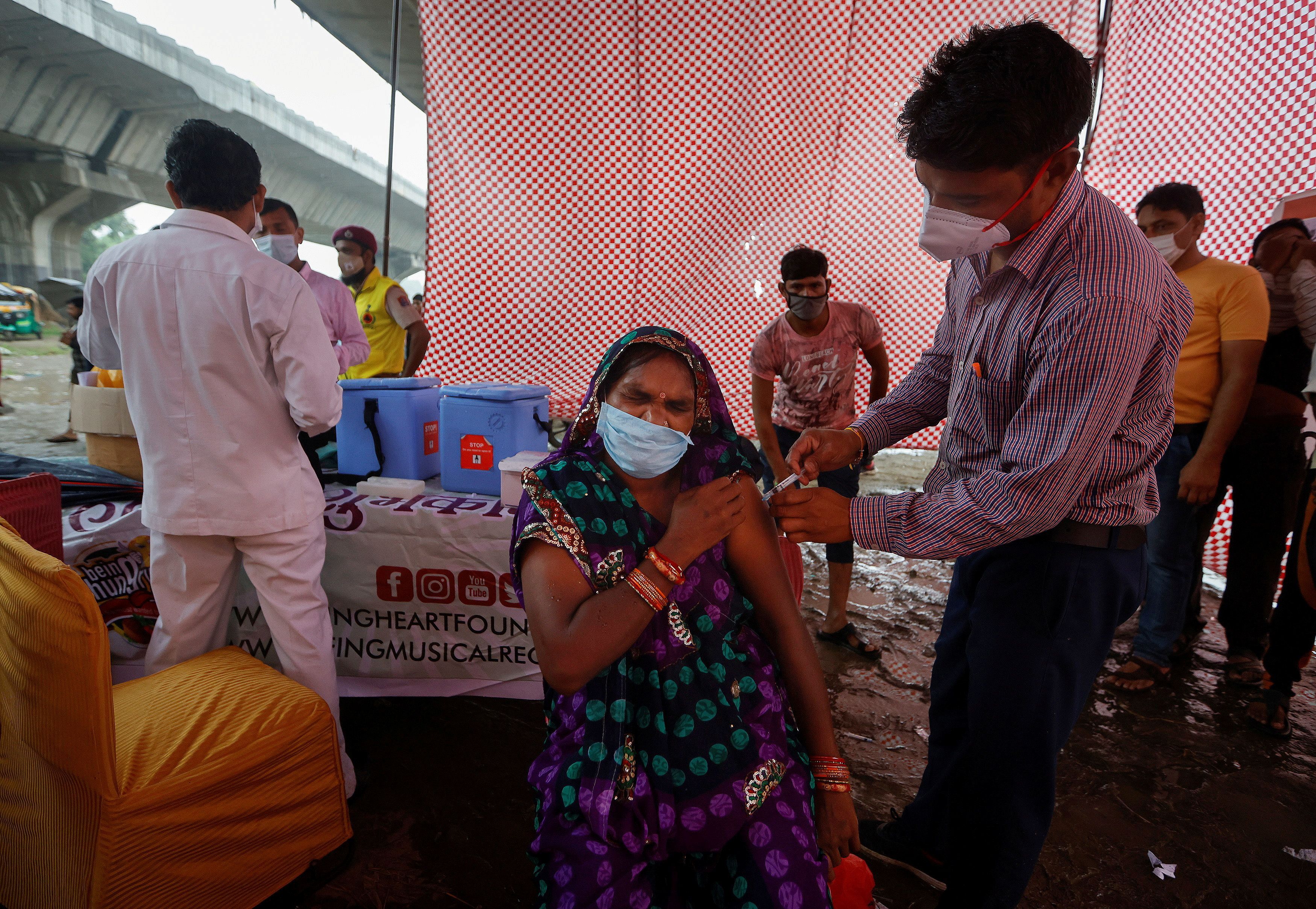
A woman receives a dose of COVAXIN coronavirus disease (COVID-19) vaccine manufactured by Bharat Biotech, during a vaccination drive at an under-construction flyover in New Delhi, India, August 31, 2021. REUTERS/Adnan Abidi

A woman receives a dose of COVAXIN coronavirus disease (COVID-19) vaccine manufactured by Bharat Biotech, during a vaccination drive at an under-construction flyover in New Delhi, India, August 31, 2021. REUTERS/Adnan Abidi

NEW DELHI, Sept 21 (Reuters) - Only months ago, India ran so short of COVID-19 vaccines that computer experts wrote software code to help people snag scarce immunisation slots and the then health minister had to constantly battle opposition criticism on social media.

The minister later quit and in came a little-known but hands-on politician, Mansukh Mandaviya, who, according to a person close to him, communicates with vaccine producers on a near daily basis and tries to resolve their problems promptly.

Vaccine supplies have surged.

Government officials say they are confident of fully immunizing nearly all adults by December, giving it the confidence to announce a gradual restart of vaccine exports in the October quarter, for the first time since April when a second surge in infections overwhelmed hospitals. read more


That will help the sputtering global COVAX vaccine-sharing programme, which is far behind its pledge to deliver 2 billion doses this year following supply problems and India's export curbs.

The GAVI vaccine alliance, which sponsors the programme along with the World Health Organization, UNICEF and the CEPI, this month cut COVAX's supply target by nearly 30% to 1.425 billion doses. read more

"This could have an immense positive impact on both health security within India as well as globally," a GAVI spokesperson told Reuters about the export announcement on Monday.

"Our priority right now is to engage with the government of India and Serum Institute of India (SII) to understand the impact this will have on our supply schedule."


The turnaround is chiefly thanks to the SII, which is cranking up more doses of AstraZeneca's (AZN.L) COVID-19 shot than the government's most optimistic projection.

SII would supply 200 million doses of the vaccine, branded Covishield, to the government this month, compared with about 150 million the previous month, said a government source who declined to be identified. read more

NEW PRODUCTION LINES

The government said in May that Covishield output could reach 750 million doses between August and December, but the actual output could be more than 900 million, said two other sources with direct knowledge of the matter.


"The company added new lines, got quick approvals to divert a line meant for some other vaccine," said one of the sources.

It now has five production lines making Covishield, up from just two in April, according to the source. The person said SII's monthly output could go as high as 215 million doses.

The health ministry and SII did not immediately respond to a request for comment.

Bharat Biotech, the producer of India's first domestically developed shot, Covaxin, told Reuters its monthly output would nearly treble to 100 million doses by the end of the year.

SII also received funding and diplomatic help from the government that ensured supplies of raw material from the United States following a plea on social media and elsewhere.

That enabled India, which has reported the most number of infections in the world after the United States, to ramp up its vaccination campaign, giving at least one dose to 65% of its 944 million adults and the necessary two doses to 22%.

Health Minister Mandaviya told reporters on Monday that he expected overall domestic vaccine production to exceed 1 billion doses in the October-December quarter, which would be more than enough to meet domestic demand.

India is the world's biggest vaccine maker and its companies including SII, Bharat Biotech and Biological E, which does bottling work for Johnson & Johnson's (JNJ.N) COVID-19 shot, have trebled their capacity to make nearly 3 billion doses a year, much of which could be available for overseas sale from next year.

"We will keep producing more to meet our needs and also export," Mandaviya said.

Reporting by Krishna N. Das; Additional reporting by Neha Arora; Editing by Miyoung Kim, Robert Birsel

Above is from:  https://www.reuters.com/world/india/how-india-flipped-its-vaccine-fortunes-2021-09-21/

Tuesday, September 21, 2021

September 21: Johns Hopkins COVID 19 Report

COVID-19 Situation Report

EPI UPDATE The WHO COVID-19 Dashboard reports 228.4 million cumulative cases and 4.69 million deaths worldwide as of September 21. Global weekly incidence decreased by 8.6% compared to the previous week, and mortality fell by 6.6%.

Global Vaccination

The WHO reported 5.78 billion cumulative doses of SARS-CoV-2 vaccines administered globally as of September 20. A total of 3.30 billion individuals have received at least 1 dose, and 2.39 billion are fully vaccinated. Analysis from Our World in Data indicates that the overall trend in global daily vaccinations continues to decline. After peaking 3 times at more than 42 million doses per day between late June and early September, the average has fallen to 29 million. In mid-July, between the 2 highest peaks, the average dropped as low as 20 million before rebounding, so the longer-term trend remains uncertain*. The global trend continues to closely follow Asia. Daily vaccinations in Europe have steadily declined since early July, and if the continent as a whole continues on this trajectory, it could soon fall below Africa on a per capita basis. On the opposite end of the spectrum, Oceania is currently #1 globally in terms of per capita daily vaccinations. It was second to last (ahead of only Africa) as recently as early July, but its trend has accelerated over the past several months. Our World in Data estimates that there are 3.43 billion vaccinated individuals worldwide (1+ dose; 43.6% of the global population) and 2.51 billion who are fully vaccinated (31.9% of the global population).

*The average daily doses administered may exhibit a sharp decrease for the most recent data, particularly over the weekend, which indicates effects of reporting delays. In an effort to reflect the longer-term trends, the numbers reported here may not correspond to the most recent data.

UNITED STATES

The US CDC reports 42.0 million cumulative COVID-19 cases and 672,738 deaths. The US appears as though it may have passed a peak in terms of daily incidence. The most recent high was 159,929 new cases per day on September 1, and the trend began to decline slightly before the Labor Day holiday weekend. The reporting has largely recovered following the holiday, but the average daily incidence has not returned to the pre-holiday level. The current average is approximately 141,000 new cases per day and appears to be decreasing. Daily mortality continues to increase slowly, now up to 1,521 deaths per day—the highest average since February 27. If the daily incidence peaked on September 1, we would expect mortality to peak in the next week or so*.

*Changes in state-level reporting may affect the accuracy of recently reported data, particularly over the weekend. In an effort to reflect the longer-term trends, the numbers reported here may not correspond to the most recent dates.

At more than 1,500 deaths per day, the US could surpass 675,000 cumulative deaths in the next several days, which would make the COVID-19 pandemic more deadly in the US than the 1918 influenza pandemic. Notably, the US population in 1918 (approximately 105 million) was less than one-third of the current population, so the COVID-19 mortality is much lower on a per capita basis.

California is the only US state categorized as having Substantial community transmission, having fallen below the threshold of 100 weekly new cases per 100,000 population that corresponds to the High category. California’s test positivity is not reported by the CDC. The next 4 states are reporting between 125-150 weekly new cases per 100k: Connecticut (126.5), Colorado (127.9), Maryland (141.5), and Vermont (146.3).

US Vaccination

The US has administered 386 million cumulative doses of SARS-CoV-2 vaccines. Daily vaccination reporting appears to have recovered from the Labor Day holiday weekend, and the longer-term trend continues to decline from the most recent peak on August 29*. There are 212.0 million individuals who have received at least 1 dose, equivalent to 63.9% of the entire US population. Among adults, 76.5% have received at least 1 dose, as well as 14.4 million adolescents aged 12-17 years. A total of 181.7 million individuals are fully vaccinated, which corresponds to 54.7% of the total population. Approximately 65.9% of adults are fully vaccinated, as well as 11.5 million adolescents aged 12-17 years.

*Due to delays in reporting, estimates for the average daily doses administered are less accurate for the most recent 5 days. The most current average provided here corresponds to 5 days ago.

US FDA PANEL BOOSTER DOSE RECOMMENDATION The US FDA’s Vaccines and Related Biological Products Advisory Committee (VRBPAC) on September 17 voted 16-2 against authorizing third doses of the Pfizer-BioNTech SARS-CoV-2 vaccine for the general population, but it unanimously recommended third doses for individuals aged 65 years and older and those who are at elevated risk for severe disease. The panel’s recommendation—made after more than 7 hours of deliberation—is a surprising rebuke to plans previously announced by US President Joe Biden, who expected booster doses to begin for the general population this week. Although the FDA is not required to follow VRBPAC recommendations, it generally does, and both the FDA and the US CDC’s Advisory Committee on Immunization Practices (ACIP) are expected to adopt the recommendation in the coming days and clarify who qualifies for booster doses. VRBPAC also signaled unanimous support for third doses for healthcare workers and others at high occupational risk, but it did not take a formal vote. The panel will likely discuss booster doses for those individuals and individuals who have received the Moderna and J&J-Janssen vaccines at a later date.

Hours before the VRBPAC meeting, the CDC released data indicating the level of protection against hospitalization wanes significantly in the 4 months following vaccination. The study, published in the CDC’s Morbidity and Mortality Weekly Report (MMWR), showed vaccine effectiveness (VE) against hospitalization for the Pfizer-BioNTech vaccine fell from 91% in the first 4 months to 77% beyond 120 days post-vaccination. For the Moderna vaccine, VE against hospitalization remained high, falling only 1 percentage point (pp) after 120 days, from 93% to 92%. Although there were not enough participants to comparatively evaluate the J&J-Janssen vaccine’s effectiveness over time, the study said the single-dose vaccine has been 71% effective at preventing hospitalization.

While most health experts applauded the FDA panel’s decision, arguing that it was evidence-based, some US residents expressed confusion over the recommendation. Biden administration officials appeared to backpedal slightly on the previous announcement that booster doses could be made available to the general public beginning this week, with several saying they still expected US health agencies to recommend the extra shots for the general population in the coming weeks when more data become available. There remains significant debate over the need for widespread booster doses. Some experts instead advocate for increased focus on reaching unvaccinated individuals, who account for the majority of new COVID-19 cases in the US, and others call for equitable allocation and distribution of available doses globally.

J&J-JANSSEN VACCINE SECOND DOSE On September 21, Johnson & Johnson (J&J) announced preliminary findings from a Phase 3 clinical trial that indicate increased protection following a second dose of its SARS-CoV-2 vaccine, developed in collaboration with Janssen Pharmaceuticals. Unlike other major vaccines—including those from Pfizer-BioNTech, Moderna, and AstraZeneca-Oxford—the J&J-Janssen vaccine was originally authorized as a single dose. In the Phase 3 clinical trial, the second dose was administered 2 months after the first dose, and the control group was made up of individuals who received only a single dose. The press release does not indicate the total number of participants.

According to the press release, a second dose increased the vaccine’s efficacy (compared to a single dose) by an estimated 100% against severe disease* and 75% and 94% against symptomatic COVID-19 globally and in the US, respectively. Additionally, antibody levels after the second dose were 4-6 times higher than after a single dose. The study also evaluated a second dose administered 6 months after the first dose. Following a booster 6-month booster, antibody levels increased by a factor of 12 compared to a single dose. The press release does not provide overall efficacy estimates (ie, compared to receiving no vaccine at all). The press release also describes real-world data that indicate the single-dose regimen provides strong, lasting protection against COVID-19. As has been the trend throughout the pandemic, the preliminary findings were presented via press release, and the data have not been published publicly nor subjected to peer review; however, J&J committed to submitting the full dataset for publication “in the coming months.”

*The efficacy against severe disease is based on only 8 cases among the control group and zero among those who received the second dose. The low number of cases yields a large confidence interval (30-100%), and additional data would provide a better understanding of the protective effect.

PEDIATRIC VACCINATION DATA Pfizer and BioNTech on September 20 announced positive results from a Phase 2/3 trial of their SARS-CoV-2 vaccine in children aged 5 to 11 years. The researchers found that a 2-dose regimen of 10µg doses administered 21 days apart demonstrated a favorable safety profile and robust neutralizing antibody response. The findings—which are neither published nor peer-reviewed—are a crucial step toward a SARS-CoV-2 vaccine becoming available for younger children, and the companies expect to submit an application to the US FDA for the vaccine’s authorization for that age group by the end of September. US regulators have issued warnings to the general public to wait for authorization before seeking vaccination for younger children, as the full adult dose of 30µg may put children at a higher risk for adverse side effects, including myocarditis.

The trial included nearly 2,300 children, and two-thirds of them in the vaccine group. The vaccinated children also were compared with a separate cohort of 16-25-year-old individuals who received the full adult course of the vaccine (2 doses of 30µg). The trial found that the neutralizing antibody response was similar between both vaccinated groups, with the neutralizing antibody levels within 5% of each other. Both groups also experienced similar post-vaccination adverse events.

Results from another study evaluating the Sinopharm SARS-CoV-2 vaccine in children were published on September 15 in The Lancet Infectious Diseases. The Phase 1/2 trial examined the safety and immunogenicity of the vaccine in a cohort of children aged 3-17 years, with participants broken into several age groups (3-5, 6-12, and 13-17 years) and dosing groups (0 [control], 2µg, 4µg, and 8µg). Three (3) doses of each vaccine dosage or placebo were administered 28 days apart. All adverse events were categorized as mild or moderate severity, but the article does not report on serious adverse events. The study concluded that children who received the vaccine had robust immune responses and similar levels of neutralizing antibodies to those observed in older vaccine recipients. The study recommended a 2-shot 4µg dose regimen for future Phase 3 trials. Additional data are being collected through a Phase 3 trial currently taking place in the UAE.

UN GENERAL ASSEMBLY & COVID-19 SUMMIT Beginning with an address to the UN General Assembly today, US President Joe Biden will focus his attention on efforts to end the COVID-19 pandemic and attempt to rally other vaccine-producing nations to commit to providing additional doses to countries in need. In addition to the main UN General Assembly meetings, the US will participate in a virtual COVID-19 summit on September 22 and a meeting of the Quadrilateral Security Dialogue (Australia, India, Japan, US) on September 24. The effort to improve vaccine diplomacy is being watched carefully by public health experts, advocates, and organizations eager for President Biden to fulfill his pledge that the US will serve as an “arsenal of vaccines” for the world. The US, along with several other higher-income nations, has faced criticism for ignoring calls from the WHO to postpone vaccine booster dose programs in order to redirect those shots to the COVAX facility, which is behind schedule on its goal to vaccinate at least 10% of the populations in low- and middle-income countries (LMICs). At the COVID-19 summit, the US is expected to make several announcements regarding its own commitments. Reportedly, the US government is negotiating to purchase an additional 500 million doses of the Pfizer-BioNTech vaccine to distribute globally, which would bring the total US donation to 1.15 billion—about one-tenth of the estimated 11 billion the world needs.

US officials have expressed concern that the UN General Assembly meetings could become a superspreader event, with the world body relying only on an honor system to ensure attendees are vaccinated before they speak. More than 100 heads of state and government as well as more than 20 foreign ministers have registered to speak in person at the meeting, with some already openly defying the vaccine honor system. Brazil President Jair Bolsanaro, for example, said he will decide whether to take the vaccine after everyone in his nation is vaccinated—only 36% is currently vaccinated. Other leaders, including Vietnamese President Nguyen Xuan Phuc, have not disclosed their vaccination status, and Russia complained the requirement infringes upon nations’ rights to participate at the UN. The New York City government, which requires proof of vaccination for convention centers, has said the requirement includes the UN assembly hall, although the UN headquarters building is considered international territory. In a goodwill effort, the municipal government has set up a mobile vaccine clinic outside the UN complex to offer free testing and vaccination.

US AIR TRAVEL REQUIREMENTS The US government plans to ease travel restrictions for fully vaccinated foreign nationals beginning in November, marking the end of an 18-month interruption to international on travel. The US currently prohibits travel for most non-US citizens who have visited Brazil, China, the EU, India, Iran, South Africa, or the UK within the past 14 days. Under the new policy, non-US residents traveling to the US will have to show proof of vaccination and proof of a negative SARS-CoV-2 test within 3 days before boarding a US-bound aircraft. Children not yet eligible for vaccination will be allowed to travel with only a negative test. The US CDC is expected to issue an order directing airlines to collect travelers’ phone numbers and email addresses for a new contact tracing system that will enable health officials to follow up with travelers after they arrive in the US. Additionally, unvaccinated US citizens arriving in the US will need to show proof of a negative SARS-CoV-2 test taken within 1 day of traveling to the US and and also complete another test upon arrival (reportedly, at their own expense). This week, the US extended its restrictions on nonessential travel to Mexico and Canada, but there is no indication if or how the vaccination and testing requirements would be applied at land borders.

VACCINATION IN AFRICA With more than 8 million cumulative COVID-19 cases recorded in African countries and rising concern over a fourth wave, WHO Regional Director for Africa Dr. Matshidiso Moeti on September 19 called on wealthy nations to forego third vaccine doses for healthy individuals, donate excess doses, and allow COVAX and the African Union to purchase the vaccine needed to protect the continent’s population. Writing in a New York Times opinion piece, Dr. Moeti warned that with only 4% of the African population fully vaccinated, countries with low vaccination coverage “could act as variant incubators, increasing the risk that more dangerous variants will emerge and enter international travel networks.” Additionally, the COVAX facility recently announced that it is cutting its planned vaccine deliveries to Africa by 150 million doses in 2021, leaving the continent 500 million doses short of the year-end target of fully vaccinating 40% of the population. According to WHO Africa, the 470 million doses now expected to be delivered this year through COVAX is enough to vaccinate only 17% of the population. At a news conference last week, Dr. Moeti blamed vaccine export bans and vaccine hoarding for the shortfall, arguing that higher-income countries are causing “a chokehold on the lifeline of vaccine supplies to Africa.” She noted that African nations recently tripled the weekly doses administered over previous weeks, but the continent will likely not reach the 40% goal until at least March 2022, based on the current pace.

INDIA VACCINE EXPORTS India is expected to resume exporting domestically manufactured SARS-CoV-2 vaccines sometime between October and December 2021. Indian Minister of Health Mansukh Mandaviya indicated that the initial focus will be on supplying the COVAX facility and neighboring countries. India is the world’s largest manufacturer of vaccines, but it prohibited exports of SARS-CoV-2 vaccines in April 2021, when the country was experiencing its largest surge. The announcement comes ahead of Prime Minister Narendra Modi’s visit to Washington, DC, for a summit of Quadrilateral Security Dialogue, which includes Australia, India, Japan, and the US. India's monthly vaccine output has increased recently, and the country expects to produce at least 1 billion doses in the last 3 months of 2021.

CANADA VACCINE APPROVALS On September 16, Health Canada granted full regulatory approval to both the Moderna and Pfizer-BioNTech SARS-CoV-2 vaccines for use in individuals aged 12 years and older. In an announcement, Moderna said the approval marks “an important milestone,” as it is the first full approval for its SARS-CoV-2 vaccine. Notably, the Moderna vaccine is not yet authorized in the US for children under the age of 18.

“TEST-TO-STAY” PROTOCOLS With the school year only beginning across the US, already tens of thousands of students have had to quarantine after coming in close contact with classmates or teachers who test positive for SARS-CoV-2. An increasing number of school districts nationwide are implementing testing programs to try to keep more children in classrooms instead of having to quarantine at home—and possibly disrupting their parents’ work schedules and their education—after being exposed to a known COVID-19 case. The strategy, known as “test to stay” or modified quarantine, allows children to stay in school if they remain asymptomatic, participate in regular testing (eg, daily) and continue to test negative, and follow other preventive measures. Typically, the tests and the staff to conduct them are provided by the school districts, straining already-tight resources.

In a statement to The New York Times, the US CDC said it does not recommend or endorse test-to-stay strategies at this time, saying there is not yet enough evidence to support them. The agency recommends that any unvaccinated student who has close contact with a known COVID-19 case undergo quarantine for 14 days. A study conducted by British researchers and published last week in The Lancet suggests that daily testing of school-based contacts could be effective in mitigating COVID-19 risk while to helping more students stay in school following an exposure. The study showed that COVID-19 incidence rates were not significantly different between schools with "test-to-stay" policies compared with those that required at-home quarantine.

FAKE VACCINATION CARDS Both the price of fake SARS-CoV-2 vaccination cards and the number of online sellers have increased dramatically in recent weeks, following US President Joe Biden’s announcement extending vaccine mandates for most federal workers, healthcare workers, and employees of many US companies, according to cybersecurity company Check Point Software Technologies. As of September 2, the average cost of a fake vaccination card bearing the US CDC logo was US$100, but that price doubled following President Biden’s September 9 announcement. Additionally, the estimated number of vendors increased from approximately 1,200 to more than 10,000. Many of the cards are being sold through the instant messaging app Telegram, which has 500 million monthly users worldwide and exhibited a 10-fold increase in US users following the mandates, up to 300,000. Most sellers require payment in cryptocurrency and collect personal information that is unnecessary to mail a blank fake card. Government authorities have cautioned against providing such information. Though it is unclear how people receive the fake cards, US Customs and Border Protection (CBP) has reportedly intercepted thousands of packages of fake vaccination cards sent to the US from China in recent months. Both the US FBI and CBP have warned that buying, creating, or selling fake vaccination cards is a federal crime.

INACTIVATED VIRUS VACCINE & EGG-BASED MANUFACTURING Researchers in Thailand and the US published (preprint) results from a Phase 1/2 clinical trial of an inactivated recombinant SARS-CoV-2 vaccine. The NDV-HXP-S vaccine* was developed in Thailand, Vietnam, and Brazil, based on components developed at the Icahn School of Medicine at Mount Sinai (New York, US), the University of Texas (US), and it utilizes a Newcastle disease virus (NDV) platform. The trial included 210 participants aged 18-59 years who were randomized into 6 groups. They received 2 injections 28 days apart using either a 1µg dose (with or without an adjuvant), 3µg dose (with or without an adjuvant), 10µg dose (without adjuvant), or placebo. All but 5 participants received both doses. The Phase 1/2 trial was principally designed to evaluate safety, and all doses were generally well tolerated, with no serious adverse events reported. Additionally, 93.9-100% of vaccinated participants had increases in neutralizing antibodies of at least 4 times over baseline, an encouraging indication of immune response.

There are multiple other inactivated virus vaccines already available—including those from Sinopharm and Sinovac in China and Bharat Biotech in India—but the NDV-HXP-S vaccine has the advantage of being produced using chicken eggs, similar to some seasonal influenza vaccines. Facilities around the world have production lines that can manufacture seasonal influenza vaccines using chicken eggs, and a SARS-CoV-2 vaccine that leverages this manufacturing platform could take advantage of substantial and geographically distributed production capacity. As we have covered previously, production capacity for existing SARS-CoV-2 vaccines remains limited, and many countries, particularly in Africa, continue to struggle to access sufficient doses to support their vaccination efforts. It will still take months to complete Phase 3 clinical trials, but a vaccine that utilizes egg-based production could potentially increase vaccine access for low- and middle-income countries (LMICs).

*Unlike previous vaccines and vaccine candidates that were principally developed by 1 or 2 companies or organizations, the NDV-HXP-S vaccine does not have a clear informal designation (eg, Pfizer-BioNTech, Moderna). NDV refers to the Newcastle disease virus platform, and HXP refers to HexaPro, a modified version of the SARS-CoV-2 spike protein used in the vaccine.

ALABAMA Alabama State Health Officer Dr. Scott Harris on September 17 said that the state’s overall mortality rate outpaced its birth rate in 2020 for the first time in recorded history. Alabama recorded 57,641 live births and 64,714 total deaths in 2020. Records from the Alabama Department of Public Health indicate that 7,128 of those deaths were attributable to COVID-19. Historically, Alabama’s birth rate has remained higher than the death rate, even during high-casualty tragedies such as World War I, World War II, and the 1918 influenza pandemic. This unfortunate statistic highlights the devastating toll the current pandemic has inflicted on vulnerable areas of the nation. Currently, 41.4% of Alabama’s population is fully vaccinated, well below the national average of 54.7%. Experts project that Alabama could again experience a higher rate of deaths than births in 2021, if the state continues down its current path.