Sunday, August 9, 2020

August 9: 1382 New COVID-19 Cases in Illinois

Public Health Officials Announce 1,382 New Confirmed Cases of Coronavirus Disease

9th Aug, 2020

SPRINGFIELD – The Illinois Department of Public Health (IDPH) today announced 1,382 new confirmed cases of coronavirus disease (COVID-19) in Illinois, including 8 additional confirmed deaths.

  • Cook County: 1 female 20s, 1 female 40s, 1 male 40s, 1 male 50s, 1 female 60s, 2 males 60s
  • Pulaski County: 1 male 60s

Currently, IDPH is reporting a total of 194,080 cases, including 7,636 deaths, in 102 counties in Illinois. The age of cases ranges from younger than one to older than 100 years.  Within the past 24 hours, laboratories have reported 41,354 specimens for a total of 3,073,988.  The preliminary seven-day statewide positivity for cases as a percent of total test from August 2 – August 8 is 4.1%.  As of last night, 1,488 people in Illinois were reported to be in the hospital with COVID-19.  Of those, 322 patients were in the ICU and 114 patients with COVID-19 were on ventilators.

Following guidance from the Centers for Disease Control and Prevention, IDPH is now reporting both confirmed and probable cases and deaths on its website.  Reporting probable cases will help show the potential burden of COVID-19 illness and efficacy of population-based non-pharmaceutical interventions.  IDPH will update these data once a week.

*All data are provisional and will change. In order to rapidly report COVID-19 information to the public, data are being reported in real-time. Information is constantly being entered into an electronic system and the number of cases and deaths can change as additional information is gathered.  Information for deaths previously reported has changed, therefore, today’s numbers have been adjusted.  For health questions about COVID-19, call the hotline at 1-800-889-3931 or email dph.sick@illinois.gov.

Above is from:  http://dph.illinois.gov/news/public-health-officials-announce-1382-new-confirmed-cases-coronavirus-disease

August 6: State COVID-19 death projections from U of Washington


Home

The newest projections from August 6, projects through December 1, 2020..  The other four projections are through November 1, 2020,  Georgia now has the highest projected death rate 2829 per million.  This week projections rose by major proportions for Colorado, California, Arkansas, Oklahoma, Wisconsin,Washington State, Virginia, Kansas and Oregon.  North Dakota, South Dakota and Missouri were added to the listings based upon current happenings in the two states.

The August 6 projections are available from:  https://covid19.healthdata.org/united-states-of-america

                         July 7----July 14-----JULY 22------July 30—August 6*

United States  208,255,  224,546, 219,864,  230,822, NOW 295,011   Population 331.00 million  629.17 per million 678.39 per million, 664.24 per million, 697.35 per million, NOW 891.17 per million

Georgia  3,857  deaths; 4736;  7336; 10,278, NOW 11,288 Population 3.99 million   966.67 per million ; 1186 .97 per million;1838.60 per million; 2575.94 per million; NOW 2829.07 per million 

New York  32,221 deaths; 35,379; 35,039; 34,423; NOW 33,945  Population 18.8 million  1713.88 per million; 1881.86 per million; 1863.78 per million; 1836.33 per million;  NOW 1805.59 per million

Louisiana   4,643 deaths; 5,167; 4955; 6401; NOW 7901  Population 4.6 million  1009.35  per million; 1123.26 per million; 1077.17 per million; 1391.52 per million;  NOW 1717.61 per million

Massachusetts  12,906 deaths; 10,121 deaths ; 9970;   9647; NOW 10,314   Population 6.7 million  1926.27 per million 1510.60 per million; 1488.06 per million1439.85 per million; NOW 1539.40 per million

Connecticut  4,692  deaths; 4,456;  4750;  4844NOW 5179 deaths  Population  3.7 million   1268.11 per million; 1204.32 per million;1283.78 per million;  1309.19 per million; NOW 1399.73 per million

Arizona  5,553 deaths; 5,177;  5664;7946NOW 6840   Population 7.29 million  761.73 per million ;710.15 per million;  776.95 per million: 1089.97 per million; NOW 938.27 per million

Texas    13,450 deaths;18,675;  18,812; 24,557; NOW 27,435    Population 29.90 million  449.83 per million; 624.58 per million; 629.16 per million; 921.30 per million; NOW 917.56 per million

Florida   17,477 deaths;19,285; 18,154,  16,318; NOW 19,358   Population 21.47 million  814.01 per million; 893.23 per million; 845.55 per million;  760.04 per million; 901.63 per million

Colorado  1937 deaths;  2,032; 2774:  2665; NOW 5179  Population 5.8 million  333.97 per million; 478.28 per million; NOW 459.48 per million; NOW 892.93 per million

Maryland  3,880 deaths ; 4,278;  4194;  4026; NOW 5174   Population 6.0 million  646.67  per million; 713.00 per million; 699.0 per million;  671.0 per million; NOW 862.34 per million

District of Columbia  666 deaths; 681 ; 694 ;  646; NOW 605 Population  .706 million  943.34 per million; 964.59 per million; 983.00 per million; 915.01 per million; NOW 856.94 per million

Missouri  5436 deaths Population 6.137 million 885.77 per million

California 16,827 deaths;  21,264; 19,572;  16,515; NOW 32,692   Population 39.78 million  423.00 per million;  534.54 per million;492.01 per million;  415.16 per million; NOW 821.82 per million

Kansas 632 deaths ; 410;  412;  588; NOW 2245  Population  2.77 million  228.16 per million 148.01 per million; 148.74 per million;  212.27 per million; NOW 810.47 per million

Illinois  8,907 deaths; 8,351;  8472 ;  8280; NOW 9995 Population 12.63 million  705.23 per million; 657.56 per million; 772.43 per million;  655.58 per million; NOW 791.37 per million

Ohio  5,712  deaths;4,545;  3900;  5694; NOW 9041  Population 11.73 million  486.96 per million; 387.47 per million; 332.48 per million; 485.42 per million; NOW 770.76 per million

Oklahoma  587  deaths;1,029 ; 1533; NOW 1484; NOW  2967 Population 4.0 million  146.75 per million 257.23 per million; 383.25 per million; 371.24 per million; NOW  741.75 per million

Arkansas 724 deaths;  617, 895;  833; NOW 2234    Population 3.018 million  239.89 per million 204.44 per million; 293.55 per million;   276.01 per million ; NOW 740.23 per million

South Carolina 242 deaths; 4,556; 3186;  3232; NOW 3672   Population 5.0 million  48.4 per million; 911.20 per million;  637.2 per million;646.4 per million; 734.40 per million

Washington  2,510 deaths; 3,170; 3303; 2178; NOW 5078  Population 7.17 million  325.98 per million ;442.112 per million; 450.67 per million;  303.77 per million; NOW 708.23 per million

Pennsylvania  9,999 deaths; 8,431; 8028;  8350; NOW 8859   Population 12.7 million  787.32 per million; 663.86 per million; 632.13 per million;657.48 per million;  NOW 697.56 per million

Oregon  471 deaths; 605;  683;  634; NOW 2967    Population 4.3 million  109.53 per million 140.70 per million;  158.84 per million; 147.44 per million; 690.0 per million

Iowa  841 deaths;  1,225; 1813,1700; NOW 2163   Population 3.17 million  265.30 per million; 386.44 per million; 571.93 per million;  536.28 per millionNOW 682.34 per million

Virginia 5,190 deaths ;  4,881;  2643; 2289; NOW 5842   Population 8.63 million  601.39  per million ;565.59 per million; 306.26 per million:  265.24 per million; 676.94 per million

Wisconsin  1,410 deaths;  992; 1041;  2030; NOW 3708  Population 5.82 million  242,27 per million 170.45 per million; 178.87 per million; 348.80 per million; NOW 637.11 per million 

South Dakota 254 deaths  Population .885 million 287.01 per million

North Dakota 215 deaths  Population .762 million 282.15 per million

Idaho  120 deaths; 559; 513; 365; NOW  916  Population 4.3 million  109.53 per million 140.70 per million;  158.84 per million;147.44 per million; NOW 213.02 per million

Trump’s executive order nightmare


Coronavirus stimulus: Extending extra unemployment benefits through executive order 'would really be a nightmare'


Denitsa Tsekova

Reporter

,

Yahoo MoneyAugust 8, 2020

Trump considering executive action if no deal is reached for stimulus

As Democrats and the White House struggle to reach an accord for a second round of stimulus, President Trump is threatening executive action if no deal is reached. Yahoo FInance’s Jessica Smith joins The Final Round to discuss.

President Trump signed several executive orders to address various issues related to the coronavirus pandemic after negotiations with Congressional Democrats over a new stimulus bill fell apart.

The immediate implications of the executive orders are unclear, and the unilateral route may be particularly messy when it comes to extending extra unemployment insurance (UI) benefits that expired after July.

“An executive order [on extra unemployment benefits] would really be a nightmare,” Michele Evermore, senior policy analyst at the National Employment Law Project, told Yahoo Money. “It would just end up resulting in people thinking they're getting a benefit but states being unable to figure out how to do it in many cases.”

US President Donald Trump speaks during a news conference in Bedminster, New Jersey, on August 7, 2020. (Photo by JIM WATSON/AFP via Getty Images)

US President Donald Trump speaks during a news conference in Bedminster, New Jersey, on August 7, 2020. (Photo by JIM WATSON/AFP via Getty Images)

Evermore said that enacting extra UI benefits through an executive order would take even longer than Congressional legislation — which experts say would take weeks to implement — because states can only administer benefits defined under the Social Security Act or by Congress. Benefits issued by an executive order aren’t authorized by the Employment and Training Administration, which manages unemployment compensation services for the Labor Department.

“States would have to set up a whole different system to pay out that piece of benefits,” Evermore explained. “I've heard from state agencies that getting the money this way would be difficult, if not impossible, to administer.”

On Saturday, Trump claimed that one of his executive orders would implement $400 in extra weekly unemployment benefits for jobless Americans — partially extending the extend the now-expired $600 provided by the CARES Act — until the end of the year, though it’s not clear if or when that would happen.

Unemployed Americans see a drop in their unemployment benefits between 52% to 72% without the extra $600, according to an analysis by Evercore ISI. Graphic: David Foster / Yahoo Finance

Unemployed Americans see a drop in their unemployment benefits between 52% to 72% without the extra $600, according to an analysis by Evercore ISI. Graphic: David Foster / Yahoo Finance

“You should always take what the administration says with a grain of salt,” Gbenga Ajilore, a senior economist at the Center for American Progress, a non-profit for public policy research and advocacy, told Yahoo Money. “I wouldn’t be surprised if the administration tries it and then backs out because of the difficulty.”

A previous GOP proposal to extend emergency jobless benefits at 70% of a worker’s lost wages, instead of sending each jobless American the same flat amount, was immediately complicated by the antiquated unemployment systems in most states.

“What the president outlines is likely legally and logistically impossible to execute in nearly every state,” House Ways and Means Committee Chairman Richard E. Neal (D-MA) said in a statement on Saturday, “not to mention that the proposed funding falls far short of what would be required.”


I don't know what CARES Act money they're talking about’

Another issue with any new executive orders to provide more stimulus amid the ongoing coronavirus pandemic would be funding.

White House Economic Adviser Larry Kudlow suggested that they could use leftover funds from the CARES Act, though that would likely be less than the $1 trillion offered in the original GOP proposal.

“Probably as much as a trillion dollars was obligated but unspent through the March CARES Act,” Kudlow told Bloomberg News on Friday morning. “We’d be able to repurpose it.”

Asked about funding for the promised executive orders, President Trump was optimistic but vague.

“We have the money,” he said on Friday evening. “We have plenty of money.”

Experts aren’t sure what money the president could use for funding an executive order on extra UI benefits.

“I don't know what CARES Act money they're talking about,” Evermore said. “The administration has limited powers of reprogramming money that was appropriated by Congress.”

Denitsa is a writer for Yahoo Finance and Cashay, a new personal finance website. Follow her on Twitter @denitsa_tsekova.

Above is from:  https://www.yahoo.com/news/us-response-virus-met-incredulity-063316318.html

Edwards Orchard is drive-in only

Edwards Apple Orchard announces opening date, drive-thru only

LOCAL NEWS

by: WTVO

Posted: Aug 9, 2020 / 08:57 AM CDT / Updated: Aug 9, 2020 / 08:57 AM CDT


POPLAR GROVE, Ill. (WTVO) — Edwards Apple Orchard announced their 2020 opening date, along with the news that they will operate a drive-thru system only this year.

“Your experience will be different this year, but we are doing everything we can to help continue your fall traditions while keeping our guests and employees safe,” Edwards Apple Orchard wrote on its website.

When the orchard opens on August 28th, the Apple Barn, Cider Cellar, and play area will remain closed. Donuts, apples, and cider will be available for drive-up pickup, along with specialty foods like corn salsa and apple butter.

“Look for the ENTER sign in the lower parking lot. A staff member will greet you with a list of 20 items available for sale that day. Mark the items you wish to purchase, and then follow the line of cars to the checkout tent where we will deliver your fall treats! Guests will remain in their vehicles,” the company said.

Edwards Apple Orchard is located at 7061 Centerville Road in Poplar Grove.

Edwards Apple Orchard West is located at 8218 Cemetery Road in Winnebago, and says it will offer pick-your-own apple service in early September.

Above is fromhttps://www.mystateline.com/news/local-news/edwards-apple-orchard-announces-opening-date-drive-thru-only/


How bad is it at Belvidere Assembly Plant?

COVID-19 cases investigated at Belvidere Assembly plant

MOST POPULAR

13


By Ken DeCoster
Rockford Register Star

Posted Aug 8, 2020 at 1:58 PM

Health chief urges precautions for those traveling to and from virus hot spots.

ROCKFORD — Health departments in Boone and Winnebago counties are investigating positive cases of COVID-19 associated with the Fiat Chrysler Automobiles Belvidere Assembly plant.

Officials did not say how many employees at the plant have tested positive for COVID-19, the respiratory illness caused by the new coronavirus.

The FCA plant, one of the region’s leading employers, draws workers from a wide swath of northern Illinois and southern Wisconsin. The Wisconsin counties just north of the state line are reporting higher rates of positive tests for COVID-19 than the Illinois counties to the south.

In a joint statement issued Friday, the two health departments said: “The Boone County Health Department has been working with Fiat Chrysler Automobiles (FCA) Belvidere Assembly Plant in the ongoing tracking of COVID-19 positive cases among their employees.They have shared their multi-layered program of safety measures with our department and we have discussed Illinois Department of Public Health and CDC guidance practices with them. FCA employs approximately 3,800 people, who live in multiple counties and states. Each local health department initiates contact tracing on positive individuals living within their borders to help mitigate community spread.”


FCA continues to make the health and safety of its employees a top priority, according to a statement issued by company spokeswoman Jodi Tinson.

“Since restarting our operations, we have had no spread of the virus at our Belvidere plant,” the statement said, adding that the company’s safety measures include on-site temperature checks, a daily health questionnaire, mandatory use of masks and safety glasses, social distancing, and continual cleaning and disinfecting.

“Where we have had an employee test positive, all of these measures have been in full use. We have also been aggressive in following recommended guidelines for contact tracing to prevent the spread and transmission of the virus.”

People who routinely travel across state lines for work or pleasure in COVID-19 hotspots such as Wisconsin need to take preventive measures to protect themselves and their communities, Winnebago County public health administrator Sandra Martell said.

“That includes things like masking and social distancing,” Martell said. “It also includes when you go to those destinations: How do you travel? Do you drive yourself in your own vehicle? Do you take public transportation? So, really trying to limit the numbers and contacts and exposures because people do travel for work.”

On Friday, the seven-day rolling rate of positive tests for COVID-19 in Winnebago County was 3.8%. The number of new COVID-19 cases was 23, raising the total number of cases since the pandemic began in March to 3,744. Since then, 96% of those who tested positive have been reported as recovered.

Boone County reported 12 new COVID-19 cases Friday, boosting its total to 770 confirmed cases since the outbreak began. The county’s seven-day rolling positivity rate stands at 5.5%.

Rock County, Wisconsin’s positivity rate was 5.4% as of Friday according to the Wisconsin Department of Health Services.

Walworth County, which includes Lake Geneva, reported a positivity rate of 7.2% as of Friday.

“Some of the largest outbreaks that we’ve seen in areas our country have been those congregate-type resort settings where people come together; they are not masked,” Martell said.“They’re enjoying themselves, but they’re not taking the necessary precautions to protect themselves and it contributes to the spread and the transmission of the disease.”


Mayor Ted Rehl of South Beloit, where three Wisconsin residents work in City Hall, acknowledged the porous nature of the Illinois-Wisconsin border, but noted that businesses in his community depend on workers from across the state line.

Rehl added that he dines frequently at restaurants in South Beloit and Beloit and that all “are doing the right thing” to protect their employees and customers.

On Friday, the Illinois Department of Public Health and Governor JB Pritzker announced new emergency rules designed to educate, warn and fine, if necessary, businesses that do not enforce COVID-19 safety guidelines.

Pritzker said the state will work with businesses, including restaurants, who have been lax on making customers wear masks.

Martell characterizes the ongoing pandemic as a marathon with multiple sprints in between.

“I understand that people are weary of all the things they need to do to stay safe,” Martell said.“Not only is it physically challenging at times but I think it’s emotionally challenging for our community to do this. Everyone’s tired.

“But, I also say our next hill that we’re going to climb in this pandemic is getting our children back into some in-person education.”

Ken DeCoster: kdecoster@rrstar.com; @DeCosterKen

Above is from:  https://www.rrstar.com/news/20200808/covid-19-cases-investigated-at-belvidere-assembly-plant

Saturday, August 8, 2020

August 8: 2190 New COVID Cases in Illinois


Illinois Reports 2,190 New Coronavirus Cases, Passes 3 Million Tests Performed During Pandemic

Published 4 hours ago • Updated 4 hours ago

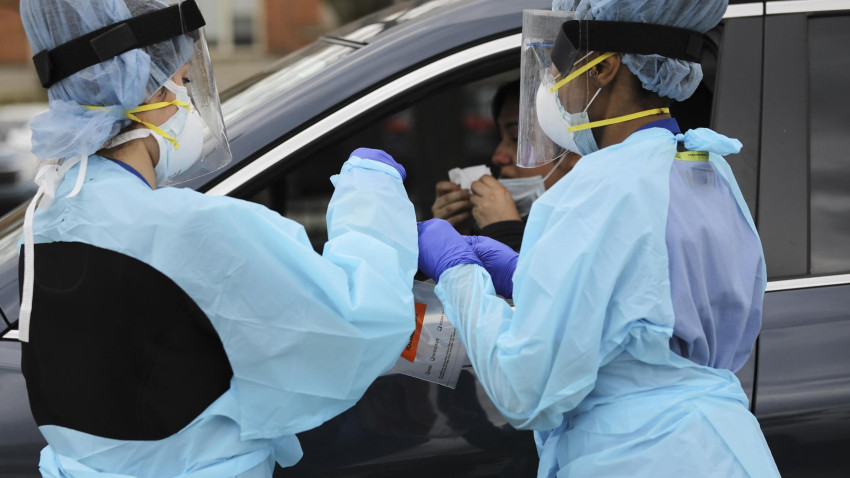
Norwegian Hospital nurses perform one of the first half dozen coronavirus tests on site in Chicago’s Humboldt Park neighborhood on Tuesday, April 28, 2020. (Abel Uribe/Chicago Tribune/Tribune News Service via Getty Images)

For the second day in a row the state of Illinois reported more than 2,000 new coronavirus cases, but the state also passed a new testing milestone as more than three million tests have now been performed statewide during the pandemic.

According to officials from the Illinois Department of Public Health, a total of 2,190 new coronavirus cases were reported Saturday, bringing the statewide total to 192,698 since the pandemic began.

According to data, the increase is the highest single-day bump in cases since May 24, when 2,508 new cases were confirmed by state health officials.


An additional 18 fatalities were reported on Saturday, bringing the statewide total to 7,631.

Saturday’s testing milestone came as the state reported 48,016 new tests, the second-highest single-day total recorded during the pandemic. In all, 3,032,634 coronavirus tests have been performed statewide during the pandemic, with a positivity rate of 6.35%.

Over the last seven days, the positivity rate has been 4.17%, the highest number recorded in that statistic since June 10.

As of midnight, 1,558 patients are currently hospitalized statewide due to COVID-19, with 338 currently in intensive care units.

Above is from:  https://www.nbcchicago.com/news/coronavirus/illinois-reports-2190-new-coronavirus-cases-passes-3-million-tests-performed-during-pandemic/2319141/

Harleys everywhere, masks nowhere: Sturgis draws thousands


Harleys everywhere, masks nowhere: Sturgis draws thousands

By STEPHEN GROVESyesterday
1 of 3

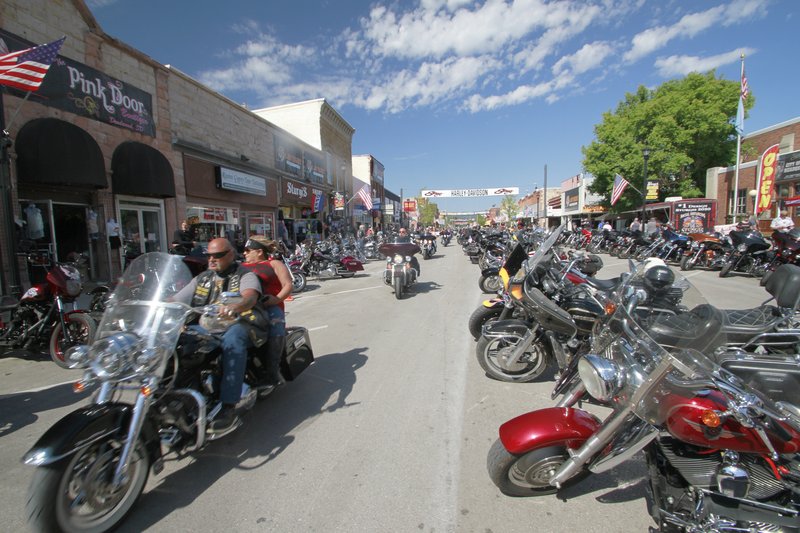
Thousands of bikers rode through the streets for the opening day of the 80th annual Sturgis Motorcycle rally Friday, Aug. 7, 2020, in Sturgis, S.D. (AP Photo/Stephen Groves)

STURGIS, S.D. (AP) — Thousands of bikers poured into the small South Dakota city of Sturgis on Friday as the 80th Sturgis Motorcycle Rally rumbled to life despite fears it could lead to a massive coronavirus outbreak.

The rally could become one of the largest public gatherings since the pandemic began, with organizers expecting 250,000 people from all over the country to make their way through Sturgis during the 10-day event. That would be roughly half the number of previous years, but local residents — and a few bikers — worry that the crowds could create a “super-spreader” event.

ADVERTISEMENT

Many who rode their bikes into Sturgis on Friday expressed defiance at the rules and restrictions that have marked life in many locales during the pandemic. People rode from across the country to a state that offered a reprieve from coronavirus restrictions, as South Dakota has no special limits on indoor crowds, no mask mandates and a governor who is eager to welcome visitors and the money they bring.

“Screw COVID,” read the design on one T-shirt being hawked. “I went to Sturgis.”

Bikers rumbled past hundreds of tents filled with motorcycle gear, T-shirts and food. Harley Davidson motorcycles were everywhere but masks were almost nowhere to be seen, with an Associated Press reporter counting fewer than 10 in a crowd of thousands over a period of several hours.

For Stephen Sample, who rode his Harley from Arizona, the event was a break from the routine of the last several months, when he’s been mostly homebound or wearing a mask when he went to work as a surveyor.

“I don’t want to die, but I don’t want to be cooped up all my life either,” he said.

Still, Sample, who is 66, feared what could happen if he caught COVID-19 at the rally. He said he was trying to avoid indoor bars and venues, where he felt the risk of infection was greater. But on the opening day of the rally, he said he ate breakfast at an indoor diner.

As Sample weighed the risks of navigating the crowds, the same thrill-seeking that attracted him to riding motorcycles seemed to win out.

“I think we’re all willing to take a chance,” he said.

Republican Gov. Kristi Noem has taken a largely hands-off approach to the pandemic, avoiding a mask mandate and preaching personal responsibility. She supported holding the Sturgis rally, pointing out that no virus outbreak was documented from the several thousand people who turned out to see President Donald Trump and fireworks at Mount Rushmore last month.

ADVERTISEMENT

Daily virus cases have been trending upward in South Dakota, but the seven-day average is still only around 84, with fewer than two deaths per day.

The rally attracted crowds of retirees and people in age ranges considered to be at higher risk from the coronavirus. But for many who see the rally as an annual pilgrimage, the camaraderie and atmosphere couldn’t be missed.

“I fell in love with the rally. I love the sound of the bikes,” said Bill Sudkamp, who was making his 20th consecutive rally appearance.

He and his wife, who declined to give their ages but said they were at elevated risk for COVID-19, were among the handful of people seen wearing masks in downtown Sturgis, a community of about 7,000 that’s roughly 25 miles (40 kilometers) northwest of Rapid City. They were also planning to avoid bars. Sudkamp felt it was inevitable that infections would spread in the packed bars and concert venues.

“It looked like South Dakota was plateauing mostly,” Sudkamp said. “It will be interesting to see what it looks like in two weeks.”

Marsha Schmid, who owns the Side Hack Saloon in Sturgis, was trying to keep her bar and restaurant from becoming a virus hot spot by spacing out indoor tables and offering plenty of hand sanitizer. She also scaled back the number of bands hired for the rally, hoping the crowds would stay thin but still spend the cash that keeps her business viable for the rest of the year.

She pointed out that many of her employees depend on the rally and the tips they can make.

“You’ve got people coming from all over the world,” she said. “I just hope they are being responsible and if they don’t feel good, they stay away.”

Several locals said they would spend the rally hunkered down at home. Carol Fellner stocked up on groceries and planned to stay away from any gatherings. Her husband suffers from bouts of pneumonia and kidney problems, and COVID-19 would be a “death sentence” for him, she said.

Fellner felt that the risk of an outbreak would be felt long after the bikers leave. The city plans to mass test residents to try to detect and halt outbreaks, but the area’s largest hospital system is already burdened with the influx of tourists and bikers who inevitably need hospital care during this time.

Sample was aware his trip to the rally could end in the hospital, which seemed to weigh on him.

“This is a major experiment,” he said. “It could be a major mistake.”

Above is from:  https://apnews.com/fa074079157ad9a3683445b291daaf39

*********************************************************************************************************************************************************

Thousands of bikers heading to South Dakota rally to be blocked at tribal land checkpoints

Edward Helmore

,

The GuardianAugust 8, 2020

<span>Photograph: Michael Ciaglo/Getty Images</span>

Photograph: Michael Ciaglo/Getty Images

Thousands of bikers heading to South Dakota’s 10-day Sturgis Motorcycle Rally will not be allowed through Cheyenne River Sioux checkpoints, a spokesman for the Native American group said on Saturday.

The decision to prevent access across tribal lands to the annual rally, which could attract as many as 250,000 bikers amid fears it could lead to a massive, regional coronavirus outbreak, comes as part of larger Covid-19 prevention policy. The policy has pitted seven tribes that make up the Great Sioux Nation against federal and state authorities, which both claim the checkpoints are illegal.

Related: 'It's just madness': bikers throng South Dakota town despite Covid threat

A duty officer for the Cheyenne River Sioux told the Guardian on Saturday that only commercial and emergency vehicles will be let through the checkpoints onto reservation land.

- ADVERTISEMENT -

A number of bikers had tried to enter but had been turned back, they said. Other reservations in the region, including the Oglala Sioux, were also turning away bikers that had attempted routes to Sturgis that pass through sovereign land.

Under Cheyenne River tribal guidelines non-residents driving non-commercial out-of-state vehicles are never allowed through the reservation. During the rally, non-commercial vehicles with South Dakota plates are also not allowed through.

The clampdown comes as fears mount that mask-free bikers visiting Sturgis for the largest gathering of people since the start of the Covid-19 epidemic could spread the virus to tribal groups that are already experiencing a rise in cases.

Oglala Sioux recorded 163 cases last week, while the Cheyenne River Sioux has seen cases rise to 79, according to the tribe’s website.

The restrictions come as local law enforcement reported a convergence of bikers from all directions. According to reports, many bikers heading for Sturgis expressed defiance at rules and restrictions that have marked life during the coronavirus pandemic.

While South Dakota has fared better than most states – it ranks 38th in Covid deaths per capita, according to a Reuters tally – cases have risen in recent weeks as hotspots move into the midwest.

During the rally, people are expected to cram bars and pack concerts with at least 34 acts playing. “Screw COVID,” read the design on one T-shirt on sale. “I went to Sturgis.”

Stephen Sample, who rode his Harley-Davidson from Arizona, told the Associated Press that the event was a break from the routine of the last several months.

“I don’t want to die, but I don’t want to be cooped up all my life either,” Sample, 66, said, adding that he had weighed the risks of navigating the crowds, but the same thrill-seeking that attracted him to riding motorcycles seemed to win out.

“I think we’re all willing to take a chance,” he said, but acknowledged the trip “could be a major mistake.”

South Dakota’s Republican governor, Kristi Noem, has supported holding the Sturgis rally, pointing out that no virus outbreak was documented from the several thousand people who turned out to see Donald Trump at Mount Rushmore last month.

The rally is marking its 80th anniversary and typically injects $800m into South Dakota’s economy. Meade county sheriff, Rob Merwin, said: “It’s going to be a lot of people and a lot of motorcycles all over the place. People are tired of being penned up by this pandemic.”

Related: Navajo elders: alone, without food, in despair

On Friday, a worker at the event told the Guardian crowds seemed larger than in previous years and warned that Sturgis attendees were paying little heed to medical advice.

“I’ve not seen one single person wearing a mask,” said bartender Jessica Christian, 29. “It’s just pretty much the mentality that, ‘If I get it, I get it.’”

“In downtown Sturgis it’s just madness,” Christian added. “People not socially distancing, everybody touching each other. It’ll be interesting to see how that turns out.”

Over 60% of Sturgis 6,900 residents who responded to a city council survey in May said they wanted the rally canceled.

A month later, the council voted to move ahead, although it canceled all city-sponsored events associated with the rally and included measures such as hand-sanitizing stations. Sturgis mayor Mark Carstensen said throughout the pandemic, “the state of South Dakota has been the freedom state and the city of Sturgis has stayed true to that”.

Above is from:  https://www.yahoo.com/news/thousands-bikers-heading-south-dakota-161317138.html