Thursday, January 10, 2019

Democrats Introduce Bill To Shield Unpaid Federal Workers From Lenders And Landlords


Igor Bobic

,

HuffPost•January 9, 2019


  • WASHINGTON ― Democrats on Wednesday introduced legislation that would give

1 / 2

Democrats Introduce Bill To Shield Unpaid Federal Workers From Lenders And Landlords

WASHINGTON ― Democrats on Wednesday introduced legislation that would give

WASHINGTON ― Democrats on Wednesday introduced legislation that would give relief to furloughed federal workers who are unable to pay rent or repay loans as a result of the ongoing government shutdown.

The national government has been partially closed since Dec. 21, and the consequences are mounting ― for national parks and airports, food inspections and emergency preparations, and a host of other services.

This week, some 800,000 federal workers will start missing paychecks. Many who were forced off the job told HuffPost that they’re fearful about taking on debt to cover housing, medicine and food costs.

President Donald Trump said Wednesday that the shutdown could continue “for as long as it takes,” with Democrats holding fast to their refusal to fund construction of a wall along the U.S.-Mexico border that Trump had repeatedly said Mexico would pay for.

The Federal Employee Civil Relief Act, introduced by Sen. Brian Schatz (D-Hawaii) and Rep. Derek Kilmer (D-Wash.), aims to give those workers a helping hand while the government remains shuttered.

The bill would prohibit landlords and creditors from taking action against federal workers or contractors who are hurt by the shutdown and cannot pay rent or repay loans. It would also allow federal workers to sue creditors or landlords that violate those protections, which would remain in effect during and for 30 days after a shutdown.

The bill is modeled after the Servicemembers Relief Act of 1940, which protects military members from being sued while in active service for their country and for up to a year after active duty.

The new proposal “prevents eviction, foreclosure, repossession, and loss of insurance. It basically allows any federal worker or contractor who is behind on monthly expenses to have relief until the government is reopened,” Schatz told HuffPost on Wednesday.

The bill has broad support from Democrats in the House and Senate, but no Republican co-sponsors ― yet. Schatz said he hoped to get at least a few of them on board.

Some banks have already moved to forgive late payments and service fees from furloughed federal workers, including Wells Fargo, Chase and Capital One.

Over the weekend, Trump told reporters that he could empathize with those who aren’t getting paid as a result of the shutdown.

“I can relate,” he said on Sunday. “And I’m sure that the people that are toward the receiving end will make adjustments, they always do. And they’ll make adjustments. People understand exactly what’s going on.”

“Many of those people that won’t be receiving a paycheck, many of those people agree 100 percent with what I’m doing,” the president added without evidence.Trump later encouraged landlords and lenders to “be nice and easy” to furloughed workers.

UPDATE: Jan. 10 ―  Sen. Marco Rubio (R-Fla.) said Thursday that while he had not yet seen Schatz’s proposal, he welcomed the concept of legal protections for furloughed federal workers.

“I certainly support the idea that we should be protecting them. I feel terrible for them. It’s not their fault. They’re caught in the crosshairs of something that has nothing to do with them and it’s unfair,” Rubio told HuffPost.

Arthur Delaney contributed to this report.

Wednesday, January 9, 2019

Belvidere SHOPCO may close soon


Pharmaceutical supplier owed $67 million says Shopko to file for bankruptcy Jan. 15


Jeff Bollier, Green Bay Press-Gazette Published 3:51 p.m. CT Jan. 7, 2019 | Updated 5:48 p.m. CT Jan. 9, 2019


  • 55 010919 Shopko Military Ave Buy Photo

The Shopko store at 216 S. Military Ave. in Green Bay. (Photo: Jim Matthews/USA TODAY NETWORK-Wisconsin)Buy Photo

CONNECTTWEETLINKEDINCOMMENTEMAILMORE

GREEN BAY - Shopko could file for bankruptcy protection from creditors as soon as next week, according to a pharmaceutical drug supplier that says the retailer owes it $67 million.

Jeff Garfinkle, an attorney for San Francisco-based McKesson Corp., said during a hearing Monday in Brown County Circuit Court, that Shopko is expected to file for bankruptcy on Jan. 15.

The companies were in court for a hearing on McKesson's request for a restraining order to keep Shopko from selling medications it supplied the Ashwaubenon-based retailer. McKesson claims it has provided Shopko with $67 million in drugs since Nov. 11, but has not been paid since early December.

McKesson's lawyers argued the company's ability to recoup that debt would be impaired if the Ashwaubenon-based retailer seeks protection from creditors under Chapter 11 of the U.S. Bankruptcy Code.

"The only way to preserve a remedy for McKesson, which has provided $67 million of goods to Shopko and not been paid for it, is to stop them from selling the goods," said David Lucey, an attorney for McKesson.

A Shopko spokesperson did not return messages or answers to a series of questions provided via email. Sun Capital Partners, Shopko's parent company, declined to comment Monday evening.

Brown County Judge William Atkinson rejected McKesson's request for a restraining order.

Stephen Hackney, an attorney for Shopko, said McKesson's request would require it to close its pharmacies, and perhaps even whole stores, potentially harming patients who need life-saving medications. He said it also would threaten the sale of some of its pharmacy business and customer lists to Kroger, Hy-Vee and other competitors, a key step in the company's effort to restructure. 

"I do not believe it is safe for citizens, residents ... and patients if I grant your order," Atkinson told McKesson's attorneys Monday morning. "There would be significant public health effects. The public harm, I don't think it can be understated."

The civil case, filed Friday in Brown County, provides some insights into Shopko's financial condition one month after it announced plans to close 39 stores and sell parts of its pharmacy business.

Shopko CEO Russ Steinhorst was in court Monday, but Hackney declined a request for an interview with Steinhorst and directed USA TODAY NETWORK-Wisconsin to the company's media representative.

Hackney said the sale of the pharmacy business is expected to net the retailer in excess of $100 million, money that is key to turning around the struggling business.

McKesson filed court documents seeking the restraining order on Friday in response to growing concerns in recent months about Shopko's ability to pay its debt. Atkinson scheduled the company's civil claims to return to Brown County Circuit Court for a hearing on Jan. 24. 

In mid-December, Shopko had to initiate a wire transfer to pay its past-due bill.

McKesson grew more concerned about the company's finances and negotiated the payment period down from 45 days after receipt to 21 days. But on Dec. 27, Shopko did not make a scheduled payment and McKesson announced it would no longer sell inventory to the company.

In a Dec. 27 email, Steinhorst told a McKesson executive that he did not have the authority to release payments to McKesson. On Dec. 31, Shopko executives emailed McKesson again to say the company would not pay McKesson for drugs received and would not commit to a future date when payments would be made.

Shopko Stores Operating Co. distribution center in

Additional court documents and testimony on Monday indicated Shopko has a $600 million loan from Wells Fargo on which it owes $570 million.

McKesson also claimed in its affidavits that Shopko was not paying other suppliers, including one of its own subsidiaries that's owed more than $60,000.

Hackney refuted the claims as baseless. He said McKesson did not provide more examples and noted that the company paid more than $200 million to suppliers in December alone.

Communities fight store closings

The claim that bankruptcy is imminent comes at a time when small communities with Shopko stores are bracing for pending store closures.

In Kimball, Nebraska, population 2,400, residents have started a change.org petition to convince the company to reconsider its plan to close the store. The petition now has more than 1,300 signatures. Similar petitions have been launched in four towns in North Dakota, one in Montana and one in Illinois.

Shopko has struggled in recent years alongside national brands such as Sears, Toys R Us and Bon-Ton Stores Inc., which have all sought court protection from creditors. Several of the stores, like Shopko, were bought in the last two decades by private equity firms.

Former Shopko CEO Peter McMahon left the company in December 2016 in search of a "new better challenge." In July 2017, the company promoted Steinhorst to interim CEO before making the appointment permanent in late 2017  The company did not announce leadership changes, but McMahon did so in a couple of tweets.

Florida-based Sun Capital Partners Inc. bought Shopko for $1.1 billion in 2005, according to Bloomberg. The next year, it sold most of the retailer's real estate to Spirit Realty for $815 million, according to PR Newswire. In 2012, the company acquired 193 Pamida locations.

In January 2018, Spirit Realty loaned Shopko $35 million at 12 percent interest with quarterly payments of nearly $600,000 each starting in November. Spirit spun off its Shopko real estate into a separately owned real estate investment trust, called SMTA, on May 31. The trust owns 90 Shopko stores.

In a report filed with the Securities and Exchange Commission in November, Spirit indicated it remains concerned about Shopko's ability to meet its lease obligations.

Around the time of the 2018 loan, a Shopko PowerPoint presentation, still available on the internet, indicated the company's plans to combat deteriorating financial results in 2016 and 2017 involved a corporate reorganization, increasing the volume of higher-margin private brand products for sale, increasing in-store efficiency and finding growth opportunities.

The retail chain was founded by pharmacist James Ruben in 1962 on Green Bay's west side. It currently operates more than 360 stores in 24 states.

According to court documents, Shopko has about 5,000 employees in Wisconsin. The 2017 Greater Green Bay Chamber Fact Book reports the company employed about 1,100 people in Brown County.

Above is from:  https://www.greenbaypressgazette.com/story/money/2019/01/07/shopko-bankruptcy-supplier-seeking-67-million/2500919002/

Tuesday, January 8, 2019

NYC Mayor Bill De Blasio Unveils Plan To Guarantee Health Care For All New Yorkers


Hayley Miller

,

HuffPost•January 8, 2019

NYC Mayor Bill De Blasio unveils universal plan to guarantee health care

New York Mayor Bill de Blasio on Tuesday announced a plan to provide health care for all New Yorkers, including those who cannot qualify for health insurance such as undocumented immigrants.

The initiative, dubbed NYC Care, will guarantee physical and mental health care for all 8.6 million people living in New York, de Blasio said at a press conference Tuesday at Lincoln Hospital in the Bronx.

“No one should have to live in fear,” the mayor said. “No one should go without the health care they need. Health care is a human right. In this city, we’re going to make that a reality. ... From this moment on in New York City, everyone is guaranteed the right to health care.”

The city will roll out the program borough by borough, the mayor’s office announced, starting in the Bronx this summer and covering the entire city by 2021.

It will ultimately reach as many as 600,000 uninsured New Yorkers, at a cost of $100 million per year ― money, de Blasio said, that the city is already spendingthrough the treatment of uninsured New Yorkers in emergency rooms and other settings for acute care.


Bill de Blasio @NYCMayor

Health care is a human right. Join me in the Bronx to discuss our plan to guarantee care for all New Yorkers.

pscp.tv


NYC Care will not offer free health care to all New Yorkers, but will provide a primary care doctor and access to specialty care priced on a sliding scale according to patients’ income. The program will be available to anyone who does not have an affordable insurance option, de Blasio said.

New Yorkers can already get care at clinics and hospitals when they need it, and many are eligible for one or several state and federal programs, including Medicaid, which the state expanded through the Affordable Care Act. But, de Blasio noted, many aren’t eligible for those programs and many more aren’t aware of the kind of care that is available to them.

A major focus of the effort, de Blasio emphasized, is making sure people get care before they get sick ― or, at least, before ongoing conditions explode into acute catastrophes ― by linking people with primary care doctors and clinics, so that they have “medical homes.”

De Blasio said he still believes the ultimate solution for health care is to create a single-payer or “Medicare for all” system ― that is, one government-run insurance program that would cover everybody ― either at the state or, better still, at the national level.

But with the prospects for a single-payer bill in Albany highly uncertain and no chance of single-payer at the national level while Republicans control the presidency and one house of Congress, de Blasio said, it made sense for the city to act.

“We don’t wait here in New York City,” de Blasio said. “Our people need health care right now and we can get it to them.”

New York is not the first city to undertake an ambitious effort to make sure all residents get health care. In 2006, San Francisco launched “Healthy San Francisco,” which makes medical services available throughout the city to the uninsured.

The chief architect of that program, Mitchell Katz, is now the chief executive of New York City’s hospital association and a member of the city’s board of health.

He helped to design NYC Care and, at the press conference, said the new program had a lot in common with the San Francisco initiative, although he expected the New York program to be more comprehensive and to cover many more people. “This is just a much broader scale,” Katz said.

During the press conference, de Blasio and his advisers said they were already increasing the capacity of public clinics and hospitals, to make sure people who need health care won’t have to wait for it.

The mayor also addressed critics who, by Tuesday morning, were already attacking the initiative because it will mean financing care for undocumented immigrants. 

Paying for them to get health care, de Blasio said, would ultimately save money because paying for their emergency care ends up costing more. But, he added, “They are our neighbors, they work right next to us, they help us to keep the city going, and that’s true of the whole country. I refuse the notion that these folks don’t deserve health care.”

Above is from:  https://www.yahoo.com/news/nyc-mayor-bill-blasio-unveils-163140990.html

4,000 Suspected Terrorists Stopped at the Mexico Border


Appears that we may need a fence across the Canadian border not the Mexican border


4,000 Suspected Terrorists Stopped at the Mexico Border, Says White House. Actually, It’s More Like Six, Reports U.S. Customs


Kevin Kelleher

FortuneJanuary 7, 2019

4,000 Suspected Terrorists Stopped at the Mexico Border, Says White House. Actually, It’s More Like Six, Reports U.S. Customs

U.S. Customs and Border Protection encountered only six immigrants on the U.S.-Mexico border whose names were in a federal database of known or suspected terrorists, contradicting earlier White House claims that nearly 4,000 suspected terrorists were stopped at the country’s southern border.

The disclosure, made by Secretary of Homeland Security Kirstjen Nielsen Monday and first reported by NBC News, concerned only the first half of 2018. Of 41 people stopped at the U.S.-Mexico border by the CBP in that period, 35 were U.S. citizens or lawful permanent residents, with the other six classified as non-residents.

By contrast, the CBP encountered 91 people at the U.S.-Canada border whose names were on the federal list, with 41 of them non-U.S. citizens or residents, NBC said.

On Friday, White House press secretary Sarah Sanders, said that CBP stopped nearly 4,000 known or suspected terrorists from crossing the southern border in 2018. Fact-checks of Sanders’ statement showed that the 4,000 figure applied to 2017, not 2018, and included stops made by DHS officials around the globe, with the vast majority of them occurring at airports.

Sanders appeared on Fox News Sunday and mentioned again the 4,000 known or suspected terrorists figure. When Fox News host Chris Wallace challenged her assertion and mentioned that most of the stops happened at airports, Sanders acknowledged that “they’re coming in a number of ways.”

Wallace then countered, “The State Department says there hasn’t been any terrorists that they’ve found coming across the southern border with Mexico.”

Californians may soon have medical care for all


image


Gov. Gavin Newsom proposes healthcare mandate, Medi-Cal expansion to more immigrants without legal status

By MELODY GUTIERREZ

JAN 07, 2019 | 6:05 PM

| SACRAMENTO


Gov. Gavin Newsom proposes healthcare mandate

Gov. Gavin Newsom announced sweeping proposals to tackle the state’s healthcare needs shortly after taking office on Monday, outlining a dramatic Medi-Cal expansion that would cover young immigrant adults who are in the U.S. illegally, require that all consumers in the state carry health insurance and increase subsidies for middle-class families to help those who need it.

The Day 1 announcement was as much a rebuke to the Trump administration as it was an attempt by Newsom to make good on his campaign promise to fix a fragmented healthcare system that leaves many priced out or underinsured. The governor also signed executive orders to consolidate the state’s prescription drug purchases into a state-run program and to create a new surgeon general position to look at health disparities before they manifest, as Newsom put it.


“Every person should have access to quality, affordable healthcare,” Newsom said earlier Monday in his inaugural address. “Far-away judges and politicians may try to turn back our progress. But we will never waver in our pursuit of guaranteed healthcare for all Californians.”

Newsom campaigned on a universal healthcare platform and has said the issue would be among his top priorities. His announcement on Monday stopped short of the single-payer system demanded by activists that would cover all residents’ healthcare costs, but was characterized as the first step down that path.

The new governor sent a letter to Congress and the White House asking for changes to federal laws so that the state can have the regulatory freedom to overhaul California’s healthcare system and move toward single payer.

“We are very pleased that this is a governor who has put forward the vision of universal healthcare and also seeks to make tangible Year 1 steps to increase access and improve care,” said Anthony Wright, executive director of Health Access California, a consumer advocacy group. “These are key steps toward universal guaranteed coverage.”

Some of the new healthcare proposals will be included in Newsom’s state budget that will be released Thursday and vetted in the coming months by the Legislature, when the details and costs of the plan will be reviewed.

“These complex proposals require a lot of scrutiny to fully understand the consequences — both good and bad,” said Assemblyman Chad Mayes (R-Yucca Valley), the vice chairman of the Assembly Health Committee. “We agree on the goals of reduced costs, increased competition and better quality healthcare for all Californians. Government has an important role to play in holding the healthcare industry accountable; however it must be balanced and not overreach or hinder innovation.”

Gavin Newsom

Gavin Newsom takes the oath of office, administered by California State Chief Justice Tani Gorre Cantil-Sakauye, and is sworn in as the 40th governor of California in front of the Capitol in Sacramento. (Kent Nishimura / Los Angeles Times)


California would be the first state to cover immigrants without legal status who are younger than 26 through Medi-Cal, the state’s health program for people with low incomes. California already covers undocumented children until they turn 19, with Newsom’s plan increasing the age cut-off to mirror that of the Affordable Care Act, which allows young adults to stay on a parent’s health insurance plan until turning 26.

“It’s the right thing to do,” Newsom said in a Facebook Live feed announcing the proposal. “It’s the fiscally conservative thing to do. It’s the moral thing to do … When we talk about universal healthcare, it means everybody. When everybody pulls together, it means lower costs to each and every one of you.”

A legislative proposal last year pegged the cost of extending Medi-Cal to undocumented immigrants under 26 at $250 million a year. That cost would fall solely to California, despite the mix of federal and state money that typically comprises Medi-Cal funding because the Affordable Care Act prohibits the use of federal dollars for covering immigrants who are in the U.S. illegally.

Cynthia Buiza, executive director of the California Immigrant Policy Center, called the proposal a “historic commitment that takes us one step closer to upholding the vital principle that no human being should suffer or die from a treatable condition, no matter what they look like or where they were born.”

“All youth deserve reliable access to healthcare, which will allow them to focus on living happy and productive lives,” said Brianna Lierman of the Local Health Plans of California, a trade association representing not-for-profit health plans.

Newsom’s proposal would also create an individual mandate in California to thwart predicted drops in the state’s health insurance market after the federal government removed financial penalties for uninsured consumers beginning this year. The requirement that consumers have health insurance or face financial penalties propped up the Affordable Care Act, or Obamacare, and its elimination is expected to drive up premiums.

Without the individual mandate, all consumers will experience rate increases this year, said officials for Covered California, the state's official health insurance marketplace. Covered California Executive Director Peter Lee said Newsom’s proposal would bring stability to the market and is a critical step toward reaching universal healthcare.

“At a time of ongoing uncertainty from Washington, the governor is not only embracing policies that will lower the cost of coverage for millions in the individual market, he is also offering increased help to those who are struggling with rising costs,” Lee said in a statement Monday.

Newsom’s plan to create a individual mandate for Californians could be a heavy lift, even in the Democrat-dominated state Legislature, where such a requirement could require a two-thirds vote.

Representatives for the governor’s office said requiring people to carry health insurance is central to another proposal to increase financial subsidies for middle-income families. Newsom’s budget will propose that the income cap be raised so that individuals earning up to $72,840 and families of four earning up to $150,600 could qualify for lower premiums.

“Gov. Newsom is backing up his words with action, helping make healthcare affordable and available to all Californians,” said David Aizuss, president of the California Medical Association.

While those proposals have to withstand legislative scrutiny, Newsom took his pen on Monday to an executive order that does not.

Newsom signed an order to create a surgeon general oversight position in the state and to consolidate pharmaceutical purchases in hopes of lowering drug costs for the state and consumers. Under the current system, Medi-Cal and state agencies separately negotiate prescription drug prices. Under the order, Newsom’s office said the state would become the largest single purchaser of prescription drugs.

The governor’s order would allow small businesses or individuals to join the state-run collective at the same bulk purchasing price points.

Consolidating prescription drug purchasing in the state has been proposed in the Legislature over the past several years, but has fizzled in part due to lobbying by powerful drug interests and the complexity of consolidating the current system.

“We are in essence taking all of these disparate pieces of state government that are currently negotiating for drug prices and bringing all them together in a scope and scale that is unlike any other in the United States of America,” Newsom said.

Above is from:  https://www.latimes.com/politics/la-pol-ca-gavin-newsom-healthcare-proposal-20190107-story.html

Monday, January 7, 2019

Other presidents have told Trump they wished they had built a wall???


Every living president has refuted Trump's claim about supporting the wall

BY JASON SILVERSTEIN

UPDATED ON: JANUARY 7, 2019 / 6:38 PM / CBS NEWS

President Trump claimed last week that "some" former presidents privately confided to him that they support his mission to build a border wall. As of Monday, every living president has said otherwise.

Former President Jimmy Carter issued a statement denying that he and Mr. Trump had any such conversation. He now joins former Presidents Bill Clinton, George W. Bush and Barack Obama in either refuting Trump's claim or denouncing his demands for the wall.

"I have not discussed the border wall with President Trump, and do not support him on the issue," Mr. Carter said in a statement issued by the Carter Center.


A spokesman for Mr. Bush told Politico that the 43rd president never talked to Mr. Trump about a border wall. A spokesman for Mr. Clinton also denied it and said the two haven't spoken since Mr. Trump's inauguration.

Mr. Obama is the only living president who has not explicitly denied having this conversation, and his office did not return a request for comment from CBS News. But Mr. Obama has repeatedly spoken out against Trump administration immigration policies and made clear since the 2016 campaign that he does not support a proposed wall at the U.S.-Mexico border. Politico also pointed out that Mr. Obama and his successor have not had any extensive conversation since the 2017 inauguration.

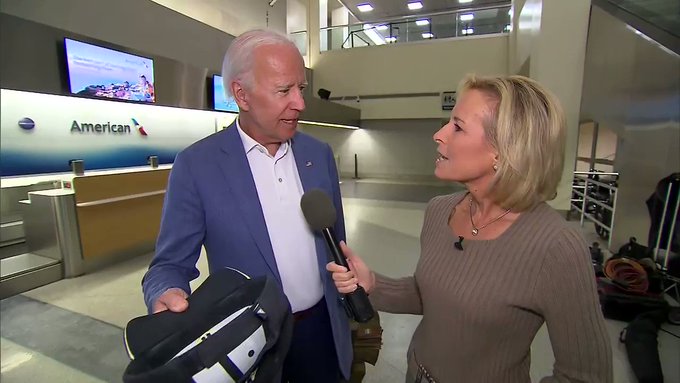
Acting White House Chief of Staff Mick Mulvaney told CNN he had "no idea" which past presidents told Trump they supported the wall. And former Vice President Joe Biden said he "can't think of a single" past president who wanted a border wall.

Embedded video

President Donald Trump said other presidents have told him "they wished they had built a wall." Former Vice President Joe Biden can't think of a single one.https://cir.ca/2CSnkdL


Past presidents have supported various measures to curb illegal immigration and secure the U.S.-Mexico border, including with strong fencing in some areas, though none of those policies resembled Trump's proposal for a multibillion-dollar steel wall covering most of the border. In 2006, then-Senator Obama voted for and President George W. Bush signed the Secure Fence Act, which approved about 700 miles of fencing along parts of the border. Trump has dismissed that fencing as a "nothing wall."

The government shutdown, now in its third week, started when Mr. Trump refused to sign congressional spending measures without $5 billion for the wall. Trump said in a news conference last Friday, "This should have been done by all of the presidents that preceded me, and they all know it. Some of them have told me that we should have done it."

First published on January 7, 2019

Above is from:  https://www.cbsnews.com/news/every-living-president-has-refuted-trumps-claim-about-supporting-the-wall/

Why is the historic clock tower at Trump's D.C. hotel open and staffed during the shutdown?


WASHINGTON, DC - APRIL 29:  Police officers wait for the marchers in the entrance of the Trump International Hotel which they are assigned to protect during the People's Climate Movement to protest President Donald Trump's enviromental policies April 29, 2017 in Washington, DC. Demonstrators across the country are gathering to demand  a clean energy economy. (Photo by Astrid Riecken/Getty Images)

The Trump-McConnell shutdown of the federal government has already shuttered most national offices, with hundreds of thousands of federal workers furloughed or forced to work without pay. In particular, it has wreaked havoc on our national parks, with reports of overflowing human waste, uncollected trash, damage to hiking trails, and even three deaths reported as of yesterday, all due to the lack of policing and supervision. Iconic landmarks and museums on the National Mall have been shuttered or have gone unstaffed, and the American public has been denied access to them.

Yet a single rather obscure historical site has somehow managed to remain open and fully staffed: the clock tower in the federal building that houses the Trump International Hotel in Washington, D.C.

As reported by the Associated Press:

Smithsonian museums are closed. There are no federal staffers to answer tourists’ questions at the Lincoln Memorial. And across the United States, national parks are cluttered with trash. Yet despite the federal government shutdown, a historic clock tower at the Trump International Hotel remained open Friday for its handful of visitors, staffed by green-clad National Park Service rangers.

The little-known post office clock tower, though included in the National Register of Historic Places, does not receive a great number of visitors, even as it provides guests of the Trump hotel with stellar views of the city.  According to the AP, its ranger staff often outnumbers the tourists.

The Trump administration appears to have gone out of its way to keep the attraction in the federally owned building that houses the Trump hotel open and staffed with National Park Service rangers, even as other federal agencies shut all but the most essential services.

Asked to explain why this particular site was permitted to remain staffed and open while so many more were shut down, a spokeswoman for the General Services Administration contended that the law that put the GSA in charge of the site obligates it to remain open. The spokeswoman also said that the status of the clock tower was “unrelated” to the building’s tenant, even though “Old Post Office” is displayed in gold letters prominently under the Hotel’s logo, as seen in the photograph above. The tower is touted by the hotel as one of the highlights of the property.

This “explanation” rings hollow to at least one watchdog organization:

A watchdog group, Citizens for Responsibility and Ethics in Washington, filed a Freedom of Information Act request with the GSA, seeking documents explaining why the tower was open, how it continues to be funded, and any communications between the agency and the Trump Organization, the president’s company. Trump gave up day-to-day management of the firm in 2017 but continues to receive earnings from its operations.

And at least one Democratic congressman has weighed in on the fact that this site out of hundreds was permitted to be staffed:

Bill Pascrell, Jr.

✔@BillPascrell

The Trump admin is using your tax dollars to keep an @NPS site at his luxury hotel open while the rest of Americans are wading through garbage and locked gates. The corruption and disgrace of this govt are without bottom.


For those who might consider what appears to be yet another example of the Trump excepting himself and his family’s interests from the consequences of his actions a mere minor matter, Josh Marshall of Talking Points Memo points out that in the conceivable, but unlikely, event that there is a legitimate reason this particular site remains open, just the appearance of such favoritism would be enough for any other administration to correct the error.

For this one, however, it appears to be simply another case of business as usual:

Assuming it is what it looks like, another example of the federal government being harnessed to the personal finances of the President, it will be just a more minor example of what we’ll learn far more about in the years to come. There is so little transparency in this administration, so much corruption that has become commonplace, that I don’t think we can really even imagine just how deep it all runs.

I have to differ with Josh Marshall on this point. We can most definitely imagine how deep it all runs.

Above is from:  https://www.dailykos.com/stories/2019/1/6/1823931/-Why-is-this-national-historic-site-at-Trump-s-D-C-hotel-open-and-fully-staffed