Thursday, November 8, 2018

Voting Problems in McHenry County

** UPDATED x1 - Problem found, fixed *** As many as 24,000 votes may be missing in McHenry County

Thursday, Nov 8, 2018

* NW Herald…

More than 116,000 McHenry County residents voted in Tuesday’s midterm election – but unofficial election results showed about 21 percent of them did not pick candidates in statewide races. […]

Issues with the county’s election reporting software may be the culprit, according to McHenry County Clerk Mary McClellan.

“We are looking at election reporting software,” McClellan told the Northwest Herald. “It is not showing all the numbers for some reason.” […]

That’s 20 points lower than the 99 percent of Will County ballots that included a gubernatorial vote. In Kane County, it was 98.6 percent. In Lake County, 98.6 percent. Cook County? 98.3 percent.

In a phone interview Thursday morning, McClellan said the gap isn’t that unusual.

“People just didn’t want to vote for governor,” she said.

Oh, please, that is just not true. The county clerk needs to look at her own vote totals.

That undervote was in way more than just the governor’s race. It’s literally everywhere in McHenry County.

* For instance, go to the clerk’s elections page and you’ll see that only 92,559 out of a total of 116,703 voted in the secretary of state’s race, so that’s about the same undervote as the governor’s race. Same goes for the 92,287 who voted in the attorney general’s race and the 92,427 who voted in the county’s two congressional races.

You can’t tell me that as many as 24,000 voters cast totally blank ballots. Those votes are either missing or the total vote count is way off. I called the clerk and she hasn’t gotten back to me.

It’s even worse down-ballot, by the way. Only 81,533 voted in the sheriff’s race and just 80,503 voted in the county auditor’s race. I can see that drop-off happening between statewide and local, but I cannot possibly see 24,000 completely blank ballots. No way.

[Hat tip: Cal Skinner.]

*** UPDATE *** The county clerk has now fixed the problem. Turns out, the early votes were counted but not tabulated online. As a result, the Democrats have apparently picked up another seat on the county board and Democratic US Rep.-elect Lauren Underwood has narrowly won the county, boosting her final count in the race.

- Posted by Rich Miller

Above is from:  https://capitolfax.com/2018/11/08/as-many-as-24000-votes-may-be-missing-in-mchenry-county/?utm_source=dlvr.it&utm_medium=twitter

Wednesday, November 7, 2018

U.S. sanctions on Iran—Do they make any sense?


Russia Is Surprise Beneficiary of Iran Oil Ban

3 hrs ago

President Donald Trump speaks during a news conference in the East Room of the White House, Wednesday, Nov. 7, 2018, in Washington. (AP Photo/Evan Vucci)


a close up of a bicycle© ILYA NAYMUSHIN/REUTERSAn early winner from the latest round of Iranian sanctions is emerging: Russia.

The U.S. began enforcing a tough new slate of economic restrictions against Iran on Monday, including a threat to sanction buyers of Iranian crude. That has refineries in Europe and Asia—recent, big buyers of Iran oil—looking for alternative supplies. Russian oil companies have stepped in, stealing customers from Iran. The two countries produce similar grades of crude, making a switch by refiners relatively easy.


But Moscow is also offering Tehran a lifeline for its stranded crude. It says it plans to defy U.S. sanctions and purchase Iranian imports. It’s offering to pay only in the form of barter, and then process the crude for domestic use. That would free up its own oil for more-lucrative crude export markets.

“Russia is playing on all sides,” said Helima Croft, chief commodities strategist at Canadian broker RBC.

Russia counts Iran as a key ally in its widened geopolitical role in post-civil war Syria. It has criticized the new round of U.S. sanctions and says it won’t be bound by them. In recent months, Moscow has repeatedly said it would purchase at least 100,000 barrels a day of Iranian oil, which would provide a welcome buyer for oil that might not find a customer otherwise. Russia is offering to pay for the crude with Russian machinery and food, according to Russia’s Oil Ministry. It’s also promising to invest in the Iranian oil sector as Western companies retreat.


The new, Washington-imposed sanctions take specific aim at Iranian oil exports, that country’s most important economic pillar. U.S. officials want to cork up all 2.2 million barrels a day of Iranian crude-export capacity, threatening buyers with sanctions. Many purchasers, because they use the U.S. banking system, are vulnerable to such sanctions and are already pulling back. Russia is less vulnerable to Washington’s retaliation, since it already is under U.S. sanctions and its economy and financial system are less tied to the U.S. than Western European countries.

Iranian exports had been down some 800,000 barrels a day from before the U.S. announced its new set of sanctions. Oil market watchers expect that to fall sharply now that sanctions are in place.

At the same time it is promising to help Iran, Russia is replacing Tehran on the global oil market. It has boosted its output by almost half a million barrels a day, compared with last year, recently hitting a 30-year production record. Russia, the world’s largest oil producer, pumped 11.41 million barrels a day in October, up 4.3% from the same period last year.

Some of that new crude is being snapped up by former customers of Iran.

That’s especially the case in Europe, where buyers have been abruptly halting Iranian purchase because they tend to be more exposed to the U.S. business and financial systems.

For European refiners, Russian oil is a natural substitute to Iran crude because it tends to be of medium density and relatively high sulfur levels can typically be shipped faster to their plants than other replacement crudes. Italian refiners Eni SpA and Saras SpA, for instance, are tapping more of Russia’s oil, especially its popular Urals grade, to make up for Iranian oil, according to people familiar with the matter. Spokespeople for Eni and Saras didn’t return calls for comment.

The “Urals [grade] will benefit,” Patrick Pouyanne, chief executive of Total SA, told a London energy conference last month.

Total stopped buying Iranian crude in July, the company said. The following month, it bought 217,000 barrels a day of Russian crude for its Le Havre refinery in France, a year-to-date high, according to data from shipping tracker Kpler.

Russia is also replacing Iranian crude for customers outside the European Union. Turkey resumed imports of Russian oil in June after a three-month absence, making up for cuts in Iran oil purchases, according to official statistics. Turkey has vowed to defy U.S. sanctions, too, but many of its companies have deep, international ties and would be vulnerable to U.S. sanctions.

That’s already translating into higher profits for Moscow’s state-run energy companies. On Tuesday, Rosneft reported a three-fold jump in net income to 451 billion rubles ($6.8 billion) for the first nine months of 2018 compared with the same period last year, mostly due to a production boost and higher prices for Urals.

The same replacement effect came about in China, which cut oil imports from Iran by 34% in September year-on year, while Russian sales rose by 7%.

In South Korea, Tehran’s oil sales collapsed in August, falling 85% on an annual basis. Russian shipments rose by 20% the same month, according to South Korean customs.

Write to Benoit Faucon at benoit.faucon@wsj.com

Above is from:  https://www.msn.com/en-us/money/markets/russia-is-surprise-beneficiary-of-iran-oil-ban/ar-BBPrVKG?ocid=spartanntp

Will Evers’ “victory” over Governor Walker hold up to recount?


Wisconsin allows a recount if election result is within 1%;  Will Governor Walker make the request?


image

Above graphic is from:  https://www.politico.com/election-results/2018/wisconsin/


TheHill.com

Dem defeats Scott Walker in Wisconsin governor’s race

© Getty

Wisconsin Gov. Scott Walker (R) appeared headed for defeat early Wednesday morning at the hands of Democrat Tony Evers, the state superintendent of public instruction.

Walker’s loss puts an end to a fraught period in Wisconsin, a state long known for go-along, get-along politics. Walker notched a string of wins for conservative causes, victories that gave him a platform for a brief and aborted campaign for president in 2016.

Walker narrowly won three races in that stretch, including a recall election mounted by Democrats and union advocates angered by his move to curtail the power of public sector unions.

Polls showed the state narrowly and bitterly divided, and almost no one did not have an opinion of Walker.

Still, Democrats failed to recruit a top-tier challenger, and many worried that none of the eight candidates who did run would have the firepower to knock off a well-funded opponent, even in a battleground state.

Evers emerged as the runaway winner of the primary, with 42 percent of the vote.

Walker started the general election with about $6 million in the bank. In hopes of closing that gap, the Wisconsin Democratic Party hired a consultant to prepare donors to flood the party’s eventual nominee with cash to help him get on the air.

Since Labor Day, Walker pulled in more than $7.7 million, while Evers raised $6 million. Both the Republican and Democratic governors associations spent freely on behalf of their nominees, a sign of just how important the two parties viewed Wisconsin.

Evers’s win is an important step for Democrats trying to rebuild their broken Blue Wall, the 18 states and the District of Columbia that voted for Democratic presidential nominees in six successive elections. That wall fell in 2016, when President Trump won states like Wisconsin, Michigan and Pennsylvania on the strength of huge support from blue collar white voters.

Above is from:  https://thehill.com/homenews/campaign/414904-dem-defeats-scott-walker-in-wisconsin-governors-race?userid=217221

Monday, November 5, 2018

Sosnowski works to lower the wages of Illinois’ skilled tradespeople


Rockford Register Star

Opinion
Letter: Rep Sosnowski works to lower the wages of Illinois’ skilled tradespeople

Posted Sep 28, 2018 at 6:45 PM Updated Sep 28, 2018 at 6:45 PM

In a letter read to the Boone County Board last week, Representative Joe Sosnowski, IL-69th District, detailed the ways he has tried and failed to weaken or end Illinois’ Prevailing Wage law. In short, the law states when biding to be the contractor/subcontractor on a public works project you must pay skilled workers the wage most common in the area of the project as set by the state. Contractors must keep proof they’ve done so or pay a financial penalty.

He points to HB 3675 with pride as an example of his efforts. Amongst a laundry list of items in the bill is one item where building schools would be exempt from prevailing wage laws. Generally, tradespeople who are willing to work for less than the prevailing wage are less skilled or experienced. Tradespeople who are less experienced make more mistakes. Who wants their child in a school built by less-skilled workers?

Rather than paying a wage that increases buying power and increases taxes paid, Rep. Sosnowski favors paying in wasted materials and delays. When paying less than the prevailing wage taxpayers pay more because some workers are forced to rely on food stamps and other government assistance. The Boone County Board should be focused on paying wages that allow our citizens to prosper helping our county grow. What Rep .Sosnowski favors increasing profits for construction companies by Illinois subsidizing them and keeping tradespeople from earning a fair day’s pay for a fair day’s work.

— Wendy LaFauce, Belvidere

Above is from: http://www.rrstar.com/opinion/20180928/letter-rep-sosnowski-works-to-lower-wages-of-illinois-skilled-tradespeople

Friday, November 2, 2018

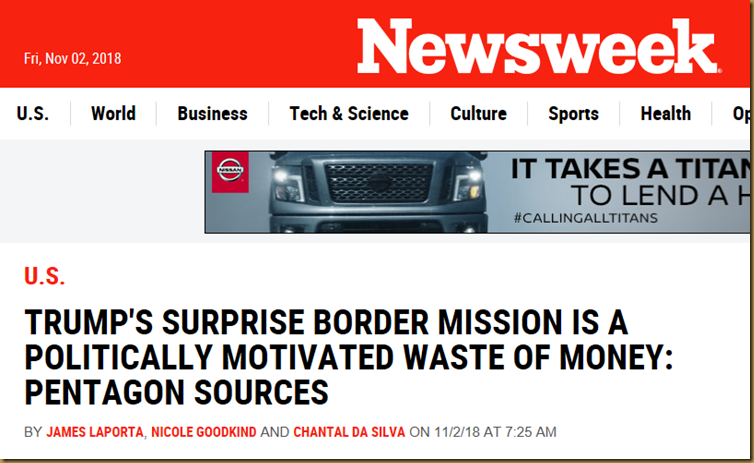
Trump's Surprise Border Mission Is a Politically Motivated Waste of Money: Pentagon Sources


image


The Trump administration’s plan to deploy thousands of troops to the U.S. border took officials by surprise, with many senior-level Defense Department officers saying they believed the move was politically motivated and a waste of money, multiple Pentagon sources with knowledge of the directive told Newsweek.

Sources with direct knowledge of how plans for the troop deployment—dubbed Operation Faithful Patriot—came together said that the initial directive to send troops to the border came directly from the president’s office, known in Pentagon parlance as National Command Authority, which would mean President Donald Trump or Defense Secretary James Mattis.

Moreover, sources affirmed that even if Mattis, a former U.S. Marine general, had been delegated authority for the operation, it would still have required permission from the commander in chief. But ultimately, the decision to move forward with the southern-border deployment was unexpected by military planners.

Speaking to Newsweek on condition of anonymity, as they are not authorized to speak to the media, U.S. military sources said senior leaders within the Pentagon had derided the deployment not only as a significant waste of taxpayer dollars but as running counter to military readiness, while a minority lauded the Trump administration’s hardline crackdown on immigration.

What the majority of service members within the higher echelon seemed to agree on was that the decision to deploy thousands of troops to the border was a politically motivated tactic, with the Trump administration ordering the deployment less than a week before the November 6 midterm elections, sources suggested.

“If Ray Charles was deaf he could still tell you that this is just an election stunt,” one source told Newsweek. “There is no practical or tactical reason for this to happen.”

Brownsville_BorderPlanning Planners from the military and U.S. Customs and Border Protection discuss the requirements for DoD support to ensure the security along the Southwest Border on October 26, 2018, in Brownsville, Texas. DoD has a long history of supporting the Department of Homeland Security and CBP with capabilities such as engineering, aviation, and administrative support. Patti Bielling/Operation Faithful Patriot

The remarks come amid the president's doubling down on his immigration rhetoric on Thursday as he spoke to reporters in the Roosevelt Room at the White House.

“Anybody throwing stones, rocks, like they did to Mexico and the Mexican military, Mexican police, where they badly hurt police and soldiers of Mexico, we will consider that a firearm,” Trump said. "We’re not going to put up with that. They want to throw rocks at our military, our military fights back. I told them to consider it a rifle.”

Pentagon sources speaking to Newsweek moments after Trump concluded his comments said that service members deploying to the southern border had not received credible intelligence about “bad actors,” and there had not been a change to the rules of engagement that would permit service members to treat rocks as firearms.

Trump had previously called the expected arrival of the caravans, composed mostly of women and children from Honduras and other Central American countries, an “invasion of our country.”

The president had also falsely claimed that the caravan contained terrorist cells, and that Democrats were organizing and handing out money to the traveling migrants.

Critics of the president have called the troop deployment a publicity stunt meant to garner Republican support just days before the midterm elections.

Despite the president’s assertions that the caravans were “made up of some very bad thugs and gang members,” documents obtained by Newsweek show that intelligence officials did not anticipate high involvement of criminal gangs—or any terrorist infiltration—as the caravan continued to follow its projected route.

The documents also showed that the Trump administration had anticipated that “only a small percentage” of migrants traveling with the caravans headed to the U.S. would make it to the border based on historical trends. The assessment said only about 20 percent of the 7,000 migrants, or what equates to 1,500 traveling with the caravan, would make it to the border.

To put this in perspective, this means there would be about 3.5 members of the military deployed for each migrant.

Currently, there are at least four caravans of Central Americans making their way to the U.S. border, with the first group having departed from San Pedro Sula, Honduras, on October 13. By Thursday, the main group, which saw its numbers swell to 7,000 before dropping to roughly 4,000, had made it to the city of Juchitan in southern Mexico.

Asylum seekers traveling with the caravan still had about 875 miles to go before they reached the closest U.S. port of entry in McAllen, Texas.

Caravan_Shoe_Pentagon A child's shoe sits along the roadside as members of the Central American caravan head out for their next destination on November 1, 2018 in Juchitan de Zaragoza, Mexico. The group of migrants, many of them fleeing violence in their home countries, took a rest day on Wednesday and resumed their journey towards the United States border on Thursday. Spencer Platt/Getty Images

Their journey could more than double, however, if they choose to follow the same route of an earlier caravan of asylum seekers that made the trip to the U.S. border in April—they took a significantly longer trek to Tijuana in the far northwest of Mexico, to claim asylum at San Ysidro port of entry in San Diego, California.

Other files obtained include a slideshow presentation produced by the Joint Force Land Component Commander Threat Working Group on Operation Faithful Patriot.

Commanders were briefed on the presentation on Saturday, and it contained U.S. government guidance to subordinate commands handling press relations during the interagency operation led by the Department of Homeland Security, suggesting government officials had planned for its official narrative on the military deployment to be “top-down driven.”

That means that “a lot of these questions will be handled in Washington and by the Pentagon,” said David Lapan, a former Homeland Security spokesman under the Trump administration and a former U.S. Marine, speaking to Newsweek. “Recognizing all the policy and political implications, they’re going to want individual service members to stay away from those things.”

The Department of Defense will make sure to differentiate between uniformed members of the military and “people who are members of the administration or people who hold policy positions in the Pentagon and can talk about political stuff,” said Lapan.

The U.S. Army North documents show that Pentagon officials were well aware of the political effect that deploying thousands of U.S. forces to the southern border might have on the upcoming November midterm elections well before the Trump administration announced the deployment.

Presentation slides provided guidance on the role that the November elections could play in driving narratives around the arrival of the caravan in an “information environment analysis” completed by the operations wing of U.S. Northern Command, the Pentagon unit overseeing the southern border deployment.

“Midterm elections NOV 06 will be the dominant driver of competing narratives and increase competitive and combative nature of IE,” stated a slide titled “Public Affairs.”

The president insisted his show of military force had little to do with next week’s elections. “I’ve been saying this long before election[s], Trump said. "I've been saying this before I ever thought of running for office. We have to have strong borders. If we don’t have strong borders, we don’t have a country.”

KellyField_Border Deployers from the 541st Engineering Company, 19th Engineering Battalion, Fort Knox, KT., land at Kelly Field, San Antonio, in support of Operation Faithful Patriot, October 30, 2018. SrA Alexandra Minor/U.S. Air Force

The public affairs documents go on to instruct officials to emphasize the collaborative nature of the interagency deployment, and how it will avoid any potential legal trouble.

The Department of Defense was asked to direct all communications coordination to the Department of Homeland Security, with public affairs officials being told to highlight the temporary nature of the mission to members of the press.

“From a military standpoint, the timing or reason for a mission is out of our control. We get an order from the commander in chief, and we do that mission when they tell us to. If you have a question about why you’re doing it, you don’t talk about it because that’s not you, that’s the White House,” said Lapan.

“It’s a tricky situation for military service members to be in given how politically fraught the situation is right now. I don’t know why the policymakers are doing this now or how they’re going to answer those questions. I haven’t seen any policymaker answer the question of why they’re doing this now and whether it has to do with midterms,” Lapan said.

Trump has staunchly defended his administration’s decision to send as many as 15,000 troops to the border, telling ABC News chief White House xorrespondent Jonathan Karl that the U.S. needed to “have a wall of people” standing guard at the border for when the caravans eventually arrive.

The U.S. Army North operation order used to coordinate tasks at the southern border paints a dire picture of the situation there, which seems to echo Trump’s sentiments: “CURRENT SITUATION. THE SECURITY OF THE UNITED STATES IS IMPERILED BY A DRASTIC SURGE OF ILLEGAL DRUGS, DANGEROUS GANG ACTIVITY AND EXTENSIVE ILLEGAL IMMIGRATION THREATENS SAFETY OF CITIZENS AND UNDERMINES THE RULE OF LAW. THE SITUATION AT THE BORDER HAS REACHED A POINT OF CRISIS AND POTUS HAS TAKEN ACTION TO SECURE OUR BORDERS. DOD WILL SUPPORT THE DEPARTMENT OF HOMELAND SECURITY (DHS) AND THE UNITED STATES CUSTOMS AND BORDER PROTECTION (CBP).”

Brad Moss, a Washington, D.C., based national security attorney, told Newsweek: “The deployment of thousands of active duty personnel to the border remains a decision with unclear motivations or intentions…[but] under federal law, military personnel are limited in what they can do, particularly in terms of domestic law enforcement.

“They certainly have the authority to provide technical and intelligence assistance to local law enforcement and DHS personnel, but they are prohibited from directly handling seizure and detention of any undocumented immigrants from the ‘caravan’ that reach the U.S. border.

“This isn’t an area of differing interpretations. Under the Posse Comitatus Act, the military is strictly prohibited from handling domestic law enforcement tasks absent an explicit grant of authority by Congress or a presidential determination regarding the existence of an emergency,” Moss said.

The Posse Comitatus Act is a longstanding federal statute that restricts the government’s ability to use the U.S. military as a police force; however, language contained in the documents give an overview of the legal authorizations for deploying U.S. troops domestically.

The president maintains an “inherent authority” exception, according to the documents. Trump could use those executive powers to restore order in extraordinary circumstances, even if a state governor objected to the president wielding his authority.

Trump had initially vowed to send up to 5,200 troops to the southern border in anticipation of several caravans of Central American migrants heading toward the U.S. border, but the president more than doubled that figure on Wednesday, indicating that he could send as many as 15,000 military troops to multiple ports of entry locations across the southwest border.

PublicAffairs_Document_Caravan A screenshot from a presentation obtained by Newsweek showing a tweet from Dana White, the Pentagon's chief spokeswoman. Defense Department sources say the southern border mission was a surprise from the White House, with many believing it was politically motivated. Newsweek

The surge in troop levels aligned with Newsweek’s report on Monday revealing how government documents showed that the Pentagon had placed roughly 7,000 troops on notice to deploy to the southern border within 24-hours. A Defense Department official told Newsweek it didn't believe the number of U.S. forces would surpass the 15,000 figure touted by Trump.

In a presentation briefed to commanders on Saturday, a public affairs slide included a Twitter screen shot from the verified account of Dana White, the Pentagon’s chief spokeswoman. The date stamp showed the tweet had been posted on the same Saturday as the briefing.

“@DeptofDefense is in support of @DHSgov request to provide support to the @CBP. #SecDef Mattis’ signed order did not specify the number of troops that will support this mission. Media reports of 800 or 1000 troops deploying are inaccurate."

Sources told Newsweek that while it was true that the order Mattis signed did not indicate troop strength numbers when he signed the directive this past Friday, operational planners at the Defense Department knew the troop levels would surge to more than 14,000 before White’s October 27 tweet.

Newsweek sought comment from the Pentagon, but received no reply on Thursday.

On Wednesday, when asked if the number of U.S. troops on the border was a political stunt, Mattis said: “The support that we provide to the Department of Homeland Security is practical support based on the request from the commissioner of customs and border police,” Mattis said per a poll report. “We don’t do stunts in this department.”

Thursday, November 1, 2018

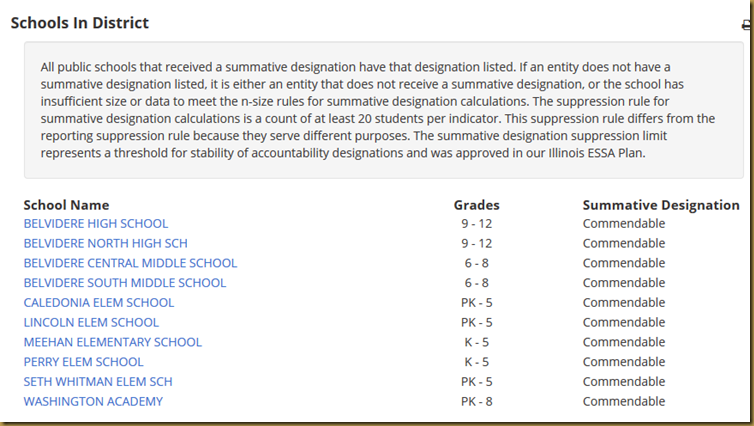
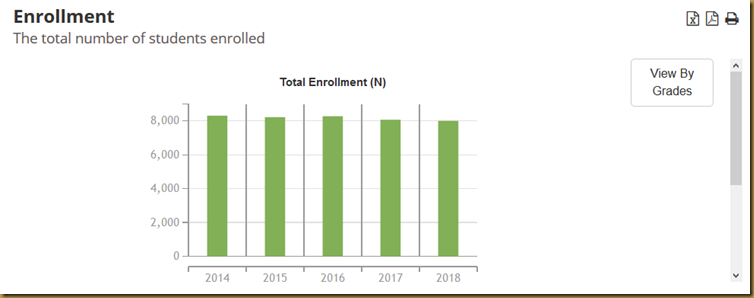
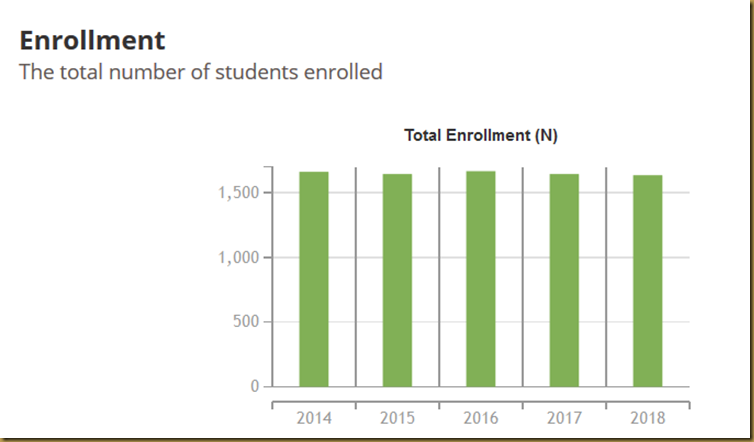
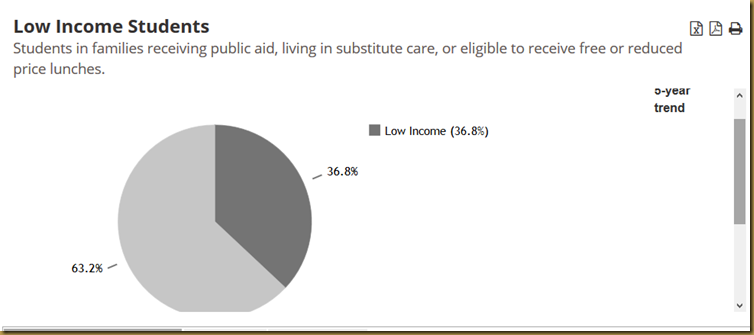
Illinois Report Cards for Boone County Schools


image


Belvidere Community District #100

image

North Boone School District #200

image


Belvidere School Statistics and Scores are available for individual schools at:  http://www.illinoisreportcard.com/search.aspx?address=61008&miles=5

North Boone Statistics and Scores are available at:  http://www.illinoisreportcard.com/District.aspx?source=schoolsindistrict&Districtid=04004200026


Belvidere Community School District #100

image

image

image

North Boone District #200

image

image


image


Second Fight over Enbridge pipeline?


image

Boone County residents gear up to fight possible second Enbridge pipeline

Most Popular

Our Picks

By Susan Vela
Staff writer

Posted at 12:19 PM Updated at 3:48 PM

CAPRON — A strip of bright green grass identifies the Enbridge pipeline running parallel to Ronald Gadow’s property.

The pipeline, officially Line 61, which starts in Superior, Wisconsin, runs through Boone County on its way to its endpoint near Pontiac, carrying an average of 930,000 barrels of crude oil a day.

Now, a new $2.6 billion Enbridge oil pipeline project sparking debate in Minnesota has Gadow and other Boone County residents concerned that the Canadian company will revive studies designed to lay the groundwork for a “twin” Line 61 that would carry more oil through the county. Enbridge officials say they have no such plans.

Gadow fears he could lose woodlands and a whole host of plants and wildlife if that happened.

“Safety is one of my concerns,” Gadow said. “It also devalues the property. If you don’t have a lawyer, you’re a total victim to what Enbridge can do.”

He has hired an attorney and plans to join other landowners and groups like Save Our Illinois Land, called SOIL, and Wisconsin Safe Energy Alliance, or WiSE, in pressing the Boone County Board to pass a resolution opposing the use of eminent domain to obtain land for a new Enbridge line. Eminent domain is the right of a government or its agent to take property at fair market value for public use.

Experts agree that Enbridge could prevail if it seeks to use eminent domain, and residents doubt they could stop the project.

“I’ve just always been under the impression that the oil companies always win,” Gadow said.

Residents are wary after Enbridge’s massive 2010 oil spill into Michigan’s Kalamazoo River and because of the Minnesota controversy.

“I think that you have to consider other things that Enbridge is doing,” said Deni Mathews, a SOIL activist.

SOIL and WiSE have invited residents living near Line 61 to informational meetings that are being held despite Enbridge’s insistence that there is no plan for a second line.

“Our stakeholders know we are not pursuing another pipeline project,” said Jennifer Smith, an Enbridge manager, during a telephone interview last month. “We have no plans to build south of Superior.”

Line 61 went into service in 2008. The company added three new pumping stations to the existing line between 2014 and 2016 to increase daily pumping capacity from about 400,000 barrels a day to 1.2 million barrels a day.

Surveys were done in anticipation of a potential twin line, Smith said. The market did not support construction of a second line, however.

Jim and Lori Schall live near Gadow. Their property also would be at risk if a twin line were built.

“You hear about things happening, like leaks,” Lori Schall said. “You can fight. You can express your concerns. But is it going to matter? It can’t hurt. It’s nice to at least let them know our concerns. If they can listen and address our concerns, more power to them.”

“Nobody is going to want it on their property,” Jim Schall said. “Nobody is going to want it near them. It’s just like having a prison built.”

Robert McNamara, a senior attorney for the Virginia-based Institute for Justice, said pipeline companies’ use of eminent domain is the subject of debate.

Although a County Board resolution may carry little weight, McNamara nonetheless says residents should “stand up, make your voice heard, and make it known you don’t intend to go quietly.”

The Boone County Board in 2016 approved a resolution opposing a proposed $8 billion, 275-mile rail line that would have cut through the county after residents expressed concerns that eminent domain would be used to acquire vast stretches of private land for the project.

“If residents want to band together, we’re more than happy to listen to what their concerns are,” County Board Chairman Karl Johnson said. “I personally am not a big fan of eminent domain.”

Susan Vela: 815-987-1392; svela@rrstar.com; @susanvela

Above is from:  http://www.rrstar.com/news/20181101/boone-county-residents-gear-up-to-fight-possible-second-enbridge-pipeline