Saturday, December 30, 2017

Trump Justice Department Pushes for Citizenship Question on Census, Alarming Experts


Trump Justice Department Pushes for

Citizenship Question on Census, Alarming Experts

“This is a recipe for sabotaging the census,” said one. The administration’s stated reason for the controversial move: protecting civil rights.

by Justin Elliott

Dec. 29, 7:36 p.m. EST

The Justice Department is pushing for a question on citizenship to be added to the 2020 census, a move that observers say could depress participation by immigrants who fear that the government could use the information against them. That, in turn, could have potentially large ripple effects for everything the once-a-decade census determines — from how congressional seats are distributed around the country to where hundreds of billions of federal dollars are spent.

The DOJ made the request in a previously unreported letter, dated Dec. 12 and obtained by ProPublica, from DOJ official Arthur Gary to the top official at the Census Bureau, which is part of the Commerce Department. The letter argues that the DOJ needs better citizenship data to better enforce the Voting Rights Act “and its important protections against racial discrimination in voting.”

A Census Bureau spokesperson confirmed the agency received the letter and said the “request will go through the well-established process that any potential question would go through.” The DOJ declined to comment and the White House did not respond to a request for comment.

Observers said they feared adding a citizenship question would not only lower response rates, but also make the census more expensive and throw a wrench into the system with just two years to go before the 2020 count. Questions are usually carefully field-tested, a process that can take years.

“This is a recipe for sabotaging the census,” said Arturo Vargas, a member of the National Advisory Committee of the Census and the executive director of NALEO Educational Fund, a Latino advocacy group. “When you start adding last-minute questions that are not tested — how will the public understand the question? How much will it suppress response rates?”

The 2010 census included a handful of questions covering age, sex, race, Hispanic origin, household relationship and owner/renter status — but not citizenship.

“People are not going to come out to be counted because they’re going to be fearful the information would be used for negative purposes,” said Steve Jost, a former top bureau official during the 2010 census. “This line about enforcing voting rights is a new and scary twist.” He noted that since the first census in 1790, the goal has been to count everyone in the country, not just citizens.

There have been rumblings since the beginning of the year that the Trump administration wanted to add a citizenship question to the census. Adding to the concerns about the 2020 count, Politico reported last month that the administration may appoint to a top job at the bureau a Republican redistricting expert who wrote a book called “Redistricting and Representation: Why Competitive Elections Are Bad for America.” The Census Bureau’s population count determines how the 435 U.S. House seats are distributed.

The law governing the census gives the commerce secretary, currently Wilbur Ross, the power to decide on questions. They must be submitted to Congress for review two years before the census, in this case by April 2018. A census spokesperson said the agency will also release the questions publicly at that time.

A recent Census Bureau presentation shows that the political climate is already having an effect on responsiveness to the bureau’s American Community Survey, which asks a more extensive list of questions, including on citizenship status, to about one in 38 households in the country per year. In one case, census interviewers reported, a respondent “walked out and left interviewer alone in home during citizenship questions.”

“Three years ago, [it] was so much easier to get respondents compared to now because of the government changes … and trust factors. … Three years ago I didn’t have problems with the immigration questions,” said another census interviewer.

The Justice Department letter argues that including a citizenship question on the once-a-decade census would allow the agency to better enforce Section 2 of the Voting Rights Act, which bars the dilution of voting power of a minority group through redistricting.

“To fully enforce those requirements, the Department needs a reliable calculation of the citizen voting-age population in localities where voting rights violations are alleged or suspected,” the letter states. The letter asks that the Census Bureau “reinstate” the question.

The full census, however, hasn’t included questions about citizenship since 1950. The Census Bureau has gathered such data in other surveys. The bureau switched the method of those surveys after the 2000 census. Today, it conducts the American Community Survey every year, which includes questions about citizenship, along with many other questions. The survey covers a sample of residents of the United States.

Experts said the Justice Department’s letter was misleading. And they questioned the Justice Department’s explanation in the letter, noting that the American Community Survey produces data on citizenship that has been used in Section 2 cases.

“You could always have better data but it seems like a strange concern because no one in the communities who are most affected have been raising this concern,” said Michael Li, senior counsel at the Brennan Center’s Democracy Program.

Do you have information about the Trump administration and the census? Contact Justin at justin@propublica.org or via Signal at 774-826-6240.

Above is from:  https://www.propublica.org/article/trump-justice-department-pushes-for-citizenship-question-on-census-alarming-experts?utm_source=suggestedarticle&utm_medium=referral&utm_campaign=readnext&utm_content=https%3A%2F%2Fwww.propublica.org%2Farticle%2Ftrump-justice-department-pushes-for-citizenship-question-on-census-alarming-experts

Friday, December 22, 2017

Thursday, December 21, 2017

151 UN states vote to disavow Israeli ties to Jerusalem


By Tovah Lazaroff

December 1, 2017 10:03

This comes as the Trump administration considers moving its embassy to Jerusalem.

4 minute read.

151 UN states vote to disavow Israeli ties to Jerusalem

AN AERIAL view of the Temple Mount and east Jerusalem.. (photo credit: REUTERS)

The UN General Assembly voted overwhelmingly to disavow Israeli ties to Jerusalem as part of six anti-Israel resolutions it approved on Thursday in New York. The vote was 151 in favor and six against, with nine abstentions.

The resolution came as the Trump Administration was rumored to be actively considering relocating its embassy to Jerusalem.

Be the first to know - Join our Facebook page.

“The president has said that he has given serious consideration to the matter, and we’re looking at it with great care,” US State Department spokeswoman Heather Nauert said.
She added that US President Donald Trump had until December 4th to make a decision on the embassy relocation or waive the matter for another six months.
In New York, only six countries out of 193 UN member states fully supported Israel’s ties Jerusalem: Canada, Marshall Islands, Micronesia, Nauru, the United States and Israel itself.
The nine countries who abstained were: Australia, Cameroon, Central African Republic, Honduras, Panama, Papua New Guinea, Paraguay, South Sudan and Togo.

The Stars' Best Kept Secrets: Ethan Hawke

Sponsored by Connatix

The resolution stated that “any actions taken by Israel, the occupying Power, to impose its laws, jurisdiction and administration on the Holy City of Jerusalem are illegal and therefore null and void and have no validity whatsoever.”
These words fall in line with similar resolutions approved in 2015 and 2016 by the United Nations Educational, Scientific and Cultural Organizations (UNESCO), including the resolution’s omission of the title “Temple Mount,” using instead only the Arabic term for the site, “Haram al-Sharif.”
The UNGA’s Jerusalem resolution called for "respect for the historic status quo at the holy places of Jerusalem, including the Haram al-Sharif, in word and practice.”
But the UNESCO votes are taken in smaller committees or boards and do not have the same representative power as the UNGA to measure the global opinion of UN member states.
The voting patterns of many of Israel’s allies, particularly among the EU nations, also differ in New York. The same countries that oppose or abstain from anti-Israel votes at UNESCO or the UN Human Rights Council often support such texts at the UNGA.
On Thursday, all the EU member states voted against Israel and in favor of the Jerusalem resolution, including countries that abstained or opposed the same text at UNESCO.
In a statement to the UNGA after the vote, the EU warned it would change its stance on such texts in the future unless the language was more neutral.
“The EU stresses the need for language on the holy sites of Jerusalem to reflect the importance and historical significance of the holy sites for the three monotheistic religions,” the Estonian representative said on behalf of the EU.
“The future choice of language may effect the EU’s collective support for the resolution,” she added.
Mexico also voted against Israel with regard to the Jerusalem resolution, even though Prime Minister Benjamin Netanyahu had just lauded the country for its support of Israel at the UN.
Kenya, which recently hosted Netanyahu, also voted against the resolution with regard to Jerusalem on Thursday.
Israel’s representative at the meeting said the omission of Judaism’s holiest site, the Temple Mount, was deliberate and yet “another instance of the Palestinian refusal to recognize the proven historic connection between Judaism, Christianity and the Temple Mount.”
The US opposed the resolutions. Its representative expressed disappointment that despite supposed support for reform, UN members continued to single out Israel.
This year alone, he said, the UN’s bodies have approved 18 resolutions that were biased against Israel.
“This dynamic is unacceptable. It is inappropriate that the UN, an institution founded on the idea that all nations should be treated equally, should be so often used by member states to treat another state so unequally,” he said.
The UNSG on Thursday also approved a second resolution that condemned Israeli settlement activity and called upon it to withdraw to the pre-1967 line. This included leaving the Golan Heights, which Israel seized from Syria during the Six-Day War.
Some 157 nations voted in favor of the text, seven opposed it and eight abstained.
All the European Union’s member states voted to support the resolution. The abstaining countries included: Australia, Cameroon, Fiji, Honduras, Paraguay, Papa, New Guinea, South Sudan and Tongo.
Those nations opposing the resolution were: Canada, Israel, Nauru, Micronesia, Marshal Islands, Solomon Islands and the United States.

Among the six resolutions was one, sponsored by Syria, which condemned Israel’s continued presence on the Golan Heights.
It was approved with 105 nations in favor, six against and 58 who abstained.
Israel noted the absurdity of such a resolution at a time when the Syrian regime was using chemical weapons against its own citizens while Israel was treating the wounded of that conflict who managed to cross its borders.
The UN General Assembly is expected to approve another ten anti-Israel resolutions by the end of the year.

Above is from:  http://www.jpost.com/Israel-News/UN-disavows-Israeli-ties-to-Jerusalem-515730

Wednesday, December 20, 2017

Nuclear Regulatory Commission downplays safety warnings, investigation finds

Nuclear Regulatory Commission downplays safety warnings, investigation finds

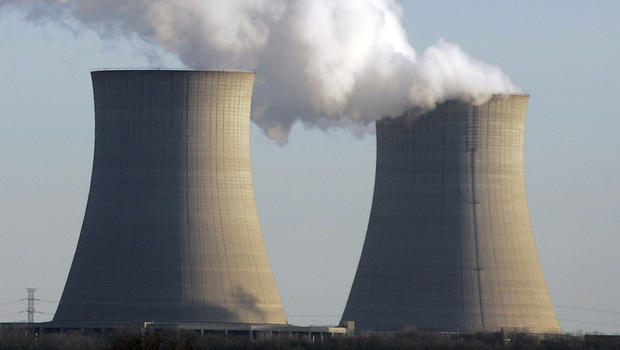
Steam rises from one of the two cooling towers, Jan. 30, 2012, at the Byron nuclear generating station in Ogle County, Ill.

Max Gersh,AP Photo/Rockford Register Star


The federal agency responsible for safety at the nation's 61 nuclear power plants routinely downplays warnings from plant workers and its own experts about problems, including some with potential for disaster, a Better Government Association investigation found.

Employees from U.S. nuclear power plants filed nearly 700 complaints with the United States Nuclear Regulatory Commission in recent years, claiming retaliation for raising safety concerns, records show. The agency found no wrongdoing.

NRC officials also overruled recommendations from their own technical experts on how to protect plants from potential catastrophe spurred by floods, equipment failures, power outages and other problems.

___

This article was provided to The Associated Press by the nonprofit news outlet Better Government Association.

Interviews with more than 20 current and former NRC and nuclear plant employees reveal a pattern of top officials dismissing safety warnings rather than impose costly fixes on plant operators. Some said careers suffered as potential threats were never fully addressed.

"It's the NRC's longstanding practice to consistently declare the plants are safe and to avoid directly answering any questions that might suggest otherwise," said Lawrence Criscione, an NRC risk analyst.

NRC officials would not consent to an interview. But NRC spokeswoman Viktoria Mitlyng responded in writing to BGA questions.

"All U.S. nuclear power plants have multiple appropriate procedures and resources in place to maintain key safety functions if severe events" occur, Mitlyng said. "These conclusions are based on extensive agency reviews and inspections."

In 2012, Criscione shared with Congress a letter raising doubts over adequacy of flood protections at Duke Energy's Oconee Nuclear Station in South Carolina and other plants built decades ago near dams.

Soon after, Criscione said, he was accused by the NRC inspector general of compromising confidential information, interrogated by armed agents and saw his case referred to federal prosecutors. They opted not to act, and he remains on the job.

Internal NRC surveys underscore a climate of fear among employees. A report on a 2015 questionnaire of NRC employees stated most felt "if you disagree with your manager it can, and most likely will, affect your career path and advancement."

Records and interviews also show that:

- In 2016, NRC brass overturned a proposed safety analysis for the Byron and Braidwood nuclear plants in Illinois after multiple appeals by Exelon, the Chicago-based owner of the facilities and the nation's largest nuclear operator.

The action undid an order issued after agency technical staff concluded Exelon did not prove critical pressure-relieving valve systems were safe to use in an emergency. The same problem may exist at other nuclear plants, said one of the NRC engineers who ordered the safety testing.

- Also in 2016, seven NRC electrical engineers publicly urged the agency to order an immediate fix or a complete shutdown of most U.S. nuclear plants after discovering a problem with an emergency power system at the Byron plant that was common to other nuclear facilities as well.

Exelon quickly addressed the problem at its plants, but the NRC acceded to a request from other U.S. operators to give them an additional two years to devise a fix.

- Separately, the NRC took only two months to reject a staff petition in March 2017 urging the agency to reverse a decision allowing Arizona Public Service Co.'s Palo Verde nuclear plant near Phoenix to operate even though an agency expert said it lacked sufficient emergency backup power to run safely.

Complaints from plant whistleblowers raised issues ranging from security problems to inadequate radiation monitoring.

- The U.S. Department of Labor ordered the Palisades nuclear plant near South Haven, Michigan, to rehire veteran security guard Chris Mikusko who claimed he was laid off in retaliation for pointing out security problems. Mikusko filed a similar whistleblower complaint with the NRC, which rejected his allegations as unsubstantiated.

- NRC investigators concluded supervisors at Exelon's shuttered Zion plant in Illinois had "greatly exaggerated" claims of disruptive behavior they had used to discipline Marilyn Lingle, hired to help dismantle the facility. Yet the agency rejected these findings and declined to discipline Lingle's managers.

The nuclear industry, through its trade group and individual companies, often downplays the seriousness of problems highlighted by NRC experts. Exelon and others in the industry bat down potential rules and regulations by pleading to NRC's top managers.

"Safety is the highest priority for both Exelon Generation and the NRC," spokesman David Tillman said in a statement. "We are equally committed to protecting our people and our communities and to suggest otherwise is a disservice to the authority of the NRC and our shared commitment to public health and safety."

The problem, say people who conduct government reviews, is that the NRC's final rulings often don't reflect warnings from its experts.

"Management tells you where they want the answer to go. If you push, you're not going to get promoted again - there are other people who are willing to say it's not a serious issue," said Richard Perkins, one of Criscione's NRC colleagues involved in exposing flooding concerns.

One case in point is the emergency safety valve issue at Exelon's Byron and Braidwood plants.

After Exelon moved in 2013 to increase power, NRC experts concluded the plants' pressure valves to relieve water in an emergency would stick open and allow cooling water to escape and not do its function to cool the reactor. They ordered Exelon to prove the valves would work, but the company blocked that with a successful appeal to the NRC's executive director.

Exelon says the valves work fine. But Samuel Miranda, an NRC expert who disagreed, said the company and NRC were rolling the dice on valves because it risks melting the reactor.

He said dozens of other U.S. nuclear plants are equipped with similarly problematic equipment.

"They either won't close or they will leak," Miranda said. "That will relieve about a million pounds per hour. It's a hole in the system. Now you're losing water that you need to cool the core."

Underscoring that frustration is the NRC's record of handling whistleblower complaints lodged by plant employees. From 2010 through 2016, workers filed 687 complaints. The NRC investigated just 235 and upheld none.

The largest number of complaints, 84, were filed by employees at the two nuclear plants operated in Georgia by Southern Nuclear, records show. Next were the 70 complaints lodged by nuclear workers in South Carolina, 58 by workers in Tennessee and 50 in California. Illinois ranked 12th, with 21 whistleblower cases filed.

© 2017 The Associated Press. All Rights Reserved. This material may not be published, broadcast, rewritten, or redistributed.

Above is from:  https://www.cbsnews.com/news/nuclear-regulatory-commission-downplays-safety-warnings-investigation-finds/

Wood County's proposed horse-buggy rules will drive out Amish, expert says


image

Karen Madden, USA TODAY NETWORK-Wisconsin Published 12:59 p.m. CT Dec. 15, 2017 | Updated 9:28 a.m. CT Dec. 18, 2017

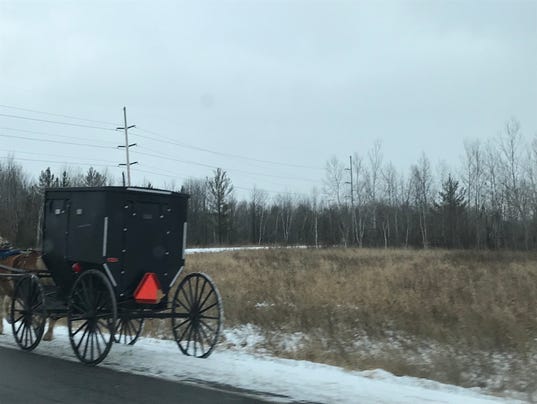
Amish populations follow most laws, but their religious convictions can sometimes make legal compliance a challenge. Daniel Walmer

Horse-drawn buggyBuy Photo

(Photo: Jamie Rokus/USA TODAY NETWORK-Wisconsin)

CONNECTTWEET 9 LINKEDIN 33 COMMENTEMAILMORE

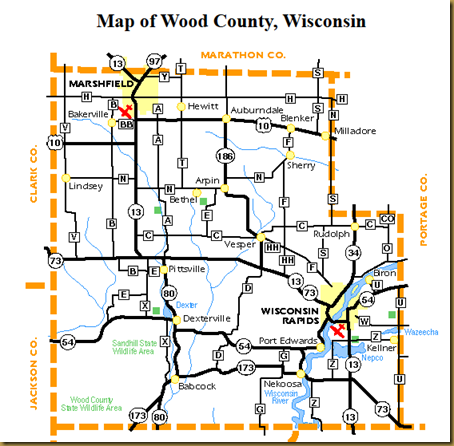
WISCONSIN RAPIDS - Horse-drawn vehicles would need windshields, seat belts, child car seats and rear-view mirrors if the Wood County Board passes an ordinance it will consider Tuesday.

Amish and other religious groups that rely on animal-pulled buggies also would need to get driver's licenses and vehicle insurance under the measure.

It's an ordinance that an expert in Amish culure says is "completely impractical" and will drive those families out of the county.

The proposed ordinance is intended to save lives, said County Board member Bill Winch of Vesper, who helped to draft the new rules. Nine people have died in crashes involving horse-drawn buggies and wagons in and around Wood County since 2009, and Winch said it's an ongoing concern.

"The Amish have been getting killed and obviously nobody liked that," he said.

The ordinance requires drivers of animal-drawn vehicles to obey the same regulations the rest of the people on the roads are expected to follow, Winch said. If the board approves the measure, operators of horse buggies would have to get a driver's license from the Wisconsin Division of Motor Vehicles.

RELATED: Year after Amish deaths, safety still an issue

RELATED: Arpin woman, 20, killed in buggy crash with SUV

The license requirement would ensure that drivers of the buggies are at least 16 years old and have passed a written test showing basic knowledge of laws involving public roads, Winch said.

If the ordinance is passed, the Amish will leave Wood County, said Mark Louden, a professor of German who specializes in Amish and Pennsylvania Dutch language and culture at the University of Wisconsin-Madison.

"There is no middle ground with this at all," Louden said after reading the proposed ordinance. "It's completely impractical."

The Amish will consider buying liability insurance or getting driver's licenses a violation of their beliefs and values, he said. Some — but not all — would be willing to attach manure catchers on their animals, another proposed rule.

Amish people want to be good neighbors and want to get along with the community they live in, Louden said. But the proposal simply doesn't leave room for compromise, he said.

If the ordinance passes, and Amish residents of Wood County start receiving tickets or getting arrested, they will move to another county or state, Louden said. They have been a nomadic people for 300 years, so they are willing to find new homes, he said.

"All I can think of is if they pass this, they don't want the Amish in Wood County," Louden said. 

Wood County Board Chairman Lance Pliml said the original idea behind the ordinance was to require proper lighting on horse-drawn vehicles and some level of education for all those who drive them.

Children younger than 10 have been driving horse-drawn vehicles and they don't understand what a "stop" sign means, Pliml said.

In addition to proposing the new rules, county officials have been trying to get Amish schools to add lessons about safely and legally traveling on public roads, he said.

Pliml said he hadn't seen the final proposed ordinance, which was advanced to the County Board by three of its committees. When a reporter shared details of the proposal with him, he said he had concerns about parts of the ordinance, including the driver's license, windshield and seat belt portions.

The ordinance requires not only windshields, but also side and back windows, all made from safety glass or plastic. It requires seat belts for all drivers and passengers, as well as child safety seats for children younger than 8 years old. It also requires drivers of animal-drawn vehicles to have the same type of insurance that is required for motorized vehicles.

Pliml said he could understand requiring some type of operator's license similar to the ones required for snowmobiles.

"The rest of that is a tough sell," he said.

Wood County Sheriff's Department, Emergency Management and County Board members have been working with elders in the Amish communities to get compliance with state laws regarding lighting and reflective signs. The county handed out new lights to those who would use them, Pliml said.

Michael Feirer of Marshfield, who is chairman of the County Board's Public Safety Committee, said the proposal is all about making highways safer.

"We want to get these people who are driving buggies down the road, or carts, to obey the traffic laws," Feirer said.

The County Board also will consider sending a resolution to Wisconsin legislators explaining Wood County's ordinance and asking that the state also take action to help solve the problem.

About the meeting

The Wood County Board meets at 9:30 a.m. Tuesday in the County Board Room in the Wood County Courthouse, 400 Market St., Wisconsin Rapids.

Above is fromhttp://www.wisconsinrapidstribune.com/story/news/2017/12/15/horse-buggies-may-need-windshields-child-seats-safety-belts-wood-county/955247001/

Monday, December 18, 2017

The Republican tax bill got worse: now the top 1% gets 83% of the gains

The Republican tax bill got worse: now the top 1% gets 83% of the gains

In its last year, the bill raises taxes on more than 53 percent of Americans.

By Dylan Matthews@dylanmattdylan@vox.com Dec 18, 2017, 4:01pm EST


By 2027, more than half of all Americans — 53 percent — would pay more in taxes under the tax bill agreed to by House and Senate Republicans, a new analysis by the Tax Policy Center finds. That year, 82.8 percent of the bill’s benefit would go to the top 1 percent, up from 62.1 under the Senate bill.

And even in the first years of the bill's implementation, when it’s an across-the-board tax cut, the benefits of the law would be heavily concentrated among the upper-middle and upper-class Americans, with nearly two-thirds of the benefit going to the richest fifth of Americans in 2018.

Chart showing distribution of tax bill in 2018, 2025, and 2027 Tax Policy Center

The paper is the first rigorous analysis of who wins and loses under the bill as agreed to in conference committee. House and Senate negotiators agreed to a number of changes in the bill, most notably lowering the top income tax rate for individuals to 37 percent from its current level of 39.6 percent. The analysis does not include an additional cost of the legislation: its repeal of the individual mandate, which the Congressional Budget Office estimates could cause as many as 13 million fewer people to have health insurance, reducing federal spending for poor and middle-class Americans’ health insurance by $338 billion over 10 years. That worsens the bill’s distribution for the poor and middle class.

From Our Sponsor

Almost all provisions of the bill, with the exception of the reduction in the corporate tax rate from 35 percent to 21 percent, are temporary, expiring at the end of 2025. One exception is the adoption of a new slower-growing inflation measure to adjust tax brackets, a change that effectively raises taxes over time and helps pay for the permanent corporate rate cut. Since corporate rate cuts mostly help Americans rich enough to own stock, that means that in 2027, poor and middle-class Americans would see a very mild tax increase on average:

2027 distribution of the tax bill Tax Policy Center

The rich and ultrarich, by contrast, would continue to see massive tax breaks due to the corporate provisions. The top 1 percent would claim 82.8 percent of the benefit of the bill, and receive an average cut of $20,660. The top 0.1 percent, the richest of the rich earning $5.1 million or more a year, would get $148,260 back on average.

These averages, however, can cloak variation within income groups:

Who wins and loses under the tax bill in 2027 Tax Policy Center

Overall, 53.4 percent of American households would see a tax increase and 25.2 percent would see a tax cut in 2027. But the shares depend substantially on what income group you're in. Most Americans in the bottom fifth of the distribution — those in poverty, or near poverty — wouldn't see their taxes change either way, as they typically don't earn enough money to pay income taxes. The different inflation measure can reduce the tax refund they receive from the earned income tax credit and child tax credit, but the effect is fairly small.

By contrast, nearly 70 percent of Americans in the middle fifth of the income distribution — earning $54,700 to $93,200 a year in 2017 dollars — would see their taxes go up, with an average tax hike of $150. That's not a huge change, but the direction is certainly not favorable.

Republicans advocating for the bill have focused less on 2027, when much of the bill’s changes will have expired, than on 2018 through 2025, when all its cuts, including for individuals, will be in effect. In 2018, the bill is an across-the-board cut for all income groups, but the biggest cuts are reserved for the upper middle class:

2018 distribution of the tax bill Tax Policy Center

At this point, across-the-board rate cuts will be in effect, as well as a doubled child tax credit and a nearly doubled standard deduction (the latter two provisions offsetting the elimination of personal exemptions from the individual income tax). Predictably, the result is an across-the-board tax cut for most families.

Poor Americans, who mostly don’t earn enough for a positive income tax burden and who are basically left out of the child tax credit expansion in the bill, get $60 each, a 0.4 percent boost to their income, on average. But the middle class would get $930 on average, or a 1.6 percent boost. The biggest percentage boost goes to the 95th to 99th percentiles, people earning $307,900 to $732,800 a year. They get 4.1 percent of their income back, or about $13,480 each. The top 1 and top 0.1 percent get less in percentage terms but still more than the middle class. The top 0.1 percent gets a 2.7 percent income boost, or $193,380 on average.

In 2018, the benefits are also more uniform, with a rather small share of each income group seeing their taxes actually go up:

2018 winners and losers under the Republican tax bill Tax Policy Center

The group with the highest share of people paying more in 2018 is actually the ultrarich, the top 0.1 percent, about 16.2 percent of whom would see their taxes go up. Only about 7.3 percent of the middle class would see their taxes go up.

But just because you don’t receive a tax hike doesn’t mean you get a cut. About 44.9 percent of the poorest Americans wouldn’t see a hike or cut, because they don’t earn enough to benefit (or suffer).

Note, again, that these tables leave out the effect of millions of people losing health insurance, typically subsidized insurance through Medicaid or the health insurance exchanges, due to the repeal of the individual mandate. That can change the bill from a small net benefit in 2018 for poor families to an overall net cost.

Above is from:  https://www.vox.com/policy-and-politics/2017/12/18/16791174/republican-tax-bill-congress-conference-tax-policy-center

Sunday, December 17, 2017

Robert Reich: The Three Big Lies About Trump’s Tax Plan

Robert Reich: The Three Big Lies About Trump’s Tax Plan

By Robert Reich On 12/17/17 at 5:43 AM

Share

Opinion

This article first appeared on RobertReich.org.

Here are the three main Republican arguments in favor of the Republican tax plan, followed by the truth.

1. It will make American corporations competitive with foreign corporations, which are taxed at a lower rate

Rubbish.


(1) American corporations now pay an effective rate (after taking deductions and tax credits) that’s just about the same as most foreign based corporations pay.

(2) Most of these other countries also impose a “Value Added Tax” on top of the corporate tax.

(3) When we cut our corporate rate from 35 percent to 20 percent, other nations will cut their corporate rates in order to be competitive with us – so we gain nothing anyway.

(4) Most big American corporations who benefit most from the Republican tax plan aren’t even “American.” Over 35 percent of their shareholders are foreign (which means that by cutting corporate taxes we’re giving a big tax cut to those foreign shareholders). 20 percent of their employees are foreign, while many Americans work for foreign-based corporations.

(5) The “competitiveness” of America depends on American workers , not on “American” corporations. But this tax plan will make it harder to finance public investments in education, health, and infrastructure, on which the future competitiveness of American workers depends.

(6) American corporations already have more money than they know what to do with. Their profits are at record levels. They’re using them to buy back their shares of stock, and raise executive pay. That’s what they’ll do with the additional $1 trillion they’ll receive in this tax cut.

2. With the tax cut, big corporations and the rich will invest and create more jobs

Baloney.

(1) Job creation doesn’t trickle down. After Ronald Reagan and George W. Bush cut taxes on the top, few jobs and little growth resulted.

America cut taxes on corporations in 2004 in an attempt to get them to bring their profits home from abroad, and what happened? They didn’t invest. They just bought up more shares of their own stock, and increased executive pay.

(2) Companies expand and create jobs when there’s more demand for their goods and services. That demand comes from customers who have the money to buy what companies sell.

Those customers are primarily the middle class and poor, who spend far more of their incomes than the rich. But this tax bill mostly benefits the rich.

(3) At a time when the richest 1 percent already have 40 percent of all the wealth in the country, it’s immoral to give them even more – especially when financed partly by 13 million low-income Americans who will lose their health coverage as a result of this tax plan (according to the Congressional Budget Office), and by subsequent cuts in safety-net programs necessitated by increasing the deficit by $1.5 trillion.

3. It will give small businesses an incentive to invest and create more jobs

Untrue.

(1) At least 85 percent of small businesses earn so little they already pay the lowest corporate tax rate, which this plan doesn’t change.

(2) In fact, because the tax plan bestows much larger rewards on big businesses, they’ll have more ability to use predatory tactics to squeeze small firms and force them out of business.

***

Don’t let your Uncle Bob be fooled: Republicans are voting for this because their wealthy patrons demand it.

Their tax plan will weaken our economy for years – reducing demand, widening inequality, and increasing the national debt by at least $1.5 trillion over the next decade.

Shame on the greedy Republican backers who have engineered this.

Shame on Trump and the Republicans who have lied to the public about its consequences.

GettyImages-632212568 Trump donor Sheldon Adelson attends the Inaugural Luncheon in the US Capitol January 20, 2017 in Washington, DC. Aaron P. Bernstein/Getty

Robert Reich is the chancellor’s professor of public policy at the University of California, Berkeley, and a senior fellow at the Blum Center for Developing Economies. He served as secretary of labor in the Clinton administration, and Time magazine named him one of the 10 most effective Cabinet secretaries of the 20th century. He has written 14 books, including the best-sellers Aftershock, The Work of Nations and Beyond Outrage and, most recently, Saving Capitalism. He is also a founding editor of The American Prospect magazine, chairman of Common Cause, a member of the American Academy of Arts and Sciences and co-creator of the award-winning documentary Inequality for All. HIs latest documentary, "Saving Capitalism," is available on Netflix.