Tuesday, September 5, 2017

“Resident only” does not exist for public comment.

image

Question: Can a unit of local government pass a policy limiting public comment to residents only?

Answer: According to a recent PAC opinion, public bodies may not restrict public comment to residents only, as Section 2.06(g) of the Open Meetings Act provides that "any person" shall be permitted an opportunity to address public officials under the rules established by the public body

Sunday, September 3, 2017

Congressman Adam Kinzinger’s townhall in Dixon?


Not My Idea Of A 'Town Hall'

By Phillip LeFevre Aug 29, 2017

TweetShareGoogle+Email

Listen

Listening...

1:37

Phillip LeFevre's "Perspective" (August 29, 2017).

My idea of what a Congressional Town Hall meeting is about has been shattered.

I recently experienced my first Town Hall meeting in Dixon with Republican Congressman Adam Kinzinger. The Congressman referred to the gathering as both a town hall meeting and a legislative luncheon. It became obvious that this meeting was rigged, with more than 99.9% of Dixon citizens not being welcomed.

First, there were beautiful pre-printed name tags for the "guests." And, there was a very short time given for attendees to ask questions. Questions that obviously were not to the liking of Kinzinger were blown off. After one question Kinzinger said, "Are you kidding me? This is a legislative luncheon!"

Secondly, I attended the meeting to ask the Congressman one question for a future WNIJ Perspective. My question was about whether he supports a new bipartisan approach to passing healthcare legislation.

I was not allowed to ask my question. As I began verbalizing the question to him, his staff began physically pushing and pulling me out of the way. Then local police deputies got involved, pulling me away as they said he was on a tight schedule and didn't have time for questions.

So, the experience of seeing protesters outside being denied access to Kinzinger's speech; to the pre-printed name tags; and then the shield put around the Congressman by his staff and police. The town meeting with this member of Congress was nothing but a staged and rigged event solely to appease supporters.

I'm Phillip LeFevre, and that's my perspective.

Tags:

WNIJ Perspectives

Above is from:  http://northernpublicradio.org/post/not-my-idea-town-hall

Federal Transportation Board rejects Great Lakes Basin rail line


By Kevin Haas
Staff writer
By Susan Vela
Staff writer

Posted Aug 31, 2017 at 12:40 PM Updated Sep 1, 2017 at 12:11 AM

ROCKFORD — The U.S. Surface Transportation Board has rejected a proposal to build a 261-mile railroad that would have cut through the Rockford area as it moved through Wisconsin, Illinois and Indiana.

In a decision Wednesday, the board said that Great Lakes Basin Transportation’s financial information was “fundamentally flawed,” making it impossible for the board to determine whether the proposal meets necessary criteria.

Construction projects are not required to be fully funded in the early stages of an application. However, financial fitness of the company behind a proposal is part of the application process, the board says in its decision.

Great Lakes’ assets “are so clearly deficient for purposes of constructing a 261-mile rail line that the board will not proceed with this application given the impacts on stakeholders and the demands upon board resources.”

Great Lakes may file a new application to meet the board’s criteria.

Resubmitting is an option, but we have made no decision whether we’re going to do that or not,” said Mike Blaszak, Great Lakes’ chief legal and administrative officer.

He declined further comment.

Jim Webster, a Winnebago County Board member who introduced a unanimously approved resolution opposing the railroad, said the Surface Transportation Board’s decision was “the best news I’ve had in a long time for the people of Winnebago County.”

The proposed freight line would have crossed through Webster’s district, and he said, “There was no real benefit to any of us here for that.”

Vicky Rowley organized an October rally against the railroad at her Winnebago Township farm property.

If GLBT submits another application, she plans to renew her protest.

“We were definitely not in support of it at all,” Rowley said. “I’m just so relieved that they didn’t approve it. It would have just been devastating for all the farms in the area. It was just unbelievable.”

Rockton farm owner Marilyn Mohring, 77, has been staying apprised of GLBT’s railroad plans via the Winnebago County Against GLB Railroad’s Facebook page.

“Just no” is what she thought when she first heard that more trains could run through her community.

She and her husband wrote letters of protest and also provided some financial support to stop the railroad proposal. They had concerns about noise, accidents and damage to creeks and wetlands.

“We just didn’t believe it was a viable thing,” she said. “It was going to disrupt way too many farms.”

Worried property owners formed several groups in Illinois and Wisconsin once they learned the controversial rail line might run through their communities. They included Winnebago County Against GLB Railroad and Citizens Against the GLB Railroad in Boone County. They wrote letters, attended meetings and informed neighbors.

Burritt Township farmer Lana Daly ended up being spokeswoman of Winnebago County Against GLB Railroad because of the potential railroad’s threat to her centennial farm. While relieved by the board’s decision, she plans to remain vigilant.

“It’s exciting to think that we’ve been part of the journey,” she said. “But I do think we need to be diligent. I don’t think it’s time to put down the torch and run the other way. It’s going to be ongoing.”

Susan Vela: 815-987-1392; svela@rrstar.com; @susanvela

Kevin Haas: 815-987-1410; khaas@rrstar.com; @KevinMHaas

Above is fromhttp://www.rrstar.com/news/20170831/federal-transportation-board-rejects-great-lakes-basin-rail-line

Saturday, September 2, 2017

A $1,000 per month cash handout would grow the economy by $2.5 trillion, new study says


17 / 18

CNBC logoCNBC

CNBC

Catherine Clifford14 hrs ago


0

Giving every adult in the United States a $1000 cash handout per month would grow the economy by $2.5 trillion by 2025, according to a new study on universal basic income.

The report was released in August by the left-leaning Roosevelt Institute. Roosevelt research director Marshall Steinbaum, Michalis Nikiforos at Bard College's Levy Institute, and Gennaro Zezza at the University of Cassino and Southern Lazio in Italy co-authored the study.


The study made economic forecasts for three proposals: a full universal basic income in which every adult gets $1,000 a month ($12,000 a year), a partial basic income in which every adult gets $500 a month ($6,000 a year) and a child allowance in which parents get $250 a month ($3,000 a year).

The larger the universal basic income, the greater the benefit to the economy, according to the report.

A $1,000 cash handout to all adults would grow the economy by 12.56 percent after eight years, the study finds. Current Congressional Budget Office estimates put the GDP at $19.8 trillion. The cash handout would therefore increase the GDP by $2.48 trillion. (Vox first did this extrapolation in their coverage of the report, and Steinbaum confirmed the accuracy of the extrapolation to CNBC Make It by email.)

The $250 allowance would grow the GDP by 0.79 percent and a $500 a month payment would grow the GDP by 6.5 percent.

These estimates are based on a universal basic income paid for by increasing the federal deficit. As part of the study, the researchers also calculated the effect to the economy of paying for the cash handouts by increasing taxes. In that case, there were would be no net benefit to the economy, the report finds.

"When paying for the policy by increasing taxes on households rather than paying for the policy with debt, the policy is not expansionary," the report says. "In effect, it is giving to households with one hand what it is taking away with the other. There is no net effect."

The study is based on the Levy Macro-Economic model, which presupposes that the potential of the economy is constrained because household income is low. That opinion, even the authors of the study admit, is debatable. "Other macroeconomic models would disagree," the report says.

The idea of a universal basic income has been promoted lately by technology leaders and Silicon Valley billionaires.

Some, like Tesla (TSLA) and SpaceX CEO Elon Musk, see cash handouts as a solution to the imminent threat of automation to the labor force. Musk has said that universal basic income will be a virtual necessity because robots will put so many low-skilled workers out of a job.

Others, like Facebook (FB) CEO Mark Zuckerberg, think handouts could give everyone the safety net necessary to think like an entrepreneur. Zuckerberg touts UBIas a way to ensure people are not afraid to take risks to pursue the projects and business ventures they are passionate about.

Y Combinator President and Silicon Valley heavyweight Sam Altman has launched an initiative to study the long-term effects on human behavior of getting a cash handout. The research is still in process.

Even as the idea of universal basic income is being studied by and discussed among the tech elite, the idea is a non-starter in the United States, according to some.

Robert Greenstein, the founder and President of the Washington D.C.-based think tank Center on Budget and Policy Priorities, called the notion too idealistic. "An effort to secure UBI would prove quixotic," he wrote in 2016. Greenstein says universal basic income is both too expensive and impossible to get through Washington D.C.

Greenstein offered one innovative alternative: "To be sure, there is a possible exception: a carbon tax that returns its proceeds to the public via a universal payment." But even that, he says, is more theoretical than realistic because he suggests that money reaped from a carbon tax would be better used to study alternative energy or to support those at the very bottom of the economy.

"If a carbon tax could pass, we might need to focus the proceeds available for these payments on low- and moderate-income families — so the payments would be adequate to offset the higher energy costs these families would face as a result of the tax — rather than extending the payments all the way up the income scale in universal fashion," Greenstein says.

Above is fromhttp://www.msn.com/en-us/money/markets/a-dollar1000-per-month-cash-handout-would-grow-the-economy-by-dollar25-trillion-new-study-says/ar-AAr35pQ?li=BBmkt5R&ocid=spartandhp

Great Lakes RR rejected by STB


Proposed freight rail from Indiana to Wisconsin rejected

Updated 1:59 pm, Friday, September 1, 2017

KINGSBURY, Ind. (AP) — A federal agency has rejected a plan to construct a freight railroad from northern Indiana to southeastern Wisconsin.

The Surface Transportation Board said Wednesday that the Great Lakes Basin Transportation's application doesn't provide enough monetary information and that the group lacks financial backing. The board said it can't proceed with the project because of the impact it would have on stakeholders and on board resources.

The group proposed building more than 260 miles of track with 26 connections to other existing railroads in Illinois, Indiana and Wisconsin. The line would be able to support as many as 110 trains a day, according to the application. Construction was expected to cost $2.8 billion.


Great Lakes founder Frank Patton said it would take trucks off local highways and relieve railroad congestion in Chicago.

"A freight train can take 30 hours — more during periods of severe weather — to pass through the Chicago area," the application said.

That can result in addition costs for shippers, additional air pollution, delayed passenger trains and billions of dollars wasted in productivity, the application said. Adding another line would give trains an option to bypass congestion in the area, Great Lakes officials said.

Communities along the proposed route expressed opposition to the plan. Residents and officials were concerned about loss of farmland, safety along the line and drainage issues.

Lake, Porter and LaPorte counties passed resolutions against the freight train line.

"I think the STB did their job," said Porter County Commissioner Laura Blaney, D-South. "The application wasn't sufficient and it's nice to see government work for the best interest of the people."

Great Lakes attorney Michael Blaszak said officials are considering their options in light of the board's decision.

Above is from:  http://www.sfgate.com/news/article/Federal-agency-rejects-Great-Lakes-Basin-rail-12166935.php

Sunday, August 20, 2017

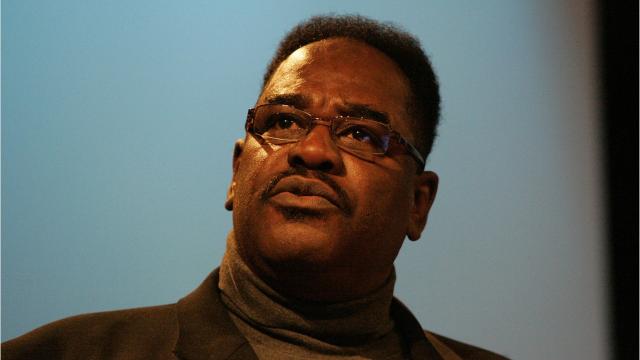
Chrysler VP bribes UAW


image


Feds: Fiat Chrysler VP bribed UAW execs 'to take company friendly positions'

Tresa Baldas and Brent Snavely, Detroit Free Press Published 6:00 a.m. ET Aug. 19, 2017


The intertwined lives of a UAW official and a Fiat Chrysler executive

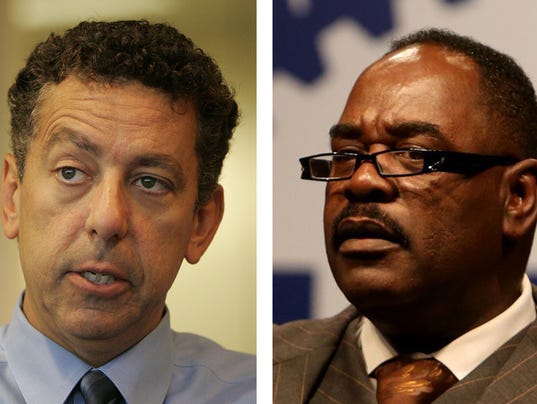
Over a period of years, former Fiat Chrysler executive Al Iacobelli and former UAW Vice President General Holiefield helped to save Chrysler and then stole millions intended for worker training, authorities say. Wochit

636367946804600146-iacobelli-holiefield.jpg

(Photo: Detroit Free Press photos)


It started out as a scandal about personal greed.

Fiat Chrysler and UAW executives, authorities said, were scheming together to line their own pockets.

But the scheme, they now claim, had another goal: Helping the company instead of autoworkers, and bribing union officials to get that done.

In an explosive document filed Friday in the growing Fiat Chrysler-UAW scandal, the government said former Fiat Chrysler Vice President Alphons Iacobelli was bribing union officials to persuade them "to take company-friendly positions."

This new allegation raises the question of whether or not the union's contract and other decisions were influenced by the wrongdoing, potentially undermining the credibility of the contract.

The phrase "company friendly positions," also could relate to how the UAW handled employee grievances, plant specific issues, holiday work and overtime work schedules, training, plant organizational changes and other plant programs.

The government, however, doesn't have to prove that contracts or policies were influenced to convict those charged. It only has to show that auto executives were bribing union officials -- a crime that prosecutors claim Iacobelli pulled off through various financial schemes. One of them, they said, involved giving union officials credit cards to go on shopping sprees whenever they felt like it.

The credit cards, they said,  were issued through the UAW-FCA training center, and paid for everything from designer clothes and $1,000 shoes to a Ferrari and swimming pool.

"Iacobelli said,  'if you see something you want, feel free to buy it. I don't have a problem if you buy it on the charge card,' " prosecutors wrote in a court filing today, adding this was part of a bigger plan to keep senior union officials  "fat, dumb and happy."


The details about Iacobelli's alleged motives surfaced in a new charging document that named a fourth targeted defendant in the case.

Both the UAW and FCA have previously said that the alleged FCA-UAW scam did not affect the contracts.

"It is important for you to know that despite some public commentary to the contrary, the allegations in the indictment in no way call into question the collective bargaining contracts negotiated by our union during this period," UAW President Dennis Williams said last month after the first charges became public.

Said Fiat Chrysler CEO Sergio Marchionne in a letter to employees last month: "This conduct had nothing whatsoever to do with the collective bargaining process."

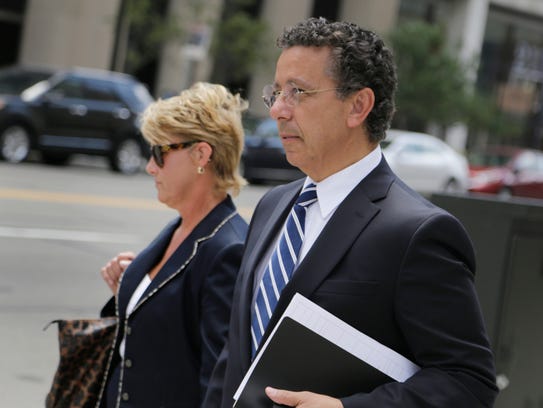
Al Iacobelli, former Fiat Chrysler labor chief, right,Buy Photo

Al Iacobelli, former Fiat Chrysler labor chief, right, walks out of the federal courthouse in Detroit on Tuesday, August 1, 2017, with an unidentified woman. (Photo: Romain Blanquart, Detroit Free Press)

Nevertheless, those involved were in positions to influence both contract negotiations and other decisions.

Retired UAW Associate Director Virdell King, the first African-American female to be elected president of a local union in UAW-Chrysler's history, was charged Friday in U.S. District Court today with being part of a conspiracy that involved the theft of more than $4.5 million in autoworker training funds.

King, 65, of Detroit, was a UAW employee who served as a senior offical in the UAW Chrysler Department from 2008 until she retired in 2016.

King was served as a member of the UAW national negotiating committee responsible for the collective bargaining agreements.

King's attorney, John Shea, declined comment.

Iacobelli, as vice president of employee relations for Fiat Chrysler, was the top official in charge of negotiating with the UAW and administering the contract and led contract modifications in 2009 and contract negotiations in 2011.

He was preparing to lead contract negotiations in 2015 until he was fired in June of that year, one month before negotiations were about to start.

Holiefield, as a UAW Vice President in charge of the Chrysler department, also led the UAW’s contract modifications in 2009 and negotiations in 2011.

In 2009, the modifications that Chrysler and the UAW made to their national contract were largely mandated by President Barack Obama's automotive task force. Those changes were made after Chrysler filed for Chapter 11 bankruptcy and agreed too receive a government loan.

In 2011, the UAW picked General Motors as its target in national negotiations and model its four-year contract with Chrysler on the results those discussions.

But Holiefield, who died in March 2015, was a polarizing figure who agreed to some policies that many UAW members strongly opposed.

In 2013, Fiat Chrysler adopted a new work schedule at several plants that called for employees to work four 10-hour days instead of five eight-hour days.

Holiefield brushed off workers concerns about the policy by calling it a "good problem to have." He argued that the the company agreed to hire more workers in return for the UAW agreeing to adopt the new work schedules.

Tresa Baldas can be reached at tbaldas@freepress.com. Follow her on Twitter @Tbaldas.  Contact Brent Snavely: 313-222-6512 or bsnavely@freepress.com. Follow him on Twitter @BrentSnavely.

Thursday, August 3, 2017

Open Meeting/Municipal Law Questions


Following Q & A are from the website of:  http://ancelglink.com/Question


March 2017
What happens if the agenda for an upcoming board meeting was not posted online in advance of the meeting, but was posted at the local government's principal office?

Under the Open Meetings Act, a public body that has a website that is maintained by full-time staff must post all meeting notices and agendas on the public body's website. The website posting requirement is in addition to posting notices and agendas at the public body's principal office or the meeting place if different than the principal office.  However, if a public body fails to post a notice or the agenda of a meeting on its website, that failure will not invalidate any meeting or actions taken at that meeting so long as the public body had properly posted the notice or agenda at the principal office or the meeting place, as the case may be.

October 2016

Can we require residents to remove election signs from their yards 7 days after the election?


Can we require residents to remove election signs from their yards 7 days after the election?

No. State law restricts the ability of municipalities to impose time restrictions on the display of political signs on residential property

February 2016
Can a unit of local government reimburse an elected official or employee for entertainment expenses incurred while at a conference?

No. The Local Government Travel Expense Control Act prohibits local governments (except home rule units) from reimbursing any official or employee for any entertainment expense unless the entertainment is ancillary to the purpose of the program or event. "Entertainment" is defined to include shows, amusements, theaters, circuses, sporting events, or any other place of public or private amusement.

January 2016
Can we limit the total time for public comment at our city council meetings to 30 minutes, and each commenter to 3 minutes?

Yes, so long as the city council has adopted rules for public comment. In a number of advisory opinions, the Public Access Counselor of the Attorney General's Office upheld similar time limitations on public comment. The PAC cautioned, however, that in order to restrict public comment in any way, the public body must have approved public comment rules.  Having a long-standing practice of limiting the time frame for public comment is not sufficient to satisfy the requirement of approved rules, according to the PAC.  So, if your public body has routinely placed restrictions on public comment (time limits, sign-ins, e

December 2015
Can a city council or village board require an individual to register 5 days in advance of a meeting to speak during public comment?

No, according to a binding opinion of the Public Access Counselor of the Illinois Attorney General's office (PAC).  See PAC Op. 14-012 (Sept. 30, 2014).  Although the PAC acknowledged that the Open Meetings Act allows a public body to adopt rules governing public comment, it found a five day advance registration rule unreasonable because it "does not take into account the fact that the public has a statutory right to address the Board."  The PAC determined that the advance sign-up requirement "imposed substantial obstacles for those who wish to speak at the Board's meetings," particularly because the OMA does not require a public body to post agendas until 48 hours before a meeting. 

tc), it should adopt rules for public comment to incorporate those practices.

November 2015
Can a public body begin its meetings with a religious prayer?

Yes, but with limits. The United States Supreme Court has decided many cases on this subject but its decisions do not give clear guidance. If a public body wishes to include a prayer as part of its meeting, here are a few guidelines to follow so as to avoid conflicts with the First Amendment.

  • Seek out clergy from a variety of denominations and faith traditions to lead the prayer.
  • Include a statement at the top of the printed agenda which says that says that the government body "does not endorse religious faith. The prayer is intended to lend solemnity to the public meeting and invite an attitude of respect and consideration."
  • Request the cleric to speak in nonsectarian terms, not referring to any specific denomination or creed, nor advocating particular beliefs, emphasizing the purpose of the prayer as stated on the agenda. If the cleric does not abide by this request, don't invite him/her back.
  • Do not provide compensation to the cleric from public funds
  • Conduct the prayer before the roll call which begins the official meeting. Typically the Pledge of Allegiance is recited before the roll call; this would be the best moment for the prayer.

By: Paul Keller

October 2015
Are school districts subject to local zoning?

Yes.  The Illinois Supreme Court recently issued a ruling that made it clear that school districts are not exempt from local zoning regulations.  In that case, a school district had installed bleachers at the high school football field that did not comply with the city's height and setback regulations. The school district argued that it was exempt from local zoning. The court disagreed, finding that although schools are exempt from local building codes, they are not exempt from zoning regulations and must, like other property owners, follow zoning regulations and procedures.

August 2015
A board has determined that closed session meeting minutes do not need to remain confidential any longer and wants to approve their release to the public. Must the board also release the tape recordings for those closed session meetings to the public?

No, the board can approve the release of closed session minutes without releasing the closed session tape recordings to the public.  Section 2.06 of the Open Meetings Act requires a public body to record its closed session meetings in the form of an audio or video recording. The OMA states that these "verbatim recordings" are not open for public inspection, except in an action to enforce an alleged violation of the OMA.  These recordings can be approved for destruction not less than 18 months after the meeting, so long as the public body has approved the closed session meeting minutes. 

May 2015
Our city council meetings are held on Tuesday evenings at 6:00 p.m. Is the deadline for posting the notice on the Sunday before the meeting or must we post it by Friday at 6:00 p.m. since Saturday and Sunday are not business days? Also, if Monday is a holiday, does that mean we need to post the notice on the Thursday before the meeting?

The Open Meetings Act requires a public body to post an agenda and notice of a meeting at least 48 hours before the meeting.  So, if a public body meets on Tuesdays at 6:00 p.m., then the notice/agenda must be posted no later than 6:00 p.m. on the Sunday before the meeting, which is 48 hours prior to the meeting.  Because the Act references hours, and not "days" or "business days," you do not skip over the weekend or any holiday in calculating the time period.  A local public body could impose on itself a more restrictive deadline for posting agendas, but that is not statutorily required - the statutory deadline for posting the notice/agenda is 48 hours before the meeting.

April 2015
Can the majority of a quorum of a governmental body attend a conference without violating the Open Meetings Act?

Yes. So long as they do not meet as a group and discuss public business.

January 2015
What do I need to do to comply with the new law that requires us to post elected officials' email addresses on our website?

Last year, the Illinois General Assembly enacted P.A. 98-0930 amending the Local Records Act.  The new law requires all local governments and school districts to post on their websites a mechanism for members of the public to electronically communicate with elected officials.  To comply with the Act, a public body can post either a "uniform single email address" or the individual email addresses of the elected officials.  A "hyperlink" to the email address or addresses must be posted on the home page of the government body's website.  The law becomes effective January 1, 2015, but governments have 90 days to comply with the email posting requirement.

December 2014
Must a public body allow public comment at every meeting, including committee meetings?

Yes, according to the Public Access Counselor in the Attorney General’s Office. In a number of recent opinions, the Public Access Counselor interpreted the Open Meetings Act to require every public body to provide an opportunity for public comment at every meeting open to the public. That includes all meetings of the corporate authorities (i.e., city councils, village boards, park boards, township boards, etc.), all committees of those councils and boards, plan commissions, zoning boards, electoral boards, and any other government board, commission, or body that falls within the definition of a “public body” under the Open Meetings Act. The public comment requirement applies to both regular and special meetings, according to the PAC.

June 2014
Are there prohibitions on elected and appointed officials and city employees accepting free items from vendors doing business with the city, such as tickets to ball games and events, fishing/hunting trips, use of condos during events/trips, etc.?

Yes, Article 10 of the State Officials and Employees Ethics Act, 5 ILCS 430/10 et seq., regulates the solicitation and acceptance of gifts by government officers and employees.  As a general rule, it is against the law for an elected or appointed official or a government employee to accept a gift from a "prohibited source," which would include a vendor that does business with the city.  The Act does contain a number of exceptions to the gift ban, including, for example, restaurant meals or refreshments that do not exceed $75 in value in a single day, political contributions, and gifts from one prohibited source during a calendar year that have a cumulative value of less than $100, among others.  An officer or employee can avoid violation of the Act by returning the prohibited gift to the prohibited source or giving the gift (or its equivalent) to charity.  Because violations of the Act can result in criminal penalties, officials and employees should consult with their municipal attorney if they have any questions about whether acceptance of a particular gift would violate the Act.  They should also review their local ethics code because some municipalities have enacted gift ban restrictions that are stricter than state law.