Tuesday, November 16, 2021

Flying soon? These are the TSA rules you need to know

The U.S. Department of Homeland Security Transportation Security Administration Seal

SearchSearch

  1. Home
  2. Coronavirus (COVID-19) information

Coronavirus (COVID-19) information

COVID-19

Updated November 15, 2021

TSA Response to COVID-19

The Transportation Security Administration continues to adjust its security operations during the COVID-19 global pandemic. We established this webpage to provide resources and information to assist passengers who travel during this time. TSA is ready to meet the current and future security needs of the nation’s transportation systems and remains dedicated to keeping travelers and our frontline workforce healthy and secure.

For the latest press releases and statements related to COVID-19, please visit our media page.

Face Masks Now Required

The Transportation Security Administration has implemented the Executive Order on face masks at airport security checkpoints and throughout the transportation network when indoors. For more information, please read our latest press release.

Any passenger who violates federal regulations, such as refusal to wear a mask in U.S. transportation systems covered by the January 31, 2021 Security Directive and subsequent amendments, may be subject to penalties or fines. The traveler will also be denied TSA PreCheck expedited screening benefits for a period of time.

Stay Healthy. Stay Secure.

TSA launched the “Stay Healthy. Stay Secure.” campaign, which details proactive and protective measures we have implemented at security checkpoints to make the screening process safer for passengers and our workforce by reducing the potential of exposure to the coronavirus. The campaign includes guidance and resources to help passengers prepare for the security screening process in the COVID environment.
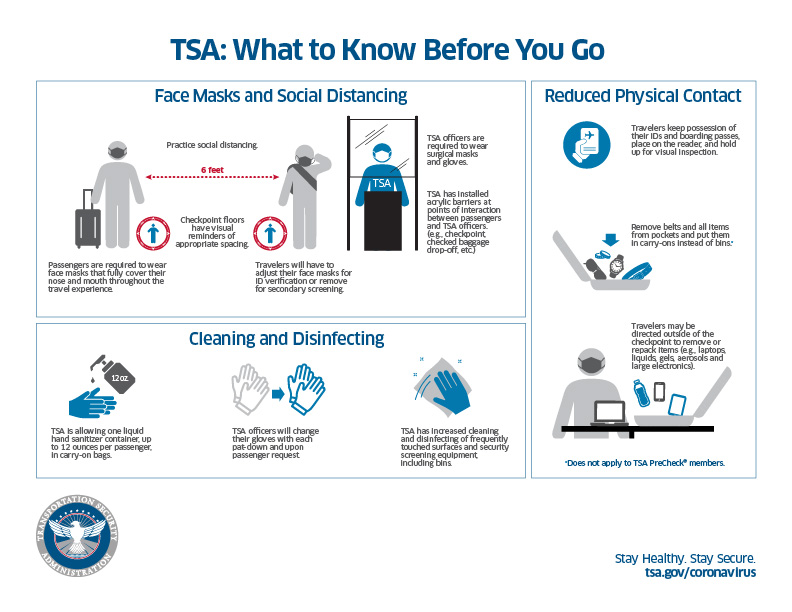
infograph
Click here for a printable infographic
on “What to Know Before You Go.”

Traveling During the COVID-19 Pandemic

Travelers are reminded to follow the Centers for Disease Control and Prevention (CDC) travel guidance as well as local and state advisories regarding COVID-19.  Starting February 2, 2021, all airline travelers must wear a face mask throughout the travel experience when indoors. You will be asked to adjust your mask for ID verification or if it alarms the security screening equipment.

Travelers are also encouraged to:

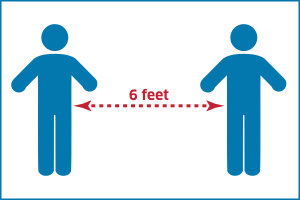
  • Maintain a social distance of six feet wherever possible while at the checkpoint.
  • Remove belts and all personal items from your pockets such as wallets, keys or phones before you enter the checkpoint queue and place them in your carry-on bag.  (Does not apply to TSA PreCheck® members).
  • Practice good hygiene, such as washing your hands regularly, including directly before and after completing the security screening process. If it is not possible to wash your hands, please use hand sanitizer.
  • Arrive at the airport early to allow adequate time for checking bags, completing security screening and getting to the departure gate. COVID-19 has affected staffing and operations across the airport environment, potentially adding time to your pre-flight experience.

Employees or travelers who believe they may have been in contact with a person who has COVID-19 should consult with their healthcare provider. Employees or travelers who have tested positive for COVID-19 should seek medical attention and follow the guidance of their healthcare provider and local health department.

Passenger Volumes

airplaneClick to View a comparison of TSA checkpoint travel numbers (current year versus prior year(s)/same weekday).

Security Checkpoints

While security is TSA’s top priority, the health and safety of our employees and the traveling public is of utmost importance to us. TSA remains in close communication with medical professionals, the CDC, and various government agencies as we continue to carry out our important mission. Below are some adjustments TSA has made at security checkpoints to make the security screening process safer.

  • Social Distancing

Social distanceTSA has implemented procedures to increase social distancing and reduce direct contact between our employees and the traveling public whenever possible – without compromising security. Adjustments include increasing distance between passengers as they enter the security checkpoint queue and throughout the screening process, placing visual reminders of appropriate spacing on checkpoint floors, and opening more checkpoint lanes where possible to reduce time spent in line.

  • Reduced Physical Contact

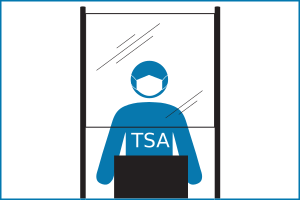
Social distanceTSA is implementing a phased installation of acrylic barriers at various points throughout the checkpoint that require interaction between passengers and TSA officers. Travelers should keep possession of their boarding pass, place it on the document scanner and show the boarding pass to the TSA officer for visual inspection while at the travel document checking station.

  • Personal Protective Equipment

Social distanceTSA officers are required to wear face mask and gloves. They may also choose to wear eye protection or clear plastic face shields. In addition, TSA officers change their gloves following each pat-down and upon passenger request.

  • Cleaning and Disinfecting

CleaningTSA has increased the frequency and intensity of cleaning and disinfecting of frequently touched surfaces throughout the checkpoint including security screening equipment and bins. TSA officers are also required to change Explosives Trace Detection swabs after each use.

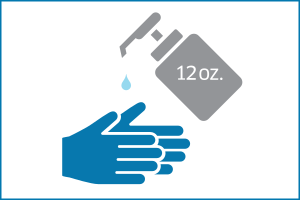
  • Medical Exemption for Hand Sanitizer

Hand SanitizerAs a temporary exemption from the 3-1-1 rule, TSA is allowing one oversized liquid hand sanitizer container, up to 12 ounces per passenger, in carry-on bags. Since these containers exceed the standard allowance typically permitted through a checkpoint, they will need to be screened separately. This will add some time to your checkpoint screening experience. Please keep in mind that all other liquids, gels and aerosols brought to a checkpoint continue to be limited to 3.4 ounces or 100 milliliters carried in a one quart-size bag. TSA’s special procedures for traveling with medication.

  • Touchless Technology

Touchless TechnologyNew technology continues to be a major priority for TSA. Here are just a few examples of technologies that are changing the way we do business: 1) Computed Tomography (CT) produces high-quality, 3-D images for a more thorough visual analysis of a bag’s contents. 2) Enhanced Advanced Imaging Technology (eAIT) safely screens passengers without physical contact for threats such as weapons and explosives, which may be hidden under a passenger’s clothing. 3) Credential Authentication Technology (CAT) machines automatically verify identification documents presented by passengers during the security screening process.

  • Expired Driver’s License and REAL ID Extension
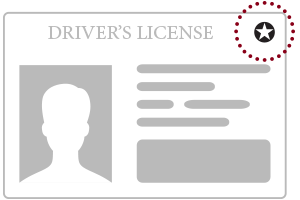
RealIDIf your driver's license or state-issued ID expired on or after March 1, 2020, and you are unable to renew at your state driver’s license agency, you may still use it as acceptable identification at the checkpoint. TSA will accept expired driver’s licenses or state-issued ID a year after expiration. DHS has extended the REAL ID enforcement deadline to May 3, 2023. Learn more about REAL ID on TSA’s REAL ID webpage.

TSA PreCheck®

TSA PreCheck® benefits are even more valuable in today’s travel climate. TSA PreCheck passengers spend less time waiting in line and keep their shoes, belts and jackets on during screening and laptops in their carry-ons, reducing overall contact during screening. Visit TSA PreCheck to learn more. Any passenger who violates federal regulations, such as refusal to wear a mask in U.S. transportation systems covered by the January 31, 2021 Security Directive and subsequent amendments, will be denied TSA PreCheck expedited screening benefits for a period of time.

Airport Closures and Flight Cancellations

TSA does not make decisions about flight cancellations or airport closures. These decisions are made locally, on a case-by-case basis, by individual airlines, airports and public health officials. Before traveling, passengers should check with their airline and airports of origin and destination for the latest information on closures and cancellations.

Supporting our Workforce

The health and safety of our frontline workforce is paramount to TSA. In addition to the measures taken to protect our frontline workforce from COVID-19 transmission, we are also using our unique authorities to provide them with the additional support and care they deserve during this unprecedented time. This includes:

  • Granting paid administrative leave or excused absences (rather than requiring use of personal leave) for those who are diagnosed with COVID-19, need to self-quarantine while awaiting a COVID-19 test result, or have had direct contact with an infected individual.
  • Providing for the maximum use of telework to promote social distancing.
  • Affording new protections and alternatives to employees who are members of vulnerable populations to fit their individual situations.

We will continuously evaluate and adapt our procedures and policies to keep our workforce safe as we learn more about this devastating disease and how it spreads.

TSA Confirmed COVID-19 Cases

TSA has 271 employees with active COVID-19 infections. Those individuals are staying home to help keep the traveling public safe. Since the beginning of the pandemic, TSA has cumulatively had 11,117 federal employees test positive for COVID-19. 10,846 employees have recovered, and 32 have unfortunately died after contracting the virus. We have also been notified that two screening contractors have passed away due to the virus.

TSA is committed to notifying the public about airport locations where TSA employees or screening contractors have tested positive for COVID-19. The chart below lists airports with confirmed COVID-19 cases and the last date worked for the most recent screening employee who tested positive. It does not include non-airport TSA employees or contractors who have limited or no interaction with the public. Passengers who believe they may have come in contact with an infected individual within the past 14 days should follow the  CDC’s recommendations for travel-associated exposure.

Above is from:  Flying soon? These are the TSA rules you need to know (msn.com)

Thursday, November 11, 2021

November 11: Johns Hopkins COVID 19 Report

COVID-19 Situation Report

Editor: Alyson Browett, MPH

Contributors: Clint Haines, MS; Natasha Kaushal, MSPH; Amanda Kobokovich, MPH; Christina Potter, MSPH; Matthew Shearer, MPH; Marc Trotochaud, MSPH; and, Rachel A. Vahey, MHS.

EPI UPDATE The WHO COVID-19 Dashboard reports 250.7 million cumulative cases and 5.06 million deaths worldwide as of November 10. Global weekly incidence increased for the third consecutive week, while global weekly mortality fell slightly over the previous week. Weekly incidence increased by 2.68% compared to the previous week, and mortality decreased by 3.68%. The global cumulative incidence surpassed 250 million cases early this week, with several countries in Europe experiencing record numbers of new cases.

Global Vaccination

The WHO reported 7.08 billion cumulative doses of SARS-CoV-2 vaccines administered globally as of November 8. A total of 3.9 billion individuals have received at least 1 dose, and 3.0 billion are fully vaccinated. Analysis from Our World in Data indicates that the overall trend in global daily vaccinations has decreased over the past week, down to 27.83 million doses per day on November 10 from a recent high of 30.83 million doses per day on November 4.*

Our World in Data estimates that there are 4.04 billion vaccinated individuals worldwide (1+ dose; 51.34% of the global population) and 3.16 billion who are fully vaccinated (40.13% of the global population). Europe, South America, North America, and Oceania all have fully vaccinated at least 50% of their populations, while Asia sits at 44.52% and Africa lags far behind at 6.34%.

*The average daily doses administered may exhibit a sharp decrease for the most recent data, particularly over the weekend, which indicates effects of reporting delays. In an effort to reflect the longer-term trends, the numbers reported here may not correspond to the most recent data.

UNITED STATES

The US CDC reports 46.6 million cumulative COVID-19 cases and 755,201 deaths, passing 750,000 cumulative deaths on November 4. The current daily incidence average is approximately 74,584 new cases per day and appears to be increasing. The decline in daily mortality appears to have passed an inflection point and appears to be holding relatively steady. The US is currently averaging 1,078 deaths per day.*

*Changes in state-level reporting may affect the accuracy of recently reported data, particularly over weekends. In an effort to reflect the longer-term trends, the numbers reported here may not correspond to the most recent dates.

US Vaccination

The US has administered 434.5 million cumulative doses of SARS-CoV-2 vaccines. The daily vaccination trend reached a recent peak at 1.2 million doses on October 29 but has declined slightly to 1.17 million doses as of November 5.* Since CDC Director Dr. Rochelle Walensky endorsed the recommendation by the CDC’s Advisory Committee on Immunization Practices (ACIP) to authorize use of the Pfizer-BioNTech vaccine in children aged 5 to 11 years, an estimated 1 million elementary-age kids have received their first dose, according to a White House official.

There are 224.7 million individuals who have received at least 1 vaccine dose, equivalent to 67.7% of the entire US population. Among adults, 80.9% have received at least 1 dose, as well as 15.1 million children under the age of 18. A total of 194 million individuals are fully vaccinated, which corresponds to 58.5% of the total population. Approximately 70.3% of adults are fully vaccinated, as well as 12.8 million children under the age of 18. Since August 13, 26.1 million fully vaccinated individuals have received an additional or booster dose, including 32.4% of fully vaccinated adults aged 65 years or older.

*Due to delays in reporting, estimates for the average daily doses administered are less accurate for the most recent 5 days. The most current average provided here corresponds to 5 days ago.

PFIZER-BIONTECH BOOSTER Pfizer and BioNTech on November 9 submitted a request to the US FDA to authorize their SARS-CoV-2 vaccine as a booster dose for all adults aged 18 years and older. If the FDA grants an amendment to the existing emergency use authorization (EUA)—which it is expected to do, possibly ahead of the Thanksgiving holiday—all 181.5 million fully vaccinated adults in the US would become eligible for an additional shot. Such a move would represent a turnaround from 2 months ago, when an FDA expert panel overwhelmingly recommended against the companies’ request for booster doses for all adults. Notably, that committee is not scheduled to meet in November, meaning the FDA could grant the request without seeking external advice. Pfizer-BioNTech made the request based on unpublished data from a randomized, controlled clinical trial of more than 10,000 people aged 16 and older who previously received a primary 2-dose series of the vaccine. Among those who received a booster dose, relative vaccine efficacy reached 95.6% when compared to those who did not receive a booster. Currently, a booster dose of the Pfizer-BioNTech vaccine is authorized for individuals aged 65 years and older, individuals ages 18 to 64 years who are at high risk of severe COVID-19 or who have frequent institutional or occupational exposure to SARS-CoV-2, as well as eligible people who completed primary vaccination with a different SARS-CoV-2 vaccine.

Health Canada on November 9 authorized the Pfizer-BioNTech vaccine as a booster dose for all people aged 18 years and older, at least 6 months following the primary 2-dose regimen. A booster dose of the Pfizer-BioNTech vaccine is the same, 30 μg, as those used in the primary series. Mounting evidence shows a third dose of the Pfizer-BioNTech vaccine significantly increases the antibody response among recipients, although it remains unclear how long any resulting immunity lasts.

MODERNA Moderna and the US National Institutes of Health (NIH) are currently in a dispute over which entity should receive patent rights to the SARS-CoV-2 mRNA vaccine the company and the agency developed in partnership. The collaboration to develop the vaccine was widely hailed as a shining example of successful interaction between public and private entities for the benefit of the global population. However, Moderna’s patent paperwork noticeably does not include the government scientists involved in the vaccine development process as co-inventors. Moderna’s stance on this dispute is that they “reached the good-faith determination that these individuals did not co-invent” the vaccine. The NIH and consumer advocacy group Public Citizen disagree with this assessment, believing that federal scientists were core to the invention of the vaccine and should be included on the patent. The NIH and Moderna currently are engaged in talks to resolve the dispute, but if left unresolved, the issue could be taken into the court system for resolution.

Ownership of patents vital to vaccine manufacturing has implications beyond the financial aspect; decisions about distribution of the product and information-sharing on patented technology fall under the patent owner’s control. Moderna has repeatedly come under fire for not providing technical information with vaccine manufacturers in low- and middle-income countries (LMICs), although the company has said it will not enforce patents during the pandemic. Both Moderna and Pfizer—which developed a SARS-CoV-2 mRNA vaccine in partnership with BioNTech—have limited licensing opportunities with other vaccine manufacturers in an effort to protect their large investments in the technology. But this tight hold on mRNA vaccine technology inhibits other countries with vaccine manufacturing capabilities from negotiating access to the information needed to make the products. Following the successful procurement of ample vaccines for the US population, the US government is now making concerted efforts to send more vaccine doses to the rest of the world. However, those efforts are being significantly stymied by strict contractual language with Moderna that prevents the US from sending doses abroad or sharing manufacturing information. Increased scrutiny on Moderna’s tight grip on vaccine supply and technology have led to promises from the company to play a more significant role in global vaccine distribution, but many have stated these pledges are too little, too late and do not guarantee enough action. Some progress in changing contractual language was made in June, but additional efforts still need to be made to improve worldwide availability of vaccine doses and technology.

AT-HOME TEST RECALL The FDA has issued a recall for additional batches of Australia-based company Ellume’s at-home COVID-19 test kits for potentially false-positive results. This recall is for the same issue that was previously reported in early October and classified as a Class I recall, the most serious recall designation that may result in “serious adverse health consequences or death.” Product batches with a manufacture date between February 24 and August 11, 2021, and distribution dates between April 13 and August 26, 2021, are included in the recall, which includes more than 2.2 million of the 3.5 million tests shipped to the US; Ellume’s previous estimate of faulty tests was 427,000. Those who attempt to use the affected tests will be notified through the app of the recall status, and replacement tests can be requested online. Thus far, the FDA has received reports of 35 false positives from the tests. The Biden administration made a $231.8 million deal with Ellume in February to boost availability of the at-home testing kits in the US, which also helped fund the company’s first manufacturing plant in the US in Frederick, Maryland, with a 500,000 test production capacity per day. The White House made an additional $1 billion allocation for the purchase of the 8 types of at-home testing kits available in the US shortly after the first Ellume recall was publicized.

VACCINE ACCESS The global rollout of SARS-CoV-2 vaccines continues to face various challenges, including hoarding and inequities in vaccine distribution, unfulfilled pledges, vaccine production backlogs, export restrictions, supply chain disruptions, communication breakdowns, logistical hurdles, and misinformation and hesitancy. Experts warn that if wealthy nations continue to put their own interests ahead of the rest of the world and continue to stockpile vaccines, the COVID-19 pandemic will remain two-pronged, with some nations working toward recovery while others continue to be threatened by ongoing outbreaks. Increasingly, public health officials and policymakers are looking toward the future, highlighting lessons learned from this pandemic and drafting an international treaty on pandemic preparedness and response.

The fact remains that the world needs to take steps to fix inequities in vaccine access now in order to reach a goal of vaccinating 70% of the world’s population by September 2022. On November 10, US Secretary of State Antony Blinken hosted a virtual COVID-19 ministerial, during which he said the US will step up efforts to boost vaccine production, increase vaccine donations, and fulfill current pledges. He announced the US helped broker a deal between Johnson & Johnson (J&J) and COVAX to help deliver more doses of the J&J-Janssen SARS-CoV-2 vaccine to conflict zones, humanitarian settings, and frontline workers such as UN peacekeepers, including a US donation of 1.5 million doses of surplus supply. Secretary Blinken also announced a new public-private partnership, called the Global COVID Corps, to facilitate private sector companies in lending expertise and resources to support vaccination campaigns, including supply chain management and on-site vaccine administration. Earlier this week, the heads of the International Monetary Fund (IMF), World Bank Group, WHO, and World Trade Organization (WTO) met with the CEOs of vaccine manufacturing companies, acknowledging the urgency of delivering more vaccine doses to low-income countries and calling on G20 nations to join efforts to meet the end-of-year goal to vaccinate 40% of the population in all countries.

The Center for Health security released a report on October 29, Navigating the World that COVID-19 Made: A Strategy for Revamping the Pandemic Research and Development Preparedness and Response Ecosystem, urgently calling on governments, international institutions, and private sector actors to immediately act to address gaps and explore opportunities at each step along the vaccine value chain.

MEASLES In a report published in an early edition of the US CDC’s Morbidity and Mortality Weekly Report (MMWR), researchers from the CDC and WHO voiced concern over diminished progress toward measles elimination, as more than 22 million infants missed their first dose of measles vaccine in 2020 amid the COVID-19 pandemic. Also in 2020, only 70% of children received their second dose. Additionally, 24 vaccination campaigns in 23 countries were planned in 2020 but were postponed due to the pandemic, leaving more than 93 million people at risk for the disease. Notably, reported measles cases decreased more than 80% in 2020 compared to the previous year, but surveillance activities significantly dropped, with the lowest number of specimens sent in for testing in more than a decade. Missed vaccination doses and gaps in disease surveillance programs highlight the largest increase in unvaccinated children in decades and put many more children at risk of contracting the disease. Major measles outbreaks occurred in 26 countries in 2020, accounting for 84% of all reported cases last year. Despite disruptions to immunization services worldwide, 81 countries (42%) maintained their measles elimination status through the end of 2020, but no new countries were verified as having achieved measles elimination. 

PLASTIC WASTE Global plastic waste was a problem prior to the COVID-19 pandemic, and an increase in demand for single-use plastics—especially those used in medical settings—has intensified the problem over the past 2 years, according to a research article published in the Proceedings of the National Academy of Sciences (PNAS). Worldwide, 193 countries have generated about 8 million tons of mismanaged plastic waste (MMPW). Of that waste, nearly 26,000 tons has entered the oceans, where it threatens to have a “long-lasting impact” by disturbing marine life and polluting coasts. The researchers, from China and the US, urged all nations, particularly low- and middle-income countries, to better manage medical and other plastic waste as the pandemic continues. A separate crowd-sourced project is tracking instances of wildlife being killed or disrupted by pandemic-related waste, with researchers noting cases of animal entanglement, entrapment, and ingestion of COVID-19 trash.

Wednesday, November 10, 2021

November 9: Johns Hopkins COVID 10 Report

COVID-19 Situation Report

Editor: Alyson Browett, MPH

Contributors: Clint Haines, MS; Natasha Kaushal, MSPH; Amanda Kobokovich, MPH; Christina Potter, MSPH; Matthew Shearer, MPH; Marc Trotochaud, MSPH; and, Rachel A. Vahey, MHS.

US VACCINATION REQUIREMENTS The administration of US President Joe Biden on November 5 released an interim final rule regarding SARS-CoV-2 vaccination for private employers with 100 or more workers in an effort to increase vaccination rates among the US population. The next day, the US Court of Appeals for the Fifth Circuit in New Orleans granted an emergency stay of the federal Occupational Safety and Health Administration (OSHA) temporary emergency rule that employees of those companies be fully vaccinated by January 4 or be required to undergo weekly testing, although it is unclear whether the stay is applicable nationwide or only in those states under the court’s jurisdiction.* According to the 3-judge panel, the petitioners bringing the request—including 5 states, all led by Republican governors, and various companies—"give cause to believe there are grave statutory and constitutional issues with the Mandate."

The court—considered to be one of the nation’s most conservative appeals courts—gave the federal government a deadline of 5 pm on November 8 to respond. Late that day, the US Department of Justice requested the court lift its stay, stating that the petitioners’ claims of harm are “premature,” given the rule’s first deadline—for large businesses to require masking of unvaccinated employees in the workplace—does not go into effect until December. The Biden administration said employers should move forward with efforts to get their employees vaccinated, saying the rule “will save thousands of lives and prevent hundreds of thousands of hospitalizations.” OSHA rules apply to private workplaces in 29 states, while the remaining states have their own state-run OSHA agencies that are required to adopt any federal rules. In October, OSHA threatened to take over the operations of the state-run OSHA agencies in Arizona, South Carolina, and Utah for failing to adopt a similar SARS-CoV-2 vaccination rule for healthcare workers; Arizona and South Carolina have begun the process to adopt that standard. Several other lawsuits challenging the vaccine rule have been filed in federal courts, including by at least 21 other Republican-led states. The Fifth Circuit must now decide whether to lift the stay or make it permanent. If the latter, OSHA could appeal to the US Supreme Court. So far, courts have largely upheld vaccination mandates issued by local and state governments and private companies, but the federal rule is more far-reaching. Despite opposition to the OSHA standard and other vaccine requirements, data show they are working to increase vaccination rates, with some companies reporting nearly 100% of their workers have received at least one dose of vaccine.

*Those states include Texas, Louisiana, and Mississippi.

PFIZER ANTIVIRAL CANDIDATE Pfizer announced last week that its investigational antiviral pill to treat COVID-19 reduced the risk of COVID-19-related hospitalization or death from any cause by 89% when compared to a placebo among patients treated within 3 days of symptom onset. The planned interim results come from a Phase 2/3 clinical trial examining the pill—which is called Paxlovid and is taken in combination with an older antiviral named ritonavir—among COVID-19 patients recovering at home who are at high risk of developing severe disease. The company said it plans to submit the data to the US FDA as soon as possible to request emergency use authorization (EUA) for the antiviral. This is the second oral pill that has shown positive results in clinical trials for treating people with COVID-19 at home and could help alleviate the strain of the pandemic on hospitals. The other antiviral, molnupiravir, being developed by Merck and Ridgeback Biotherapeutics, reduced the risk of hospitalization and death by about half, and UK regulators granted conditional authorization to the pill last week. Clinical trial data for both drugs have not yet been peer-reviewed or published in a journal.

Access to any new therapy is a global concern, and Pfizer said it will institute a tiered-pricing approach to promote equitable access if the drug receives regulatory clearance. Merck also has taken steps to facilitate manufacturing and distribution of its antiviral, including entering into advance purchase agreements with individual nations, implementing tiered pricing, and granting voluntary licenses to generic manufacturers and the Medicines Patent Pool. Notably, wealthy nations are already contracting with both companies for supplies of the antivirals, raising questions about when low- and middle-income countries (LMICs) might be able to access the treatments, with limited supply expected to be produced through the end of the year.

REGEN-COV Regeneron Pharmaceuticals on November 8 announced positive results from a Phase 3 clinical trial of its combination monoclonal antibody REGEN-COV for SARS-CoV-2 prevention. The trial—jointly run with the US National Institute of Allergy and Infectious Diseases (NIAID)—enrolled SARS-CoV-2-negative individuals who lived in the same household as someone who tested positive for SARS-CoV-2 within the prior 4 days. Participants received either one 1,200mg dose of REGEN-COV, administered via 4 subcutaneous injections, or a placebo. The trial found that REGEN-COV reduced the risk of developing COVID-19 by 81.5% during an 8-month timeframe. Notably, by the end of the follow-up period, about 35% of participants had also received at least 1 dose of a SARS-CoV-2 vaccine. REGEN-COV also reduced the risk of COVID-19-related hospitalization by 100%, with 0 individuals hospitalized in the REGEN-COV group and 6 individuals hospitalized in the placebo group. There were no deaths during the trial, and the trial did not record any new safety concerns for the treatment. REGEN-COV is currently authorized for the treatment of individuals with mild-to-moderate COVID-19 who are not hospitalized and to prevent infection in individuals exposed to COVID-19. The new data provide some indication that REGEN-COV could provide long-lasting immunity for immunocompromised individuals and others who are unresponsive to vaccines. Regeneron said it plans to submit the data, which is not yet published or peer-reviewed, to the US FDA as soon as possible in hopes of gaining authorization for the drug to be used as pre-exposure prophylaxis.

CHILDHOOD VACCINATION Now that a SARS-CoV-2 vaccine is authorized for children ages 5 to 11 years in the US, state regulators—along with parents, pediatricians, and public health officials—are contemplating when and if the shots should become mandatory for children. All 50 US states have requirements for school-age children to be immunized against other diseases such as polio, chickenpox, and measles. The nation’s second-largest school district, Los Angeles Unified School District in California, already has said children aged 12 and older must be vaccinated by mid-December to continue in-person learning, and several other jurisdictions and states have plans to make SARS-CoV-2 vaccination mandatory for children and adolescents to attend school as soon as the US FDA grants a vaccine full approval for those age groups.

Costa Rica will require SARS-CoV-2 vaccination for all children aged 5 and older beginning in March 2022, making it one of the first countries to implement such a policy for youth. So far, nearly 75% of the country’s adolescents ages 12 to 19 years have received at least one dose of vaccine. In the UK, the number of breakthrough infections among vaccinated individuals is increasing, and health officials say children—who remain largely unvaccinated—are partly to blame, with unvaccinated kids passing the virus to their vaccinated parents. A recent study published in The Lancet Infectious Diseases showed that fully vaccinated individuals who were exposed to a household contact infected with the Delta variant had an appreciable risk of becoming infected in the home, although the risk was lower than for unvaccinated individuals (25% vs 38%). Another study published in The Lancet Regional Health Europe highlights the role the Delta variant plays, showing increased transmissibility among household contacts when compared with the Alpha variant. While no vaccine is 100% effective in preventing COVID-19, evidence shows vaccination can help reduce the risk of infection and transmission to others, as well as significantly reduce the risk of hospitalization and death.

INTERNATIONAL TRAVEL TO US The US on November 8 reopened its borders to fully vaccinated travelers from 33 countries that were subject to previous restrictions implemented in early 2020. The countries—including Mexico, Canada, the UK and most European nations, China, India, South Africa, Iran, and Brazil—accounted for more than half of international visitors to the US in 2019, prior to the pandemic. Travelers entering the US by air will be required to show proof of vaccination status and a negative SARS-CoV-2 test, while those entering through land borders with Canada and Mexico will only need to show proof of vaccination. Notably, the loosening of restrictions comes just as Europe is experiencing a new surge of COVID-19 cases, with the WHO last week warning the region is again “at the epicenter” of the pandemic. Notably, Germany this week recorded its highest 7-day incidence since the beginning of the pandemic. Additionally, several countries, including Austria and Iceland, have implemented new or reinstated previous restrictions, and vaccination rates have plateaued across the region. A WHO official urged the US to pay close attention to Europe’s current situation and to not delay in reinstating public health measures, especially prior to the upcoming holidays.

EMERGENT BIOSOLUTIONS The US government has ended its contract with Emergent BioSolutions, a Baltimore, Maryland-based SARS-CoV-2 manufacturer that had to pause production earlier this year after an inspection revealed a batch of J&J-Janssen vaccine doses had been contaminated. The more than US$650 million contract—which only involved production of the AstraZeneca-Oxford vaccine that is not authorized for use in the US but is widely used in Canada, the EU, and South Africa—originally was awarded in May 2020, and Emergent will not receive about US$180 million after the government stopped making payments following the contamination discovery. Notably, J&J-Janssen will continue to use Emergent to produce its vaccine under a separate agreement even though the facility continues to lack federal regulatory approval to manufacture vaccine doses for use in the US.

VACCINE MISINFORMATION Tackling COVID-19 misinformation is far from simple. Sources and believers of misinformation range from high-profile NFL players to religious institutions, and efforts to combat vaccine hesitancy are often hodgepodge with unclear or mixed efficacy. According to new findings from the KFF COVID-19 Vaccine Monitor, 78% of adults have heard at least 1 of 8 different false statements about COVID-19 and believe it to be true or are uncertain if the statement is true or false. Only 22% did not believe any of the 8 false statements, the survey found. Belief in misinformation was associated with unvaccinated status, identification as Republican, rural residency, lack of a college degree, and age under 50 years. Belief in misinformation also was correlated with individuals who listed One America News, Fox News, or Newsmax as their trusted news source. In an effort “to understand, identify, and stop misinformation, and help others do the same,” US Surgeon General Dr. Vivek Murthy released a community toolkit for the general public this morning. Dr. Murthy previously identified COVID-19 misinformation as a threat to public health, and he hopes health professionals, faith leaders, teachers, parents, and others will use the new toolkit to engage in in-person conversations to dispel myths and rumors, especially regarding vaccination.

In a new analysis from the Center for Health Security, its estimated that COVID-19 vaccine misinformation and disinformation costs an estimated $50 to $300 million each day.

LOSS OF BENEFITS ​​The US military has implemented SARS-CoV-2 vaccine mandates as a matter of readiness, a US Department of Defense official recently told the Senate Veterans' Affairs Committee. If service members refuse to get vaccinated, discharge decisions will be left to individual commanders, and those personnel that receive other-than-honorable discharges might lose certain US Department of Veterans Affairs (VA) benefits, including GI Bill funding, home loans, transition assistance, and some healthcare services. The military’s first vaccine mandate deadline passed on November 2, when active-duty members of the US Air Force and US Space Force (USAF/USSF) were to be fully vaccinated against COVID-19. As of last week, about 3% of the USAF/USSF active-duty members were not vaccinated and face possible expulsion. Deadlines for the other branches are looming. According to the Pentagon, 97% of the nation’s 1.3 million active-duty service personnel have had at least one vaccine dose, with 99% of the Navy with at least one shot, 93% of Marines, and 90% of the Army. Notably, the US Department of Defense has issued only a handful of exemptions, although none for religious reasons.

Outside of the military, other workers who remain unvaccinated may face financial repercussions, including increases in health insurance premiums, costs of weekly testing to comply with mandates, or even job loss. Now, some employers are rescinding death benefits for unvaccinated workers who die of COVID-19. New York’s Metropolitan Transportation Authority (MTA) is one of the highest-profile employers to do so, no longer paying a $500,000 death benefit to the families of subway, bus, and commuter rail employees who are unvaccinated and die of COVID-19. Other employers also are considering limiting benefits, such as short-term disability, to unvaccinated workers. Insurers—including MetLife, Hartford Financial Services Group, and Prudential Financial—have reported increases in the number of death-benefit claims for COVID-19 deaths among working-age people amid the Delta variant surge, causing them to payout higher-than-normal amounts through their employer-sponsored life insurance and international life insurance businesses.

SINGAPORE Currently, the government of Singapore fully covers medical costs for COVID-19 treatment for all nationals, permanent residents, and long-term visa holders. However, because unvaccinated individuals are causing a disproportionate strain on the healthcare system, the Ministry of Health announced this week that individuals who are “unvaccinated by choice” will be ineligible to receive full government coverage for COVID-19 medical bills beginning December 8. These unvaccinated individuals will still have access to normal healthcare financing options where applicable, such as private insurance or government subsidies. As of November 8, 85% of Singapore’s population is fully vaccinated, and vaccination is free to all nationals and long-term residents.

Monday, November 8, 2021

Rep Kinzinger was armed on January 6

Adam Kinzinger says he 'thought about' having to use his gun at the Capitol on January 6

John L. Dorman

Mon, November 8, 2021, 7:53 PM

Adam Kinzinger

Rep. Adam Kinzinger of Illinois. Chip Somodevilla/Pool via AP, File

  • Rep. Kinzinger said he was prepared to use his gun to defend himself at the Capitol on Jan. 6.

  • "There was a moment where I was like, 'Man, there's a real sense of evil,'" he told Rolling Stone.

  • Kinzinger recounted the six hours barricaded in his office as the mob of insurrectionists loomed.

Rep. Adam Kinzinger in a recent interview said that he considered using his gun during the January 6 insurrection at the US Capitol, expressing that he was "prepared to defend" himself against his own party.

While talking with Rolling Stone, the Illinois Republican spoke of the "real sense of evil" he felt that day, and even before the insurrection occurred, he felt as though violence, fueled by then-President Donald Trump's unsubstantiated claims of a stolen election, was imminent.

"I knew there was going to be violence. I didn't necessarily know they were going to sack the Capitol, but I knew there was going to be violence. In fact, I warned [House Minority Leader] Kevin McCarthy two days prior to it. And he was very dismissive of it, of course," Kinzinger told the magazine.

The congressman described how the day progressed as he tried to get a sense of what was developing on Capitol Hill.

"I asked my staff to stay home," he said. "I came in, it was kind of a normal morning. I was watching Trump's speech and it was crazy, like usual."

He added: "I remember seeing [Donald Trump] Jr. say, 'This is now Trump's party.' And I'm like, well that's creepy. And then Trump says, 'I'm going to go with you to the Capitol.' I'm like, 'Man, this is bad.'"

Kinzinger then recounted how he attended the start of the Electoral College certification in the House chamber, but then left the proceedings and spent six hours "hunkered down" in his office with his gun, where he said he was "prepared to defend" himself.

The congressman noted that at around 2:30 p.m. on January 6, a "bad feeling" took over.

"There was a moment where I was like, 'Man, there's a real sense of evil.' I can't explain it any further than that. ... I just felt a real darkness, like a thick, bad feeling. And there was about a 15-to 30-minute time frame, where, at one point, you realize they've breached the Capitol. I know if they can breach those outer lines, they can get anywhere, including my office," he told the magazine.

He added: "I had been targeted on Twitter that day and prior, like, 'Hangman's noose. We're coming for you.' And people know where my office is. So I barricaded myself in here, thinking, 'If this is as bad as it seems, they may end up at my office, breaking this crap down, and I may have to do what I can.'"

Kinzinger said that he "thought about" having to use his gun because the mob outside of his office doors was unrelenting in their quest to stop the election certification of a president, one of the hallmarks of US democracy, and he knew that they were eager to complete their doomed goal.

"If you're already at a point where you're beating down police officers, and you're willing to sack the US Capitol, which hadn't been done in hundreds of years, if you come face-to-face with Chief RINO in his office, who doesn't believe that Donald Trump won reelection, yeah, they're going to try to fight and kill me, and I'm not going to let that happen," he said.

Kinzinger is now a member of the House select committee investigating the Jan. 6 insurrection, one of only two Republicans on the panel alongside GOP Rep. Liz Cheney of Wyoming.

Read the original article on Business Insider