

Friday, August 6, 2021

August 6: Johns Hopkins COVID 19 Report

COVID-19 Situation Report

EPI UPDATE The cumulative global COVID-19 incidence surpassed 200 million cases:

1 case to 25 million: 239 days

25 million to 50 million: 69 days

50 million to 75 million: 42 days

75 million to 100 million: 39 days

100 million to 125 million: 58 days

125 million to 150 million: 36 days

150 million to 175 million: 43 days

175 million to 200 million: 53 days

The WHO COVID-19 Dashboard reports 200.8 million cumulative cases and 4.26 million deaths worldwide as of 12:00pm EDT on August 6.

Global Vaccination

The WHO reported 3.98 billion doses of SARS-CoV-2 vaccines administered globally as of August 5. The WHO reports a total of 1.56 billion individuals have received at least 1 dose, and 781 million are fully vaccinated. Analysis from Our World in Data shows that the global daily doses administered approached the record high on August 4, with 43.0 million doses per day*. The global trend continues to closely follow the trend in Asia. Our World in Data estimates that there are 2.30 billion vaccinated individuals worldwide (1+ dose; 29.6% of the global population) and 1.18 billion who are fully vaccinated (15.2% of the global population).

*Over the past several weeks, we have observed a pattern of a sharp decrease in the average doses administered for the most current day. This decrease eventually disappears, which indicates that it is an artifact of reporting. Moving forward, we will attempt to capture the longer-term trends, which may not necessarily align with the most recent update.

UNITED STATES

The US CDC reported 35.4 million cumulative COVID-19 cases and 611,958 deaths. Despite considerable vaccination coverage at the national level, daily incidence continues to accelerate, mirroring the early stages of previous surges. Daily incidence is now up to nearly 90,000 new cases per day, the highest average since February 13. Daily mortality also continues to increase, up to 377 deaths per day, which is more than double the most recent low on July 10 (174)*. It appears that daily mortality may be starting to increase exponentially, but additional data are needed to more fully characterize the longer-term trend.

*Changes in the frequency of state-level reporting may affect the accuracy of recently reported data, particularly over the weekend. In an effort to reflect the longer-term trends, the averages reported here may not correspond to the current date.

As the current US surge continues, COVID-19 hospitalizations are increasing nationwide. New hospital admissions per day are the highest since February 14 and more than 4 times the most recent low in late June. Several states are setting new records and still increasing, and several others are approaching their current record. Florida is currently reporting 40% higher than its previous highest peak, and Louisiana is reporting 8% higher than its previous record. Numerous states in HHS Region 4 (Southeast) are exhibiting concerning trends in new hospitalizations. In fact, the region as a whole is reporting nearly 80% of its highest peak and increasing rapidly. Nationally, new hospital admissions among children (17 years and younger) are only 13% below the record set in early January and increasing rapidly. Notably, Florida’s new hospitalizations among children are nearly double its previous highest peak in January. Arkansas, Kansas, Maine, Mississippi, Missouri, and Texas also are setting new records for new pediatric hospitalizations, which is particularly concerning as some states begin their school year with in-person learning.

Current COVID-19 hospitalizations also are increasing steadily. The number of currently hospitalized patients has more than tripled from slightly more than 12,000 in late June to nearly 45,000, over only 5 weeks. Similar to new hospitalizations, several states are reporting record high totals, particularly in Region 4. Florida is reporting more than 9,500 hospitalized COVID-19 patients, which is 14% higher than any other day with available CDC data. The earliest data are from August 1, 2020, and Florida’s trend at that time was declining, so it is unclear what the actual peak was during that surge. Louisiana is currently only 4% below its highest peak in January 2021. The current surge is increasing rapidly—much more quickly than in the previous surge—and we expect Louisiana to set a new record in the next several days. As a whole, Region 4 is reporting 65% of its highest peak and increasing rapidly. Hawai’i also is exhibiting a rapid increase in hospitalized COVID-19 patients. It is currently equal to its January 2021 peak, and while it is still 34% lower than its highest peak from August 2020, its trend is accelerating rapidly.

Analysis by The New York Times indicates that every state except Rhode Island is reporting increasing current hospitalizations over the past 2 weeks. Notably, Rhode Island’s COVID-19 hospitalizations have decreased steadily since mid-December 2020. Among the states with increasing trends, 10 have more than doubled over the past 2 weeks, including Alabama (+162%), Louisiana (+156%), and South Carolina (+156%), which have increased by more than 150% over that period. Notably, 6 of the 8 states in Region 4 are reporting biweekly increases greater than 100%. The exceptions are Tennessee and North Carolina, which are reporting +87% and +89%, respectively.

US Vaccination

The US has administered 349 million cumulative doses of SARS-CoV-2 vaccines. Daily vaccinations are increasing slowly, now up to 582,867 doses per day*. A total of 193.2 million individuals in the US have received at least 1 dose, equivalent to 58.2% of the entire US population. Among adults, 70.4% have received at least 1 dose, as well as 11.3 million adolescents aged 12-17 years. A total of 165.6 million individuals are fully vaccinated, which corresponds to 49.9% of the total population. Approximately 60.8% of adults are fully vaccinated, as well as 8.6 million adolescents aged 12-17 years.

*Due to delays in reporting, estimates for the average daily doses administered are less accurate for the most recent 5 days. The most current average provided here corresponds to 5 days ago.

PFIZER-BIONTECH VACCINE FULL FDA APPROVAL With the number of new COVID-19 cases surging in the US, the US FDA reportedly has taken an “all-hands-on-deck approach” to reviewing data on Pfizer-BioNTech’s SARS-CoV-2 vaccine, aiming to grant full approval by September 6 or possibly sooner, according to multiple sources familiar with the process. However, some agency and White House officials hope the timetable will be accelerated further, with approval coming as soon as August 15, several sources shared. Speaking at a town hall on July 21, US President Joe Biden said he expects final approval by the fall. Pfizer-BioNTech filed its application for full licensing with the FDA on May 7, and the agency announced the vaccine would undergo priority review on July 16, meaning approval would come no later than January 2022. But it appears the FDA is significantly speeding up that timeline.

Real-world data show that full vaccination dramatically reduces the risk of COVID-19-associated hospitalization or death, but the pace of vaccination has largely stalled in the US, with only about 50% of the total population fully vaccinated and 70% of the adult population having received at least one dose. In an August 4 statement, an FDA spokesperson said the agency’s full approval of SARS-CoV-2 vaccines could engender additional confidence among some people and encourage them to get vaccinated. A June poll by the Kaiser Family Foundation found that 3 in 10 unvaccinated adults said they would be more likely to get vaccinated if one of the vaccines currently being used under emergency use authorization received full approval. Notably, the survey concluded that FDA approval might serve as a proxy for alleviating safety concerns, as many respondents appeared to not understand the regulatory process and two-thirds believed that the vaccines currently available already have full FDA approval or were unsure whether they have full approval. Full licensing of a SARS-CoV-2 vaccine also is expected to spur even more employers to implement vaccine mandates and would provide physicians greater latitude to prescribe additional doses for older adults or people with compromised immune systems.

EMPLOYER VACCINE MANDATES Some of the largest employers in the US recently have announced SARS-CoV-2 vaccination mandates for all or some of their employees amid a surge of COVID-19 cases. The US FDA is expected to fully license the Pfizer-BioNTech vaccine within the next few months, a move that could spark more companies to implement requirements. Tyson Foods, Google, Netflix, Disney, Walmart, Uber, Lyft, Morgan Stanley, The Washington Post, and United Airlines are several of the major companies that are requiring that at least some of their employees be vaccinated, either as a condition of employment or in order to return to corporate office buildings. On August 5, CNN announced it fired 3 employees who violated the company’s policies by returning to the office unvaccinated, one of the first known examples of a major company terminating employment for workers who ignore vaccine mandates.

Reportedly, the Biden administration is considering withholding federal funds from a variety of institutions, including long-term care facilities and universities, in order to encourage more Americans to get vaccinated. The US Equal Employment Opportunity Commission (EEOC) has issued guidance generally permitting employers to institute vaccination mandates in the workplace as long as reasonable accommodations are offered to those with religious beliefs, disabilities, or other conditions that might prohibit vaccination. On July 6, the US Department of Justice published a memorandum explaining that Section 564 of the Food, Drug, and Cosmetic Act, which authorizes the US FDA to issue emergency use authorization (EUA), does not prohibit public and private entities such as businesses and schools from imposing SARS-CoV-2 vaccine requirements. In essence, the regulation permits employers to implement policies requiring vaccination as a condition of employment even when the vaccine is being used under an EUA. Several states have moved to ban future vaccine mandates. As we previously reported, mandatory vaccination requirements twice have been upheld in federal courts. Undoubtedly, additional legal challenges will emerge as more employers, universities, and other entities require proof of vaccination for employees, contractors, and office guests.

NEW YORK CITY VACCINE MANDATE On August 3, New York City Mayor Bill de Blasio announced the Key to NYC Pass program, which requires vaccination for many activities in the city. Starting August 16 (with the program fully implemented by September 13), the program will require individuals to have received at least 1 dose of a SARS-CoV-2 vaccine for indoor dining, indoor fitness facilities, and indoor entertainment venues (eg, theaters, museums). The effort is similar to restrictions implemented in France, but it appears to be the first large-scale program in the US. Last week, Mayor de Blasio announced a vaccine mandate for city employees, which requires weekly testing for unvaccinated personnel.

Notably, Key to NYC Pass does not refer to an actual pass or smartphone application, but rather to the mandate itself. Individuals have the option to use the physical vaccination card issued by the US CDC, the state’s Excelsior Pass app, or the city’s NYC COVID Safe app to provide documentation of vaccination status, but questions remain regarding how businesses are expected to verify vaccination status, particularly regarding how to verify the authenticity of vaccination cards. While both apps also document negative test results, these are not considered a valid substitute for vaccination under the city’s mandate.

US EVICTION MORATORIUM Following the expiration of a federal moratorium on evictions on July 31, the US CDC issued a new temporary moratorium on August 3 that targets areas of “substantial or high [SARS-CoV-2] transmission.” Substantial transmission corresponds to counties with more than 50 new weekly cases per 100,000 population and test positivity of 8% or higher over the past week. Based on the CDC’s COVID-19 risk classification, these counties currently account for approximately 90% of the US population. The new order is scheduled to expire on October 3. The moratorium aims to provide additional time for states to distribute rental assistance funding at a time when the increasing prevalence of the Delta variant is increasing the COVID-19 risk across the country.

As the previous moratorium expired, the White House and the US Congress called on each other to act; however, Congress was unable to agree to a legislative solution, and the White House acknowledged that it did not have the authority to take action. In light of a recent US Supreme Court decision to allow the CDC to extend the previous moratorium through July, in part, due to assurances that it would not be extended further, US President Joe Biden noted that the new moratorium will likely “face obstacles.” In fact, one realtor organization has already filed a lawsuit in federal court, and one local judge has reportedly indicated that he will disregard the order. Even if the moratorium is overturned, President Biden indicated that it could potentially remain in place during the litigation process, which would effectively extend protections for renters.

WHO BOOSTER DOSE MORATORIUM The WHO on August 4 called for a temporary, 2-month moratorium on the administration of “booster,” or third, doses of SARS-CoV-2 vaccines for most people, urging a focus on helping all nations catch up with their vaccination efforts to reach at least 10% of their populations by the end of September. In a briefing, WHO Director-General Dr. Tedros Adhanom Ghebreyesus said, “We cannot—and we should not—accept countries that have already used most of the global supply of vaccines using even more of it, while the world’s most vulnerable people remain unprotected.” Of approximately 4 billion doses administered worldwide, more than 80% have been used in high- or upper-middle-income countries. WHO staff said the science supporting booster doses for the vaccinated general population to enhance immunity is not yet clear, and distinguished those shots from additional doses potentially needed among immunocompromised populations for the development of immunity, which they said should be considered part of the initial series and not a booster. Dr. Tedros called for a moratorium on booster doses through at least the end of September, with the possibility of extension, in order to increase the vaccine supply going to the COVAX facility and encouraged leaders of the Group of 20 countries to make “concrete commitments” to help close the global vaccine gap.

The WHO’s call for a booster moratorium comes as several nations begin or move toward starting such programs. Israel on August 1 began providing third doses to adults over age 60 who are at least 5 months from their second dose, with Prime Minister Naftali Bennett on August 5 warning older Israelis to take extreme caution until they receive the additional shot. In Russia, anyone 6 months post-vaccination can receive an extra dose, and in Hungary, those who are 4 months post-vaccination can get one. Other nations, including Germany, the United Kingdom, and France, are set to roll out additional dose campaigns among various segments of their populations beginning in September. The US FDA is expected to announce a plan for additional doses for all populations by early September, with a plan for immunocompromised individuals possibly coming sooner. Despite the WHO’s calls for a moratorium, most countries appear to be moving ahead with plans for additional doses, claiming they will be able to provide the extra shots and donate millions of doses to low- and middle-income countries. Notably, a WHO internal analysis estimates that if only the 11 wealthier nations planning or expecting to begin additional dose campaigns this year were to provide shots to everyone over age 50, they would use approximately 440 million doses of the already tight global supply. If all high- or upper-middle-income countries began such campaigns, the estimate doubles. With COVAX seeking at least half a billion more vaccine doses to distribute before the year’s end, the onus lies with wealthier countries to fill global vaccination gaps with limited supplies.

VACCINE DIPLOMACY As the Delta variant spreads worldwide, driving up the number of new COVID-19 cases, the US government is under increasing pressure to provide vaccine doses to countries in need. So far, the US has donated more than 110 million doses and plans to donate at least 500 million more. As part of its efforts to improve global vaccine access, the US Department of State is working to support the development of a network of overseas manufacturers to help grow global SARS-CoV-2 vaccine supplies by several billion doses annually. Gayle Smith, US State Department Coordinator for Global COVID-19 Response and Health Security, said she would like to see US vaccine makers—including Moderna, Pfizer, and J&J—support the establishment of low-cost manufacturing facilities and share technological information with other companies to make vaccines available at lower price points.

To this end, the US International Development Finance Corporation has offered US$2 billion to vaccine makers as incentives. So far, agreements have been made with companies in India, South Africa, and Senegal, but these are for companies to “fill and finish” vaccine doses by obtaining large batch ingredients, blending the product, and filling and packaging vials for distribution. One of these companies, South Africa-based Aspen Pharmacare, this week announced it will increase its annual production capacity for the J&J-Janssen vaccine from 300 million to 500 million beginning in January 2022. Some advocates are pushing for the US to pressure pharmaceutical companies to share the technical expertise necessary for overseas companies to produce the vaccines themselves. Notably, the US government retains ownership of one of the main patents used in the Moderna vaccine, but it has not yet charged royalties, giving the government leverage over the manufacturer.

In an effort to counter criticisms it has not done enough to incentivize large pharmaceutical companies to transfer vital technologies, the US—in partnership with nongovernmental organizations and philanthropies—plans to host a high-level leadership summit during next month’s UN General Assembly meeting, with the goal of rallying the international community to increase its pledges for vaccine and public health resources donations. As the US appears to be stepping up its vaccine diplomacy efforts, so does China. Chinese President Xi Jinping on August 5 announced his country hopes to provide 2 billion doses of SARS-CoV-2 vaccines to other countries this year, and will donate US$100 million to the COVAX facility.

MODERNA VACCINE EFFICACY Moderna this week released final analysis of its Phase 3 COVE study data for fully vaccinated individuals at 6 months follow-up. A corresponding preprint published in medRxiv provides details about the study. The placebo-controlled efficacy trial included nearly 45,000 participants aged 16 and older, and roughly 2,250 participants between the ages of 12 and 15. According to the data, the Moderna vaccine’s efficacy after 6 months was 91% among evaluable participants and irrespective of previous SARS-CoV-2 infection. Vaccine efficacy against severe disease was 97%. In South Africa, where the SARS-CoV-2 Beta variant (B.1.351) was dominant during the study, the vaccine efficacy was 100%. However, the study did not evaluate vaccine efficacy against the now widespread Delta variant, and the company acknowledged that additional research is necessary to fully evaluate the vaccine against new variants.

NOVAVAX VACCINE CANDIDATE Novavax issued several statements this week regarding progress on its candidate SARS-CoV-2 vaccine. Novavax has been working on its application to the US FDA seeking emergency use authorization (EUA), but it appears the company will not submit the application until the fourth quarter of 2021. Despite the delay in seeking emergency authorization in the US, Novavax also announced encouraging information on the international front. Novavax submitted applications for emergency use authorization to regulatory authorities in India, Indonesia, and the Philippines, and it expects to submit an application for emergency use listing to the WHO later this month. Reportedly, emergency use applications are expected to be submitted to Australia, Canada, and the UK starting in September. Novavax is partnering with the Serum Institute in India to manufacture its vaccine. Additionally, the company finalized an advance purchase agreement with the European Commission for up to 200 million doses of the vaccine, with an initial commitment of 100 million doses with the option to add an additional 100 million in 2023.

Novavax also announced preliminary results from an ongoing clinical trial of its vaccine, specifically regarding the effect of an additional dose of the vaccine. In the Phase 2 study, participants received a third dose of the vaccine 6 months after the initial 2-dose regimen. According to a press release, the researchers observed “a 4.6-fold increase in...antibody titers” following the third dose. Additionally, the participants exhibited a 6-fold increase in antibodies effective against the Delta variant. The preliminary data suggest that older adults—aged 60-84 years—could exhibit greater benefit from a booster dose compared to younger adults. The statement indicates that complete data will be published to a preprint server and submitted for peer review.

POST-EXPOSURE PROPHYLAXIS A study published this week in the New England Journal of Medicine shows that REGEN-COV—a combination of the monoclonal antibodies casirivimab and imdevimab—reduced the risk of symptomatic COVID-19 disease by 81% among people exposed to a household contact with confirmed SARS-CoV-2 infection. The trial included 1,505 participants, with half assigned to receive REGEN-COV and the other half to placebo. The participants’ mean age was 42.9 years, 45.9% were adolescent boys or men, 9.3% identified as Black, and 40.5% identified as Hispanic or Latinx. Overall, a single 1,200 mg subcutaneous injection of REGEN-COV reduced the risk of symptomatic and asymptomatic infections by 66.4% among household contacts. Additionally, the median time to symptom resolution (1.2 weeks vs 3.2 weeks) and duration of high viral load (0.4 weeks vs 1.3 weeks) were shorter among REGEN-COV recipients who developed symptomatic COVID-19 than for placebo recipients who developed symptomatic COVID-19. The study’s findings were used by the US FDA in its recent revision to REGEN-COV’s emergency use authorization (EUA), which expanded emergency use for the drug as post-exposure prophylaxis (PEP) for COVID-19 in high-risk adults and pediatric individuals. REGEN-COV remains authorized for the treatment of mild-to-moderate COVID-19 among adults and pediatric patients who are at high risk for progression to severe COVID-19.

LONG COVID/PASC IN CHILDREN According to a study published in The Lancet Child & Adolescent Health, so-called “long COVID,” or post-acute sequelae of COVID-19 (PASC), is rare among children, with most children fully recovering from SARS-CoV-2 infection after 8 weeks. British researchers aimed to determine illness duration and symptoms among UK school-aged children who reported data, through adult proxies, to the COVID Symptom Study. The researchers included data from 1,734 children aged 5 to 17 years who tested positive for SARS-CoV-2, with case control matches who reported information to the database but who tested negative for the virus. Of these children, the most common symptoms were headache (62.2%) and fatigue (55%) and illness duration lasted approximately 6 days. Only 25 (1.8%) of 1,379 children who tested positive experienced symptoms for at least 56 days, with a significant regression in symptoms within the first 28 days. Notably, the data showed that while only 0.9% of the children who tested negative had symptoms lingering for 28 or more days, this control group had more symptoms (median: 9) during the first 28 days and in the few in whom symptoms persisted beyond 28 days (median: 5). While the study’s findings suggest that long-lasting symptoms are rare among children diagnosed with COVID-19, the researchers emphasized the importance of following any child with prolonged illness, whether from SARS-CoV-2 infection or another illness.

VACCINATION FOR PREGNANT WOMEN On August 3, the UK government initiated a study to determine the most beneficial dose schedule for SARS-CoV-2 vaccination in pregnant women. The study will include 600 pregnant women who will be vaccinated using either the Pfizer-BioNTech or Moderna vaccines. The women will receive the 2 doses of these vaccines either 4-6 weeks apart or 8-12 weeks apart in order to determine the best interval. Researchers will analyze blood specimens from each participant collected over 9 follow-up visits as well as a single blood specimen from the newborn and from breast milk. While pregnant women in the UK, US, and other countries are already being vaccinated, this study aims to provide further insight into the immune response in pregnant women and their newborns.

“DELTA PLUS” VARIANT As the prevalence of the Delta SARS-CoV-2 variant of concern (VOC) continues to increase around the world, there are emerging reports of infections caused by a sub-lineage of the Delta variant that includes an additional mutation. The subvariant is being widely referred to as “Delta Plus”; however, this appears to be an informal designation, as there is not yet a mention of that term on the WHO or US CDC VOC websites. India designated Delta Plus as a VOC in late June. Delta Plus refers to the B.1.617.2.1 (or AY.1) variant—a subset of the Delta variant B.1.617.2—which includes an additional mutation (K417N) to the spike protein that is not present in the original Delta variant. The K417N mutation also is present in the Beta variant, and it is believed to help the virus evade immune response, including reduced susceptibility to some monoclonal antibody treatments. The Outbreak.info variant tracker reports more than 450 cases involving the Delta Plus variant across at least 30 countries.

In June, Public Health England was among the first to document the K417N mutation in the Delta variant. Information from the Indian Ministry of Health and Welfare indicates that the Delta Plus variant exhibits “increased transmissibility, stronger binding to receptors of lung cells, [and] potential reduction in monoclonal antibody response.” But while the “plus” seems to imply that the variant is more dangerous, it is not yet clear how much it differs from the main Delta variant. As the pandemic continues, new variants will continue to emerge, which could include further evolution of VOCs that possibly result in increased transmissibility, disease severity, and resistance to treatments or vaccines. Genomic surveillance is critical to rapidly identifying and characterizing these variants before they spread widely.

Thursday, August 5, 2021

Toxic invasive poison hemlock is spreading into US parks and backyard gardens


It is in Indiana, Illinois maybe next.


Toxic invasive poison hemlock is spreading into US parks and backyard gardens

Sarah BowmanLondon Gibson

Indianapolis Star

0:21

0:39

A toxic invasive species that can be deadly if eaten is spreading, wrecking havoc across parks, flower beds and backyard gardens.

Poison hemlock, which resembles Queen Anne’s Lace, can be spotted in highway right-of-ways, along fences and on the edges of farm fields. In just the last year, however, the plant that was originally brought to the U.S. from Europe has migrated near more populated areas, which has experts concerned.

“That movement is a bit scary to me because this plant is very toxic and it’s more of an opportunity for kids to play with it and pets to eat it,” said Dan Shaver with Indiana's Natural Resources Conservation Service. “It is not a plant you want around your home or in your local park.”

The toxic biennial can be found in nearly every state in the U.S., according to the National Park Service.

This is the time of year that poison hemlock spreads and grows its footprint. Each plant produces a lot of seeds — up to 30,000 — that ripen between late June and August after it flowers. Those seeds are easily scattered during late summer mowing, Shaver said.

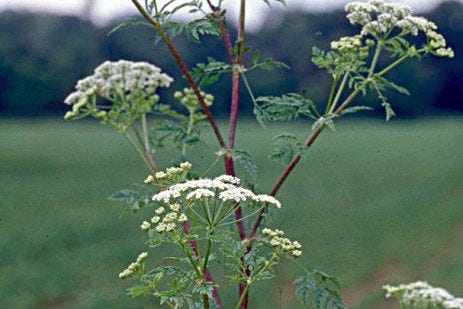
Umbrella-like flower clusters similar to Queen Anne's lace are one way to recognize the hazardous weed poisonous hemlock.

It loves to find those little pockets that are unmanaged, whether that’s a street corner not getting mowed or a pollinator habitat growing wild in a neighborhood.

Poison hemlock also does well in moist soil conditions, Shaver said. So with the wet springs the Midwest has seen, it’s been the perfect environment for the toxic plant to explode.

“It just hit this exponential rate of spread,” Shaver said. “Poison hemlock was nowhere and all of a sudden it was everywhere.”

Kevin Tungesvick, a senior ecologist with Eco Logic, an environmental restoration company, said in Indiana, the plant has spread too broadly to be eradicated from the state. 

Short of that, he said, the goal is to try to manage and control poison hemlock to the maximum extent possible — to protect both environmental and public health.

In June, Jason Hartschuh of the Ohio State University Extension said the hazardous plant was appearing "everywhere" in Ohio – more visible this year than ever before. 

Get the Coronavirus Watch newsletter in your inbox.

Stay safe and informed with updates on the spread of the coronavirus

Delivery: Varies

Your Email

Here’s what you need to know about this deadly plant, including the toxic effects it can have, how to spot it and how to get rid of it.

Stop tossing your pet goldfish in lakes:'They grow bigger than you think,' officials warn

How poison hemlock makes you sick

Like any invasive species, poison hemlock can out-compete and displace native species, Shaver said, which certainly is of concern. But the real issue, in this case, is when it crowds into areas where people, pets or livestock could come into contact with it.

All parts of the plant are poisonous from its seeds to the sap, said Dawn Slack with The Nature Conservancy’s Indiana chapter.

If the sap from poison hemlock comes into contact with someone’s skin, it can react with the sun and cause blisters and welts, according to the U.S. Department of Agriculture.

That’s why Slack recommends handling poison hemlock, if there’s some that needs to be removed, with gloves, long sleeves and pants as well as eye protection.

Pictured is poison hemlock, which has a purple, blotchy stem.

But while the sap can prove dangerous, the true threat is if any part of the plant — stalk and stems, leaves, flowers, seeds or roots — were to be ingested.

Hemlock poisoning can be fatal with no antidote. All plant parts contain toxic alkaloids that can interfere with nerve transmissions to your muscles, ultimately causing respiratory failure.

Other signs of poisoning can include trembling, salivation, pupil dilation, muscle paralysis and loss of speech.

Symptoms can show as early as just 30 minutes after ingesting it, and the severity of the poisoning depends on how much was ingested and the concentration of the hemlock was at the time. Still, even small amounts can have serious effects.

“None of this should enter your body,” Slack said.

The effects aren’t limited to humans. Poison hemlock can be mixed with harmless plants in pastures and crops where livestock may eat it, or in a garden where a dog may munch on the plant.

Carl Lewis on US men’s 4x100-meter relay failure: It was a 'clown show'Toxic invasive poison hemlock is spreading into US parks and backyard gardens'The Suicide Squad' star John Cena makes the most of his 'second chance' in HollywoodGet the latest news straight to your phone: Download the USA TODAY app

How to spot poison hemlock

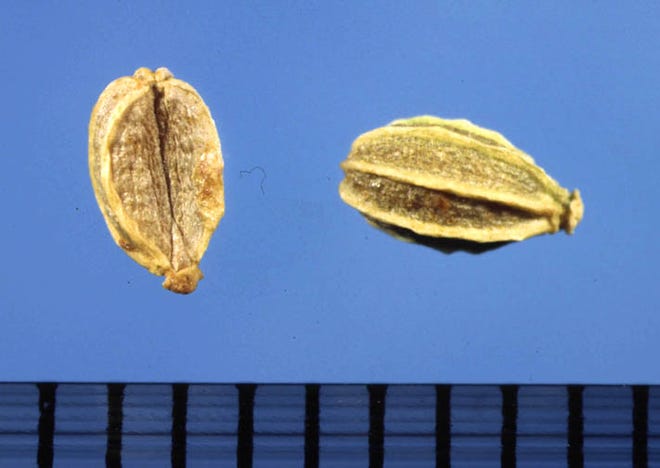
Poison hemlock is part of the parsley and carrot family. Its leaves are easy to confuse with parsley. Its seeds look similar to those of anise and its roots resemble parsnip roots.

This mistaken identity is the main way people are exposed or accidentally poisoned. But there are ways to distinguish poison hemlock that are unique only to it.

Poison hemlock is a biennial plant. In its first year, it puts out a clump of lacy-looking leaves that grow close to the ground. But during the second year, it sends up a flowering stem that can grow as tall as 4-6 feet – and some even taller.

Purple-splotched stems are one way to tell hazardous poison hemlock apart from the benign Queen Anne's Lace.

Once it flowers, it looks like a giant Queen Anne’s lace, Slack said, adding that it has a beautiful cluster of tiny white flowers at the top. What sets it apart, however, is that the stem is bigger and it’s dotted with purple spots all along the stalk.

It can be found along many major roadways, the edge of fields and fences, the banks of streams and in ditches. After two years, the poison hemlock plant will die, but not before it has put out thousands of seeds.

How poison hemlock spreads 

Poison hemlock is native to Europe and was brought over to North America many decades ago as a garden plant, desired for its delicate white flowers. But over time, it moved out of gardens and into fields, prairies and other open areas.

Like most invasive species, poison hemlock has been around for a long time, but in small enough populations that no one really noticed. And another hallmark of invasives, poison hemlock doesn’t have native competition or predators to help control it.

When hemlock flowers, each plant can produce as many as 30,000 seeds.

Mature seeds are the most toxic part of the poisonous hemlock plant if ingested by animals or humans.

With the right wet and cool conditions and a built-up seed bank, the population can proliferate and explode — past the point where it can be eliminated.

“It’s kind of a combination of things,” Slack said. “And all of a sudden we’re faced with ‘we need to do something now.’”

One of the main ways that poison hemlock has been spread is through mowing, Shaver said. The seeds will get caught in mowing equipment or they will get rustled into the air as the plants are mowed over. That’s why there is an effort to raise awareness about how to best manage the plant, he added.

One of the 'deadliest plants in the US:More to know about poison hemlock

How to manage poison hemlock

If you spot poison hemlock in a public park or along a road side, Shaver recommends reaching out to the agency in charge of that property to let them know about the plant.

But if you find it in one of your own flower beds or a shared neighborhood space, there are ways you can remove it yourself. First, and most importantly, is to make sure you are wearing protective gear — such as gloves, goggles and long sleeves — before working to control it.

Timing is everything, Tungesvick said – and the best time for management efforts is in the spring.

There are several common and effective herbicides that can be used on the plant, Shaver said. Those should be applied in the early months before the plant flowers.

The same goes for management efforts that don’t involve chemicals, such as digging up the poison hemlock. April is the prime month for control, Tungesvick said. It usually is flowering by the end of May and maturing its seeds in July. By then it’s too late and there is a greater risk for further exposure or spreading the seed.

Slack recommends going after the poison hemlock in its first year, if you are able to spot the plant when it’s still a low cluster of leaves. She said it’s best to dig up the entire thing and then set it out in the sun to dry completely. Once it’s fully dried, that’s when you can discard it.

The stem of the poisonous hemlock plant, with purple spots

If you aren’t able to catch the plant until its stalk bolts up in the second year, then Shaver said you can clip the flowers before it goes to seed and then bag them up.

No matter what, Shaver warns against weed-whipping or mowing the poison hemlock. Not only could that potentially spread the plant, but it can also get its seeds and sap into the air where it can get on your skin or possibly even ingest it.

“It’s important to control it,” he said, “but it’s something that requires a lot of thought and caution before doing so.”

Follow Sarah Bowman on Twitter: @IndyStarSarah.

Indianapolis Star environmental reporting project is made possible through the generous support of the nonprofit Nina Mason Pulliam Charitable Trust.

Above is from:  https://www.usatoday.com/story/news/nation/2021/08/03/poison-hemlock-us-parks-gardens-beware-toxic-plant/5465780001/

A third COVID shot this Fall?

Moderna says booster likely needed before winter

BY PETER SULLIVAN - 08/05/21 08:38 AM EDT 369


Moderna said Thursday that its COVID-19 vaccine maintained 93 percent efficacy six months after the second dose but said that a booster shot will likely still be needed before the winter.

The 93 percent efficacy after six months announced by Moderna ahead of an earnings call on Thursday is a positive sign and compares to 84 percent efficacy after that time for the Pfizer vaccine.

Still, Moderna CEO Stephane Bancel said on CNBC on Thursday that the data was collected before the delta variant became prevalent in the United States, meaning the equation could change now that the delta variant is widespread.

"We are pleased that our COVID-19 vaccine is showing durable efficacy of 93% through six months but recognize that the Delta variant is a significant new threat, so we must remain vigilant," Bancel said in a statement.

While there is strong data for six months, the company said in a presentation that it believes antibody levels will "continue to wane and eventually impact vaccine efficacy."

It added that the combination of delta, fatigue with wearing masks and people moving indoors as the weather gets colder will cause an "increase of breakthrough infections in vaccinated individuals."

"Given this intersection, we believe dose 3 booster will likely be necessary prior to the winter season," the company said.

Phase 2 trials have shown "robust" immune responses from a booster shot, including against delta, the company said.


  • Pfizer has also said it thinks a booster shot will be needed.

The idea of giving third doses in wealthy countries like the U.S. while many people around the world wait for even a first dose has drawn pushback from the World Health Organization.

U.S. health officials have not yet announced that booster shots are needed, but they are leaving open that possibility, particularly for vulnerable groups like the immunocompromised or the elderly.

Above is from:  https://thehill.com/policy/healthcare/566466-moderna-says-booster-likely-needed-before-winter

Tuesday, August 3, 2021

August 3: Johns Hopkins COVID 19 Report

COVID-19 Situation Report

The Center also produces US Travel Industry and Retail Supply Chain Updates. You can access them here.

EPI UPDATE The WHO COVID-19 Dashboard reports 198.8 million cumulative cases and 4.2 million deaths worldwide as of 11:30 EDT on August 3. Global weekly incidence increased for the sixth consecutive week, up 5.1% over the previous week, but weekly mortality decreased for the first time since June, down 8% compared to the previous week.

The US is #1 globally in terms of total daily incidence (85,459 new cases per day), accounting for 14% of the global total, and Indonesia is #1 in terms of total daily mortality (1,789 deaths per day), representing 19% of the global total.

Global Vaccination

The WHO reported 3.89 billion doses of SARS-CoV-2 vaccines administered globally as of August 3. The WHO reports a total of 1.51 billion individuals have received at least 1 dose, and 752 million are fully vaccinated. Analysis from Our World in Data shows that the global daily doses administered continued to increase through August 1, peaking at 41 million doses per day before falling to 39 million on August 2. The global trend continues to closely follow the trend in Asia. Our World in Data estimates that there are 2.23 billion vaccinated individuals worldwide (1+ dose; 28.6% of the global population) and 1.15 billion who are fully vaccinated (14.8% of the global population).

UNITED STATES

The US CDC reported 34.97 million cumulative COVID-19 cases and 611,051 deaths. Despite considerable vaccination coverage at the national level, daily incidence continues to accelerate, mirroring the early stages of previous surges. At 72,790 reported cases per day on July 30, the current surge is the United States’ second largest to date, surpassing both the spring 2020 and spring 2021 peaks. The average daily incidence is the highest since February 17*.

We expect the US to surpass 35 million cases in this afternoon’s update. If that is the case:

1 case** to 5 million cases- 196 days

5 million to 10 million- 93 days

10 million to 15 million- 29 days

15 million to 20 million- 25 days

20 million to 25 million- 22 days

25 million to 30 million- 61 days

30 million to 35 million- 132 days

**First reported cases on January 22, 2020.

Daily mortality also continues to increase, up to 302 deaths per day on July 30, which is 76% higher than the most recent low on July 10 (172)*. Daily mortality does not appear to be increasing exponentially like daily incidence; however, this could change over the coming weeks as daily incidence increases.

As the US epidemic continues to surge, several states are reporting daily incidence at or near their highest peak to date. According to CDC data, Louisiana (4,119 new cases per day) has already surpassed its previous record—10% higher than its January 2021 peak—and Hawai’i (298) surpassed its highest peak (August 2020). On July 30, Florida reached its second highest average daily incidence to date (15,817). Florida has not yet reported data from this weekend, and we expect that it will set a new record in its next report. Arkansas (1,869) and Mississippi (1,475) are at 61% and 63% of their respective highest peaks, both in January 2021. And Alabama (2,057) and Missouri (2,642) are both approaching 50% of their highest peaks from January 2021 and November 2020, respectively*.

*Changes in the frequency of state-level reporting may affect the accuracy of recently reported data, particularly over the weekend. In an effort to reflect the longer-term trends, the averages reported here may not correspond to the current date.

US Vaccination

The US has administered 347 million cumulative doses of SARS-CoV-2 vaccines. Daily vaccinations are increasing slowly, now up to 552,647 doses per day*. A total of 191.8 million individuals in the US have received at least 1 dose, equivalent to 57.8% of the entire US population. Among adults, 70.0% have received at least 1 dose—finally reaching the White House’s target—as well as 11.1 million adolescents aged 12-17 years. A total of 164.9 million individuals are fully vaccinated, which corresponds to 49.7% of the total population. Approximately 60.6% of adults are fully vaccinated, as well as 8.4 million adolescents aged 12-17 years.

*Due to delays in reporting, estimates for the average daily doses administered are less accurate for the most recent 5 days. The most current average provided here corresponds to 5 days ago.

VACCINE-RESISTANT VARIANT RISK With the number of new COVID-19 cases rising in much of the world, scientists are warning that continued transmission provides an opportunity for the evolution of new, and potentially more harmful, SARS-CoV-2 variants. The current increase in cases is being fueled by the highly transmissible Delta variant as well as the loosening and inconsistent use of public health prevention measures, increased social mobility, and inequitable vaccine access, WHO Director-General Dr. Tedros Adhanom Gebreyesus said on July 30, warning that health systems in many countries are overwhelmed and that more variants will emerge as long as the virus continues to spread. US CDC Director Dr. Rochelle Walensky cautioned that a new variant could potentially evade vaccines but added the vaccines authorized in the US continue to protect people from severe disease and death.

In a modeling study published in Nature Scientific Reports on July 30, researchers with the Austria Institute of Science and Technology examined the impact of the rate of vaccination and the strength of non-pharmaceutical interventions on the probability of the emergence and establishment of a vaccine-resistant SARS-CoV-2 strain. The researchers' model identified three factors that could lead to the establishment of a vaccine-resistant strain: the high probability of a resistant strain’s initial emergence, a high number of infected individuals, and a low rate of vaccination. The researchers’ analysis showed that the highest risk of vaccine-resistant strain establishment occurs when a large proportion of the population is vaccinated but viral transmission is high, underlining the importance of controlling transmission through public health interventions while continuing vaccination campaigns. Nevertheless, the researchers conclude “the emergence of a partially or fully vaccine-resistant strain and its eventual establishment appears inevitable.” The UK’s Scientific Advisory Group for Emergencies (SAGE) published an updated theoretical and non-peer-reviewed paper on July 30 essentially coming to the same conclusion, that a vaccine-resistant SARS-CoV-2 variant almost certainly will emerge and public health authorities must continue efforts to reduce transmission as much as possible.  

US CDC MASK GUIDANCE ​​The US CDC’s latest masking guidance—calling for all people, even those who are vaccinated, to wear masks in indoor public settings in areas where transmission is categorized as high or substantial—is in direct response to the increased transmissibility of the Delta variant. According to data released last week, data show that individuals fully vaccinated for SARS-CoV-2 who become infected—known as breakthrough cases—carry viral loads similar to those found in infected unvaccinated individuals, suggesting that vaccinated people can transmit the Delta variant of concern just as easily as those who are unvaccinated.

The data are based on a COVID-19 outbreak that began in Provincetown, MA (US) in early July following multiple summer events and large public gatherings. Of the 496 cases reported in the outbreak at the time of data analysis, 346 (74%) cases were among fully vaccinated people and 90% of 133 cases sequenced were caused by the Delta variant. Almost 80% of the breakthrough cases were symptomatic, with common symptoms including cough, headache, sore throat, myalgia, and fever. Among 5 patients who were hospitalized, 3 had underlying medical conditions and 4 were vaccinated. No deaths were reported. The report, published as an early release in the CDC’s MMWR, said even jurisdictions without high or substantial transmission should consider expanding prevention measures, including masking for all individuals in indoor public spaces. Health officials emphasize that breakthrough cases remain rare and that vaccines provide protection against severe symptoms and hospitalization. Lending further credence to the protective power of the vaccines, data show that counties with low vaccination rates are experiencing rapid rises in COVID-19 cases and increases in deaths.

SARS-COV-2 TRANSMISSIBILITY An internal report from the US CDC suggests that the SARS-CoV-2 Delta variant may be capable of causing more severe disease than previous variants and that it may be as transmissible as chickenpox. Studies from Canada, Scotland, and Singapore indicate that individuals infected with the Delta variant are at a higher risk of hospitalization and requiring oxygen supplementation. Evidence discussed in the report shows that the Delta variant may be capable of skirting the protection offered by the vaccines, and fully vaccinated individuals who become infected may carry high viral loads in their noses and throats, possibly making transmission from the vaccinated more common than previously understood. Despite the concerns raised in the report, vaccination remains the best way to protect against severe disease. The report states that vaccines are capable of preventing severe symptoms in at least 90% of cases, even though they might be less effective at preventing infection. Experts acknowledge that discussions around vaccination may need to shift from preventing transmission to personal protection in light of the new data.

US EVICTION MORATORIUM The federal eviction moratorium, administered by the US CDC, expired on July 31, without extension, after the US Supreme Court on June 29 declared that the agency could no longer extend the program without “clear and specific congressional authorization (via new legislation).” A recent surge in COVID-19 daily incidence, driven by the highly transmissible Delta variant, is lending urgency to efforts to keep people in their homes and out of congregate or dangerous living situations, such as in shelters or on the street. More than 11 million adult renters are behind on payments, according to the Center on Budget and Policy Priorities. But it appears the CDC, US Congress, and the White House were caught off guard by the moratorium’s expiration, leaving officials scrambling for solutions.

Over the weekend, White House officials asked the CDC to extend the moratorium, focusing specifically on areas with high or substantial COVID-19 transmission, but the CDC denied the request, saying it has no legal authority to do so under the Supreme Court’s ruling. Additionally, Congress failed to pass legislation that would have provided a last-minute extension of the federal moratorium until October 18. Afterward, Congressional leaders called on the White House to extend the moratorium, but officials said they also lack legal authority to do so. On August 2, US President Joe Biden called on state and local governments to extend or implement eviction moratoria for at least the next 2 months. Approximately one-third of states currently have eviction moratoria through August. Additionally, President Biden, at the request of Congressional leadership, is asking relevant federal agencies to examine why more of US$46.5 billion in Emergency Rental Assistance provided to state and local governments has not yet been distributed. The White House made other requests of federal, state, and local agencies and jurisdictions and committed to “doing everything in its power” to keep people housed.

US GLOBAL VACCINATION PROGRAM The US government announced today that the country has donated and shipped more than 110 million doses of SARS-CoV-2 vaccines to more than 60 countries, fulfilling a June pledge by President Joe Biden to donate at least 80 million doses. The majority of the vaccines were shipped through the COVAX facility, with other portions provided through regional partners such as the African Union and the Caribbean Community (CARICOM). Reportedly, an “initial tranche” of 25 million vaccines is going to African nations, and the US government is supporting vaccine manufacturing efforts in South Africa and Senegal. A White House fact sheet lists the countries and amount of vaccines the US has donated to date.

According to the fact sheet, the US government has purchased 500 million doses of the Pfizer-BioNTech vaccine and expects to begin shipping them to 100 low-income countries at the end of August. The donated vaccine doses, worth $3.5 billion, will be delivered through COVAX, helping the facility get closer to its goal of delivering 2 billion doses in 2021. However, to offset the costs of purchasing the supply, the US reportedly is diverting hundreds of millions of dollars intended to support vaccination drives in low-income countries. COVAX continues to struggle, delivering only 177 million vaccines so far, some of which are going unused in recipient countries due to a lack of funding, shortage of sufficient transportation, a dearth of trained vaccine administrators, or the absence of public interest to receive the shots.

EMERGENT VACCINE PRODUCTION FACILITY After a more than 3-month shutdown of SARS-CoV-2 vaccine manufacturing at Baltimore, MD (US)-based Emergent BioSolutions, the US FDA last week granted permission for the plant to resume manufacturing based on the regulatory agency’s “observations of the implemented corrective actions.” As we previously reported, the FDA published a report in April stating the facility was unsuitable to produce vaccine doses, and Emergent agreed to pause production until issues identified in the report were resolved, which appears to have happened. At the time, Emergent was manufacturing both the J&J-Janssen and AstraZeneca-Oxford vaccines for the federal government; production for the latter has since moved to another company. J&J, which has been in control of the plant since April, confirmed the FDA is permitting manufacturing to resume and said it will continue to work with the agency to gain clearance to use up to 30 million doses of its vaccine made at the facility prior to its shutdown.

In a call with investors on July 29, Emergent officials disclosed a US$41.5 million loss from having to discard vaccine doses deemed unusable by regulators as well as the expenditure of US$12.4 million to address problems at the facility. The following day, Emergent filed documents with the US Security and Exchange Commission disclosing for the first time it has received “preliminary inquiries and subpoenas to produce documents” stemming from shareholder lawsuits and investigations from the SEC, the US Department of Justice, the Financial Industry Regulatory Authority, the state attorney generals of Maryland and New York, and committees in both houses of the US Congress. Additionally, Reuters reports that AstraZeneca-Oxford vaccine doses sent from the plant to Canada and Mexico in late March were cleared without proper regulatory inspections. These reports underscore ongoing troubles for Emergent, which holds a US$628 million federal contract to be the primary domestic manufacturer of both the J&J-Janssen and AstraZeneca-Oxford vaccines, as well as other federal contracts for various products included in the National Strategic Stockpile, most notably the company’s anthrax vaccine.

DELTA VARIANT IN CHINA Once recognized as implementing the world’s strictest COVID-19 prevention measures, China’s zero tolerance COVID-19 policy is facing challenges amid a recent increase in cases caused by the Delta variant. The policy attempts to keep the country’s number of cases to zero by limiting international travel, requiring regular testing, and enforcing stringent quarantine measures, among other regulations. But over a period of 2 weeks, the country’s average number of new daily COVID-19 cases has more than doubled and nearly half of China’s 32 provinces have reported cases caused by the Delta variant, indicating the variant is moving quickly. This current wave is thought to have originated at the international airport in the eastern city of Nanjing, after a case was first detected on July 20. All 9.3 million residents of Nanjing are undergoing testing, and the city of Wuhan, where the virus was first detected in late 2019, plans to test all 12 million residents. Wuhan recently recorded 3 cases of the Delta variant after having reported no cases since mid-May 2020. The variant’s rapid spread has raised concerns over the level of protection provided by Chinese vaccines. So far, China has administered 1.7 billion doses, enough to fully vaccinate about 60% of its population. Public health officials estimate 80% of the population will be fully vaccinated by the end of the year.

INDONESIA Healthcare workers in Indonesia are overwhelmed, as daily COVID-19 incidence remains high, daily mortality continues to climb, patient capacity surges, and medical supplies dwindle. The country’s average number of new daily cases peaked on July 18, reaching a number 4 times higher than the previous peak in January 2020. Average daily incidence is down as of August 2 but still remains high. Average daily mortality continues to rise as of August 2 and is currently 6 times higher than the previous peak in January 2020. Approximately 1,200 healthcare workers in Indonesia have died during the pandemic; nearly half of those were doctors. Many more healthcare professionals have been infected and returned to work after recovering. Facing long hours, stressful working conditions, and greater exposure to infected patients, Health Minister Budi Gunadi Sadikin said the country is prioritizing providing additional vaccine doses to healthcare workers. Most who have been vaccinated received the Chinese Sinovac vaccine, but the additional doses will be the Moderna vaccine.

AUSTRALIA LOCKDOWNS Military personnel are being brought in to help local police enforce a lockdown in New South Wales, Australia. The lockdown comes in response to an outbreak of the highly transmissible SARS-CoV-2 Delta variant in the region. The lockdown was recently extended to August 28 after an outbreak of 170 cases was traced to an infected individual who failed to self-isolate. The 300 unarmed military personnel will aid in enforcing the lockdown by knocking on residents’ doors to ensure everyone is complying with stay-at-home orders. In parts of Sydney, the state’s largest city, residents will be required to wear masks when outdoors and stay within 5 kilometers (3 miles) of their residence. On August 2, Queensland state extended lockdown orders through August 8 in its largest city, Brisbane, after officials detected 13 new locally acquired cases. Australia is expected to continue cycles of stop-start lockdowns until at least 70% of the population is fully vaccinated. Prime Minister Scott Morrison said he expects to reach that goal by the end of the year; only 15.4% of the population is fully vaccinated as of August 2.

BLOOD CLOTS Two studies recently published by The Lancet provide additional insight into the risk of blood clots associated with the AstraZeneca-Oxford SARS-CoV-2 vaccine. A peer-reviewed study conducted by researchers at AstraZeneca included data from all reported cases of thrombosis with thrombocytopenia syndrome (TTS, a blood clotting disorder) within 14 days of vaccination with either dose of the AstraZeneca-Oxford vaccine reported to AstraZeneca’s global safety database through April 30. The researchers identified 399 cases of TTS among 49.2 million individuals who received the first dose of the vaccine, equating to an estimated risk of 8.1 cases per million doses. The risk decreased following the second dose, however, down to 2.3 per million doses—13 cases of TTS among 5.62 million individuals who received the second dose. The researchers estimated that the average over a 14-day period prior to the pandemic was as high as 7.16 cases of TTS per million people. So while the risk following the first dose of the vaccine was a slight increase over the expected risk, the risk following the second dose was “within preliminary estimates.”

A preprint study, conducted in Spain and funded by the European Medicines Agency, included 1.3 million vaccinated individuals as well as 225,000 COVID-19 patients and 4.5 million control participants. The vaccinated participants included 946,000 who received the first dose of the Pfizer-BioNTech vaccine (including 779,000 who received both doses) and 426,000 who received the first dose of the AstraZeneca-Oxford vaccine. The researchers evaluated the risk of blood clotting disorders—including venous thromboembolism (VTE), thrombocytopenia, and thrombocytopenia syndrome (TTS)—following vaccination. Participants who received the Pfizer-BioNTech vaccine had 29% higher occurrence of VTE following the first dose than expected, but there was no significant difference following the second dose. For the AstraZeneca-Oxford vaccine, the researchers did not observe a significant difference in the occurrence of VTE. Notably, the risk of VTE was 8 times higher than expected among COVID-19 patients. Similarly, there was an elevated risk of thrombocytopenia following both doses of the Pfizer-BioNTech vaccine, but not for the AstraZeneca-Oxford vaccine. Neither vaccine exhibited an elevated risk of TTS. The study also provides further analysis of the associated risks by sex and age group; however, the duration was not sufficient to include data regarding clotting risk after the second dose of the AstraZeneca-Oxford vaccine.

MONOCLONAL ANTIBODY The US FDA on July 30 expanded the emergency use authorization (EUA) for the monoclonal antibody REGEN-COV—a combination of casirivimab and imdevimab—to include post-exposure prophylaxis (PEP) among certain people exposed to or at high risk of exposure to an individual infected with SARS-CoV-2. The EUA now allows monoclonal antibody PEP among people at high risk for progression to severe COVID-19, who are not fully vaccinated, or who are not expected to mount an adequate response to vaccination and who have been exposed to a SARS-CoV-2-infected individual or who are at high risk of exposure to an infected individual in congregate or institutional settings such as nursing homes or prisons. Under the EUA, REGEN-COV now can be administered monthly as a subcutaneous injection or intravenous infusion to qualifying people aged 12 and older. The expanded EUA represents the first time an antibody treatment has been authorized for this purpose.

SARS-COV-2 EXPOSURE IN DEER A study conducted by the US Department of Agriculture (USDA) evaluated exposure to SARS-CoV-2 among white-tailed deer in several US states. The USDA’s Animal and Plant Health Inspection Service (APHIS) conducted serological testing on 481 serum specimens collected from white-tailed deer in Illinois, Michigan, New York, and Pennsylvania, from January 2020 through 2021. Antibodies against SARS-CoV-2 were detected in 33% of specimens, including 67% of specimens collected in Michigan. For comparison, only 1 out of 143 specimens collected prior to January 2020 tested positive for SARS-CoV-2 antibodies, and that specimen “was at the minimum threshold of detection,” which could potentially indicate a false-positive result. The researchers did not identify any animals that exhibited signs of illness.

Statements by APHIS note that the study was not sufficient to draw conclusions regarding population-level exposure among deer, but it does provide evidence that deer have been infected by the virus. It is unclear how the animals were exposed or the extent to which the infection is spreading among deer populations. It is also uncertain whether deer can transmit the infection to humans, but information from APHIS indicates there is no evidence that consuming meat from an infected animal could result in SARS-CoV-2 infection. While many questions remain unanswered, this study does provide additional information regarding potential animal reservoirs for SARS-CoV-2, which could potentially impact longer-term epidemic control efforts.