Monday, April 6, 2020

Coronavirus Myths


Fact check: Debunking 10 myths about the coronavirus that causes COVID-19

April 3, 2020 at 6:00 am Updated April 3, 2020 at 10:23 am

(Illustrations by Gabriel Campanario)(Illustrations by Gabriel Campanario)

By

Seattle Times graphics staff

As the new coronavirus that causes COVID-19 spreads across the globe, so does misinformation about it. Here’s a look at 10 claims about the virus, along with the facts from trusted sources.

MYTH

Young people are not susceptible to this coronavirus.

FACT

People of all ages can be infected. Older people and people with preexisting medical conditions (such as asthma, diabetes or heart disease) appear to be more vulnerable to becoming severely ill. But young people can carry — and spread — the virus, even if they don’t show symptoms.

Source: World Health Organization


MYTH

The coronavirus can’t survive airborne or on surfaces.

FACT

Researchers have found that droplets carrying the virus can travel through the air and stay suspended for about half an hour. They can also settle on surfaces, where the virus can last longer — up to 24 hours on cardboard and up to 72 hours on plastic and steel. The risk of getting infected from touching these materials, however, remains low because the virus’ ability to infect decreases rapidly over time.

Source: The New York Times


MYTH

Hot weather makes the virus disappear.

FACT

“You can catch COVID-19, no matter how sunny or hot the weather is,” according to the World Health Organization. So far, evidence shows the virus that causes COVID-19 can be transmitted anywhere, and places with hot and humid weather have reported cases. Regardless of climate, take protective measures if you live in, or travel to, an area where the virus is present.

Source: World Health Organization


MYTH

Taking a hot bath prevents you from getting infected with the virus.

FACT

The temperature of your bath doesn’t change your normal body temperature and won’t affect whether you catch this virus. But washing your hands frequently is a great way to keep from getting sick, because it will eliminate viruses that may be on your hands and avoid infection that could occur if you then touch your eyes, mouth or nose.

Source: World Health Organization

MYTH

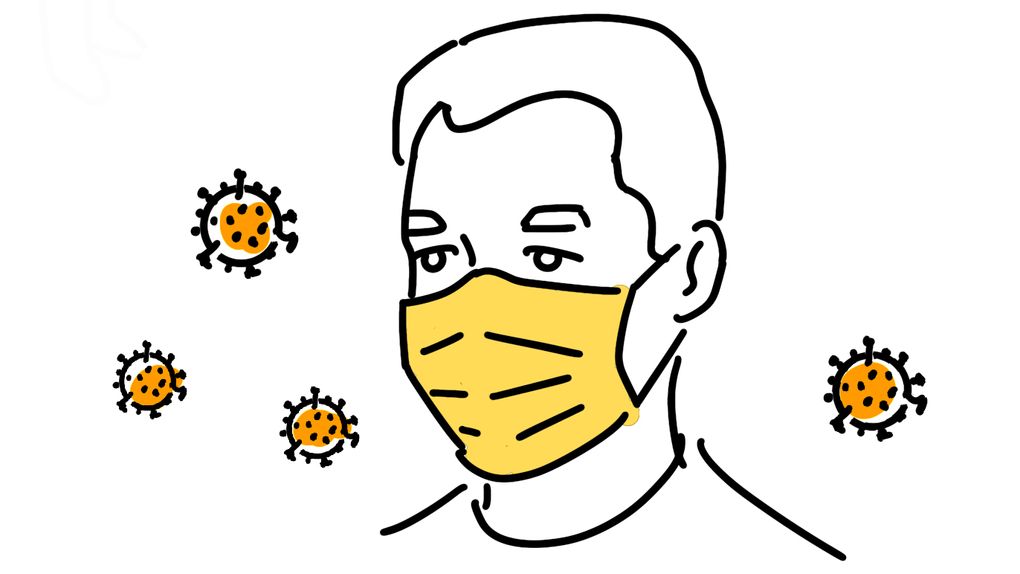
Face masks don’t work to prevent infection.

FACT

A face mask isn’t guaranteed to keep you from getting sick, but the protection is better than nothing. A mask can help capture some droplets that carry the virus. And it’s important to note that wearing a mask isn’t just about protecting yourself; it can also help keep you from passing viruses to others.

This coronavirus seems to be spread even by people who aren’t showing symptoms. As of Friday morning, April 3, the White House coronavirus task force was formalizing new guidance to recommend that many Americans wear face coverings of some kind — even T-shirts or bandannas — when going outside or to places like grocery stores or pharmacies.

Even if you’re wearing a mask, make sure to follow social distancing and hygiene guidelines recommended by public health officials; for instance, stay at least 6 feet from other people, wash your hands often and don’t touch your face.

Make sure you know how to use your mask and keep it clean. Wash your hands thoroughly before touching it.

Medical-grade masks — particularly N-95 masks, which are the most effective but are in short supply — should be reserved for medical professionals who deal directly with sick patients.

Sources: World Health Organization; The New York Times; The Associated Press

ADVERTISING


MYTH

Covering your body with alcohol or chlorine kills the virus.

FACT

Spraying alcohol or chlorine all over yourself won’t kill viruses that have already entered your body. Spraying such substances can be harmful to clothes or mucous membranes, such as those in your eyes and mouth. Both alcohol and chlorine can be useful to disinfect surfaces, but they need to be used according to appropriate recommendations.

Source: World Health Organization


MYTH

Rinsing your nose with saline prevents infection.

FACT

Some people are familiar with this tactic because there is limited evidence that regularly rinsing your nose with saline can help you recover more quickly from the common cold. However, rinsing your nose doesn’t prevent respiratory infections such as the virus that causes COVID-19.

Source: World Health Organization


MYTH

Eating garlic protects you against the new coronavirus.

FACT

There’s no evidence from the current outbreak that eating garlic has protected people. It’s a healthy food that may have some antimicrobial properties, but that’s unrelated to COVID-19.

Source: World Health Organization


MYTH

Hand dryers effectively kill the coronavirus.

FACT

Hand dryers aren’t effective at eliminating the virus. If you use a hand dryer and touch your face afterward, you could get infected. You can use a warm air dryer or paper towel to dry your hands after thoroughly washing your hands with soap and water, but it’s the washing that eliminates the virus, not the dryer.

Source: World Health Organization


MYTH

Taking ibuprofen might worsen COVID-19 symptoms.

FACT

There’s no evidence to support this suggestion, according to the World Health Organization and other leading agencies.

Source: The Associated Press


Illustrations by Gabriel Campanario, Seattle Times news artist

Above is from:  https://www.seattletimes.com/seattle-news/health/fact-check-debunking-10-myths-about-the-new-coronavirus-that-causes-covid-19/?utm_source=marketingcloud&utm_medium=email&utm_campaign=Morning+Brief+4-6-20_4_6_2020&utm_term=

Washington returning some ventilators


Washington sending over 400 ventilators for non-coronavirus patients to New York, harder hit states

April 5, 2020 at 12:39 pm Updated April 5, 2020 at 3:53 pm

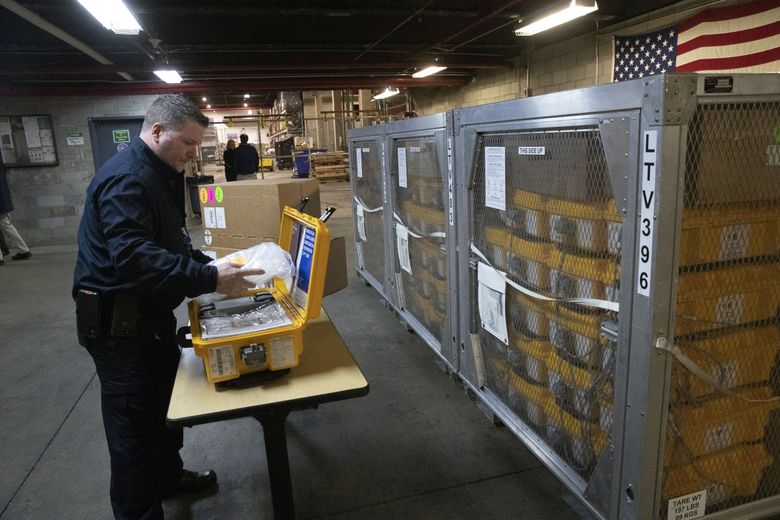
Vincent Dellova, a coordinator at the New York City Emergency Management Warehouse, packs up a ventilator, part of a shipment of 400, that arrived Tuesday, March 24, 2020 in New York.  (Mark Lennihan / AP)Vincent Dellova, a coordinator at the New York City Emergency Management Warehouse, packs up a ventilator, part of a shipment of 400, that arrived Tuesday, March 24,... (Mark Lennihan / AP) More

David Gutman

By

David Gutman

Seattle Times staff reporter

Washington will return more than 400 of the 500 ventilators it recently received from the federal government, so they can go to New York and other states harder hit by the coronavirus crisis, Gov. Jay Inslee said Sunday.

After requesting 1,000 ventilators from the Strategic National Stockpile, Washington last month received 500.

The National Stockpile ventilators are not suitable for treating COVID-19 patients, state officials said. That’s because those individuals generally need a higher amount of pressure support into their lungs than the ventilators from the national stockpile can provide, said Jessica Baggett, a spokeswoman for the state’s Joint Information Center.

The stockpile ventilators, though, can be used for other patients, freeing up more COVID-19 compatible ventilators to help with the crisis.

The decision to return the ventilators comes five weeks after the first coronavirus death in Washington, when Inslee declared a state of emergency. It offers a glimmer of hope that the drastic steps the state has taken since then — shutting down schools and nonessential businesses and grinding daily life to a halt — have helped forestall the bleakest possible outcomes.

Dr. Raquel Bono, the retired Navy vice admiral leading the state’s coronavirus response, said in a statement that they’d made the decision to send off the ventilators after conferring with the Washington State Hospital Association. She said the state’s aggressive social-distancing actions have slowed the virus’ growth here.


“We have seen fewer infections in our communities than anticipated,” Bono said. “Our current status allows us to help others who have a more immediate need.”

Hospitalizations for patients with COVID-19-like illnesses declined by more than 20% in Washington in the last week of March, a small hopeful sign. And the Army Corps of Engineers has built a 250-bed field hospital at the CenturyLink Field Event Center to handle a potential overflow of non-COVID patients.

All 500 ventilators from the national stockpile had been distributed to hospitals across the state, a spokeswoman said, and the state was in the process of recalling them Sunday. Washington has also purchased more than 750 ventilators, which are expected to arrive over the next several weeks, Inslee’s office said.

“I’ve said many times over the last few weeks, we are in this together,” Inslee said in a prepared statement Sunday. “This should guide all of our actions at an individual and state level in the coming days and weeks.”

At the same time, on Sunday, Inslee reiterated his call for President Donald Trump to order the nation’s manufacturers to start producing more masks, face shields and testing materials. He faulted the Trump administration for what he called a lack of leadership during the pandemic, leaving states to scramble and compete with each other for such protective equipment.

“I mean, the surgeon general alluded to Pearl Harbor,” Inslee said on “Meet The Press” on Sunday. “Can you imagine if Franklin Delano Roosevelt said, ‘I’ll be right behind you, Connecticut. Good luck building those battleships.’”

Cassie Sauer, president and CEO of the Washington State Hospital Association, said hospitals here are not experiencing the dire needs for ventilators that New York hospitals are seeing.


“Sending some of our ventilator supply where it was immediately needed seemed like the right thing to do to support others across the country,” Sauer said.

Judith Malmgren, a Seattle epidemiologist, said Washington seems to be in good shape to send the ventilators back, even though we’re not seeing the number of new daily confirmed cases decline yet.

“They’re stable and the number of beds and the hospitals are not over capacity,” Malmgren said. She also noted that a majority of confirmed cases are now in people younger than 60, meaning they’re less likely to require hospitalization, a reversal since the earliest days of the crisis.

Dr. Arnold Monto, a professor of epidemiology and global health at the University of Michigan, said the state’s return of the ventilators was a cause for optimism.

“Seattle did what it needs to do,” Monto said. “The important thing is to watch the curve. The peak may be of different height in different places because of local factors.”

Washington joins Oregon, which on Saturday announced it would send 140 ventilators to New York, as states that have managed to slow new infections enough that the most dire predictions may be averted.

“We’ll be sending 140 ventilators to help NY because Oregon is in a better position right now,” Oregon Gov. Kate Brown tweeted Saturday. “Oregon doesn’t have everything we need to fight COVID-19 — we need more PPE and testing — but we can help today with ventilators. We are all in this together.”

Inslee has also been very cautiously hopeful.

“We have had some success flattening the curve. That has taken place because we acted relatively early,” he said Sunday. “But I want to reiterate, we are a long ways away from being out of the woods. We have not got down to anywhere close to where we need to be to declare victory of this horrendous virus.”

David Gutman: 206-464-2926 or dgutman@seattletimes.com; on Twitter: @davidlgutman.

ABOVE IS FROM:  https://www.seattletimes.com/seattle-news/health/washington-sending-over-400-ventilators-for-non-coronavirus-patients-to-new-york-harder-hit-states/?utm_source=marketingcloud&utm_medium=email&utm_campaign=Morning+Brief+4-6-20_4_6_2020&utm_term=

Sunday, April 5, 2020

Projections from University of Washington Study: April 5

Projections from University of Washington Study
FROM:  http://www.healthdata.org/research-article/forecasting-covid-19-impact-hospital-bed-days-icu-days-ventilator-days-and-deaths
Home

Major decrease in projections for State of California and Washington thus US death projection is down..

PROJECTION:

As of April 5, 2020

United States of America:  (81,766 4-5-2020) (93,531 4-4-2020) (93,765 4-1-2020)  Deaths

>Population 331 Millions  (2020) 

*******************************************************************************************************8

California:  (1,783 Deaths   4-5-2020) (5,068 4-3-2020) (5,161 4-1-2020)

>39.56 millions (2018)

Florida:  (6770 deaths 4-5-2020) (6,897 4-3-2022)(6,937 4-1-2020)

>Population  21.3 million (2018)

Illinois: (3,629 deaths 4-5-2020)(3,386  4-3-2020) (2786 4-1-2020)

>12.74 million (2018)

Louisiana: 746 deaths 4-5-2020

>4.6 million (2018)

Ohio:  544

>11.69 million (2018)

Massachusetts  8,254 deaths

>6.9 million (2018)

Michigan  2,963 deaths

>9.996 million (2018)

New York: (15,618 deaths 4-5-2020) (16,261 4-3-2020) (16,090 4-1-2020)

>19.54 million (2018)

Texas:  (2,025 4-5-2020)

>28,7 million (2018)

Washington632 deaths 4-5-2020) (978 4-3-2020) (1,233 4-1-2020)

>7.536 million (2018)

Wisconsin:  (644 deaths 4-5-2020) (951 4-3-2020) (926 4-1-2020)

>5.814 Million (2018)

April 5: 11,256 COVID-19 cases in Illinois

In response to the COVID-19 pandemic, Gov. JB Pritzker has ordered Illinois residents to stay at home. Executive Order No. 10 requires all residents to stay home, with exceptions for essential needs or business activities. Gatherings of 10 people or more are prohibited. The order extends through April 30, 2020.
Coronavirus Disease 2019 (COVID-19) in Illinois Test Results
Positive
(11,256  4-5-2020) (10,357 4/4/2020) (8,904-- 4/3/2020) (7,695-- 4/2/2020)   (6,980-- 4/1/2020) (5,994-- 3/31/2020)  (5,05--7 3/30/2020) (4,596-- 3/29/2020)
Deaths
(274  4-5-2020) (243—4-4-2020) (210-- 4-3-2020) (157 4-2-2020)(141 4/1/2020) (99 3/31/2020) (73 3/30/2020)  (65 3/29/2020)
Total Persons Tested*
(58,983  4-5-2020) (53,581—4-4-2020)  (48,048-- 4-3-2020) (43,653-- 4/2/2020) (40,384-- 4/1/2020) (35,225-- 3-31-2020) (30,446-- 3/30/2020)  (27,762-- 3/29/2020)

*Total number of people reported electronically for testing of COVID-19 at IDPH, commercial or hospital laboratories. Deaths are included in the number of positive cases
All numbers displayed are provisional and subject to change.

Information regarding the number of people under investigation updated on 3/30/2020.
Information to be updated daily.

Above is from:  http://www.dph.illinois.gov/topics-services/diseases-and-conditions/diseases-a-z-list/coronavirus

*****************************************************************************************************************************

Increase in Illinois projected deaths; peak changed to higher number 8 days earlier.

The University of Washington model has a large increase in total deaths for Illinois and places peak date of cases two days later than on March 31 when it was 4-16-2020

PROJECTIONS from:  http://www.healthdata.org/research-article/forecasting-covid-19-impact-hospital-bed-days-icu-days-ventilator-days-and-deaths

Total COVID-19 deaths projected through August 4, 2020 in Illinois

(3,629 4-5-2020)(3,386 4-2-2020) (2,789 4-1-2020)  (2,326  3-31-2020)  (2,369 as of 3/30/2020)  (2,454 AS OF 3-26-2020)   

COVID-19 deaths   Peak deaths  (208 on 4-12-2020) (109 on 4-20-2020)

For a lengthier discussion of the projection model go to:  http://boonecountywatchdog.blogspot.com/2020/03/forecasting-covid-19-impact-on-hospital.html

****************************************************************************************************************************************************************

Cases in U.S.

Updated  April 5, 2020

This page will be updated daily. Numbers close out at 4 p.m. the day before reporting.

***On Saturday and Sunday, the numbers in COVID-19: U.S. at a Glance and the figure describing the cumulative total number of COVID-19 cases in the United States will be updated. These numbers are preliminary and have not been confirmed by state and territorial health departments. CDC will update weekend numbers the following Monday to reflect health department updates.***

CDC is responding to an outbreak of respiratory illness caused by a novel (new) coronavirus. The outbreak first started in Wuhan, China, but cases have been identified in a growing number of other locations internationally, including the United States. In addition to CDC, many public health laboratories are now testing for the virus that causes COVID-19.

COVID-19: U.S. at a Glance*†

  • Total cases : (304,826  4-5-2020) (277,205 4-4-2020) (239,279 4-3-2020) (213,144 4/2/2020)(186,101 4/1/2020) (163,539 3/31/2020) (140,904 3/30/2020)   (122,653  3-29-2020)
  • Total deaths:  (7,616 4-5-2020)  (6, 593 4-4-2020) (5,443 4-3-2020) (4,513 4-2-2020) (3,603 4-1-2020) (2,860 3/31/2020) (2,405 3/30/2020)   (2,112  3-29-2020)
  • Jurisdictions reporting cases: 55 (50 states, District of Columbia, Puerto Rico, Guam, Northern Marianas, and US Virgin Islands)

* Data include both confirmed and presumptive positive cases of COVID-19 reported to CDC or tested at CDC since January 21, 2020, with the exception of testing results for persons repatriated to the United States from Wuhan, China and Japan. State and local public health departments are now testing and publicly reporting their cases. In the event of a discrepancy between CDC cases and cases reported by state and local public health officials, data reported by states should be considered the most up to date.

† Numbers updated Saturday and Sunday are not confirmed by state and territorial health departments. These numbers will be modified when numbers are updated on Monday.(

Cases of COVID-19 Reported in the US, by Source of Exposure*†

* Data include both confirmed and presumptive positive cases of COVID-19 reported to CDC or tested at CDC since January 21, 2020, with the exception of testing results for persons repatriated to the United States from Wuhan, China and Japan. State and local public health departments are now testing and publicly reporting their cases. In the event of a discrepancy between CDC cases and cases reported by state and local public health officials, data reported by states should be considered the most up to date.

† CDC is no longer reporting the number of persons under investigation (PUIs) that have been tested, as well as PUIs that have tested negative. Now that states are testing and reporting their own results, CDC’s numbers are not representative of all testing being done nationwide.

Above is from:  https://www.cdc.gov/coronavirus/2019-ncov/cases-updates/cases-in-us.html


***********************************************************************************************************************************************************

Sizeable decrease in estimated US deaths, peak is now extended by 16 days but somewhat higher.


PROJECTIONS:   US COVID-19 Deaths thru 8-4-2020: (81,766 4-5-2020) (93,531 4/3/2020) (93,765 4/1/2020)   (83.967 3/31/2020)    ( 82,141 3/30/2020);  Peak Daily 2,644 on 4-16-2020

Older Peak Daily Deaths  (3,130 on 4-16-2020) ( 2214 on 3/31/2020) (2,214 on 3/31/2020) (2,271 3/30/2020)

Saturday, April 4, 2020

April 4: 10,357 COVID-19 cases in Illinois

In response to the COVID-19 pandemic, Gov. JB Pritzker has ordered Illinois residents to stay at home. Executive Order No. 10 requires all residents to stay home, with exceptions for essential needs or business activities. Gatherings of 10 people or more are prohibited. The order extends through April 30, 2020.
Coronavirus Disease 2019 (COVID-19) in Illinois Test Results
Positive
(10,357 4/4/2020) (8,904-- 4/3/2020) (7,695-- 4/2/2020)   (6,980-- 4/1/2020) (5,994-- 3/31/2020)  (5,05--7 3/30/2020) (4,596-- 3/29/2020)
Deaths
(243—4-4-2020) (210-- 4-3-2020) (157 4-2-2020)(141 4/1/2020) (99 3/31/2020) (73 3/30/2020)  (65 3/29/2020)
Total Persons Tested*
(53,581—4-4-2020)  (48,048-- 4-3-2020) (43,653-- 4/2/2020) (40,384-- 4/1/2020) (35,225-- 3-31-2020) (30,446-- 3/30/2020)  (27,762-- 3/29/2020)

*Total number of people reported electronically for testing of COVID-19 at IDPH, commercial or hospital laboratories. Deaths are included in the number of positive cases
All numbers displayed are provisional and subject to change.

Information regarding the number of people under investigation updated on 3/30/2020.
Information to be updated daily.

Above is from:  http://www.dph.illinois.gov/topics-services/diseases-and-conditions/diseases-a-z-list/coronavirus

*****************************************************************************************************************************

The University of Washington model has a large increase in total deaths for Illinois and places peak date of cases two days later than on March 31 when it was 4-16-2020

PROJECTIONS from:  http://www.healthdata.org/research-article/forecasting-covid-19-impact-hospital-bed-days-icu-days-ventilator-days-and-deaths

Total COVID-19 deaths projected through August 4, 2020 in Illinois

(3,386 4-2-2020) (2,789 4-1-2020)  (2,326  3-31-2020)  (2,369 as of 3/30/2020)  (2,454 AS OF 3-26-2020)    

COVID-19 deaths   Peak deaths 109 on 4-20-2020

For a lengthier discussion of the projection model go to:  http://boonecountywatchdog.blogspot.com/2020/03/forecasting-covid-19-impact-on-hospital.html

****************************************************************************************************************************************************************

Cases in U.S.

Updated  April 4, 2020

This page will be updated daily. Numbers close out at 4 p.m. the day before reporting.

***On Saturday and Sunday, the numbers in COVID-19: U.S. at a Glance and the figure describing the cumulative total number of COVID-19 cases in the United States will be updated. These numbers are preliminary and have not been confirmed by state and territorial health departments. CDC will update weekend numbers the following Monday to reflect health department updates.***

CDC is responding to an outbreak of respiratory illness caused by a novel (new) coronavirus. The outbreak first started in Wuhan, China, but cases have been identified in a growing number of other locations internationally, including the United States. In addition to CDC, many public health laboratories are now testing for the virus that causes COVID-19.

COVID-19: U.S. at a Glance*†

  • Total cases : (277,205 4-4-2020) (239,279 4-3-2020) (213,144 4/2/2020)(186,101 4/1/2020) (163,539 3/31/2020) (140,904 3/30/2020)   (122,653  3-29-2020)
  • Total deaths:  (6,593 4-4-2020) (5,443 4-3-2020) (4,513 4-2-2020) (3,603 4-1-2020) (2,860 3/31/2020) (2,405 3/30/2020)   (2,112  3-29-2020)
  • Jurisdictions reporting cases: 55 (50 states, District of Columbia, Puerto Rico, Guam, Northern Marianas, and US Virgin Islands)

* Data include both confirmed and presumptive positive cases of COVID-19 reported to CDC or tested at CDC since January 21, 2020, with the exception of testing results for persons repatriated to the United States from Wuhan, China and Japan. State and local public health departments are now testing and publicly reporting their cases. In the event of a discrepancy between CDC cases and cases reported by state and local public health officials, data reported by states should be considered the most up to date.

† Numbers updated Saturday and Sunday are not confirmed by state and territorial health departments. These numbers will be modified when numbers are updated on Monday.(

Cases of COVID-19 Reported in the US, by Source of Exposure*†

* Data include both confirmed and presumptive positive cases of COVID-19 reported to CDC or tested at CDC since January 21, 2020, with the exception of testing results for persons repatriated to the United States from Wuhan, China and Japan. State and local public health departments are now testing and publicly reporting their cases. In the event of a discrepancy between CDC cases and cases reported by state and local public health officials, data reported by states should be considered the most up to date.

† CDC is no longer reporting the number of persons under investigation (PUIs) that have been tested, as well as PUIs that have tested negative. Now that states are testing and reporting their own results, CDC’s numbers are not representative of all testing being done nationwide.

Above is from:  https://www.cdc.gov/coronavirus/2019-ncov/cases-updates/cases-in-us.html

***********************************************************************************************************************************************************

PROJECTIONS:   US COVID-19 Deaths thru 8-4-2020:  (93,531 4/3/2020) (93,765 4/1/2020)   (83.967 3/31/2020)    ( 82,141 3/30/2020);  Peak Daily 2,644 on 4-16-2020

Older Peak Daily Deaths( 2214 on 3/31/2020) (2,214 on 3/31/2020) (2,271 3/30/2020)

Friday, April 3, 2020

Projections from University of Washington Study 4-3-2020

Projections from University of Washington Study
FROM:  http://www.healthdata.org/research-article/forecasting-covid-19-impact-hospital-bed-days-icu-days-ventilator-days-and-deaths
Home

Major decrease in projections for State of Washington

PROJECTION:

As of April 3, 2020

United States of America:  93,531 (93,765 4-1-2020)  Deaths

>Population 331 Millions  (2020)

*******************************************************************************************************8

California:  5,068 Deaths (5,161 4-1-2020)

>39.56 millions (2018)

Florida: 6,897 deaths (6,937 4-1-2020)

>Population  21.3 million (2018)

Illinois: 3,386 deaths (2786 4-1-2020)

>12.74 million (2018)

New York: 16,261 deaths(16,090 4-1-2020)

>19.54 million (2018)

Washington:  978 deaths (1,233 4-1-2020)

>7.536 million (2018)

Wisconsin:  951 deaths (926 4-1-2020)

>5.814 Million (2018)

April 3: 8,904 COVID-19 cases in Illinois


In response to the COVID-19 pandemic, Gov. JB Pritzker has ordered Illinois residents to stay at home. Executive Order No. 10 requires all residents to stay home, with exceptions for essential needs or business activities. Gatherings of 10 people or more are prohibited. The order extends through April 7, 2020.
Coronavirus Disease 2019 (COVID-19) in Illinois Test Results
Positive
(8,904 4/3/2020) (7,695 4/2/2020)   (6,980 4/1/2020) (5,994 3/31/2020)  (5,057 3/30/2020) (4,596 3/29/2020)
Deaths
(210  4-3-2020) (157 4-2-2020)(141 4/1/2020) (99 3/31/2020) (73 3/30/2020)  (65 3/29/2020)
Total Persons Tested*
(48,048 4-3-2020) (43,653 4/2/2020) (40,384 4/1/2020) (35,225 3-31-2020) (30,446 3/30/2020)  (27,762 3/29/2020)

*Total number of people reported electronically for testing of COVID-19 at IDPH, commercial or hospital laboratories. Deaths are included in the number of positive cases
All numbers displayed are provisional and subject to change.

Information regarding the number of people under investigation updated on 3/30/2020.
Information to be updated daily.

Above is from:  http://www.dph.illinois.gov/topics-services/diseases-and-conditions/diseases-a-z-list/coronavirus

*****************************************************************************************************************************

The University of Washington model has a large increase in total deaths for Illinois and places peak date of cases two days later than on March 31 when it was 4-16-2020

PROJECTIONS from:  http://www.healthdata.org/research-article/forecasting-covid-19-impact-hospital-bed-days-icu-days-ventilator-days-and-deaths

Total COVID-19 deaths projected through August 4, 2020 in Illinois

(3,386 4-2-2020) (2,789 4-1-2020)  (2,326  3-31-2020)  (2,369 as of 3/30/2020)  (2,454 AS OF 3-26-2020)     

COVID-19 deaths   Peak deaths 109 on 4-20-2020

For a lengthier discussion of the projection model go to:  http://boonecountywatchdog.blogspot.com/2020/03/forecasting-covid-19-impact-on-hospital.html

****************************************************************************************************************************************************************

Cases in U.S.

Updated  April 2, 2020

This page will be updated daily. Numbers close out at 4 p.m. the day before reporting.

***On Saturday and Sunday, the numbers in COVID-19: U.S. at a Glance and the figure describing the cumulative total number of COVID-19 cases in the United States will be updated. These numbers are preliminary and have not been confirmed by state and territorial health departments. CDC will update weekend numbers the following Monday to reflect health department updates.***

CDC is responding to an outbreak of respiratory illness caused by a novel (new) coronavirus. The outbreak first started in Wuhan, China, but cases have been identified in a growing number of other locations internationally, including the United States. In addition to CDC, many public health laboratories are now testing for the virus that causes COVID-19.

COVID-19: U.S. at a Glance*†

  • Total cases : (239,279 4-3-2020) (213,144 4/2/2020)(186,101 4/1/2020) (163,539 3/31/2020) (140,904 3/30/2020)   (122,653  3-29-2020)
  • Total deaths (5,443 4-3-2020) (4,513 4-2-2020) (3,603 4-1-2020) (2,860 3/31/2020) (2,405 3/30/2020)   (2,112  3-29-2020)
  • Jurisdictions reporting cases: 55 (50 states, District of Columbia, Puerto Rico, Guam, Northern Marianas, and US Virgin Islands)

* Data include both confirmed and presumptive positive cases of COVID-19 reported to CDC or tested at CDC since January 21, 2020, with the exception of testing results for persons repatriated to the United States from Wuhan, China and Japan. State and local public health departments are now testing and publicly reporting their cases. In the event of a discrepancy between CDC cases and cases reported by state and local public health officials, data reported by states should be considered the most up to date.

† Numbers updated Saturday and Sunday are not confirmed by state and territorial health departments. These numbers will be modified when numbers are updated on Monday.(

Cases of COVID-19 Reported in the US, by Source of Exposure*†

* Data include both confirmed and presumptive positive cases of COVID-19 reported to CDC or tested at CDC since January 21, 2020, with the exception of testing results for persons repatriated to the United States from Wuhan, China and Japan. State and local public health departments are now testing and publicly reporting their cases. In the event of a discrepancy between CDC cases and cases reported by state and local public health officials, data reported by states should be considered the most up to date.

† CDC is no longer reporting the number of persons under investigation (PUIs) that have been tested, as well as PUIs that have tested negative. Now that states are testing and reporting their own results, CDC’s numbers are not representative of all testing being done nationwide.

Above is from:  https://www.cdc.gov/coronavirus/2019-ncov/cases-updates/cases-in-us.html

***********************************************************************************************************************************************************

PROJECTIONS:   US COVID-19 Deaths thru 8-4-2020:  (93,531 4/3/2020) (93,765 4/1/2020)   (83.967 3/31/2020)    ( 82,141 3/30/2020);  Peak Daily 2,644 on 4-16-2020

Older Peak Daily Deaths( 2214 on 3/31/2020) (2,214 on 3/31/2020) (2,271 3/30/2020)