Friday, January 15, 2016

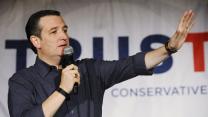
Ted Cruz's Citizenship Status Challenged In Birther Lawsuit


Here we go...

01/15/2016 12:03 pm ET

Scott Olson/Getty Images

A lawyer in Texas has filed suit challenging Ted Cruz's run for president.

A new lawsuit claims Sen. Ted Cruz (R-Texas) is ineligible to run for president, citing his Canadian birth.

The case, lodged Thursday by Texas attorney Newton B. Schwartz Sr., says Cruz is ineligible to run as he isn't a "natural born citizen," Bloomberg reported. Cruz was born in Canada to an American citizen.

“This 229-year question has never been pled, presented to or finally decided by or resolved by the U.S. Supreme Court,” Schwartz says in his complaint.

Schwartz has requested the U.S. Supreme Court expedite the case ahead of the Iowa caucuses and told Bloomberg he was surprised Cruz didn't file a case himself to avoid any complications.

The issue became heated during this week's GOP debate after a moderator asked Cruz about Donald Trump's accusations that the senator may be constitutionally prohibited from presidential office.

"Back in September, my friend Donald said he had his lawyers look at this from every which way and there was no issue there," Cruz replied. "There was nothing to this birther issue. Now, since September, the Constitution hasn't changed, but the poll numbers have."

A similar debate took place nearly 50 years ago over the eligibility of George Romney, former Michigan governor and father of Mitt Romney, to run for president. George Romney was also born to U.S. citizens living outside the country. Mitt Romney recently tweeted in support of Cruz, citing his father's case.

There may be no more infamous birther controversy than the one that dogged President Barack Obama, who was actually forced to release his birth certificate to shut down rumors he was born outside the United States. Trump has been one of the most vocal doubters of Obama's birthplace.

ABOVE IS FROMhttp://www.huffingtonpost.com/entry/ted-cruz-birthplace_56988b8ee4b0778f46f8ef55?

How Ted Cruz fixes the Goldman Sachs loan scandal


Yahoo Finance

By Rick Newman 20 hours ago


Senator Ted Cruz allegedly failed to disclose Goldman Sachs loans

There’s nothing wrong with a candidate taking bank loans to help finance his campaign, as Ted Cruz did when he first ran for the Senate in Texas in 2012. But failing to report those loans, as Cruz acknowledged doing after the New York Times uncovered the loans, is illegal.

Not going-to-jail illegal, however. The Federal Election Commission, which enforces campaign-finance laws, is generally viewed as one of the weakest regulatory agencies in Washington, reluctant to press violators too hard—especially members of Congress who must approve its budget every year. A Cruz spokeswoman has already said the failure to disclose was "inadvertent," and the candidate will update the necessary reports. But the FEC may still investigate and fine Cruz for the error. If Cruz wants to wrap up the loan controversy quickly, he'll acquiesce to the FEC's demands.

But that depends on Cruz’s willingness to bow before a federal agency, and Cruz is notoriously hostile toward government authority. So it’s possible Cruz could fight any FEC enforcement effort, prolonging the controversy. “If he’s smart, he’ll start amending these reports immediately and say it was a misunderstanding,” says Larry Noble of the nonprofit Campaign Legal Center. “But it could get complicated.”

Cruz, according to the Times, took loans totaling about $1 million from two Wall Street banks: Goldman Sachs (GS) and Citibank (C). The Goldman loan is a particular eyebrow-raiser because Cruz’s wife, Heidi Cruz, is a Goldman executive (who’s on leave while Cruz campaigns).

Cruz took out the loans in the first half of 2012, when he was being heavily outspent in the Republican Senate primary by David Dewhurst, the wealthy Texas lieutenant governor, who was pouring millions of dollars of his own money into the campaign. Dewhurst beat Cruz in the primary but failed to win 50% of the votes, forcing a two-way runoff. Cruz came roaring back and won the runoff two months later. With a weak Democratic opponent in the general election, Cruz easily won the Senate seat vacated by Kay Bailey Hutchison.

A lot of candidates take out loans to help fund a campaign. As long as Cruz got his own loans on normal terms—at an interest rate comparable to market rates, with no sweetheart terms—the loans ought to be legit in their own right. The Times characterized the Goldman loan as a “low-interest” deal, but it’s worth pointing out that interest rates in general were at near-record lows back in 2012.


The two bank loans apparently went to the Cruzes personally, rather than to the campaign. That also isn’t unusual. If the loans were administered properly, the banks would have wanted collateral -- something a political campaign doesn’t really have. But the Cruzes did have collateral, such as investment accounts and other assets. The Cruzes then loaned the money they got from the banks to the campaign. That could be problematic, if the FEC digs deep enough, because if some of the money came from Heidi Cruz, it could be construed as a campaign donation subject to a limit of $5,400. The amount handed over to the campaign obviously exceeded that.

If Cruz plays nice with the FEC and accepts a modest penance, one question will still remain: Was the failure to disclose really inadvertent? There are reasons to be doubtful. "He's an extremely sophisticated guy," Carol Pepper of investing firm Pepper International says in the vide above. "His wife certainly knew. She works at Goldman. These are not hicks. For him not to be disclosing this, it's ridiculous."

Were he truly willing to break the rules, Cruz might have had reason to keep the bank loans a secret. For one thing, they gave his campaign a lifeline at a crucial moment of the race, when announcing the need for loans might have made his campaign seem underfunded and vulnerable.

As the Times points out, Cruz was also cultivating a homespun image of husband and wife risking their own life savings on a cause they believed in, which would seem a lot less endearing if the public knew it was bankrolled, at least in part, by Wall Street money. Plus, Cruz may have felt it was prudent to keep Goldman Sachs, his wife’s employer, off the books, since it might look like cronyism or, at a minimum, an unusual privilege.

The FEC has cut back on fines for campaign finance violators in recent years—but still acted in some cases. Last spring, it fined Democratic Ohio Congresswoman Marcy Kaptur $6,400 for the late reporting of a large donation. In 2014, the agency fined retired Democratic Congressman Edolphus Towns of New York $5,000 for the personal use of campaign funds while he was still in office. Not exactly eye-popping fines.

Ted Cruz can certainly afford a slap on the wrist, since his net worth is at least $3 million. He’s also unlikely to run short of campaign funds ever again. Cruz is one of the better-funded candidates in a crowded field competing for donors. His presidential campaign has raised at least $45 million so far, with super PACs supporting Cruz pulling in at least $40 million more. And his fundraising pace is accelerating as he surges in the polls. Taking out those loans in 2012 appears to have been a prudent risk, even if they weren’t prudently reported.

Rick Newman’s latest book is Liberty for All: A Manifesto for Reclaiming Financial and Political Freedom. Follow him on Twitter: @rickjnewman.

Above is from:  http://finance.yahoo.com/news/how-ted-cruz-fixes-the-goldman-sachs-loan-scandal-181559074.html#

Thursday, January 14, 2016

The feds want to give $14 million in taxpayer money to a Koch brother’s coal mine


By Katie Herzog on 13 Jan 2016 13 comments

Damn, it feels good to be a billionaire.

Today in WTF News, we learned that billionaire industrialist William Koch — brother of arch conservatives Charles and David Koch — may be getting a $14 million royalty refund after his coal mine on leased federal property in Colorado shut down. And that $14 mil would come compliments of the American taxpayer.

When coal is mined from underground on federal land, the federal government is entitled to an 8 percent royalty. But coal-mining companies can claim they face trying economic conditions and ask for a “royalty rate reduction,” Reuters reports. One of Koch’s companies did just that. It’s not a big surprise that a greedy fossil fuel billionaire would ask for an extra government handout. What’s crazy is that the U.S. Bureau of Land Management wants to grant the request.

Put another way, to make it sound even crazier: The Obama administration is proposing to hand $14 million to a billionaire Koch brother to subsidize his past coal-mining efforts on public land, after he already shut down the mine and laid off the workers.

More from Reuters:

Oxbow Mining, a subsidiary of Koch-controlled Oxbow Carbon LLC, closed its Elk Creek site in western Colorado two years ago after setbacks such as a fire and partial collapse made working the underground mine too costly, according to the company and regulatory paperwork. …

“Although production at the mine has been idled indefinitely since the end of 2013 … the royalty rate reduction would be retroactive,” the Bureau of Land Management wrote in an opinion to Colorado officials, who have a say in the decision since they share coal revenue.

The rebate would come in the form of a “royalty rate reduction” going back to 2012 and lower the government’s take to 5 percent from the usual 8 percent of coal sales.

Why would the government ever agree to this? As Reuters explains, “Reducing royalty rates has been a tool used by the federal government for decades when maximizing coal production was part of a national energy policy.” At the same time, “Royalty rate reduction has been criticized for decades, and an Interior Department review in 2013 found that officials often lacked the financial expertise to determine whether a coal company needed a lower rate.”

In his State of the Union address Tuesday, President Obama emphasized the importance of transitioning away from fossil fuels and toward renewable energy: “Rather than subsidize the past,” he said, “we should invest in the future — especially in communities that rely on fossil fuels. That’s why I’m going to push to change the way we manage our oil and coal resources, so that they better reflect the costs they impose on taxpayers and our planet.”

It would seem that the bureaucrats at the BLM haven’t been listening to the president lately. Perhaps someone from the White House ought to give them a call and catch them up on the latest?

William Koch — while not as notorious as his election-purchasing brothers — is still very, very rich. And not a little weird: He built his own private ghost town in Colorado, complete with saloon, jail, church, stable, train station, and, for a bit of a modern touch, a water-treatment system. “Known as ‘Wild Bill’ to his friends,” wrote the New York Post, “Koch has amassed an impressive collection of period memorabilia. He owns the former possessions of several iconic figures, such as Jesse James’ gun, George Custer’s flag and Sitting Bull’s rifle. He also paid $2.3 million for the only known photograph of Billy the Kid.”

Sounds like he’ll put that extra $14 million to good use.


ABOVE IS FROM:   http://grist.org/article/the-feds-want-to-give-14-million-in-taxpayer-money-to-a-koch-brothers-coal-mine/

German Valley has a “new” police car on patrol thanks to the generosity of a Boone County community.


Belvidere PD gives squad car to German Valley

Published: Wednesday, Jan. 13, 2016 1:35 p.m. CST • Updated: Wednesday, Jan. 13, 2016 1:36 p.m. CST


German Valley's "new" police car, a 2007 Dodge Charger, is ready for action with a fresh paint job and new decals. The City of Belvidere gave the used car to the village. Photo supplied

By Vinde Wells

vwells@oglecounty

news.com

German Valley has a “new” police car on patrol thanks to the generosity of a Boone County community.

The City of Belvidere recently gave the village a squad car that the police department there was ready to retire.

With new paint and decals, the car is now on duty on German Valley’s streets

Part-time German Valley Police Chief Mike Boomgarden said the village’s only squad car, a 1995 Crown Victoria purchased used 19 years ago from the Freeport Park District, had reached the end of its run.

Looking for a replacement, Boomgarden, who is also the full-time police chief at Forreston, reached out to other police agencies to see if any of them had a good, used car they wanted to sell.

Belvidere Police Chief Jan Noble, a longtime friend, had the answer.

“The city council up there voted unanimously to give us a used car at no cost,” Boomgarden said. “They even put new tires on it for us.”

Noble said he took German Valley’s need for a car to his police commission and city council with a proposal to give then the 2007 Dodge Charger slated for replacement in the near future.

“They agreed this was a good way to help out another community,” Noble said.

Boomgarden said the car, with 80,000 miles, came with the cage for prisoners and snow tires.

Noble delivered it himself.

Boomgarden took the car to Forreston Auto Body to have rust spots repaired and a new paint job.

“We got it repainted and put our decals on it,” he said. “It’s now in service.”


Above is from:  http://www.oglecountynews.com/2016/01/11/belvidere-pd-gives-squad-car-to-german-valley/adh69zj/

Chrysler Faked Sales?

Fiat Chrysler Faked Sales, Dealers Say in Racketeering Suit

Phil Milford

Jennifer Surane jennysurane


  • Trading halted in Europe after shares fall 11 percent

  • Dealers paid to report false sales at month's end, suit says


Fiat Chrysler Automobiles NV investors reacted dramatically to the latest concerns about automotive industry scruples after dealers accused the company’s U.S. unit of offering money to falsify sales.

The U.S. dealers’ allegations add to the claims that are shaking investor confidence in the auto industry, with Volkswagen AG having admitted to rigging emission tests in the U.S. and Renault SA having had its offices raided, raising the specter of a VW-type scandal at the French car company.

“The perception investors have is that the sector has been lying for emissions, for bonuses, targets, whatever you want, therefore, you don’t want to be a shareholder,” said Massimo Vecchio, an analyst with Mediobanca in Milan. Given the Volkswagen scandal and the raid on Renault, “people are obviously scared.”

Chrysler plans to fight the U.S. lawsuit, which the company said in a statement is without merit.

Trading Halted

Fiat Chrysler trading was halted in Europe after shares fell as much as 11 percent. The company’s credit default swaps, used by investors as insurance against defaults on company debt, surged.

Dealers were paid to report fake sales on the last day of the month and then cancel the sales the next day, according to the federal lawsuit filed by two related auto dealerships Jan. 12.

“If it’s true, this could mean that volumes at Fiat Chrysler aren’t really what they appeared to be and this could mean that the numbers for revenue could be in question,” said Richard Hilgert, a Morningstar Inc. analyst in Chicago.

“Usually, lawsuits in the automotive industry are just a regular part of the business and the trading isn’t as volatile here when this kind of news breaks,” Hilgert said.

Dealer Obligations

The lawsuit, against the company’s North American unit, FCA US LLC, was brought by Napleton Arlington Heights, based in Illinois, and Napleton Northlake, based in Florida, according to court records.

Fiat Chrysler said in Thursday’s statement that it has been discussing the need for the dealer group to meet its obligations under certain agreements. Kevin Hyde, counsel for the dealers, didn’t immediately answer phone calls to his office in Westmont, Illinois.

FCA US had an incentive program which dealers could join if they met certain sales targets, and would then enable them to get subsidies for each new vehicle sold, according to the suit. The company solicited dealers to falsely report sales and funneled money to conspiring dealers, the dealers allege.

Sales Targets

Chief Executive Officer Sergio Marchionne has set high goals for the company, including erasing 7 billion euros ($7.6 billion) in debt and more than tripling net income to about 5 billion euros by 2018. He backed off a target of selling 7 million vehicles in 2018 at the North American International Auto Show in Detroit Jan. 11, saying at the same time that 2015 earnings will be better than expected.

In one instance a competing dealership reported 85 false new reports of vehicles being delivered, resulting in it being paid “tens of thousands of dollars as an illicit reward for their complicity in the scheme,” both dealers said in the lawsuits.

The lawsuit contends the company’s actions “have been arbitrary and capricious, as well as coercive,” by “strong-arming its dealers to achieve sales numbers not clearly defined,” with “non-conspiring dealers” ineligible for bonuses.

They seek unspecified damages and a jury trial, according to court papers.

Automotive News first reported the suits Jan. 13.

The case is Napleton’s Arlington Heights Motors Inc. v. FCA US LLC, formerly known as Chrysler Group Realty Company LLC, 16-cv-00403, U.S. District Court, Northern District of Illinois (Chicago).

Above is fromhttp://www.bloomberg.com/news/articles/2016-01-14/fiat-chrysler-unit-accused-of-racketeering-to-falsify-sales?cmpid=yhoo.headline

Wednesday, January 13, 2016

Ted Cruz Didn’t Disclose Loan From Goldman Sachs for His First Senate Campaign


image


Ted Cruz Didn’t Disclose Loan From Goldman Sachs for His First Senate Campaign

By MIKE McINTIREJAN. 13, 2016


As Ted Cruz tells it, the story of how he financed his upstart campaign for the United States Senate four years ago is an endearing example of loyalty and shared sacrifice between a married couple.

“Sweetheart, I’d like us to liquidate our entire net worth, liquid net worth, and put it into the campaign,” he says he told his wife, Heidi, who readily agreed.

But the couple’s decision to pump more than $1 million into Mr. Cruz’s successful Tea Party-darling Senate bid in Texas was made easier by a large loan from Goldman Sachs, where Mrs. Cruz works. That loan was not disclosed in campaign finance reports.

Those reports show that in the critical weeks before the May 2012 Republican primary, Mr. Cruz — currently a leading contender for his party’s presidential nomination — put “personal funds” totaling $960,000 into his Senate campaign. Two months later, shortly before a scheduled runoff election, he added more, bringing the total to $1.2 million — “which is all we had saved,” as Mr. Cruz described it in an interview with The New York Times several years ago.

A review of personal financial disclosures that Mr. Cruz filed later with the Senate does not find a liquidation of assets that would have accounted for all the money he spent on his campaign. What it does show, however, is that in the first half of 2012, Ted and Heidi Cruz obtained the low-interest loan from Goldman Sachs, as well as another one from Citibank. The loans totaled as much as $750,000 and eventually increased to a maximum of $1 million before being paid down later that year. There is no explanation of their purpose.

Neither loan appears in reports the Ted Cruz for Senate Committee filed with the Federal Election Commission, in which candidates are required to disclose the source of money they borrow to finance their campaigns. Other campaigns have been investigated and fined for failing to make such disclosures, which are intended to inform voters and prevent candidates from receiving special treatment from lenders. There is no evidence that the Cruzes got a break on their loans.

A spokeswoman for Mr. Cruz’s presidential campaign, Catherine Frazier, acknowledged that the loan from Goldman Sachs, drawn against the value of the Cruzes’ brokerage account, was a source of money for the Senate race. Ms. Frazier added that Mr. Cruz also sold stocks and liquidated savings, but she did not address whether the Citibank loan was used.

The failure to report the Goldman Sachs loan, for as much as $500,000, was “inadvertent,” she said, adding that the campaign would file corrected reports as necessary. Ms. Frazier said there had been no attempt to hide anything.

“These transactions have been reported in one way or another on his many public financial disclosures and the Senate campaign’s F.E.C. filings,” she said.

Kenneth A. Gross, a former election commission lawyer who specializes in campaign finance law, said that listing a bank loan in an annual Senate ethics report — which deals only with personal finances — would not satisfy the requirement that it be promptly disclosed to election officials during a campaign.

“They’re two different reporting regimes,” he said. “The law says if you get a loan for the purpose of funding a campaign, you have to show the original source of the loan, the terms of the loan and you even have to provide a copy of the loan document to the Federal Election Commission.”

There would have been nothing improper about Mr. Cruz obtaining bank loans for his campaign, as long as they were disclosed. But such a disclosure might have conveyed the wrong impression for his candidacy.

Mr. Cruz, a conservative former Texas solicitor general, was campaigning as a populist firebrand who criticized Wall Street bailouts and the influence of big banks in Washington. It is a theme he has carried into his bid for the Republican nomination for president.

Earlier this year, when asked about the political clout of Goldman Sachs in particular, he replied, “Like many other players on Wall Street and big business, they seek out and get special favors from government.”

In recounting the decision to put all of their savings into the campaign, Mr. Cruz said in the 2013 Times interview that Mrs. Cruz immediately agreed to his proposal, even though he was trailing in the polls and still viewed as a long shot against Lt. Gov. David Dewhurst, who spent $24 million of his own money on the race.

“What astonished me, then and now, was Heidi within 60 seconds said, ‘Absolutely,’ with no hesitation,” Mr. Cruz said.

Mrs. Cruz, who is on leave as a managing director at Goldman Sachs, later suggested that the reality was more complicated. She told Politico in 2014 that she thought they should apply “common investment sense” and not use their own money for the campaign “unless it made the difference” in winning. The article did not mention anything about loans from banks.

The money from the Cruzes allowed his campaign to keep running television ads in the period preceding the primary election, including a $300,000 ad buy that highlighted the story of Mr. Cruz’s father’s flight from Cuba in the 1950s after opposing the Batista regime. Mr. Cruz earned enough votes in the primary to qualify for a runoff, where he defeated Mr. Dewhurst and went on to win the general election.

The ethics reports that candidates file with the Senate require them to list all assets they held at the close of the year or that generated income during the year. Assets are reported in broad categories of value, such as $1,001 to $15,000 and $100,001 to $250,000.

Mr. Cruz’s filings show that at the close of 2011, he and his wife had cash and securities in bank, brokerage and retirement accounts worth $1.3 million to $3.4 million. They also had mortgages and a loan against Mr. Cruz’s partnership equity in his law firm. During 2012, they sold securities worth $82,000 to $355,000, and the value of other holdings was reduced by, at most, $155,000.

However, they also added a money-market account with $250,000 to $500,000 in it, and the value of other holdings increased by as much as $435,000. All told, the value of their cash and securities in 2012 saw a net increase of as much as $400,000 — even as the Cruzes were supposedly liquidating everything to finance Mr. Cruz’s Senate campaign.

The biggest change in the Cruzes’ finances in 2012 was the addition of the two bank loans, each valued at $250,000 to $500,000, during the first half of the year. One was a margin loan from Goldman Sachs. Margin loans, which are secured by holdings in a brokerage account, are often used to buy more stocks, but can be obtained for almost any purpose.

The other loan was a line of credit from Citibank. Even if the Citibank loan did not go directly into the Senate campaign, it could have freed up other assets for that purpose. While the Cruzes were well paid — he made more than $1 million a year as a law partner, and she earned a six-figure income as an executive in Goldman Sachs’s Houston office — they also had big bills, including mortgage payments and full-time child care.

Both loans had floating interest rates around 3 percent, according to Mr. Cruz’s Senate disclosures, which appear to be generally in line with rates available to wealthy borrowers at that time.

During the remainder of 2012, the Cruz campaign repaid Mr. Cruz for about half of the money he lent. His Senate disclosures show that he and his wife paid off the Citibank loan that same year. As for the Goldman Sachs loan, it remains outstanding, though the balance has been reduced to between $50,000 and $100,000.

The federal guide to campaign finance reporting for congressional candidates makes it clear that if the original source of money for a candidate’s personal loan was a margin loan or a line of credit, it must be disclosed.

“Bank loans to candidates and loans derived from advances on a candidate’s brokerage accounts, credit cards, home equity line of credit, or other lines of credit obtained for use in connection with his or her campaign must be reported by the committee,” according to the guide.

Gov. Rauner to seek end of consent decrees, ACLU responds


From an ACLU press release
2016-01-12


Statement of Edwin C. Yohnka: American Civil Liberties Union of Illinois on Governor Rauner's declaration to seek end of consent decrees, Jan. 12, 2016:

Yesterday, in a series of interviews marking his first year in office, Illinois Governor Bruce Rauner said that a "big part" of his administration's plan going forward would be to seek release from court oversight in various federal consent decrees to which the State of Illinois has agreed.

The American Civil Liberties Union currently represents clients in five ( 5 ) such consent decrees, addressing care for children under the care of the Department of Children and Family Services, youth detained by the Illinois Department of Juvenile Justice as well as people with intellectual, physical and psychiatric disabilities who have been needlessly warehoused in large institutions and want to live in community-based settings.

Because of this experience and involvement, the American Civil Liberties Union of Illinois issued the following statement about the Governor's comments. The following can be attributed to Edwin C. Yohnka, Director of Communications and Public Policy at the ACLU of Illinois:

Governor Rauner should know that adherence to terms of a consent decrees is not a political option to be debated in the media. These agreements exist because the State violated the law — often over decades — in ways that impose significant harms to our clients and others in Illinois. If he possesses a magic wand to fix the challenges faced by children in the child welfare system, youth being incarcerated or people with disabilities after years of neglect by the State, we hope the Governor uses the magic soon. The reality is that the way to make getting out of consent decrees a "big part" of his agenda is to bring the State's dysfunctional systems in compliance with the law by improving the way the State provides services and supports to people who depend on its help.

We look forward to engaging in that work, rather than debating ideological rhetoric.

Above is from:  http://www.windycitymediagroup.com/lgbt/Gov-Rauner-to-seek-end-of-consent-decrees-ACLU-responds-/53914.html